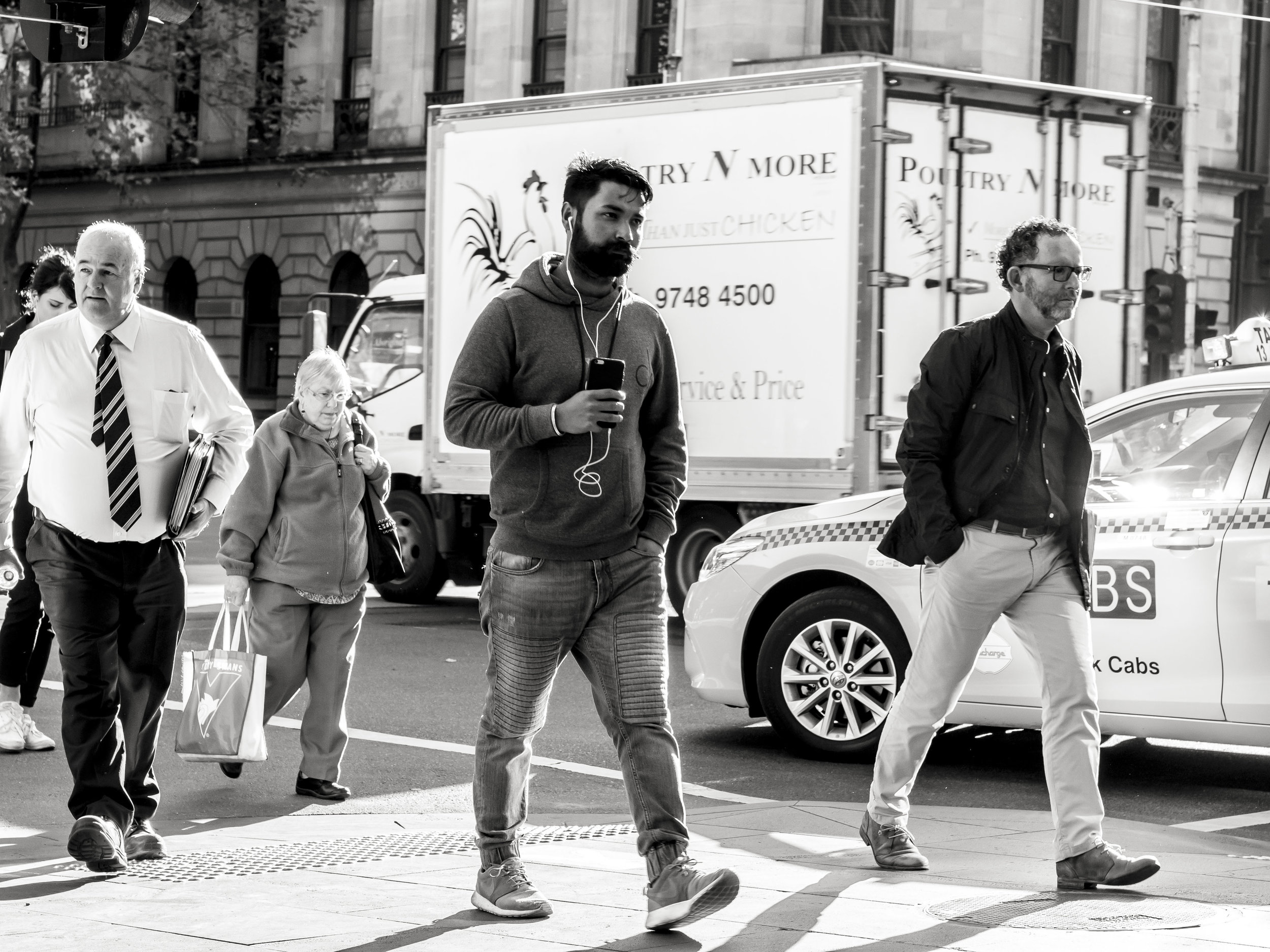
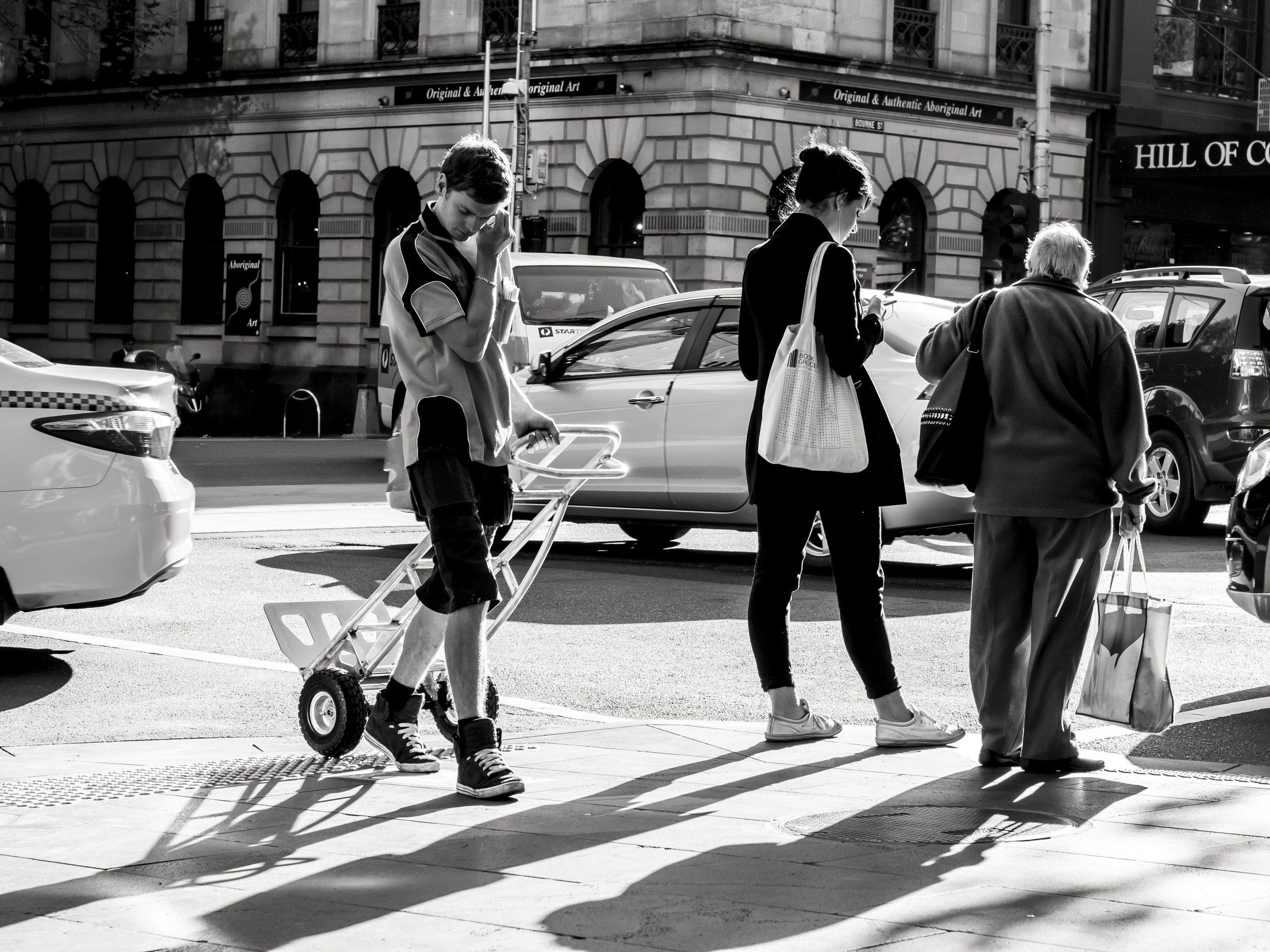
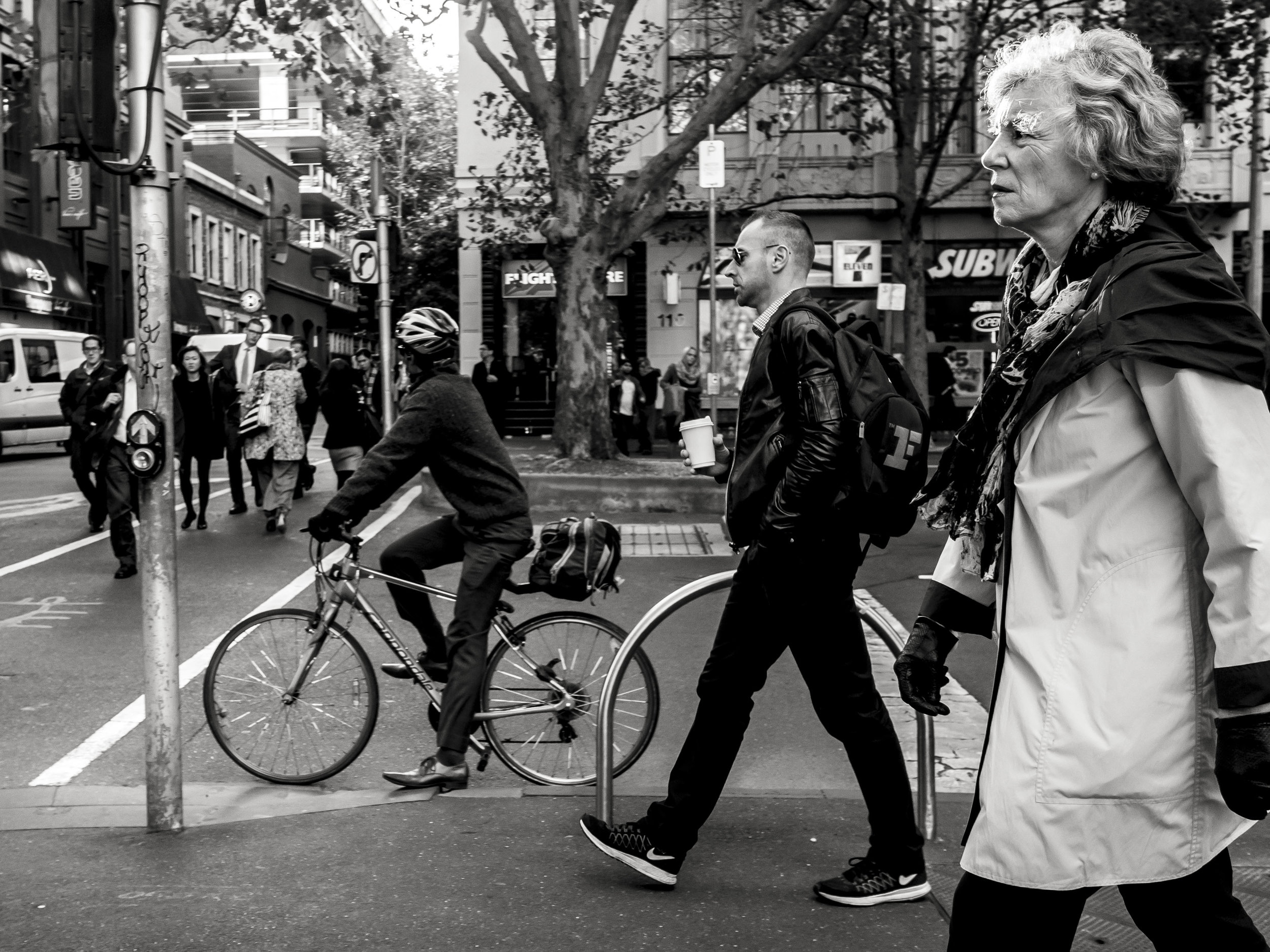
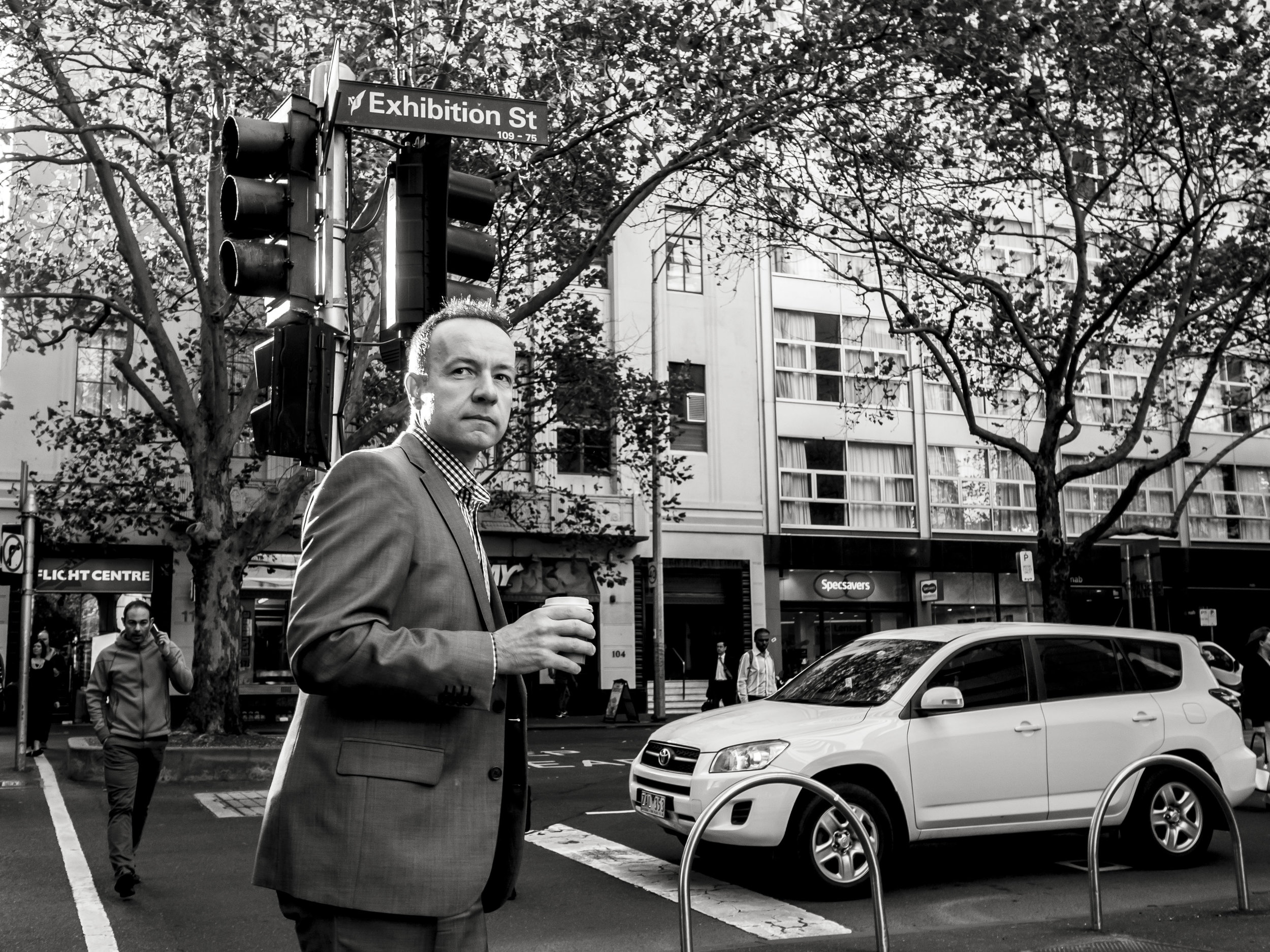
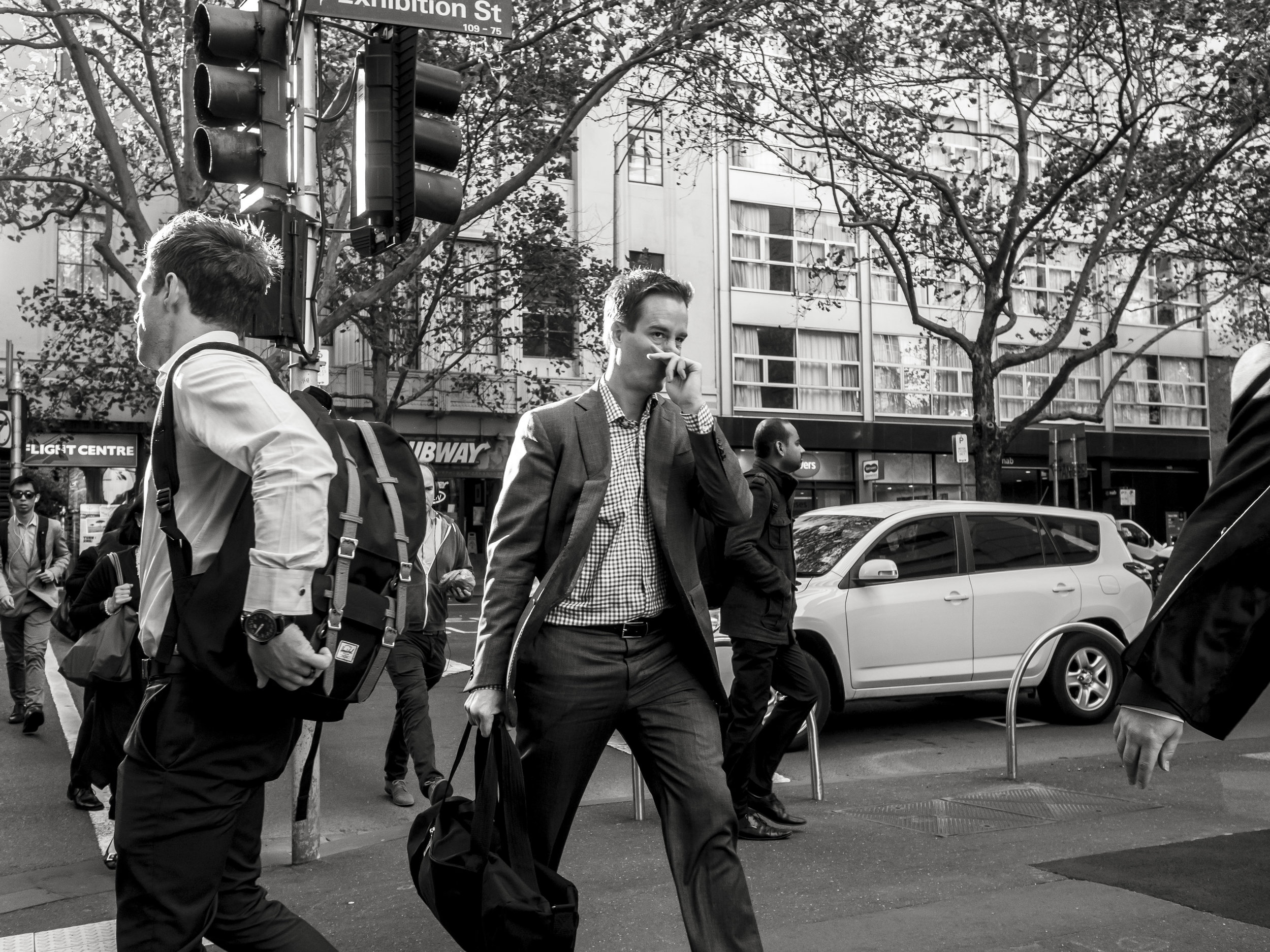
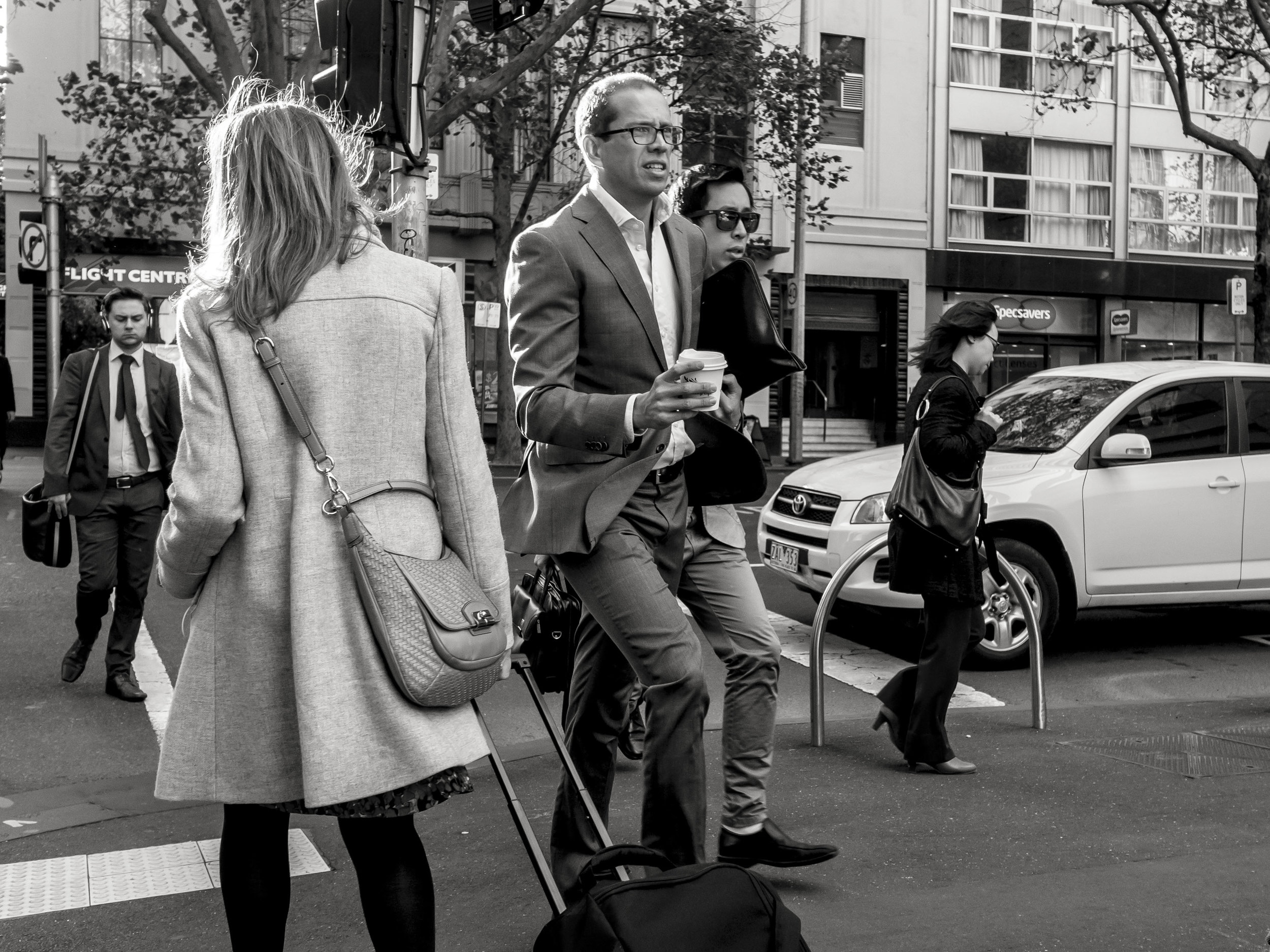
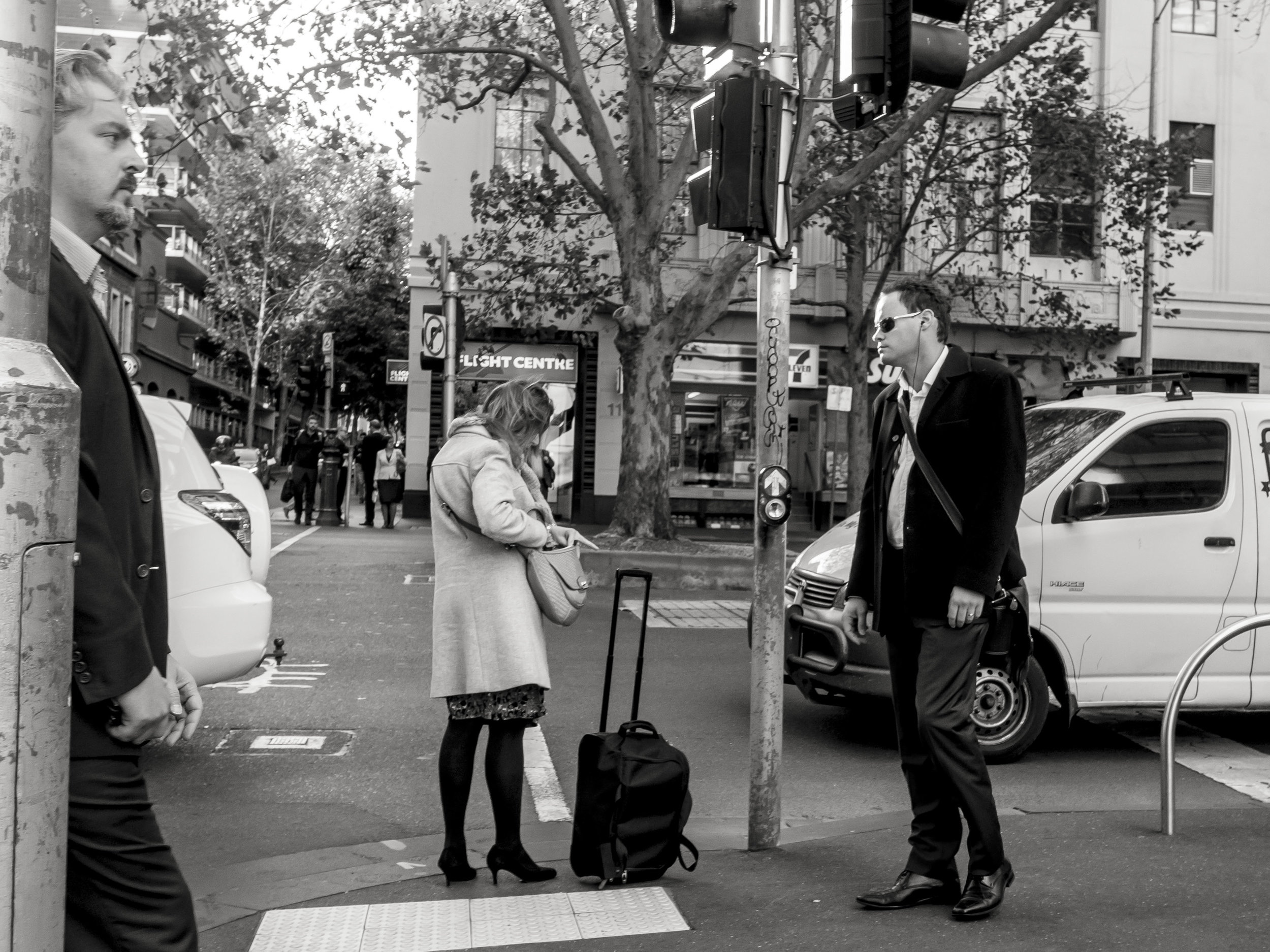
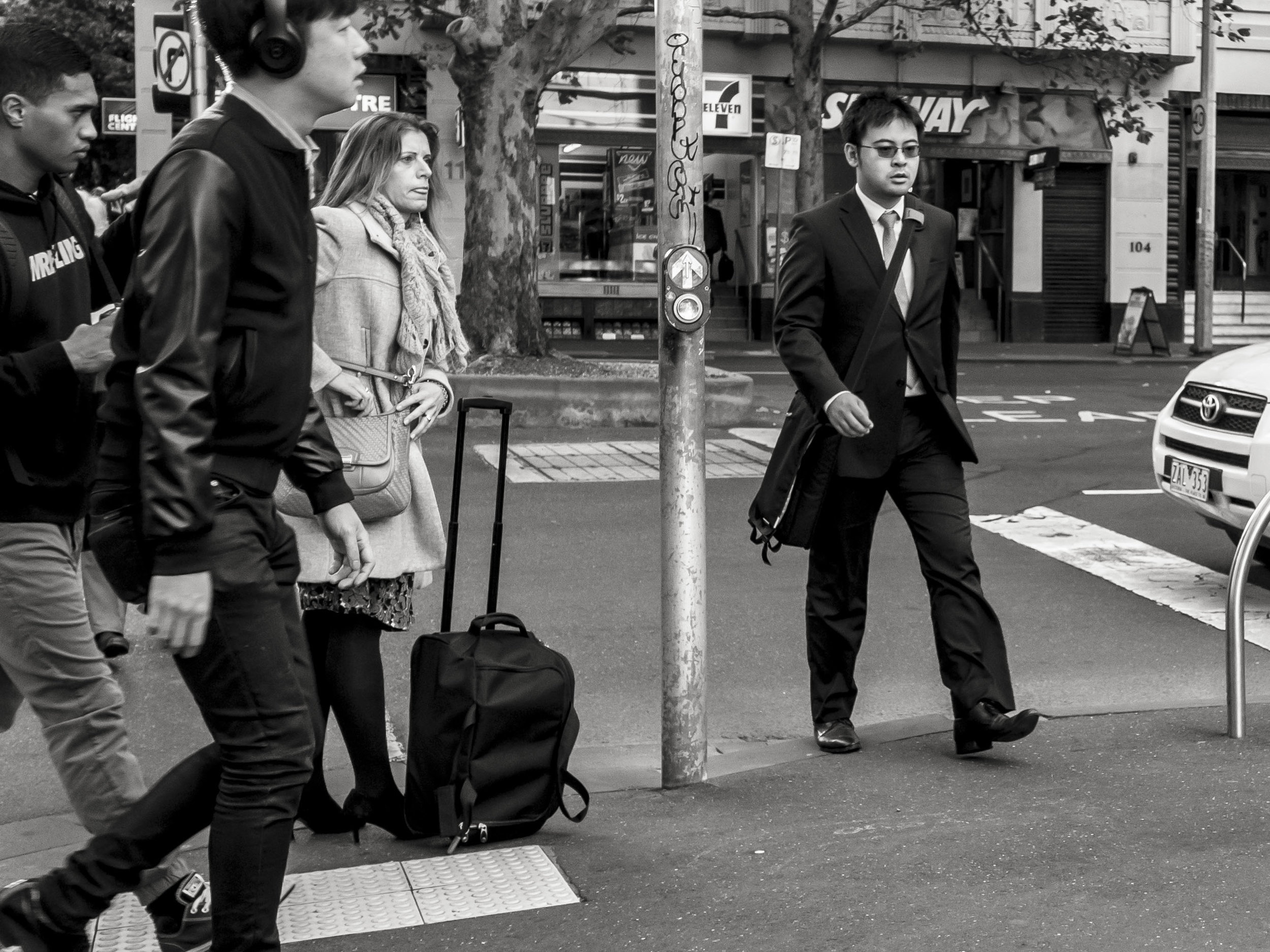
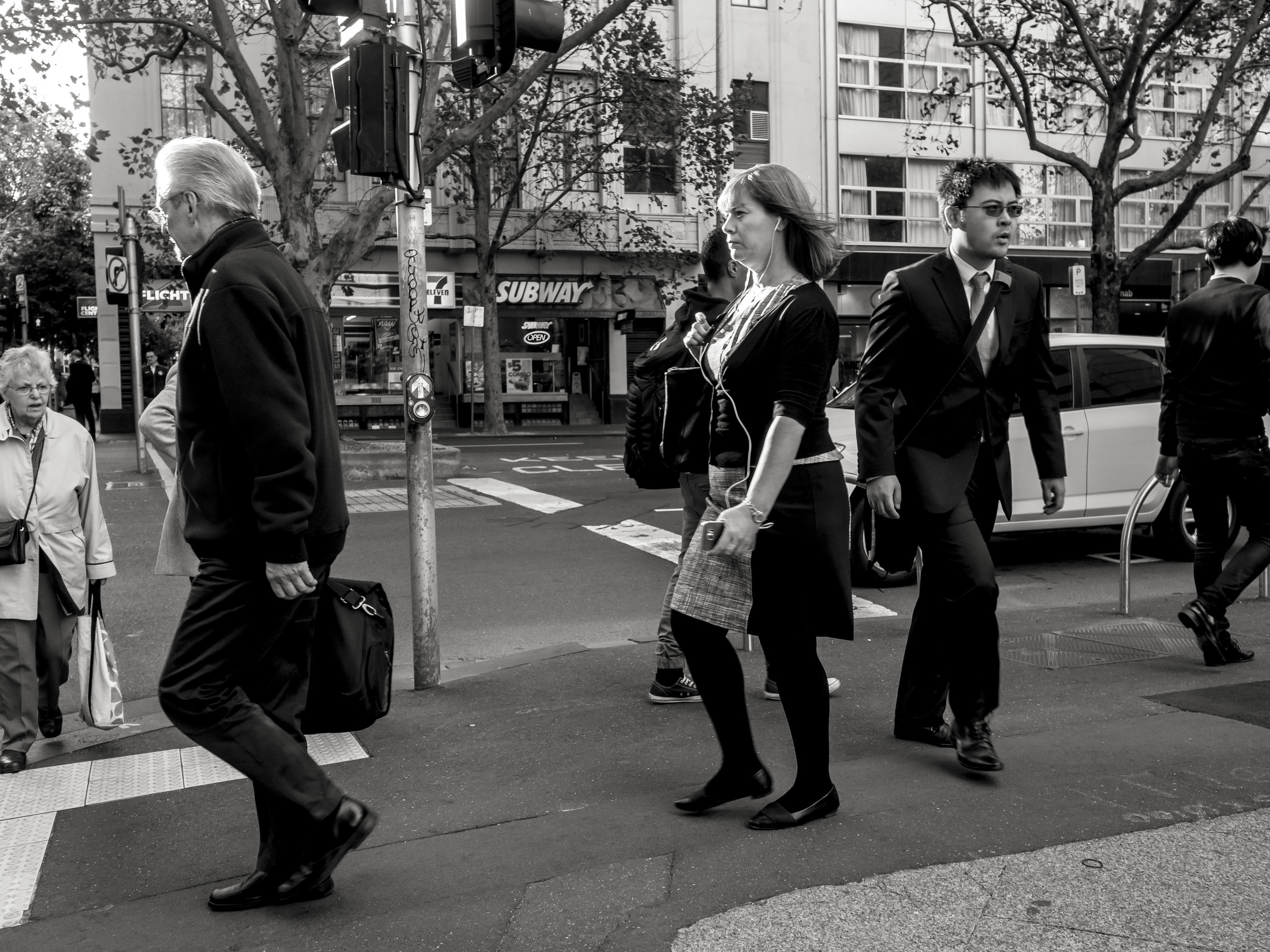
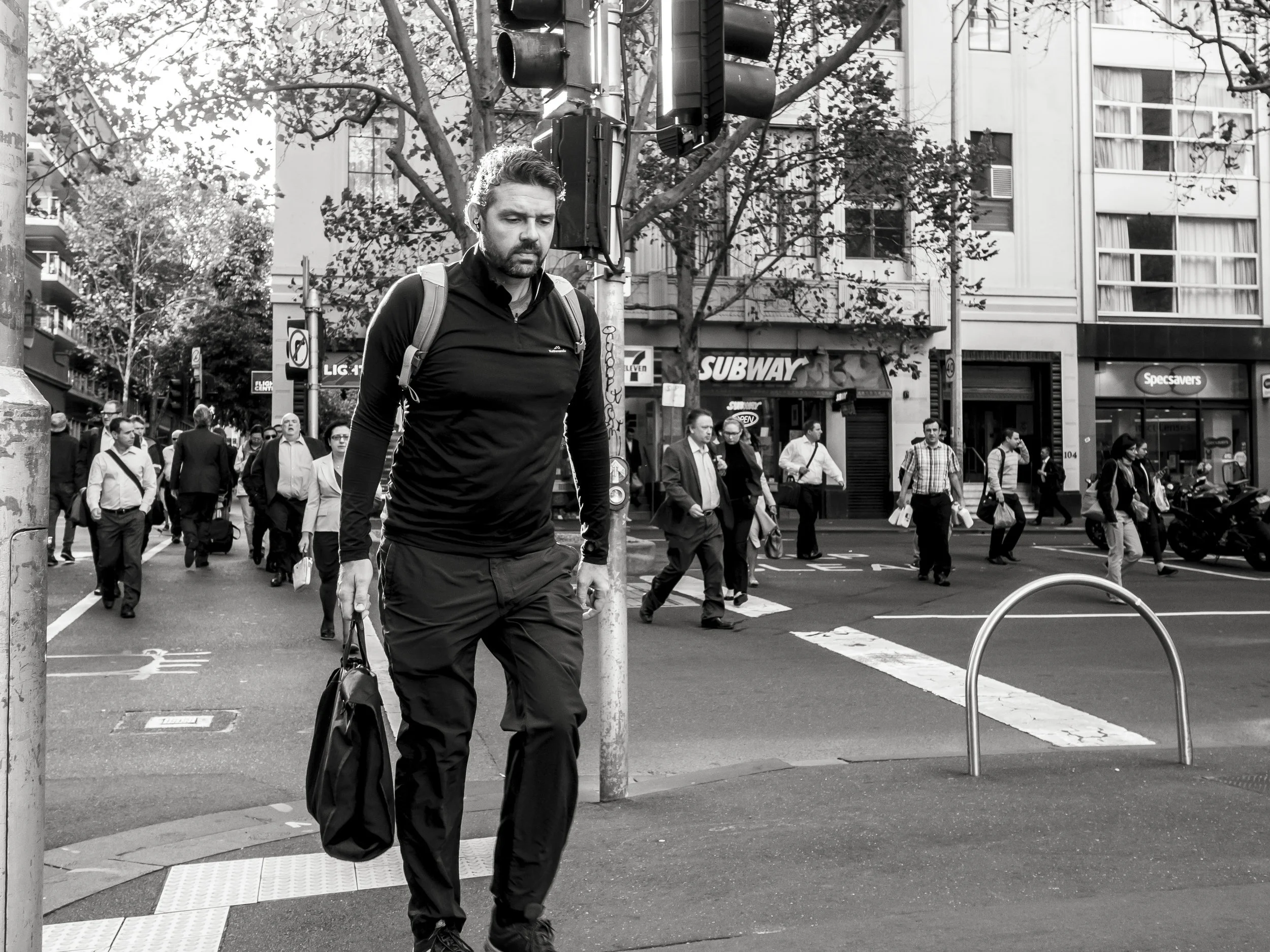
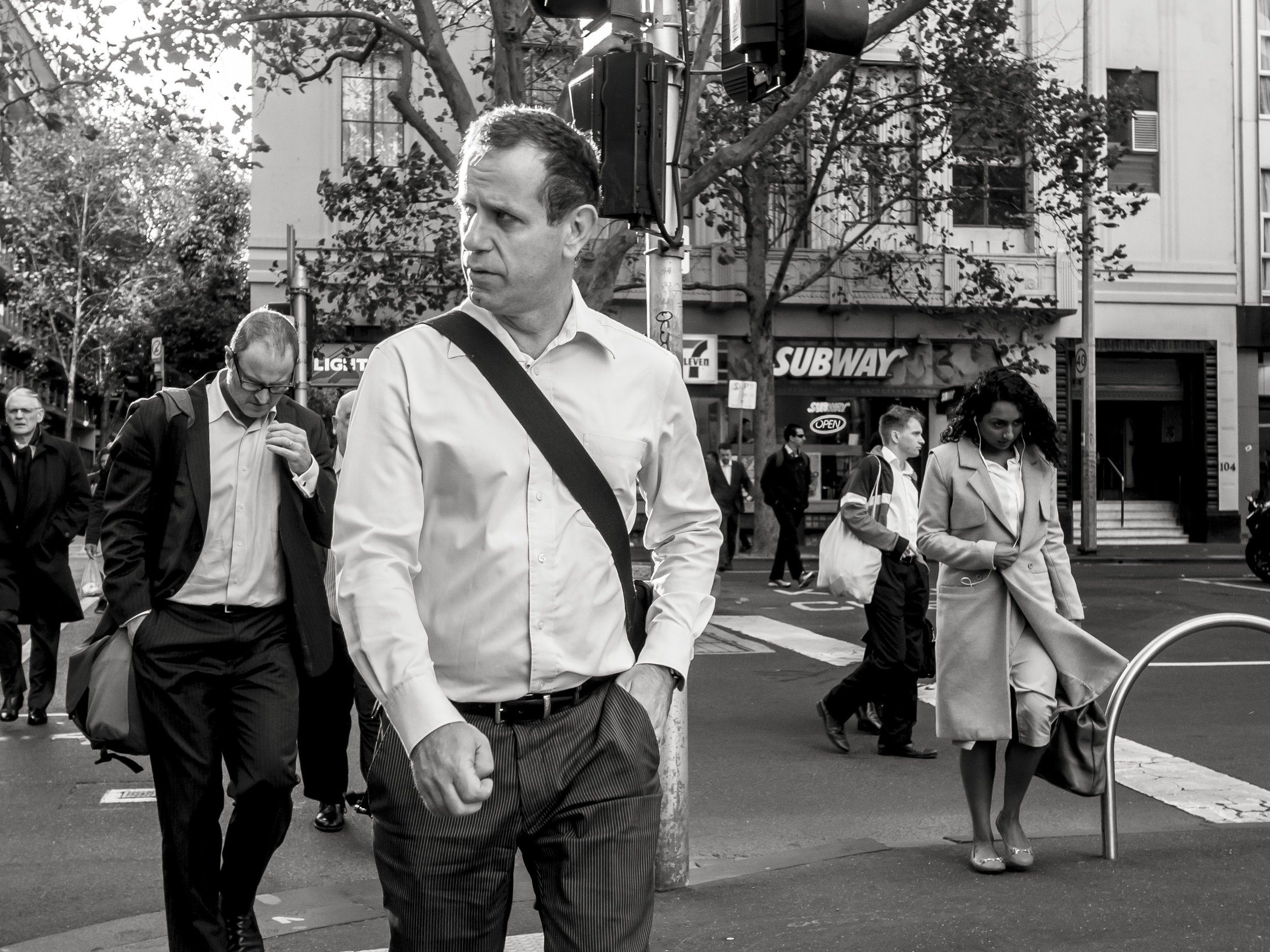
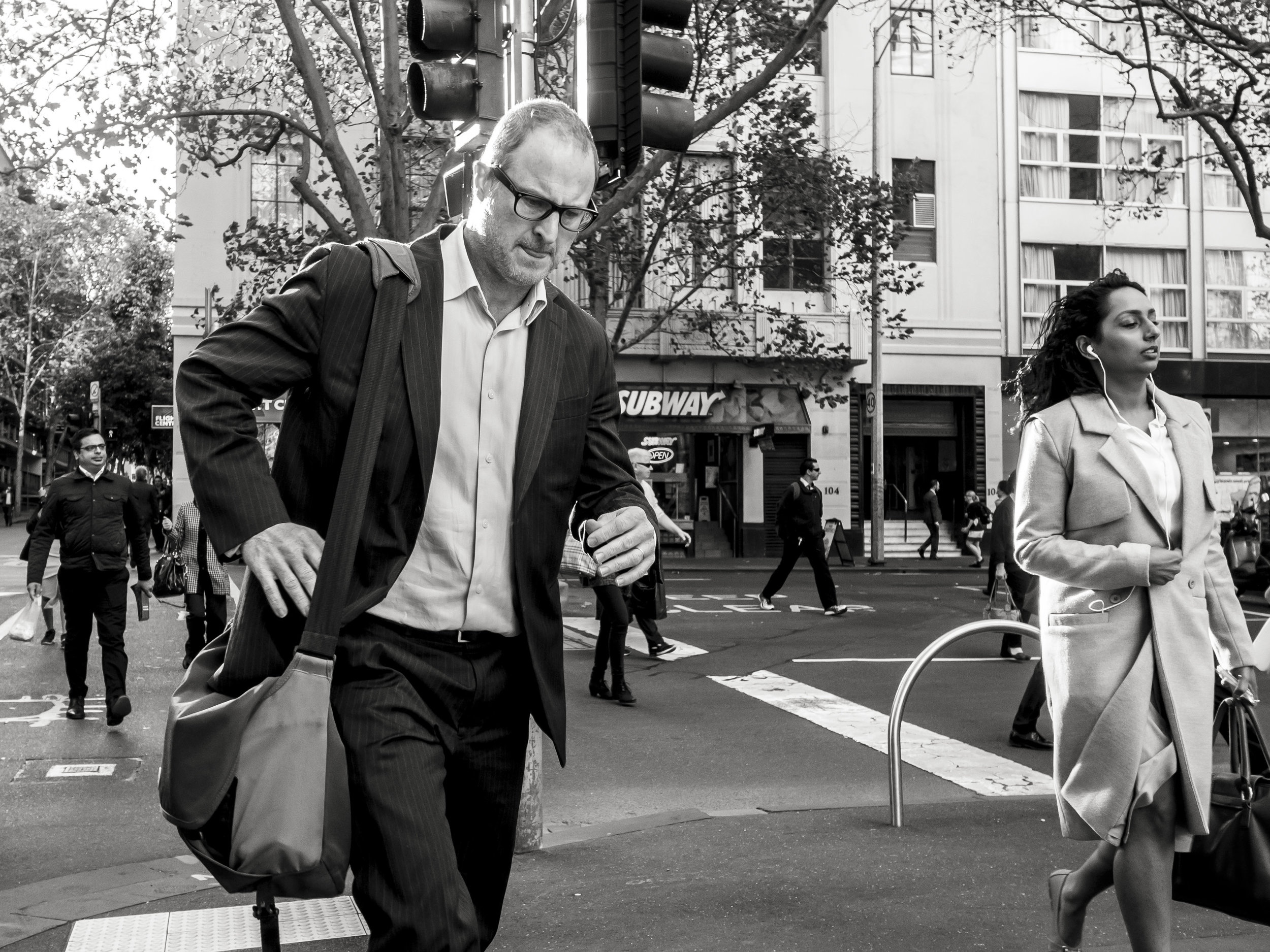
The 50mm Dilemma

Still on that 25mm (50mm equiv) lens and it's role as the new 20mm.

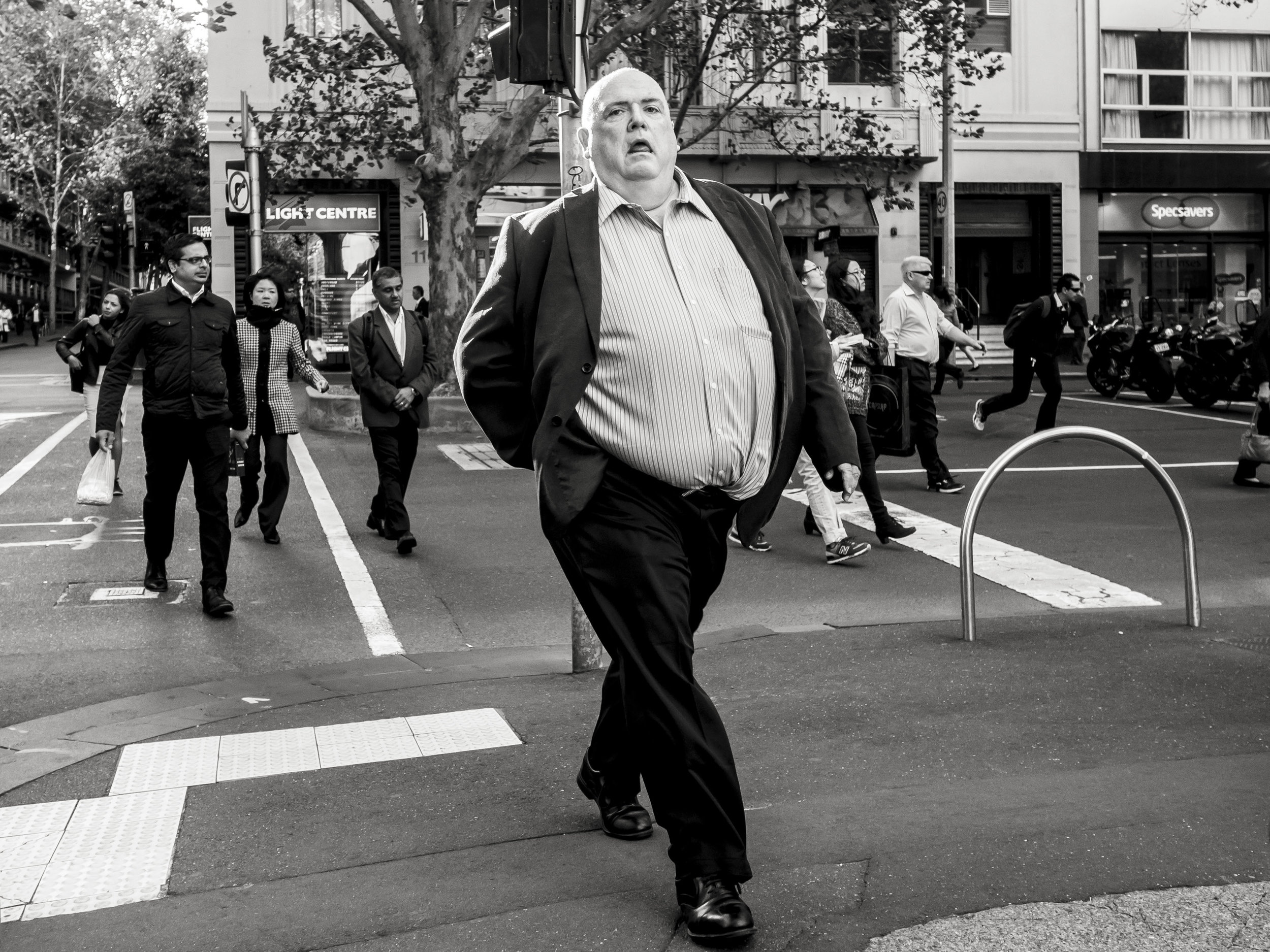
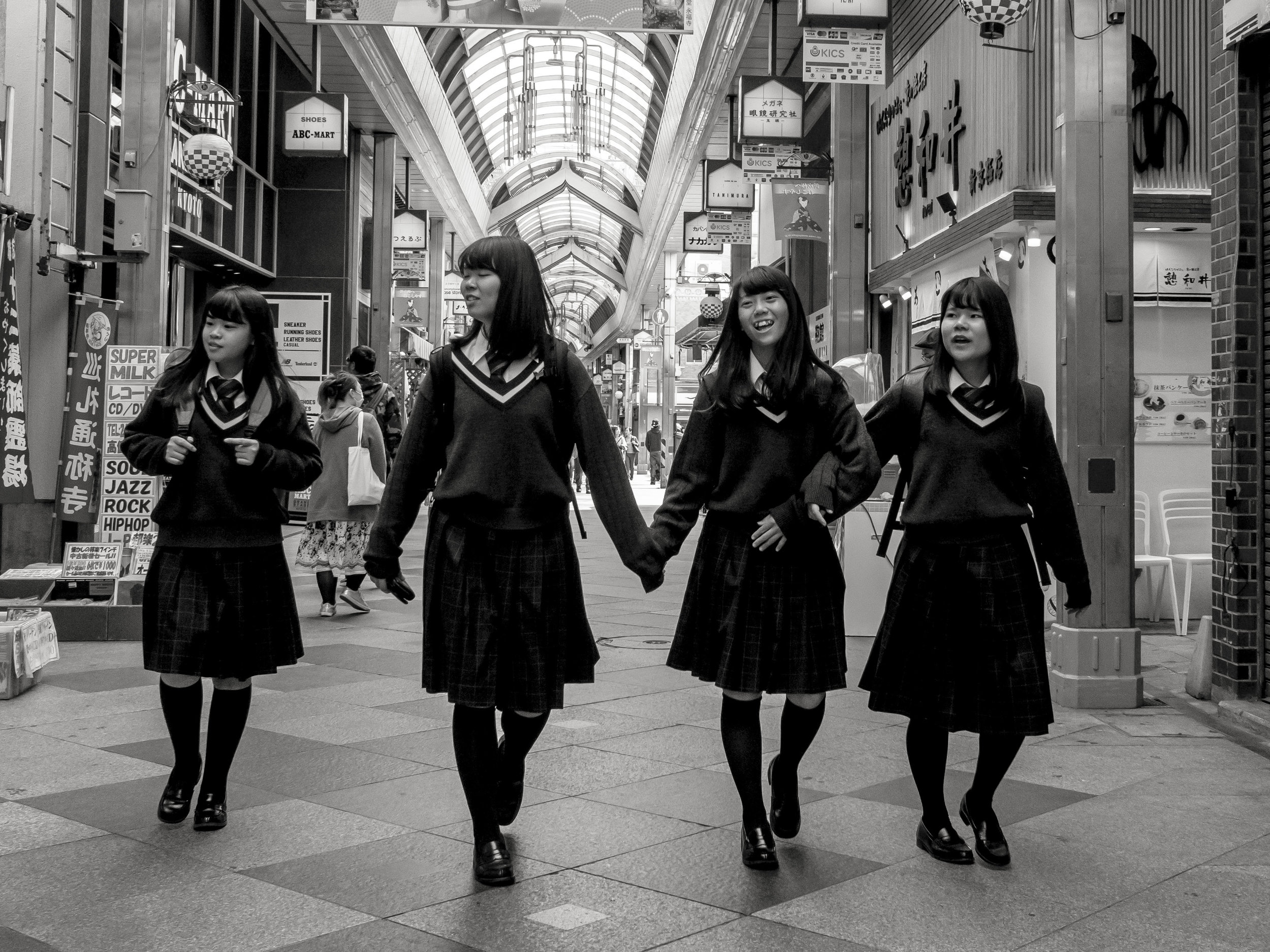
I think the real issue for me is that even though the 20mm is considered the "true" standard lens both mathematically and visually, it does commit to a look. The lens is too wide for normal portraits, but wide enough for environmental portraits. That is to say, if you get too close there is some "fish bowl" effect to faces, that stepping back a bit fixes, while including some context. 

Often considered a boring lens, I think it is simply the first wide angle lens.

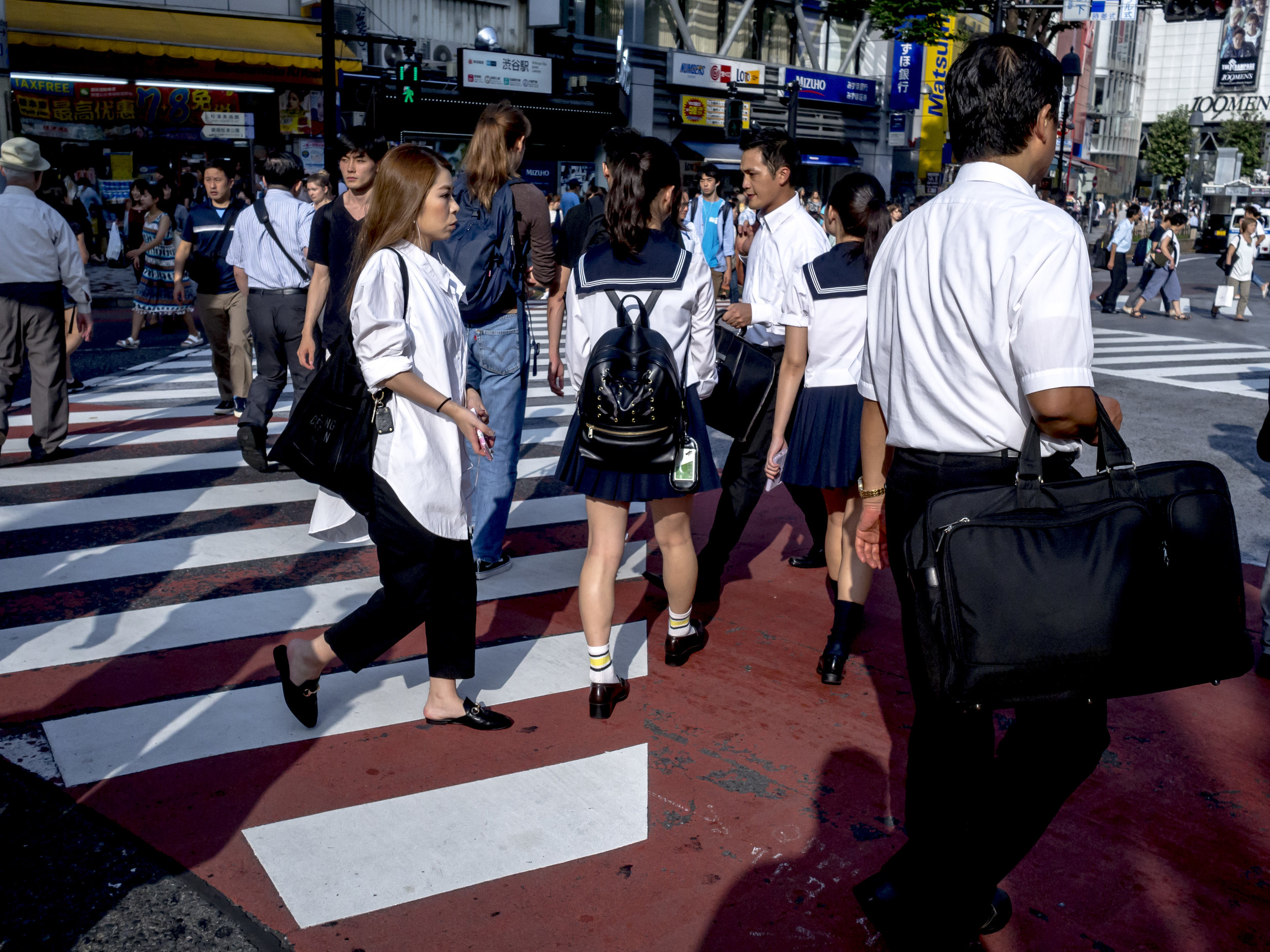
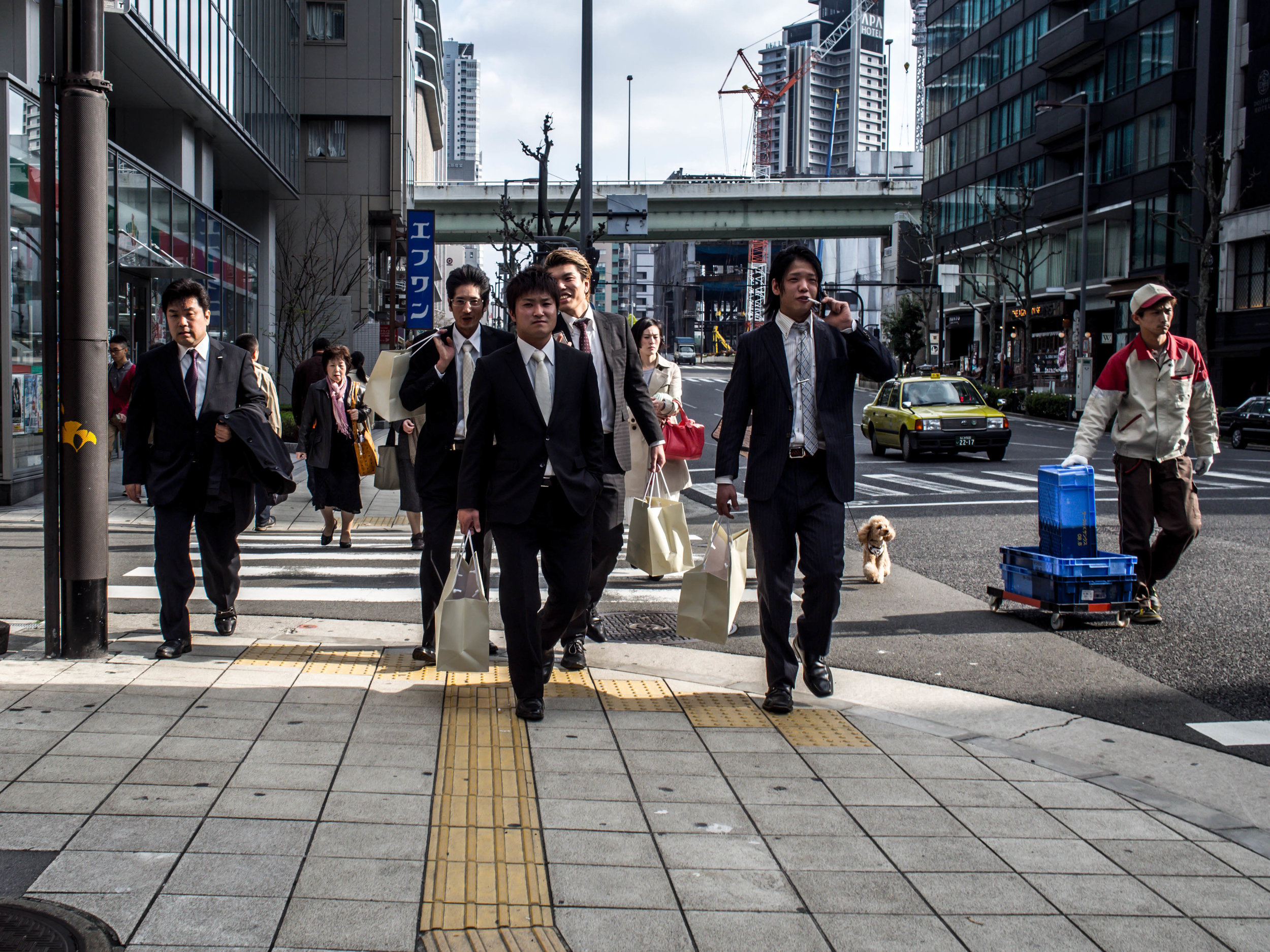
The 50mm lens perspective on the other hand is too tight for environmental portraits that share a feeling of intimacy with the viewer. As a compression style, true portrait lens it is also weak. This is possibly why I have found the lens hard to use. I either want a street scene in all it's chaotic glory or I am closing in tight on one subject. The 50mm perspective does neither well. If pushed, the 17mm and 75mm would be my last two lenses kept.

What is it good for?

I do not believe it is a true all rounder. Telling a budding shooter to just use a 50mm to develop their eye will, I believe, lean them towards portraiture over environmental images. It will however clarify their vision and force a good understanding of depth of field, so good for technical training. The 50mm may also be a good lens to force a decision, being not enough of either. I reckon pretty quickly, the fresh minded learner will start to shift one way or the other. One of the most comfortable lenses I have ever used was a Canon 28 f1.8 on a crop frame camera. The 45mm focal length just felt perfect. 

Imagine how different the first images from a new photographer may be if they started out with a 35mm lens only? They may show an aversion to tight cropping of faces due to distortion, will learn to include more width and depth as the lens will reward these, not fight them. The 35mm trained photographer will be the stage manager, where the 50mm photographer stresses the main subject or "hero" of the image. The 50mm may well become their portrait lens in contrast to what they see as normal. 

 A lot of the classic street shooters* used 40mm lenses, or later the 35mm as it was the nearest available, as the 50mm perspective was too focussed in on a single thing over the interplay of multiple subjects. It is fine to say, "just step back a bit", but that looses intimacy, often opportunity and changes depth perception. I find you tend to look further out to compensate for the extra magnification, often composing in your head images that cannot happen due to obstructions or timing (this could be just a practice thing, but 17/45mm photography comes far more naturally) . The 17mm allows you to be "front rank" in a crowd, shoot from lower without unnatural distortion and allows a little room for error. The 45mm gives you a better "tight" lens, not requiring a short walk or heavy cropping to achieve composition. 
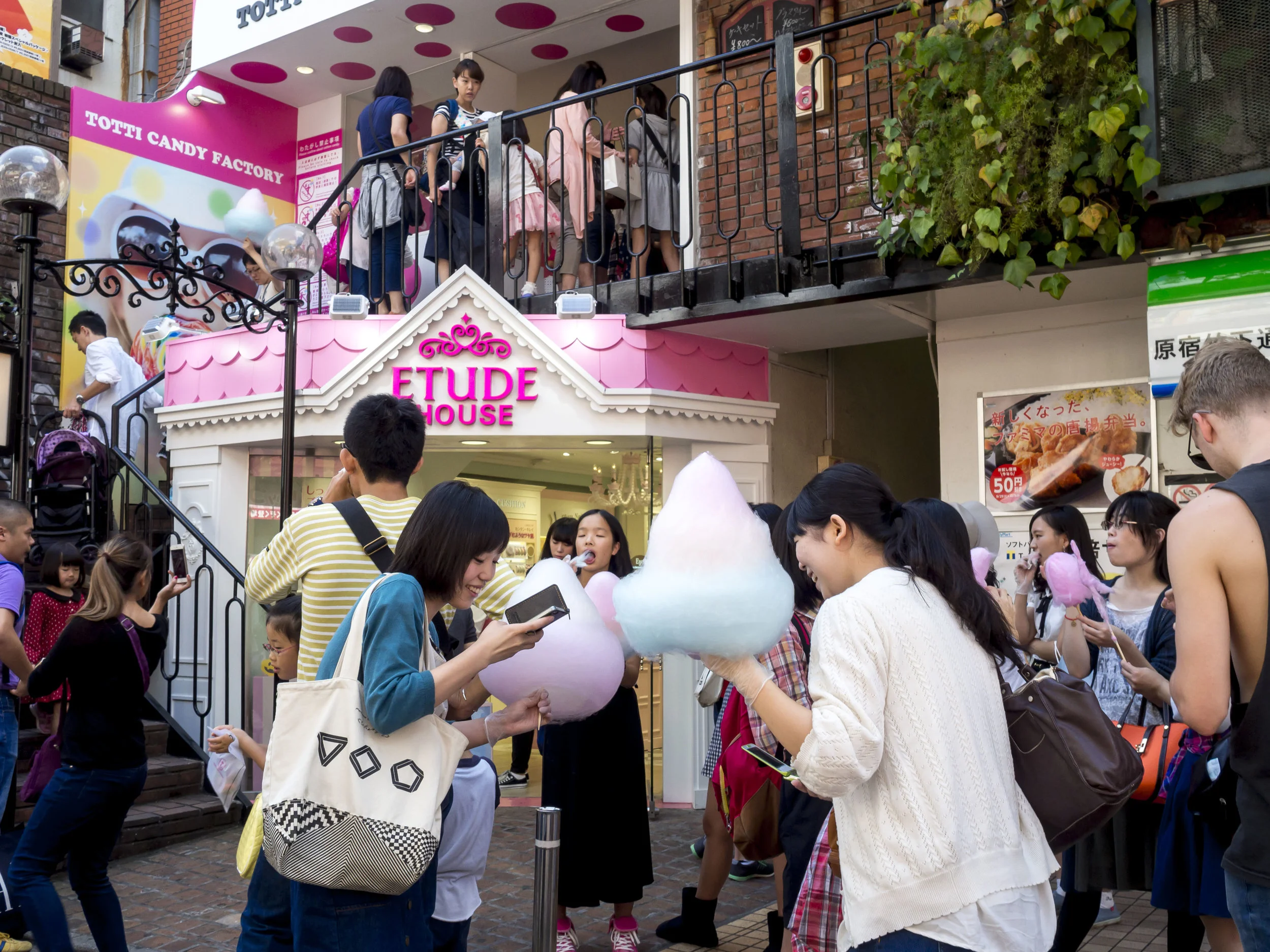
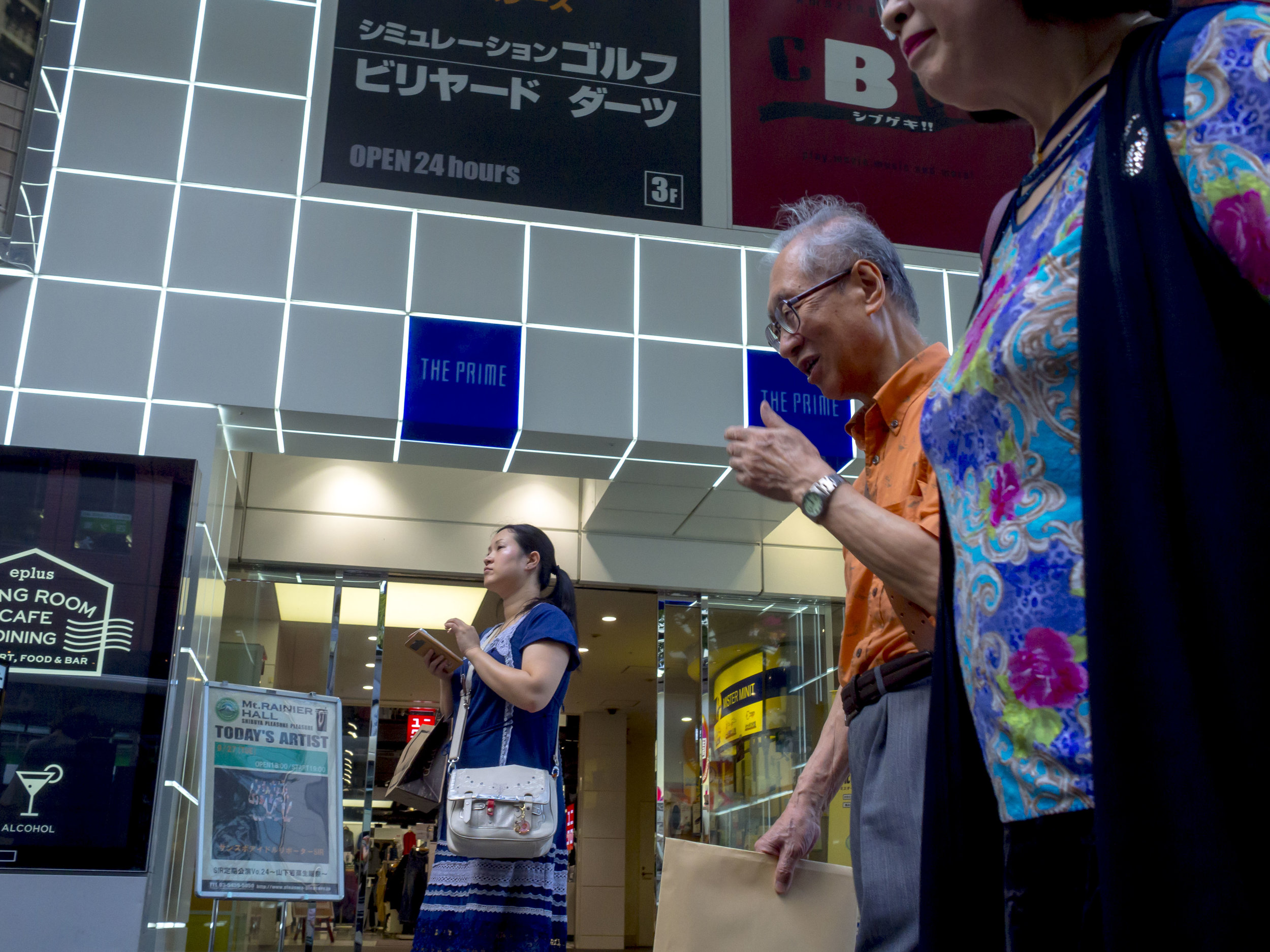
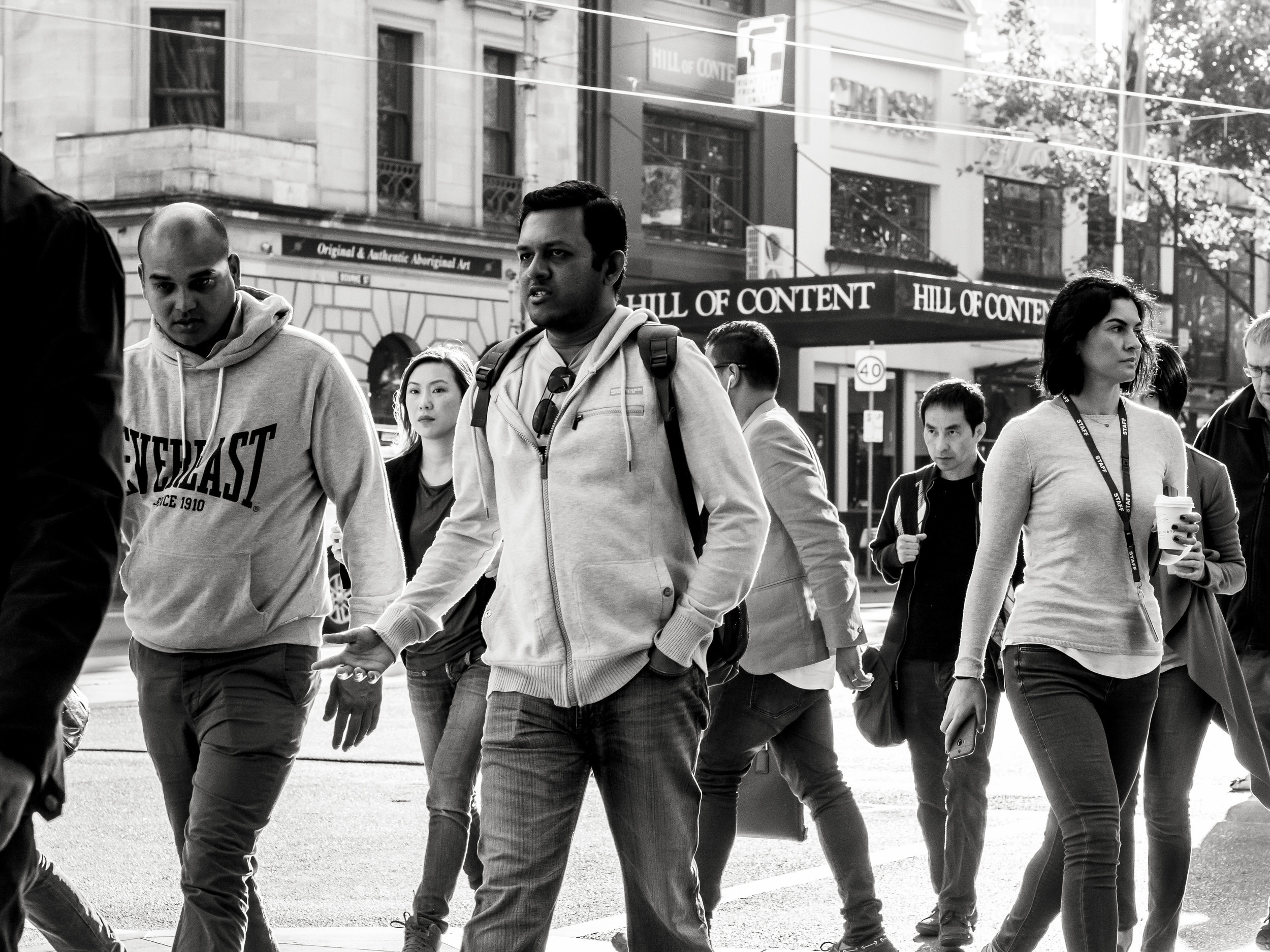
Story telling composition with the 17mm. An even wider lens would obviously add more, but with added distortions and possibly too much wasted information.
Story telling composition with the 17mm. An even wider lens would obviously add more, but with added distortions and possibly too much wasted information.

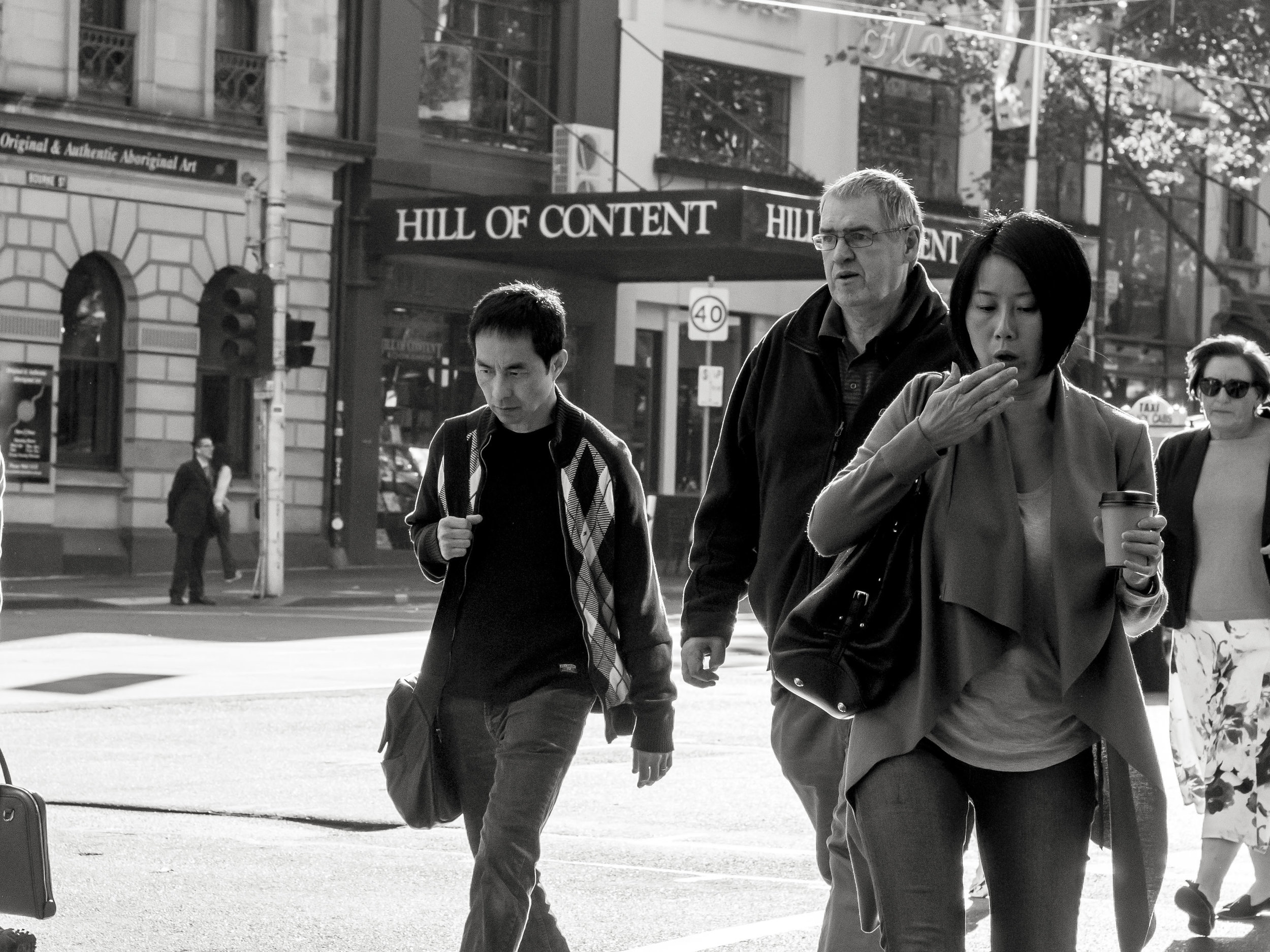
A tight crop achieved with a 45mm (90mm equiv). This lens effortlessly creates these images in any city I visit. The 25mm often includes too much and lacks that slight compression. Strangely I did not take to the 60mm macro I owned for a year. It, l…

A tight crop achieved with a 45mm (90mm equiv). This lens effortlessly creates these images in any city I visit. The 25mm often includes too much and lacks that slight compression. Strangely I did not take to the 60mm macro I owned for a year. It, like the 25mm was a middle lens. It was not as powerful as the 75mm nor as gentle and natural as the 45mm.

For my own uses, the 25mm is going to be my intimate portrait and general close-up lens, more a little brother to the 45mm than a longer 17mm. There is a lot of depth control and quality to be had, even withstanding the neither here-nor-there angle of view. 

The differences in Bokeh, colour, sharpness (the look of, not the quantity) and contrast when compared to the 17mm with well controlled distortion (ideal for panoramic landscapes) are also a benefit. It has similar characteristics to the 20mm Panasonic, but with better auto focus, more compression and a bigger jump up from the 17mm.
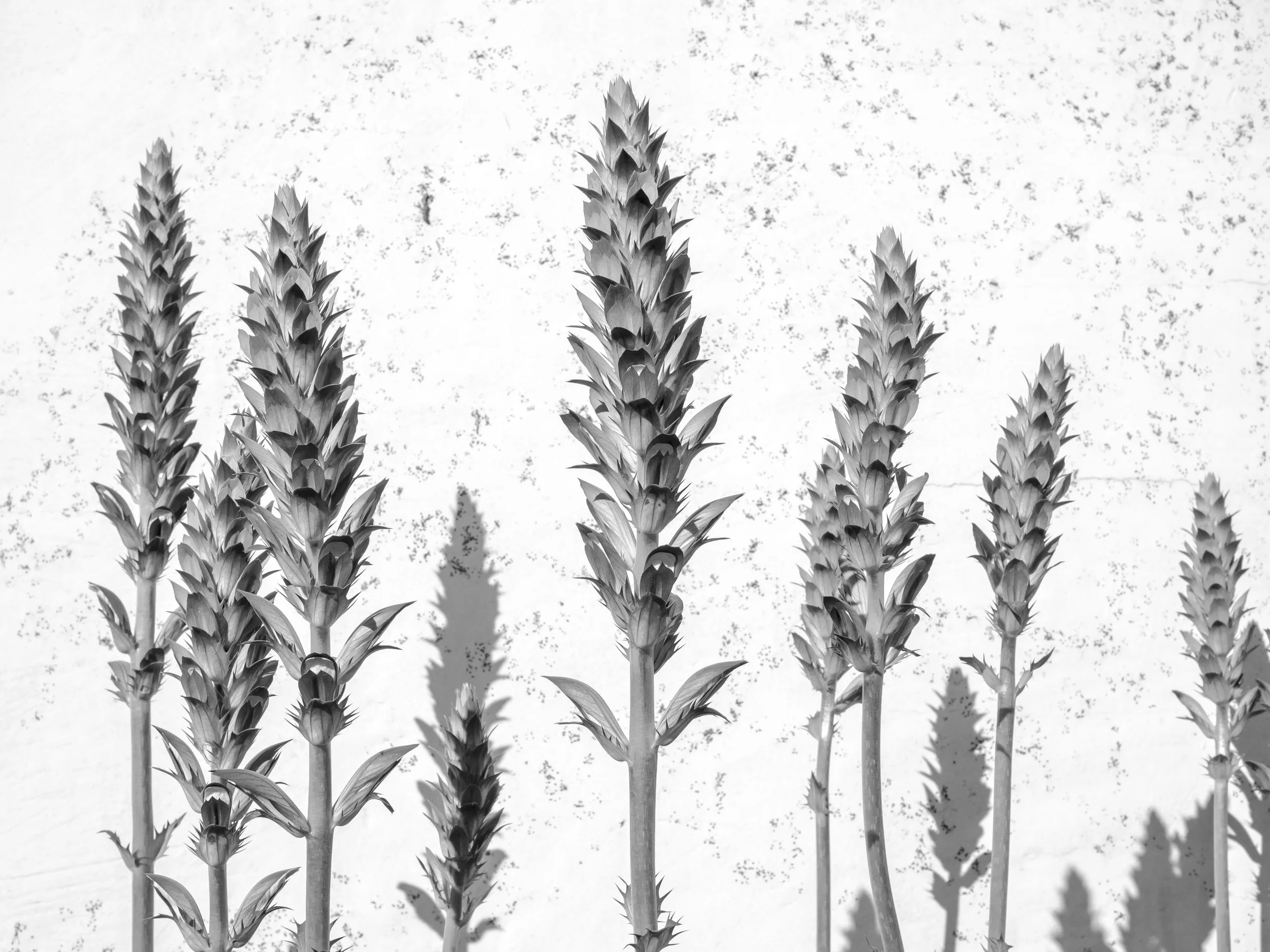
OMD 25mm at f8 showing the difficulty of obtaining full depth of field at close distances even on M43. What is soft in this image is not distracting. A good sign.

OMD 25mm at f8 showing the difficulty of obtaining full depth of field at close distances even on M43. What is soft in this image is not distracting. A good sign.

The images below were taken to see how the lens performs with reasonable depth of field** In the role of fine art/close up lens. This is important because the lens will rarely have perfect back to front focus when doing close-ups (nearly impossible without focus stacking etc.). 
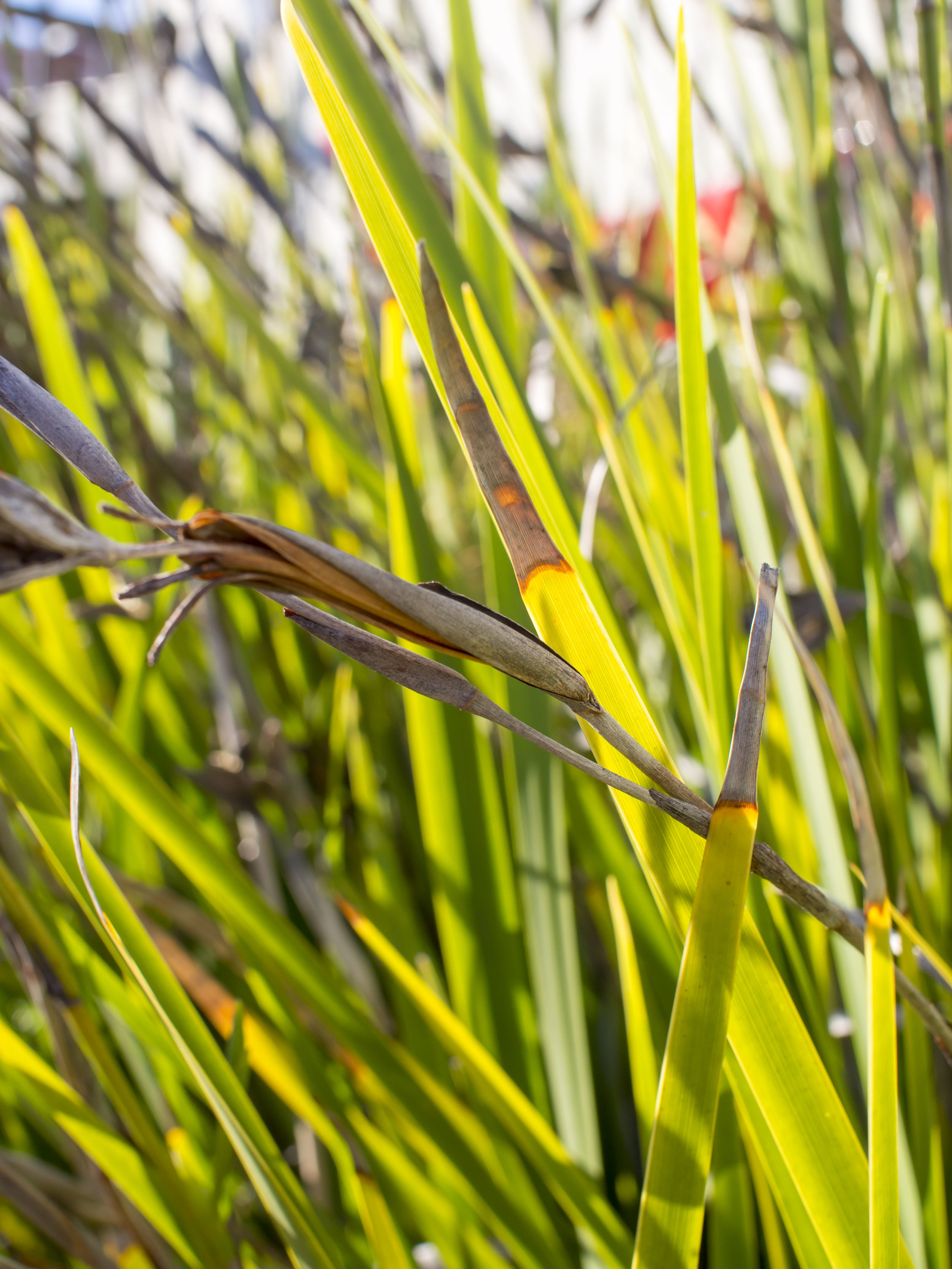
OMD 25mm f5.6. A little nervous in the far background, but smooth and controlled until then. Not the best ever Bokeh, but well within post processing tolerances and a tough subject.
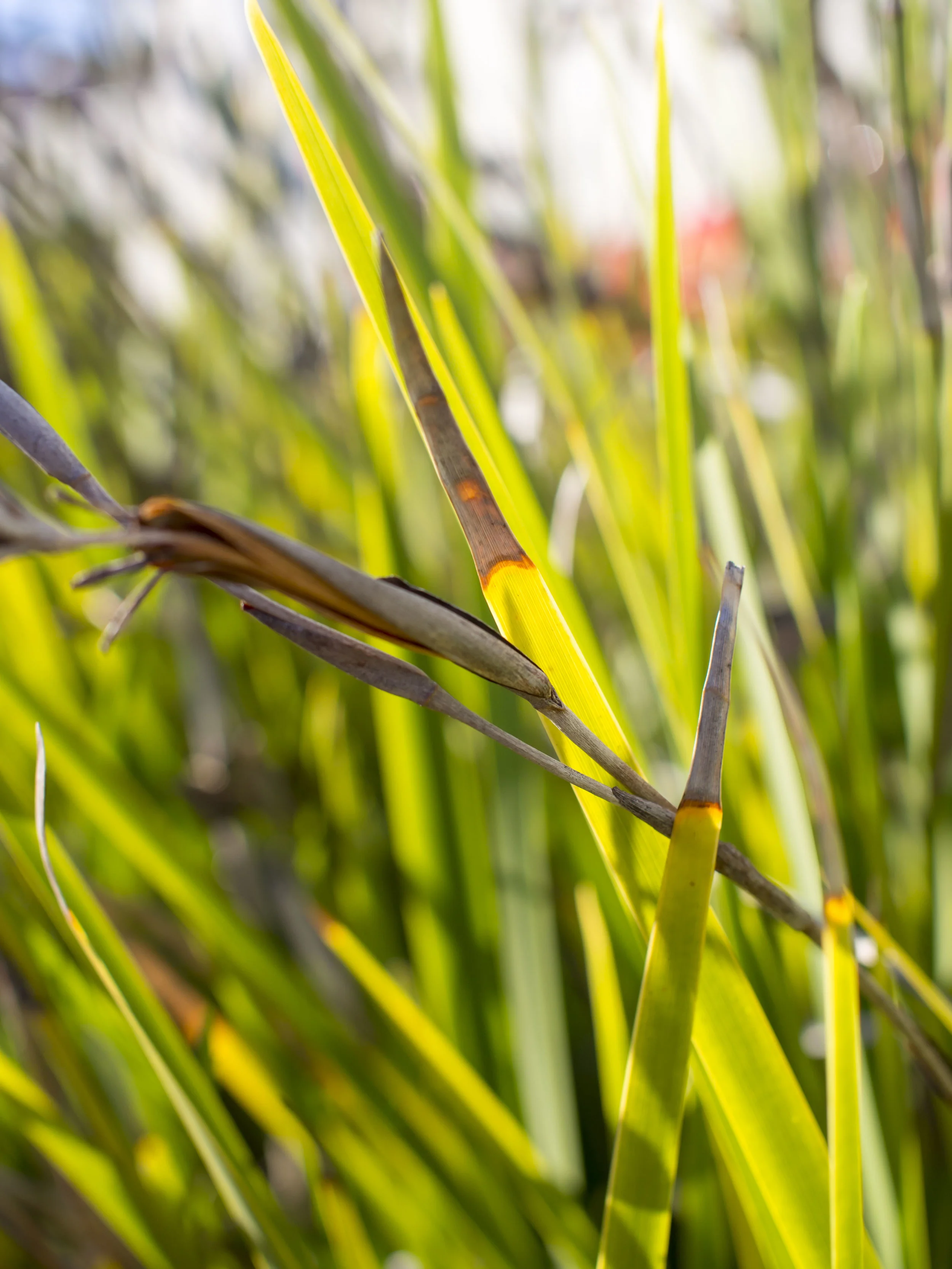
OMD 25mm f5.6. A little nervous in the far background, but smooth and controlled until then. Not the best ever Bokeh, but well within post processing tolerances and a tough subject.

OMD 25mm f2.8. Slightly more softening of Bokeh and good snappiness on the main point of focus.

OMD 25mm f2.8. Slightly more softening of Bokeh and good snappiness on the main point of focus.

It is clear to me that the best Bokeh will come from the lenses best able to show it, the 45 and 75mm, but the 25mm will have a place as my shortest and most inclusive portrait lens and won't let the side down. 

Everyone has a different sweet spot when it comes to favoured lenses, but I have determined mine. The 25mm will be my least used lens, but not unused. As an exercise, take a zoom out for a day of general shooting and look at the focal lengths you tend to use most. The next step is to go into primes only for those focal lengths. Go on, you know you want to.

*Cartier Bresson used 50mm a lot, but his images speak as much to portraiture as pure street. 

** It is important to remember that Bokeh is not just blur discs shot with long lenses, set wide open, it is the character of any transition from perfect focus to out of focus on any lens at any aperture at any focal distance. This is why it is so subjective and open to interpretation. There is little "bad" Bokeh, but there is almost infinite variety.

The power of the crop

Some believe street images should not be cropped. They also believe you should shoot with primes only and "use your feet". What happens when that does not do the job? Do you toss the image? 

Cropping, whether it is done before or after the initial capture is a part of photography and always has been. Some of the greats of old did, some did not.  

EPM2 17mm

EPM2 17mm

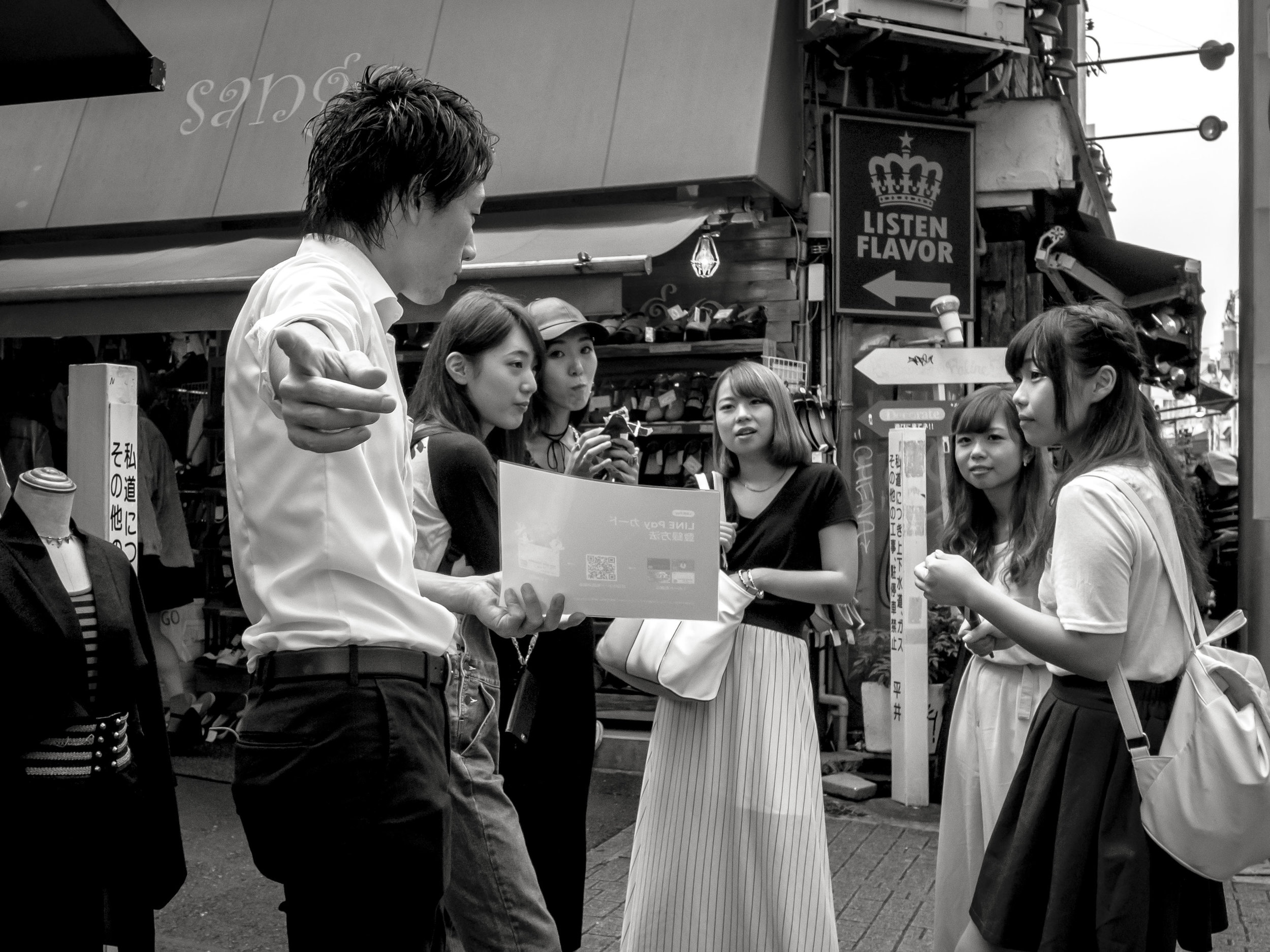
This image is a busy (too busy) street scene with no strong focus.

untitled-9270136.jpg

The extra intimacy and impact of this image cropped surprised me.

I do not crop much. I am a bit OCD about straight lines, but often there is not the room to fix every lop sided image.

Also cropped and straightened. The cropping exaggerated the closeness of the pointed finger.

Also cropped and straightened. The cropping exaggerated the closeness of the pointed finger.

The Pen is as mighty as, well....the Pen

Later in the same trip to Tokyo, mentioned previously, I switched the 17mm to the EPM2. The little EPM has a tough run. It was gifted, but not used much. It was sold, but came back. It now sits around as the spare to the spare to the spare. 

On the Tokyo trip last year I decided to do one of the no-no's of street shooting. I took two cameras with different interface, different batteries even and two I was not overly familiar with (the two Pen's).

EPM2 17mm F5.6

EPM2 17mm F5.6

The Pen F continued to frustrate as the on/off switch magically got turned off regularly (by magic me it seems). The EPM on the other hand started to quickly feel very comfortable. The left hand hold I favour actually allowed me to turn on and off, focus and shoot, all with my thumb. The thing worked like a dream.

I also feel the EPM is a slightly more mature sensor and processor than the EM5 mk1. Not much, but occasionally the images have more punch without excessive contrast.

The little beast is also tiny and although it is red, it most often went under the radar.

The little beast is also tiny and although it is red, it most often went under the radar.

Added blue channel in the Lightroom "camera calibration" panel works well also.

Added blue channel in the Lightroom "camera calibration" panel works well also.

It is also really quiet, even without a silent mode.

It is also really quiet, even without a silent mode.

Some of my favourite images of the trip came from this combo.

Some of my favourite images of the trip came from this combo.

Very OMD-film like colour and contrast.

Very OMD-film like colour and contrast.

Fear and Ignorance.

On the topic of useable image edges and corners, These three images were taken "fresh off the plane" on a trip to Tokyo last year. They were literally in the first two dozen frames I made wandering around the Tokyo station precinct. My settings needed a bit of work, the choice of shutter priority was not flawed as such, but familiarity with the camera was lacking.

Pen F 17mm F2.2

Pen F 17mm F2.2

The fear? An awareness of the supposedly weak corners and edges on the 17mm. To be avoided!

The Ignorance? Forgetting that and shooting in shutter priority, getting the above image nearly wide open.

and again

and again

This with a more sensible f5.6. F2.8 to 8 are all about the same, excellent centre and good edges.

This with a more sensible f5.6. F2.8 to 8 are all about the same, excellent centre and good edges.

Just to break with convention, Pen F 45mm shot from the hip. This was the first image from the Pen F that made me realise the "bigger" quality lurking in there.

Just to break with convention, Pen F 45mm shot from the hip. This was the first image from the Pen F that made me realise the "bigger" quality lurking in there.

Roses and Reflections

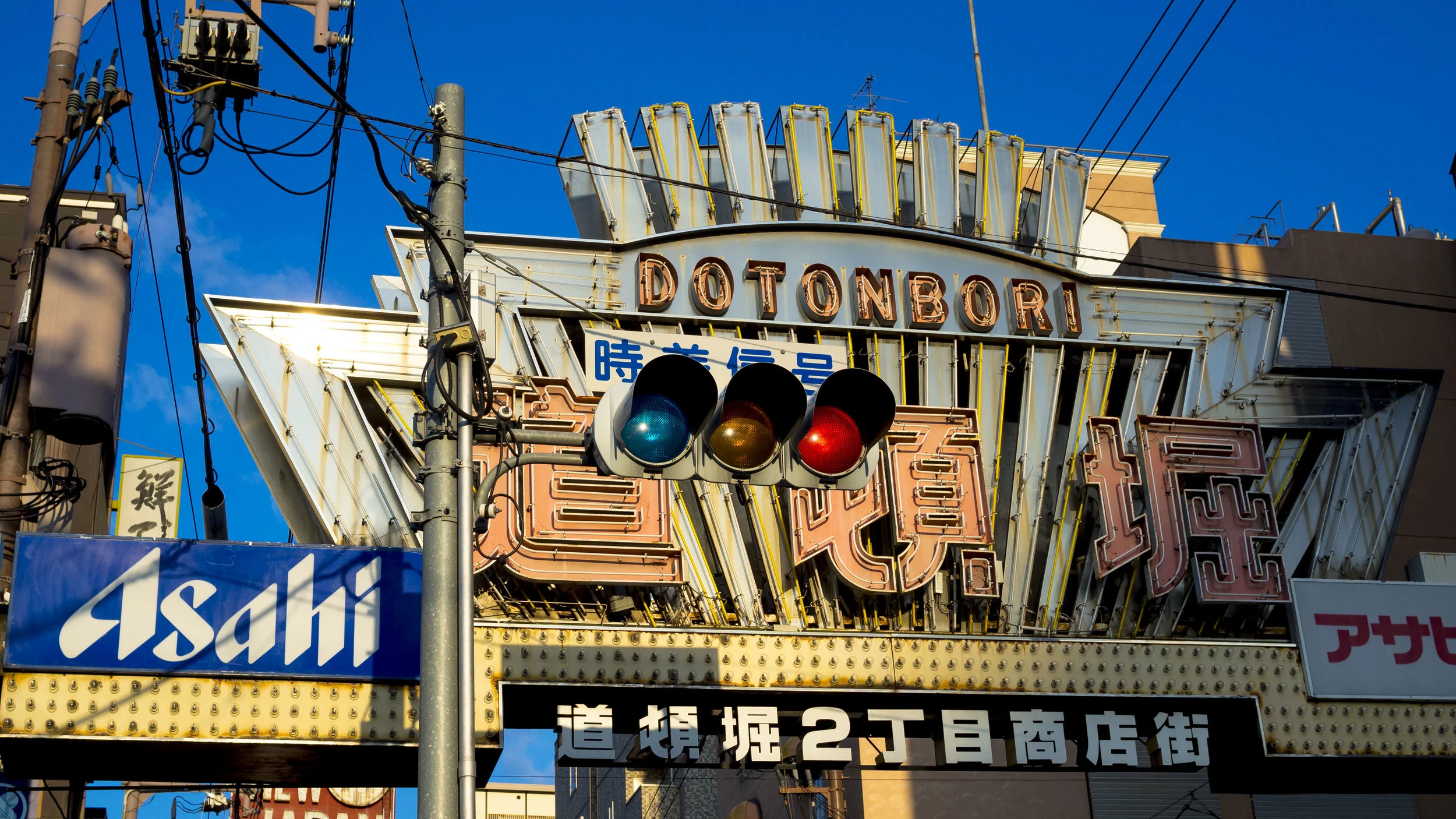
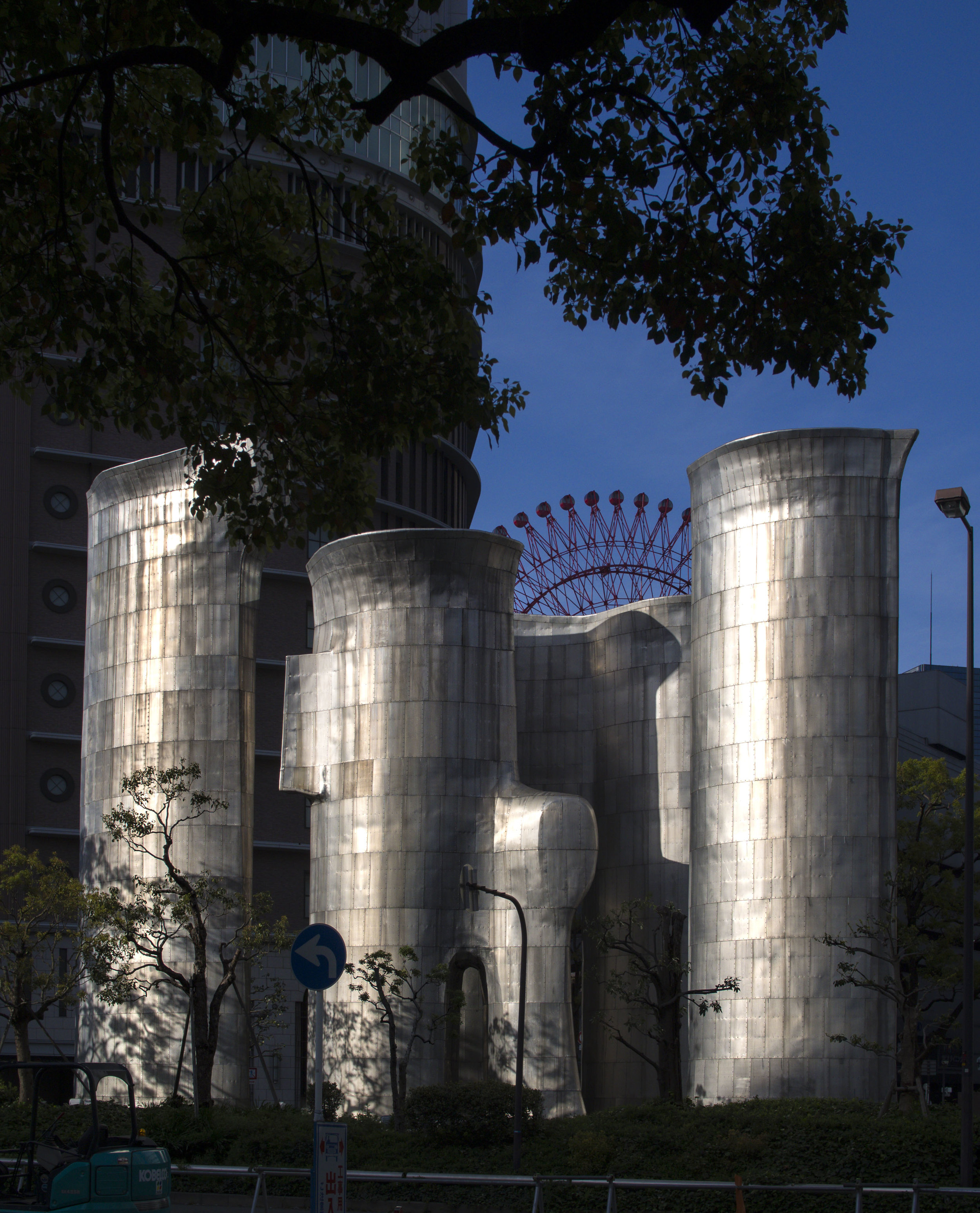
With re found memories comes another discovery, of a lens used more than I realised. The 25mm, it seems, was a bit of a star in Osaka. 

OMD 25mm

OMD 25mm

OMD 75-300

OMD 75-300

OMD 17mm

OMD 17mm

OMD 25mm

OMD 25mm

OMD 25mm

OMD 25mm

Old Friends

I have discovered that memory can play tricks. The images from our first trip to Japan have been pushed aside as later trips took precedence. It was only two years from our first trip there to our fourth, so the first is both a recent discovery and an ancient memory. The biggest difference was in my processing. Very harsh and contrasty. A gentler approach has revitalised them.
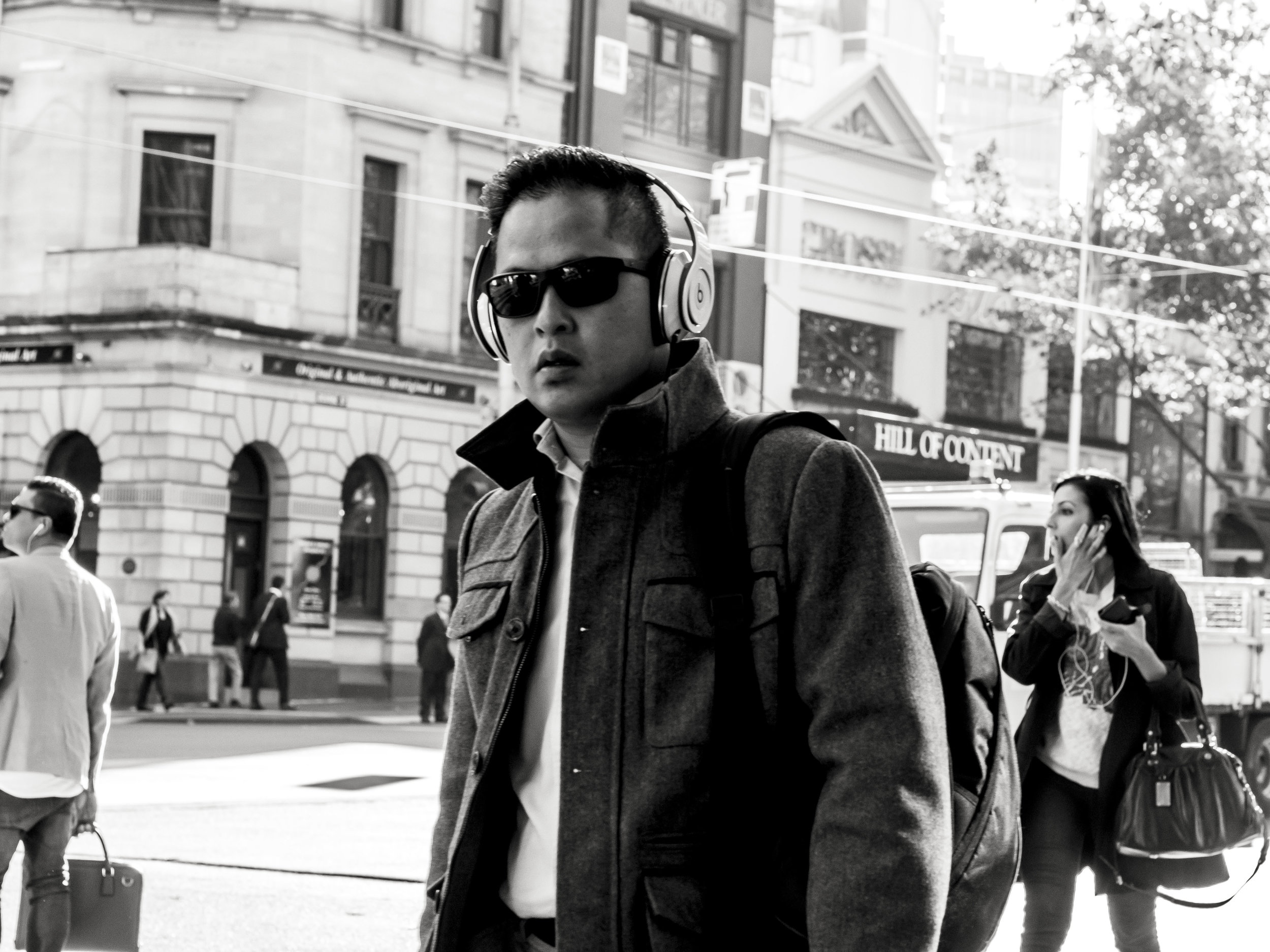
Osaka stood out as the most photogenic city.
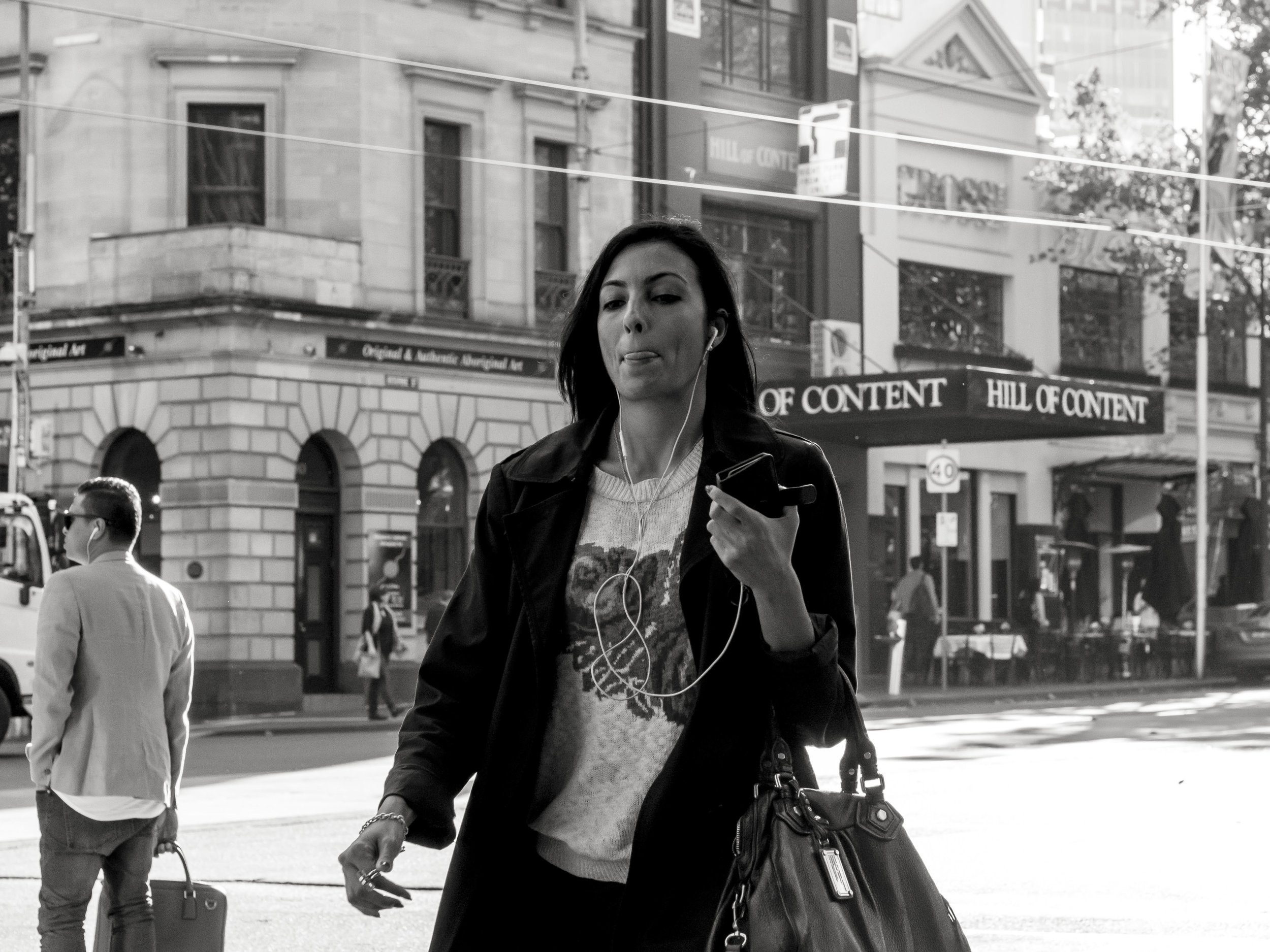
I have missed these images. 
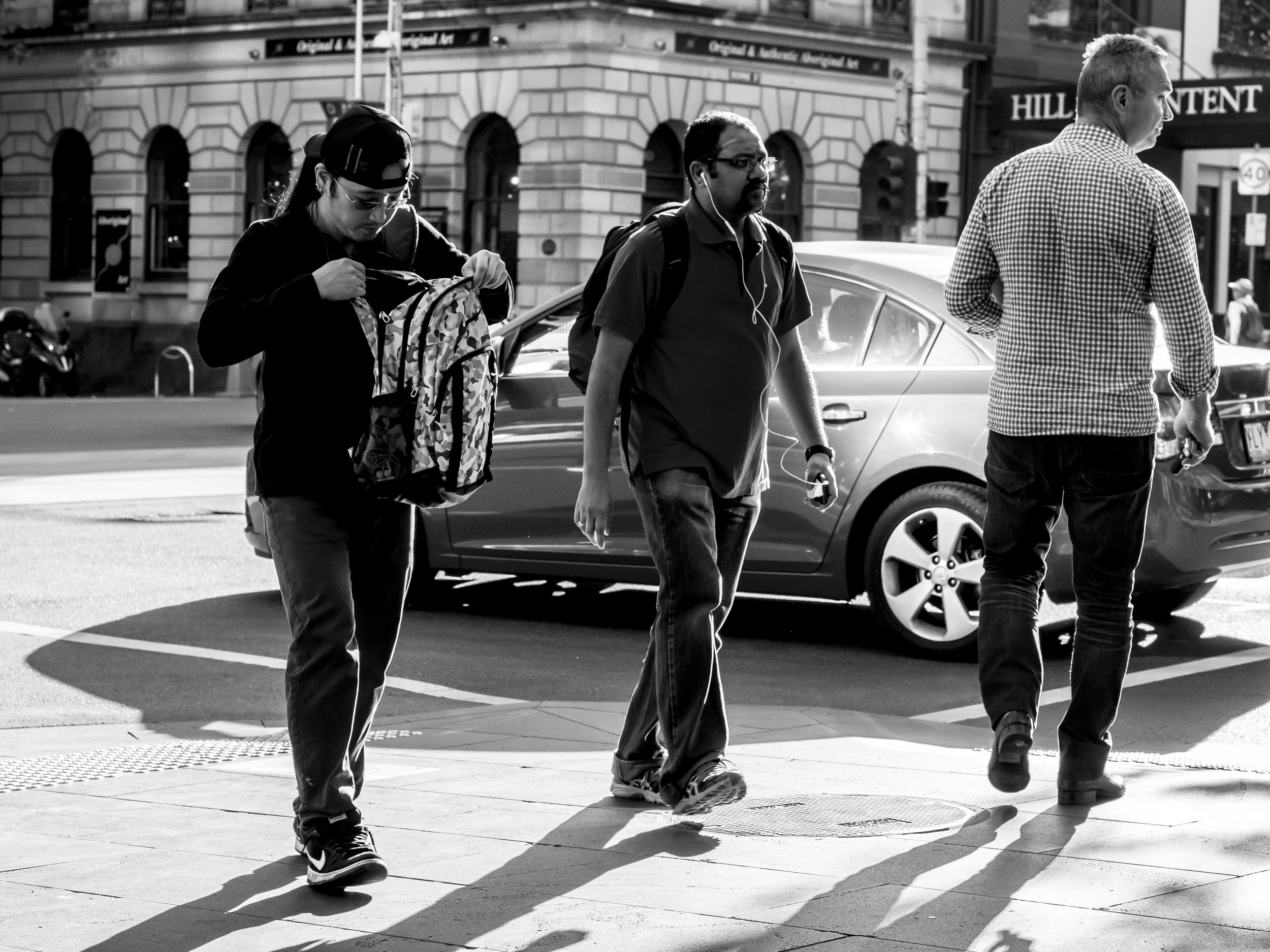
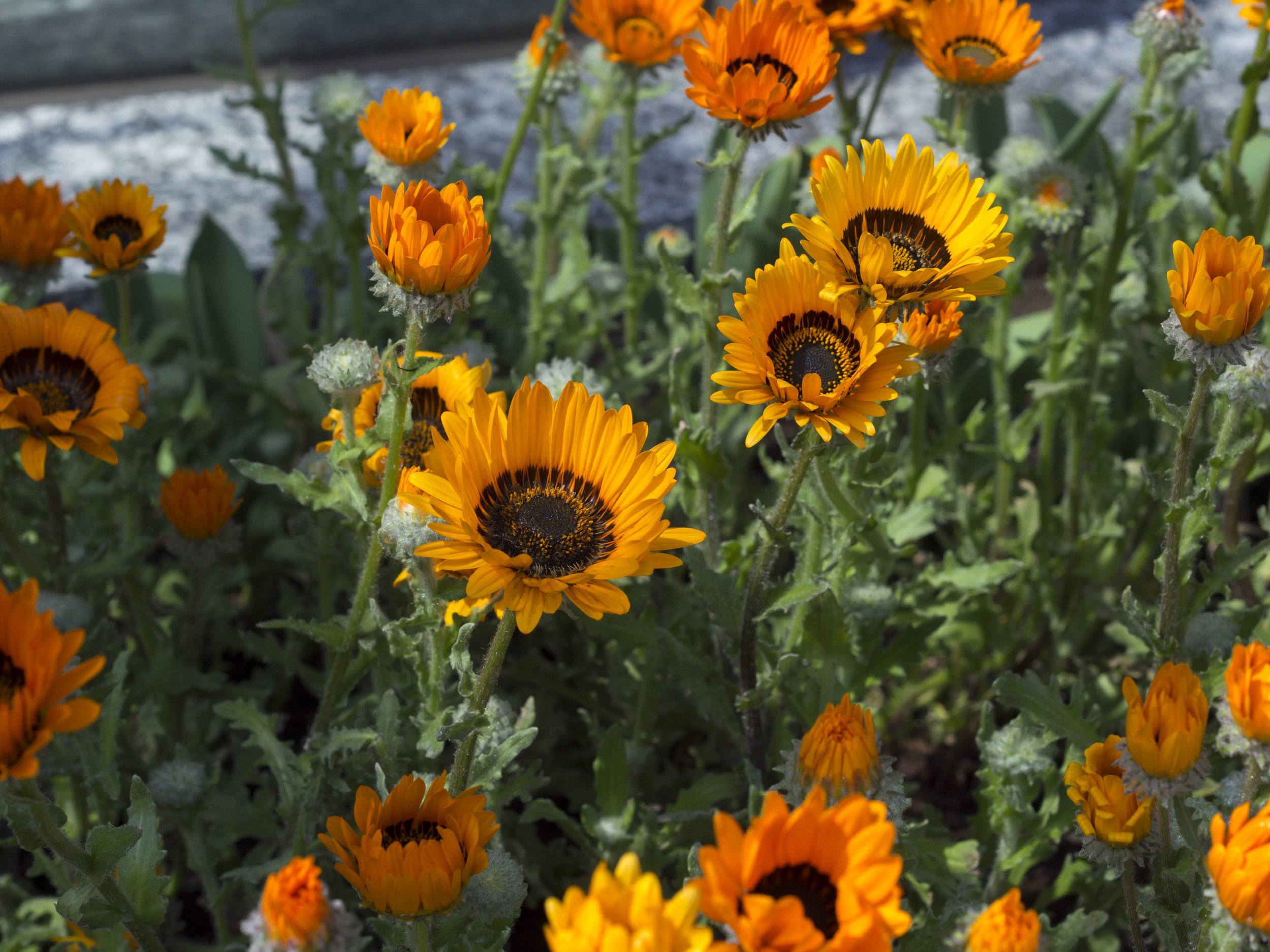
First, a burst of orange.

OMD 45mm

OMD 45mm

_4110442.jpg

Then some reflected light...

OMD 75-300

OMD 75-300

and reflections of a different type.

OMD 25mm

OMD 25mm

Finally, some mad compression, so common in Japanese cities, but Osaka did it as well as any where.

OMD 75-300

OMD 75-300

OMD 75-300

OMD 75-300

Yellow Therapy Osaka

This is a sewage truck in Osaka! Way to clean stuff guys.

OMD 45mm

OMD 45mm

Osaka has the best light and the brightest colours.

OMD 75-300

OMD 75-300

OHS be damned!

The Japanese just get stuff done. OHS rules are a little more flexible than here.

untitled-9280445.jpg
untitled-9270079.jpg
_4090360.jpg

Second Trap

Same City, later in the same day, much the same technique, but AF was used with the 45mm as distance allowed.

A slightly different dynamic and perspective, but just as intimate?

Watcher's Life Trap

Just thinking about a technique that has paid off in the past.

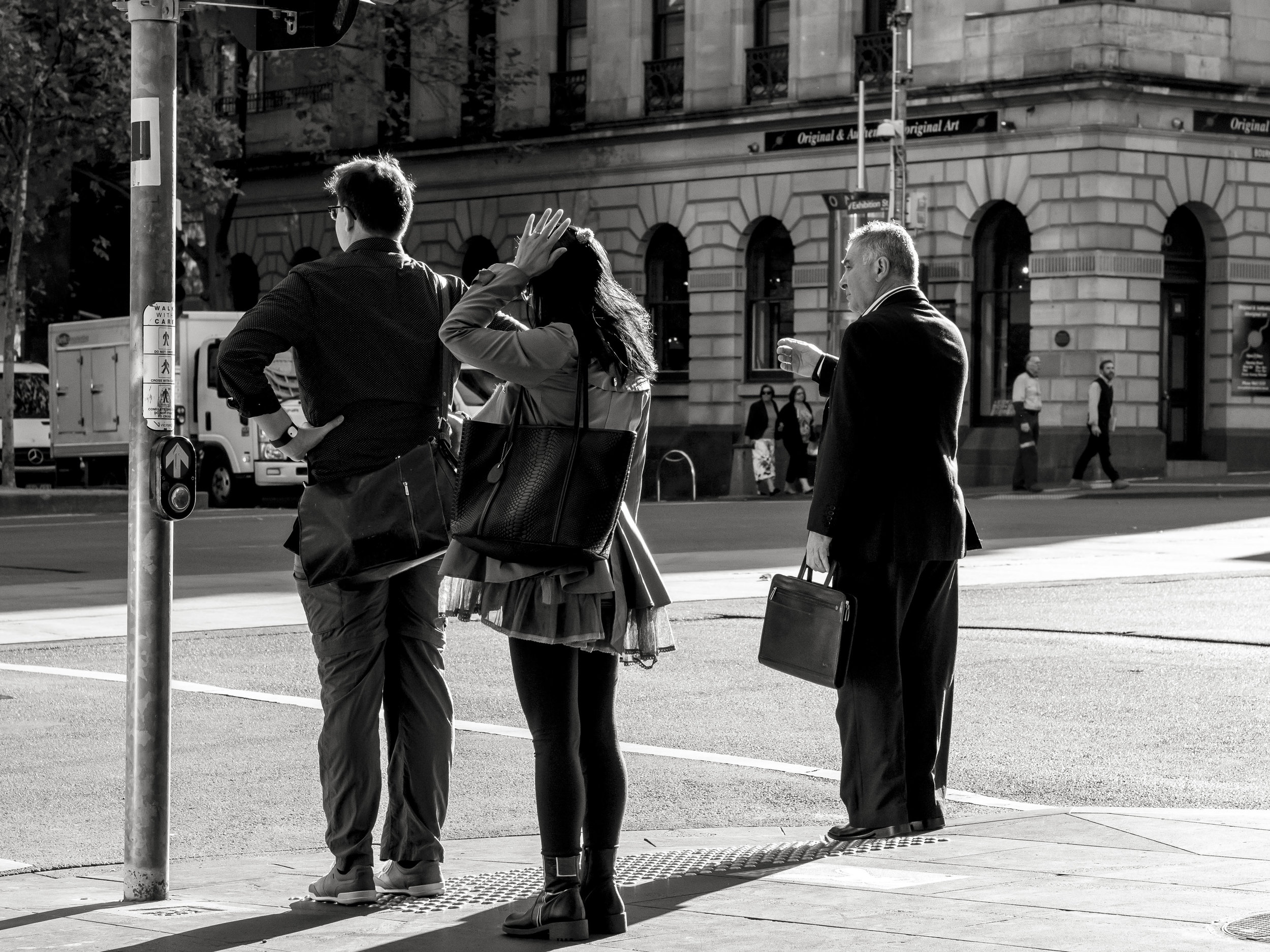
Find a corner, well lit and trafficked .

Set your lens to about 1-2 meters, f4-8, depending on format and auto everything else. 

Look as invisible as you can. Eye contact is to be avoided. 

Fire away by instinct.

After about three changes of lights, you will see patterns appear. The flow becomes a wave of little stories.

Peoples faces go from a nameless mess, to the faces of these stories. You notice things on processing that become familiar over time. You feel that you know these people.

All of the above were taken using an EPM2 and 17mm at f4.

Benefits of spring too late

We missed the bulk of the cherry blossom (and the crowds) in Kyoto, but occasionally the last signs were still there. personally I find blossom pretty difficult photographically. Once you have the close up and resplendent boulevard images covered, there is not much else to tell, so the slightly later, lime green brilliance of the trees is a win really. 

Hills of Kyoto. OMD 45mm

Hills of Kyoto. OMD 45mm

More similar than different, the rolling hills of northern Tasmania just last week. OMD 25mm

More similar than different, the rolling hills of northern Tasmania just last week. OMD 25mm

Looking at looking

Japan has many wonderful places to get married. Unfortunately, they are also tourist meccas. 

OMD 45mm f5.6

OMD 45mm f5.6

Partly out of respect for the wedding party and partly from a people watching reflex I turned to the crowd.

One vs many

Like the cold, dead eye of the fish, I framed, shot and walked on. Their day was very different.

untitled-4200104-2.jpg

A 17mm Olympus mini review, In defence of the decent.

There has been a lot written about the importance, or not, of sharpness and other quality measures of lenses. The ridiculous thing about this is often only measurable differences are discussed, rarely actual real world differences. Reviewer who shun test charts have to take a different direction when reviewing, often feeling they have to be excused for their less than technical methods.

A case in point is the 17mm Olympus lens. I have been a grudging user then a fully converted fan of this lens. Like many others, I find the using of it far more satisfying than reading it's reviews. Are there better lenses? Always. Are there lenses more suited to the tasks this lens is intended for? Not many.

First lets put the quality issue into some context.

Wide-open lens performance is a much loved and measured characteristic of the modern era. With M43 lenses it is more relevant than other formats, because offering more depth of field than any larger formats at an equivalent focal length, the format tends to have it's wider apertures hammered. 

There are technically better lenses than the 17mm when a wider aperture is used, no doubt. Is it atrocious? No, but it is soft on the outer frame and suffers from some obvious CA issues. I also find the lens tends to wash out highlights, lowering contrast a bit at wider apertures, especially on the EM5. 

Wide open with a little post processing.

Wide open with a little post processing.

So, what does this really mean?

If you shoot wide open in the corners and print very large prints, you will have to do some selective sharpening and CA removal. That's it. How much better or worse would lens "X" be to this? Hard to say and the only way a viewer could possibly know is if you placed two of the same print taken with different lenses side by side. Not a real world scenario. This is another case of "Go find me a problem. Now find me a real problem".

Ok. This is as bad as it gets. Still acceptably sharp after basic processing for a large (A2) print at normal viewing distances.

Ok. This is as bad as it gets. Still acceptably sharp after basic processing for a large (A2) print at normal viewing distances.

Is there a bright side to it's performance?

Yes there is. The transition from focussed to out of focus with this lens is extremely coherent, or elongated (?). In practical terms, you can shoot wide open when you need to, with the image holding on to out of focus detail better than many "modern" bokeh lenses. Modern bokeh, as I call it, is a lens design that exaggerates smoothness and fast drop off for good portrait separation, very "on trend" at the moment and ideal when relevant. In a wide standard lens it is not really relevant.

The proper use of this focal length is environmental portraiture, not head shots. With an environmental portrait, coherent surroundings, even if they cannot be fully in focus due to other considerations is far more important that smooth mush without story telling potential.

Possibly one of the benefits of the slightly softer, lower contrast rendering wide open is it does not highlight out of focus regions against in focus ones too obviously. Remember, the Japanese have long worshipped the German lens makers of old. Many modern Japanese designs emulate or copy styles and principles of older lenses for good reason. The old joke used to be the Japanese design lenses for us, while they use lenses made by Germans.

Taken late evening (darker than it looks here), so wide open out of need. Focus fell on the man's Kimono, but the story can still unfold because the bokeh is neither too fast/strong in fall off nor too irregular to bear. There is still a snap to the…

Taken late evening (darker than it looks here), so wide open out of need. Focus fell on the man's Kimono, but the story can still unfold because the bokeh is neither too fast/strong in fall off nor too irregular to bear. There is still a snap to the man's back, but the eye drifts to the woman and then further into the image. I feel this makes a more complicated and usable image.

Sharpness stopped down evens the field. When needed for landscape or deep street scenes, from f2.8 to f8, the lens shows much the same characteristics as it's major competition (Leica 15mm, Lumix 20mm and 14mm, Sigma 19mm). 

Taken this morning with the EPM2 and 17mm at f5.6.

Taken this morning with the EPM2 and 17mm at f5.6.

Top right corner with a little added post for some micro CA that appeared around the holes. I know from printing that this level of detail tops out an A3+ print and nobody looks that closely at the corners of an image unless they are looking for tec…

Top right corner with a little added post for some micro CA that appeared around the holes. I know from printing that this level of detail tops out an A3+ print and nobody looks that closely at the corners of an image unless they are looking for technical faults.

It is important to remember, that many of the best M43 lenses are less than perfect here.

So, to sum up, is it really any good? 

EPM2 17mm f2.8

EPM2 17mm f2.8

It is nearly ideal for the task it is designed for. The designers took a risk with this one, hoping, I feel, that the public would get what they were aiming for and not let the test bench brigade beat it up too much. The big risk is the review reader jumping at another lens and finding the measured optical benefits are a poor substitute for the excellent handling and practicality of the design.

Lately I have taken mine off the Pen F and mounted it on an EPM2 body. The camera uses the same sensor and processor as the EM10 mk1, offering quality as good as any in the first generation of 16mp Olympus cameras, i.e. plenty. The handling suits the lens perfectly. The camera can be in my off hand (left) and I can turn it on, focus and shoot without making the operation obvious.
Taking Stock, with more detail.

Both of my two pro zooms have gone to people who need them more than I and I hope they serve their new owners as well as they did me.

Where does this leave me?  The same place as I was two years ago, except for the Pen F body.

My kit is really settled now and I am starting to feel the creative flow return;

I have either an all primes kit of; 17, 25, 45, 75mm f1.8 lenses, ideal for street or portraiture.

or a travel/event Kit of 17, 45, 75-300.

There is no true wide angle as I do not use them (not a fan of obvious lens special effects*) and the fast, long or both tele options make both lenses equally useful and fully complimentary. I could have just as easily kept the pro 40-150 instead of both these two, but in-hand size is the main constraint for me at the moment.

Looking at the lenses specifically;

The 17mm is perfect for street scenes. Exactly what it was purchased (and designed) for. I have toyed with a 15mm Leica (sharper wide open in the corners and a lovely cool-brightness), but the Panasonic adds a more modern, fast fall off and "softer" bokeh, less useful for street and the 17mm stopped down is equally sharp for rare landscapes. The same goes for the 20mm Panasonic, with added focus issues.

Fast and responsive.

Fast and responsive.

Good colour with in an old fashioned feel.

Good colour with in an old fashioned feel.

Good, coherent bokeh for less than ideal depth situations.

Good, coherent bokeh for less than ideal depth situations.

*

The 25mm still vexes me. I need to make it my friend and stop thinking of the Panasonic 20mm. My heart is still drawn to the 40mm equivalent focal length and the main strength of the 20mm is it offers a very different look to the 17mm, but the 25mm is the more logical and practical choice (AF speed, MF lightness to touch, rich Olympus colour, a more logical focal length in a 17/45 kit, better compression, more natural perspective and very good close focus). It still feels like a short telephoto without any power, but maybe that's ok as apparently I like tele lenses. I must admit, I struggled to find any images taken with this lens, let alone a series.

_4080157.jpg
All three of the above images were taken on a brassy spring afternoon in Osaka. The width of the streets suited the 25mm well.  The harsh editing was my look at the time. I really have to re visit them.

All three of the above images were taken on a brassy spring afternoon in Osaka. The width of the streets suited the 25mm well.  The harsh editing was my look at the time. I really have to re visit them.

Something the 25mm does really well is give me the lush, rich look Canon used to supply.

Something the 25mm does really well is give me the lush, rich look Canon used to supply.

*

 The 45mm, like the 17mm, is ideal to purpose. It is for me the perfect balance between compression, without obvious flattening and sharpness, without harshness. I like it so much I have 2!

A good working distance, natural perspective and inclusion of environment.

A good working distance, natural perspective and inclusion of environment.

A tight crop showing good quality with gentleness at the magic f2.2.

A tight crop showing good quality with gentleness at the magic f2.2.

Natural details in high relief.

Natural details in high relief.

Relaxed and comfortable feel.

Relaxed and comfortable feel.

*

The 75mm. This is a tougher one. Lots of subjective quality. As for "a quality", it can be a little too perfect and can flatten* subjects a bit. This is the same dilemma I had with the Canon 135L f2, technically perfect but lacking something gentle. The 200 f2.8L was on the other hand loaded with character. The temptation with this one is to go to it's happy place all the time (wide open and compressed). The reality is I like using it, but it rarely takes images that people comment on and the habits it forms can be hard to break. To me the 17mm and 45mm are the "character" lenses and the 25mm and 75mm are the technically superior, but more creativelychallenging ones. 

Strong, compressed perspective 

Strong, compressed perspective 

Great for abstract detail pulling and almost surreal quality.

Great for abstract detail pulling and almost surreal quality.

Again a powerful tool, giving M43 the depth of field versatility it is often considered to be lacking. There are faster and shorter lenses in M43, but this is the best power to price/weight lens.

Again a powerful tool, giving M43 the depth of field versatility it is often considered to be lacking. There are faster and shorter lenses in M43, but this is the best power to price/weight lens.

*

The 75-300. This lens just keeps on giving. Soo many of my favourite images come from this lens, far too many considering it's price point. The slow aperture tends to force more depth into images I would probably shoot with a wider aperture and this is a good thing. Often this extra depth, with pleasing bokeh from the lens, makes an image stronger and less telephoto gimmicky.

A literal flick of the wrist grab shot. Nearly binned, but it grew on me. The slightly missed focus is mitigated by the consistently pleasant bokeh.

A literal flick of the wrist grab shot. Nearly binned, but it grew on me. The slightly missed focus is mitigated by the consistently pleasant bokeh.

One of over 100 keepers taken in two hours, granted in ideal conditions. When editing these images it is easy to forget the lens is the cheapest bit of kit I own.

One of over 100 keepers taken in two hours, granted in ideal conditions. When editing these images it is easy to forget the lens is the cheapest bit of kit I own.

One of many zoo images taken on less than ideal conditions. This lens pulls off near miracles regularly.

One of many zoo images taken on less than ideal conditions. This lens pulls off near miracles regularly.

If pushed, the 17/45/75-300 could probably do me, but the 25 and 75 are still in the mix, for the moment. The Panasonic 20mm would give me an alternate rendering in the semi wide standard range, but the 25mm would have to go as their jobs would be too similar (being a foil for the 17mm).

*I might be just getting old or maybe I have seen too many photos, but obvious, exaggerated perspective or "special effects" as I now call them are just not interesting to me. When a photographer falls back constantly on a look provided by that very wide or very long lens, a little voice in me screams "break free of gimmicks". I know wide angles are needed to cover some subjects, but that can be done subtly (I prefer normal perspective panoramic's) and obviously long lenses have their uses, but again, strong flattening of perspective can be boring also. Think about how many truly great images have been taken with relatively normal lenses (35-90 equiv) and how many super wide or long, (non specialised needs exempt) images you see that have reached similar greatness?

Taking Stock

Well, the long pro zoom has gone.

Looking at my lens options now (more on that later), I took the 75-300 out for a spin in the garden this morning.

OMD 75-300 at about 200 wide open.

OMD 75-300 at about 200 wide open.

There is that niceness the cheap zoom has. Great colour, more than adequate sharpness, surprising bokeh and good accuracy.

OMD 75-300 wide open (f6+!) at about 10 feet.

OMD 75-300 wide open (f6+!) at about 10 feet.

Something I still under estimate with M43 and long lenses is the lack of depth of field at closer focussing distances. The image below is sharp in the centre of the flower, but the stamen is a little soft! Even as slow as it is, this lens does not guarantee enough depth of field always. 

A crop of above

A crop of above

Down sizing (or OMG what am I doing!)

Part of my journey to photographic recovery, is down sizing my kit. Although I have a strong preference for telephoto lenses, I still have too many of them. Chasing the "one bag kit" has been my bane for years. I get there, add something I feel I need, then lament the over complication of it all.

The main area of over abundance is in the medium tele focal length range, about 75mm or so.

A friend is in the process of choosing which he would like to buy and that has me waiting, pondering my options.

The problem is, I have a "perfect" 75mm prime, a pro zoom that hits it's sweet spot around the 75-100mm area (although it does not loose anything much longer or wider) and a cheap tele zoom that is very good in the 75-200 range also and offers a surprisingly good 100mm more. 

The cheap zoom at full bore, showing real world quality similar to my much loved Canon 400 f5.6L

The cheap zoom at full bore, showing real world quality similar to my much loved Canon 400 f5.6L

The 75-300mm zoom

The cheap lens always surprises. It is the star of a large school advertising montage, has produced some of my favourite long lens images, is cheap (replaceability being nearly as useful as "nearly indestructible"), and it is surprisingly usable. I have pulled off stage production and some indoor sports shots, dark zoo enclosures and lots of reactive snap shots whilst travelling. It also shows surprisingly good bokeh, considering it's length and speed, better in some circumstances than the 40-150. Realistically, for me, this lens, combined with a fast 45mm, covers all of my long lens needs.

The rendering of this lens is really pleasant and smooth. It asks the question of our real sharpness needs. I can compare it directly to a "better" lens, but without direct comparison, there is often no easy way of knowing which is which*. Can this lens create an A2 enlargement that is sharp enough? Or rather does it avoid a lack of sharpness that would detract from it? This is really the role of a lens, to not let any obvious failing (lack of sharpness, obvious distortion, uncontrolled aberrations etc.) detract from the image while capturing it. Truth be told, more sharpness usually goes unremarked, but a chronic lack of it when not appropriately applied, is an issue.

The 75mm prime

Really sharp wide open with powerful separation, but sometimes not as characterful as similar images taken with the humble 45mm. Maybe the longer focal length compresses enough to give the image a flatter look, but the 45mm often just looks more "3D…

Really sharp wide open with powerful separation, but sometimes not as characterful as similar images taken with the humble 45mm. Maybe the longer focal length compresses enough to give the image a flatter look, but the 45mm often just looks more "3D".

This one is quite simply the best lens (technically anyway) I have owned. It knocked off the 135L canon from top spot and has been reliably stunning whenever used. The speed is good, but the focal length is a bit in between for me. Not long enough for stage work, but too long for portraiture and it is the most guilt inducing lens. It was not cheap, nor was it ridiculously dear for such a great bit of glass, but the reality is, it has fallen into dis-use (see below). 

The Pro 40-150 zoom

This one is the reason for the prime not getting much use. At 75mm and above it is near to faultless. The short end has some obvious CA in the corners from F2.8-5.6. Not terminal, but there, so the small and handy 45mm tends to get used if off centre framing is important, simply to reduce post processing.

The only real issue is size. Shooting easily with the equivalent of a 300 f2.8 puts the relative weight into perspective, but the size is an issue for street shooting. Not only do I draw attention even just nursing the lens in the crook of my arm, but using it rarely goes unnoticed. I have even found the 75mm a little too big to slip by, but the zoom is just too obvious.            Not how I work.

For pro work it is perfect, but I am not intending to do that again, so it's role now looks to be events (not common and the 75-300 is capable here), landscape (even rarer) and spontaneous images around the house, which is a bit like swatting flies with a shotgun.

The main point I have gleaned from this train of thought?

I can probably function perfectly well, and possibly more contently, without either of the two premium lenses above.

Why?

Firstly; I have always liked lesser gear that punches above it's weight. When I shot Canon, my most satisfying purchases where; The 35 f2 EF (old), 28 f1.8 usm, 70-200 f4L non IS, 85 f1.8 and 400 f5.6L non IS, mounted on crop frame "100" series cameras for the most part (see a pattern there?). None of them were technically the best in their class, or the most advanced designs (all date back to film era designs), but each of them produced images every bit as good as lenses twice or more times their price. What I love about the newer gear is this is even more pronounced. Yes, the latest wonder cameras and lenses are, well, wonderful, but the most basic modern kit is streets ahead of even some premium gear of the past. I am surprised how many of my favourite images have been taken with my cheaper glass and on older cameras.

Secondly; I have been having an almost anti sharpness reaction lately**.                                      One of my favourite image makers when starting out was a fellow named McDuff Everton. His signature look was a simple and clear vision and equally clear images. Usually leaning toward panoramic travel/landscapes, his shots took the viewer to the place, but the thing that really stuck with me was the lack of "Ansel Adams" like super sharpness. His images lost nothing in their power by being smooth and gentle rather than brittle or too obviously sharp. That is not to say the gear I will be using is not capable of razor sharp images, but none of the lenses with distract me with thoughts of hunting supreme technical heights. They will simply provide pro grade images with minimum fuss and bravado. 

Each lens in my bag will have character over all other considerations.                                      The 17mm renders very natural looking street images. The 25mm is the versatile "one lens only" lens, with useful close focus. The 45mm is for "bokeh" heavy portraits or low light and the 75-300mm has reach. There will also be a useful little 14-42 hanging around just in case.            This kit also sits well with my current disinterest in gear and photographic over analysis.

In a day or two, the buyer will make up his/my mind for me. Until then I can run scenarios through my head,  but I think I know where I am going. Less is actually more.

*

*The fact is, when looking for sample images from these three lenses, I often had to check their meta data to be sure I was representing them accurately!

** Working part time in a book shop has been eye opening for me. Tasmania has a lot of great landscape shooters, many with decades of experience. The trend lately, not just here, is to print books with obvious digital over sharpening and equally over saturated colours. I have seen horrifyingly over worked images from local photographers all the way to the later printings of books like "Ansel Adams in Color", a book I have a superior 1980's version of and the work of others such as Steve McCurry. Not always their fault, but even if down to the printer, the trend is worrying.