The Dynamic Duo

After looking at my preferred lens kit (4 primes), I think it only fair to give the two zooms I use, more often than even I realised, a quick mini review.

                                                              The Batman                                                                       (Dark Mysterious and often Underestimated)

First up the 75-300 zoom.

It is really hard to over state the power and usefulness of this lens. It has reach, sharpness, nice Bokeh (yes, it is possible for a slow lens to exhibit pleasant Bokeh in the true meaning of the term), brilliant colour and takes images that mathematically seem Bumblebee like* in their improbability. I have had two of these. The first I parted with when I still used Canon for my long lens work, but I caved and got a second, then compared the images it created to both the 400 f5.6L and the 70-200 F4L and realised it lost very little and allowed me to cut the Canon cord.

_4090501.jpg
_4090488.jpg
When given good to average light, it can fool me into thinking I am looking at an image made by the 75mm f1.8.

When given good to average light, it can fool me into thinking I am looking at an image made by the 75mm f1.8.

Giant poster anyone? This is a 50% crop.
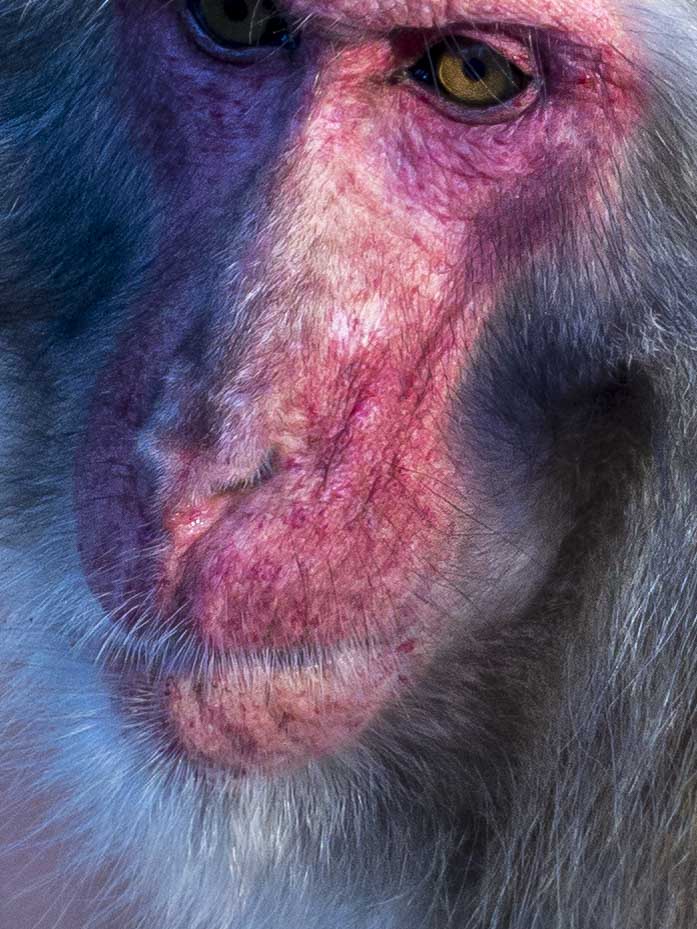
Giant poster anyone? This is a 50% crop.

Sitting on my back patio, looking at what ever comes. This bee was about 6 feet away. This focal range is excellent for capturing small objects in flight and staying out of their reaction zone.

Sitting on my back patio, looking at what ever comes. This bee was about 6 feet away. This focal range is excellent for capturing small objects in flight and staying out of their reaction zone.

A blow up of the above image showing both the shallowness of the depth of field at extreme magnifications but also the sharpness retained wide open and hand held at the longest (weakest) focal length. Would anyone complain about an A3+ print made fr…

A blow up of the above image showing both the shallowness of the depth of field at extreme magnifications but also the sharpness retained wide open and hand held at the longest (weakest) focal length. Would anyone complain about an A3+ print made from this image?

In less than perfect light, it pulls off the most unlikely images. A purely speculative image taken with a flick of the wrist at about 10 feet in the most atrocious weather. I know for a fact that the previous image was taken across the street, so t…

In less than perfect light, it pulls off the most unlikely images. A purely speculative image taken with a flick of the wrist at about 10 feet in the most atrocious weather. I know for a fact that the previous image was taken across the street, so the lens had to fully refocus in a split second.

A bit like the Pelican, this lens looks ungainly, even inefficient, but it is as graceful as any when allowed to fly.

A bit like the Pelican, this lens looks ungainly, even inefficient, but it is as graceful as any when allowed to fly.

                                                                  Robin  (or maybe Nightwing?)                                      (The Little Scrapper)

A lens I own due to a re-gifted camera (EPM2) and one that I have only used a couple of times for testing, is the 14-42 f3.5-5.6 11R (the newer non electronic collapsible one).

What can I say? This lens reduces the gear centric thinking that I think controls most of us a bit. It is cheap to buy, cheap feeling and even a little cheap to look at, but the images are anything but cheap. It allows me to scratch the "gear does not matter" itch.

This is the lens (wait for it), that allowed me to sell the 12-40 F2.8 as it filled the seldom used wide-ish angle and even less often needed "all rounder" standard lens roles. Paired with the 45mm, which is the perfect foil for it's main weakness (slow at the long end), or the 75-300, I have either a very pocketable little day kit or an amazingly powerful (for it's size) travel kit especially with the EPM2.

Don't get me wrong. The 12-40 was a lovely lens, but this little gem comes sooo close at equivalent apertures, I do not need to stress that I am cutting irresponsible corners. It is only ever really going to be used for the occasional landscape (best aperture always used) or the even more occasional trip when a camera is really considered optional, but I would have no hesitation using it for either.

The lens has a "fine" sharpness rendering, with lots of micro contrast. It is by far the best cheap, standard lens I have ever used, with only the Fuji 16-50 kit for company. It also brings to my kit a slightly old fashioned rendering, where the 12-40 shared a similar look and dynamic with the 25mm, making them too similar to split, this lens has this in common with the 17mm f1.8.

Wide open at the long end. EM5. Like the 75-300, this lens does not offer "super" Bokeh, but what it does offer is pleasant and reasonably controlled.

Wide open at the long end. EM5. Like the 75-300, this lens does not offer "super" Bokeh, but what it does offer is pleasant and reasonably controlled.

For the kind of methodical or light hearted work it will do, it is ideal. If I was working professionally? Not sure. I would probably be too conscious of it's perceived cheapness, but if only the results mattered, then it could be my sneaky secret.

Every extinguished bug's last act is held in fine detail.

Every extinguished bug's last act is held in fine detail.

untitled-1010142.jpg
A crop of the above image showing the fine detail on offer. This is the kind of quality that used to thrill me from my 35L Canon. How far we have come.

A crop of the above image showing the fine detail on offer. This is the kind of quality that used to thrill me from my 35L Canon. How far we have come.

I really appreciate the smooth Bokeh transition. One of the advantages of a slow lens is you shoot with the assumption of good depth of field, not be tempted to push the envelope too much. Ironically DOF still often bites me with M43 because you thi…

I really appreciate the smooth Bokeh transition. One of the advantages of a slow lens is you shoot with the assumption of good depth of field, not be tempted to push the envelope too much. Ironically DOF still often bites me with M43 because you think you should have plenty, but often don't. The snappy, micro contrast sits well with the pleasant Bokeh.

What I have learned here is;

Modern lenses and cameras are getting better and better, reaching a point of technical sufficiency. More is really excess or to relieve photographer limitations. There is little to be gained from the super lenses on offer unless you are going to really stress them in the specific area they are designed to excel (often fast apertures) and newer cameras are reducing limitations, but in most cases these limitations do not need to be removed.

This is especially evident when the end product is considered. For blogging, book publication, fine art prints up to a size and blogging etc, most cameras and lenses produce better images than needed.

Ask an Olympic sports photographer if they could do with more speed, accuracy and resolution and the answer will be yes, but ask them if they could do their job 20 years ago, they will also answer in the affirmative, it just took more time, planning and skill. They will also be the ones out of a job when the guy in the bleachers can shoot 16k video in the near dark, lifting out award winning images through image saturation alone.

When you have been in the photographic world for long enough it dawns on you that you have been basically looking at the same images over and over for years. Advertisements are the most telling. I remember some amazing shots, taken in the seemingly distant past of great sporting or wild life events on film, without fast motor drives, manually focussed. The quality when viewed in a magazine, glossy brochure or even bill board was/is sufficient to impress. We are now being coerced by ideas not realities. I keep a few ancient (90's) magazines around to remind me.

Can you tell the difference between a 72dpi or 300 dpi A3 print at a normal viewing distance? There are many examples of people educated in the field not being able to. This also goes for cameras. I remember reading a review of the new Canon G9 super compact camera on The Luminous Landscape blog. The reviewer was using it to make record keeping images made with his main camera, a 50mp medium format model. He was so surprised by the quality he made a bunch of prints (fairly big, A2-3?) and showed them to his friends, all fellow photographers.  The only way any of them could tell the difference between the images was the different depth of field rendering of the formats, but they usually could not pick a clear winner or even work out what the trick to question being asked was. Some even preferred the colour from the Compact.

The same site recently compared prints from three Canon cameras (an 8, 20 and 50mp). Yes you could tell the difference between the extremes on close inspection, but at normal viewing distances not really. The things that were not rendered by the 8mp camera (a small red and white sign on a door) were still not perfectly clear (i.e. readable) with the 50mp images. This also bring up the subject of relevance. Would the image be better if you could read the "no parking over driveway" sign?

Ok. I have strayed off topic a bit, but the examples are many, comparing big vs small, real vs perceived, lens A vs B, all leading to the same conclusions; we can now easily measure better than we can see, but measuring is often pointless in the real world. Kudos to you if you just bought that super lens or monster camera, but I warn you, for your own sake, don't go comparing it's results to lesser lenses or even worse ask a non photographer what they think. Their lack of shared enthusiasm can be heart breaking.

Try it yourself. Show a group of average people an image taken with a compact or older SLR of low MP rating and a different image made with a state of the art camera. Be fair and offer up two of your favourites images processed as well as you can, preferably both done recently so your own skill and processing preferences are the same. Don't tell the viewers what they are responding to, just show them the prints. I bet no one will pick or even care what differences there are in the images technically, only aesthetically (remember photo blogs are written for other people with the same interest, but the bulk of the viewing public has no such interest).

On the bright side, all of those older images you took on redundant cameras and formats, are still just as relevant now as when taken. 

Modern photographers are not limited by gear, only ability, skill, practice, time and subject matter.

*

* One of my favourite explanations for the difference between mathematics and science goes something like this;

"Mathematics plots and measures the probable, science proves it". Two examples are the Titanic that "could not be sunk". The first field experiment horribly proved otherwise and the Bumblebee that apparently, mathematically cannot fly.

The Three Musketeers (plus the other one)

I have written a lot about the lenses I use, hoping, I guess to help others to make informed choices about their own needs and to be honest, because it helps me to make sense of what I feel about them.

I think it is also important with the flood of uber expensive glass coming from Olympus and Panasonic at the moment, to take stock of the "lesser" lenses they offer that made their name in the first place. 

The first thing to qualify here is that the "best" lenses by test bench reputation are not necessarily the best lenses overall, or at least they are not in a class of their own.

The four lenses that are my stable are;

Aramis the flexible persuader The 17mm f1.8.

Not a reviewers favourite, but loved by it's users and often under estimated. I find it ironic that many of the giant killing comparison tests around use this lens when it is thought by many to middle of the road at best.

This is probably the single most important lens in my kit. Ironic really, as it is the only wide angle in a portraitists bag and although it is the weakest by reputation, it never, ever lets me down optically, mechanically or creatively. I thought (stressed) long and hard about this one, switching between the 15, 20, 17, but in the end I kept the 17 as the first choice due to it's excellent functionality. I decided to get one of the others or any improved future model the second I felt it was not doing the job. That day never came.

Build to purpose (I believe), it offers the ideal optical characteristics and utility for a wide-standard lens. When compared to the Panasonic 20mm or 15mm's for example, it shows a deeper and more coherent, old fashioned (?) bokeh transition, rather then the fashionable, but not as useful in a street wide angle lens, fast and creamy drop off.

It always amuses me when people reviewing or commenting on the bokeh of wide angle lenses are disappointed, even after qualification, by their poor performance as traditional portrait lenses. 

I feel a more useful application of the designer's talent is to give the lens, designed for "environmental" portraits, more depth of focus, not less. The new 17 f1.2 looks to have the creamier out of focus blur that people are lusting after, but that only makes the older lens all the more relevant as an option, not just a make-do lens.

It has also revealed a pleasing landscape capacity recently.

The expanded out of focus coherence is very forgiving, but can also still be snappy enough thanks to it's micro contrast, for creative use.The above image reminds me of the Leica look I fell in love with years ago. The overall clarity of the composi…

The expanded out of focus coherence is very forgiving, but can also still be snappy enough thanks to it's micro contrast, for creative use.

The above image reminds me of the Leica look I fell in love with years ago. The overall clarity of the composition, even the out of focus areas, with added snap on the focus point that really jumps out and draws your attention "out of order". A more modern Bokeh design would hero the foreground, at the expense of the rest of the story.

This image shows the bokeh rendering at it's best. The image is a bin job, but even at f2 and manually focussed at 2 meters (for outside shooting), the image holds together. Most lenses would show a blur line at about the second poster or closer, wi…

This image shows the bokeh rendering at it's best. The image is a bin job, but even at f2 and manually focussed at 2 meters (for outside shooting), the image holds together. Most lenses would show a blur line at about the second poster or closer, with little rendered usefully past it. It would have an obvious sharp/soft dynamic. The 17mm lets you determine the point where the detail transitions naturally. In practice, it makes the bokeh "invisible" not an effect in itself.

Colour, flare, contrast? No problem there either.

untitled-1190105-2.jpg

Sometimes it simply surprises with it's visual crispness. This is one of those lenses that does not test super sharp (in some tests, but well in others which is why tests are of limited use), but looks sharp to the eye. I think this is the benefit of it's "micro contrast", something a lot of older Leica and Zeiss glass exhibit in spades.

It is superior at adding punch to images in less than perfect light, another excellent street feature.

The EPM2 and the 17mm seem to particularly like each other.

The EPM2 and the 17mm seem to particularly like each other.

*

 Athos The Straight Shooter.

The lens that often gets brilliant reviews, but is my least favourite of the 4 (for reasons even I have difficulty explaining) is the 25mm f1.8.

There is nothing much to complain about.

The CA wide open is more obvious than the 17mm (on my copies anyway), but is easily fixed. It is enough for me to have a pre-set in Lightroom (called 25 wide open). None of the others has one.

When it is (I am) on song, it is powerful and competent, a visual chameleon, taking on some of the best characteristics of the other three and then some. I often think of it as my "Canon memory" lens. The look is bold, rich, smooth and sharp, but not so sharp that it is an overly obvious or artificial look, just honestly sharp, wide open or stopped down.

This lens often delivers images that look "bigger" than M43, especially on the Pen F. I think it may shine brightest when the files are printed really big, allowing the eye to explore deeper, discovering the fine detail and smooth texture within.

EM5 25mm

EM5 25mm

In contrast to the 17mm, this lens offers more portrait like bokeh. It drops away smoothly and pleasantly, but missed focus can leave an unsettled feeling of softness, I often misinterpreted this as a lens failing until I worked it out. It has a similar look and bokeh to the 20mm Pana, but the focussing, both AF and MF, are far better implemented.

Although I am an advocate for the perfect 40mm equivalent, the 25mm (50mm equiv) makes so much more sense in tandem with the 17mm as do it's optical properties.

Spot on, but the focus drop off even at f4 is quite quick, so focussing mistakes are punished.

Spot on, but the focus drop off even at f4 is quite quick, so focussing mistakes are punished.

*

d'Artagnon the talented all rounder.

The 45mm, one of the recent legends of lens manufacture and one of the foundation stones of M43 success (along with the 20/14mm Pana's). It is the pocketable best friend that has been my go to lens when a standard-longer is wanted.

I recently shot a wedding using the 45 for 80% of the images.

This lens just makes sense. It is very sharp in a more "snappy" sense than the 25mm, probably due just to the extra reach (compression), but at the same time seems to be gentler and does not have the "flattened" effect of the 75mm. I like it so much I have 2 (maybe I should just get them turned into a pair of goggles and wear them with a funny hat!?).

The sample images I could show are legion, so I will use a small representative of the lenses consistent excellence and utility. All taken in one day, along with many others.

untitled-1210091.jpg
untitled-1180285.jpg
untitled-1180527.jpg
untitled-1180408.jpg
untitled-1150080.jpg
untitled-1180183.jpg

And one from the recent wedding.

untitled-1070067-3.jpg

"A little bit of this and a little bit of that". Universal, reliable, jewel like.

Perfect?

I would like a slightly closer focus, like it's Panasonic counterpart, but the 25mm grows another foot in that area, so kit balance is retained.

*

Finally we reach Porthos, the not so gentle giant.

The 75mm is by many measures the most powerful of the set. It is bitingly sharp with strong colour and contrast. It is the only one of the four that falls outside of the "normal" range of lenses. I can always pick images made with this lens without checking the EXIF data. They just jump out.

Powerful enough to calm the smaller format doubters. 75mm f1.8 (150mm f2.8 equivalent).

Powerful enough to calm the smaller format doubters. 75mm f1.8 (150mm f2.8 equivalent).

A crop of the above, shot wide open.

A crop of the above, shot wide open.

At first, this was a revelation, allowing me to cut Canon loose as I had found my replacement for the 135 F2L, a lens with almost identical properties. It is longer and faster than the Canon in their native formats, but it also shows the flip side of it's power, much the same as the Canon.

My current screen saver. Pin sharp and hyper real looking at 29" even cropped a little.

My current screen saver. Pin sharp and hyper real looking at 29" even cropped a little.

It can look too perfect or "flat", a bit two dimensional. On it's own it would be a pony with just one impressive trick, but in this kit it offers reach and a distinctive look, strengthening the team overall. Combined with the very capable, but less "perfect" 75-300, these two make a good team.

My only minor complaint is the focussing, that I considered very capable until I used the 40-150 F2.8. Of the four I would consider the 75mm the slowest in grabbing (even a little more finicky than the 75-300) and has an annoying habit of getting stuck on some things when used on the EM5, but less so on the Pen F.

*

These are just four good lenses from a capable designer/manufacturer. All other brands can produce lenses that are similar, but I hope this post shows two important things;

1) All reasonable quality lenses are enough to do serious work* and all have features that can be a benefit to the photographer, even lenses that have been over shadowed by more impressive stable mates.

2) Getting to know your lenses is key to success. Find their character, replace them if they do not suit, but use the strengths of each lens to it's fullest and don't dwell on perceived weaknesses.

* my trouble-shooting pair of the 14-42 and 75-300 can produce pro grade images as well, often indistinguishable from the better glass. More on this later.


Perfect Day

With permission from the bride, I am going to share a couple of my favourite images from the wedding last month.

Mainly I have included them to show the beautiful rendering the Pen F gives, especially when your subject deserves it.

I have always been a fan of the OMD's mono images, but the Pen F files are more flexible in the highlights and smoother, giving me a couple of different scratches for that mono itch.

The combo of the Pen and the 45mm also shine, taking the bulk of the images on the day.

Pen F 45mm

Pen F 45mm

Pen F 45mm

Pen F 45mm

Thanks the happy couple and Hollybank reserve for putting on a perfect day.

Pen F 45mm

Pen F 45mm

It is no slouch with colour either, but the mono images really shine for me.

Ha colour.

Strong light and brilliant. Suck it mono! 

untitled-1251012.jpg

Ok, fair's fair. The mono reply is strong also I guess.

The lure of evil colour

Here are a couple of images that I like, but have had trouble deciding on processing for. Black and white or colour? Both work both ways. This is one of those exercises that helps decide me on being a colour only shooter. The lure and mystery of colour always draws me even when I feel a mono image is the obvious, stronger and easier path.

I did a rare wedding the other week. The sort you wish they were all like, small, friendly, genuinely loving and stressless. The images came effortlessly as they do when you are gifted with wonderful subject matter, but even then the mono/colour question cropped up time and again. I really liked the mono images and some really sang when the colour ones struggled in soft, green shade under an old tree, but colour called me first. Shame really as the Pen F in particular does mono as well as any digital camera I have used.  

untitled-1251006.jpg
Tighter cropping due to the over abundance of orange and white in that corner. Not offensive in the mono image.

Tighter cropping due to the over abundance of orange and white in that corner. Not offensive in the mono image.

untitled-1250103.jpg
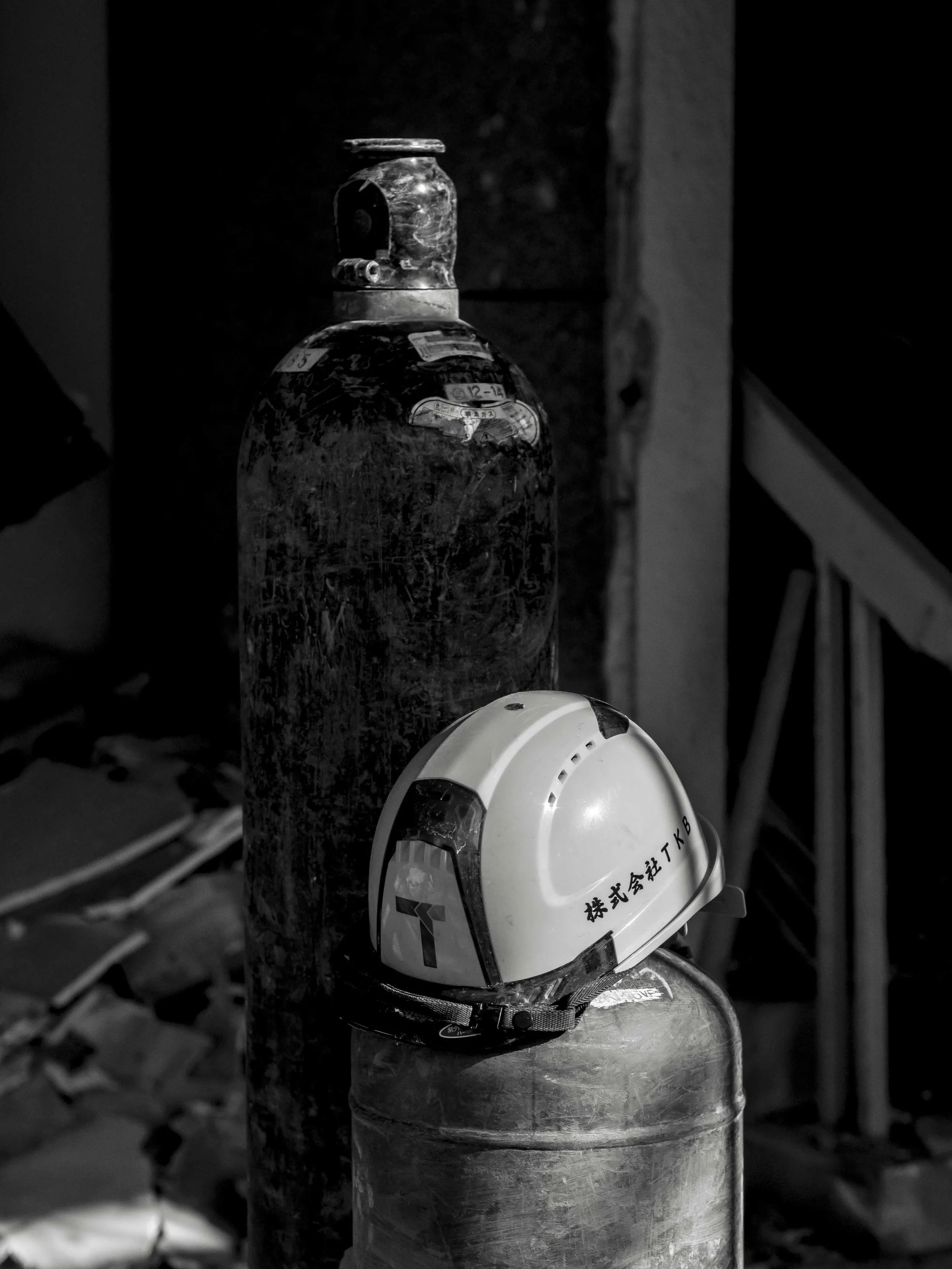
More "open" and gentle than the colour image, but I cannot deny that the yellow of the helmet was the draw for the image in the first place.

More "open" and gentle than the colour image, but I cannot deny that the yellow of the helmet was the draw for the image in the first place.

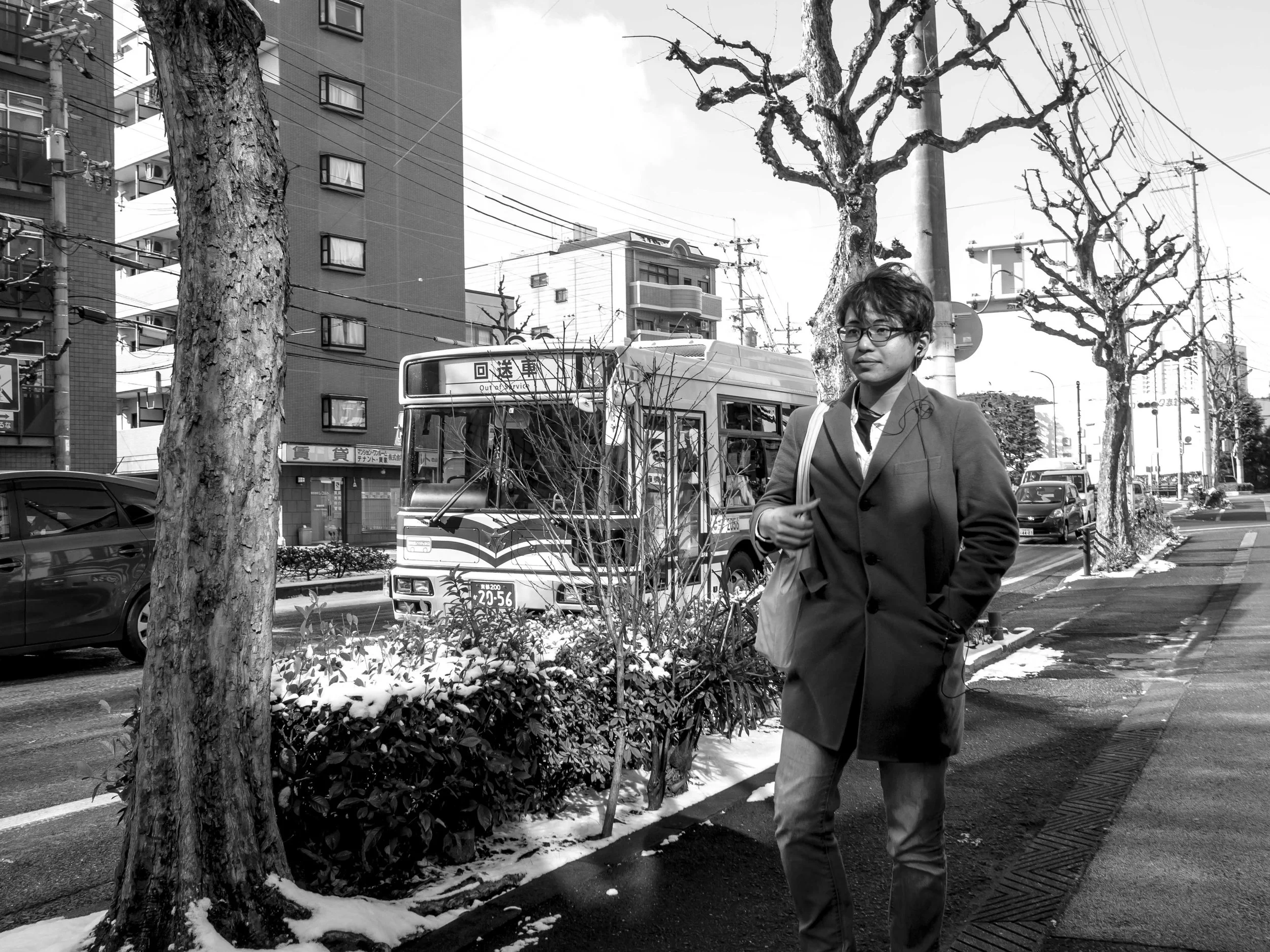
Coping with the first snow.

Lots of fun for us, but an un welcome reality for the locals. Snow and especially ice, can just make things hard, but the Japanese tackle it with their usual stoic good cheer.

untitled-1250930.jpg
untitled-1250994.jpg
untitled-1250978.jpg
untitled-1250996.jpg
untitled-1250975.jpg
untitled-1250921.jpg
untitled-1251005.jpg
untitled-1251007.jpg
untitled-1251022.jpg

training

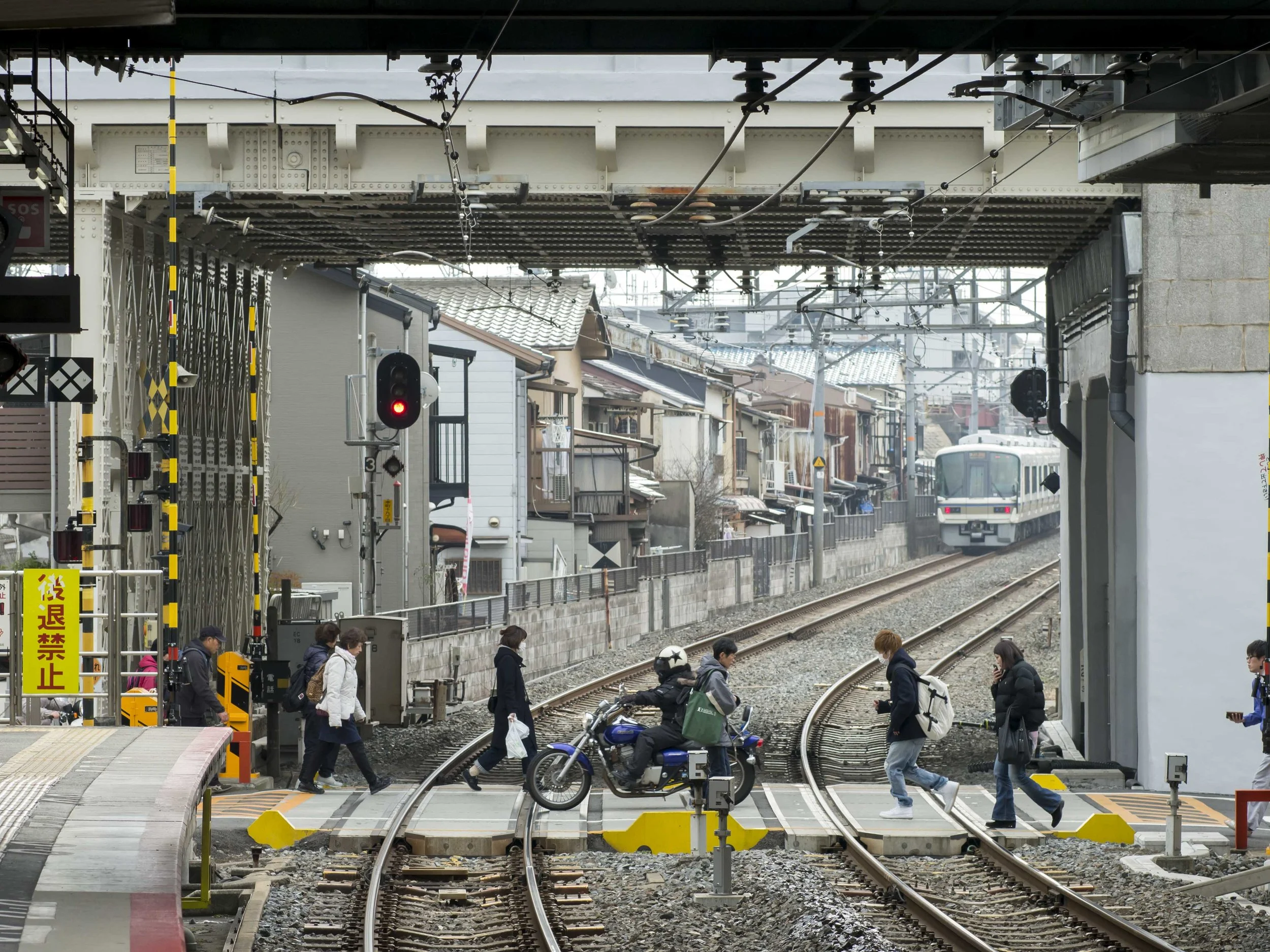
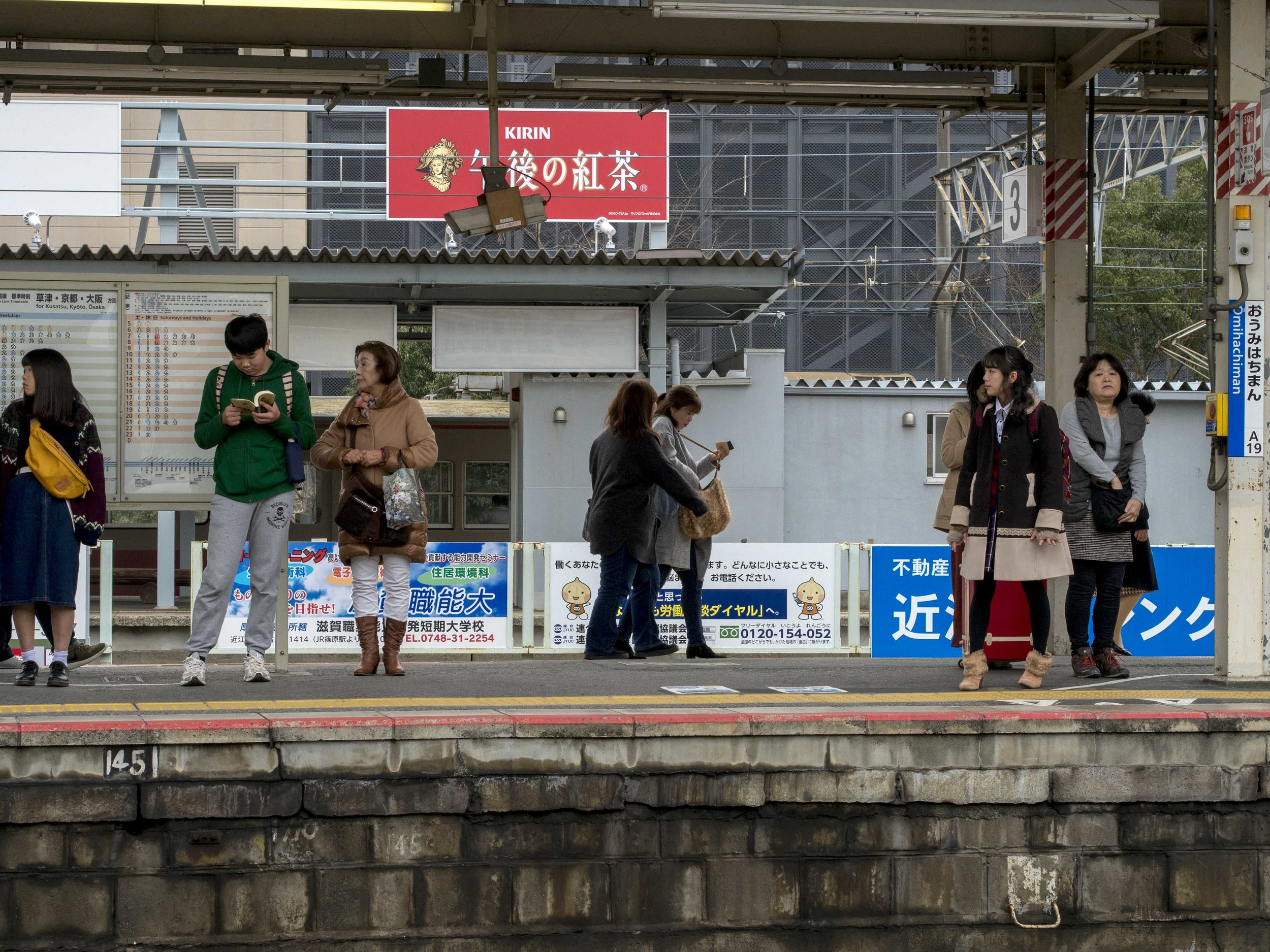
When travelling in Japan, most people use trains at some point. For me they are the beginning and the end, and sometimes the middle of a shooting day, offering a perfect mix of people, light, colour and movement.

Kyoto has some of my favourite stations, so far at least. They cover the small, quaint and slightly shabby to magnificent state of the art. Either way, they are part of life in Japan and it shows.

untitled-1210091.jpg
untitled-040444.jpg
untitled-1190504.jpg
untitled-1200212.jpg
untitled-1230394-2.jpg
untitled-1200202.jpg
untitled-030164.jpg
untitled-1190520-2.jpg
untitled-1180280-2.jpg
untitled-1180398.jpg
untitled-1210083.jpg
untitled-1190523-2.jpg

Live view

A benefit that can never be under estimated about "Live view" cameras (mirrorless or the odd mirrored camera that can function well this way), is removing the guess work of exposure compensation.

The image below was taken late evening in that period where you start to mistrust your own eyes, but before full darkness. For an SLR shooter, even with a state of the art light meter, getting the exposure somewhere between "as seen" and "as wanted" is tricky, requiring lots of experience. Imagine doing this in the film era!

With a "What You See Is What You Get" camera, it is simply a matter of setting for taste based on what you see.

The most important setting control on my EM5's is the exposure compensation control that I have switched to the back thumb dial. The Pen, to it's credit does not seem to need as much adjustment, which is good as the control is far too stiff and frustratingly cannot be moved.

EM5 45mm at F2

EM5 45mm at F2

Oddly, when I use an SLR camera, I am now keener to use exposure compensation, as I know the benefit. Getting used to setting it though without seeing the effect is unsettling and to my mind pointless in this day and age. Ansel Adams would have used any tool at his disposal, even digital, so why shouldn't we.


Incidentally, this is also an area the EM5 shines, both technically and artistically.

reinvention

It's always a challenge to go somewhere many have gone, even yourself on several occasions, and "see" something different, just or differently. 

untitled-1190099.jpg

Winter can provide different light, especially when leaf cover diminishes. 


untitled-1190105-2.jpg


Fresh paint helps also.

Escorted

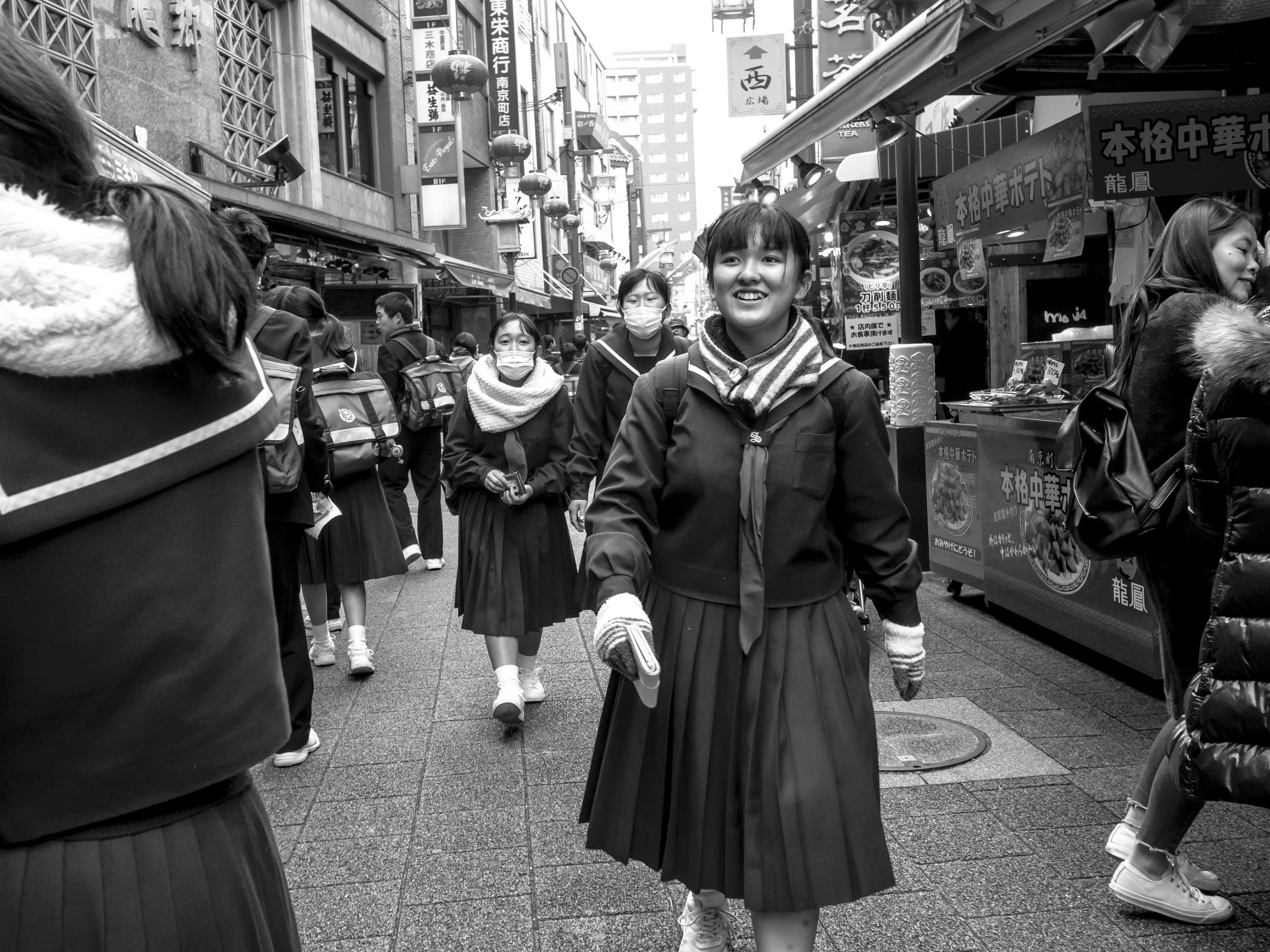
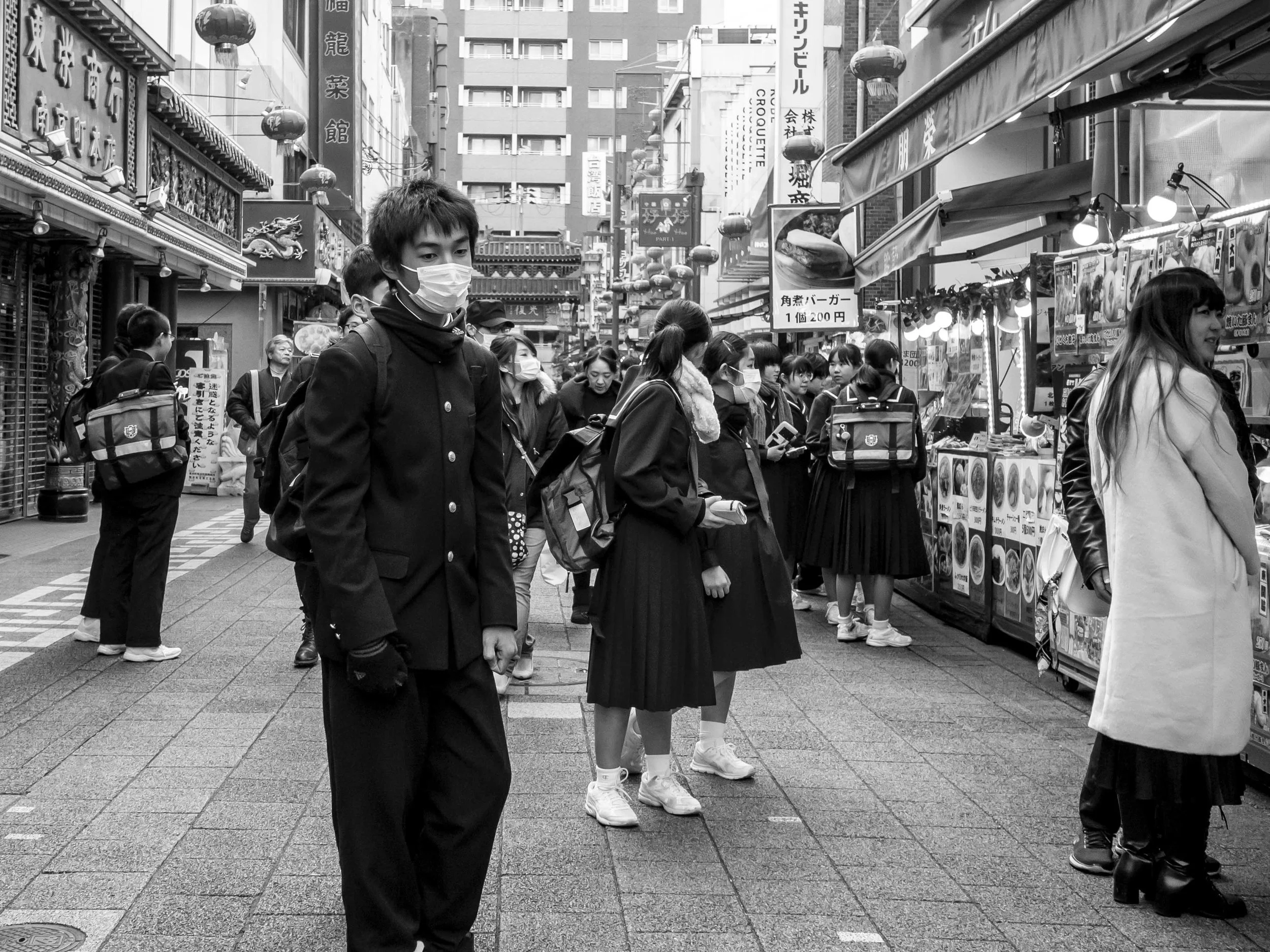
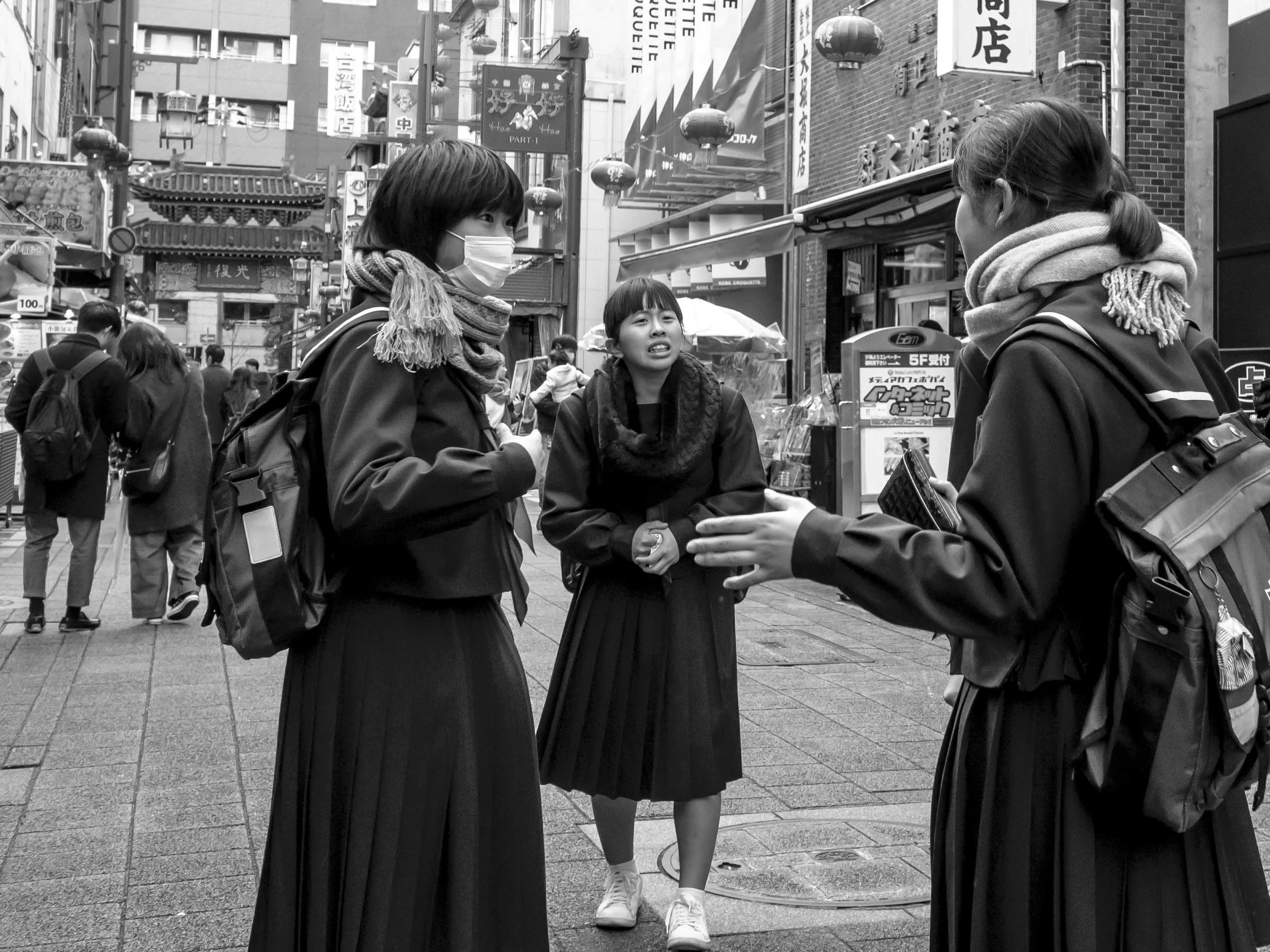
On our visit to Chinatown in Kobe, we were unintentionally escorted by a group of high school kids.

It seemed that everywhere we wanted to go, they went to, so for about an hour we ambled in loose ensemble, all engaged in our own things. The longer we were around them, the more infectious their sense of comradeship and fun became.

untitled-1230468-2.jpg
untitled-1230495-2.jpg
untitled-1230418.jpg
untitled-1230519-2.jpg
untitled-1230523-2.jpg
untitled-1230494.jpg
untitled-1230518-2.jpg
untitled-1230508-2.jpg
untitled-1230330-2.jpg

Night watch

Passing a small real estate office near our hotel, my wife and I noticed an owl (real) sitting on the back of a chair. Possibly there to catch mice after dark or simply as a companion for the owner. 

A brief moment of clarity, prompted me to enquire whether they would charge by commission, Owl-ey, or maybe higher perches?

My wife just quietly walked away. 

untitled-1210081.jpg

Smokin'

Smoking in Japan is often limited to specific smoking areas. These give the like minded people a chance to catch up and socialise. Even if there is not enough room.

EM5 17mm 

EM5 17mm 

Ghosts of things past

One of my early photographic inspirations came from the work of Keith Lazelle. He would walk the entire length of the Appalachian trail, armed with 35mm Olympus cameras and a variety of lenses, aiming for fine art level images that he would then sell in the "down" months. 

Some of his images, discovered by me first in Camera and Darkroom magazine (sometime in the '90's), have stayed with me since. His use of deep and mysterious light, contrast and abstraction drawn from Fuji Velvia slides and printed on Ciba(Ilfra)chrome paper were (are) magnificent and a testament to his photographic eye and the care he took translating his vision. 

I cannot claim to match him, but with him in mind often, I am drawn to images like the one below.

The Philosopher's trail Kyoto.  EM5 25mm lens

The Philosopher's trail Kyoto.  EM5 25mm lens

More Magic Light

More examples of light in Kobe. The day went from sunny and mild to cold, sleeting and windy. Lousy weather tends to make for brilliant light as a rule and that was the case here.

untitled-1230338.jpg
untitled-1230464.jpg
untitled-1230512.jpg
untitled-1230444-2.jpg
untitled-1230423-2.jpg

All images, EM5 and 17mm except the middle one taken with the 45mm

Tripplet

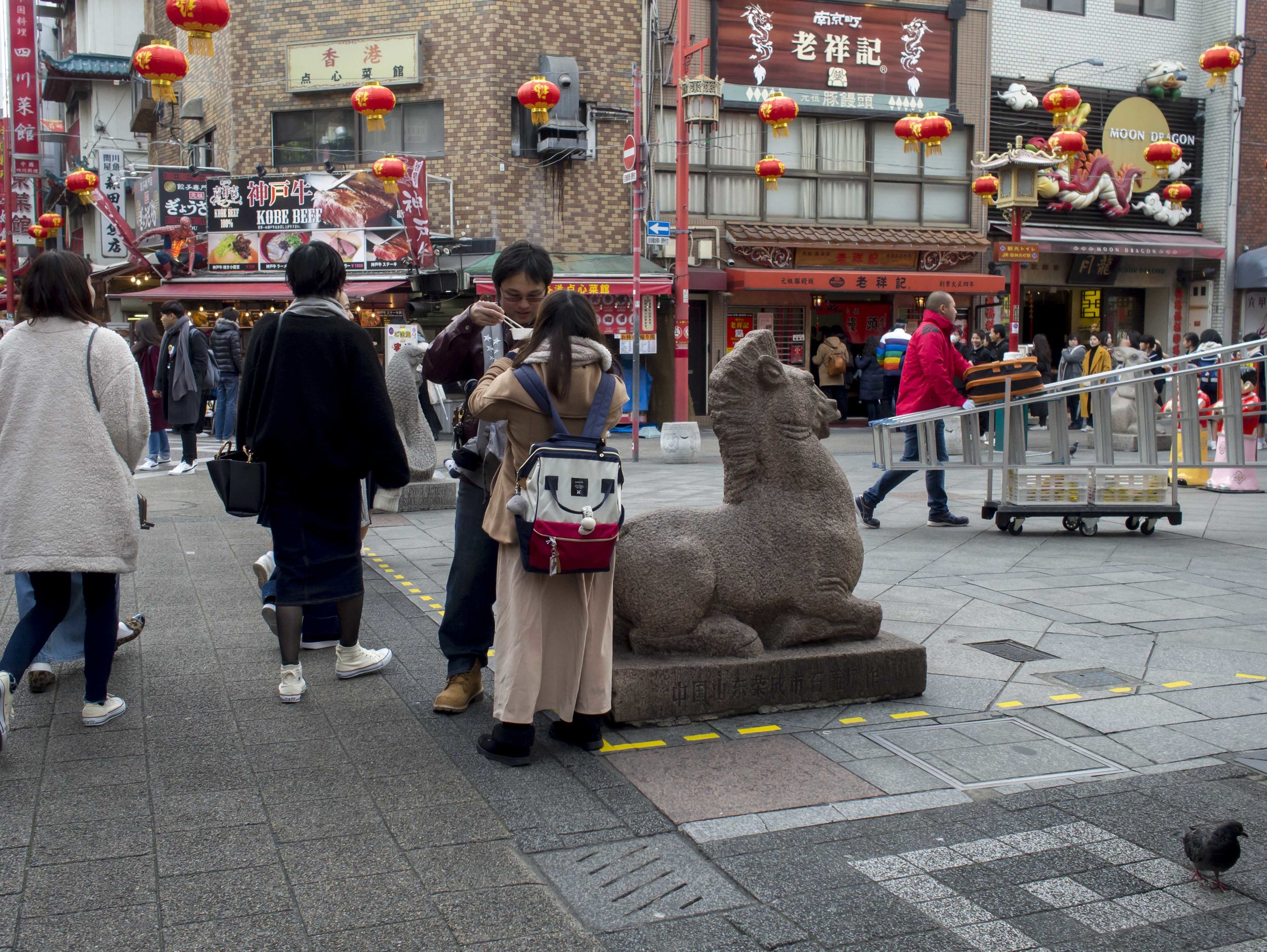
Kobe is an interesting city of contrasts. The day trip we made showed us three disparate "feels". We started west of the station in an area that looked like it was all about the promise of an interesting night life, then we went up the surrounding hills to find colonial trading houses and faux European street scenes and then down to the city proper, where magnificent tall and regal office buildings and top end shopping contrasted strongly with China Town and dock lands.

Once the gateway for foreign trades and renown for Kobe Beef, the city still plays an important role today.

For me, it offered great light, interesting people and that mix of un self conscious small town and proud, vibrant city that tends to produce interesting images.

Below, I felt that I had a balanced image first up. The light was interesting and the main subject (I feel it is the slightly classic looking man) had plenty of support. 

The second image, giving you an indication of how often I push the button when walking and framing, is more pointed. It takes away much of the street feeling and becomes more about the man and the crowd opposite, almost a "me against the tide of them" statement.

untitled-1230310.jpg

The third image exaggerates the feelings from the image above, making the man the secondary, framing element to the man on the left across the road. Light becomes the framing factor here, not compositional, subject balance.

untitled-1230311.jpg

My favourite is the middle one at the moment, but these things change.

All images EM5 with the 17mm

Old School

Just really like the "Adams" feel of this one.

EM5 files do have the ability to look film like, especially in the often difficult (for digital) highlights.

EM5 45mm

EM5 45mm

Becoming lost

My usual work process is to import my images with a pre set called "gentle". This gives me a small boost in whites with a corresponding drop off in blacks, reduced highlights and slightly boosted shadows. This image was imported "as shot" in Olympus RAW and very gently pushed. 

Sometimes I think I (we) need to reset. The Japanese have a saying that goes something like "If you are at a dead end, go back and start again with a "learning mind"". 

EM5 75mm

EM5 75mm