The Merry-Go-Round

Back on the gear Merry-Go-Round again. I may have an opportunity to do some sport in the near future. Indoor, high end, genuine pressure stuff. Fun!

My kit is too big, but it still lacks a decent fast/long option with premium. pro focus, so the 40-150 if back in the mix.

A perfect day off allowed me an opportunity to borrow the floor demo one (we do not have “demo” gear as such, as we are a small store), for an hour or so.

Off to the park!

All of the images below were taken hand held with the EM1 mk2 and most are LSF jpegs.

First up, the usual mandatory check to make sure I have a “good” one. I have never had a dud lens from Olympus, but there is always a first time and this is a little too expensive to risk.

My last one was the lens, that combined with the brand new Pen F, produced some of the best quality images I have ever created.

untitled-3290033.jpg

Looking good first up. There is clear sharpness in all four corners and fine detail.

The set below are a comparison of the realistic application of the lens against the 75-300 “budget” kit lens (top) and the “naked” (no teleconverter) pro lens (bottom).


As usual the cheaper lens puts out a great image, but again I am seeing it handle micro contrast completely differently (as with the 12-100 comparison). The 75-300 is hard to criticise on a purely artistic level, but by comparison, you do see more fine detail resolution from the pro glass.

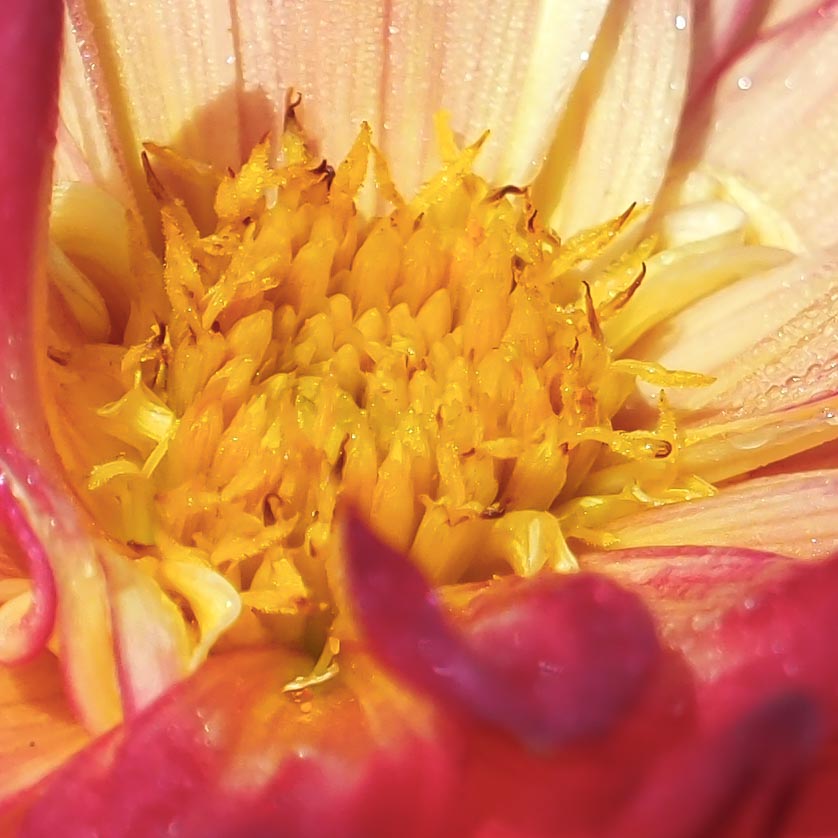
The third set are from the 75-300 again for a not very scientific comparison. Is it just me, or do the set from the budget lens look more exciting?

With the 1.4x extender, the quality and responsiveness does not seem to drop off much either.

With the 1.4x extender, the quality and responsiveness does not seem to drop off much either.

The only issue is the speed loss (1 stop) forcing the ISO up. I am really not loving Lightroom’s handling of the EM1’s noise over ISO 400. The jpegs are better and that is not how it should be.

The only issue is the speed loss (1 stop) forcing the ISO up. I am really not loving Lightroom’s handling of the EM1’s noise over ISO 400. The jpegs are better and that is not how it should be.

Ok, it looks like a good one, but I am again impressed by the beautiful images created by the little travel tele.
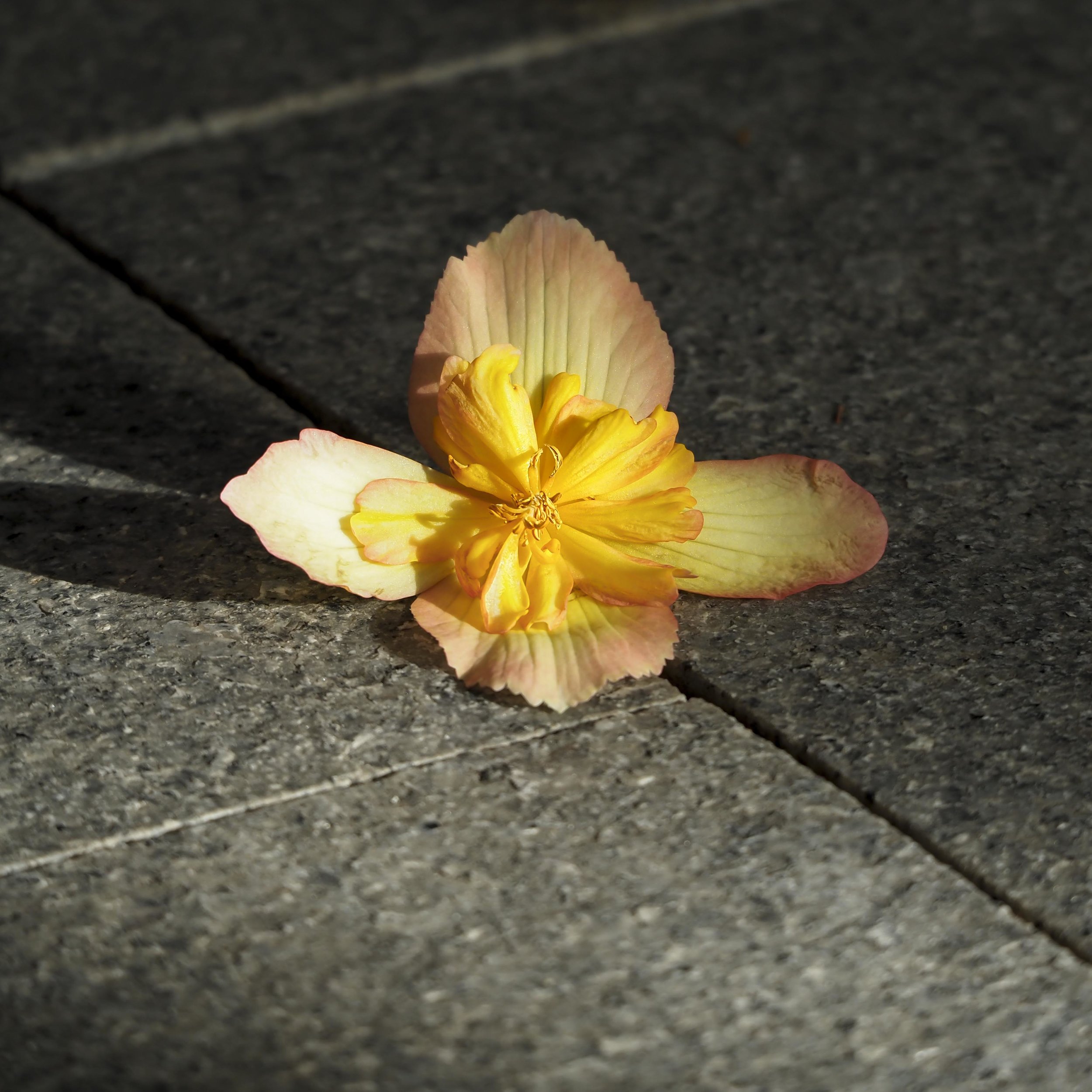
Just lovely, as usual.

Just lovely, as usual.

Now for what I am looking for, AF.

At first I had the usual frustrations with C-AF (don’t even get me started on AF-Tr). I have found the continuous focus is plenty for a car moving at normal speed, a fast horse moving across the frame or a bird flying steadily, but not great (with the 75-300 anyway) with erratic subjects. Don’t get me wrong, the EM1 is a good performer in this area, but I personally do not like to leave all of the driving to the car so to speak.

Being an old school sports shooter (old school as in manual focus, no winder and with film), I do know, although I tend to forget, that timing, anticipation and skill are more important than AF speed. Never under estimate the skill of sports shooters in the past who were often limited to ISO 400 films, forced to use wide apertures with manual focussing and relying on pure, practiced reflex to get the shot, and that was without any ability to review their images until processed. I was not that good, but I knew people who were.

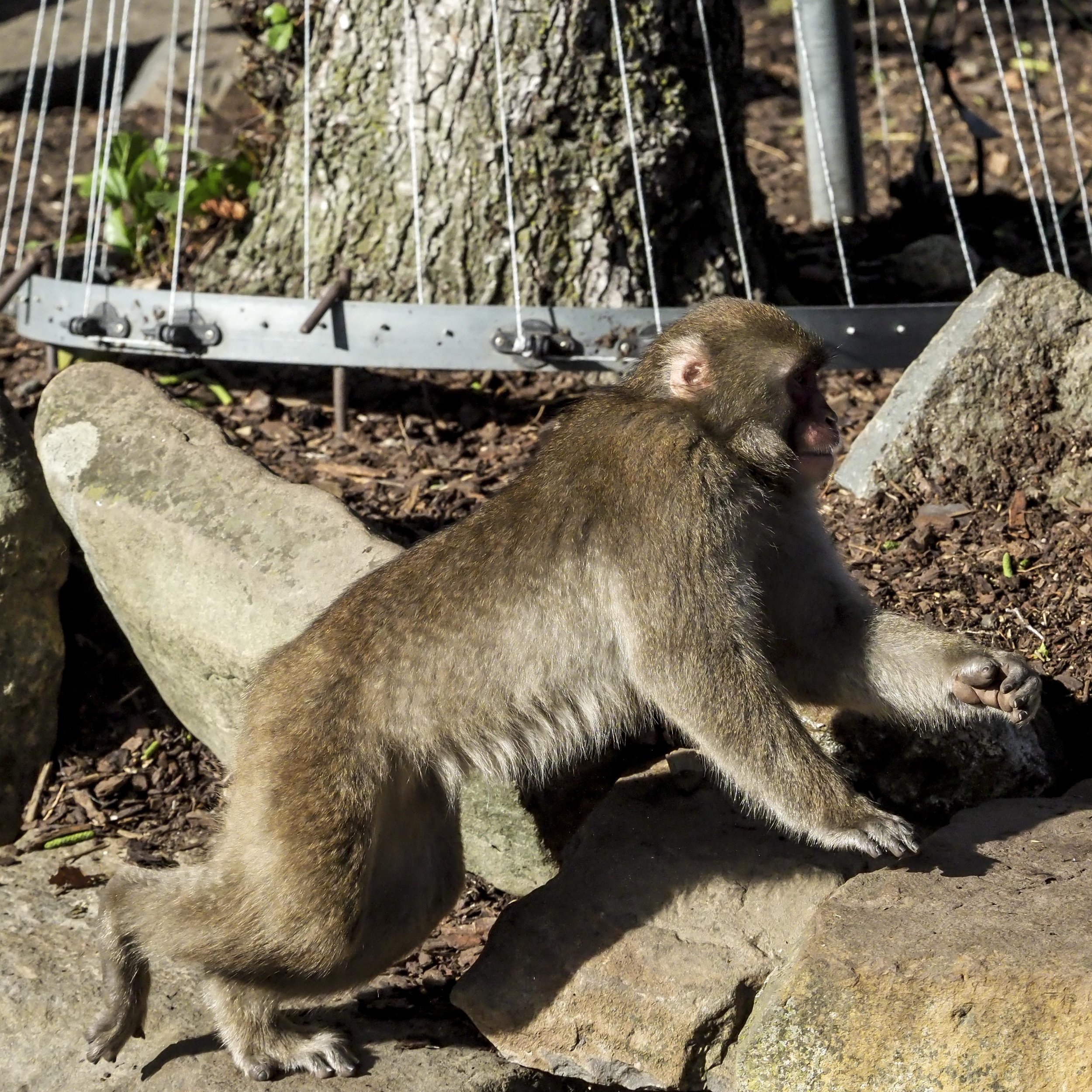
After a few minutes of tracking fast moving monkeys, with patchy success, I tried single shot and rediscovered the lightning fast acquisition the OMD series are known for. Even before they could track focus, the early OMD’s could still shoot sport. You just have to learn to break your old habits of DSLR tracking. The trick is, just shoot. Do not hesitate and do not try to follow the action with the cameras focus, just follow it with your eye*. The early OMD’s did not have tracking and I am not fully trusting of the newer models, so this style, once accepted, was ideal for me.

With the 40-150 and an old OMD, I have managed to capture medium grade basketball with a better than average success rate and indoor swimming was almost too easy (just focus on the water a foot in front of the swimmer and fire at the right time).
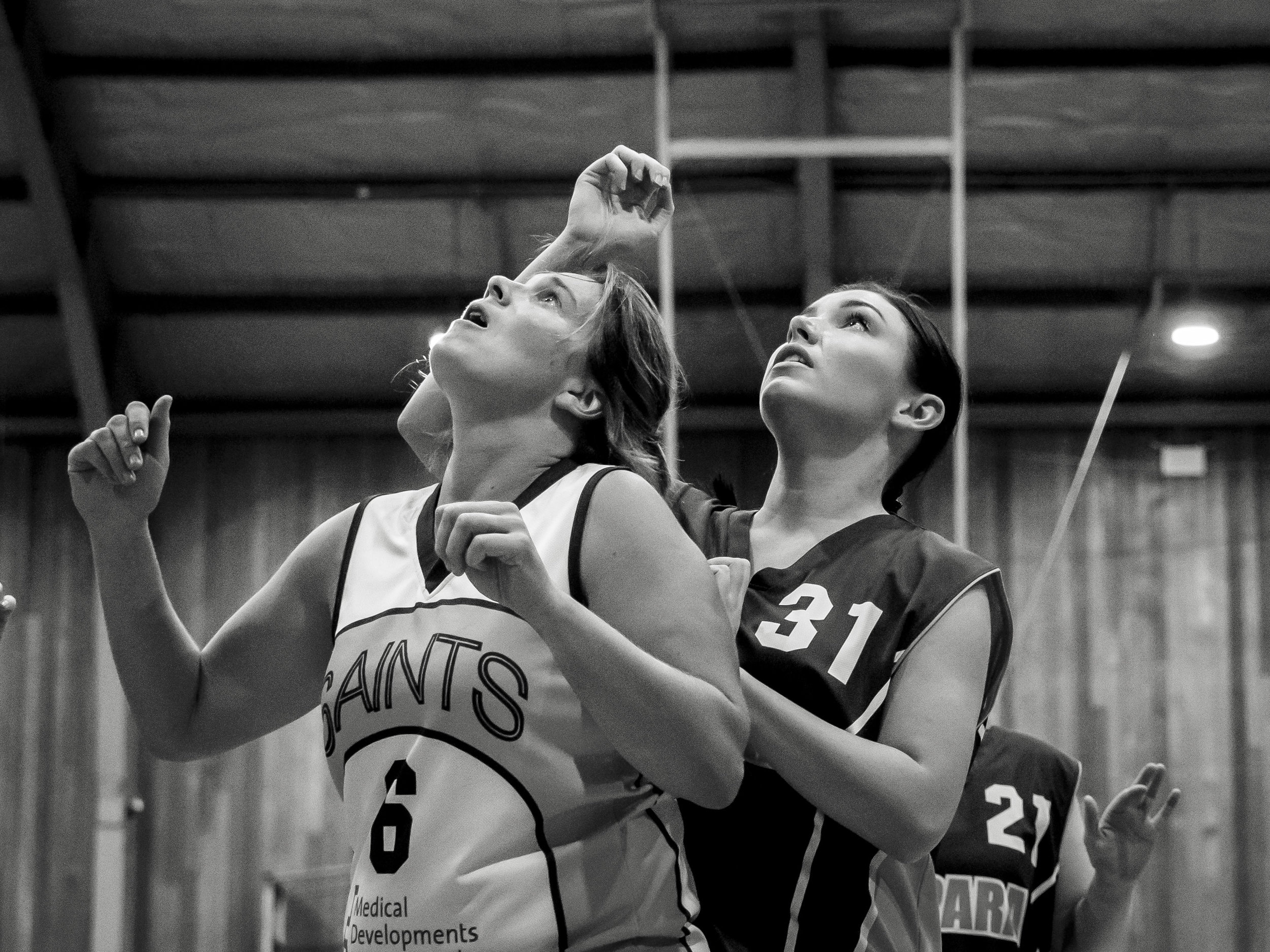
EM5 mk1 and 17mm lens zone focussed.

EM5 mk1 and 17mm lens zone focussed.

With the EM-1 I am not really interested in the tracking, but more in the first grab focus speed, which is better than the older models. I can basically see and shoot, with near instant acquisition and capture. This combined with wide angle zone focus under the hoop, manual trap focus for oncoming subjects, tight portraits with S-AF and a little tracking should give me options aplenty.
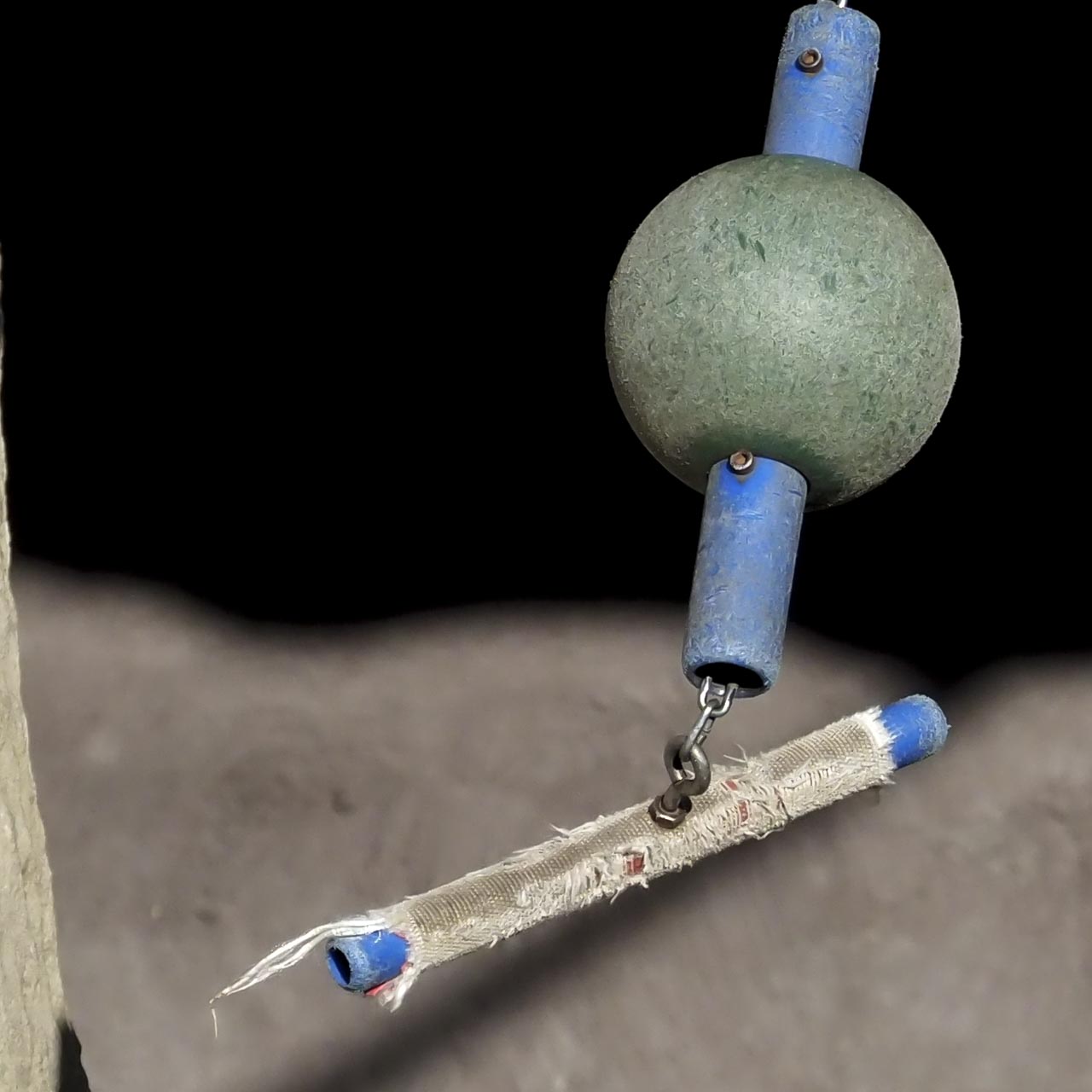

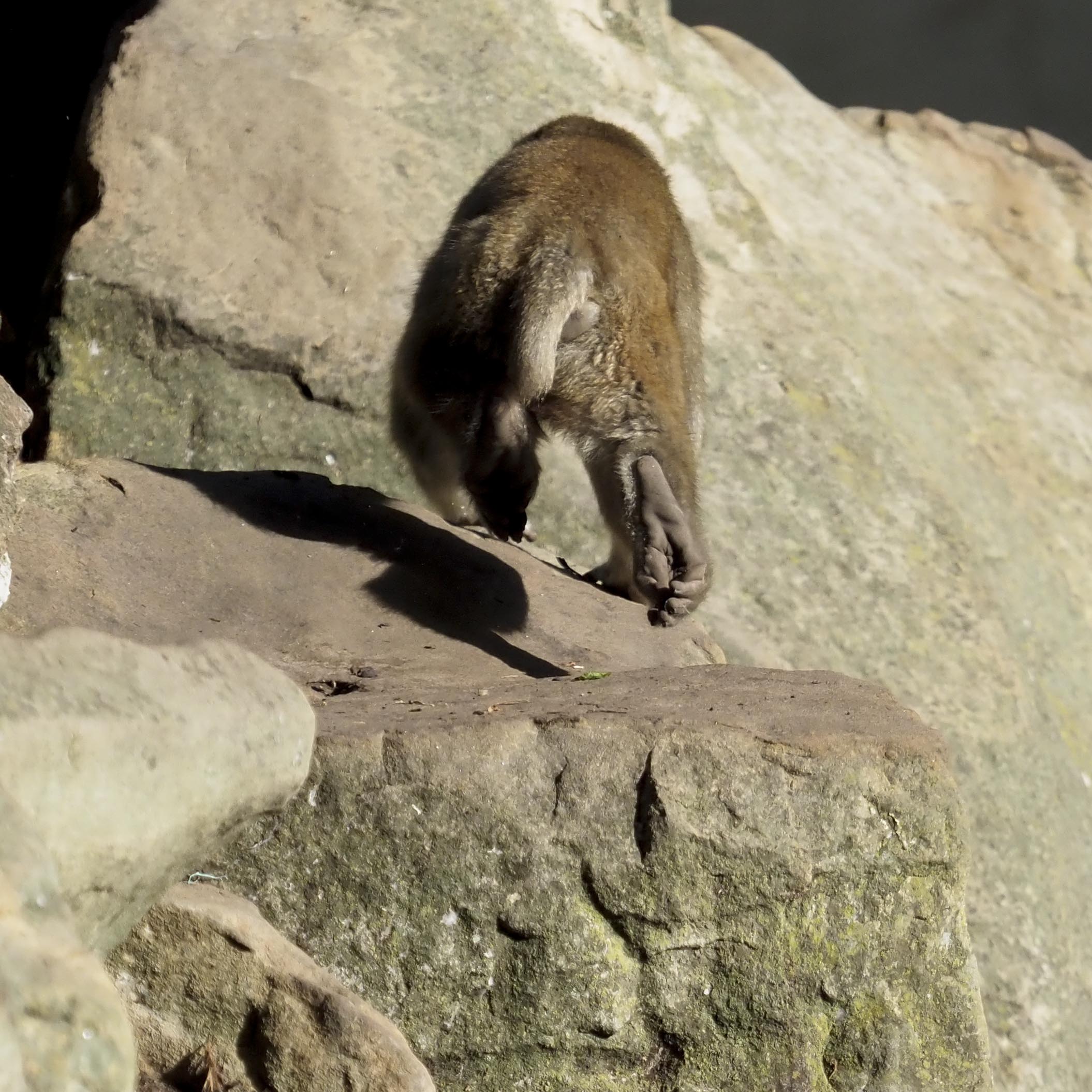
The ball swing (a heavy crop) was rocking violently after a monkey had jumped off it. I let the camera do the grab, without trying to track at all. The runners were really moving (and were smaller, faster, more erratic, closer and lower contrast than a sporting human). These are a few of many similar images. Unlike the tracking sets, these are not the one or two of the sharper grabs from a cluster, but single, timed, pin sharp files with maybe one or two more on either side as they presented. It is fair to say, the misses were not from the camera and lens, but me.

One from the teleconverter combo.

One from the teleconverter combo.

Taken with the 75-300 which is no slouch, as long as there is enough light.

Taken with the 75-300 which is no slouch, as long as there is enough light.

Other considerations.

It is weatherproof, which my longer tele is not (but that may be pointless due to it’s limited coverage and weight when out in the field with the 12-100).

It provides another strong Bokeh option (but nowhere near as powerful as the 45/75mm primes).
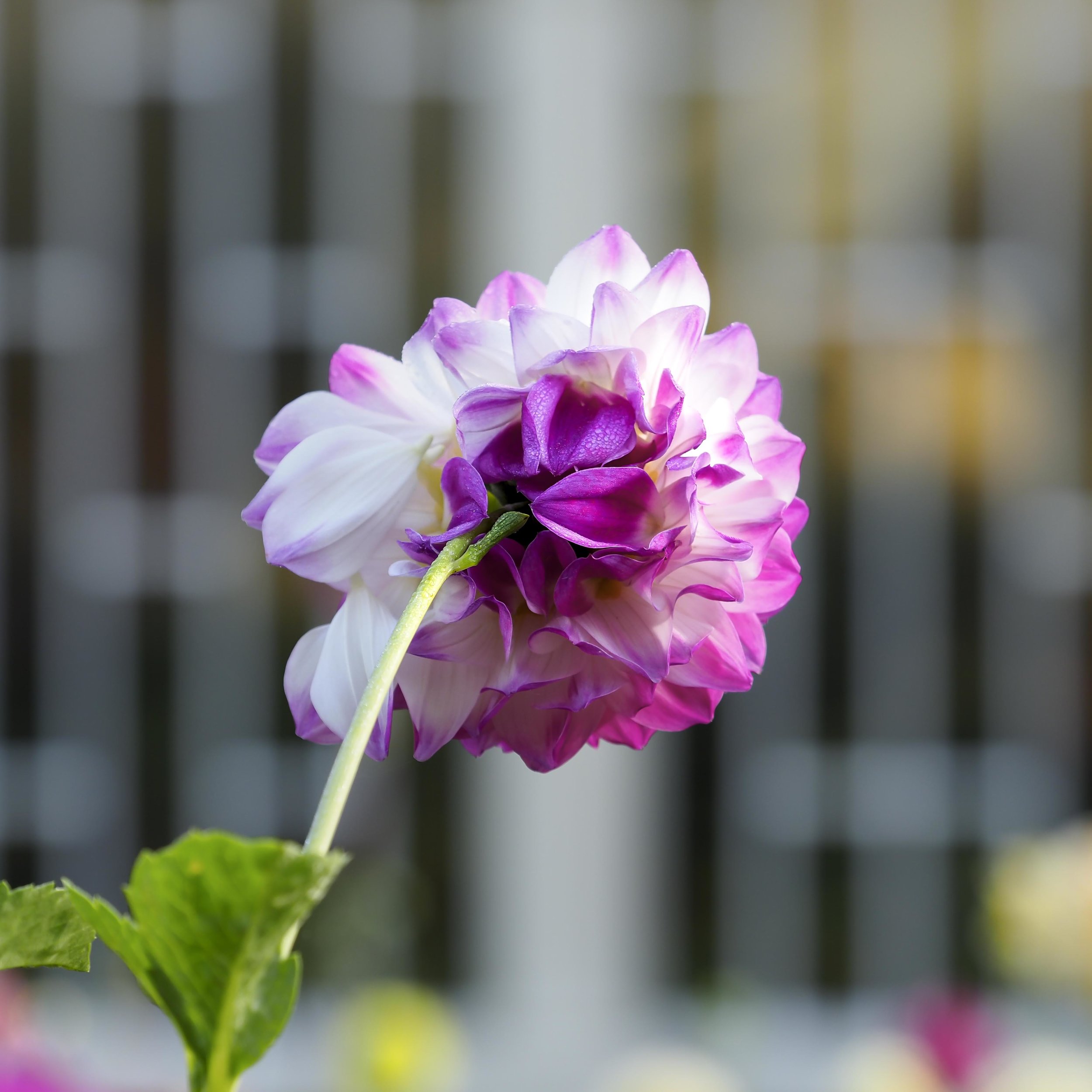
The substantial difference between the Bokeh of the 12-100 (f4 at 90mm) and the 40-150 (f2.8 at 90mm). The 40-150, like the 12-40 seems to produce a lighter and brighter file than the very hard 12-100.

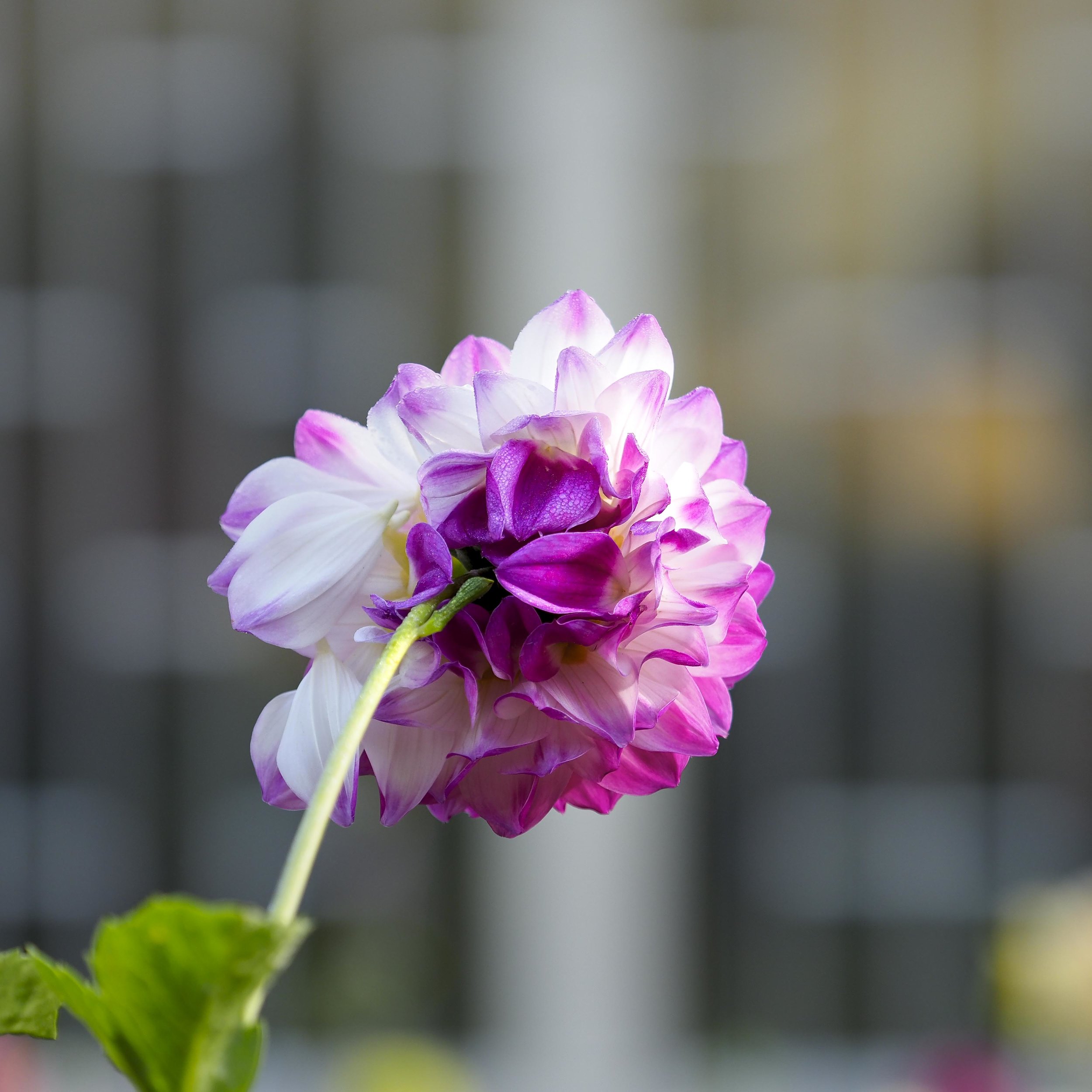
Another image is to show the Bokeh of the lens which is pleasant front and back. I felt I had issues with the last one I tried early on with busy Bokeh. I think, like a lot of things, early impressions can be misleading.

Another image is to show the Bokeh of the lens which is pleasant front and back. I felt I had issues with the last one I tried early on with busy Bokeh. I think, like a lot of things, early impressions can be misleading.

So the questions are;

Can I justify the substantial cost of a lens that adds a small window of speed/reach** that is otherwise a very pleasant lens to use?

Do I need the teleconverter?

*One eye on the viewfinder and the other (left) eye looking around outside of the frame. It is tricky at first, but once mastered, you are not limited to the lenses view only and can respond to what is coming.

** In telephoto’s I have at my disposal;

up to 100mm (200mm FF equivalent) f4 pro grade, 75mm (150e) f1.8 absolutely top tier optics, but older and possibly less speedy to focus, and up to 300mm (600e) with better than average glass, but “kit” grade focus and a slow maximum aperture.

The new lens would only add;

150mm (300e) at f2.8 with pro grade glass and focus, and 210mm (420e) f4 near enough pro grade with the extender.

Short Sighted and Forgetfull

With all of my detailed analysis (non scientific, but detailed none the less), I cannot forget the humble, aged EM5 mk1’s. They still take a cracking image and show the strength of the core principals Olympus aimed for all those years ago.

Always at their best controlling strong, contrasty light, they were a revelation after Canon. EM5 and 75-300.

Always at their best controlling strong, contrasty light, they were a revelation after Canon. EM5 and 75-300.

Both shot with the Em5 and 75-300. Love the firm control of colour and flexibility of the files.

Both shot with the Em5 and 75-300. Love the firm control of colour and flexibility of the files.

EM 1Mk2 jpeg Explorations

Still trying to get a handle on the LSF jpeg’s from the EM1. They look to have different, but similar “power” to the RAW files, but with a running head start for processing.

The image below has minimal processing other than a basic mono conversion, some control of the relevant colours and and a little brush work to remove “strays” in the black shadows. Unlike a lot of jpeg files, they do not fall apart when treated like RAW files (many serious jpeg shooters process jpegs in layers as they do not push or pull well with basic sliders).

EM1 75-300

EM1 75-300

Each year we take down the mandatory Australian fly screen in our bedroom and get a short window (so to speak) of lush late summer garden through clear glass. Most of the images I get this way are impossible to take from outside.

Another taken in the same set.

Another taken in the same set.

Strange Birds

Apparently they escaped from Perth zoo in a storm and now want to come home. Careful what you wish for.

untitled-300197.jpg

Japan Looming and the usual kit angst.

This next trip to Japan is going to be different. My wife and I agree that my street image catalogue can always do with more, but there has to be another element to my images this trip.

Part of this comes from the reality that the trip is not what we originally planned (a guide trip for our parents, who are not coming now) and many of the places we will visit have been done to death, so there is a need to see them with fresh eyes.

This makes my kit choices a less predictable (as if they ever are!) as I will be looking to do street, but also “high” art level images.

The best fine art rig I have is the Pen F and 12-100 used at low ISO’s. This offers totally clean, super sharp images with deep, subtle micro contrast, but this adds considerable weight and bulk for a one use outfit.

The EM5’s are proven (and preferred) for street with the light and sharp prime lenses and to be honest, they are kept with this role in mind.

This pairing of Pen and EM5 also allows me to use only one battery type and leave one camera behind on certain trips.

  • Pen F with 12-100 with filters and tripod

  • 2x EM5’s for street with 17/45 (or 25/75 or 17/75) lenses (not sure as usual, but any will do).

*

The EM1 adds the extra resolution, electronic shutter and custom settings to allow me to use it like the Pen F, but I am not fully convinced it is as sharp as the Pen F in this role (further testing has shown there is little, if any practical difference). AF speed is better. The EM1’s LSF jpegs are also very good and combined with the camera’s better metering, offer a cleaner work flow.

Negatives; The EM1 does frustrate me with it’s soft shutter release that is inconsistent and spongy when fired by thumb. I have also found this combination a little heavy for all day, at the ready use. 2 types of batteries.

  • EM1 and 12-40 for general street and landscape (filters included).

  • 75-300 for longer work (filters included).

  • Optionally, the 12-100 as the one lens option for the EM1. These two seem to really like each other.
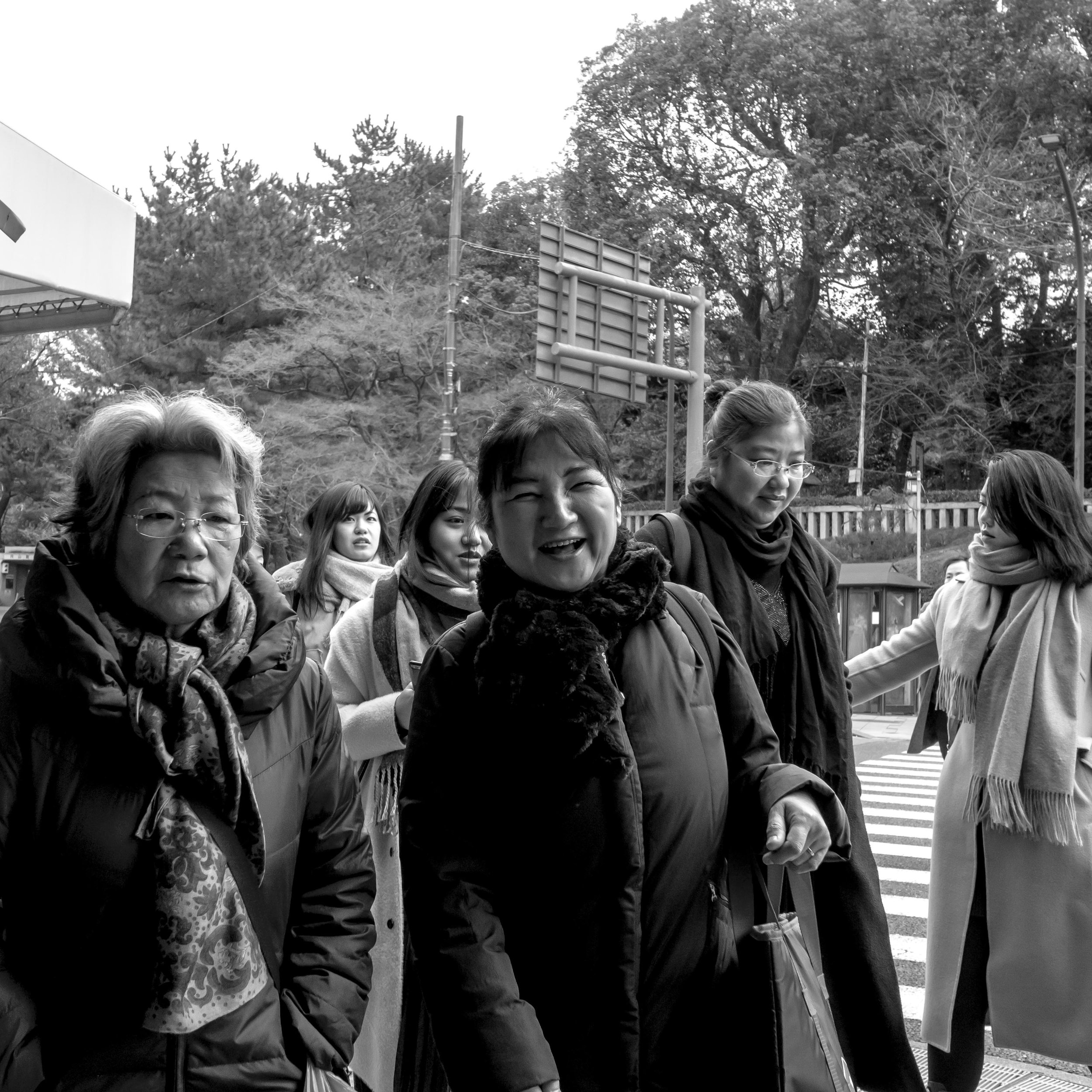
  • EM5 with the strap and 17 as the cross body “everywhere” camera.
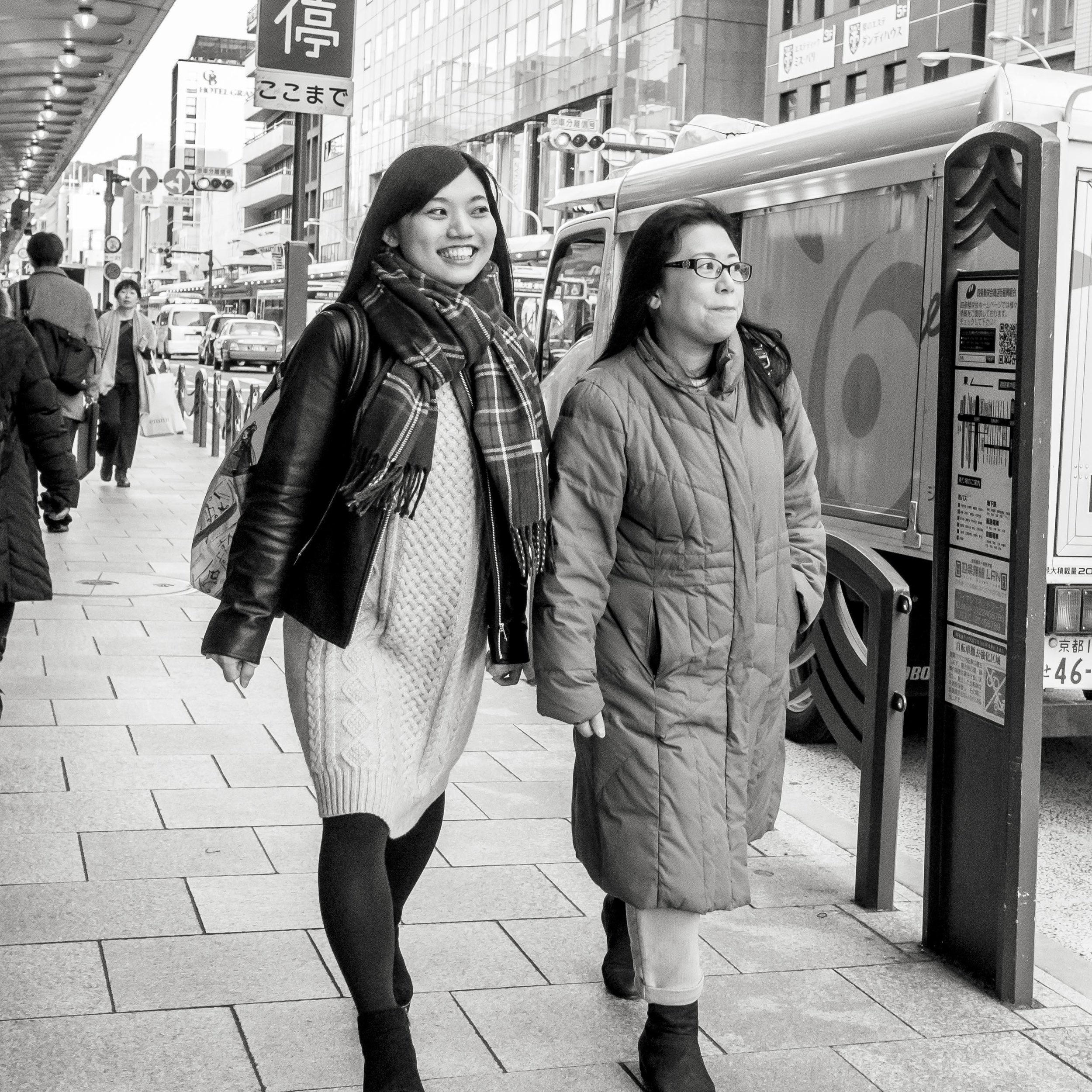
The quality the 12-40 and EM1 can produce in jpeg.

The quality the 12-40 and EM1 can produce in jpeg.

*

All of this has to fit into my TT Turnstyle 10.

The top kit needs to be broken down for travel, maybe forcing me to take a bigger bag to get to Japan and the TT for when I am there (where it would work well).

The bottom kit all fits fine as is, especially the 2 camera/2 lens version.

*

The temptation of just taking the 2 or 3 EM5’s and 4 primes is always present. This trip is more about consolidation and exploration than seeing things first time, so there is less pressure to get it right. There is also nothing wrong with the landscapes from the Em5’s, I just prefer to work with an electronic shutter.

Kyoto

Sometimes an image works in black and white only. A very mundane scene, saved only from the virtual bin by curious experimentation, this image works for me on a very “tones and textures” level in mono.

EM5 45mm

EM5 45mm

Working Religiion

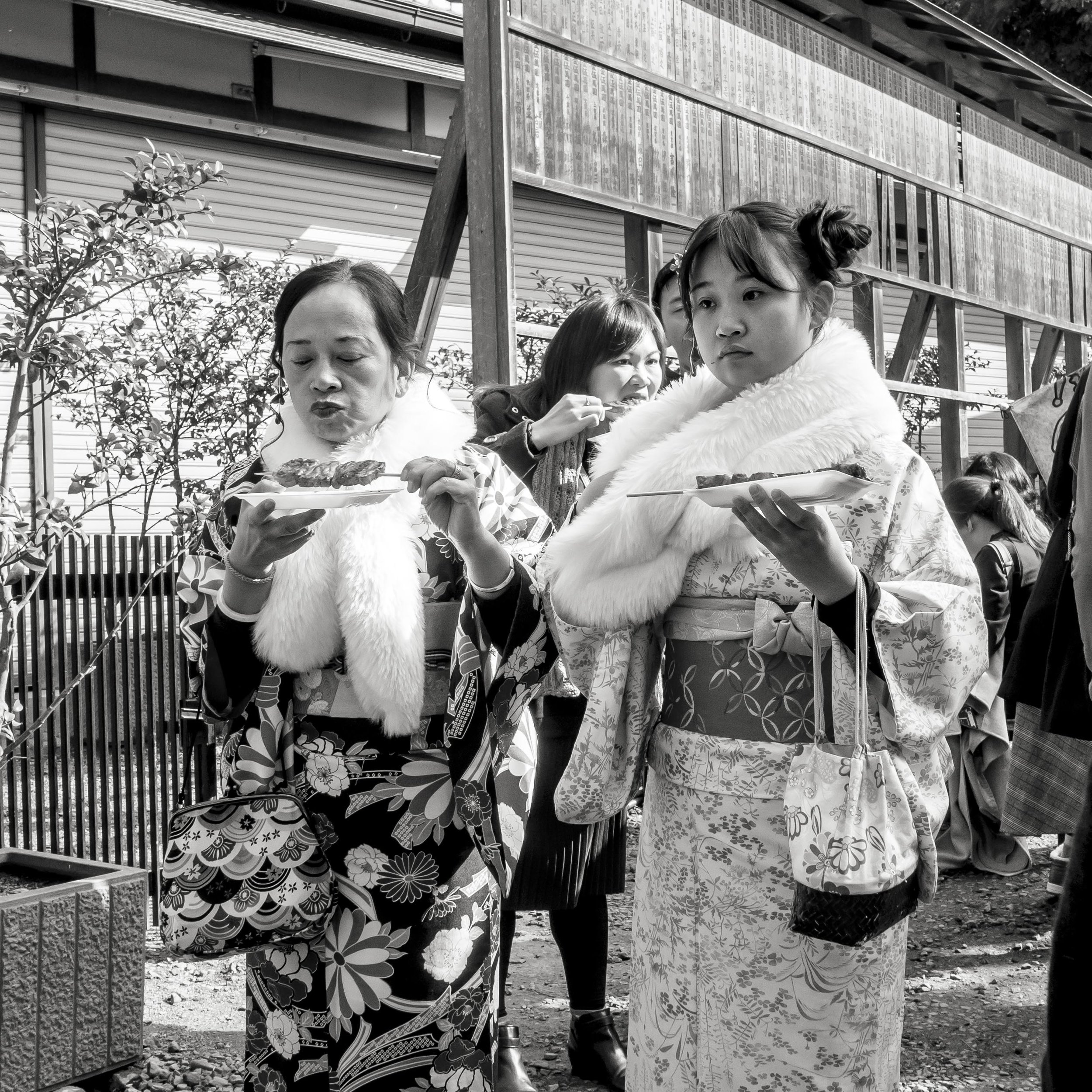
Religion in Japan is very inclusive, very everyday. It is a working religion, a part of every day life and it is often a complicated mix of tradition and belief.

untitled-1150227.jpg

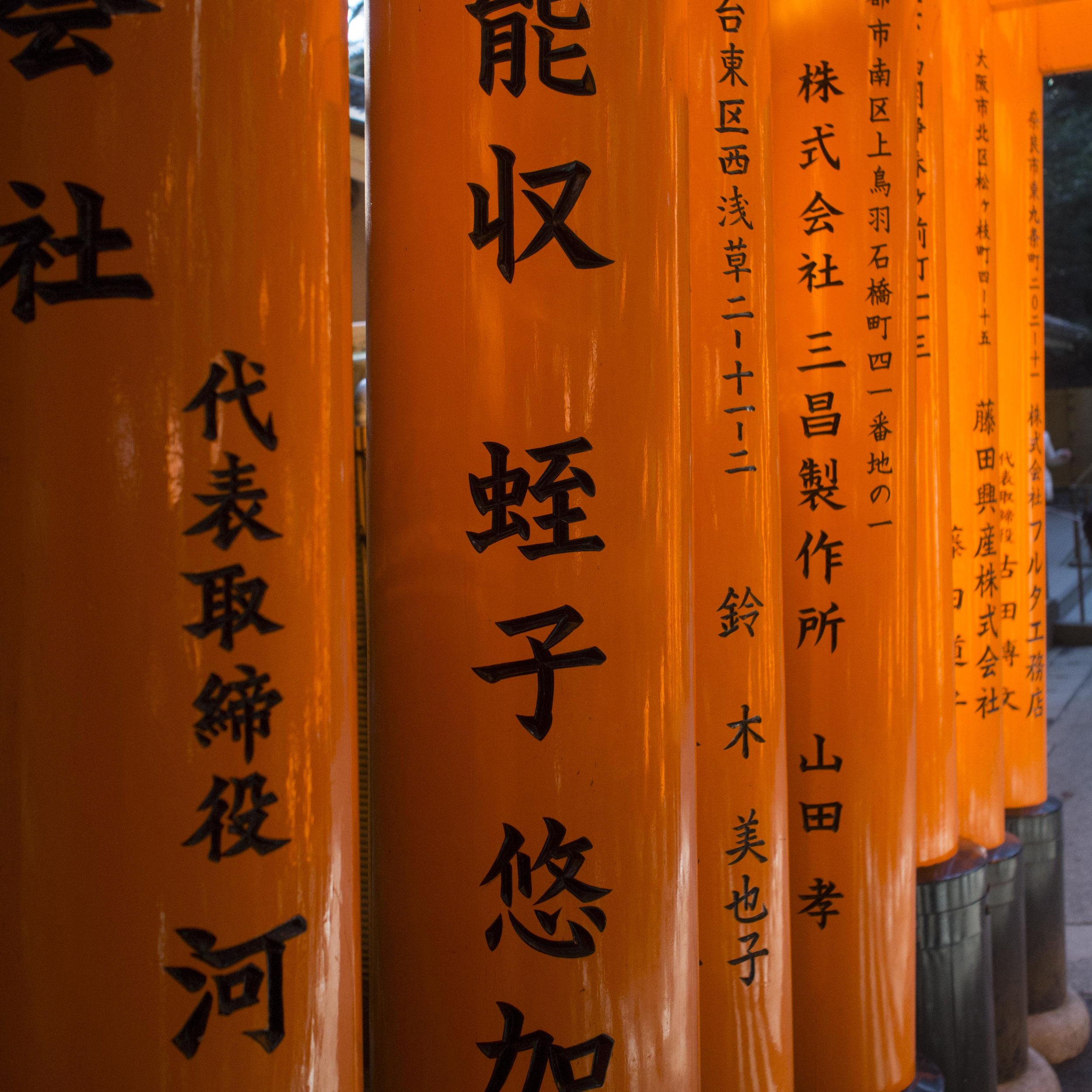
It can also be beautiful in a very real way.

Architectural Contradictions

Kyoto, more than an other city I have been to in Japan, has a bewildering variety of architectural styles. Many can be seen in the space of only a few city blocks.

untitled-050704.jpg

The main shopping strip has everything from carved detail the Italians would be proud of, rust and run-down to all of the last 6 decades covered.

untitled-1150276.jpg

But it’s when you get into the backstreets that the really cool (weird!) stuff appears.

untitled-1240531.jpg
untitled-1240788.jpg

All this sits surprisingly comfortably with several hundred years of traditional building.

Over Processing or Over Thinking?

The image below is over processed.

That is according to me, as their is no reliable or logical measure for this. Each to their own.

The reason I feel it is over processed, is because I know how much effort I put into it’s processing. Which lines I crossed.

Taken with the “Hard” sharp EM5 mk1 sensor and the sublimely sharp 75mm at f5.6 (as near technical perfection as I have at hand), the temptation was to follow the image’s potential and push the envelope.

Showing off?

I guess there is always an element of that when processing work for others, otherwise we would not bother at all.

Technically perfect at A2.

Technically perfect at A2.

There is nothing overtly fake about the image. Nothing added or removed, nothing modified in the true “Photo Manipulation” sense. The sharpening, mostly applied by brush tool in Lightroom is supplemented by added clarity and contrast, highlight recovery and selective colour saturation.

Nothing was pushed to the maximum settings available, not even close. Even the dreaded M43 noise is basically invisible at large print sizes and there are no sharpening artefacts. I just felt I went back to the sharpening “well” once too often.

These have always been the processing tricks photographers have used to enhance the perception of perfection in their images, but at what point is there more make-up than face?.

Personally, guiltily, I like the effect, but equally I felt compelled to come clean and share my unsettled feelings of “tricking” you, the viewer.