Spring Landscapes In Japan

The landscapes in Japan are stunning, which is no surprise as most, be they large or small, are the work of decades, centuries even.

In many of these gardens we have witnessed volunteers on their haunches, plucking weeds with tweezers!

Nara’s parkland, dear and all.

One of the most famous gardens in Japan, featured on Monte Don’s show.

Every stone chosen and placed by experts.

The little 17mm, a lens not considered perfect by any means is a champion in this style.

Even inperfection is embraced.

The whole hillside is planned and executed with the patience of a life time.

This deep forest scene is only meters away from walls and less than 100m from a city road.

With a fine balance of controlled randomness, the gardens of Japan are a symphony of gentle perfection.

Golden Light.

Golden light in Kyoto is a meaningful, but brief moment in time as it shafts down the main street.

Taking my turn.

The Fog

Suffering from a little creative fog at the moment.

My volunteer work has shifted to more mundane projects to finalise the end of the financial year, something I accept. The paper is hammering me with the reality I do not find the work (it’s shape, not the subject matter) at all satisfying and there is nothing else happening on any other front.

The reality is, the paper does nothing for my soul. The images are generally staged, limited and no matter how many you shoot, nothing much is used. Beware striking gold, it will mostly be stowed in the vault and forgotten (or used in a blog post). To be fair, sport is an exception, but has its own issues with captioning*, so I hope my reduced hours, leaning heavily towards the action laden weekends, will suit better.

The odd happy snap resonates, like a lone tree on an open plane. Need a forest, a big one.

The only shining light is revisiting the work of the past, Japan in particular. I believe you are only as good as your next image, but my huge catalogue of the past needs to be given its due.

Having to face the reality that I will likely be happier doing something else for a living and taking photos for myself only, these mean much as they are closer to the norm. The creative freedom of shooting for yourself is actually not a luxury when dealing with artistic endeavours, it is a must.

If I was assigned the task of taking this image two things would happen. I would shift thinking, possibly blocking the natural flow of getting it taken naturally, but secondly, I would probably be confused on assigning, because from an editorial perspective, how would you describe it?

The reality is, artistic photographers work hard and often for little reward, because they do not work to a defined, limited formula. That is the point and the problem.

To be financially successful, without selling out what they believe, artistic photographers need to be ahead of the game. They need to establish themselves, often oblivious to other influences, continue to change and evolve and offer only their perspective on their terms, not adopt those of others.

They need to make an audience on their terms, not pander to one purely for commercial considerations or the desire to be accepted. You need to accept the artist, not the other way around.

When an image makes sense to you, you often have no time to decide if it will resonate with others.

I do not delude myself into thinking that I am an artist, preferring to think of myself as a craftsman in the true sense. I am taking something un-original and trying to do it as well as I can, as often as I can, in preference to doing it well enough to be just suitably functional.

I refuse to be limited to thinking like a tradesman, doing what is instructed without any of the freedom of thinking I need to do better.

Is that art or just an illusion of the process?

I guess it does not matter really, because it is what I do.

*If asked to come back with 200 useful files of a sports match, I would not be daunted. If that becomes 10 with accurate captions, my shooting changes. I shoot less because for every action shot, I need to take several for identification and if that is unlikely, I simply do not bother. An un-captioned image is a useless image to the paper and I accept that. I just do not like it. Never thought I would say that. This actually happenned on the weekend. I covered a football match with only 50 images (no bursts), plenty for a page of images, but ended up taking 350+ to get numbers as well. Football is the best of them because at this level, the players have numbers front and back, but add in a lack of numbers, team lists and even educated watchers and it becomes a guessing game.

Just Waiting And Watching

Sometimes, the best thing a street photographer can do is just sit, watch and wait.

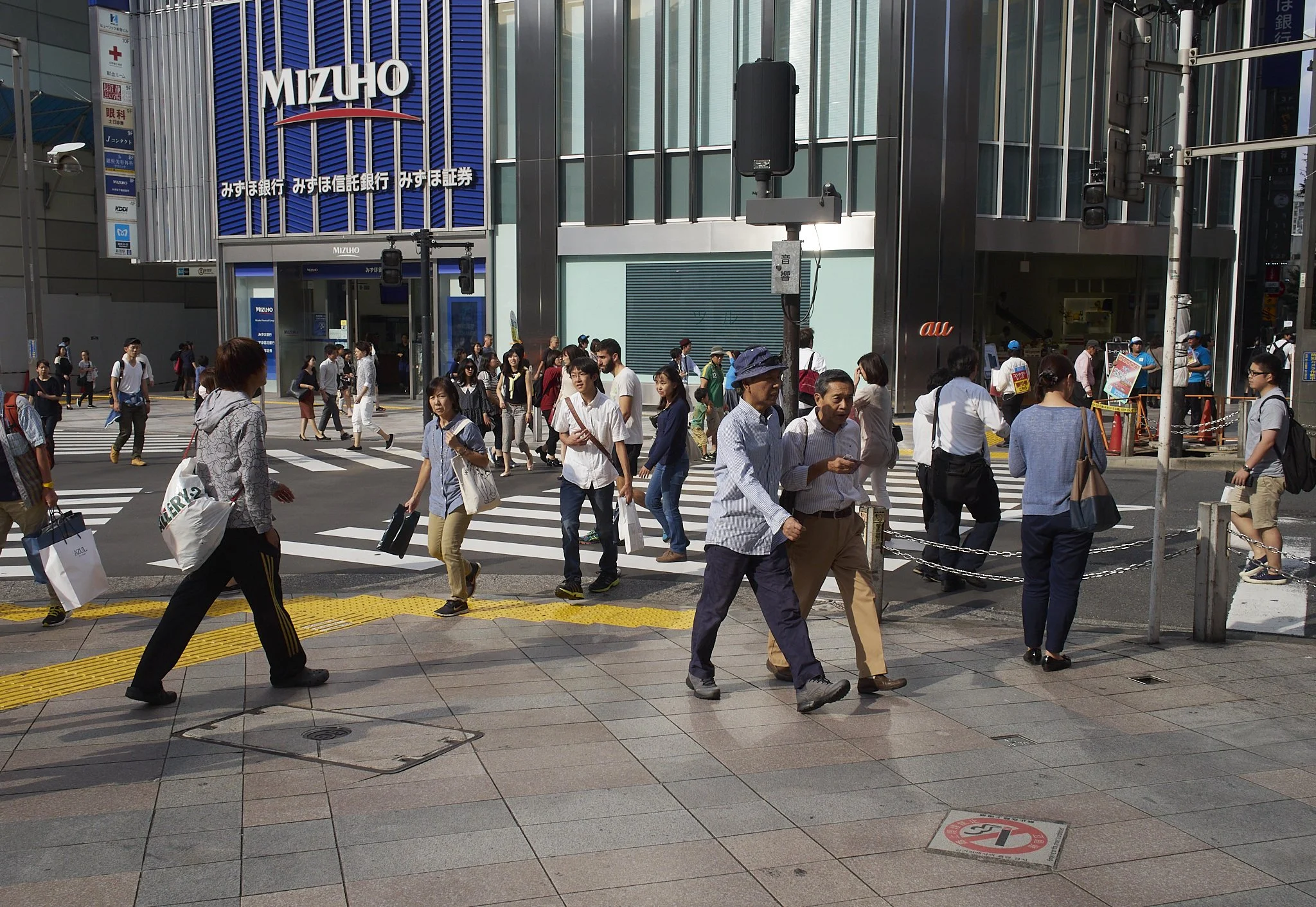
This set was from Harajuku up near the station corner. I did not think much about these images at the time and they failed to jump out early on in processing. Their depth is the element that works. Your eye jumps forward and back. I get that now.

They are growing on me.

Below is a set that made more of an impression, but only one file at the time, taken at Shinjuku later the same day.

The second set has the theatrical light that grabs me. Big city light.

Below is another set, taken the following day at Harajuku.

Little Surprises

Looking for supporting files for my book review of “Reclaim The Street”, I have been stumbling on some images that even though they were processed recently, seem to still avoid my full attention.

Might be a challenge to print well, but we will see.

The Shortest Nature Lens

I travel as light as I can. When travelling, especially when some street or low stress family shooting is the norm, I travel very light.

This does not leave room for adapting to other high needs photography like sport or nature. Or does it?

All the images below were taken with a 16mp, M43 EM10 mk2 and 45mm f1.8 Oly lens all cropped and before crop.

This shot shows that even with a relatively poor close focus distance, it even manages semi macro shooting.

The Realities Of Street Photography Labels

I have a deep an abiding love of street photography.

Of all the genres, I feel the most drawn to it and find practicing street photography to be a timeless pleasure. I can in fact admit to loving and practicing street photography before I knew there was such a thing. I used to call it National Geographic style, for lack of a better term.

The thing is, it is very hard to pin down what street photography actually is and I get frustrated by artificial labels being applied.

I bought two books on the Perth trip (because big, heavy books are such a practical idea when travelling), both loosely about street photography, but very different in approach and content.

“Reclaim The Street” grabbed my attention on the very first day because the front cover image was close to one of my own favourites from Japan. It shows a Salary Man in Shibuya leaning head first into a wall. A Salary man “taking a moment” is a common enough sight and very in context with place and story.

Similar vibe to this, just more focussed on the man and only the man and more desperate, less tranquil in a sea of motion.

The second book is about portraiture by Mary-Ellen Mark, a photographer I have long wanted a decent book about, relying up until now on a battered copy of Camera and Darkroom magazine.

In it, she states that to her, Street photography is the hardest form and very different to what she does, which brings to light the differing opinions on what it actually is.

To me, Street shooting is about people and life, simple as that. The choice of whether it is overt of covert is the photographers philosophical and technical choice.

Mark is an overt documentary portraitist, which to me is a form of street photography, but she sees it as a different dicipline.

Kate Kirkwood photographs rural landscapes with a human touch proving that the literal street is not needed.

Bresson snapped Parisians doing their French thing, but could equally have posited his images as a documentary work on Parisian life.

At the end of the day, it is all about people doing their thing.

Same, same, but different.

Street photo?

The image above is just a snap of a family, or is it?

I could title it, age it even and it may become a work of some importance, but it is still a family snap. Maybe if I went back in time, or forward even it would change in importance?

The elements of a Street photo are there, people, natural interactions, place, layers, but by being familiar or mundane is it shifting into a different space?

Sally Mann photographed her own children candidly, posed and documentary style, but if you stretch the definition, they fall under the huge umbrella of Street.

Maybe this one?

This image has more “gravitas”, is more clearly layered and theatrical. It has more of a feeling of “seizing the moment”, but is it any more or less a Street photo?

I guess if you personally need to define the catergory more formally, then it can be easy to do, but for me, the types of image making I like tend to blend together with no clear lines of embargo, meaning I either have to make up a fusion term, or stretch the definition of what a Street photo is.

Maybe the easy fix is to call it all “Life Photography” and move on.

There you go, fixed :).

Perth Favourites 2

Henry and Roly, the sensitive ones.

May, the quiet dreamer.

Finn the schemer

Some pastels

So much world, so little time.

Perth Favourites 1

Some favourites, including the kids, the real reason we came over.

A little Stephen Shore, a little French Riviera.

My Martin Parr

Cool cloud.

Drinks anyone?

Finn with the boys favourite, Lego.

May, caught performing.

Finn and Henry. Finn has an amazing ability to “re-conform” computers.

Their other pass time, exploring. Henry in particular is more interested in wild life than most other things.

Spot of old school charm.

Perth Days Four And Five #2

The Giants are a series of giant Trolls built on various locations around Mandurah. Each has a story and specific feel. We managed two, as they are a fair way apart and we got off to a sluggish start.

Perth Days Four and Five #1

Day four in perth was spent in the city proper. As with many capitol cities, we find the centre less interesting than other laces. I bought some good books I have been after for a while and the odd one that surprised me, but other than a forced lugging of a decent encumbrance, there was little else to hold us.

The next day though, had Giants!

Perth Day Three (pt 2), Or Channelling Martin Parr

Martin Parr is a well known British street-documentary photographer, who specialises in seaside holiday images. Not of his calibre, I was still drawing on memories of his work for these.

Red and yellow work so well as anchors.

Even yellow can hold its own.

Warriors facing the day.

Perth Day Three (pt 1)

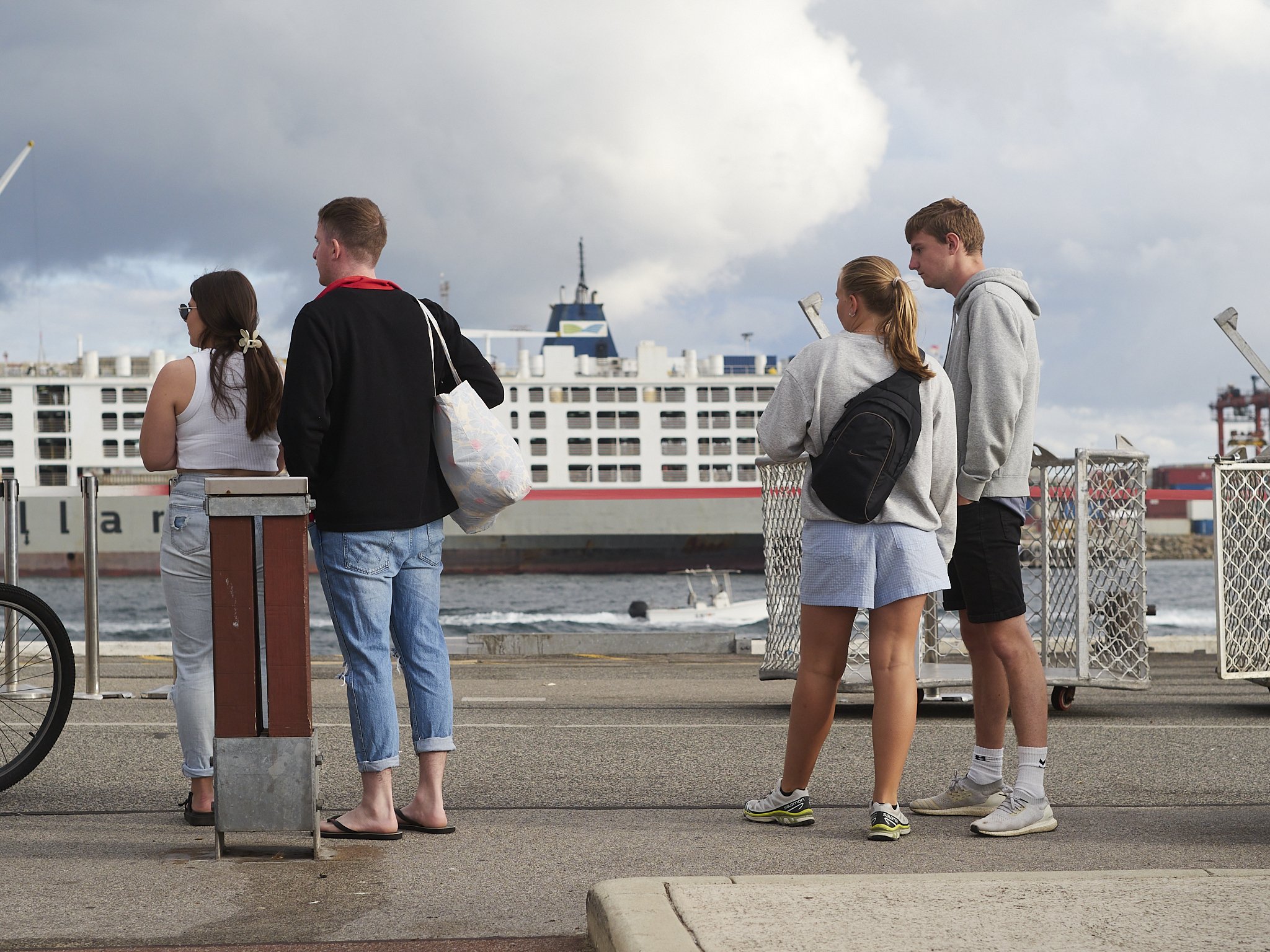
I love the dock area of Fremantle. Busy, interesting and massive on some levels, it always has something going on, so you can imagine how I felt when I missed an amazing sunset when walking into town for dinner, then the very next morning, still smarting, I missed the magnificent early morning sun hitting the bridge and docks.

Next morning, resigned to no two days never being the same, I still packed a camera and a couple of prime lenses.

Early signs were promising.

Then the light went nuts.

I added a little highlight recovery to this, niot much more. Needless to say, the rest of the day was an exercise in timing between rain squawls and patchy sunshine.

No, no two days are the same and it turned out this one was a cracker, from the strong post dawn light over our shoulder, to the strom rolling in, this one just gave and gave.

Perth Day Two

Note, some of the day two images were included in the previous post on prime lenses.

The Process And An Argument For Primes

I and others have touched on this before, but with the benefit of hindsight and thousands of images uner my belt, I feel even more strongly about it.

Primes lenses make my photographic life easier.

I have revisited this spot in Osaka a few times, each armed with only the 45mm. I have never felt I couldhave shot it better with a zoom, makign the most if the framing as that one lens allowed. I can move a little and of course the wrong lens entirely would change my experience, but still, the clarity of the prime did not hold me back.

This may sound contrary, because zooms are the convenience tool, primes are “old school” and harder to use, but for me, that is not the case.

The case first for zooms.

They are perfect when you cannot do anything about where you are or how many hands you have. Shooting long distances, possibly using shorter lengths in a fluid situation or more improtantly, not being able to change lenses due to various circumstances are all zoom territory.

Bad weather. fast changing shooting distances, a press crush, a cramped cabin or swinging off the top of a crane are all ideal zoom ecosystems. A pair of zooms when shooting fast for the paper is the safe bet. My primary field sport lens is the 300mm, but on the second camera is always a zoom for the occasional close to extemely close action.

Ironically, I also like zooms on a tripod for landscapes or in a studio. They fix the pixel wasting micro crops that would otherwise be done in processing, allow for exploration of the scene and all the negatives, like less stable performance, slower apertures etc are avoided and reduce filter and accessory fiddle.

Now, the case for primes.

Personally, I shoot faster and cleaner with prime lenses.

The process with a prime is;

See > move > frame > shoot.

No time to zoom, just point and shoot.

Sometimes there is a body change before is I go from close and intimate mode to candid longer shooting (but two choices are plenty**) or the reverse and settings may need changing (but as I grow, this is less often the case). Clean simple and intuitive.

The process with a zoom is either;

See > zoom > move > frame > shoot or,

See > move > zoom > frame > shoot.

The couple of takeaways from this are that often the whole frame/move/frame bit is fluid and distracting and often the mental side of framing is the same.

If I can zoom before hand and stick to it, often to an end, which I am guessing for many is common*, then the zoom becomes a slow, heavy and still a little distracting set of primes, but there is always that thing, that 1000lb gorilla at the end of the camera whispering “the potential is limitless, are you sure?”.

For me the creative reality is clear.

Indecision is a killer.

Clarity is all.

Primes offer clarity.

Options are a fog that is sometimes hard to navigate.

Zooms are “foggy”.

This is a real thing for me, but also something recognised by many in the creative world. The mitigation of obstacles or working within defined limits helps to flame creativity. The pencil artist does not want a better pencil or more colours. They just want to draw. Give them infinite options and it may lead to infinite indecision.

The reality is either movement or zooming are needed, but not always both and perspective when chosen is fine as long as it is of the type you want. If you cannot move, then zooming is great, but if you can move, then moving is better. “Flat foot” zooming is a common problem, “moving to zoom” frees up the eye and embeds you in the process.

In my C.I.A mantra, the A is for Action/Angle. Angle in particular is important. The change of direction is shooting angle by as little as a few degrees, can make all the difference to the power and mood of an image. Just zooming can clarify or tighten up an image, or add inclusivity, but little else.

Movement in all directions is a must, zooming useful is a luxury.

Also worth mentioning is the power of the modern camera. Zooming and cropping have become nearly the same.

Decen quality cropped…….

..from this file, EM10.2 and 45mm lens.

*I would theorise that many zoom users are only interested in the ends of their range when things get pressured. This is in line with below.

**You do not need to cover every single focal length, you only need a representative of the different perspectives and required magnifications you need. A super wide, semi wide, standard, short tele, long tele are all perspectives as will as magnifications.


Perth First Day

First day in Perth on holidays netted me a container load of shots of the family, who I need to check with before using.

Some other bits also until then.

Pressing my 45 into wildlife mode (i.e. massively cropping off an EM10 image).

The other Crane of Fremantle.

Kit used is a very comfirtable 15mm Leica and 45mm Oly on a pair of EM10’s (except I only took one with me which was a pain).