I have had a some wins in video this year and even my misses have been within my scope of understanding to an extent.
Unlike stills, which I do almost by instinct now, mixing camera “X” with lens “Y” for an anticipated result, video and all its combinations (far to many as it goes) is still cursed by tentative growth.
I need to know more, I need to accelerate the process.
These summer holidays, summer being a loose term this year it seems as the weather refuses to break through, I will be testing a lot of things, defining processes and generally just getting on top of what works best.
First, I need to define my goals. What am I looking for, what style, quality base and work flow is ideal and flexible enough for my needs?
There is a fashion at the moment for silky and brilliant, the “soft digital” look, but also a need for flexible and timeless results at the core. My tastes run more towards naturalistic and clean, but my clients will want what they want.
Question 1
Shoot 4k or 1080 for 1080 output?
Nobody I shoot for needs or wants more than 1080 as a rule as almost everything is going on line, but is it still better to capture and process in 4k (or higher) for lower output and have bigger in reserve. Also, can I really see the difference anyway and is there a sweet spot that I am not aware of (more on this below).
Question 2
V-Log, Flat or B-Raw and then, in what compression?
I have had some lovely results with V-Log this year, even Flat profile for very controlled and low stress shoots and the work flow of an OOC format is as simple as it gets, but B-Raw is a revelation and can even run small enough to make little difference to my storage and work flow.
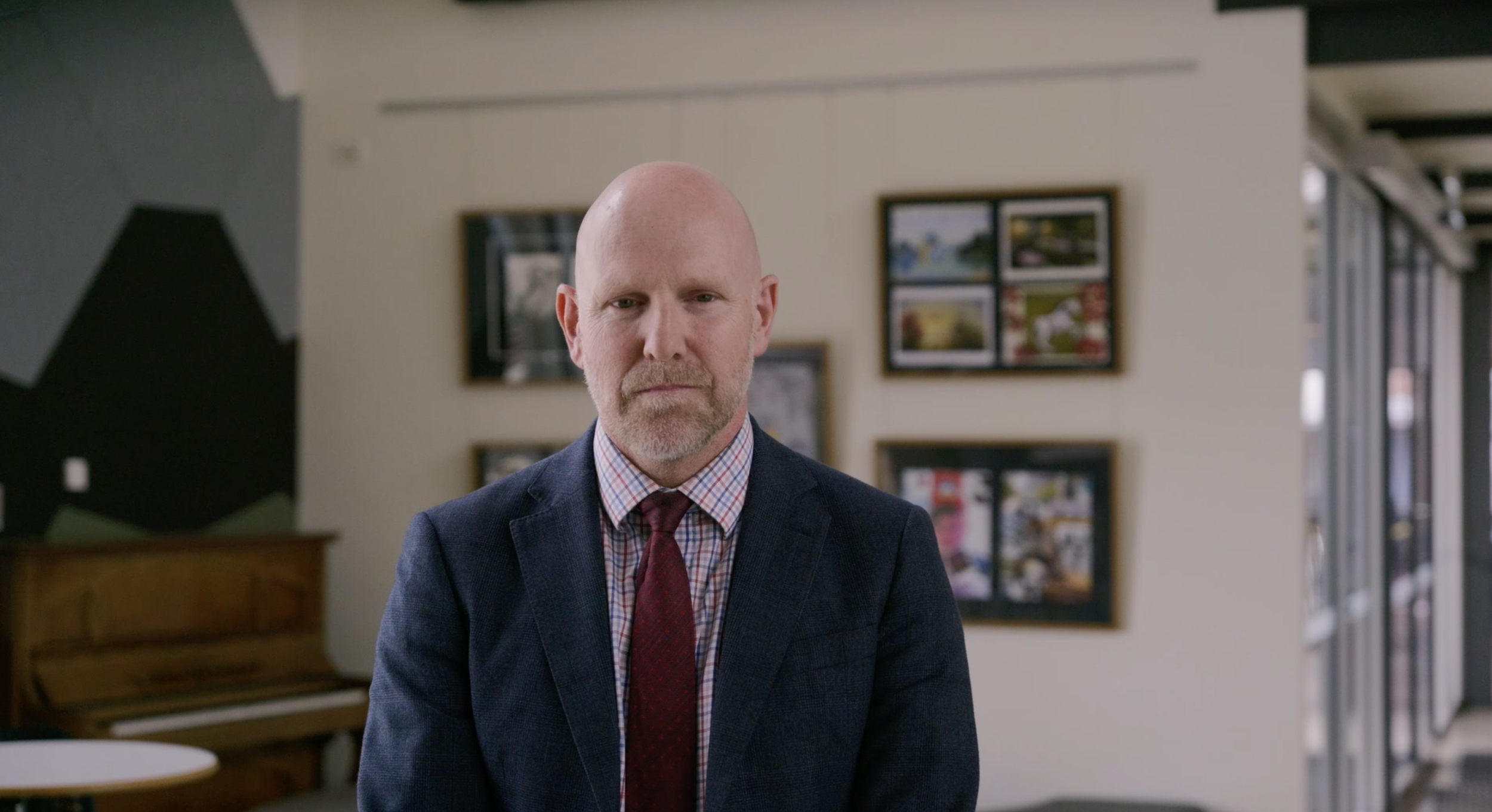
This was a V-log file I shot recently (S5, 28-70 Sigma). It was fine, but the five I shot for the project were all in very different light and locations so matching them was harder than it would have been with B-Raw.
The big issue is one of choice, or to be more precise, so many choices. The common consensus is Q5 (constant quality) or 8:1 (constant bit rate) are enough for most professional projects, Q3 or 5:1 reserved for higher quality jobs. These qualities are considered “TV broadcast capable” according to Black Magic.
12:1 compression is too small for quality work (detail gets lost in movement and shadows).
Q0 and 3:1 are over kill for most uses and I have recent experience with exactly that*.
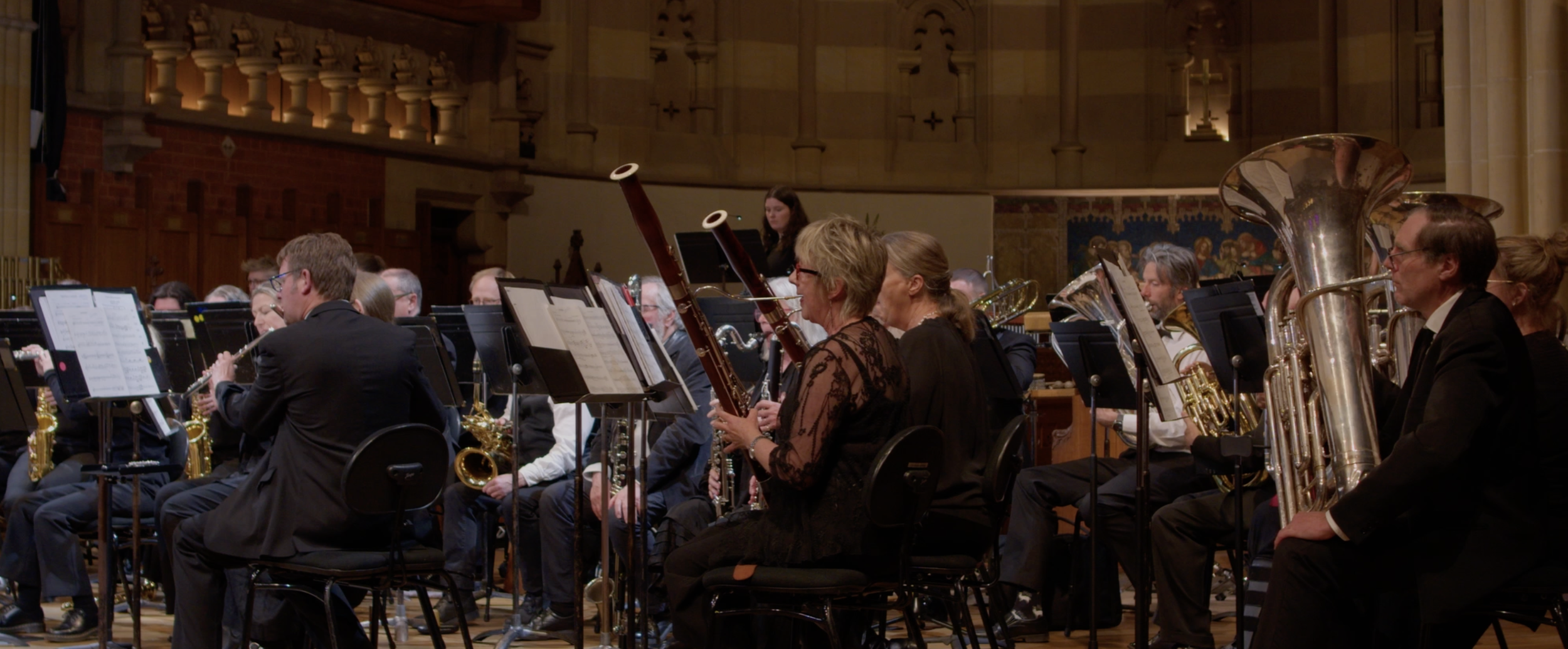
The quality was lovely, but too much for a small screen.
Constant quality or “Q” settings are better for subjects with a mix of movement and detail as they keep files smaller if there is little to record, but can go higher if needed. The catch is, Q5 in particular can drop to such a low bit-rate for static scenes, it causes problems of its own.
For example 4k/12:1 runs at 34 MB/s, while Q5 ranges from as low as 21 to 58 MB/s, while 8:1 sits on 51 MB/s, so always near the top of Q5, but never lower than that set rate.
So, 5:1 is roughly the average of Q3, 8:1 is roughly the average of Q5, which all make sense, the thing to be aware of is a Q setting will “go to sleep” a little when bored and may spike above the write rate of your media when stressed.
Given that, I will hypothesise it would be best to use Q3 over 5:1 for mixed situations (Q3 can be as little as half the load of 5:1), but probably 8:1 over Q5 because the bottom of the Q5 offer is less than 12:1, although for busy scenes, Q5 is probably still ideal.
We will see.
The constant bit rate formats also tell you accurately how much recording time you have, which may be safer for some jobs like long performances.
In the first two questions I hope to find out things like; if I limit a job to on average say 35 MB/s but still want decent resolution and detail, am I better off using 2k/3:1 or Q0 or 4k/12:1 or for better quality at say 50 MB/s should I use 2k/Q0 or 4k/8:1?
Question 3
Which camera and lens combinations sing and which ones disappoint?
This is something I usually find out as I go with stills, but with video there are fewer times to find out, a lower threshold for error and only a relatively small safe “core” to fall back on.
My best results so far seem to be from the Sirui anamorphic (but I have not compared my now matching two for consistency), the S-Prime Panasonics, Hope 25 and the Sigma 28-70, the latter two pressed into “hybrid” service, so seeing more action.
The 50 Hope, 12 Vision, Spectrum lenses and the IRIX have taken some lovely stills and test footage, but I have not used them “in anger” for serious work. I need to know if there is any real benefit head to head to using them over more convenient lenses.
So, do I need better lenses, do filters make a difference, are some combos easier to use than others (noticed this with the Nightwalker and Hope test, sold the NW), what other qualities do I need to know about (flare, distortions etc), things that often rear their head when in use?
Something that I have also found difficult to find on the web is B-Raw performance from the G9II. In theory it is equal to the S5IIx (same generation cameras), but it is hard to find concrete evidence. Comparing it to the S5 and GH5s will be interesting and will likely determine if I need to upgrade the S5II, go with a BM camera, a S5IIx or S1II (which is the same price as a Pyxis 6k!).
A third Video assist is on the cards if the G9II cuts it.

Still a favourite shoot, this one failed to make it into anything useful, partly because I was concentrating on stills, so there was no coherent plan and partly because I left it too late.
Question 4
How can I speed up my processing and turn around, which in some part comes down to all of the above and my understanding of Resolve.
Question 5
Based on the above, what three rigs should I move forward with?
My ideal and how I am set up now would be the GH5s in the RigidPro rig and BMVA 12g 7”, the G9.2 in All-i V-Log and a light 5” Portkeys monitor for mobile run-n-gun and the S5.1 and BMVA 5” for B-cam support to both. All three can be run for over 2 hours with decent power supply options.
I am open for this change however, which is the point of testing. It may be that the GH5s or S5 have the best V-Log results with their older and less hyper-sharpened sensors, the G9.2 the best B-Raw-out with it’s newer implementation and the Raw can soften it’s output or do I need to upgrade the S5II to Raw-out (or get an S5.2X, BS1H or S1.2).
Finally, should I get a third BMVA 12g (5” for the G9.2)?
Question 6
Does it work as intended?
Do I have my rigging, mounts, attachments, power, sound, lighting and storage needs covered and fix what falls short? Do my three specialised kits all do what they should?
The process.
This will require a pain staking set of tests with all the relevant lenses on all possible camera mounts in all the core formats because each camera may well perform better in different codecs. I am fully expecting some to be the champions of V-Log, others to be the better B-Raw-out supports and some, like the older G9’s to have a place also.
I need to be organised, methodical and comprehensive.
The first step is a test location (my storage garage down stairs) with movement, spaced objects lights, etc.
I need a flare point, some depth for Bokeh tests, some busy and fine movement (a fan and something that it pushes), enough contrast to test noise and DR and details for sharpness.
If I do this, I will go into next year with more confidence in my video processes.
*Shooting a one hour concert recently in 4k 3:1 on one camera (GH5s static) and 5.6k Q5 on the other (G9.2 moving), which netted me 600gb+ of footage. The G9-Q5 combo actually produced the bigger files. I did this to make sure the video was as good as I could produce within my storage limit, but went too far due to uncertainty.