There are a lot of opinions around about lenses and many of them are based on the same opinions we have had for ages, perpetuated by the makers and some purchasers through ignorance or sometimes deliberately.
Lets look at some of these myths.
1) Fast (wide aperture) lenses are better than slower ones.
This is not automatically true, in fact in the past slower lenses were often considered more stable and reliable, faster ones had to go to extreme measures just to be as good, while delivering the special feature they were bought for.
Early Olympus and Leica for example made no distinction between their faster and slower primes, each lens was made to do a job up to the same standard, just different jobs.
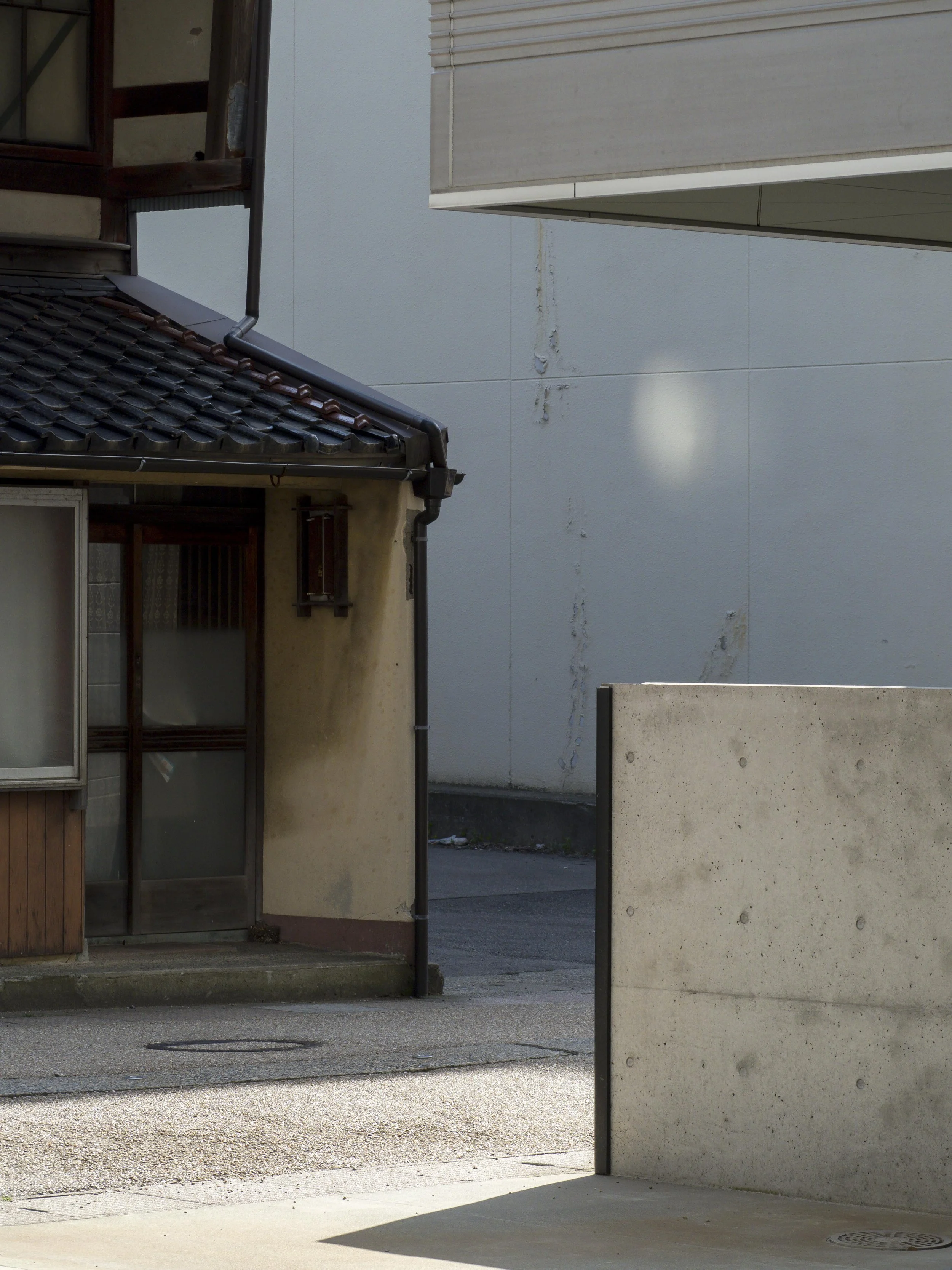
Hollywood set-like lighting captured with the kit 40-150 Olympus. At f8, which was needed for the correct depth of field, no other 40-150 I own would have made the image any better.
If you need a fast lens, then get one, but don’t buy a big and expensive super fast prime lens to get your landscape passion off and running. Most lenses are near identical at smaller apertures and once you are over the uber-blur look, you may rarely use the very wide aperture that cost you so much.
Few professional photographers rely only on fast lenses and wide apertures and the look they produce, these images simply do not tell a story or add context.
Sports, wildlife, indoor and portrait shooters may lean towards them, but often out of need. Shallow depth is only one type of image and not so long ago it was considered to be a side effect of low light shooting. It is not a coincidence that fast and accurate AF and the fashion of very shallow depth imaging came hand in hand.
More important for you may be the rendering of a lens at a middle aperture for landscapes or environmental portraits, something a super fast lens may not be very good at. Look at the bulk of the work shot for National Geographic or similar documentary works, there is little shallow depth imagery and when there is, it is often driven by need.

An early image taken on the Sigma 30 f1.4, a lens known to produce super sharp images wide open and creamy Bokeh. Since purchasing it, I have rarely used it, possibly responding to the flat, very modern rendering or maybe the large (for MFT) form factor? The reality is, I like context in my images, something this lens is designed to blur away and because of that, it’s a bit of a one trick pony. I would hate to be forced to shoot with only this type of lens.
2) Bigger and more expensive lenses are inherently better than smaller, cheaper ones.
Any lens, if made to the needs of its design concept, does not need to be any bigger than it needs to be, which is to say, that monster chunk of glass up front, might not be an image improver, it may simply need to be there equalise the lens with it’s lesser stable mates.
Designers go to great lengths to make their flag ship designs their best lenses, something they may find challenging as lesser lenses pretty much come together effortlessly.
Large lenses also mean bigger filters and they require better flare controls (lens coatings and hoods).

The lens that took this (17 f1.8 Oly mk1) is not overly special on the test bench, nor impressive to look at. It has soft corners wide open (often a field curvature thing that flat charts cannot measure, which means nothing when used in the field), average overall measured sharpness (not visual sharpness, which is excellent), a very small front element and form factor, mediocre Bokeh by modern standard with a modest aperture, but it consistently takes some of my favourite images. The designers wanted a good street photography lens and made just that.
3) The lens mount does not matter (when do we even think about that?).
The lens mount determines the stress placed on the lenses design. The Sony mount for example is quite small, the sensor is actually bigger than the mount itself (hides the corners), meaning the effort made to make wide lenses for it has to be both clever and extreme resulting in some massive, complicated and heavy glass.
Nikon on the other hand have made their new Z-mount so big, they could almost accommodate a larger format sensor with it. This makes some aspects of lens design like super fast and fast-wide lenses significantly easier and they can over engineer a lens, knowing the extreme edges are not needed.
The larger mount also results in about one stop less perceived depth of field, so a modest f4 lens acts like an f2.8 visually.
4) Lots of glass makes for better lenses.
Again, like points one and two, more glass and glass with exotic lettering (LD, SLD, Asph etc) is not there to make a lens better, but more likely just to make a lens possible*. If you make a lens faster, longer, wider, or a zoom (possibly many or all of these), it gets harder to achieve good results so extreme designs with lots of special glass and lens coatings become necessary, even mandatory, resulting in that heavily corrected “perfect” look.
A common theory floating around is that lots of highly corrected glass tends to render a “flatter” 2D looking image, one that looks less realistic and satisfying to the eye unless you accept the paper cut-out sharp-soft look as normal. Whether that is true or not, there is a look some modern super lenses have that to be honest I am not a huge fan of (see the Sigma 30mm image above).
I am reminded of the three EF tilt/shift lenses Canon made. Two were not so hard to make (45 and 90) so they got no exotic glass and no red “L” ring. The more difficult 24mm needed extreme effort, so it got the works over two models. Perception was the L lens was better by default, which was erroneous as they were all basically identical, the others just suffered from Canons odd “L” class segregation policy (only lenses with exotic glass got the L designation).
Ironically, more glass increases the chance of lens miss-alignment, introducing flaws. This is less common these days, but as Lens Rentals revealed in their testing of multiple zooms, not completely solved.
5) Sharper is always better.
As any cinematographer will tell you, there are types of sharpness and sometimes down-sides to too much sharpness or contrast. There is more to a lens that it’s sharpness, in fact of late many reviewers tend to hand wave away sharpness as “we have plenty these days, even in kit lenses”.
The selection of a lens needs to match the needs of the job.
Sharpness is like vehicle speed performance, it needs to be viewed in balance with other elements like handling, comfort, brakes and economy. Is a straight line speed racer a better car than a road tourer?
I have personally come to class lenses as hard sharp, simple-smooth sharp, or micro-contrast sharp and have found that the type of sharpness is often connected to the out of focus rendering with my sharpest lenses not always rendering pleasant Bokeh**.
None is better than the other, but each does it’s intended job.
Super sharp corners wide open with perfect field flatness are basically a waste unless you shoot perfectly flat subjects wide open all the time and quite often, there are other factors that effect sharpness or it’s requirement.

Taken on a $100 plastic fantastic kit tele lens, this is not only sharp enough, but “perfectly” sharp to match the subject and look I was after. I have three 40-150 lenses used as the light requires, the biggest and heaviest being the fastest, but in this situation would it have taken a better image? I am often grateful that I had that lens on that hot day in Japan as it captured a dozen of my favourite images without unnecessary weight, bulk or aperture speed.
6) Test charts are needed to determine quality.
Lens tests are a basic form of categorising a lens in direct comparison to other lenses using the same test processes and the user needs to be aware of the process and it’s limitations.
No more, no less.
The lens test has always been a good place to seek justification for a purchase or feed the lust for a future one, but they must be taken in specific context to their process and the reader needs to be aware that there is a lot more to a lens than test data.
Examples of confusion I have witnessed are different cameras being used, sometimes in different formats then the results directly compared, or the top 20% of MTF charts compared, ignoring the reality that both lenses filled the first 80% effortlessly.
The real question is what does the image look like?
I was once told by a Leica technician that lens test procedures are important to some extent, but the only way to find out if a lens suits your needs is to use it for at least two years. The modern equivalent is to look at all the images taken with a lens in situations similar to your ideal.
Are the images it makes all same-ish, do they look flat or two dimensional, are they too boringly perfect, lacking life or character? That lens may test very well, but is that enough?
Designers always have a goal in mind, but more recently that goal seems to be to make the “perfect” test bench lens, no matter the cost in other areas.
The only way to really get to know a lens is to use it doing what you do, how you do it.
7) More Bokeh is better.
For a start that is a regular mis-use of the term.
Bokeh just is like the weather, it is not a measurement like rain fall. You can have different Bokeh, more or fewer out of focus elements in your image and the effect can be exaggerated or avoided as needed, but more blur is not fundamentally a measurement of better Bokeh.
This is an often very real reason for buying a super fast lens or two. The ability to loose a background to soft and beautiful blur is however only one photographic option and assumes that the subject in context to their environment is not wanted. This is rarely the case in the real world.
You can’t tell a story with a super shallow depth of field image, only a part of it. If you intend to tell stories, you will find that the lenses ability to render harmonious semi-soft backgrounds is more important than it’s silky soft blurring of everything.
Any image, unless taken of a flat surface will have an element of Bokeh because depth of field is a measurable thing, so when buying a lens, look at it’s rendering and how you react to it in all circumstances, not just up close-wide open.
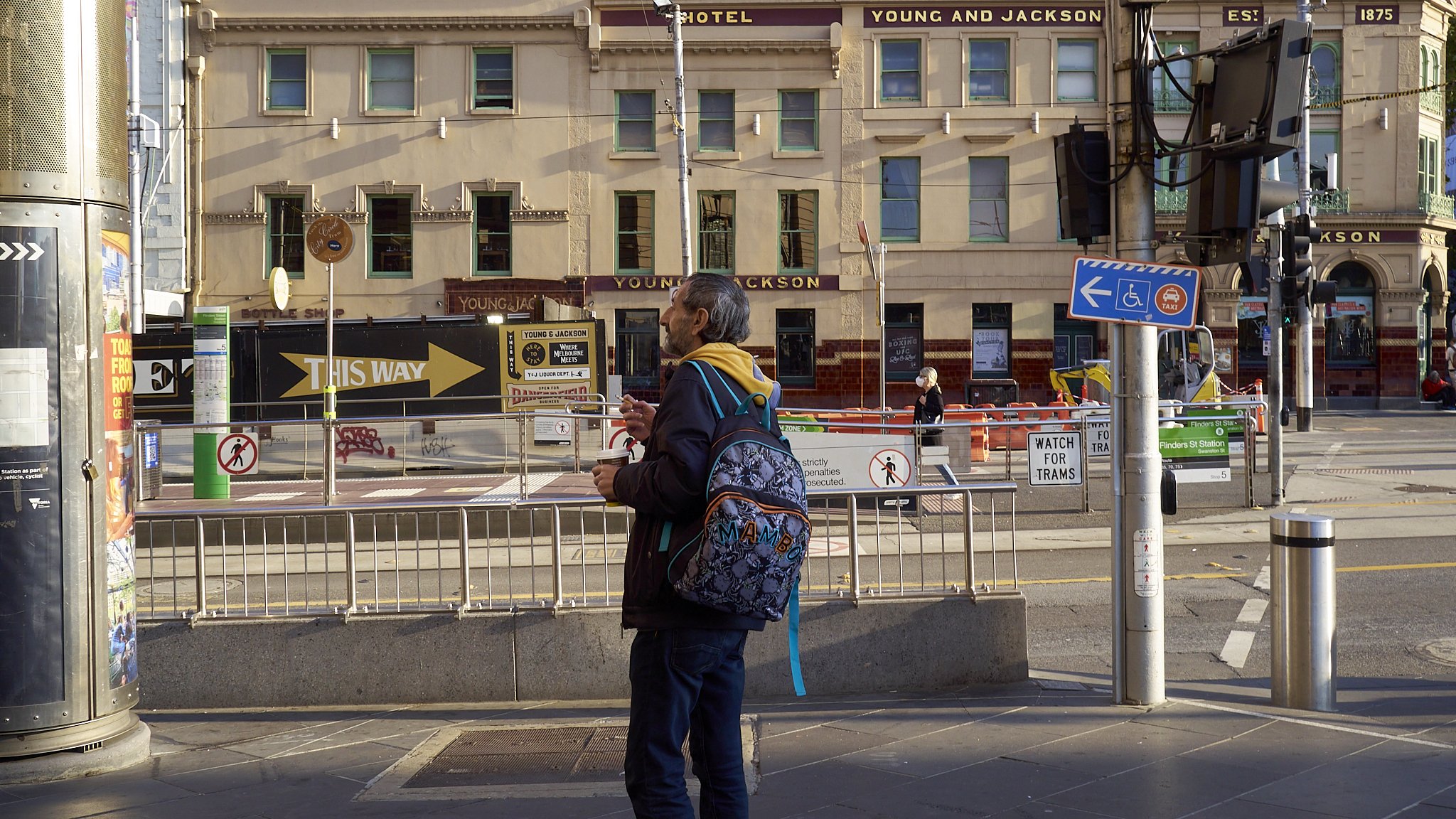
Taken with the 17mm lens mentioned above, a lens that has such expanded and coherent Bokeh transition that I call it my “never miss” lens for street photography. I even have images that are misses, but the lens makes them acceptable. It can be shot at f2.8 with manual focus set to 5ft and is sharp-seeming from front to back of the image. I can even safely use it wide open with similar results in low light. This image that could be called “Arrows of confusion” is a good example of one that requires more depth to tell the whole story.
Lenses I have come to respect, even love over the years are a mix of those known to be spectacular and some very modest lenses. The right lens for the job is all you need***.
The Olympus 17mm f1.8, featured a couple of times above is one of my most used street and travel lenses over the last twelve or so years and more recently a video favourite. It became a favourite not because it was bought to be a hero lens, in fact I struggled to commit due to iffy reviews (but there was not much choice), but once I started using it, the doubts simply went away and it became a compulsion not a choice.
More than a few times it has surprised me, excelling in areas I had assumed it weak and it is fair to say, it taught me a little about lenses.
A staple of ten trips to Japan (possibly the only lens that has made every trip), it and the more impressive looking 75mm f1.8 are responsible for more than half of my favourite images.
They are an example of two very different lenses, one forgettable on paper, the other with a stellar reputation, complimenting each other perfectly.
I appreciate it’s more forgiving, elongated Bokeh rendering, not usually a modern Bokeh enthusiasts go-to, but ideal for street imaging, it’s resistance to flare and handling of strong light, it’s tiny form factor, super reliable AF, manual focus clutch (basic but workable), perceived micro-contrast sharpness and natural organic colour.
It has become an unlikely landscape favourite, a core street champion and I even like it’s shallow depth Bokeh-when I need it.
My 15mm Pana-Leica is similar in many ways, but seems to be better at dull day brilliance and snappier sharp-soft shallow depth images, so they can act as a the perfect pairing.

The technically stronger 15mm Pan-Leica is a nice foil to the 17mm justifying both in my kit, but if I had to choose, the 17mm would be it. I can speculate with some surety that the image above taken on the 17 would be slightly warmer-more organic looking, less delicate-sharp and the people in the background slightly more coherent and smoother with less of that foreground “snap”. Same-same but different.
If I owned the f1.2 version of the 17mm I would probably appreciate it for paid work when stresses not of my choosing come into play, but when stopping it down to f2.8 or 4 for street and general travel, it’s images would likely be no different.
I am not saying the 17 f1.2 is not a very special lens, but for my needs, it is overkill and provides nothing my more pedestrian Panasonic 15 or even the full frame 35 f1.8 cannot, which thanks to the full frame sensor has similar depth of field, better low light performance and lighter weight.
For my more recent trips, the 9mm Pana-Leica, basic 15, 17, 45 and kit 40-150 Oly with the kit 12-60 Panasonic lenses have been more than enough for my needs and in total weigh less than my Oly 40-150 f2.8 or Sigma 28-70 f2.8 while adding depth and options.
Very often an f4 version of a professional zoom matches a f2.8 one at shared apertures, but costing and weighing half as much. Which would you take on a long hike for landscapes?
Also cheap f1.8 primes are often excellent and very stable (and enough), low glass count lenses can have very good 3D rendering and low flare.
There is no shame in buying the lesser lens, sometimes it is even the smart move, so before getting blinded by the hype, look to actual users reviews, people who have been around the block a few times and ask yourself “what role will this lens fill in my kit”, before just buying the dearest and heaviest option.
A second opinion https://www.youtube.com/watch?v=yFAZOXxie4w
*There are many cases of lens spec creep over the years that have not bettered the optical quality of a lens, only retained quality after a feature is added and compensated for. An example is the Canon 100mm Macro lens. The very first FD lens was not AF, internal focussing, stabilised or overly fast at f4. By the time Canon had improved it over 3-4 models until the last EF 100 f2.8L IS, with internal focus, was produced it was not made appreciably sharper (macro senses tend to be near reference perfect by design). All the special glass and clever design had managed to make a faster, heavier, dearer and more complicated lens that was the visual equal of the much easier to design original from 30 years before.
**In my Olympus kit the 12-40, 75-300, 45, 75 and 40-150 f4 are smooth sharp with pleasant Bokeh. The 40-150 f2.8, 300 and 12-100 f4 are extremely hard-delicate sharp with often busy Bokeh, the 17 and 40-150 kit are micro-contrast sharp, Bokeh a mixed bag, but sometimes elongated or more coherent in transition style.
***Some past favourites include the 180 and 28 f2.8, 50 and 90 f2 macro OM Olympus, Canon FD 24 f2.8 SSC and 100 f4 SC, EF 135 f2L, 200 f2.8L, 400 f5.6L, 35 f2 and 50 f2.5 macro (old models), 28 and 85 f1.8 USM’s, Olympus 17, 45 and 75 f1.8’s, all three 40-150’s from the kit to the f2.8, 75-300 kit tele and 300 f4. A mix of premium and more ordinary lenses. My most commonly useful and impressive lenses have been macro’s but curiously I do not own one now.