Looking closely at shallow depth of field photograph lately, I have come to see just how much I need “story telling depth of field” to get my ideas across to the viewers of my images.
Story telling depth of field means at least enough depth to see the context of the subject in their space.
I grew up with this as an unquestioned reality.
My inspiration came from photographers who naturally shot deep depth of field because everything in front of them was important, lens tricks and heroing subjects only rarely crossed their minds, because without depth there was no context, without context there was often no story, so it follows no image of value.
Sam Abell, the National Geographic photographer who most inspired me in my earliest years of this journey, would compose his images from back to front, depth of field was that important to him.
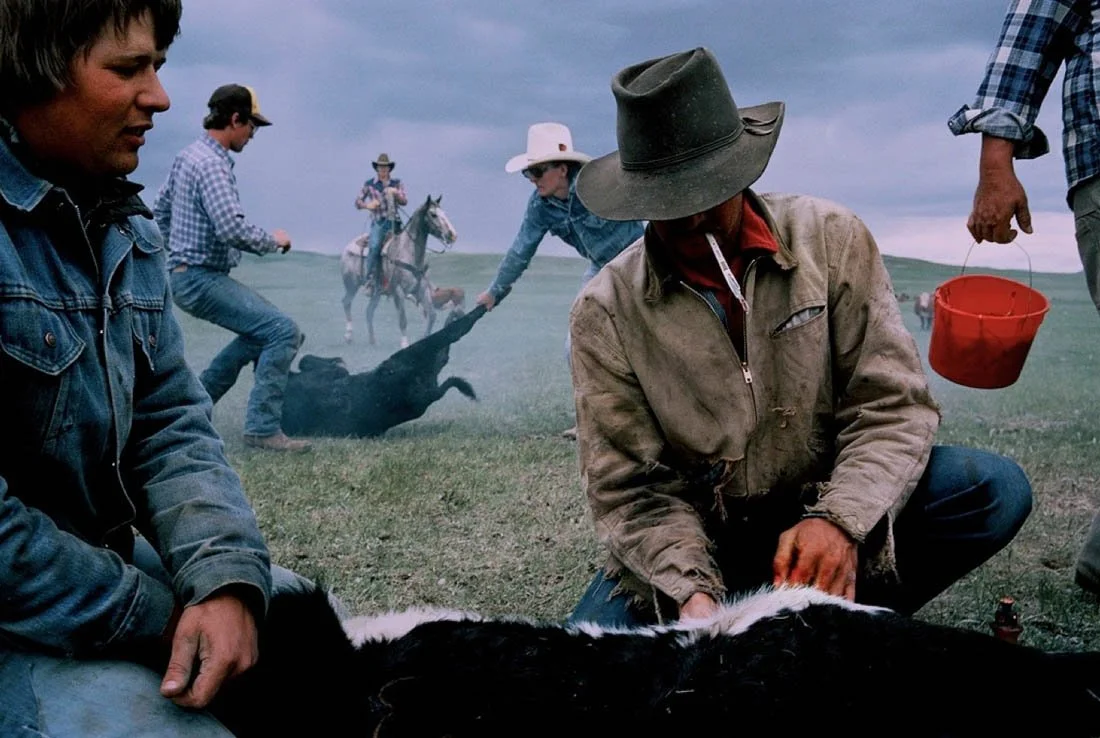
He called this image out in an interview as a multi layered story in one image, the red bucket adding an extra point of interest “bringing it all together”. In all likelihood, Abell may have wanted more depth of field but slow emulsion ISO 64 slide film might have limited his workable options.
Very shallow depth, that very sharp-to-soft look popular today and empowered by some very sharp fast glass, does have it’s uses, it heroes the subject against an often beautifully blurred background, but that background then becomes irrelevant for anything other than a studio-like backdrop to the subject and lacks context.
It is worth remembering that for a lot of the history of photography, shallow depth of field was the enemy. Why else would photographers go to such lengths to retain depth when slow speed films on large format cameras fought them constantly?

This image of a friend we know from the local dog park is an ideal example of a sharp subject against a soft and blurry background. The right amount of Sid is in focus, with good transition to less focussed areas until we get to the background that is lost to impressionistic blur. The lens was a 300mm at f4, plenty for this, but any less depth and personally, I get jittery.
Fashion, art, some portrait and rainy day fooling around shooters may desire this look, macro, sport, low light or indoor imagers are often forced to accept it or find ways to mitigate it (flash, tripod, high ISO’s).
For me, and I accept that you may disagree, I find f1.8 (about 2.8-3.4 in full frame) on a MFT semi wide or standard lens to be the minimum amount of depth of field I need to keep context, but it is still capable of attractive blurring and the ability to separate out a subject. I often find nice Bokeh when needed, I just don’t force it.
To me, there is a balancing point of subject clarity in supporting context that is just about right.

I would prefer the viewers eye discovers the transition between in and out of focus rather than have it forced on them.
A slightly longer lens may produce a more aggressive look and I do that often, but any faster or any longer and I find the look has limited uses.
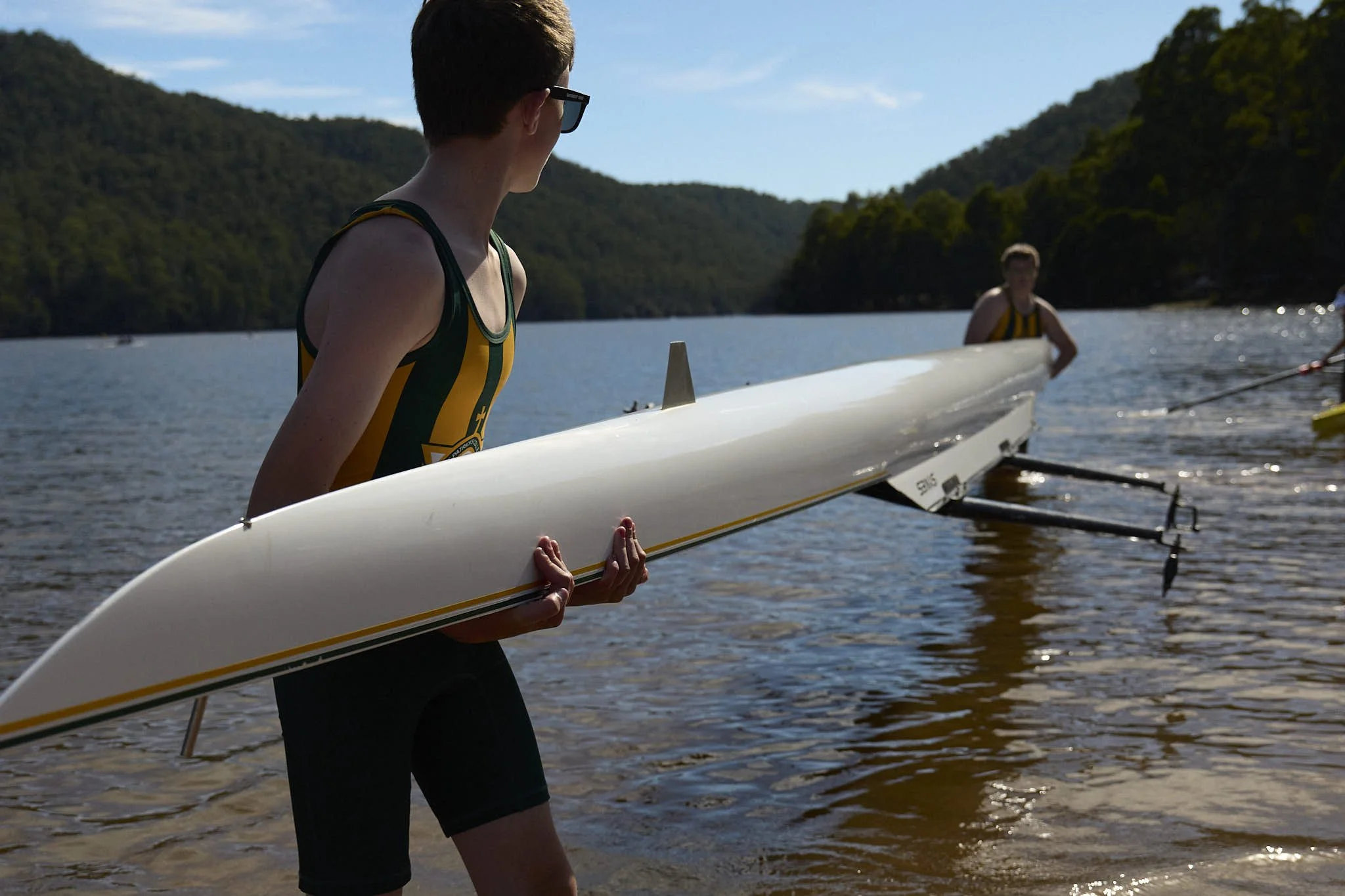
This image was taken at f6.3 on a full frame camera (S5II with 20-60 kit lens at about 24mm), so about 2.8-3.4 in MFT format. It seems about right to me, not by design only luck, the image both attractive and able to tell a story. Very shallow depth in this situation would risk loosing context and force near instant decisions of where to place that thin band of focus. Any more depth would reduce the beauty of the image, without adding anything.
The longer I do this photography thing, the more aware I become of the interplay between in and out of focus qualities and quantities.
It is all of it really, the whole game, but under threat at the moment with the trend leaning towards lens enabling “focus slicing”.
It is ironic that at a time when ISO’s are become increasingly irrelevant, that the compromises we used to accept in low light (like shallow depth of field), is now being applied in bright sunlight, sometimes even requiring an ND filter!
Never before have we been able to buy faster and better corrected lenses and need them less.
Bokeh, a term much over used and unfortunately ever less understood as time passes, is exactly that, the interplay of depth of field effects at any aperture with any lens at any distance, not just long lenses, in too close, shot wide open.
Bokeh is not a measure of quantity, it is a qualitative term and quite subjective.
The Sam Abell cowboy image above was likely shot at about f4-5.6 on a 28mm, hardly on trend.

This image, taken at 2.8 in MFT format (about 40-60mm from memory, so f5.6 at 80-100m in full frame) has about the right depth of field, maybe a little shallow, but the idea of the subject in their space is expressed adequately. More blur and the foreground elements become blobs, their context lost.
I have always felt that using Micro Four Thirds format had little real effect on my visual communication strength, but I did not think it might actually be sitting in my sweet spot. Every aperture is useful all the time.
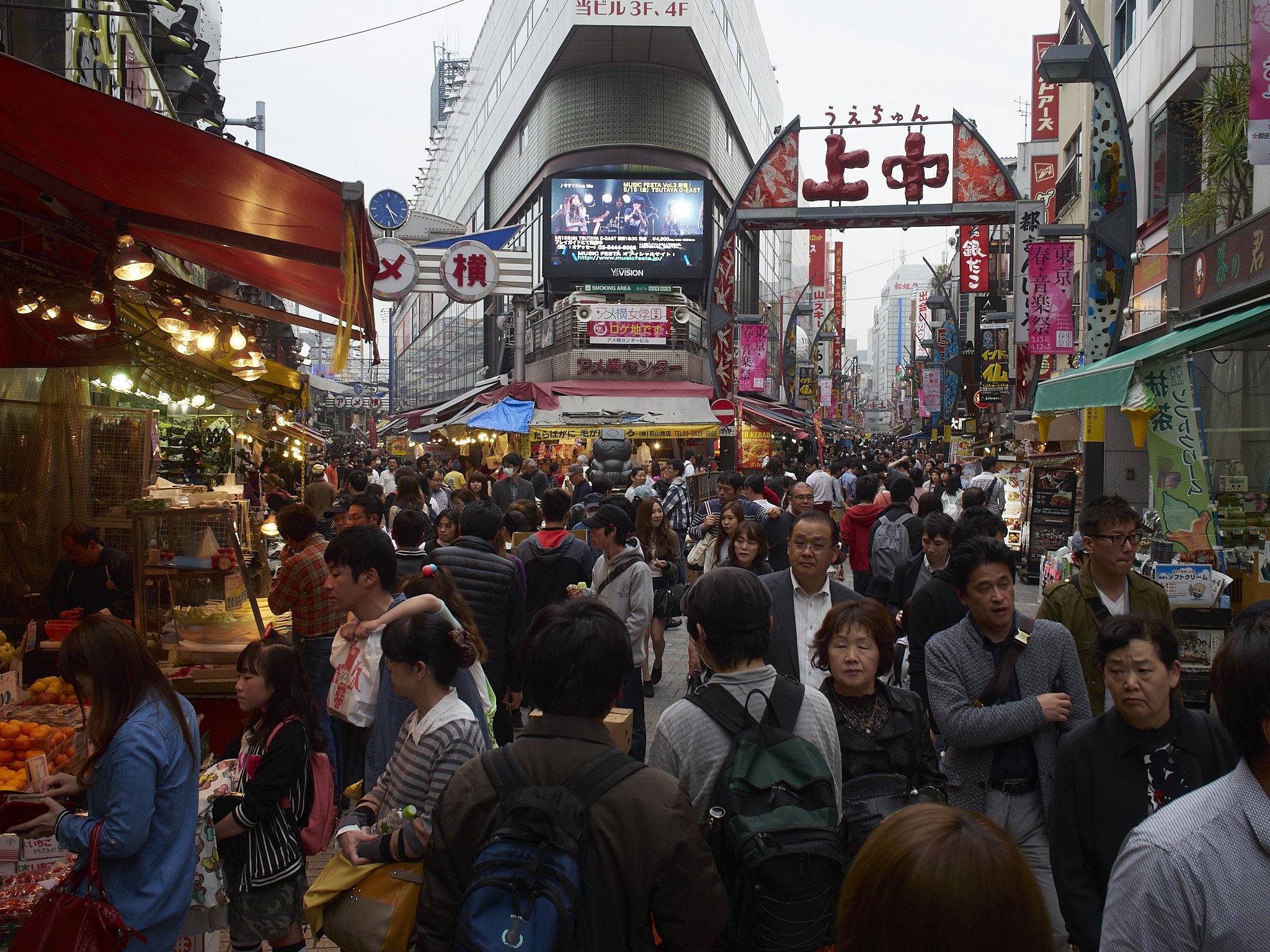
From our first trip to Japan, a late evening grab in Ueno, the 17mm showing it’s capabilities at f1.8 (where reviewers tend to give it low marks).
Any compromise the format might force on me in this regard can be mitigated by increasing focal length and/or decreasing distance to match full frame math***, but recently I have come to understand that I do not need shallower depth, I actually don’t like it. I have exactly the right amount of depth of field provided by my various lenses for their logical applications.
My wider lenses allow low light street or event photography at their widest apertures with little to no fear of losing precious detail. My 17mm used at f1.8 regularly does candid group shot portraiture at events, the wide aperture allowing me to use my flash at as little as 1/32nd power even using a bounce reflector and the ceiling, so it will literally run all night.
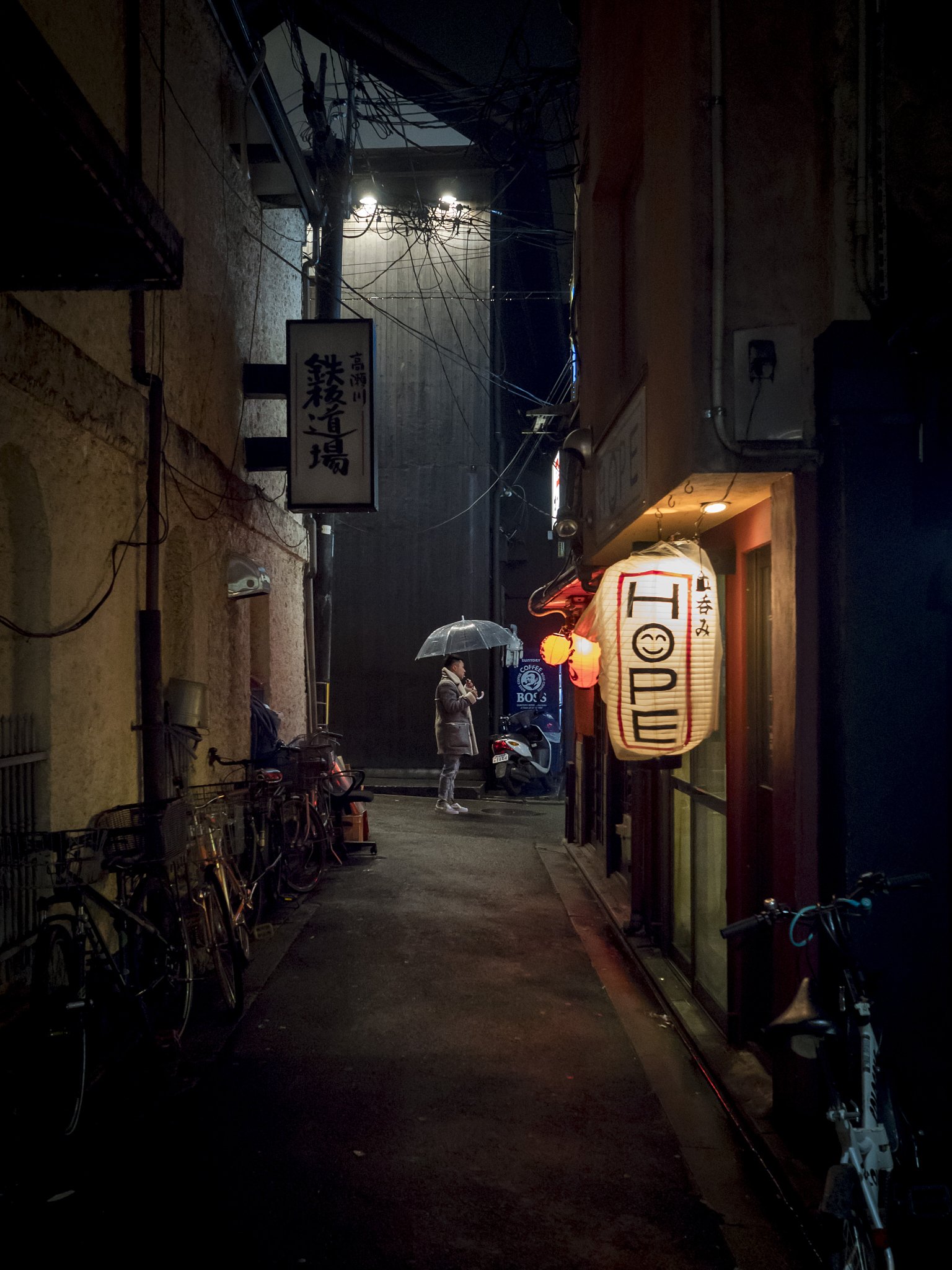
The 17mm allows me to shoot between f1.8 and 2.8 in most situations with little fear of losing context or even sweating focus, an important feature for street photography. That specific lens even extends the effect of its transition in an old fashioned way, to help retain depth detail by design Not a very modern thing, but something I appreciate.
My longer lenses seem about right at 45-75 f1.8, 150-200 f2.8 and 300 f4 for their respective focal lengths. The only option I would sometimes appreciate would be a f2 200mm because depth is still decent and the extra speed could be handy, but that would triple the price and weight.

This image could have been fine with a softer background, but would it have made any real difference as the background supports the story? The 45mm at f1.8 is tiny, fast and capable of gentle separation, which in this space is about perfect.
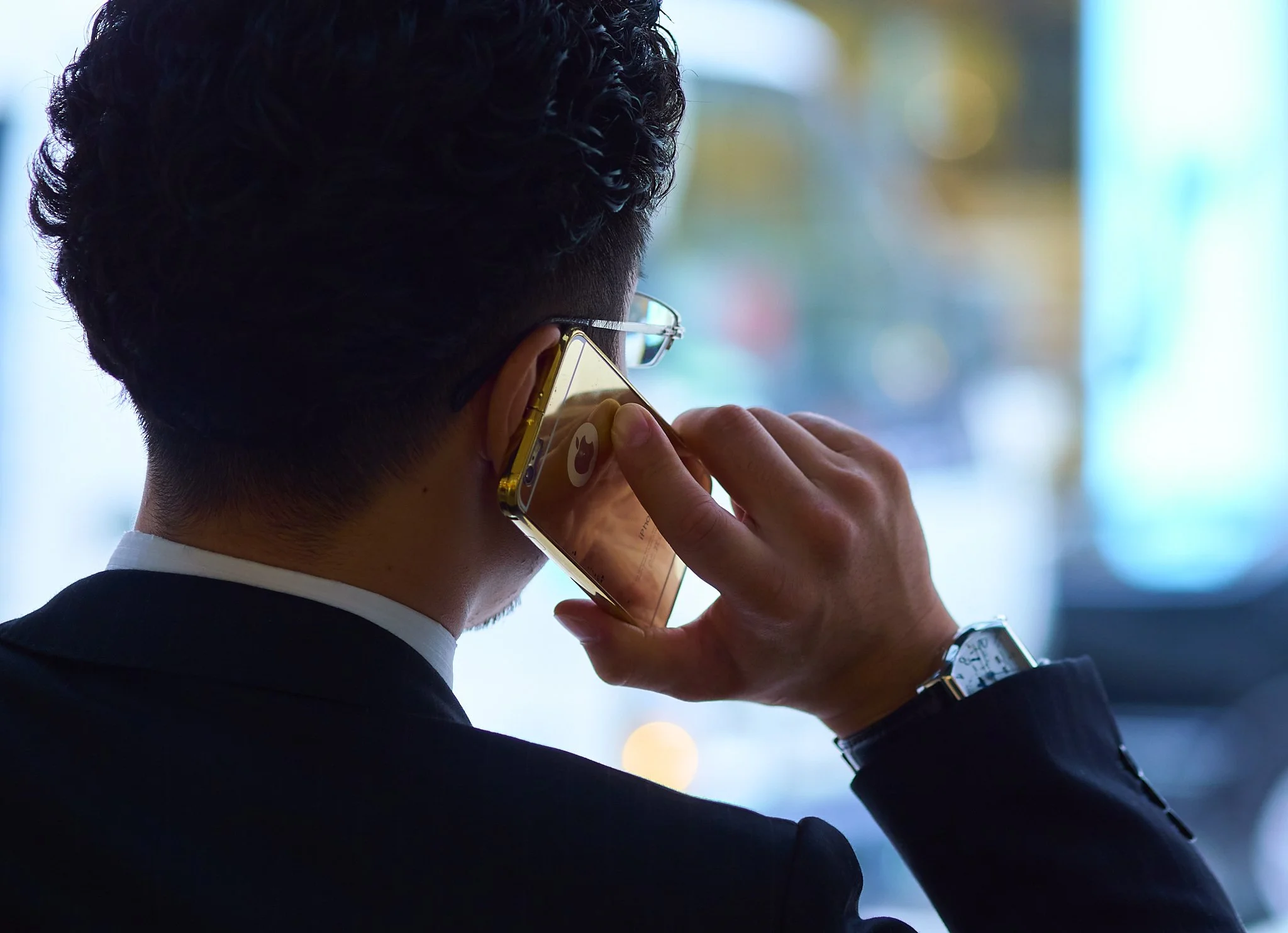
This is my most powerful MFT lens and aperture combination, the 75mm at f1.8. Again, this is exactly the right amount of depth of field and in this case, the background was late evening intersection lighting, so not overly pretty. Less would start to lose subject detail and force a choice of what more you want to lose. It is not a coincidence that Olympus made this and their 300 f4 the equal of full frame super lens equivalents (150 and 600mm), because they knew that both lenses would be used wide open all the time.
I have recently played with the spectacular f1.2 Olympus primes and had a chance to compare them to my full frame Panasonic f1.8 lenses, which showed slightly shallower depth of field (I feel often too shallow) and more compression at equivalent focal lengths and apertures.
My main take away from my tests was that yes, the extra speed would sometimes be useful in MFT* and the specific lenses are effectively perfect in sharpness and rendering.
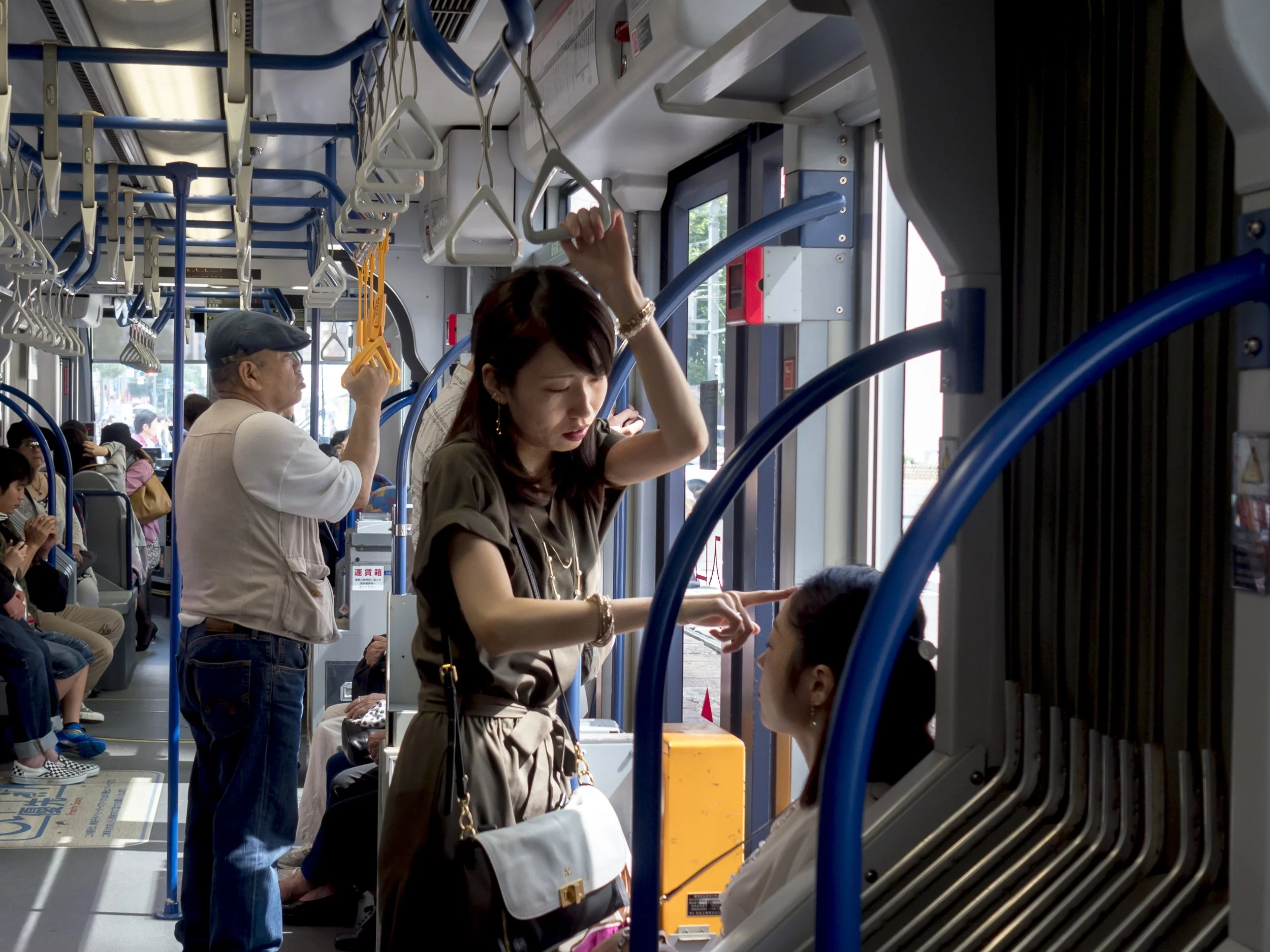
This image, shot on the 45mm lens has the main element as it’s pillar, but I am also more than fine with the story told behind of life in modern Hiroshima.
For my needs, I have enough to do what I need how I want to do it, or if I do not, it is not in these lenses that I am lacking*, but it is reassuring to know there are options available.
I preferred the look of f1.2 on MFT to f1.8 in full frame, partly because of the more useful depth of field and overall rendering. The Olympus file is on the left below and I find it nicely balanced. If you look from one to the other, the actual strength of subject separation is fully intact in the MFT file, it is just not so obvious as the lens based effect in the Panasonic file.
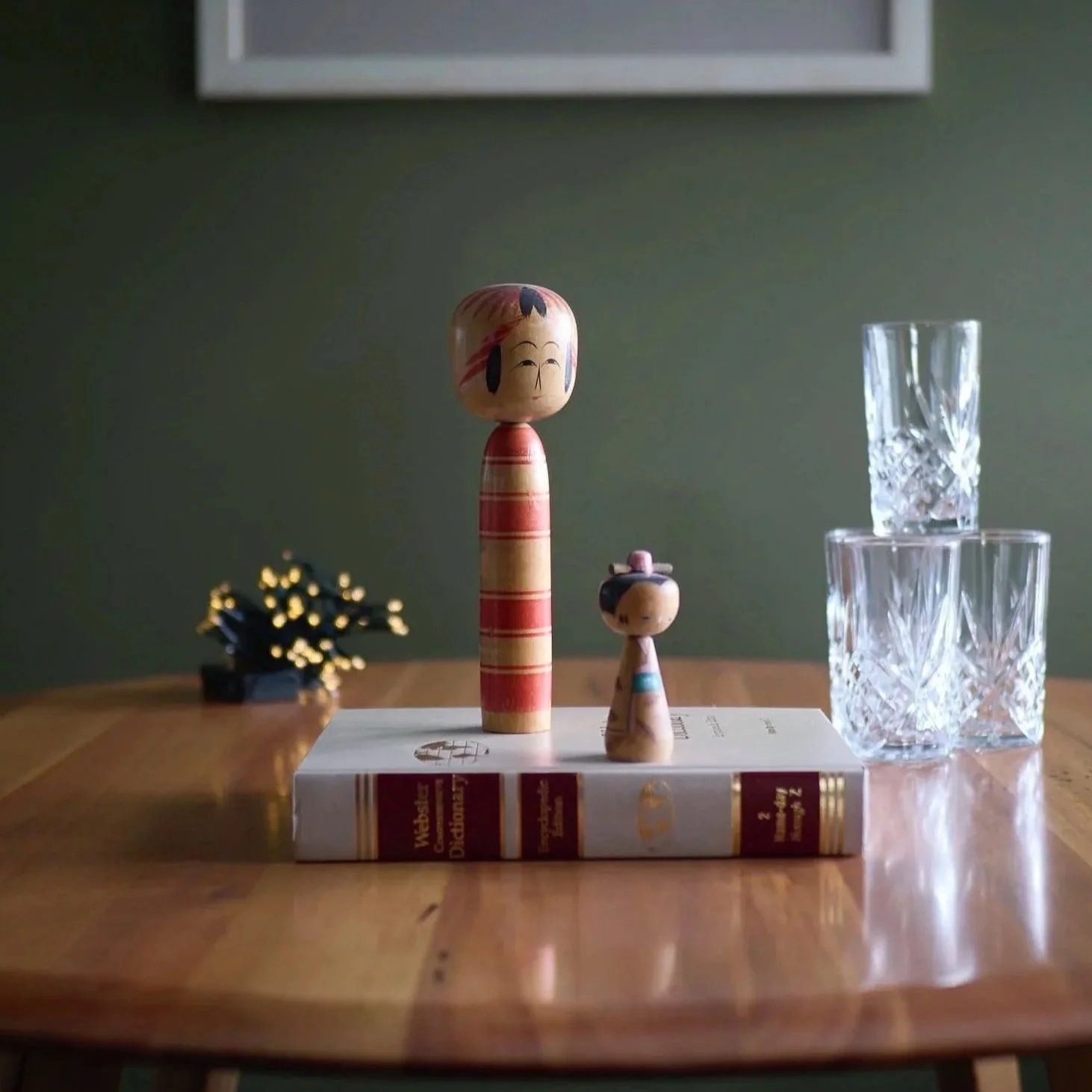

One solid argument for the f1.2’s over the 1.8’s MFT lenses would be that at f1.8 the faster lenses are going to be better, because they are already stopped down two stops and yes, that is true (and it showed in my recent MFT vs full frame tests, the f1.8 MFT images were by far my favourite files in the tests I did, perfectly balanced), but my 1.8 MFT lenses are fine wide open.

If the image works, it is rarely going to be better because of a slight increase in any one factor alone.
Shooting in full frame at f1.8 depth of field is so shallow, I would rarely shoot with it commercially and if I did, it would be from desperation. When I adopted some full frame gear it was to help with video which has less flexibility than stills, but a second motivator was having some high ISO, wide aperture stills options. I have used this added power only a few times and find the added bulk is rarely a good trade off.
Another side effect of this trend is the flatness in rendering of many modern fast primes**.
As fast lenses are better corrected for corner to corner wide open sharpness and other aberrations, its character suffers**. My fastest lens, the Sigma 30 f1.4 has the benefit of a stop more speed, something I bought it for and it is bitingly sharp wide open, but it has never drawn me to it’s rendering, tending towards a flat, two dimensional look.

Technically strong and a decent subject, but there has always been something about this image that disappoints me. The 30mm is a thoroughly modern lens with good wide open sharpness and dramatic out of focus drop-off, but there is a price to pay.
If pushed, I will choose the 45mm f1.8, which probably renders about the same depth of field wide open (slower aperture, but longer lens), because it looks much more vibrant and natural to my eye.

This file taken on the less exciting 45 f1.8 has plenty of pop and separation. You do not need to completely lose a background to hero a subject.
The super shallow focus look can be addictive, but it is usually lost on a client who does not know why they managed to get everyone sharp in their phone photos, while the professional only managed one person per shot, with little justification other than their own preference!
I have found it is important to shoot with a clients eyes and their tolerance for indulging our desire to push the visual envelope is usually pretty low.
Very shallow depth of field, strong lens compression, wide angle perspective distortion, even anamorphic lens oddness from cinema lenses are all compromises accepted from problem solving lenses, but their effects can tend to become fashionable for a while. There is no better example of the acceptance of an introduced flaw than the anamorphic flare look.
Like anything, if they are over used or worse if lens makers actually cater to these trends at the expense of other considerations, they can be “perfected” and then become stale, predictable, habits and at the end of the day dissatisfying.
Depth of field is a creative tool, but it has many faces, all of which are useful, none are subjectively right or wrong.
We must all learn to use depth of field’s many benefits, see all it’s faces.
*MFT’s one weakness is relatively poor extreme high ISO performance, mitigated somewhat by the better lens physics, so f1.2 is a boon and equalises the format, but for me f1.8 is actually enough for almost any lighting, I just wish it was available on a 200mm!
**Working in camera shops from the 80’s to the 2020’s, I was mystified by the ability of Sigma and Sony to magic up these super fast perfecto lenses and why the major players were slower to follow, but my suspicion is their designers broke some ancient rule of lens design. They chose to correct-away three dimensionality and depth, both important to image making in favour of flat field sharpness and super smooth Bokeh.
***Basically any lens on any format at the same focal length, same distance to subject and same aperture will have about the same depth of field, just the magnification changes.