Looking into the future, assuming I need to do anything at all (waiting for something to die naturally, break or get lost), I have a few things that need addressing.
A new standard lens for my MFT cameras.
Contenders are the 12-45 f4, a light and small option that would allow me to also bring small primes along without any real effort and to be honest in MFT f4 compared to f2.8 is close enough, you need f2 or wider to achieve true shallow depth in this range, and I have those.
The 10-25 f1.7 Panasonic is always on my mind, but as a standard lens it is a hard sell for me, lacking any real reach and the 25-50 has the same issue backwards. A 14-35 f1.7 would be excellent, but there you go. For video it is ideal, wide enough to compensate for the forced crop of stabilisation, but for stills, I would struggle (maybe).
The 12-40 f2.8 Mk2, because considering all the above, they are excellent and well priced. I have the Mk 1 and it is great, but the zoom is clogged up with sand from a few years ago (one of those things I am waiting on to fail on me). This does not really bother me except for video.
Do I need it?
The old 12-40 still works and I use it. The more I use it, the better it feels, until it feels “dry” with heavy use. I could get it serviced, but that would likely cost a large chunk of a replacement.
My 12-60 Pana/Leica has developed an aggressive “chugging” action when turned on, like it is testing its AF or stabe or similar and it is quite disconcerting, but again, I can use it until it dies and I will.
The 12-60 kit is also a great lens and gets use when speed is not important (see below). Between the three and primes I would always be able to pack something, even if one gives out.
A very obvious option is to mate the 8-18 Pan on the G9 with an Oly and a telephoto. This is basically how I run anyway. The Oly 8-25 comes to mind, but I have the Pana now.
I also have two full frame standard lenses and I am quick to say I can make do with primes, I even prefer to.
Landscape photography is starting to talk to me again after a break of 20+ years.
For gear, landscape is easy. You do not need fast, or even expensive glass. Landscape shooters use small or middle apertures, where most modern lenses are excellent. Tripods need not be heavy or large, thanks to electronic shutters and mirrorless cams (no mirror slap). So, small cameras and excellent kit zoom lenses are plenty. If high resolution is needed, most of my MFT cameras can provide.
My personal kit would be a G9 Mk1, my 9mm, 12-60 kit and 40-150 kit covering 18-300 in full frame terms. This kit weighs less than 2kg, the lenses adding up to about 600g of that. The camera has high res, something I will probably never use and I have a half dozen batteries.
The 9mm can do macro, the 12-60 very close to that and both are weather sealed. The 40-150 is not, but I will just be careful. Filter sizes are a handy 58mm or smaller.
Tripods are still a thing, but with light weight and well stabilised MFT cameras, I do not need a large one or often one at all. I have an old Velbon Sherpa that weighs about 1kg. Plenty.
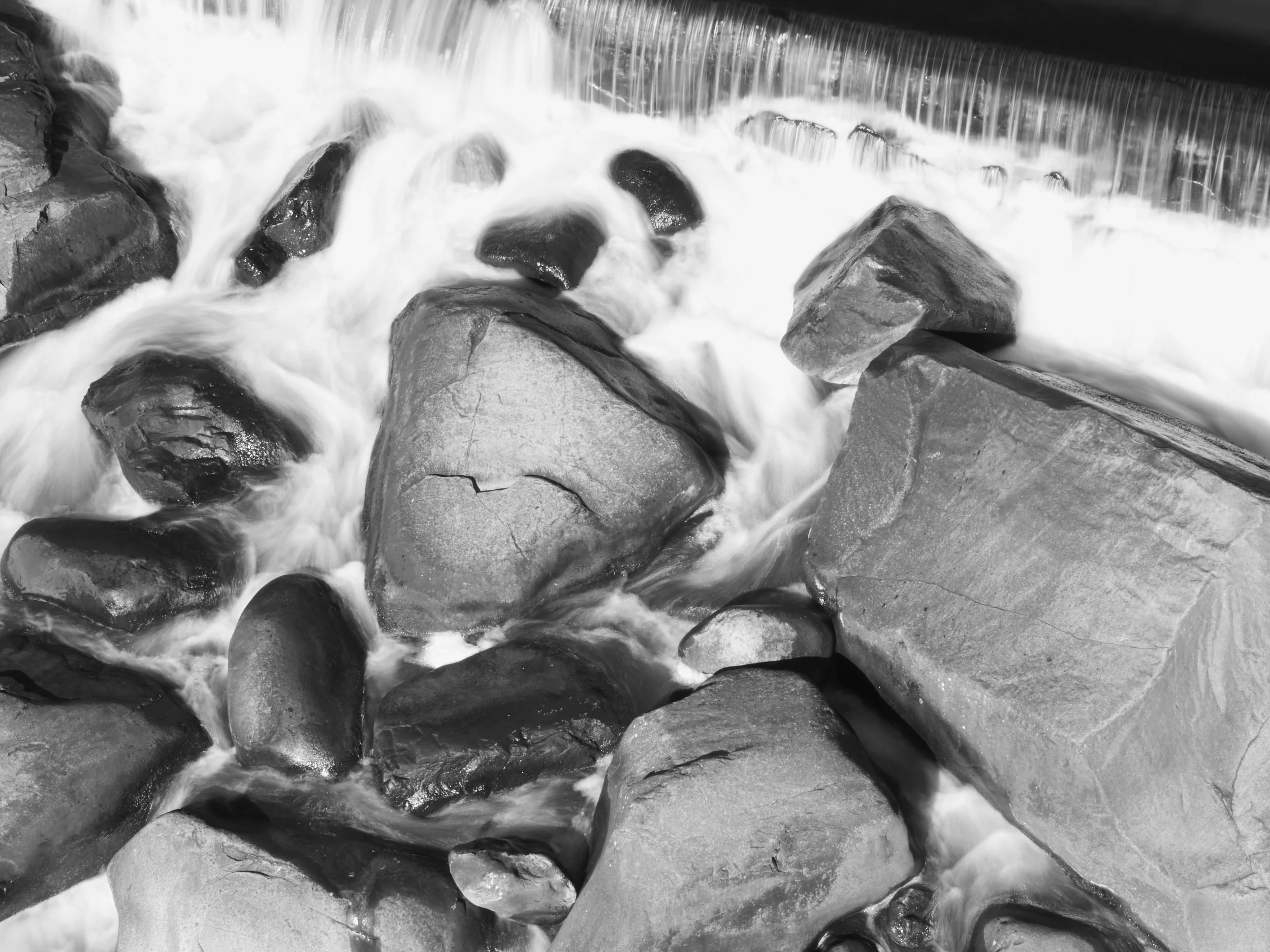
Hand held using a EM1x and 40-150 f4, on a swinging suspension bridge with people walking on it and the 5 stop ND applied.
Low Light.
I feel I am falling behind in low light sport situations. Not badly, but a bit. There is a lens advantage in MFT, but that gap is closing compared to full frame cameras with new light weight slower lenses (not buying a 600 f4).
The obvious fix is full frame and I have a S5 and S5II, which armed with a good lens like the Sigma 70-200 f2.8 would do most things, but to get the same sort of performance I am used to with the EM1x’s I feel the S1.II is needed, which means that and a lens (70-200) maybe 2 (100-500 Lumix), could be north of 9k au all up.
The OM1-III is also pending and most reports have it packing a newer sensor with at least 1 stop better low light, which if you consider I am jumping from EM1x’s to the OM1-3, a camera four generations newer, should mean something substantial. My EM1x’s will remain my workhorse sports cams, the new one would just be a low light fix.
Adding “little white” would also help, but I can replace my 300 and 40-150 f2.8 second hand for the same money.
The gimbal thing.
I am bothered by the creative options I do not have access to especially for commercial work by shunning gimbals. An actual gimbal as such is not that tempting, but a similar fix is.
The Weebil cinepeer or DJI RS3 Mini are cheap, more than capable of taking my G9II or S5II kits, but the OSMO Pocket 4P is also very tempting. It is four times the price, but 1/3 the size of a gimbal, requires no balancing and unlike the gimbal, I can run, jump, hang upside down with it or hand it over to another to use and it is operationally fully integrated.
My OSMO 1 still has a use, it is the under water or “stupid places” cam, because I have the housing and can seal it in and leave it or bolt it to something, but the 4P can actually mix in with my main cams with normal footage.
It also seems to have cheaper accessories than the older ones (a single filter for the 1 cost $100), lots of power (3hrs), internal memory (100gb), twin lenses not just a faux zoom and is small enough to pack in a video kit like a spare battery, not as a whole other thing and need I mention D-log 2 with 17 stops of DR!
It is not perfect, but as the very recent firmware update release showed, they will improve it and well, nothing is perfect, you have to ask yourself “does it do what I want”, not “what could it have done” in these situations.
Yes the dynamic of the two sensors is a pain for some, but I have other cameras to do many of the things it cannot, so basically, nitpickers, thanks for your thoughts, but I am ok with a perceived 85%-er.
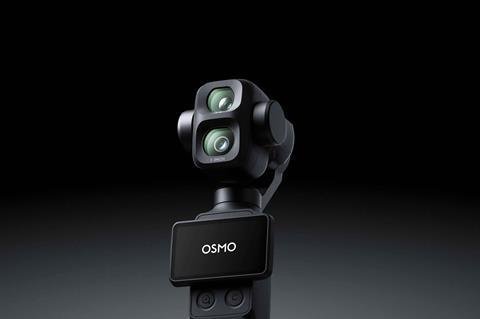
“Almost perfect” is actually better than almost any other bit of gear I own!
It feels like for all my needs the Ronin 4D just got smaller and cheaper.
I was watching a Scott Secco https://www.scottsecco.com vid the other day, possibly the king of creative movements in his field and could not help but think he could do so much with the OSMO 4P, and much more easily. I imagine the “dropped from a tree shot” in the rain could have been done with the 4P in a plastic bag and a length of climbing cord.
It can be with me always, can go places, be mounted on things and shoot from angles no mirrorless would be used for, I can even run (or swim with a housing) with it.
A gimbal like the RS3 with some deep compatibility with the Lumix cams for only $299au is also very tempting, but gimbals leave me cold. Just dedicating a cam and balancing it out (without cage) is a major consideration, not something you want to do on a whim and the USB cable I need to link the G9II to it is already used by my SSD for ProRes recording (The S5II with/without half cage and 20-60 locked at 20 would likely be the one, no cable needed and no SSD, but it is a thing).
To be fair, the S5II as a hybrid cam, could have the plate permanently attached and the gimbal balanced for it ready to go, so this is not a big one and the S5II is one of the linkable cams giving me face tracking etc.
I do not trust the S5II as much as the G9II for straight hand held simply because the lens options are larger and the full frame depth of field makes focus and stabe less effective. The G9II on a short pole (ironically a gimbal extension arm) works really well.
Sure they can do a lot with existing gear, but a G9II alone does some of that with almost gimbal level stabe and I even have a mechanical steady cam (a cheap one) which gets it a lot of the way, so its a 4P or nothing for me.
I guess the big question with gimbal work is what shots do you want and how smooth do those need to be?
A smooth pan around a subject, a move in or out from them, a follow shot, or a long dolly move.
I have a mechanical gimbal, slider, great internal stabe and tripods with pan heads. Do I really need anything more?
So;
Option 1 use the G9II and mechanical gimbal if needed, the existing OSMO 1 for silly ideas and tripods/sliders/hand held for other movements. $0au
Option 2 get a cheap gimbal and increase my options somewhat, but with some stuffing around, extra weight, learning curve and having to dedicate gear. $300-350au
Option 3 get the 4P* and add even more options with minimum fuss and maximum application of existing (option 1) gear. $1000-1200au.
I went with the 4P (in an Ultimate kit with the decent Freewell ND filters, some other bits and a micro SD card and high speed reader that I will likely use in anther camera), because most of the rest of the things I might do with a gimbal are covered, but there are things this will allow that I cannot do now. Between it and the OSMO 1, I can go under water, into small spaces, hang off handle bars etc.