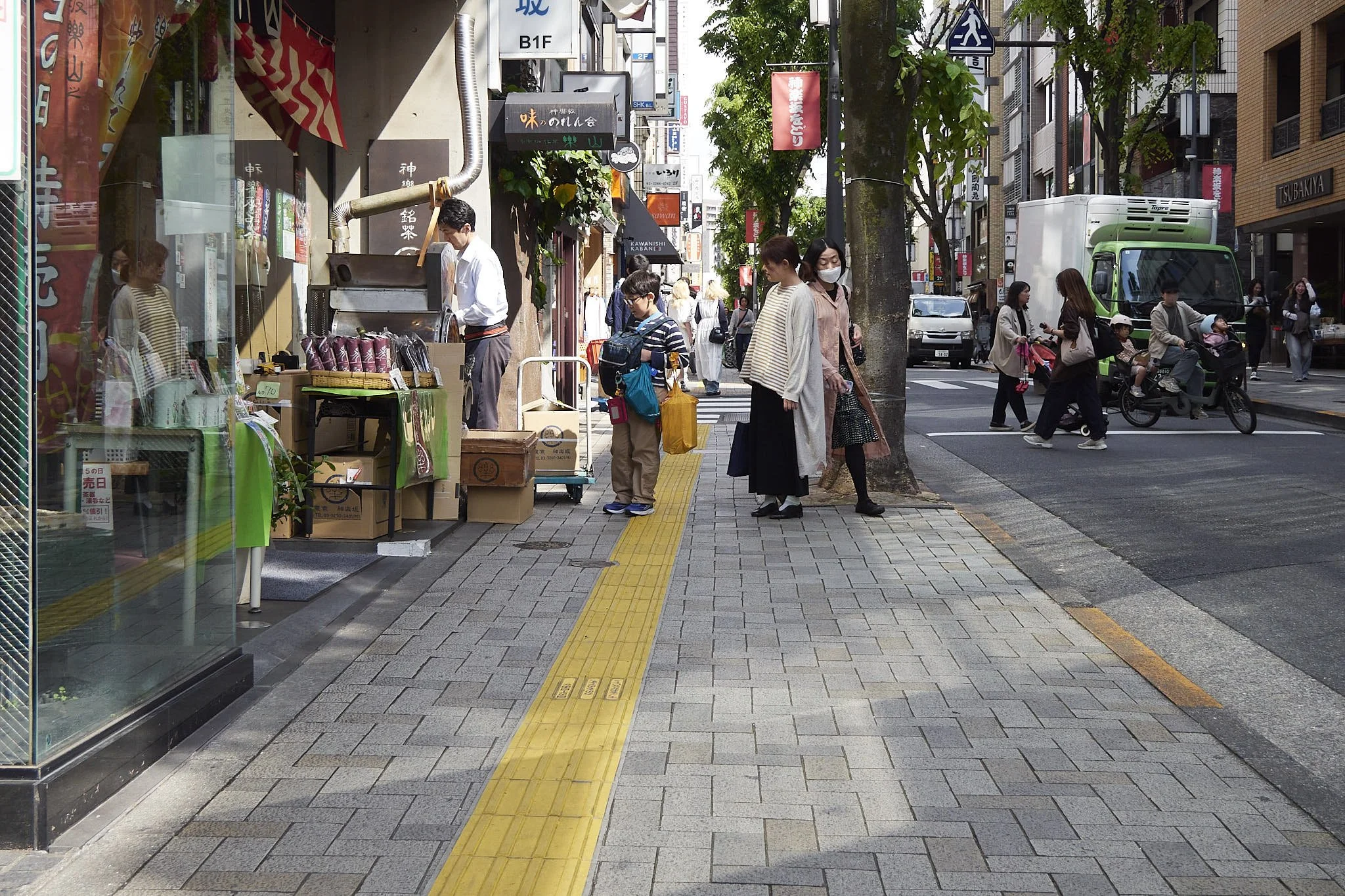
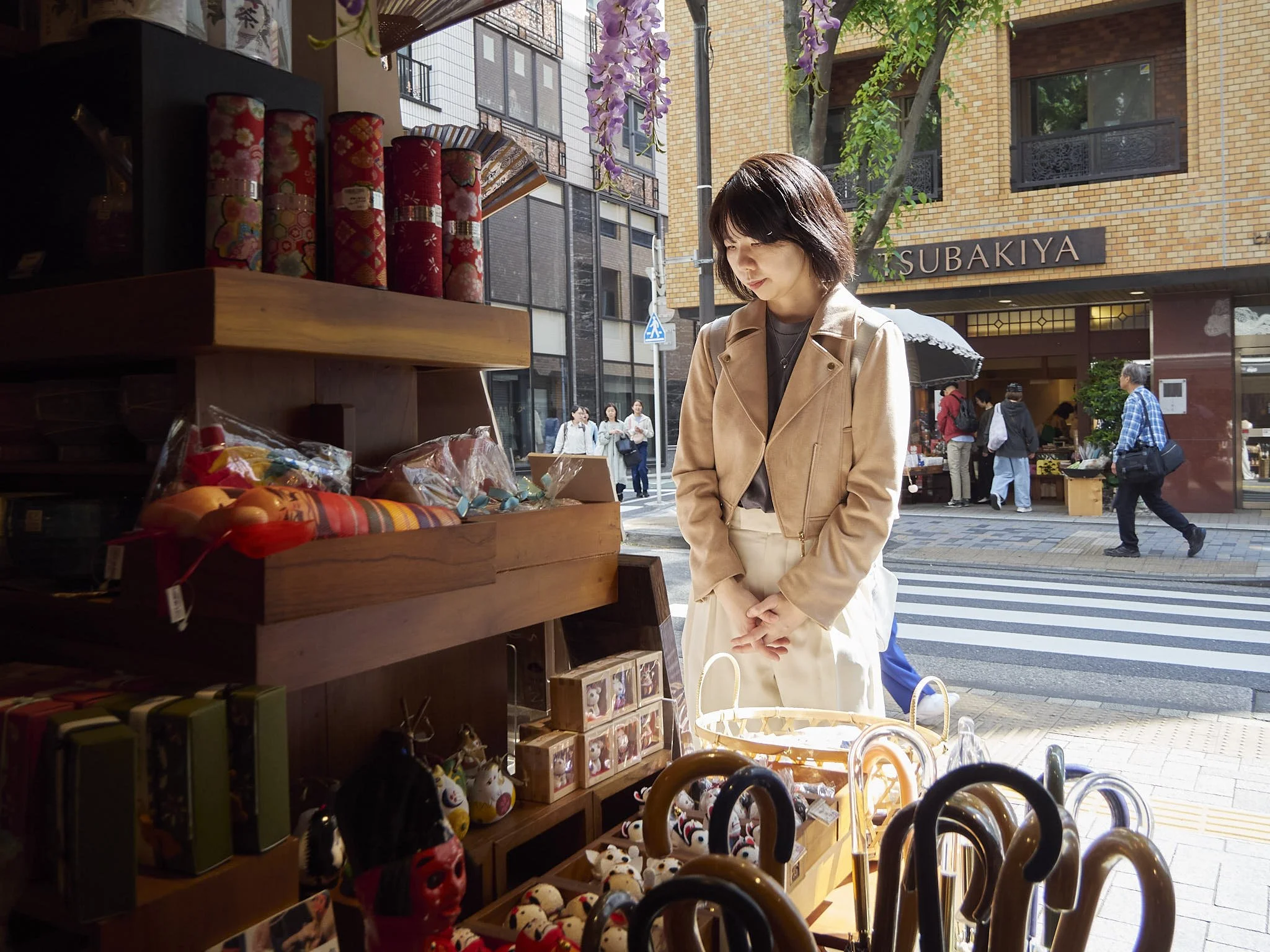
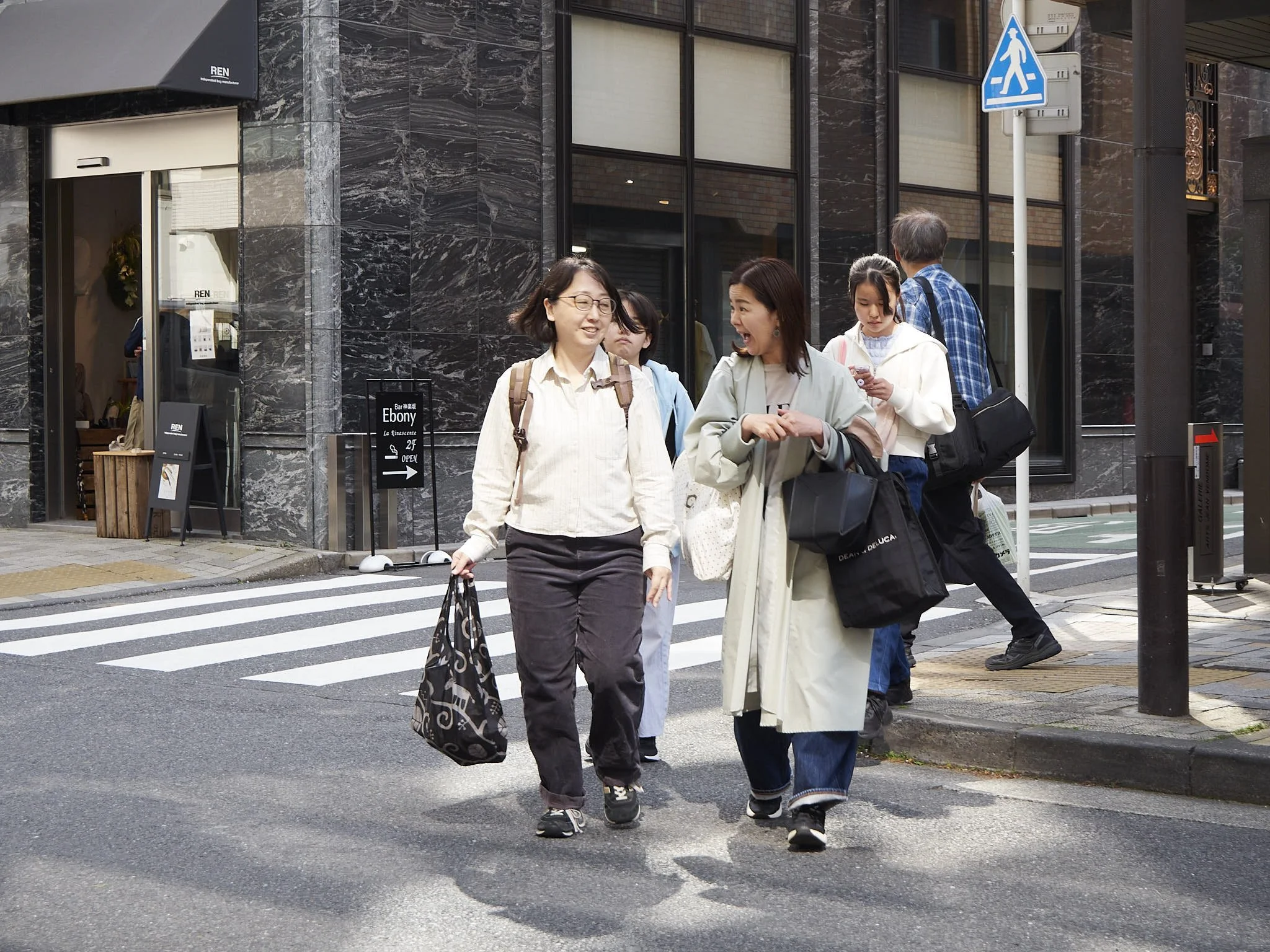
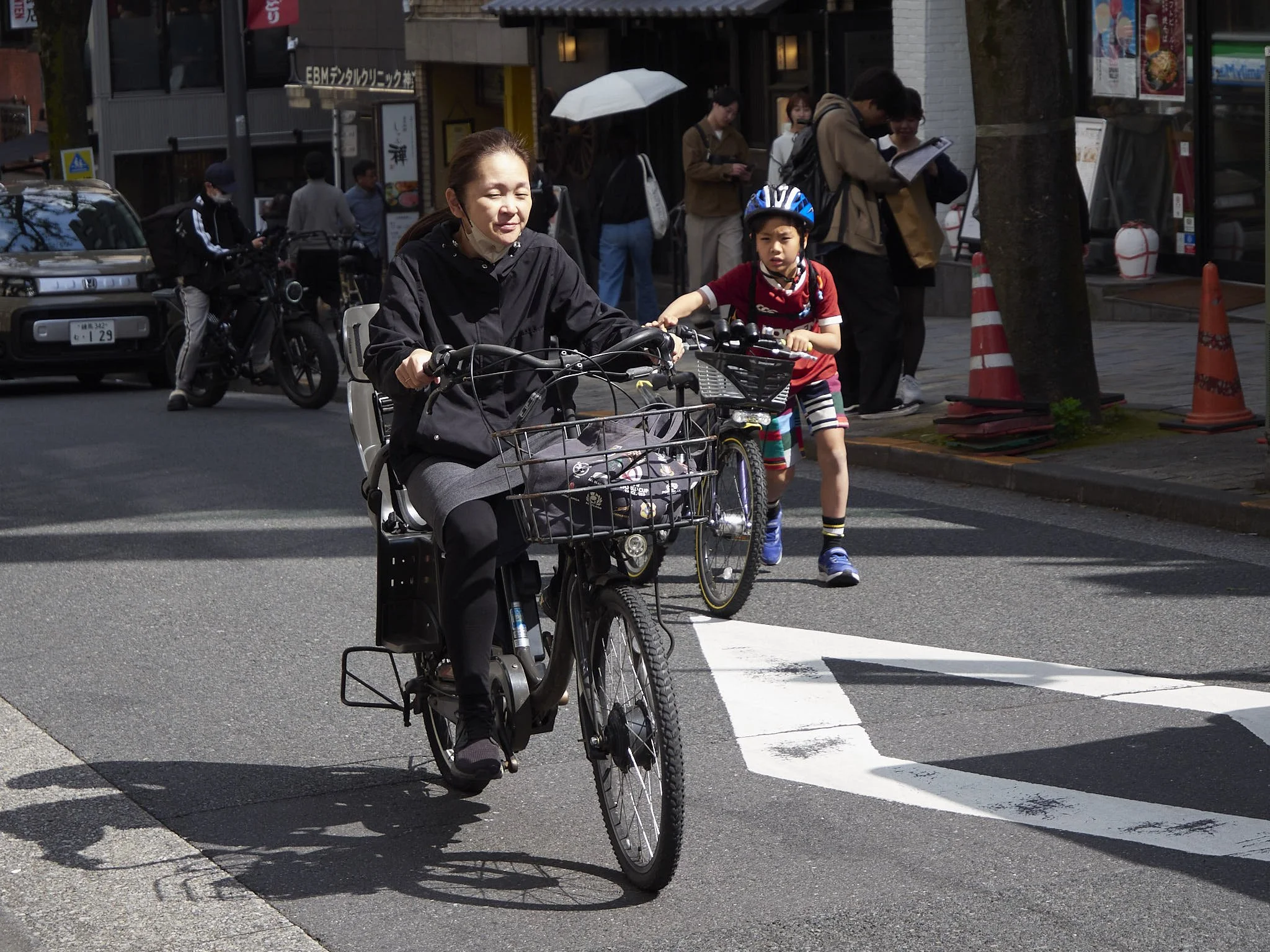
More Testing Fun (Quiet Day Here).

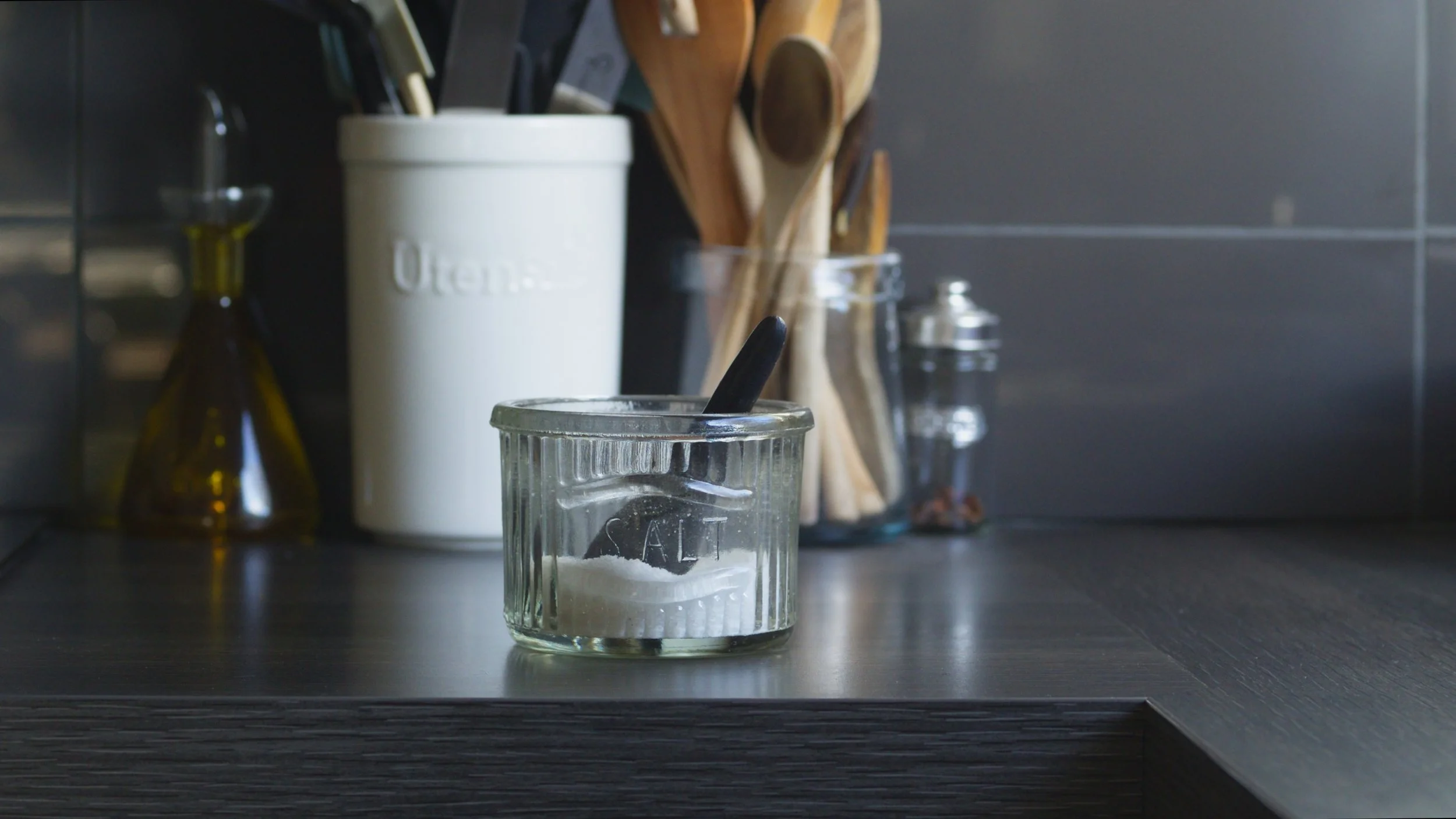
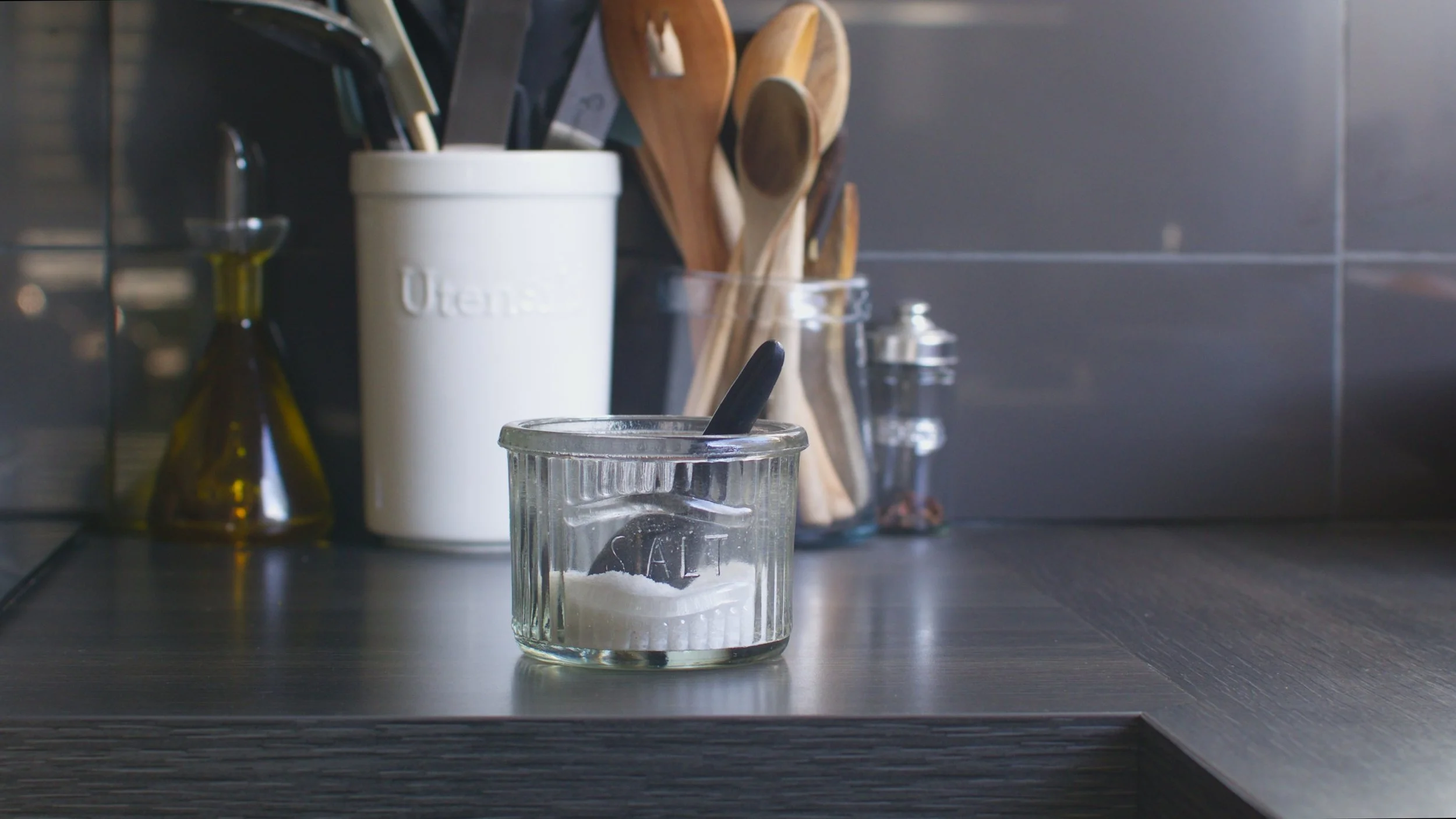
The little 12mm Vision Prime is a forgotten child really, probably a good hint that I don’t use wide angles much!

It is a solid little lump, taller than it is deep, heavier for it’s size than most and optically very decent.

It has a secret weapon, the ability to close focus down to…., well lets just say, if you use a matt box, you may hit the filter on your subject before you reach its minimum!

All tests shot on the GH5s with BMVA set to C4k Q3. The Hope is a 45mm on that camera, the Vespid a 70mm and the 12mm is roughly a 20mm.
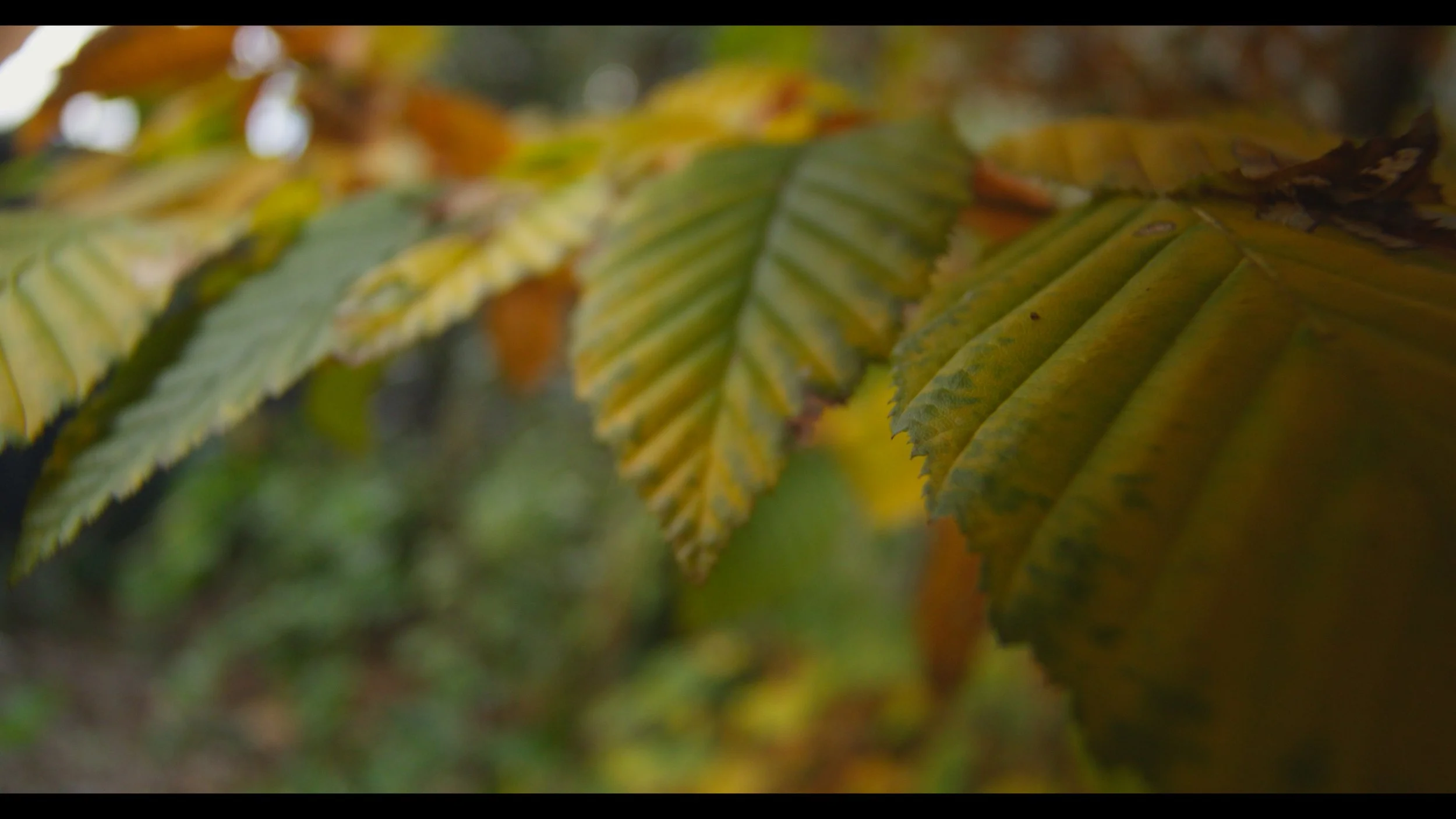
An early clip, where I did just that.
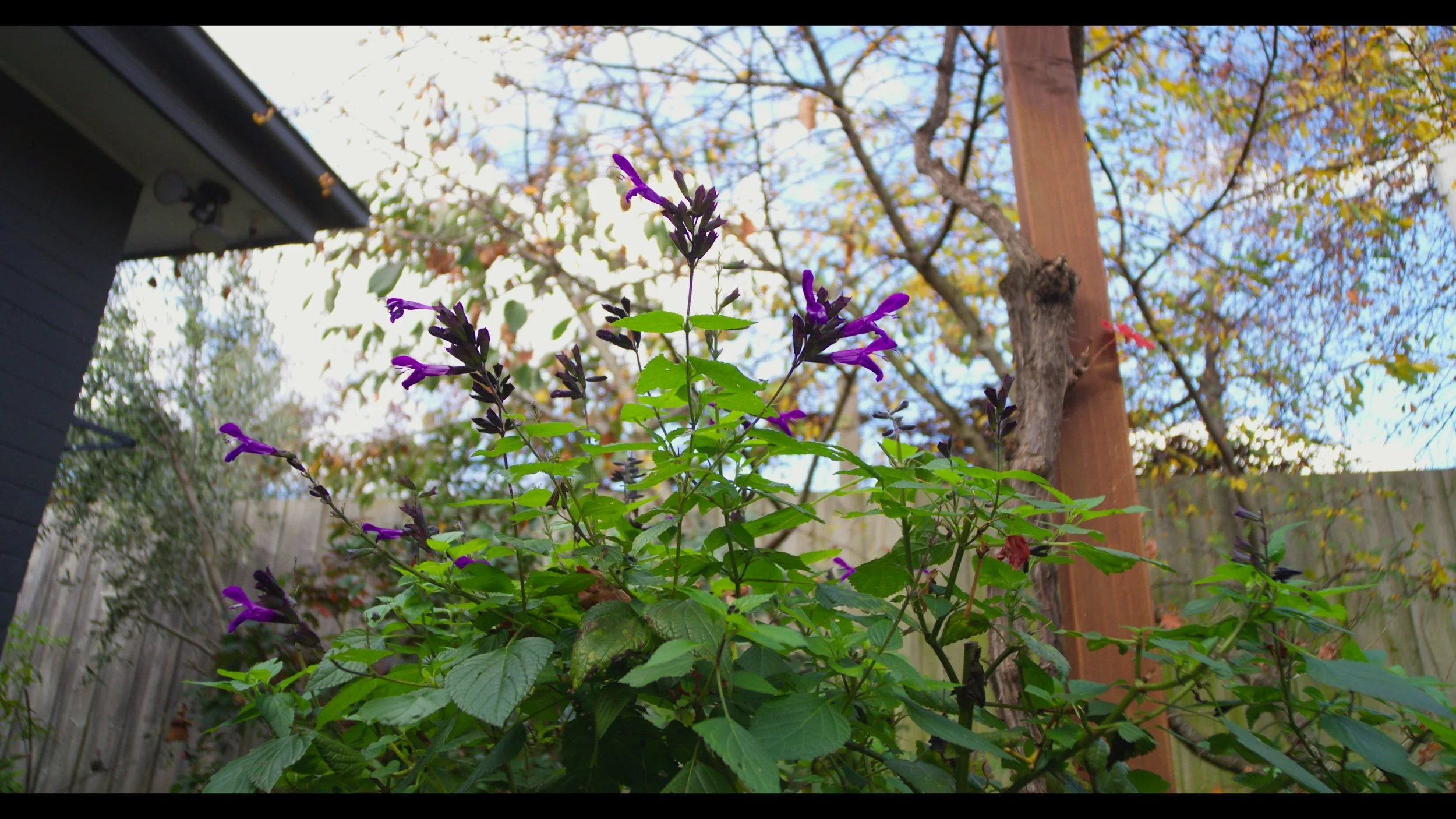
You straight away start thinking angles and getting close, very close. Corners can look a bit funky, but they sharp when needed, Bokeh just goes a little off campus from time to time.
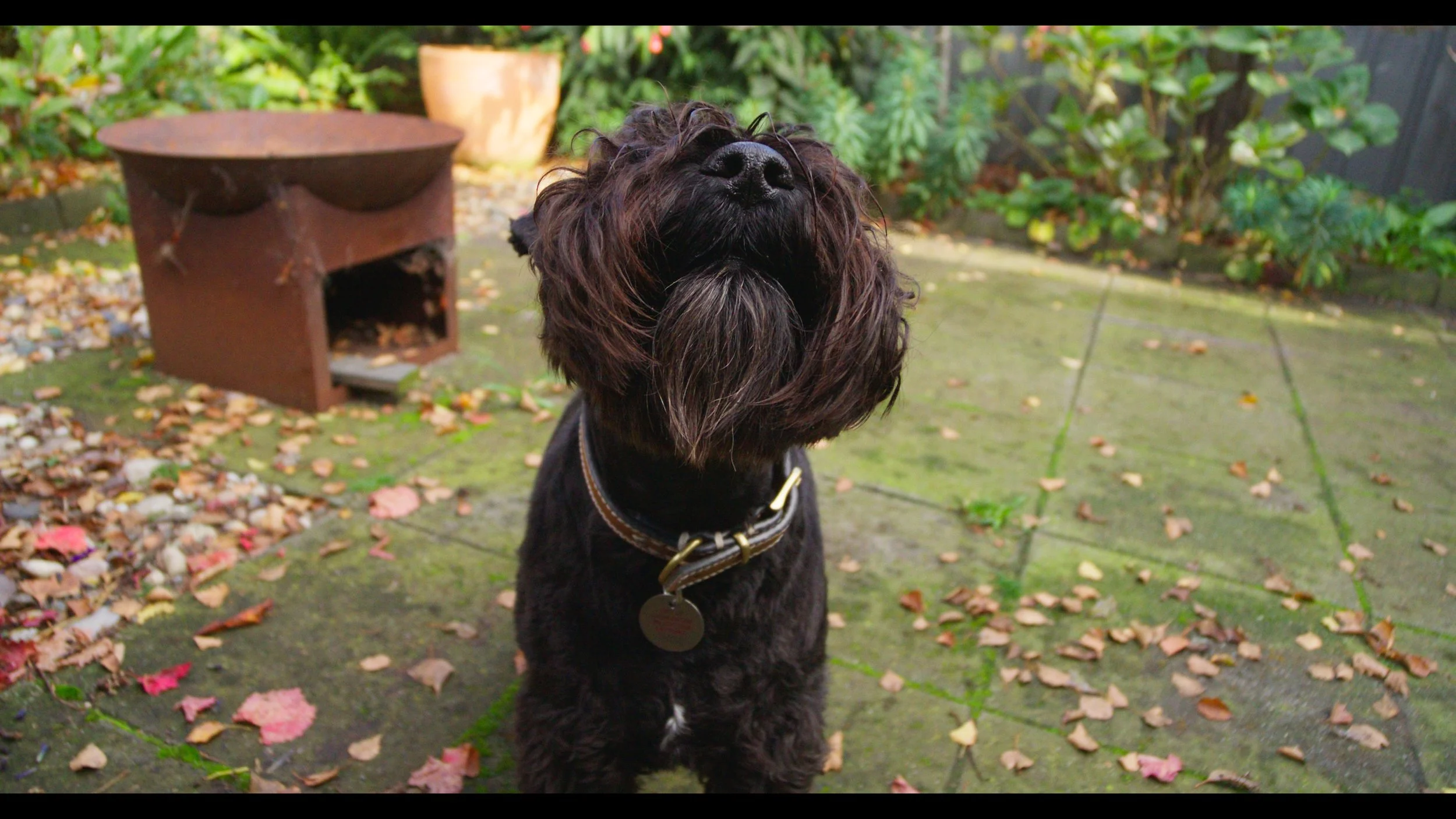
Or you can let them come to you. I have found this lens is a good fit with the Hope primes giving me a handy 12, 25, 50 set and the disappointing 16mm (one sample) and too wide 10mm put me off chasing more Hope glass. It was also really, really nice to hand hold, the G9II was seriously gimbal like with this little lump of glass up front.
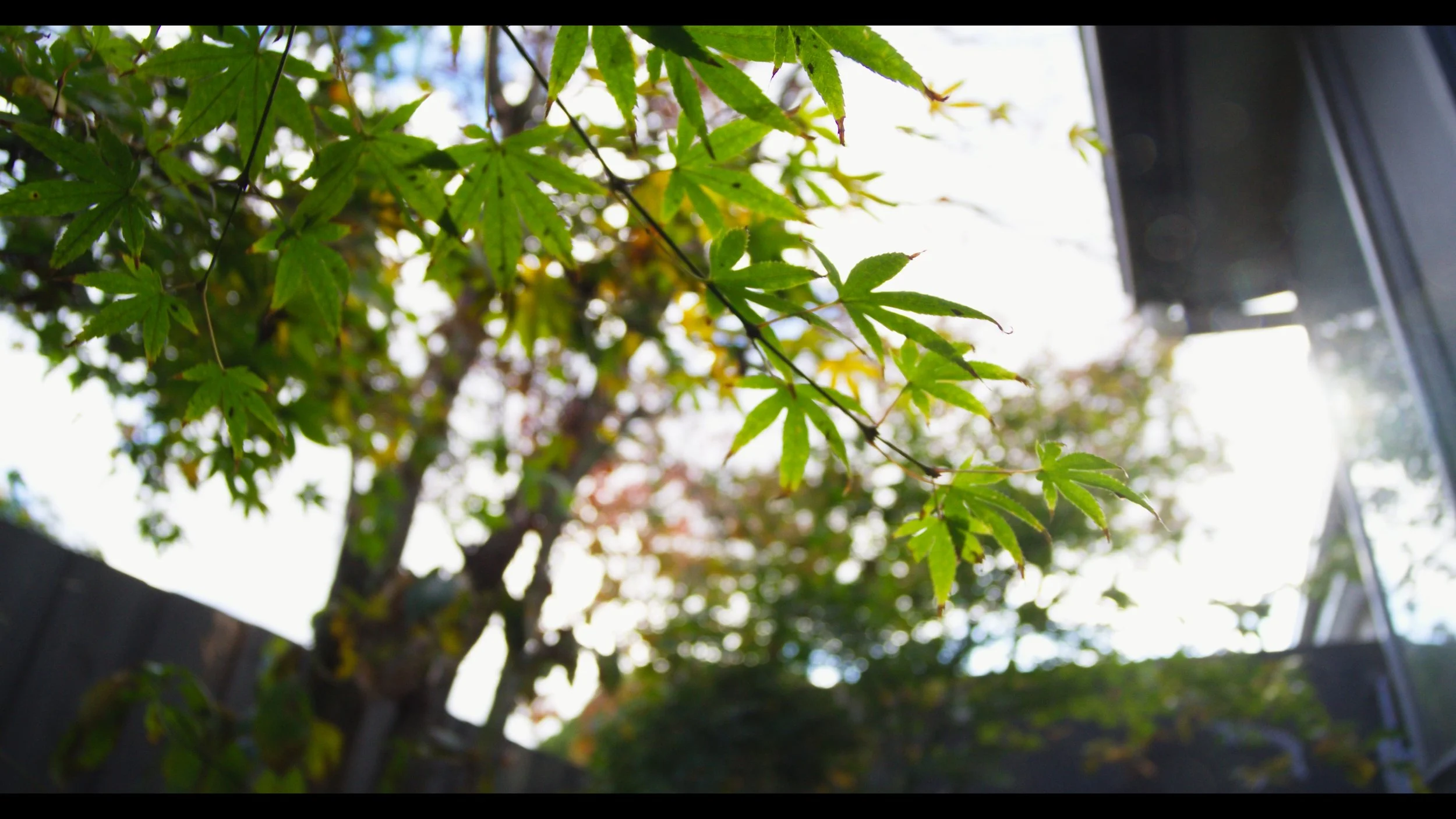
Turns out, the lens can almost focus on the back of the matt box filter (notice the little blobs top right, they moved with the lens, not the sun).
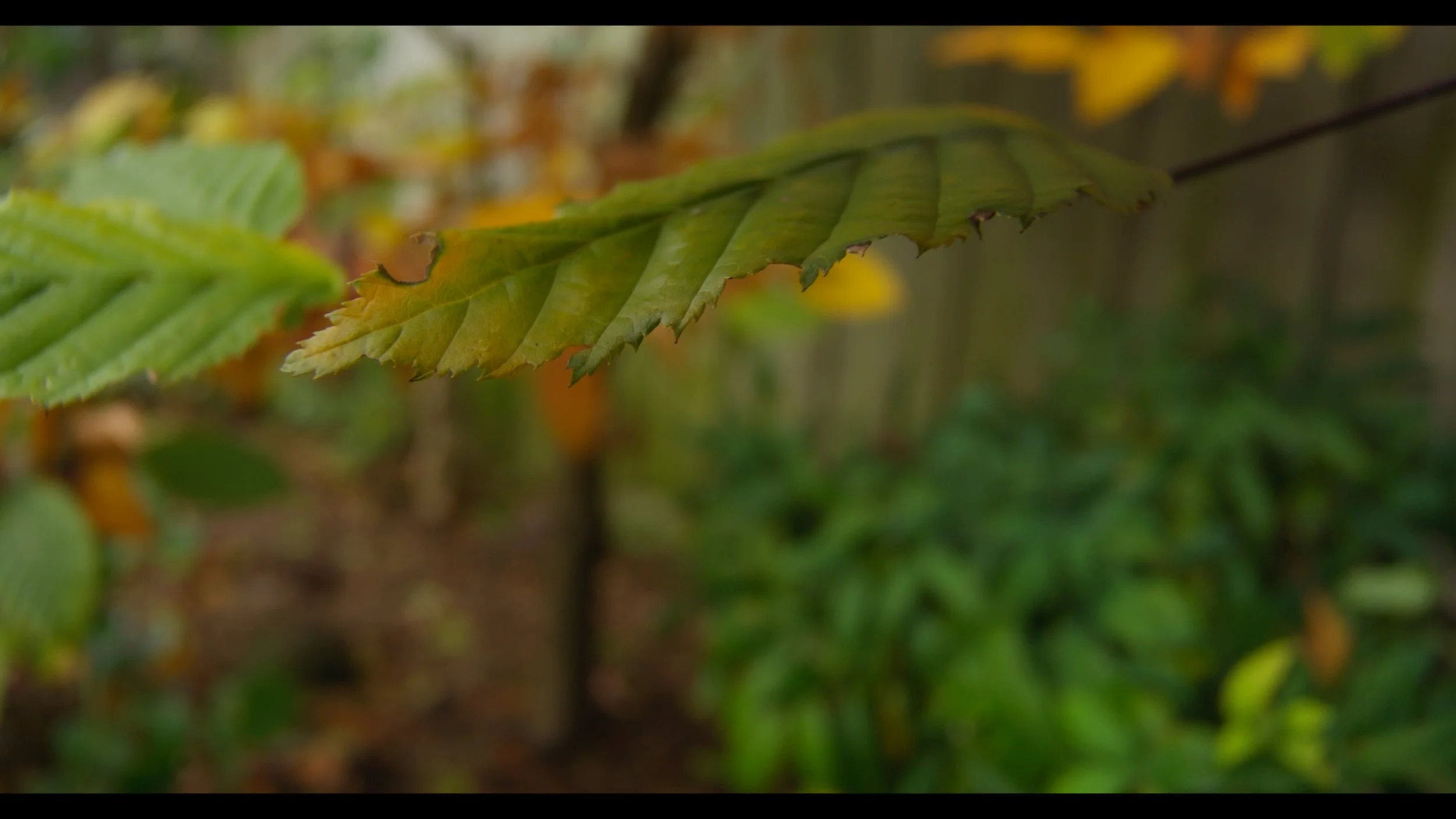
During this test the sun was behind a cloud, if I had just waited ten minutes….

So, while these were loading, I thought I might give the 25mm Hope another run in some nicer light (which happened pretty much as soon as I finished with above).
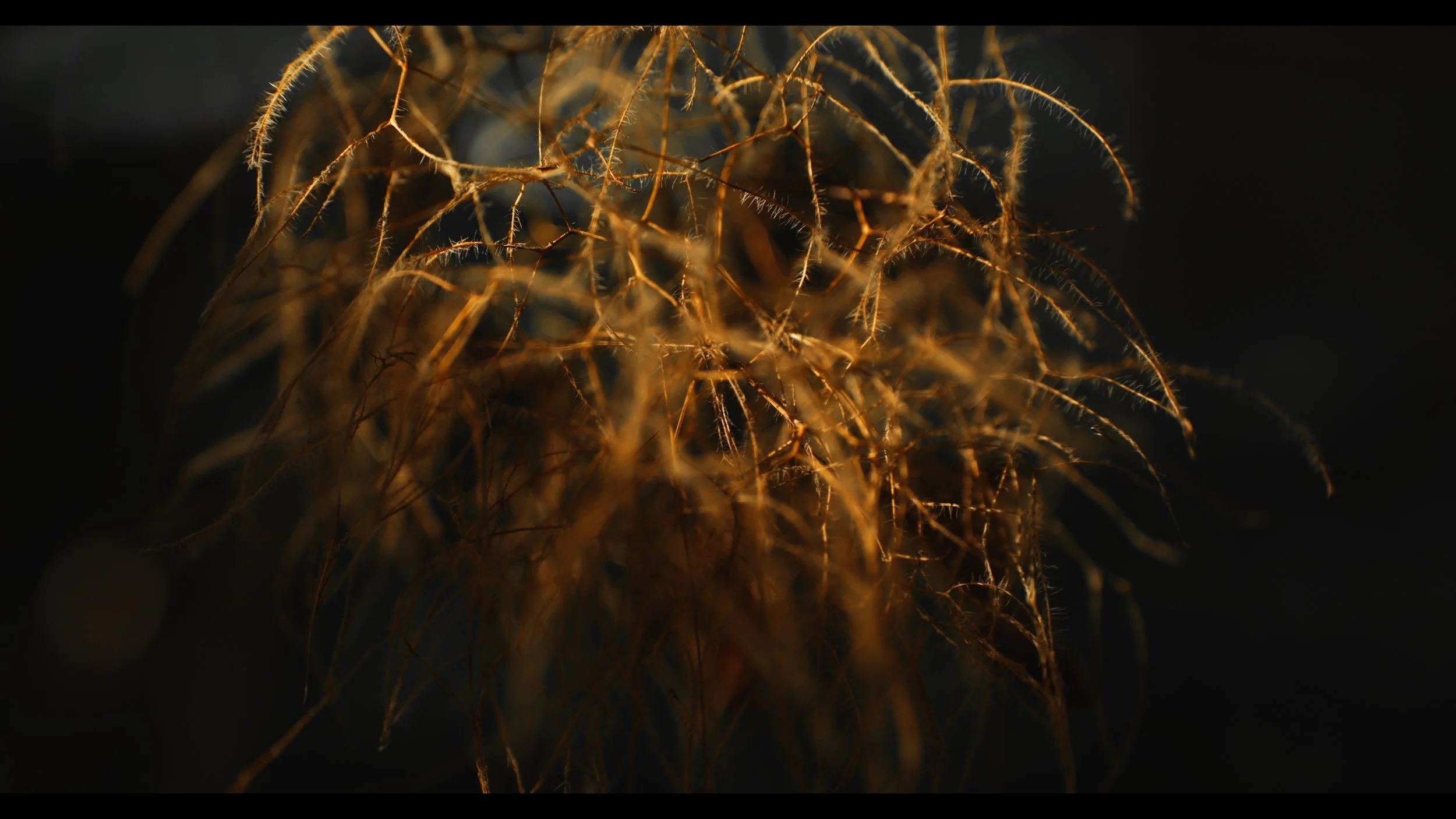
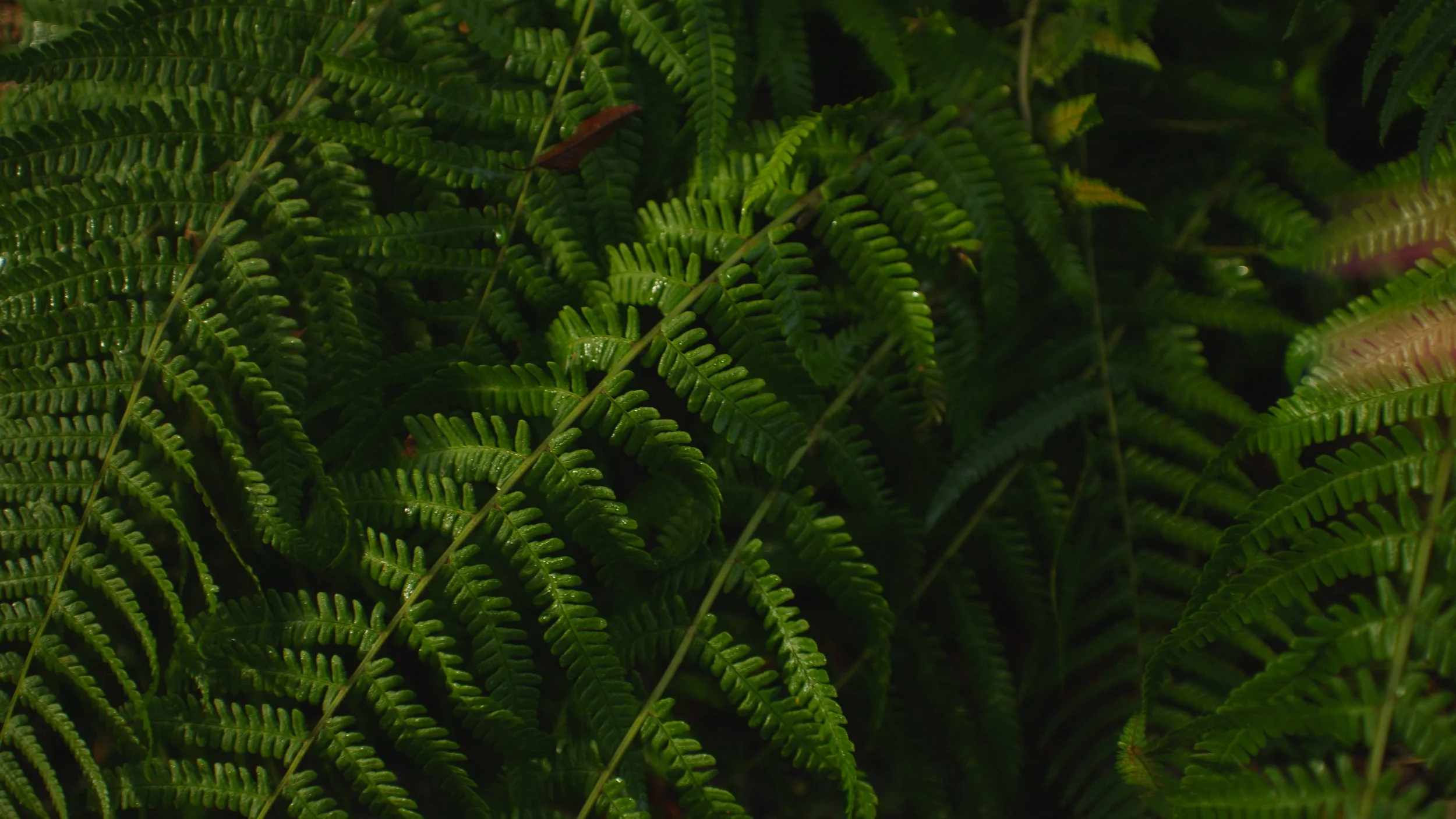
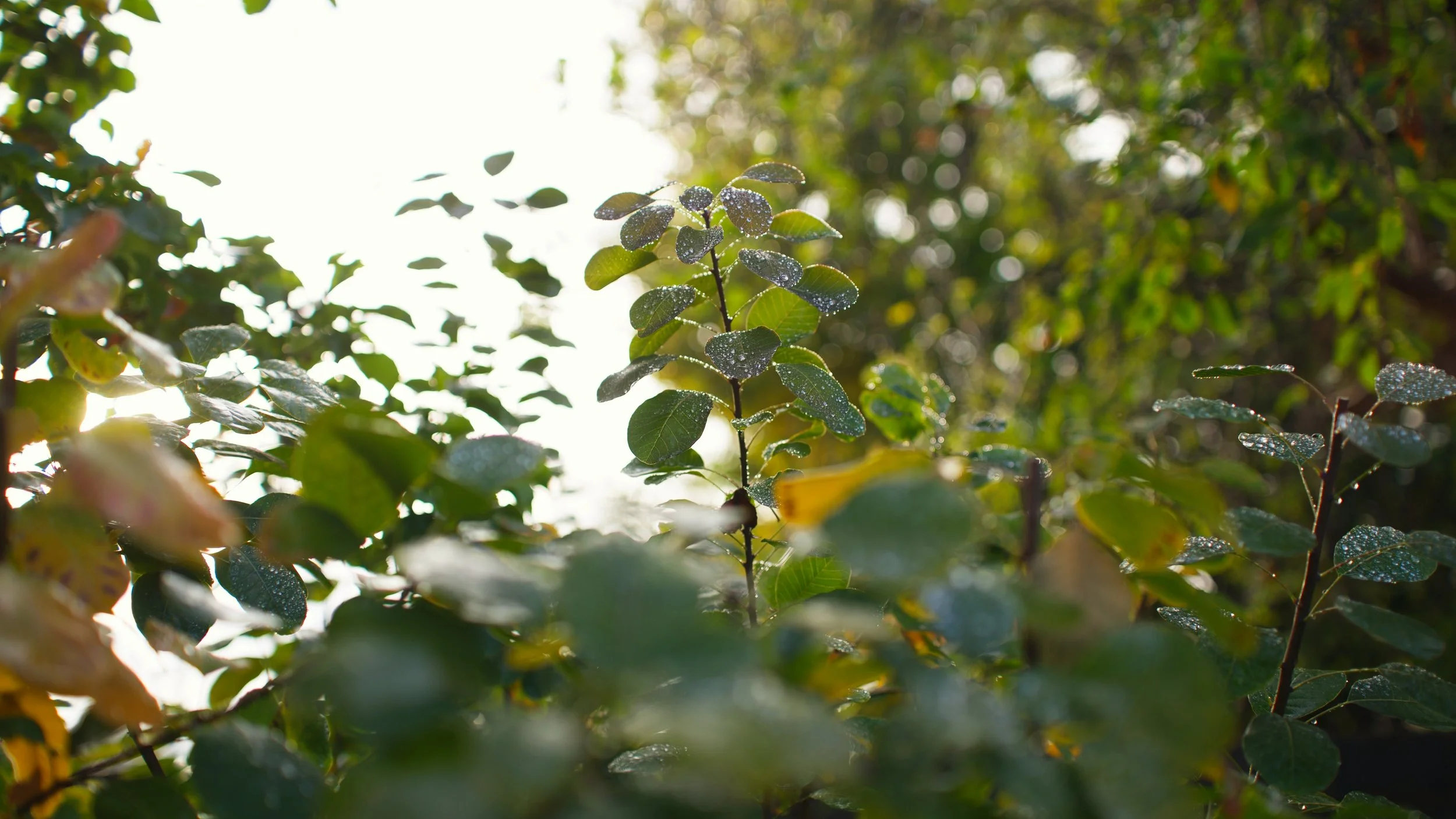
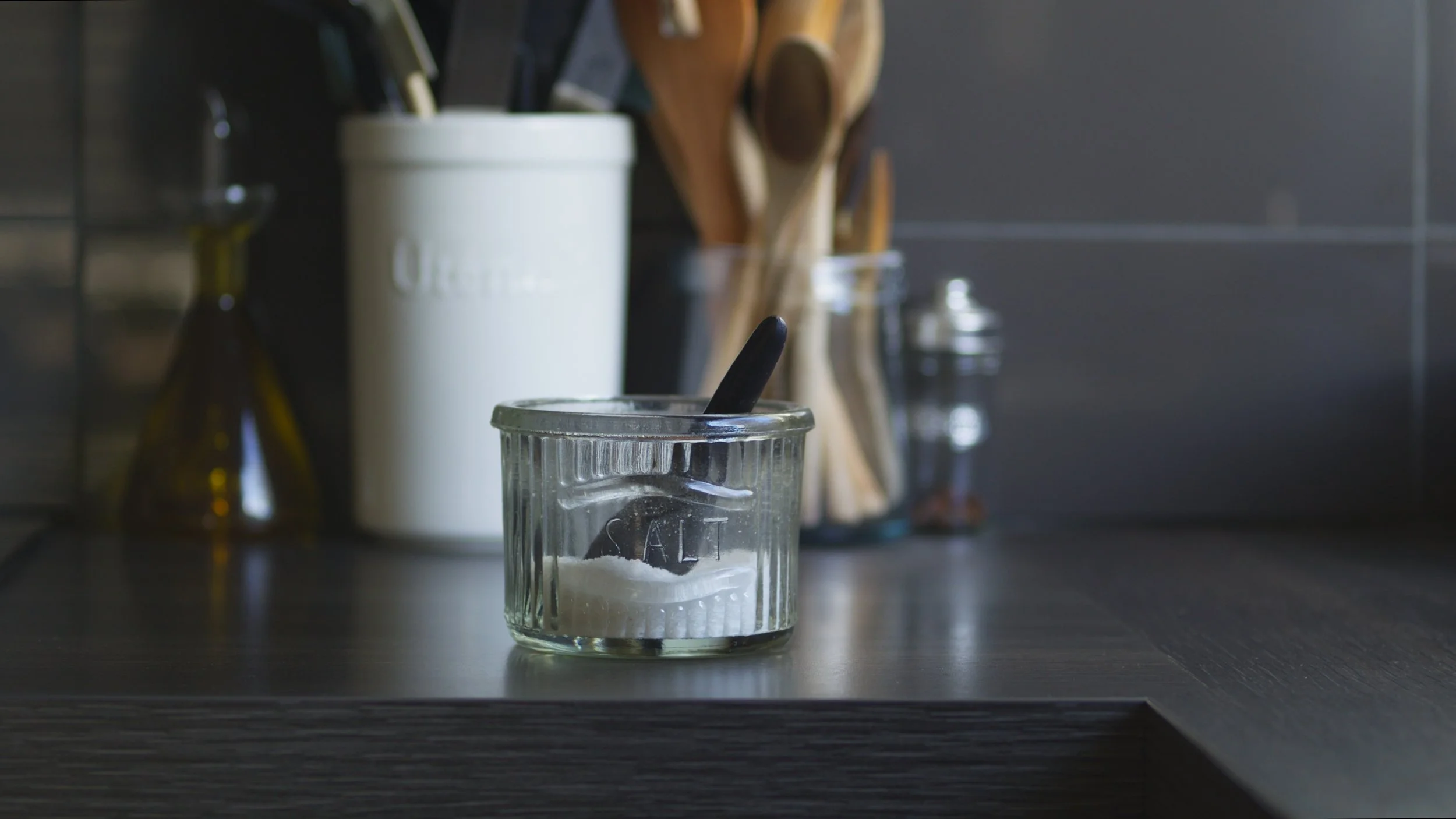
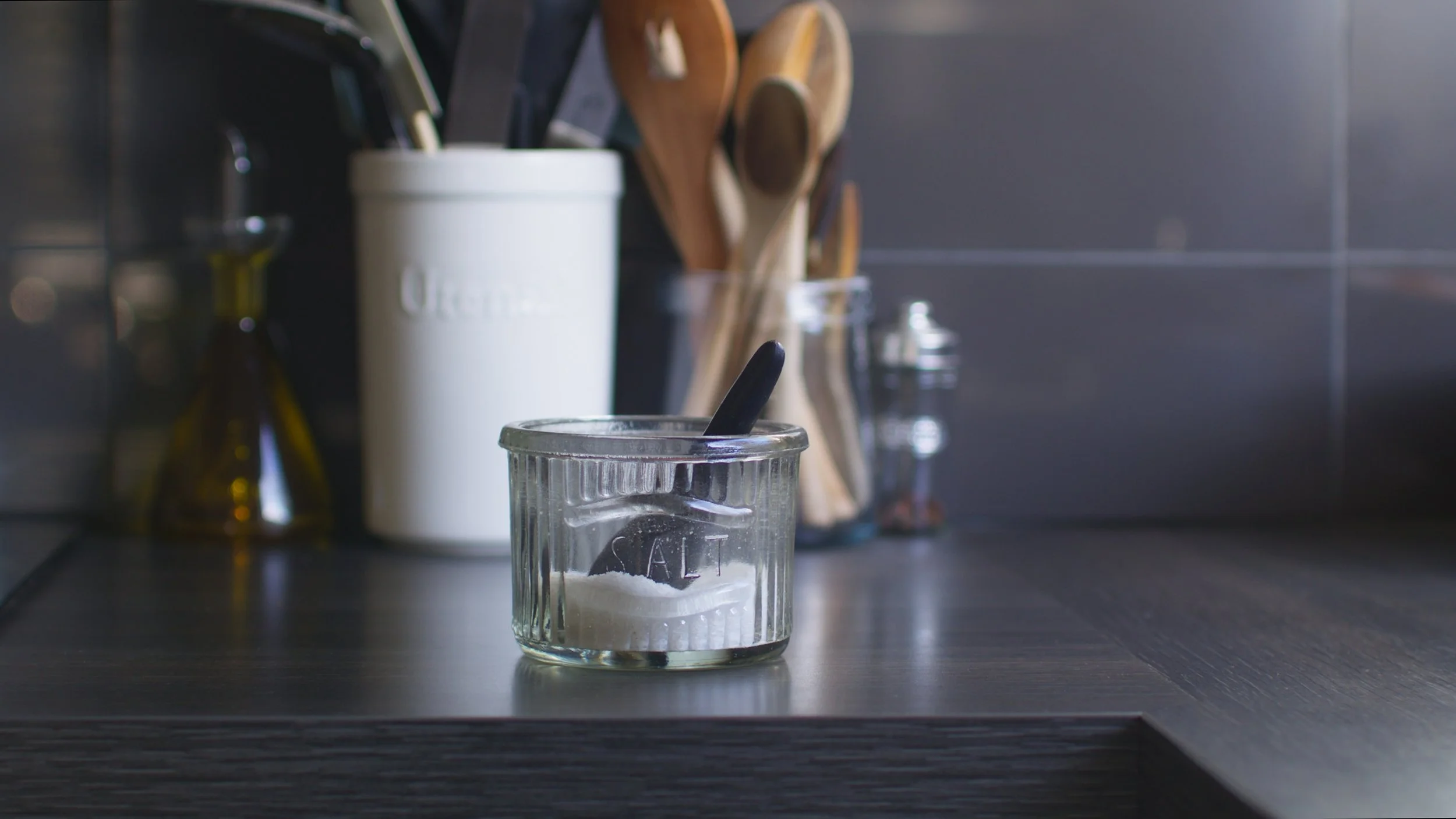
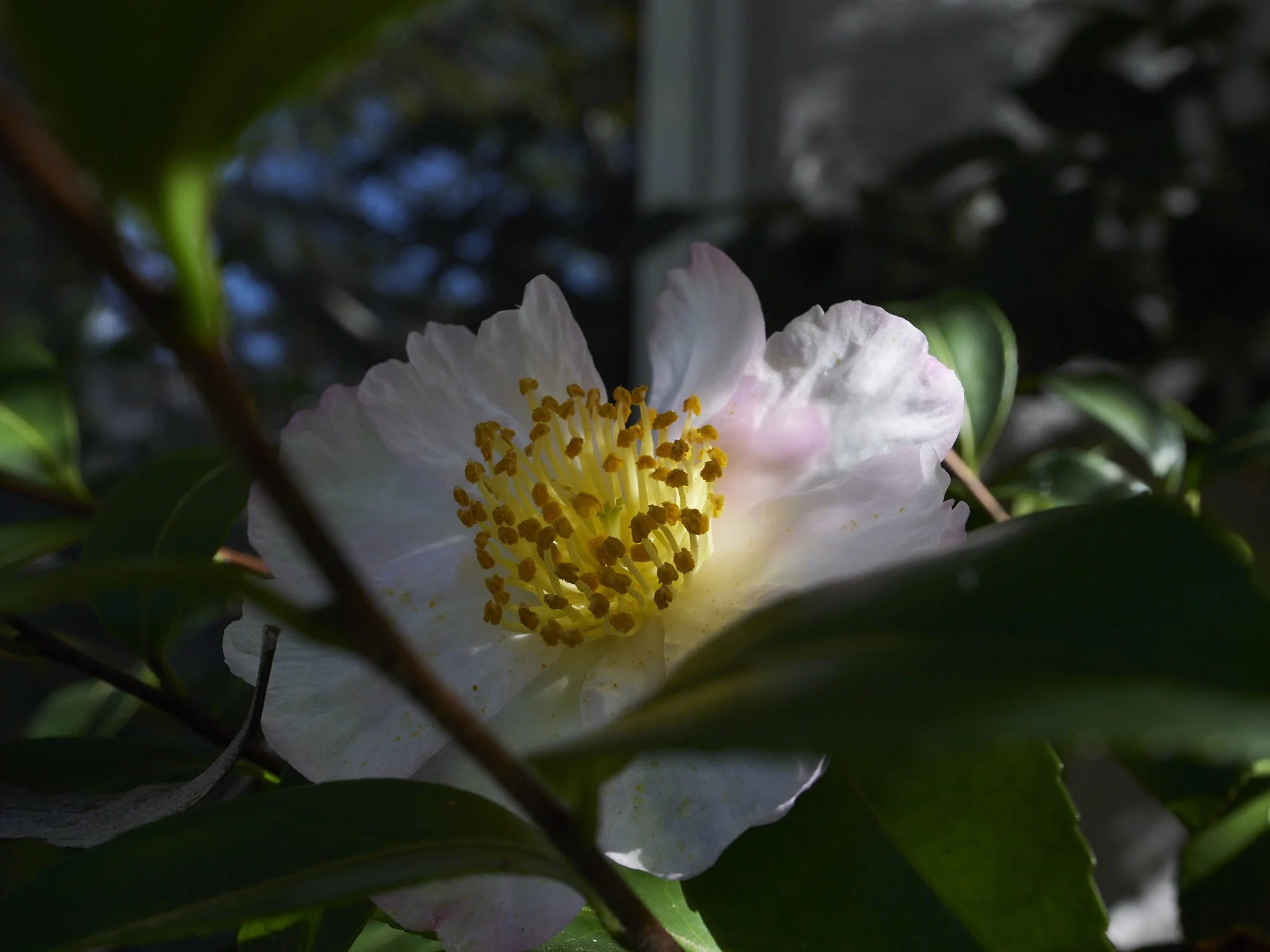
Also capable of some pretty good close focus.
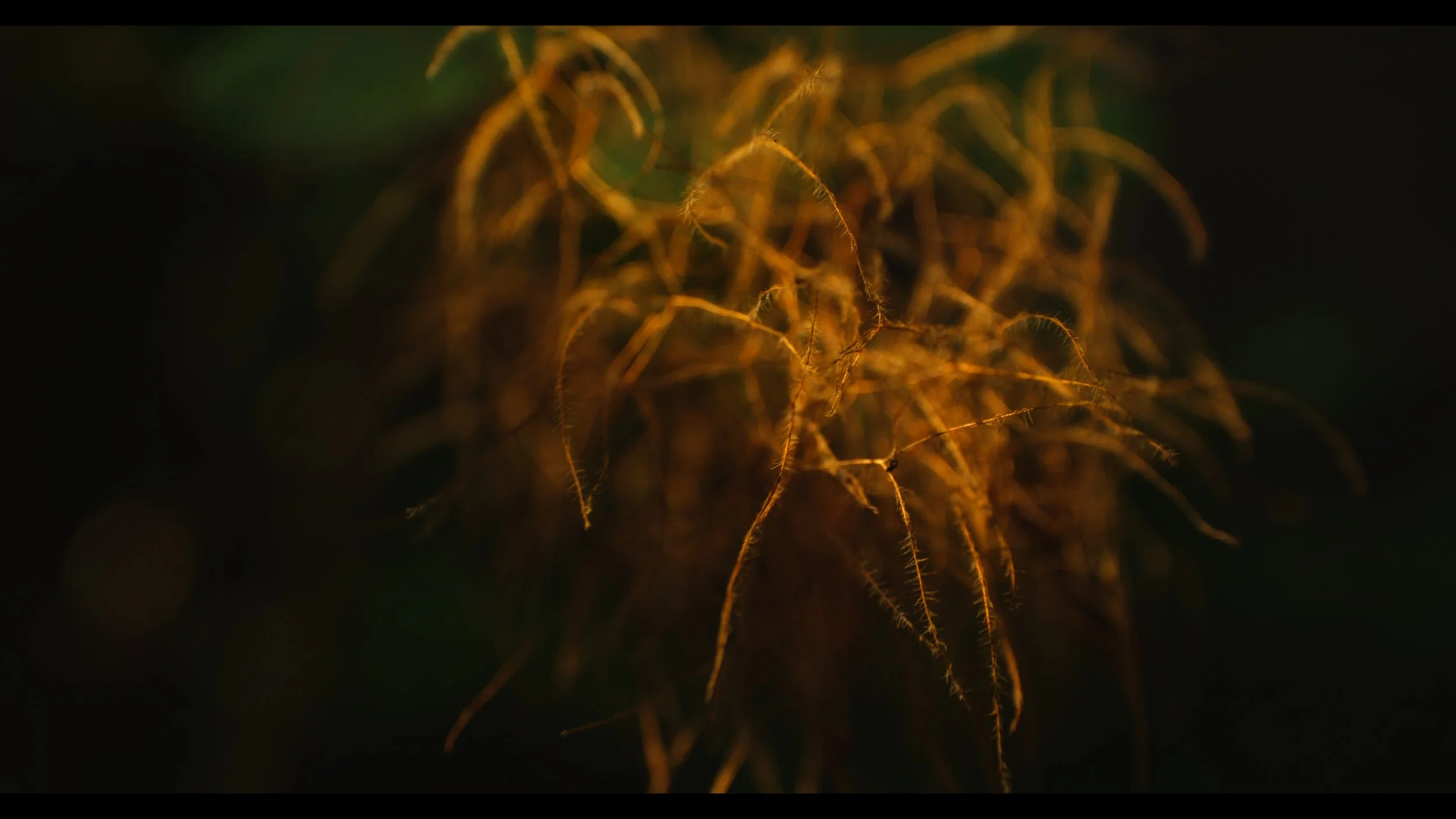
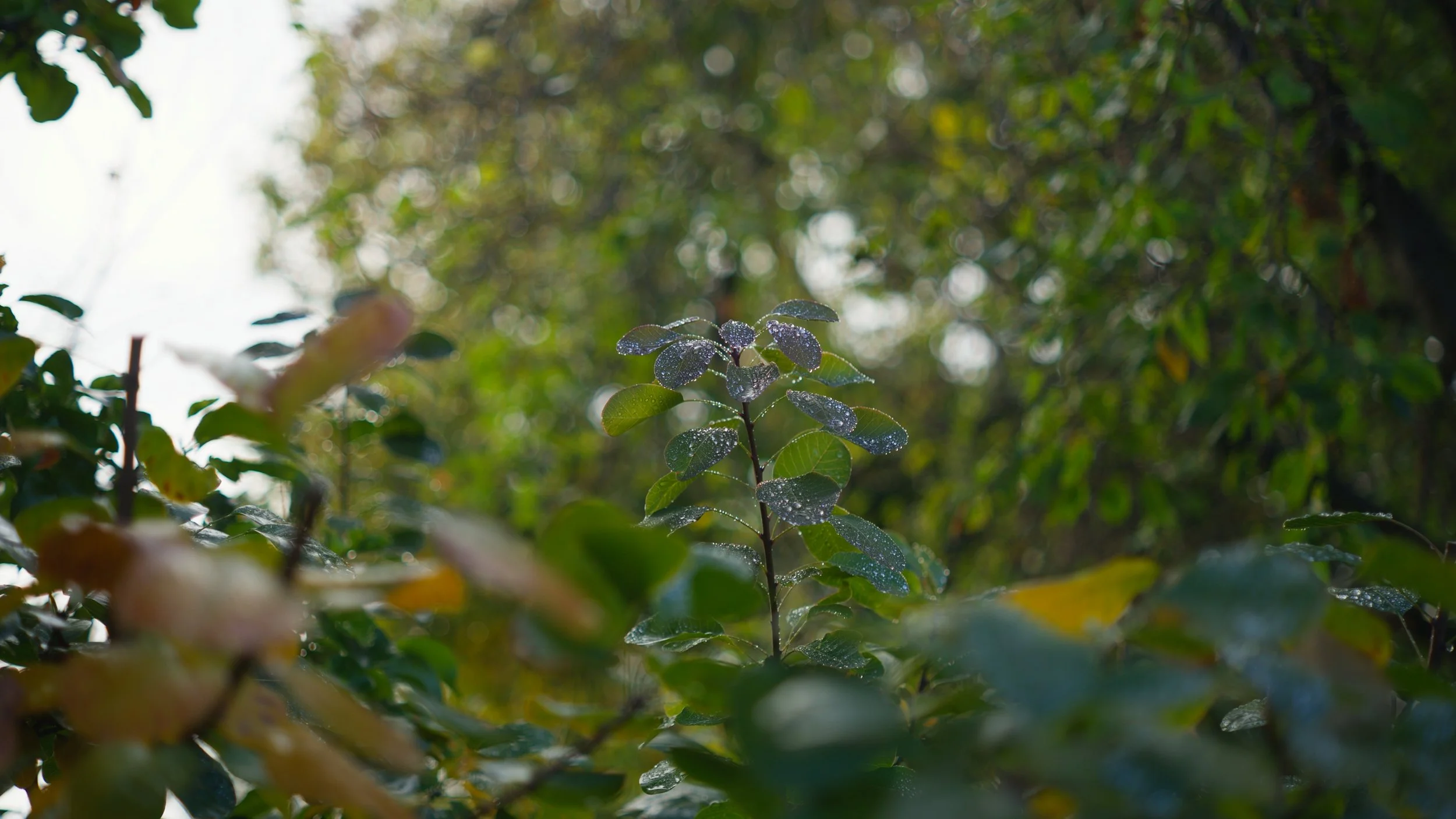
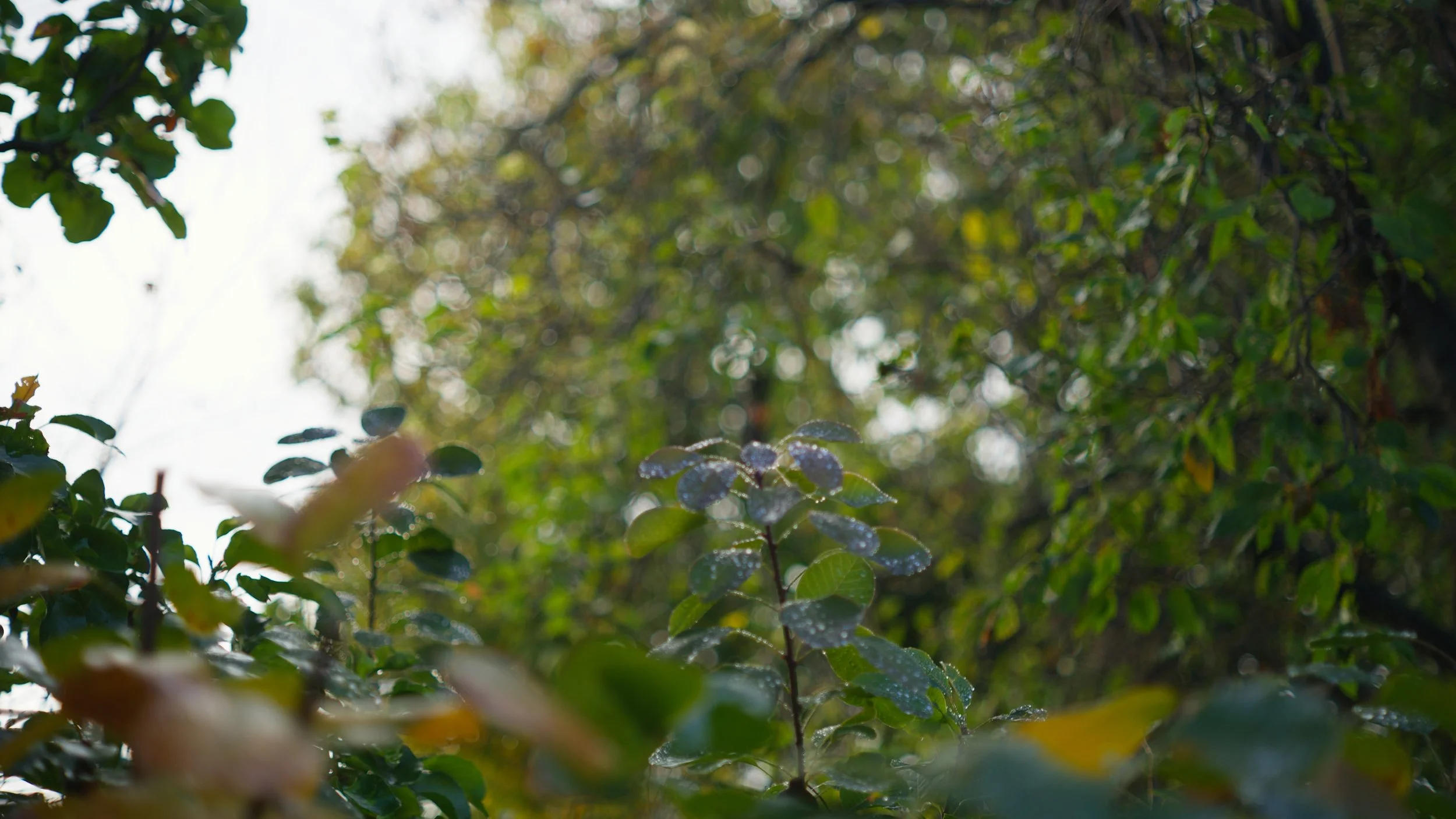
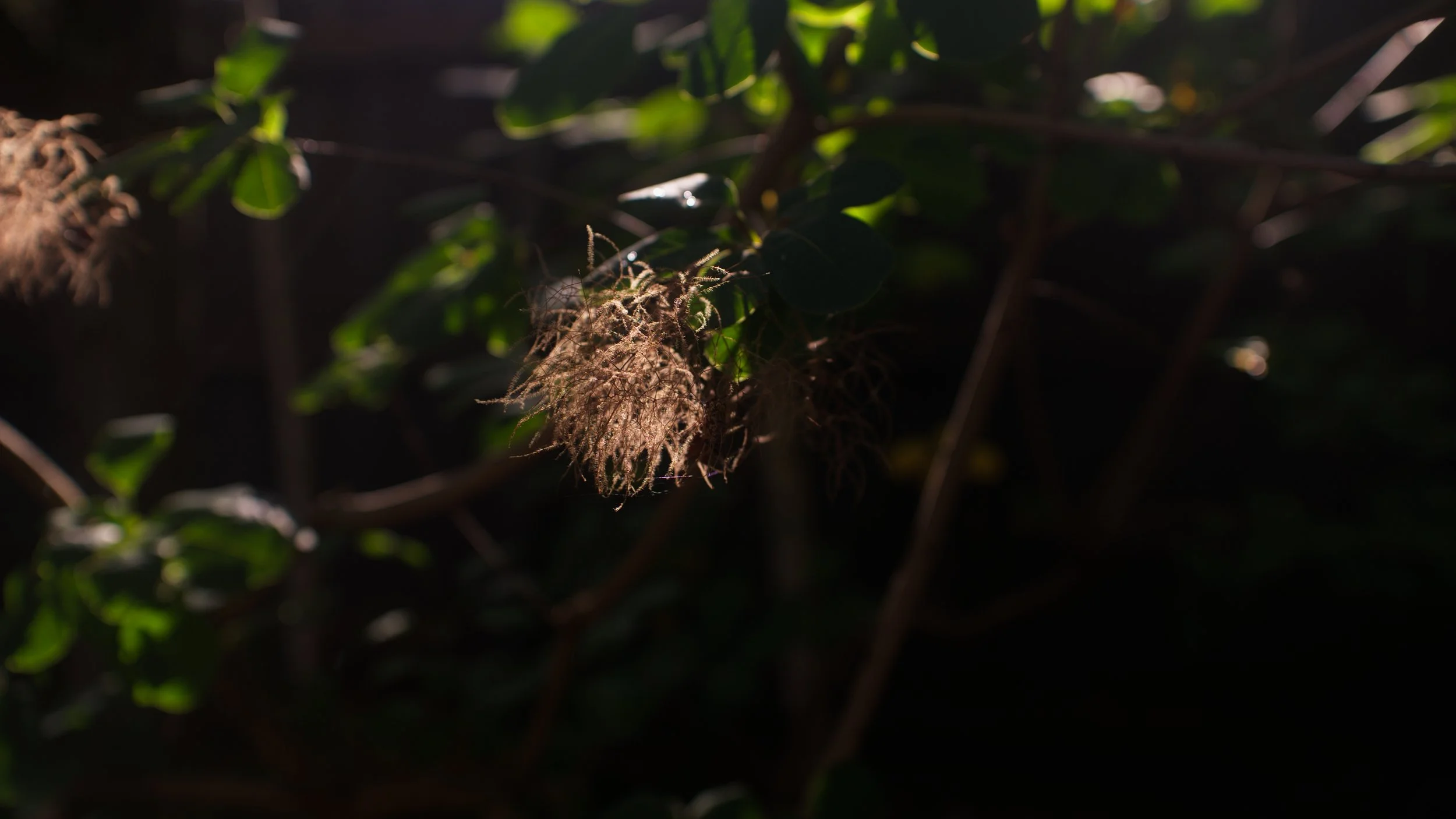
I managed several usable files at different points in this framing. This is warmer, how the lens rendered the one above also, but I changed it to match the Vespid better.
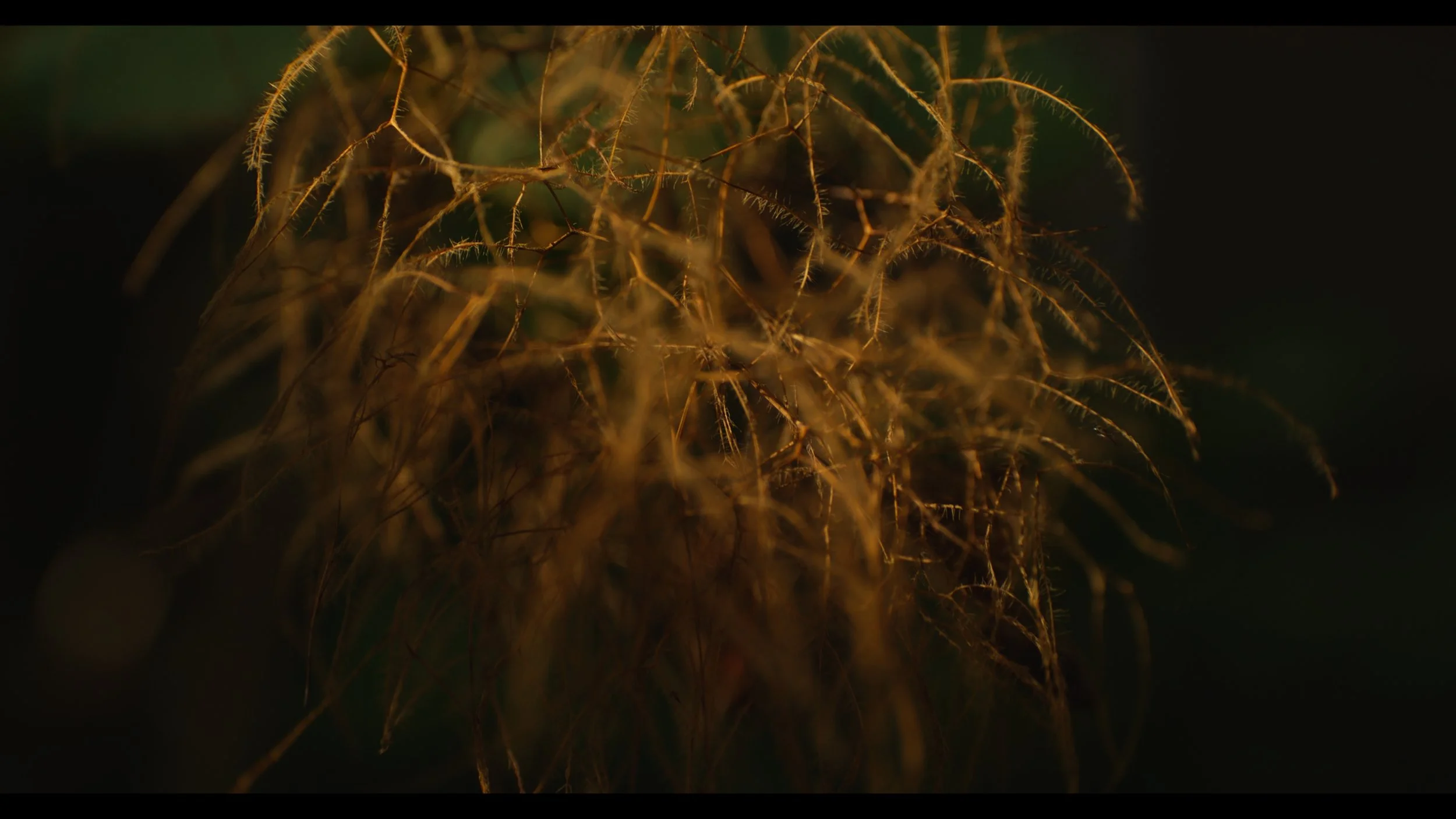
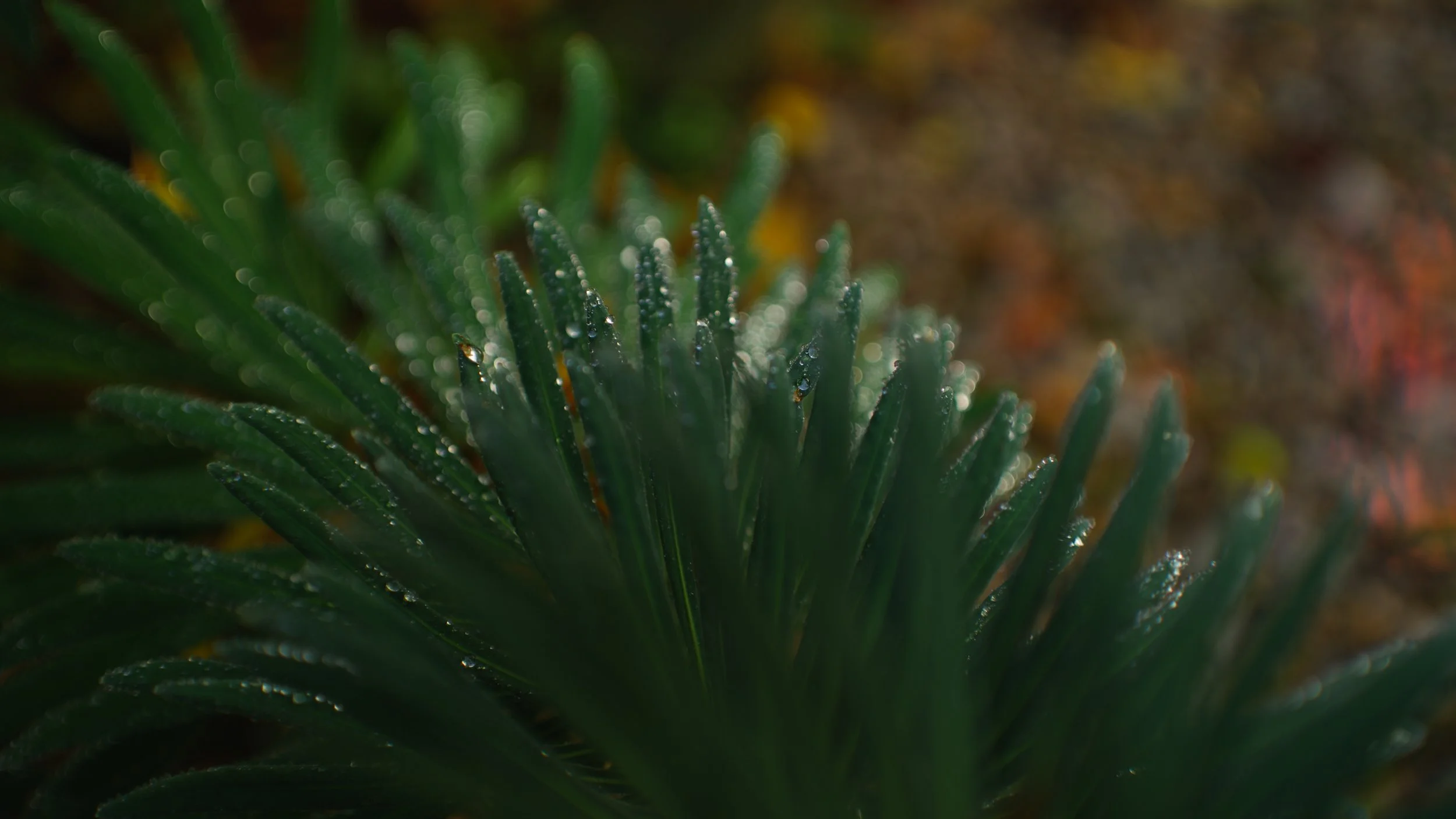
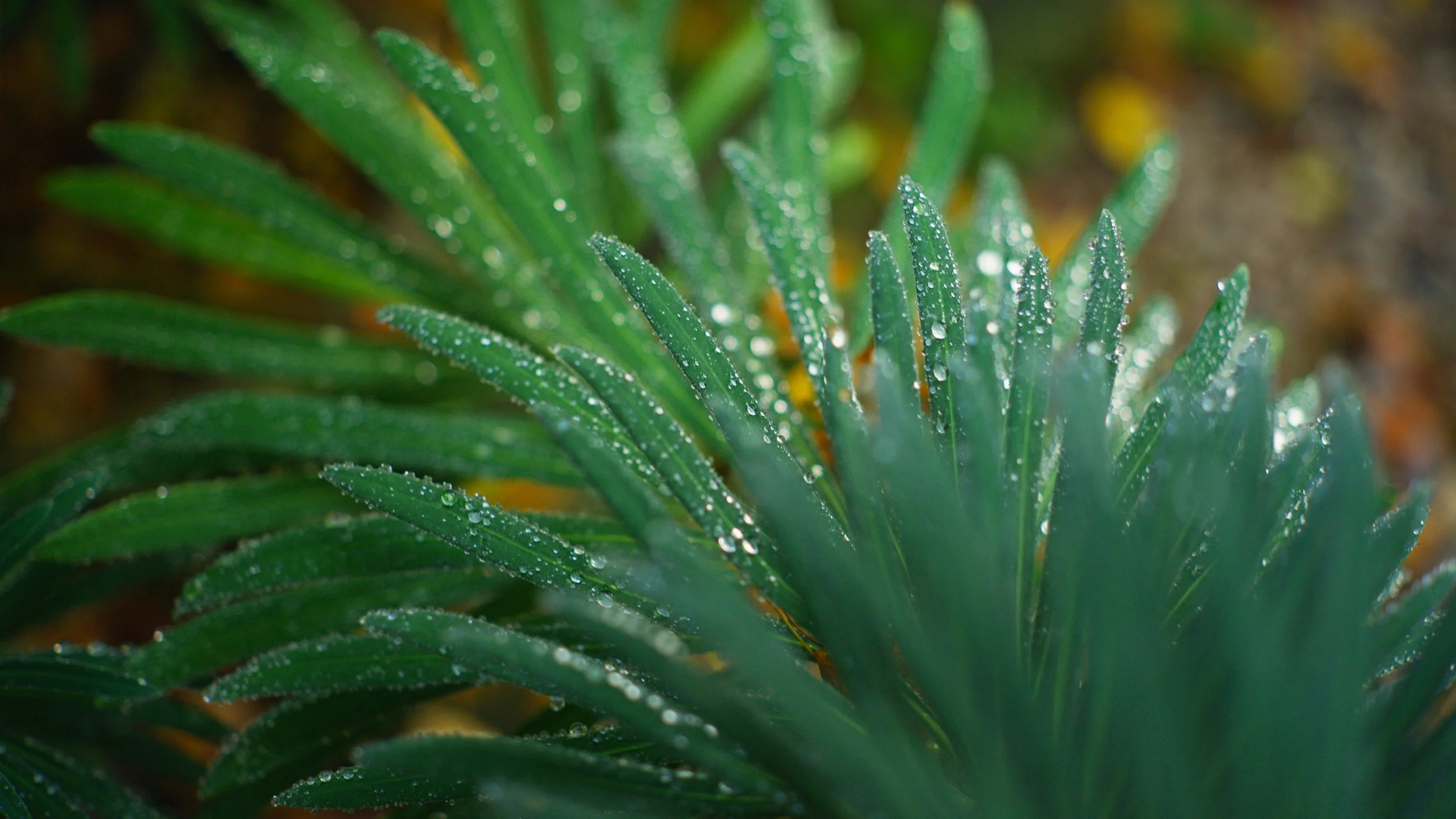
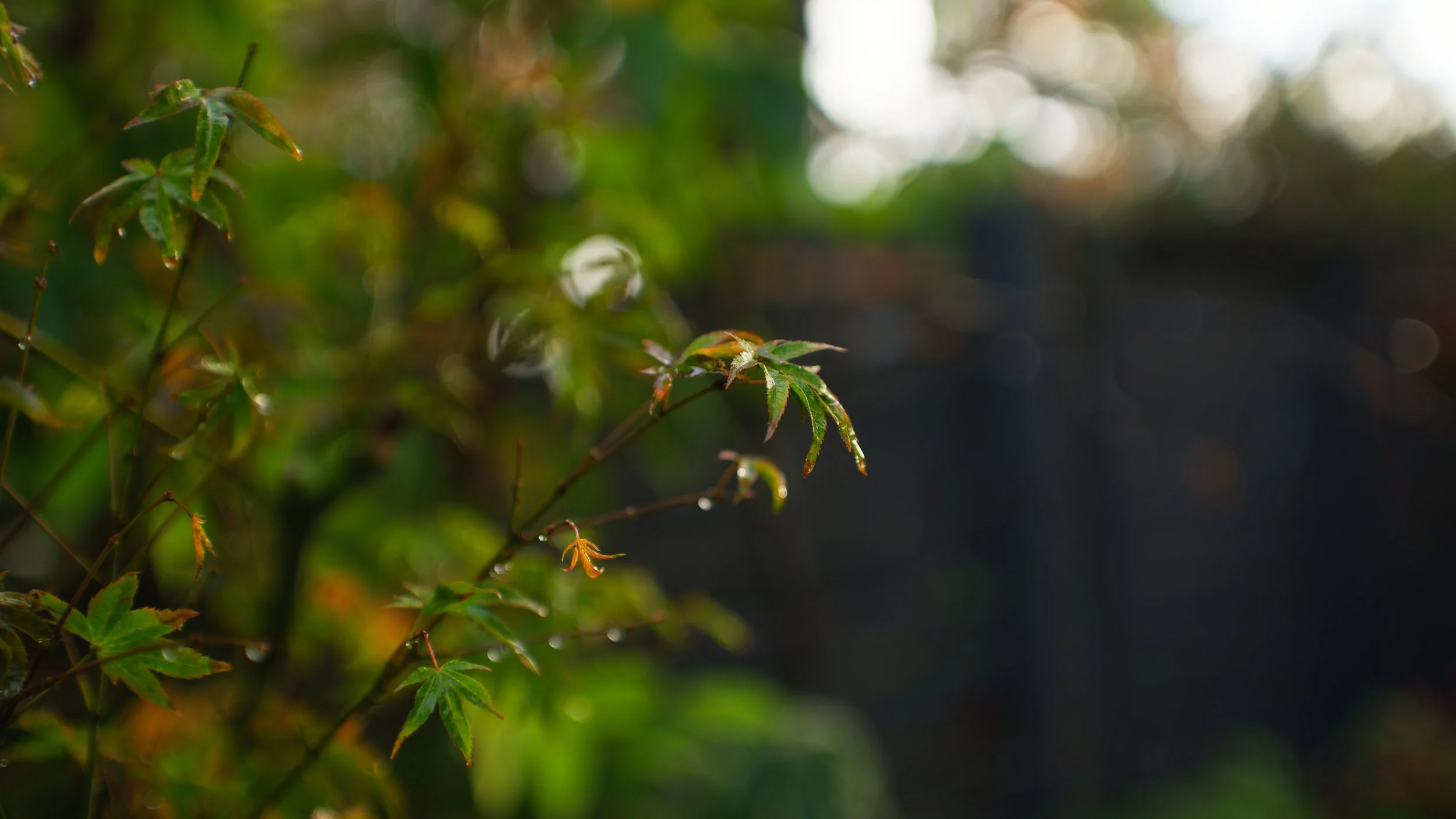
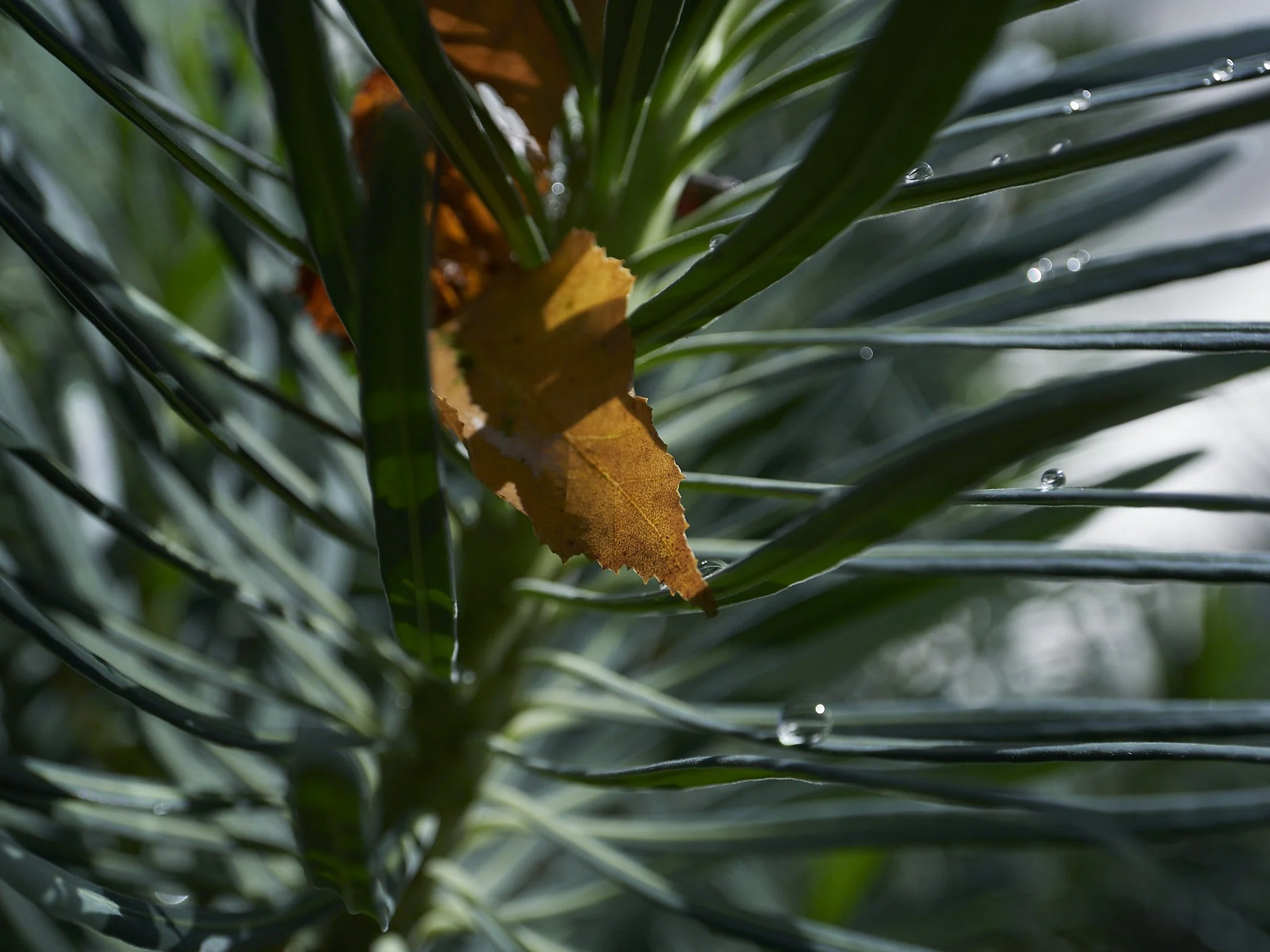
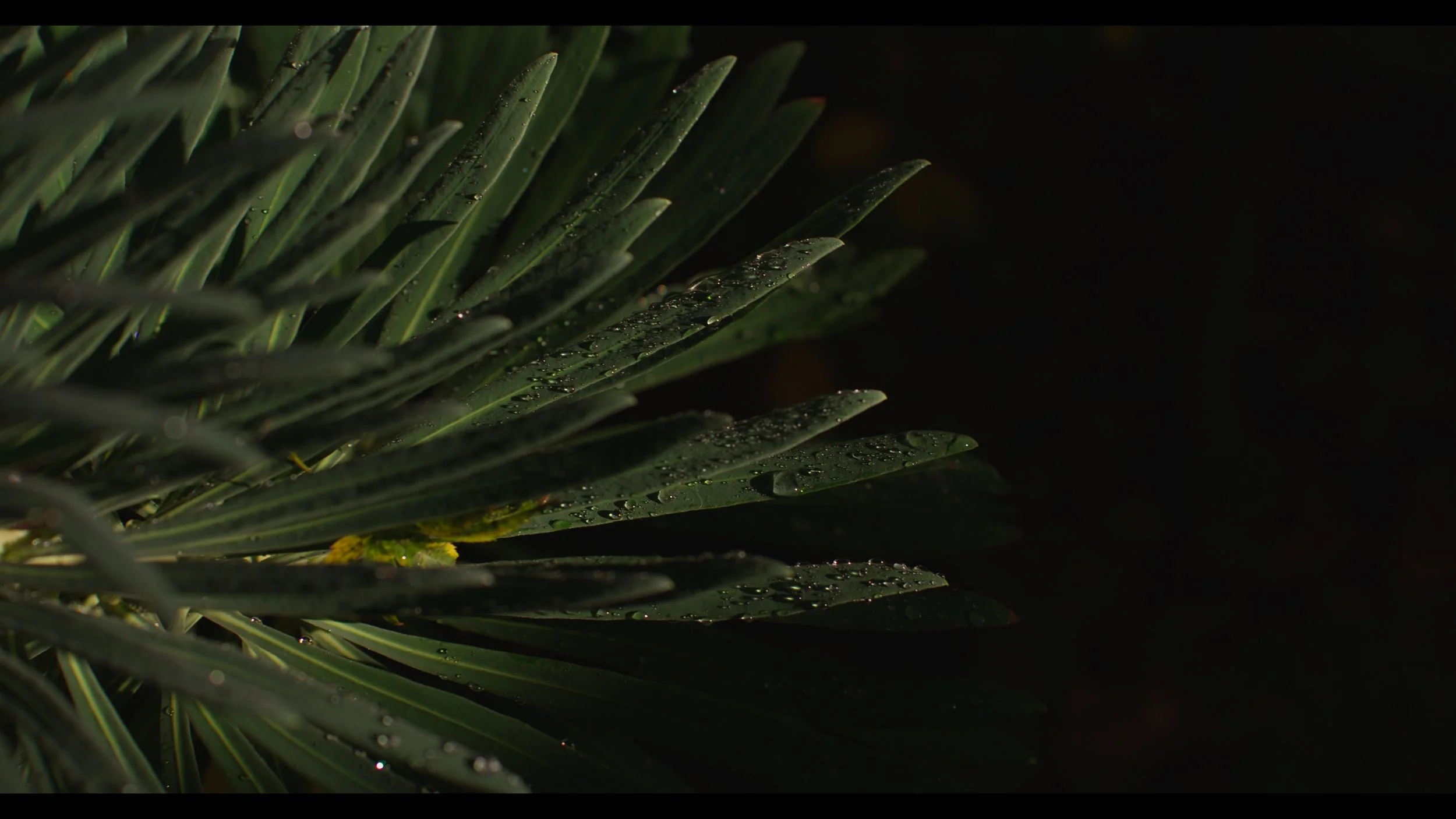
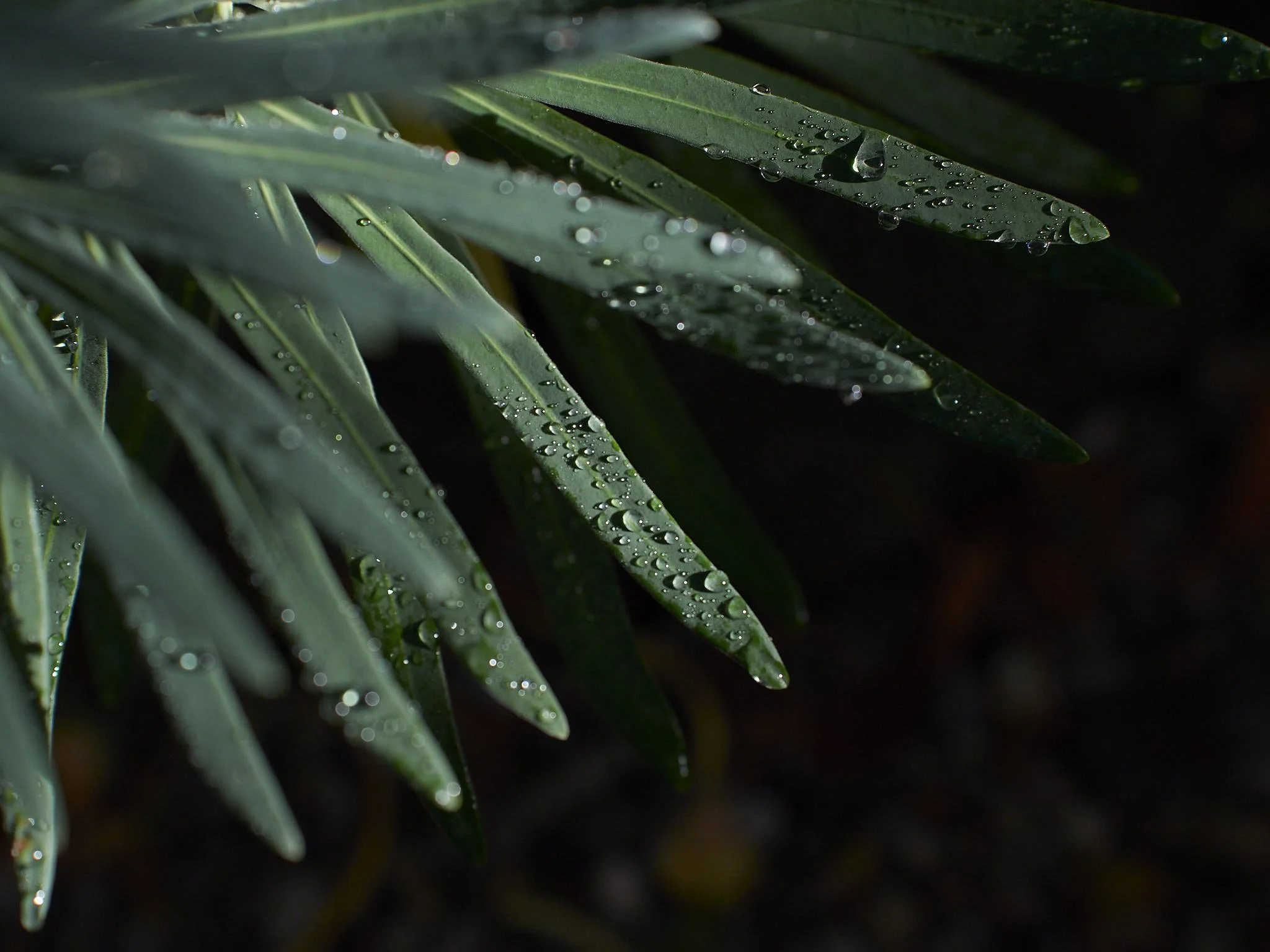
Taken on the Vespid a few minutes later, but I failed to get a sharp enough image of the front fronds (because it was not sharp). The Hope totally won this contest, sharper results and easier to get. Interesting.

Something I only noticed when posting, is the Vespid files are darker, because I am responding to the tonality of the lens in the grade, not processing for stills presentation. This is neither good nor bad, it just is. The Vespid allows me to see subtle tones that may not be translated successfully, the Hope is, as I have said before, a simpler and cleaner image, just less subtle.
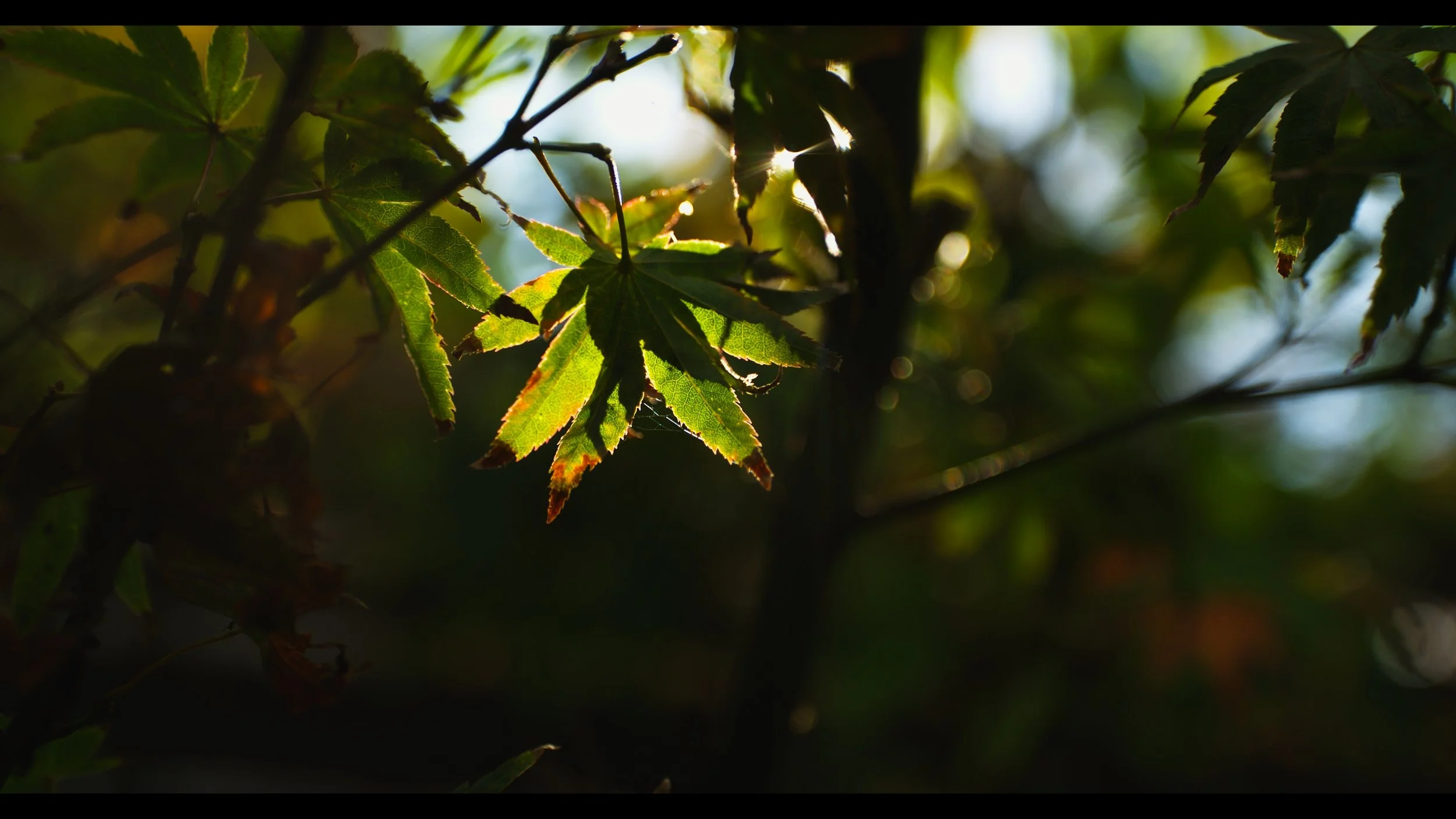
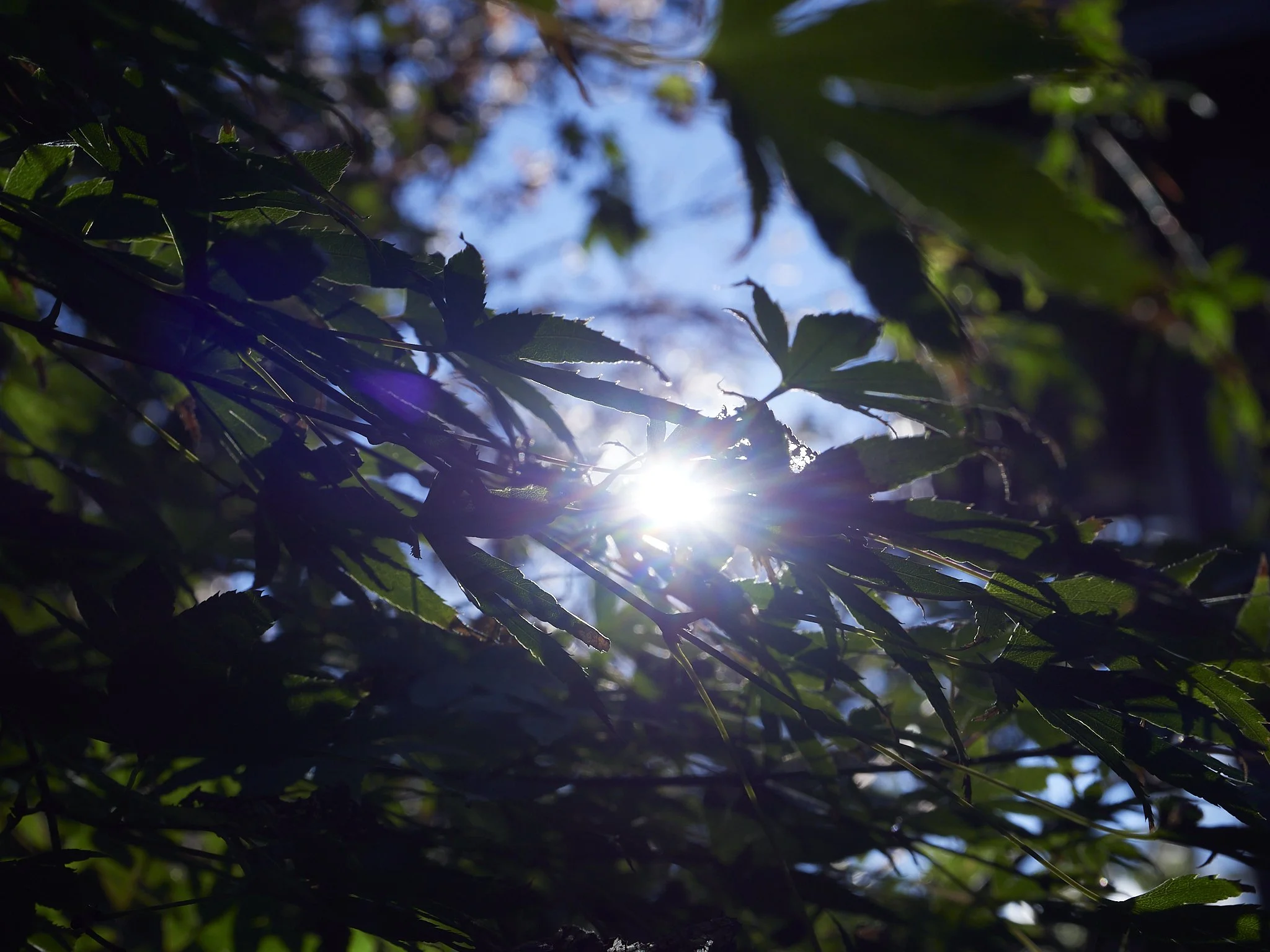
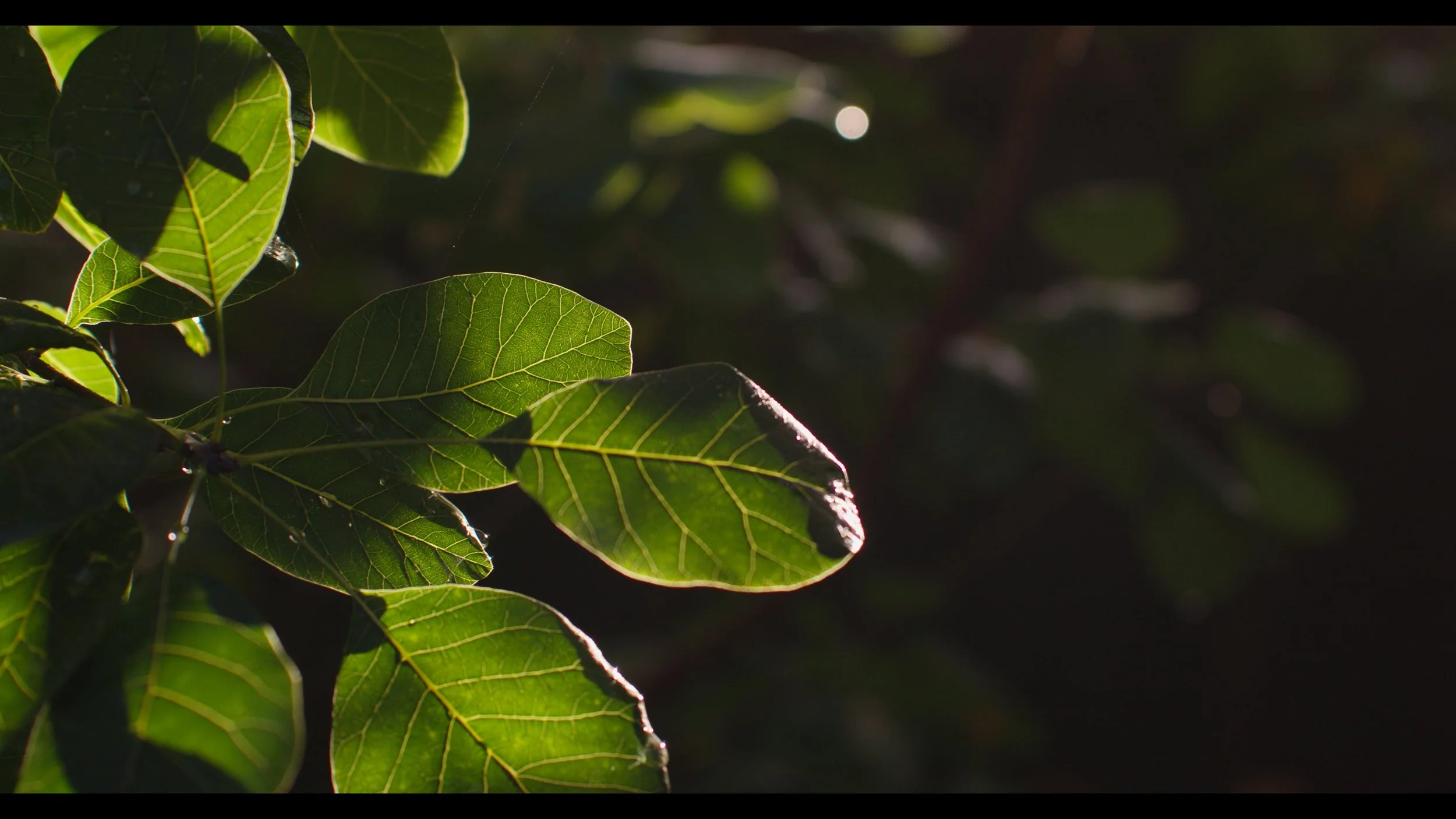
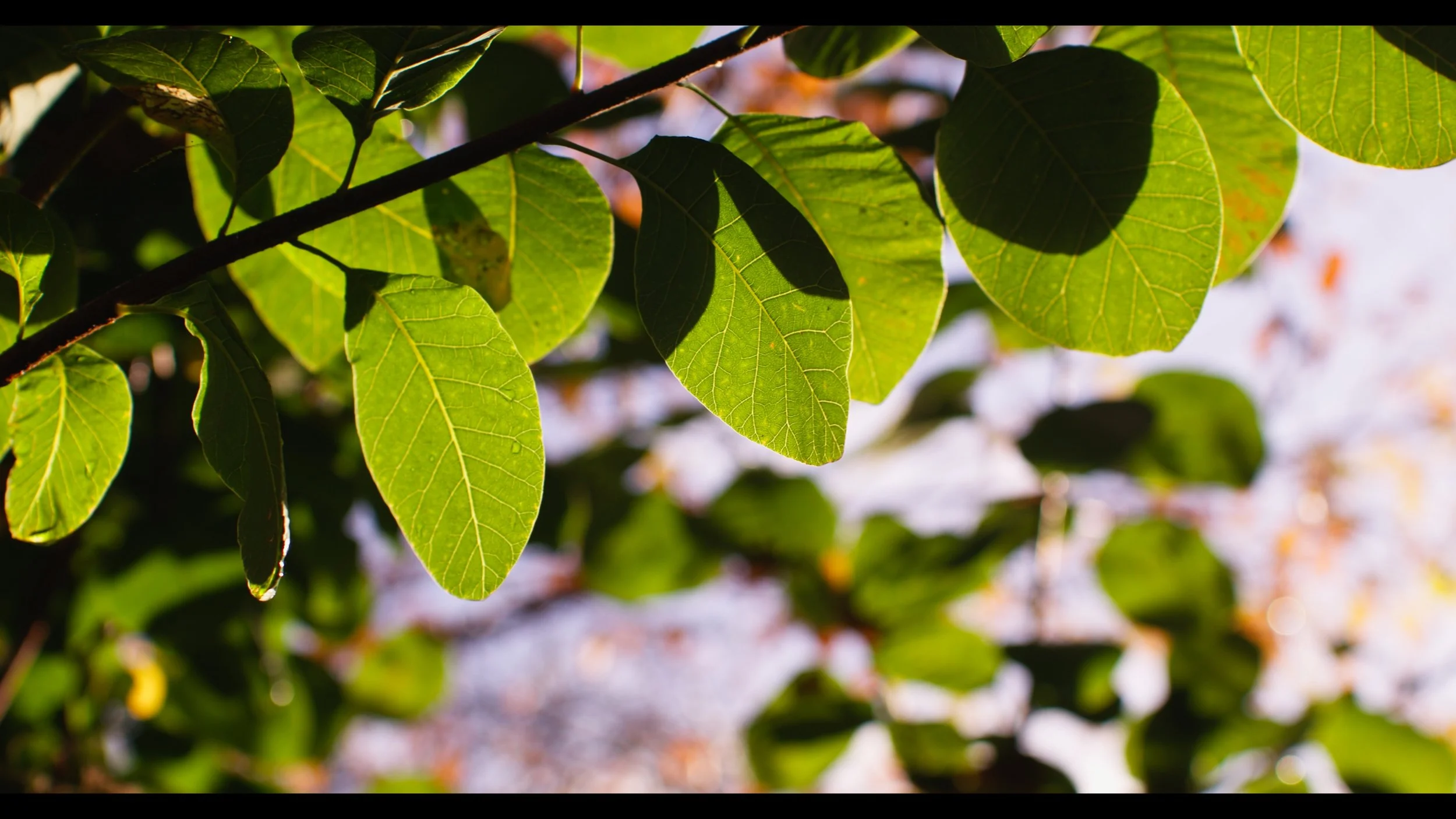
Hope, straight into the sun. Bokeh seems to have less colour and separation, but I have pushed in clser on the shorter lens.
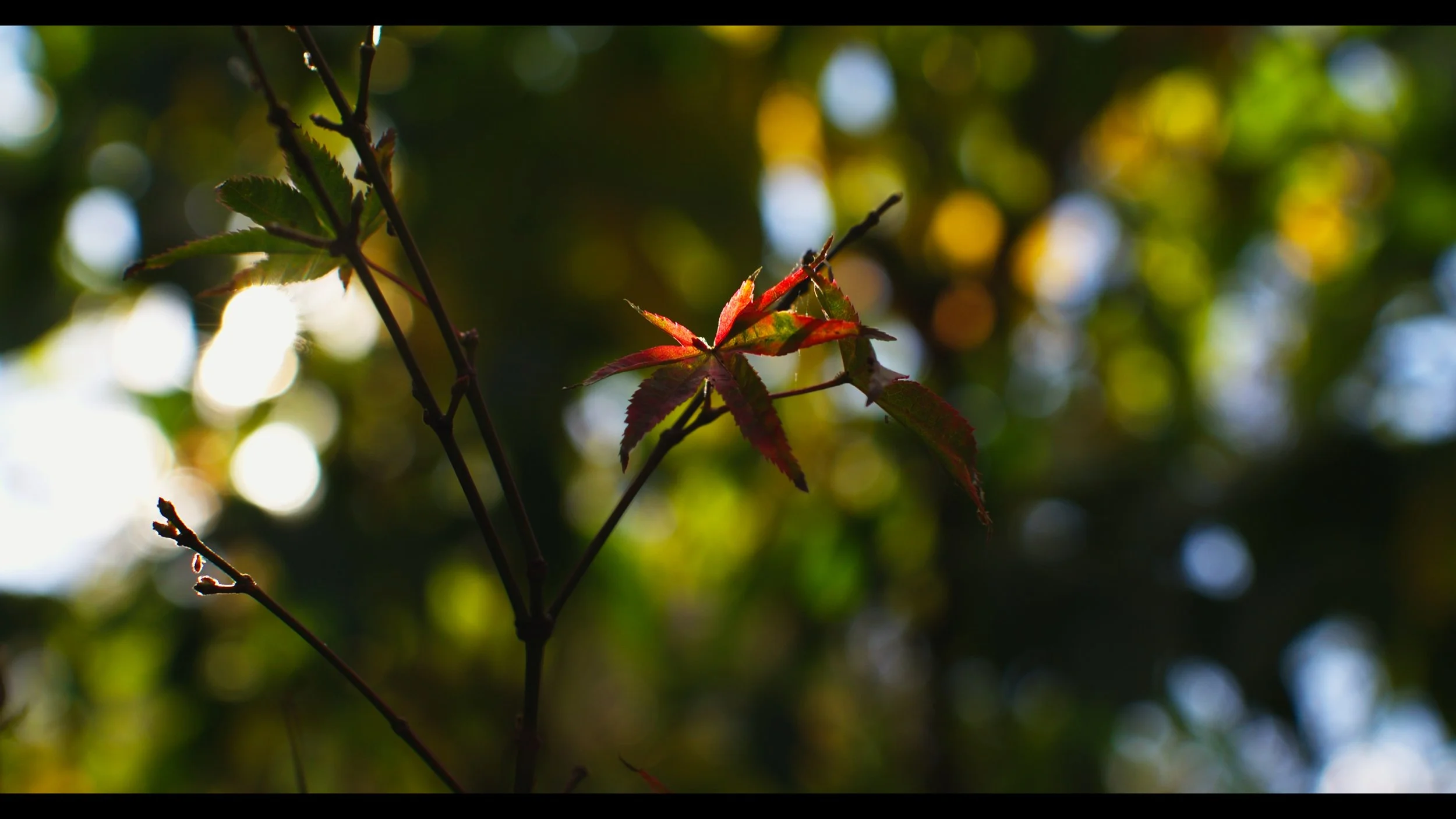
Vespid for the same, but this was a rare win.
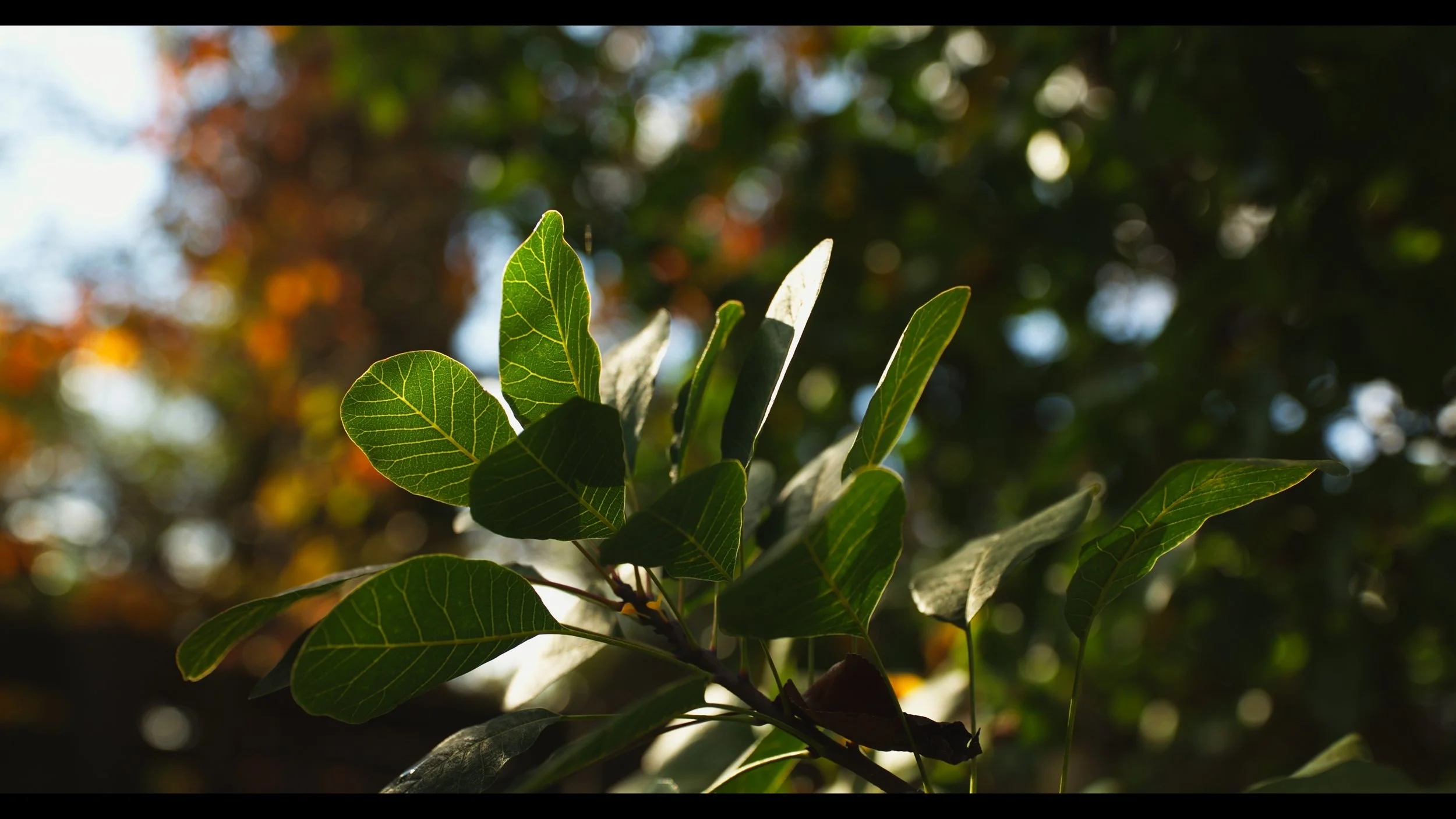
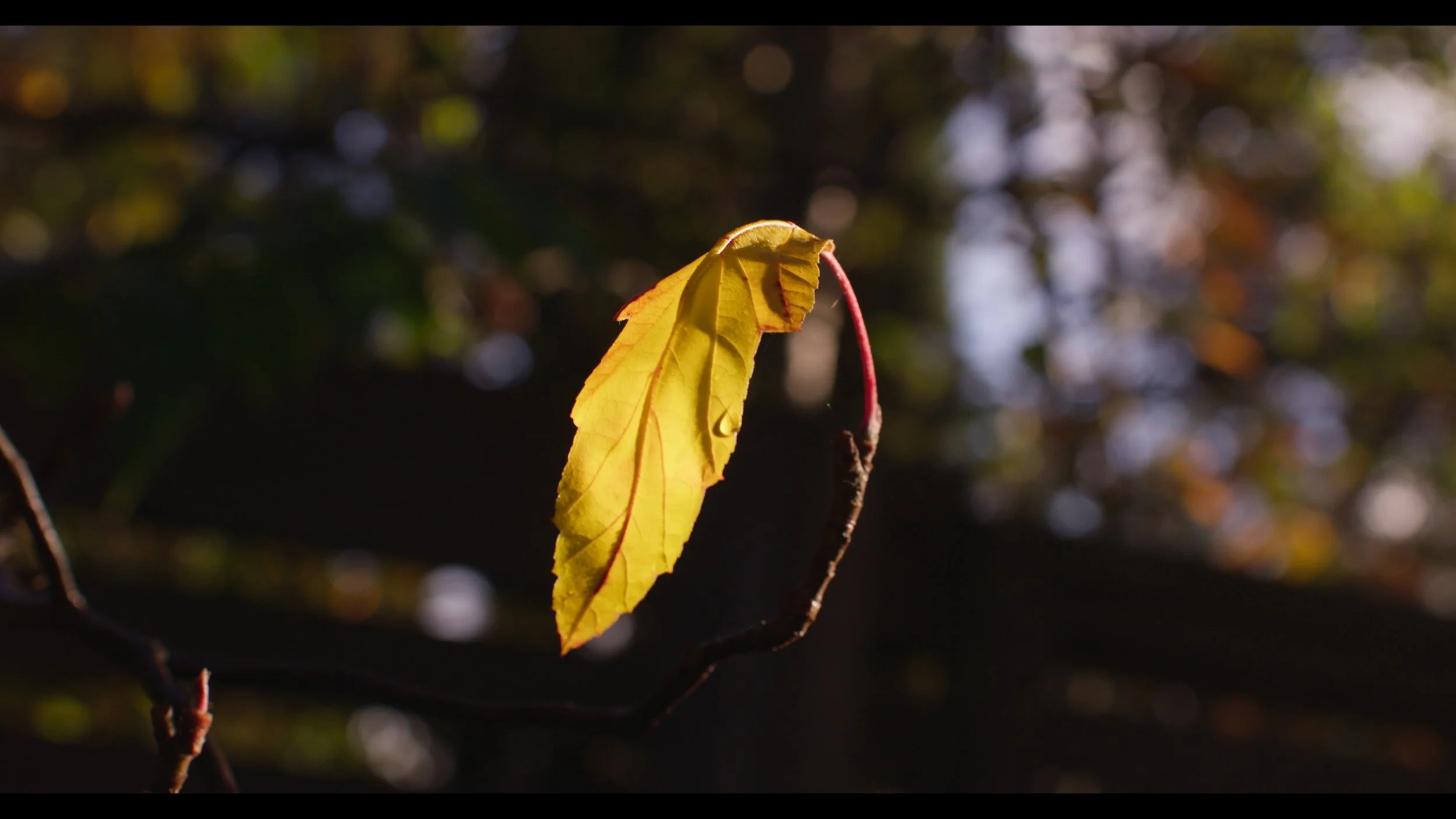
As was this. I will give it to the Vespid for colour and depth, but there are other factors.
Then I got a whole series of these, I mean lots and you should have seen them in false colour on the BMVA screen!
Even a few of these.
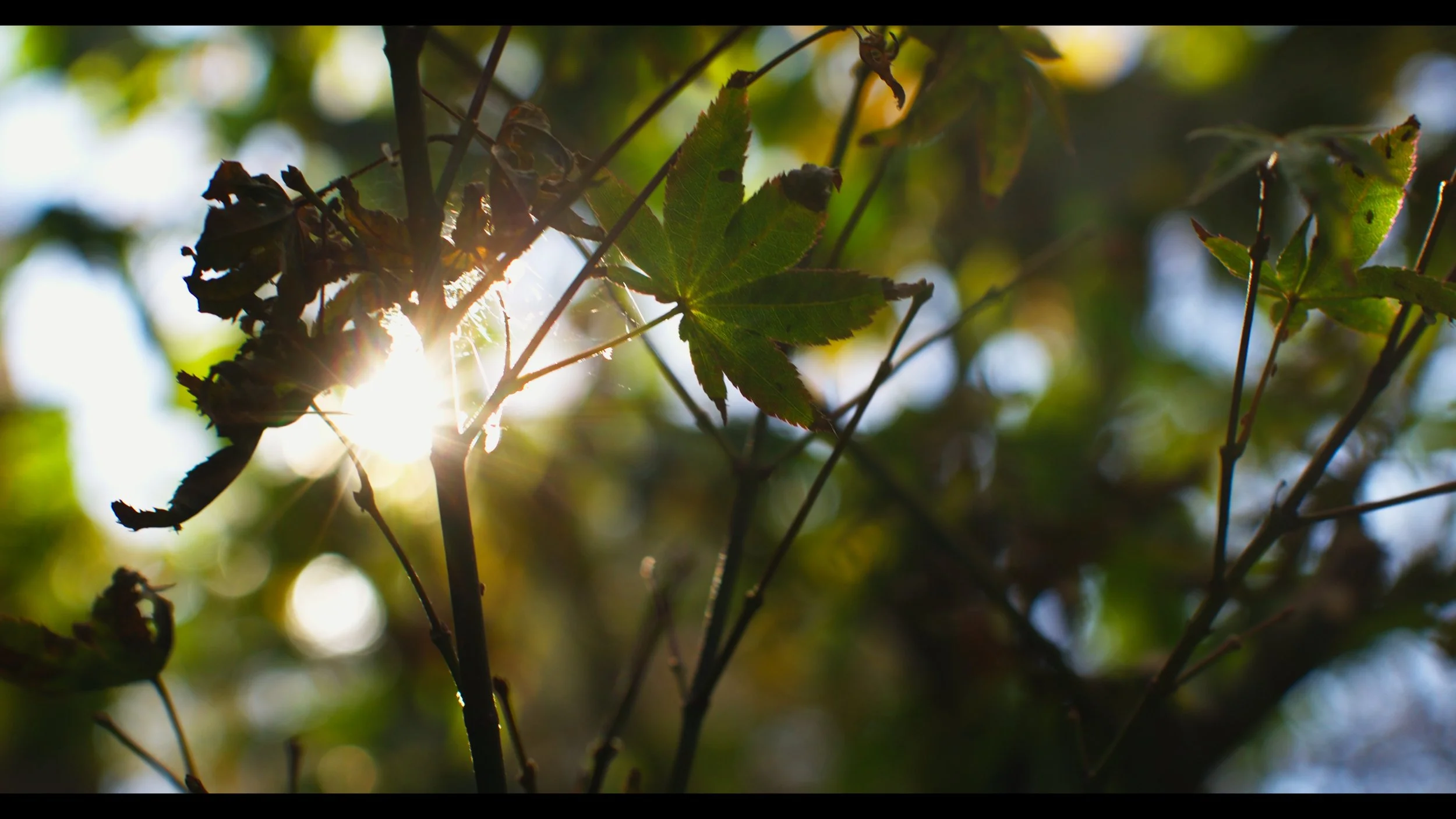
Then this, in middle of a load of rubbish, some perfectly normal behaviour. I do not entirely blame the lens for this, the cheap Neewer ND in front is likely not helping, but I used the same filter in front of every lens I tested today and this was the only one that freaked out. I then bought a decent ND for the lens end, so I will see if this helps.
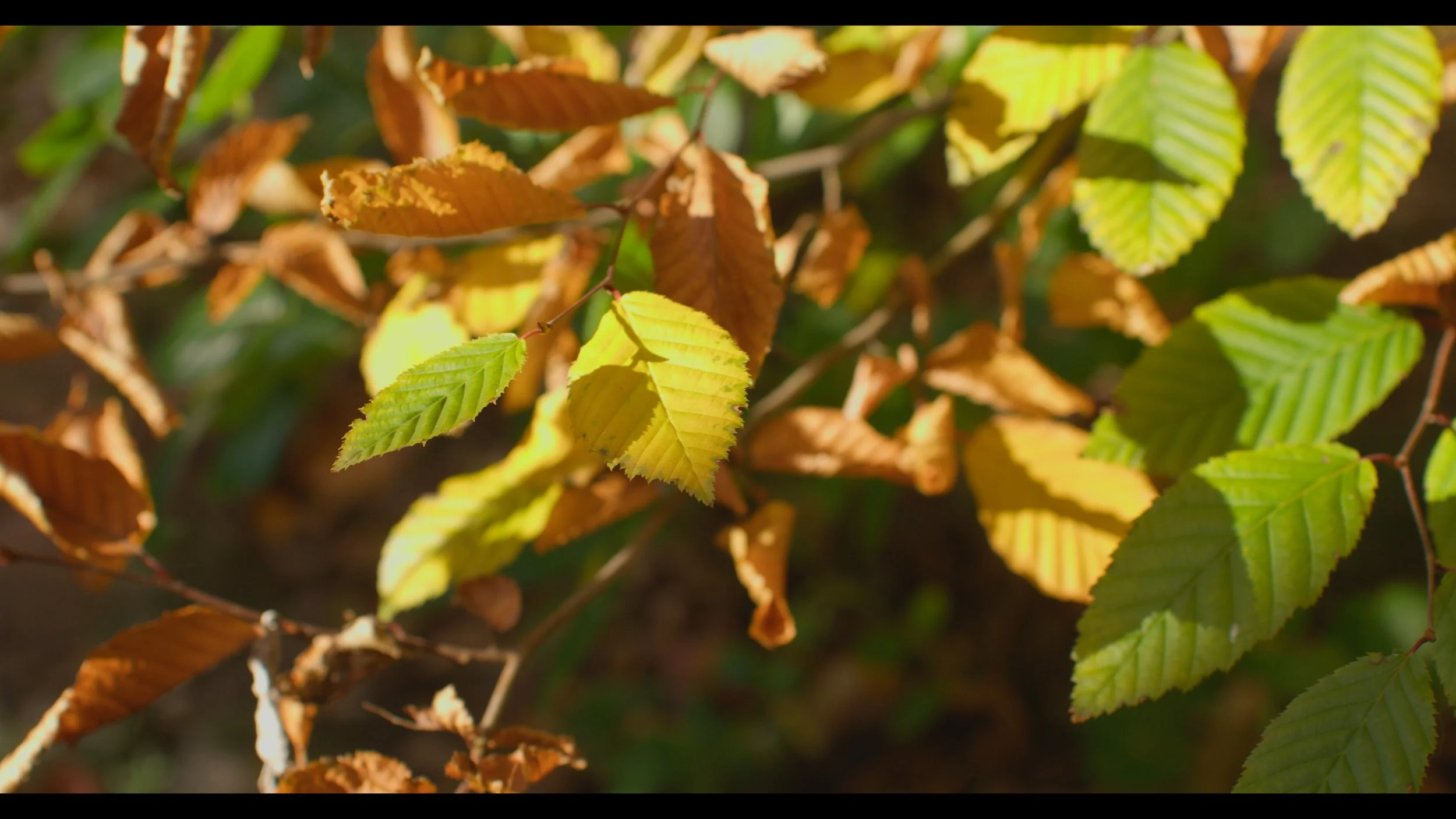
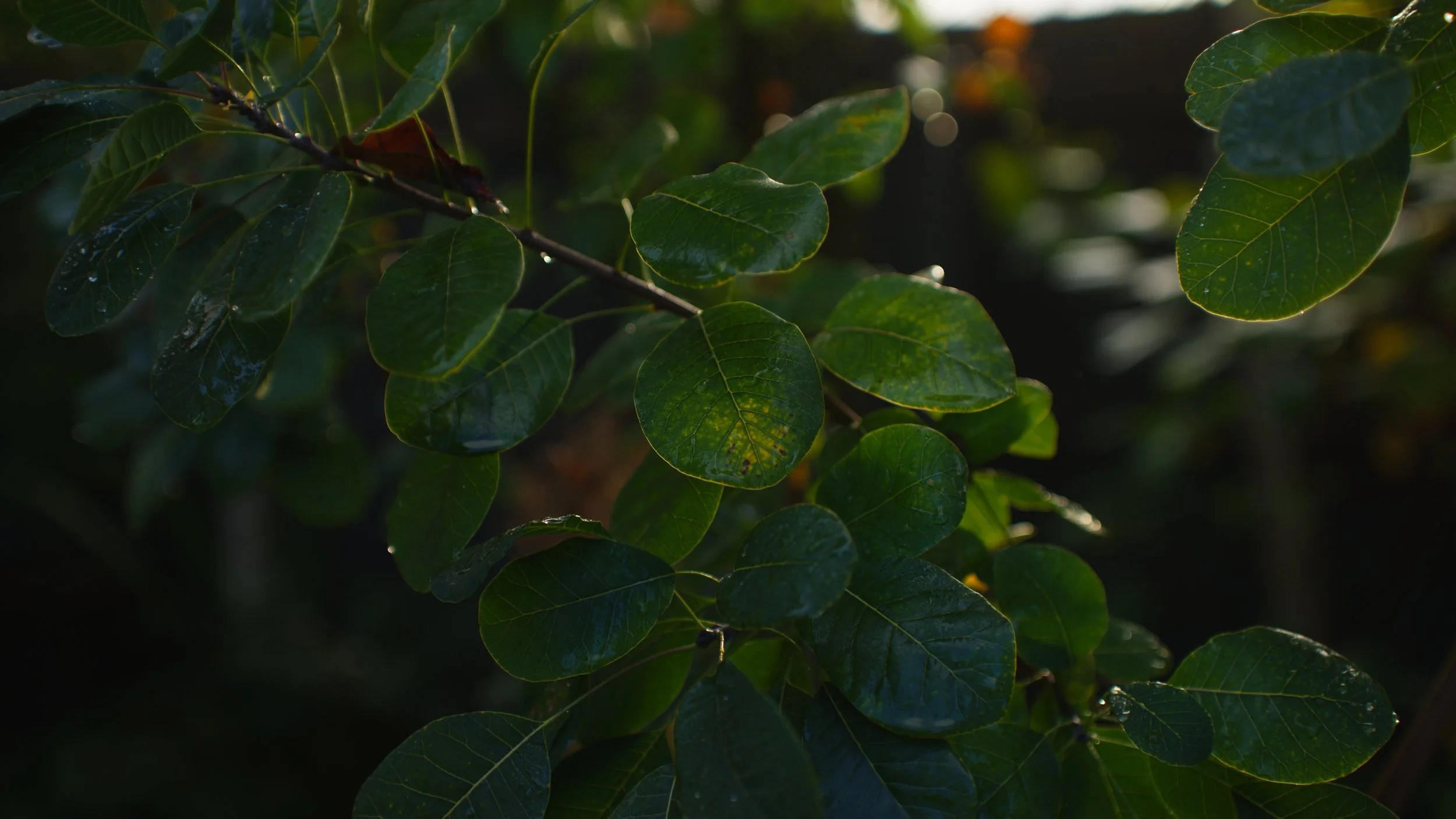
Lovely gentle rendering from the Vespid, which ass a 70mm on this camera.
Slightly different time and angle as well as focal length (45mm equiv), but the more robust and utilitarian look of the Hope. Safe as houses, just maybe not as exciting.
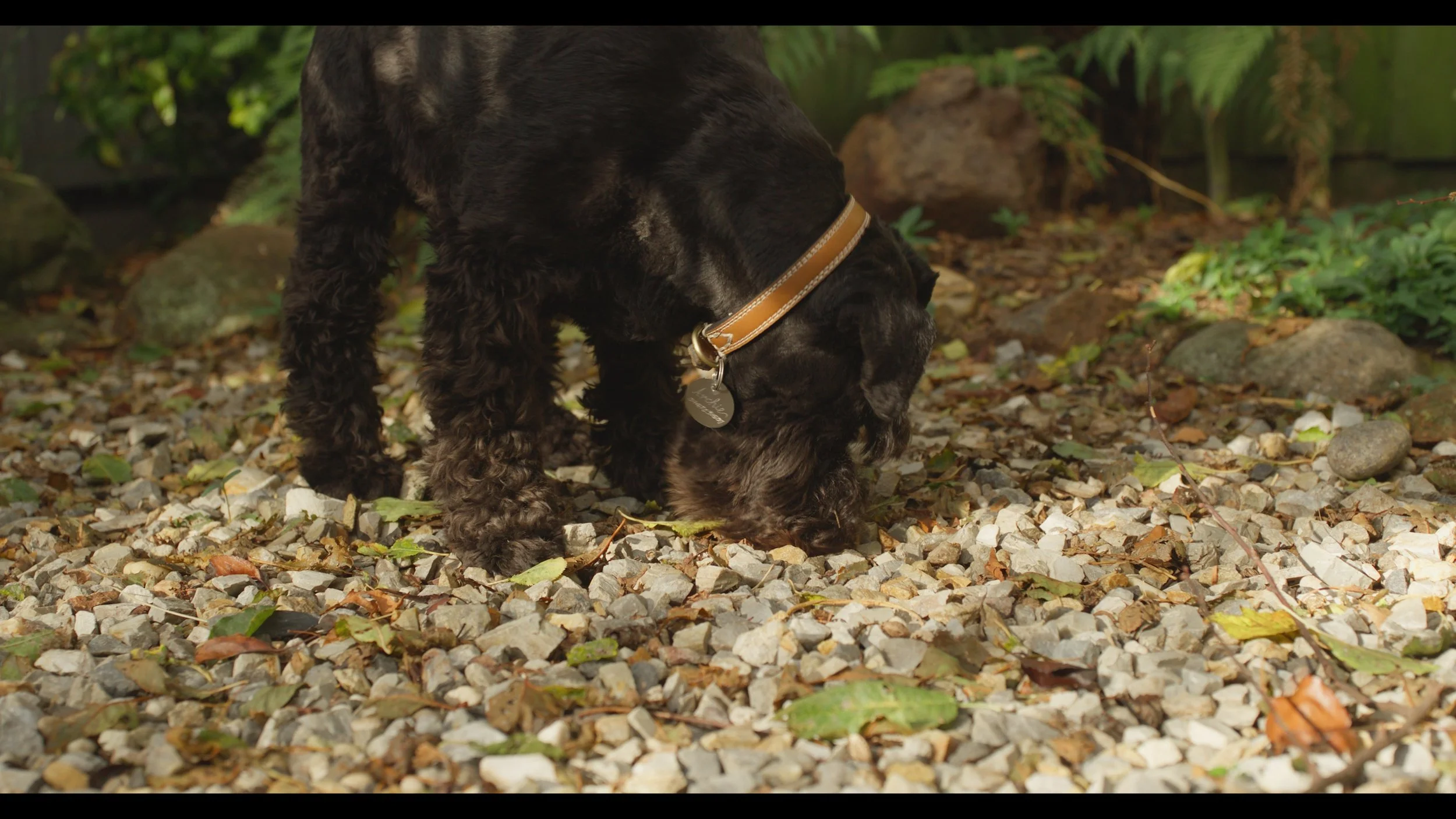
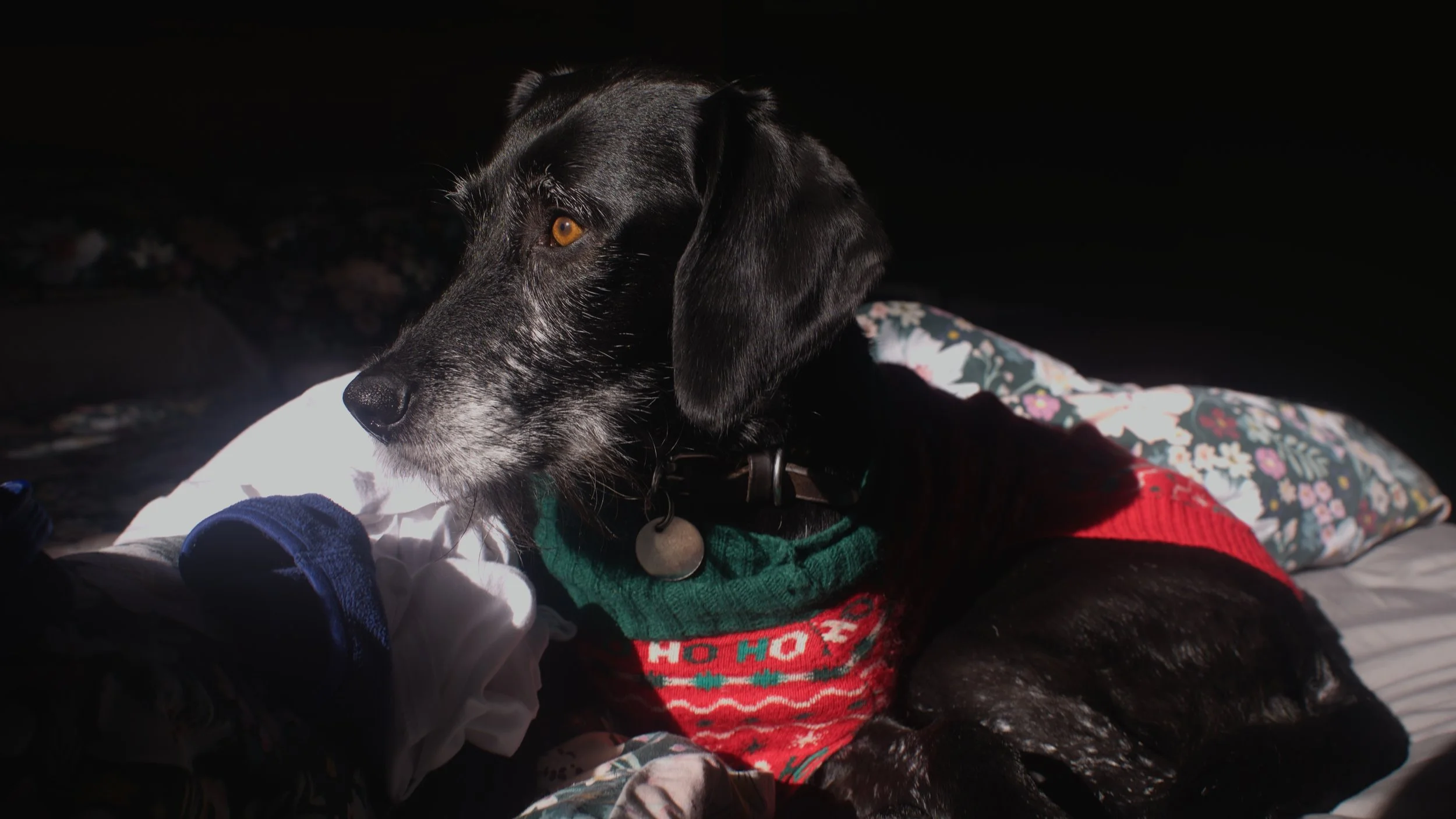
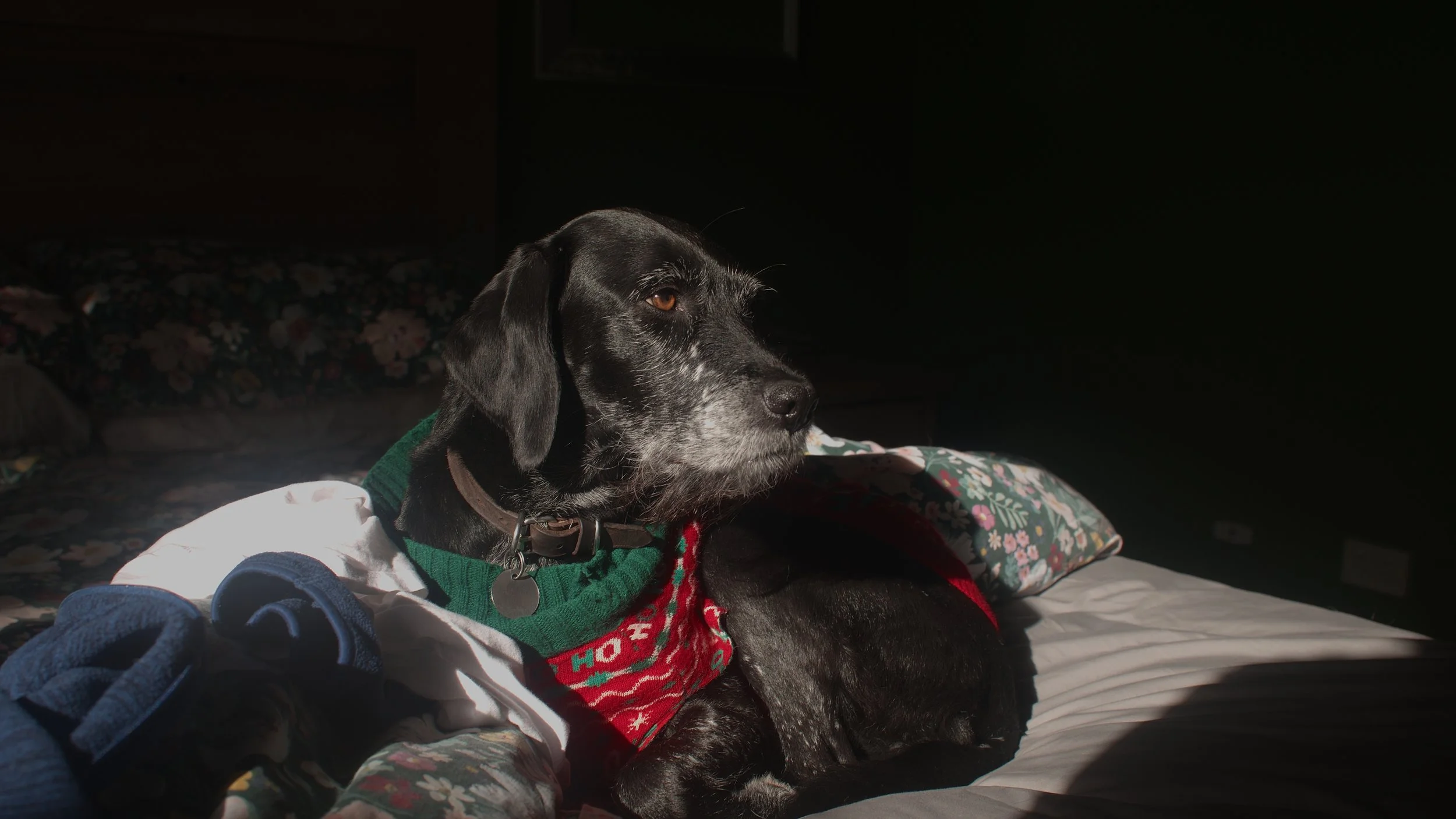
Hard to get a totally sharp shot of a moving target at 25 fps, but I managed a few. Collar detail was the intent. Hope version at T2.1
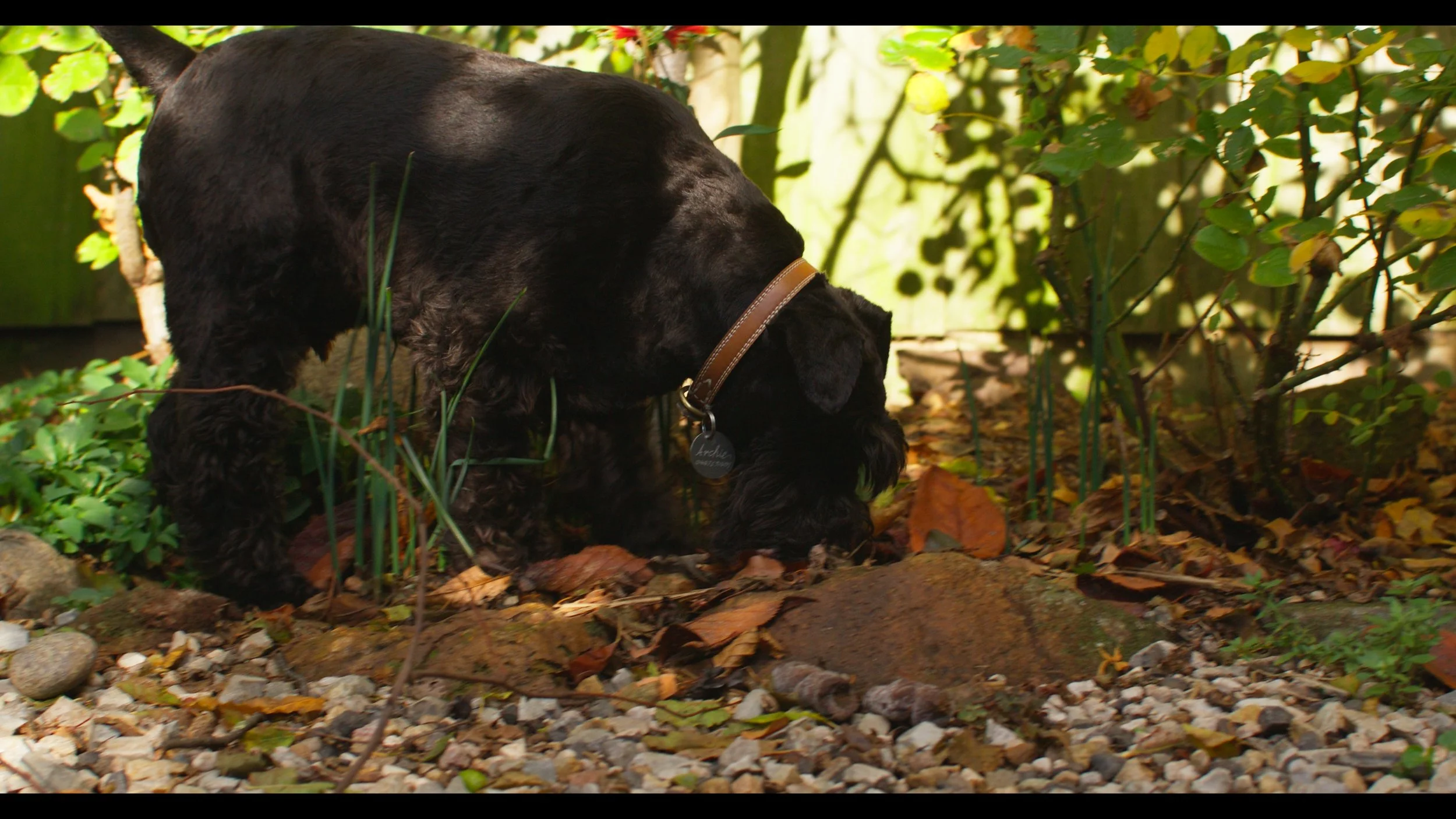
Ten minutes later and Archie obliged in almost the same spot, Vespid version at T4. More 3d pop here, but this is a 72mm effectively as opposed to a 45mm equivalent.

So, more consolidation of what I already felt.

The Hope and Vision lenses are my solid MFT choices. Easy to use, sharp, fairly bullet proof and pleasing to the eye.

The Vespid is capable of a more delicate, neutral and nuanced image, especially in shadow detail, but it can go a little crazy some times.

If I assume the Vespid is the full frame standard, the Hope 25 for MFT, then I have a strong base to work from and when I try to be fair to both, they can work together. If I want a second full frame cam, I will use an S-prime, probably the 35 or the Spectrum 50, as these have given me the most cool-neutral files so far, but I still need to test that.

A second MFT cam could be either the 50 or the 12 no issue.

Closing In On A Decision

Looking at a mate for the PL mount Vespid, the Vespid 25 Mk1 is floating to the top.

The Mk2 24mm is technically better, but if I defuse the whole “better being the enemy of good” thing, is it really that much better than the Mk1 for me?

I have responded very positively to the 40mm, probably better than I would have hoped to the quality of the footage and have to admit that when compared to the Hope glass, there was an honest utility to the Hope’s, but a special something in the Vespid files, that I may be closer to understanding.

In the mix for a New York second was the 7Artisans Infinte (not a typo) 24 for as little 870au, a lens that has reviewed well against the Vespid 2’s and Nisi Athena’s, so likely as good technically as the Mk1’s. https://www.youtube.com/watch?v=Tm8DhFCR4Vc , https://www.youtube.com/watch?v=WfAsC9-lKcE and https://www.youtube.com/watch?v=nTwDUHEwm50 , with a cooler look that matches my favoured glass, but a couple of things came forward that I was sensitive to from previous experience.
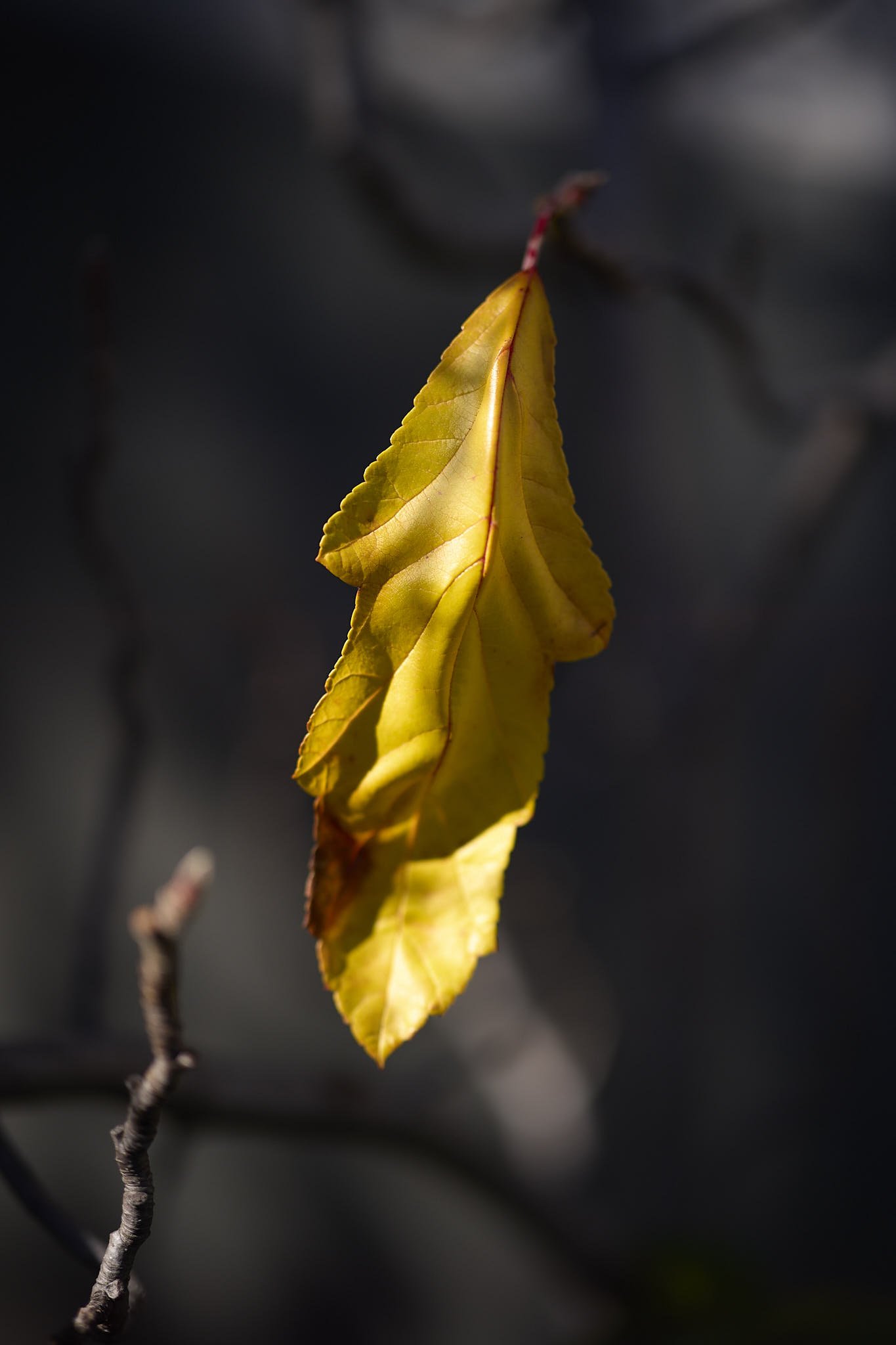
The built consistency of 7Art lenses, and this goes for all three sets I have touched on, is mixed. One reviewer praised their Hope 85 for its smooth focus, but said their 25 is a little tight. My 25 is perfect, my 100 is tighter, my 16 (returned) was horrible and the optics were iffy. All the reviewers above of the Infinte range said as much, that they were not consistent in a set or same lens to lens.
Mount tightness is not an issue, the PL-mount will see to that.

They have some other mechanical quirks like oddly placed barrel marking, their weight (1kg+) and filter thread, which seems to be settling on 77mm for me, but the Infinte are 82.

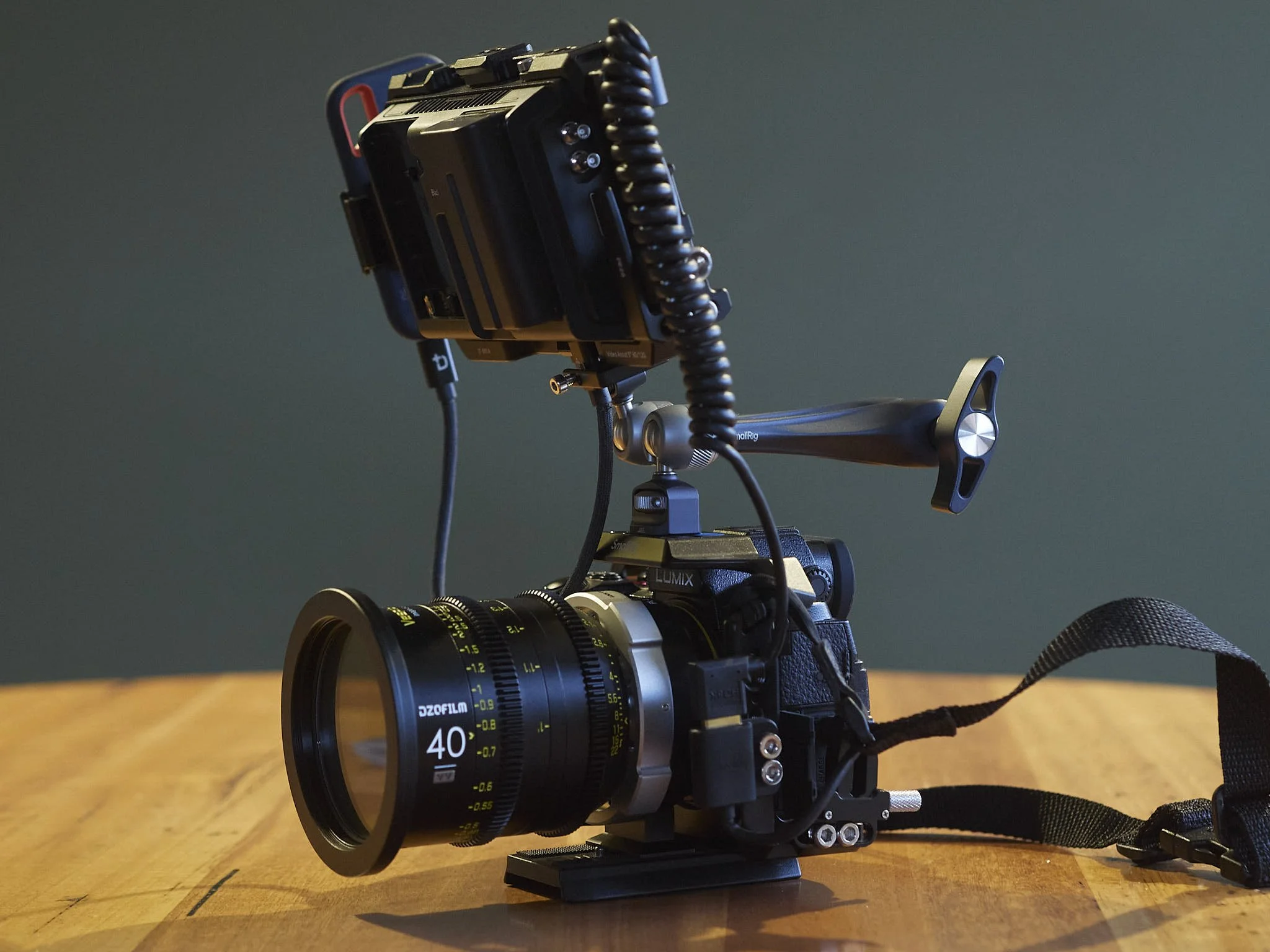
The Vespid is “perfectly” heavy, inertia just right without being cumbersome on my S5 rig (cage, rails, NP battery plate, BMVA 5” and handle). I find movements with this are very steady, something that lighter rigs like with an S-Prime are too light for.

One of the things I have responded to with the Vespid is handling, which seems to be about ideal with the exception of my habit of grabbing the aperture ring by mistake. This is a product of the fairly long barrel, no focus assist and lack of practice (only my third test with the lens) and I do the same with the similarly sized Hopes as well. On the Spectrum, the shorter barrel made finding the aperture ring harder and to its credit, but this is a bit of a lucky dip, the aperture ring is obviously tighter.
The focussing the Spectrum was nice, but not as smooth as the Vespid, sometimes even seeming to “settle” and resist focus pulling after a longer transition.

The second issue is the image. They look more like competition for the cleaner Vespid 2’s or Nisi’s, sharp and contrasty, cool toned and match well with warmer Panasonic cams, but I am maybe after a different look, the Vespid 1 look.

All the files in this post were shot wide open, where the Vespid Mk1’s are weak or if you drink the cool aide, at their most “cinematic”. The file above was bright and clean when opened, I have graded to a punchier look and it was easy with just RAW exposure and curves. What the Vespid manages to do, is add a little something to the file, something I am struggling to define other than to say "more delicate and complicated”. So, where is the image ruining CA, flare and wide open softness?

While these files were loading, it occurred to me to test the Spectrum 50mm in roughly the same (twenty minutes later) morning light. To my eye, the light was much the same, but the results were interesting.

Same grade applied and boy, are these different lenses. Like the Hope glass, the files seem to be simpler, less complicated and perfectly usable, but the feeling of the file, the mind set it creates, is so very different to either the Hopes or Vespid.

I did a little adjusting to even the comparison out (quite a large white balance and tint shift), using only my memory of the Vespid file and ended up here. Still noticeably cooler and more contrasty.

Framing is interesting. In almost every case, I shot further back with the Vespid, a wider lens, I feel and some of this may be evident below, is because there is a more subtle rendering, more fine detail and tonal separation allowing me to shoot wider and pick out details.

The Spectrum seems to make me go in closer and chase the focus point, which is harder as the Vespid has the better close focus. The lens is considerably lighter, but there is more to this I feel.

This is common and something I notice often with different lenses. The Typoch 28 drew me in, the IRIX macro (oddly) seems to push me away from the subject. My S-Primes have a stand-offish feel, the Pana M43 lenses also, the Oly glass tends to push me in.

Every lens is different, they all seem to be trying to tell me something.

The Vespid again, rich colours and depth, strong contrast and maybe micro contrast. Something very right about the file, but notice the weird flare mark on the right from the Neewer ND filter in the matt box. This happened a lot, not sure how or why, as the sun was behind me and hidden?

The Spectrum. If there was ever an argument for keeping several sets of matched lenses for their different strengths, this is it. Same exposure (T2 on this lens), but the light may have been stronger as the false colour was washed out a little and focussing was harder.

Again the Vespid. Rich, deep colour, with delicate detail.

The Spectrum does the same again. A brighter, lighter and simpler file. Nice Bokeh, good sharpness wide open. Bokeh is nicer on the Vespid, but for a sub $500au lens against a lens that launched for $2k, this is pretty respectable.

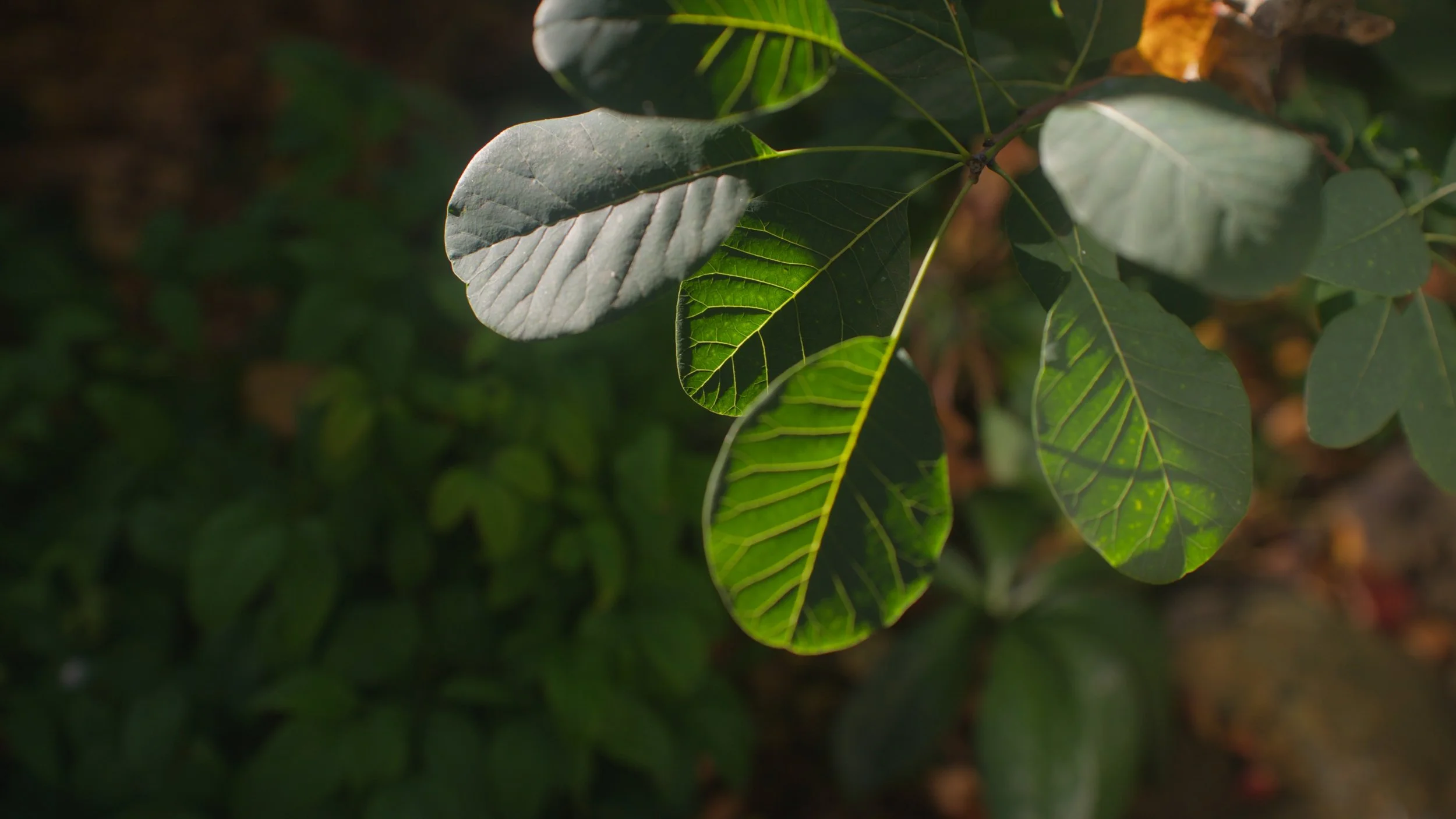
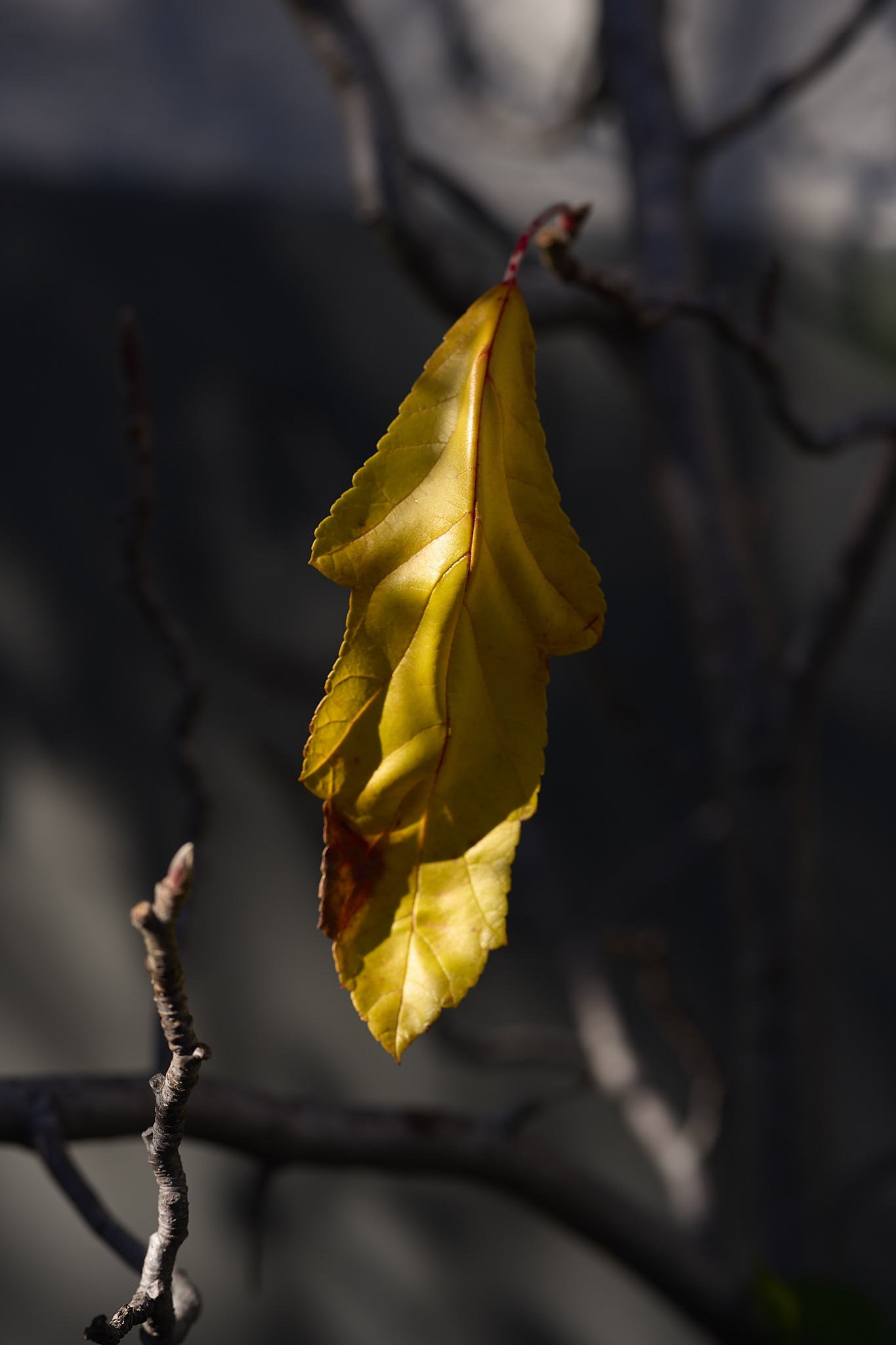
This file with the Vespid was easy to grade (in fact they all were with a simple “apply grade from previous” and adjust), a little work in curves applied to bring out the pop in the leaf and just a lovely file.

The cooler version from the Spectrum, possibly a punchier file, but it took some doing as the initial copy-paste grade was light and flat. Colours are cooler and they also seem to be less nuanced. Bokeh looks to me more ball or cats eye shaped with smears, the Vespid is more complicated and subtle here.

This file is interesting, I was trying to flare the Vespid, which I did, but after a little work, that mostly went away.

The hope file looks duller and cooler, but this is it, same space, same light (slightly different angle) and basically no veiling flare.

I did notice this funky Bokeh though. The Spectrum is a bit of a mystery packer here. Usually quite pleasant it can throw in some wild card stuff.

It looks like I respond to the depth of the Vespids rendering, leaning into the subtle colour and detail on offer.

Same grade on the Spectrum, totally different look. If I go into darker and moodier settings with this lens, I do not respond as well, so I am guessing the micro contrast and more neutral rendering are allowing me more freedom with the Vespid, the Spectrum is more a matter of reacting to what I see.

So far, I can see a valid use case for the Spectrum (simple and more defined rendering and possibly flare prone environments), but in all but one case, I have preferred the Vespid files.

Again darker, looking for small points of contrast. The grade wrote itself, chasing darkness and points of light. I went looking for a single water droplet. The Bokeh is interesting on this one from soap bubble balls, to smeary brush strokes and a little busy in the background.

I feel that losing at there comparisons, the Spectrum files could all do with more aggressive grading, but when I tried, the files were not as deep, not as giving. They wanted a flatter and brighter grade and fought against the alternative. Bokeh is more controlled in this file, but all together less interesting!

So, apart from different looking files, and a different experience overall, the Spectrum 50mm, that cost me under $300au new has a place in my kit because it is different, which is enough. The 35 may be closer in colour, but I am only guessing here.

There is a lot to be said for not mixing glass from different sets. If you do, it is probably best to have a defined and different role for each, like a OSMO or macro lens so the differences are disguised by circumstances.

I will be getting the Vespid 25mm Mk1, because I need to match the 40mm in all ways mechanical and visual, something my other lenses will not do easily. The Mk2’s are great, but I cannot justify the expense or risk achieving an even more jumbled mess, so if I ever go there, it will be another matched set, but I doubt there will be a need.

Dark and subtle, this is a trend with the Vespid.

The 7 Artisans Infinte are interesting, but same again and I have a decent showing from the brand, I have pushed my luck enough.

7Artisans make good glass, but seem to struggle with consistency, so if you end up with matching lenses, go you, but it is not guaranteed. For the price, I may go there for an exotic lens like a 16 or 135mm, but then I would have 8 distinct sets represented…….. .

The 25 will provide me with a full frame wide that’s better than the bottom end of a kit zoom, a 40ish focal length in APS-c or 1.8x MFT formats and a nifty fifty on regular MFT. It has a good reputation for sharpness, especially In cropped formats to avoid corner softness and from what I have read and seen, it is a good match for the 40mm.

I just like the ease with which I can capture and grade files like this.

The other thing is, I am sooo sick of thinking about it.

Something I have learned here, something that needs to be shared but is hard to explain, is the difference a lens can make, any lens. You only know by using it, all the videos in the world will nt make this clear to you.

I feel the Vespid is sharper with more micro detail and colour contrast, then slightly softened by some CA wide open, giving the effect of a very sharp lens with a mild filter on. That is cinematic I guess.

The 40mm Vespid is just right for me, maybe a 25mm will not be, but by sticking to type, I am hoping so.

Hope vs Vespid, A Better Test

This time, thanks to the PL-MFT adapter arriving, I can compare the Hope 50 to the Vespid using the same camera and format.

I processed the first file (Hope at T2), then applied the same grade to all files. One file, the Vespid at T4 was over exposed, either user error or a change in the light, which was happening, but let’s assume it was me, so that was normalised.

I moved the tripod to give the two lenses a similar composition, but I was far from precise.

The Hope at T2, Nice Bokeh, sharp and warm-neutral, balanced to my eye and the assumed white balance of the space.

The Vespid at T2. Slight visible CA and a cooler tint, maybe more neutral. The Vespid file looks a little more open and the Bokeh more complicated with soup bubble hints, while the Hope is more controlled and flat, but that is subjective. I tend to find cooler images look sharper to my eye.

It occurs to me that the Vespid files, even after I processed the Hope first, look very true to the GH5s look, which tends to favour cool-magenta, so I processed away from that, then the Vespid bought it back. In my last test I did the opposite with the even warmer 25mm and did it no favours.

On closer inspection sharpness seems to be a wash, the Hope benefitting from basically no CA, the Vespid exhibiting obvious signs of it possibly softening a sharper base image. Again Bokeh is “safe” on the Hope, interesting and delicate on the Vespid.

The Hope is maybe cleaner overall, more commercially useful.

I feel the Hope has a very un-opinionated rendering (perfect for some). It is safe, takes no chances, gives you what you expect to see, but just from these tests I have felt getting some extra vibrance in the grade is the trick to them.

The Vespid lives closer to the edge, gives you that extra vibrance, pushes for more delicate and finer separation, more fragile Bokeh, more “pop” as they say, but can come unstuck sometimes.

The Hope at T4. I have found with these, all that changes is the depth of field. very reliable.

The Vespid at T4. Much better behaviour now, no CA, cleaner looking, still some “pop”. The Vespid file is maybe more 3D looking, but it is a shorter focal length?

Looking closer again, it is pretty obvious that either lens in their happy place can max out 4-6k resolution, but I know that because either can take great stills at 20+ mp.

The Vespid slightly sharper? Maybe because of more micro contrast or the cooler tones (the Hope lacks some separation above due to a warmer lean).

Again the Hope is the safe bet, the honest workhorse, the Vespid is the wild child, more delicate, more….. something I find it hard to define, just maybe more.

So, in the quest to justify the Vespid and maybe get another, I may have as offer clearly different character, which is enough and one can fit into both kits.

The two Hope lenses I have are mated well, giving me a sound base line for MFT, but do they match a full frame lens on an S5?

I feel confident with my Spectrum glass, the 35mm feeling closest to these in colour and rendering, maybe the Sigma zoom or 50mm S-prime as well.

The Spectrum 50mm on the other hand gives me Vespid vibes, so to match that lens, maybe the Vespid on MFT and the Spectrum on a full frame?

If I get the second lens, the 25 on MFT and the 40 on full frame or APS-c would make a matched pair, but a third lens?

If I leave it a while and can justify it, maybe a pair of Mk2’s as a set, the 40mm as my indulgence for now.

Considering cameras, the other half of the equation, the S5 can only give me full frame in B-Raw at 5.9k 25fps, so to use the 40mm as purchased, I generate massive files and only have one frame rate option. The 25mm would match that in APS-c, allowing me to use 4k 25 and 50 fps.

The GH5s seems to like the rendering of the Vespids, the colours seeming to come from the same place, neutral-cool to slightly magenta. The Spectrum 50 and S-prime 35 do this also, but do not fit MFT. The GH5s has more B-Raw 4k options without a crop, so a 25mm Vespid would also work on that (maybe I should have just bought that in the first place?)

The G9II, is the third cam that can shoot B-Raw, but I rarely do, using it more as a versatile hybrid and keep it light weight.

The S5II is the warmest rendering of my cams, so the Vespids would balance out well, but only in V-Log.

If I were to try to categorise my lenses, the Spectrum 50, Vespid, my anamorphics and 35 and 85 S-primes and IRIX render cooler and crunchier files.

The Spectrum 35, S-prime 50, the Hopes and Vision 12mm are warmer and simpler in rendering.

When I bought the 40mm on sale, it seemed destined. I was in Japan, the add came up as a spot deal, I jumped and it was mine, no more available. I saved enough to cover the Nisi adapter (also on sale), then grabbed the MFT one (also on sale-it just gets better).

The second adapter muddied the waters a little, but to be honest, having a PL-MFT adapter opens up a world of potential wonder for the future.

The lens was bought to scratch the comparison itch we all suffer from sometimes and it did that, while giving me the classic 40mm in full frame, but can I just sit on that now? I think I can be happy that both formats are well served with options of all types and the Vespid can be a “one lens” option, at least for a while (maybe until Black Friday?).

Hope Vs Vespid, Time To Find Out

I did a little test, not very scientific (or straight) but hopefully enough to know.

The Vespid on the S5 (5.9k B-Raw, 8:1) vs the GH5s (C4k Q3), same capture settings (wide open, ISO 800), some base grade (4800 white balance, no tint, no exposure adjustment, then an equaliser).

The Vespid, with mild soap bubble Bokeh and a cool tint. Lovely look as expected, the Bokeh a little Ni-sen or cross-eyed and CA is obvious. It looks “poppy” but it does have an almost x1/2 depth of field advantage.

Apart from the slight framing miss and the extra C4k width, the full frame depth of field difference is obvious* taking away from the file by comparison and the exposure looks brighter and very warm, which is not the camera as the GH5s runs cool-magenta. No breathing or CA, but focus was slightly harder to acquire, likely down to the brighter exposure (false colour was mostly light grey and grey) and the difference in depth and framing.

No way of comparing Bokeh here as the DOF is too different thanks to the difference in formats, but there is a difference. The Hope looks “safe” overall, maybe even boringly so, the Vespid is a little more edgy, a bit more opinionated.

The CA on the Vespid file has robbed it of some fine detail rendering, even with more actual resolution.

What this would mean though is, if I were to get a Vespid wide for the full frame, I would have less DOF than the same settings on an MFT with the Vision 12mm.

The Vespid again. Smooth and natural looking, basically no focus breathing noticed.

The Hope, a little over exposed, so it lets in some more light? No focus breathing either. The Vespid was easier to focus, but shallower depth of field helps there. I actually really like the faux T4 (MFT T2.1) depth on this one, more coherent, natural and more of a story teller.

Hope on the left again, but I did balance the shot a little this time. No point in poor exposure matching (either way) skewing the results. The advantage of MFT depth of field is evident here, holding more foreground detail.

Ok, the question may be answered. The Hope looks to be as sharp or sharper wide open with no CA, the Vespid has a feeling of CA fuzziness, the difference in cameras and formats having more to do with the difference in look.

The Hope is brighter, slightly snappier wide open with no CA and warmer by a mile as it goes (both camera sensors lean cool).

As they came out, I preferred the Vespid file, but several things are at play;

  • The shallower depth always looks more “cinematic” and grown up.

  • The warmer and slightly brighter Hope file will by it’s very nature look less deep and punchy, softer even (white balance is sooo important here).

  • Things were not perfectly aligned as the lenses were different actual focal lengths and I was no scientist here.

  • I processed and exposed for the first camera, the S5 and Vespid, so it got the best of everything, although I did try to be fair and base-line my settings (even ignoring the difference in false colour).

  • The Hope file was actually cropped more from a smaller base file (not by much, but enough), so I was not totally fair here either, but the respective cameras gave me few other options as the S5 only does full frame RAW in 5.9k and the GH5s in C4k.

  • The Hope is known for better flare, CA, distortion and vignetting control, the Vespid for it’s unique look, all of which I am seeing here.

Maybe another test comparing the Vespid to the Hope 50 on the same camera, as my MFT mount arrived during the test. This may be a bit of a waste, but I picked one up cheap, so again, I let fate guide my hand. The Vespid butchers bill is now about square, but two adapters for one.

My feelings from here are a little confused.

If I were to get the 25mm Vespid Mk1, what would be accomplished other than a wide angle for the full frames with shallow depth of field and a decent, but probably unnecessary, new standard for the MFT cams? It is different to the Hopes and similar to the 40mm, so a dual win there.

If I went with the Mk2 24mm, would I get a noticeably better lens than the Hope and if so, what role would either then play? A replacement MFT standard or again a wide for the S5, but do I really need that? Matching the two Vespid series might be as difficult as matching the Hope to the Vespid.

A lens that could be a 40mm in 4k RAW with a forced APS-c crop on the S5 maybe (back to the 25mm)? Cheaper to just use what I have in 6k and ditch the masters after processing down or use one of the 35’s I have at hand.

The biggest question is, what role does the Vespid play? It is gorgeous, but many of my other options are enough, more than enough even. With two adapters I have a one lens-multiple cameras kit, which is a bit backwards, but guarantees a similar look.

The 25mm is floating to the top because it is a different look to the Hope, flawed where the Hope is stronger, it is cheaper than the 24, it matches the 40mm and is suffering from a serious case of better being the enemy of good, even great. I guess if the Hope could cover full frame and had a PL mount, I would be golden.

I like the 40 for it’s look, that intangible thing that I have to admit it seems to have over the Hope, even if I cannot put a finger on what it is. I was however, surprised by the sheer quality also, so the 25 would undoubtedly provide the same.

I had hoped to find either a clear difference on looks or quality and found the former, the one I wanted to find. The Mk1 Vespids are still excellent and beautiful in their own way, the Hopes are clean and safe. Perfect.

Now, can I justify effectively three cine series for each format, even if one if shared?

My next test will be using the same camera with the 50mm Hope and Vespid, just to see if a more level playing field would make less difference.

*The two lenses are similar in magnification for their respective formats, but the full frame lens is almost twice as long by actual focal length. Also, I messed up the framing slightly, pushing the 25mm back a little too much.

Video Glass, Why And How?

The Vespid has shifted the bar for me a little.

It is reassuring, even exciting to have a true (budget) cine lens in the kit, but also a little unsettling. I am happy enough that I have bought the MFT-PL adapter as well to maximise its potential (covering 40/60 and 70/80 focal lengths across my four formats)

This can lead to a syndrome I am aware of, something I noticed years ago when I bought high end Hi Fi gear.

Upgrade your cables and then you start looking sideways at your amp, then your speakers, then a source provider, then…… you do it all again. Balance is important, shifting it can be as bad as it is good and doing so needs to be done with some consideration.

It cost me tons back in the day, but it kept me busy and at the top of my game (I was selling the stuff as well).

My first to be settled question is can the Hope and other lenses I have keep up or provide something different enough to matter? Can they be the partners the Vespid needs to function as part of a team, or is this going to force a shift across the board when multiple cams are used and will the other lenses fall away?

Once I do some tests, I will maybe put this to bed.

If not, where to from here?

I have the IRIX 150 macro in L-Mount, several sets of Spectrum (L), Hope (MFT) and stills lenses (for both mounts), none of which I want to make redundant, but also, if the Vespid is better by enough to matter, I will not hold myself back out of blind loyalty.

Nothing is ever wasted, but sometimes you need to move forward to support your “A” game.

If they are good but different, then that is fine, each lens set can have its own job.

The Hope lenses for example are clean and robust, match reasonably (matched colour is a small issue with the two I have, but no more than mixing cameras), they are clearly capable of good work, so if they offer something the Vespid does not, they are an option.

Based on cosmetics, it looks an easy job.

So, assuming I have options, or the Vespid elevates my base, the logical (?) thing is to add the 25mm Vespid MkI ($1200au). It is perfectly sharp from f2.8, especially on MFT or APS-c cams with tighter corners, but has the mild CA issues and wide open gentle softness of the 40mm, so it can be used with character or clean, aside from aperture limitations (more on this below).

This would give me a spread of 25-225mm across four formats (with the IRIX 150 macro), enough for anything I would need, the establishing, group or dramatic wide shot, semi wide two person, several levels of tight and compressed portrait, a true tele-macro and multiple ways of mixing these.

The only flaw in this logic is MFT performance which is half the logical justification for this lens. The 25mm on MFT becomes a handy 45-50mm focal length (depending on camera), but with the need to stop it down to T2.8 to 4 for best performance (maybe, as central performance is decent wide open), it is effectively shooting at T5.6 to 8 full frame equivalent.

If I am buying the Vespids for character not perfection, then the 25 makes sense as, to be honest, the 25 is fine wide open, just not as sharp as the Mk2, better being the enemy of good.

The reality is, my preferred aperture for full frame is T4, where the 40mm is excellent, then at T2.1 it offers a gentler, dreamy sharpness option. In MFT format, T4 is too much depth of field (about T8 FF) and a little slow, so a wider aperture that can be used confidently, like the Mk2’s T1.9 (about T4 equivalent) is better. The Mk1’s 25mm is tempting, but might be a poor saving overall.

In MFT the Hope 25 can provide very sharp and CA free images at T2.1 as well as a warmer image to balance out to cooler GH5s sensor, so I wold basically be buying a wide angle for the full frames, then have a confusing and probably unnecessary choice to make in MFT.

Without it I would not have a full frame wide angle, relying on the MFT 12 Vision, 9mm Pana, or full frame 20-60 S-series etc. I don’t use wides much for video and when I do, AF in MFT format is preferred, so this may be enough anyway (the Vision 12mm is actually really good with insane close focus).

If I assume that my G9II would be the most likely mount for a wide used in “Chivo” style* of super close and intimate, looking for perspective distortion, looking for a too-close feel, the 12mm Vision is perfect and the 9mm Leica provides it with AF. On the GH5s, it is an even stronger effect.

*

If on the other hand I wanted or needed to up that base level, to better support MFT format with more usable sharp wide open speed, go a little wider, have a lens that provides the safety net of even better flare and CA performance, basically no distortion (as a full frame wide), the 24 Vespid MkII ($1700au) is the path.

The MkII’s are more modern optically, often called “mini Arles”, but can be matched to the MkI’s when the older lenses are stopped down.

The 24 is also smaller and lighter, especially compared to the slightly larger than most 25mm.

This of course has the potential to start the whole process again and to be honest, if I had to buy only one set, it would be MkII’s, but I might feel I had missed a trick without a MkI in the fold.

The third option and this is a strange one maybe, is a 28mm F1.4 Typoch Simera, non-C type ($600au), the newer one without that odd locking mechanism, which annoys me when shooting video.

There is breathing and vignetting, but they are optically excellent. I feel the role they would play is much the same as the Vespids, to be the “character” glass,

This would also require two M adapters ($2-500au) and add another mount into the mix, but it would also still be cheaper than the options above and add the same glass with more speed than a Vespid in a smaller size.

A 28mm is not wide, but at this pricing, a 21 or 18 could be added within reason, the whole lot coming in under the Vespid 24’s price.

A hand holdable 28 is very appealing and I am ok with stills lens focus pulling, which has to be balanced with my preferred handling “shape” of the stills lens over a cine lens (backwards to a cine lens).

The head is screaming the 24mm, the heart would settle on the 25, but it’s utility might be limited and my gut is saying stick with what you have. Only the wallet and my perverse sense of running against the tide says Typoch.


*Aka Emmanuel Lubezki the maker of The Revenant.


Just What I Didn't Need, More Choices!

So my friend James loaned me his pair of Typoch Simera (non-C/cinema lenses) for a play. M-Mount on an L-Mount camera, so kind of in the same family.

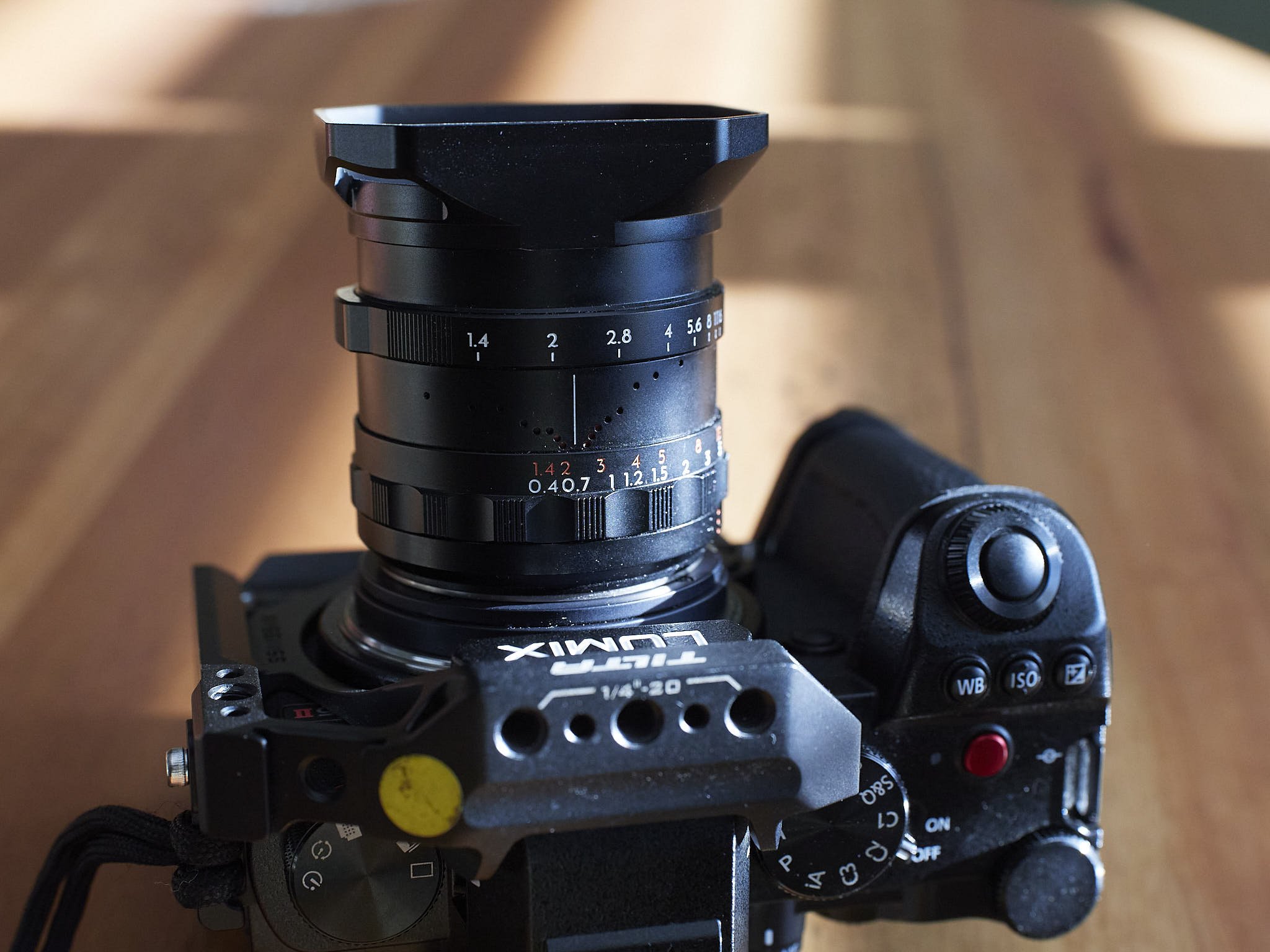
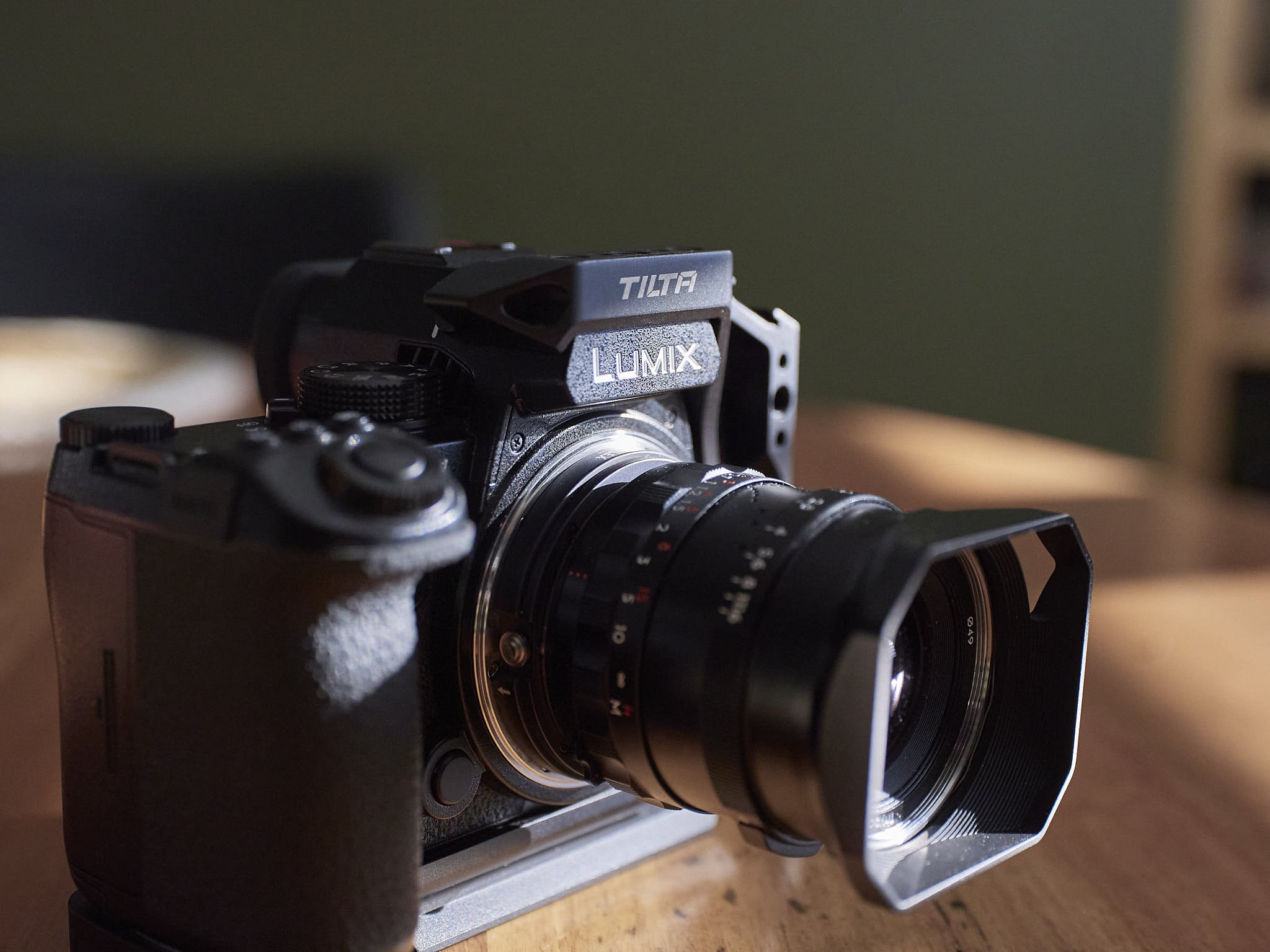
Lovely Novoflex mount, very tight and clean both sides, a good start. The shots of lens and camera were taken with the Hope 25 on a G9.

Something I did notice right away is my hand held preference for the focus ring at the rear so I can cradle the camera while focussing and the aperture ring well out in front, clearly visible, but out of harms reach (harm being me). This was something I really liked about Olympus OM lenses back in the day.

Cine lenses are all designed the same way and standardised, toothed aperture ring to the back, focus forward but this often makes hand held use a little cack-handed, with the focus ring well forward and the aperture ring out of sight under the camera body and easy to bump (I do it regularly over several series of lenses, so its a thing) and with mechanical lenses, you sometimes don’t realise it has shifted.

With one set of lenses, I often shift aperture instead of the focus ring as they are quite close together and feel similar.

It’s funny how sometimes we react to certain dynamics without realising until an alternative is presented. I had a tendency to go to stills lenses for run-n-gun work, because they gave me aperture feedback and required clicked aperture changes, neither of which are cine lens things. The Panasonic glass can also be electronically set to long-linear throw, which is ideal.

Both cine lenses have their aperture rings to the rear. The Vespid ring in particular is invisible to me while shooting hand held and its focus ring is well forward, which necessitates a handle on the camera for best balance. The S-prime works like a stills lens (with 270 degree linear throw), which is sometimes cleaner and better for me.

I randomly chose the 75 and used my handily arranged Autumn garden studio. Most images are shot at between f1.4 and f2, f4 for the odd deeper depth one (how I would use it for video). No notes taken and a day so forgive the generalisations.

Well, aren’t we the little gem.

Wide open, smooth and sharp.

Even nicer at f4.

The 75 instantly cemented itself with me as a stellar portrait lens.

Next the 28, the lens that to be honest, I would be seriously interested in as a cine option.

A 28 is almost the perfect all-rounder for me and hard to find elsewhere.

A full frame 28 is the widest normal lens I like, one of the reasons I went with the 28-70 Sigma, giving some width with minimal distortion. On APS-c it becomes the true normal, a 42mm, on MFT 1.8x crop it is a 50 and on MFT 2x it is close to 60mm. The M-mount is also a tight, low profile and clean adapter and not too crazily priced.

The 28 is also a bit special.

Sharp wide open even when cropped tight and I will admit, my manual focussing was a bit loose.

Same as above at f4, the perfect bland of snappy sharp and smoothly blurred.

F4 again, fast becoming my favourite full frame aperture (about the same as f1.8-2 in MFT, so no coincidence).

Wide open Bokeh, my focus missed the lock slightly. Very, very gentle looking image, light and bright with a harmonious smoothness, music to a cinematographers ears (or eyes I guess).

It looks and feels nice in this space. Trying to tell me something?

I am torn on what my next move should be.

The Vespid 40mm has been a find, a real find, finally settling my full frame video kit down with a “one lens that is two at 40 & 60mm” and matches or betters my excellent MFT Hope lenses, but where to next?

The Vespid 25mm ($1200au) would fit well and is nicely priced. I have the PL-L-mount adapter, a MFT-PL would then be a logical addition as the 25 would add several needed focal lengths (25/37+45/50). This would also fix my only problem with the S5, which only outputs B-Raw smaller than 5.9k (in C4k) in APS-c format.

The Vespid II 24mm ($1700) on the other hand is only 40% dearer and upgrades the cine lens experience to close to Arles level, so I would have, I guess, a similar lens to the 40mm with a more restrained and refined character and better corrections.

Both of these have to be looked at side by side with the 25 Hope, which for MFT does the same job, so I am actually covered here, making a good argument for sticking to a single Vespid in full frame.

The Typoch Simera-C 28mm ($1300au + $100-280 adapter = $1400-1600) did not appeal mainly because it is a different mount. A series made to be the equal of the Vespid I’s optically, with some benefits (smaller and faster) and minor short comings normal for smaller lenses and their price is actually a little dearer than their Vespid I equivalents.

A 28mm appeals on many levels, but neither of the Vespid series have one.

The Simera 28mm (non-c) are cheaper ($670au + $100-280 for the adapter = $800-950) but the same optics, and as I said above, I actually like their back to front configuration for hand held work.

Focus throw is nothing like a cine lens at 240+ degrees, the longer distances in particular are quite squished, but I have managed before with other stills lenses and these are better than most.

The aperture can be de-clicked, especially helpful when you can actually see it!

Leaning towards nothing right now (maybe a 25/24 Vespid on sale), because the 40mm did what I needed, but thanks again to James for sewing another seed.

The S5 And The Vespid 40mm, A Happy Marriage

I received the Nisi PL-L adapter yesterday, much, much quicker than I was expecting, in days rather than weeks, so my blessed run with the impulse buy of the Vespid has turned out well.

The adapter fits well, slightly loose on the S5II, but most lenses are, snug on the S5 and the Pl mount lock is tight as designed.

It is an odd looking combo, but probably no weirder than the metallic grey/green meets black/orange of a dedicated Nisi Athena lens.

The S5 in B-RAW is 5.9k so biiig files even at 8:1, 19GB eaten up in a couple of minutes of test footage, but wow, I could lift convincing stills from this.

A nice still drawn from some test footage.

Really stands up to it.

Bokeh is pleasant enough, ignorable really.

It allows the sharpness to pop.

Foreground Bokeh is also a creative tool.

This file showed some mild moire around Lucy's whiskers, nothing terrible, but there.

This was an interesting mistake. I was thinking about V-Log while processing, and accidentally applied my Log power grade base to this B-Raw file and did not realise until later. Colour looked good, it graded well and I even played with the colour a little.

Before I get too carried away, this has also come at a time when I have adopted 4-6k B-Raw as my baseline (being reviewed), so I am responding to better processes overall, but regardless, it is a good combination by any standards.

This file exhibited consistent and strong veiling flare across the frame (no hood used), consistent enough that curves could effectively remove it. In the Hope comparison I did, the Hope resisted flare better, but the flare was tougher to remove, being more aggressive and localised.

My gut tells me that the Spectrum 50 on the S5II (both in Log) would be a good match, so my B-cam could be tighter or if matched with the GH5s, the Hope 25 or 50 would also work.

I am not seeing noticeably better performance from the S5 and Vespid over the GH5s and the same lens, which is reassuring and handy. Might still get a PL-MFT adapter, but then I might get another lens and on it goes!

If I were to get another, the Vespid 25 appeals, but so does getting a 24mm in the Mk2 range (for a 24/35, 45/50 combo), just for the other way of doing things, but leaning more into the MFT kit (where the extra speed would be more practical).

This would give me, between the two lenses over multiple formats, a wide establishing lens (24), several semi-wide standards (36/40/43/48), and some short portrait lengths (60/72/80) with speed where I would use it (MFT/wide).

A Surprise Problem Solver.

In my seemingly eternal hunt for the perfect rig, a post by Mark Bone regarding the best placement and angle for a screen https://www.youtube.com/watch?v=dyNUrnVf5SU got me agreeing and ordering something (not what he recommended, but close).

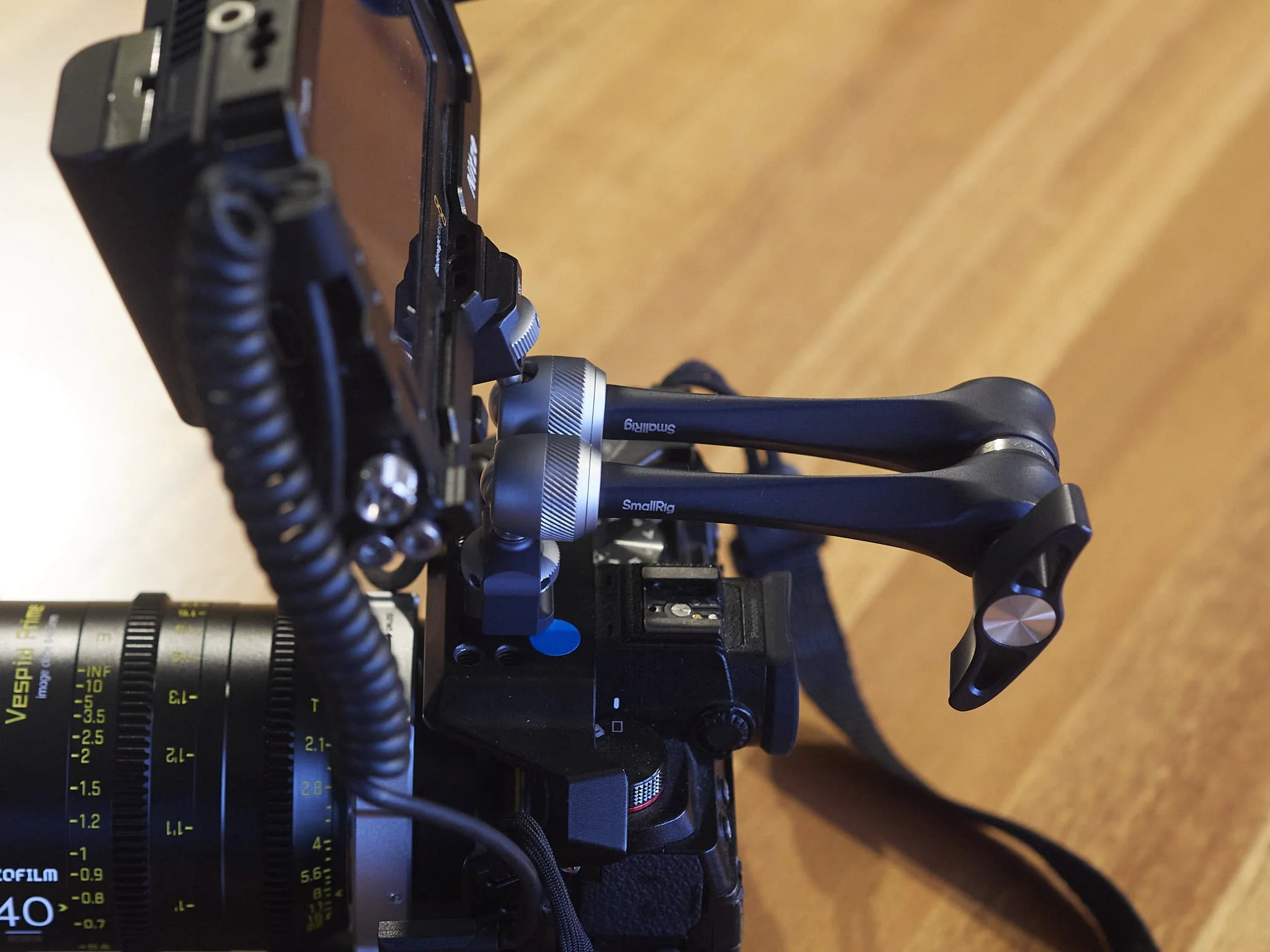
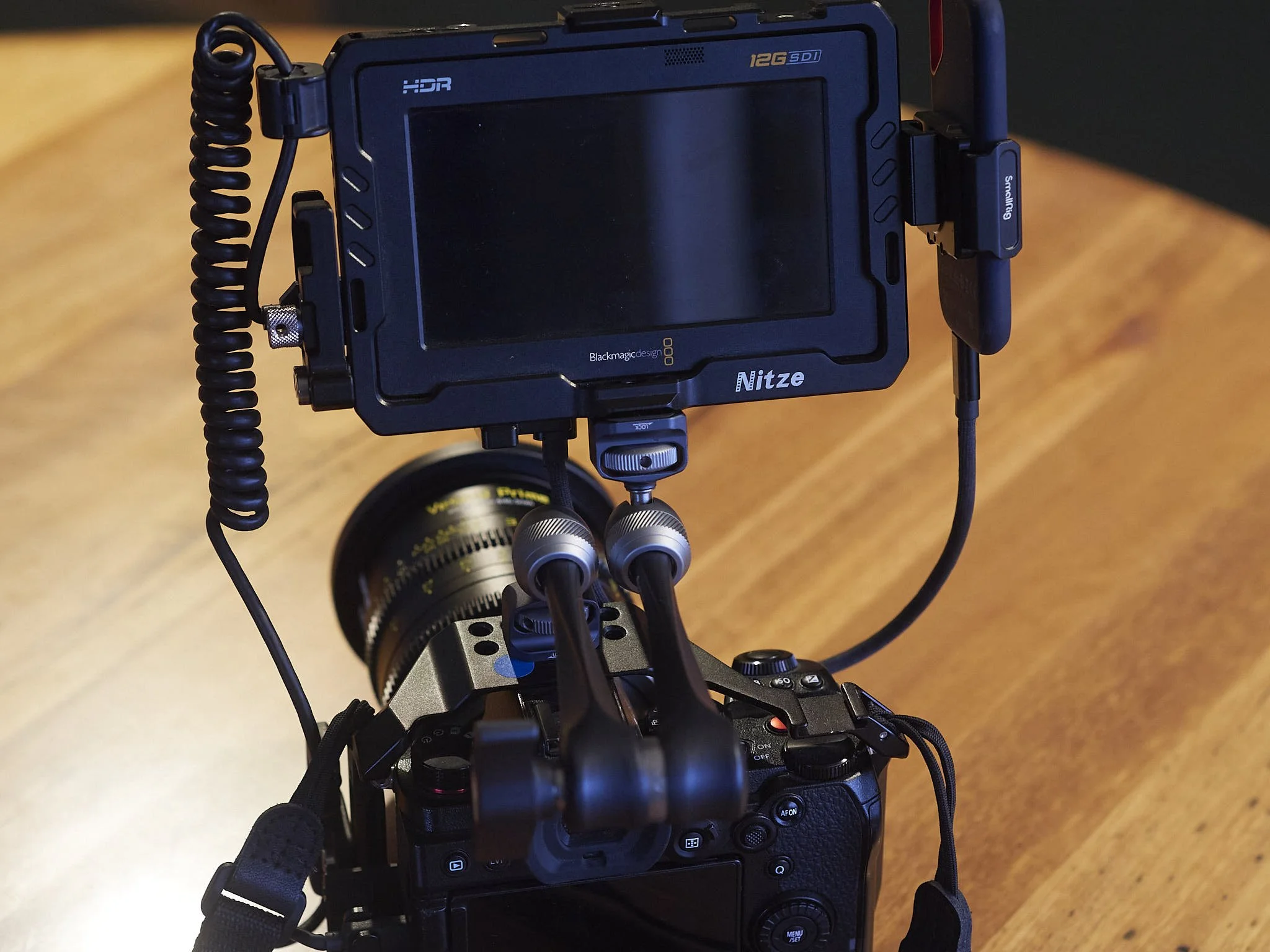
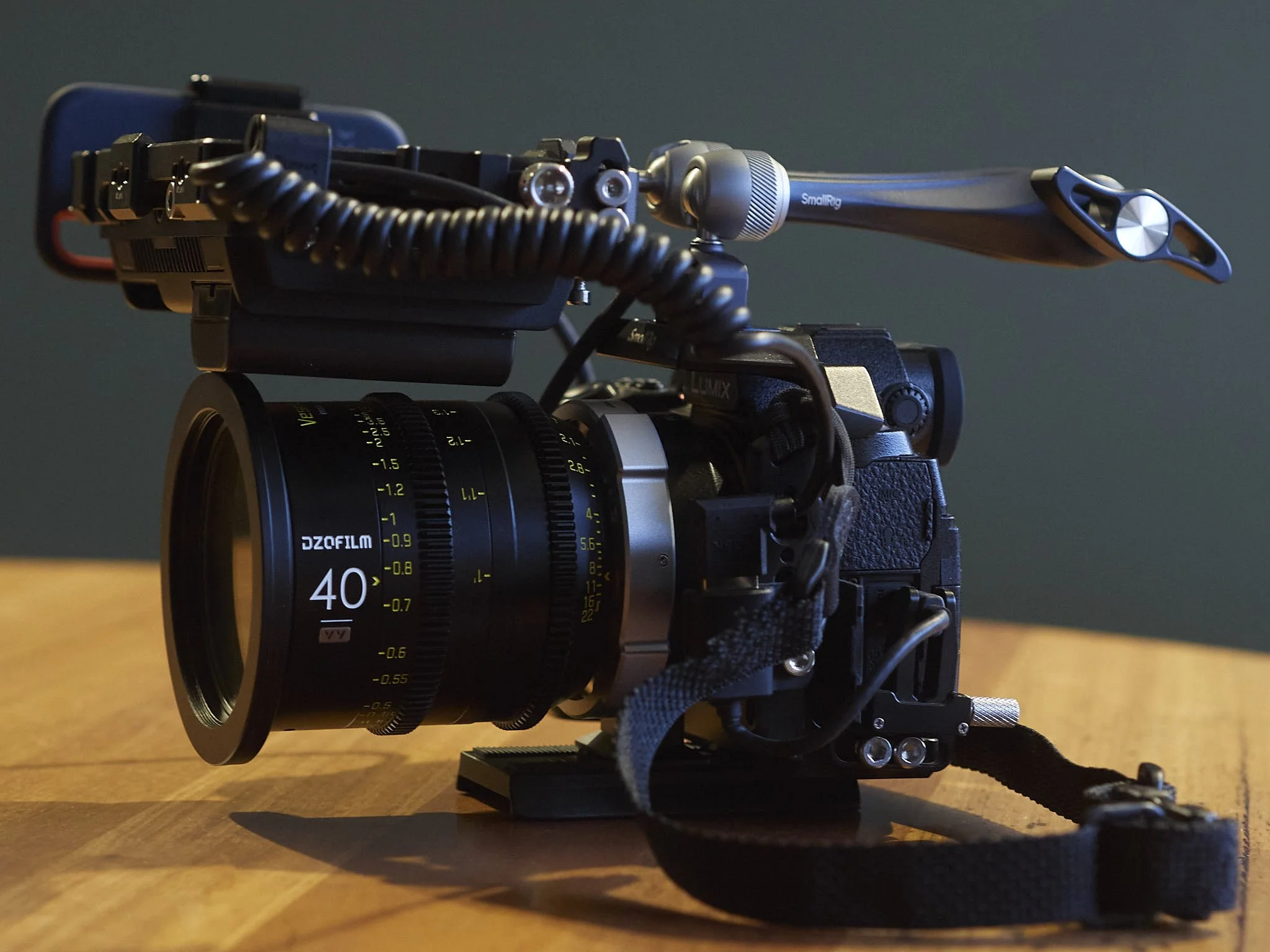
I went with the Smallrig 11” rosette arm, a multi angle arm that can mount on an ARRI point, then allow articulation of a screen to almost any angle. It was bulkier than the one MB uses, but it was available to me and cheap enough to try out.

Complete now with the Nisi Pl-L mount that was given a lead time of 2-3 weeks, then turned into 2 days…… seems I am blessed with this whole process. The adapter cost about as much as I saved on the lens, so free mount I guess.

I was working on perfect angles and placement or even a useful application for the arm, trying to put this accessory to best use, but I gave up on it and was returning to rigging normally. I then remembered an idea I noticed while shopping for the arm, which was to mount it as a handle.

The screen is in the usual spot, front of a handle, but unlike the normal, it is lower and tighter and I have options.

Capable of 3kg capacity, it handles this comfortably.

From here it is no great ordeal to swing it either side, backwards or forwards. The main locking clamp first releases the two heads (the monitor drops, so be careful), then the rosette is released allowing for major angle changes.

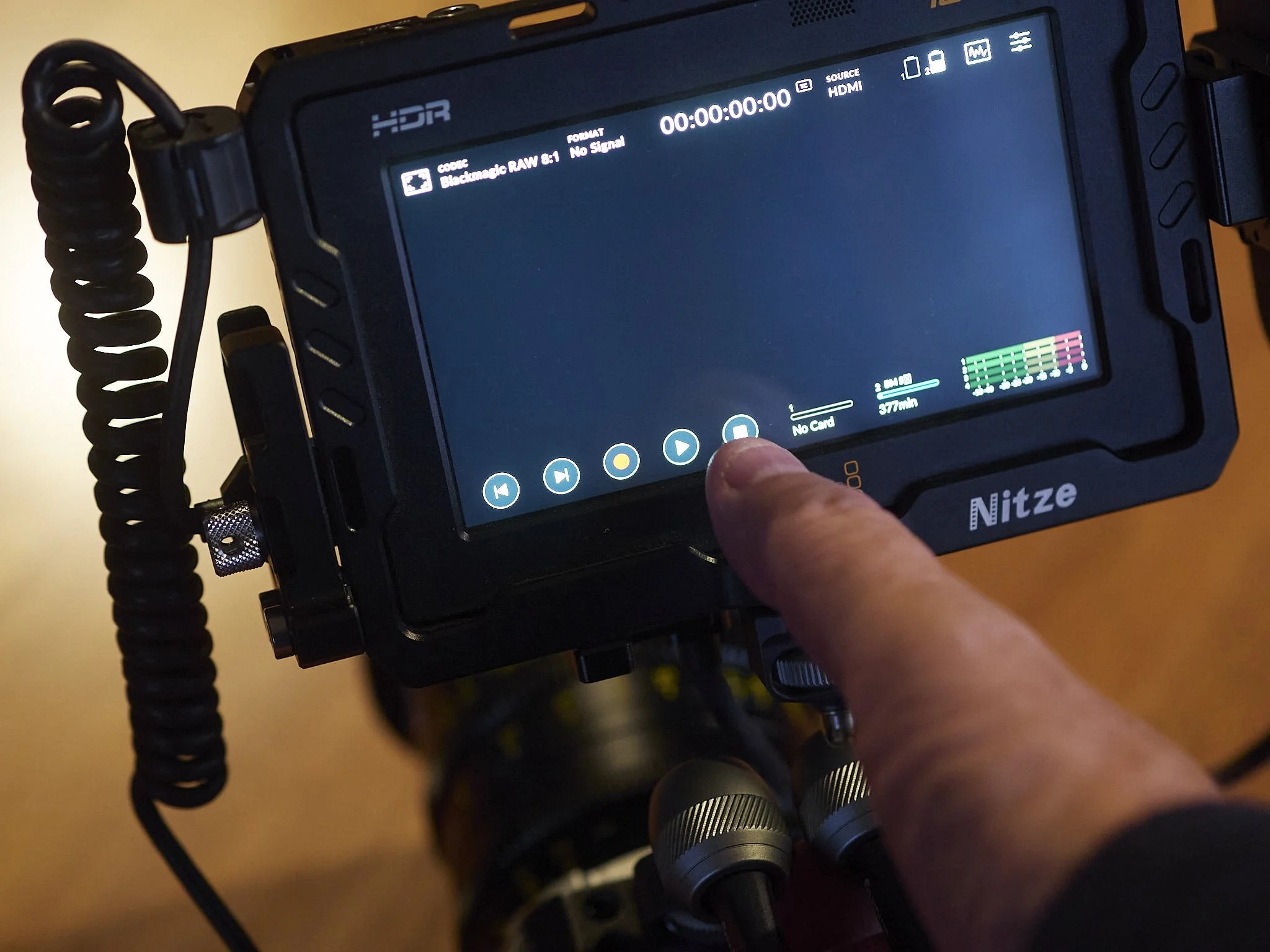
The main advantage for a solo shooter is to have a static camera with the screen and go button as close as possible to the holding hand. This is the only combination I have out of a half dozen handles, that allows me to hit go and stop with my thumb.

Easy peasy. I actually did it automatically while testing the lens.

From here I can articulate the arm pretty much anywhere I might need, but what I have found more useful is the ability to activate and reactivate the recorder (BMVA screen) with my thumb.

I finally have a right hand actuation option, that allows my left hand to focus etc without having to leave the lens.

It’s not the most comfortable handle (nor the worst), but it is the most useful and makes the S5 and cage a good core rig for my movement/static B-rig.

From here I can put the handle sideways, angled up, put the screen anywhere within 11”, so lets say, laying on my back with the camera overhead or as a second interview camera, with the screen close enough to see and even control, or have it subject facing or really low, with the screen at knee height.

Even if I use the lowest sitting of my monitor mounts, I cannot get much lower than this and they basically just adjust screen angle.

I may even add one to my big GH5s RigidPro rig, because every other option I have tried has been too tall and bulky, severely limited my packing options. This will retain the needed low profile while adding a handle to help pack and un-pack it. One thing that has vexed me is adding a handle to get it out of the bag that is not so tall, it precludes closing the lid!

The big rig would even leave me with the option of a second handle using an existing Nato rail mount (very low profile until needed), so I could hand hold and use the screen off angle.

Ed. I have two now and they both developed a slight shift on the mount. Nothing terminal, but occasionally annoying.

Video Quality, Real Needs And Perceptions

I have been doing a lot of reading and watching lately, had some concrete ideas that have disintegrated into sand and reform, only to do it again, but within all that, I have noticed some things that, when I chose to listen, have managed to enlighten me.

Basically, I would find myself so often looking to a selected Vlogger to enlighten me as to the minor differences between camera “A” and “B”, then feel gutted that they were getting great results using techniques or gear I had previously rejected.

I started to feel like maybe my priorities were out of whack.

1)

The images I see that I like have little to do with codec, camera, or lens. They are generally contrasty, sharp and realistic, something that was the norm prior to the current regime. What I am saying here is the treatment of the footage seems to be more important than the scaffolding.

2)

Cameras and lenses can look different to each other, which makes us question what we have, try more and buy more, but they can also, more often than not, look the same. Most reviews “normalise” to the point where we are only looking at the most basic level of their output. Yes brand or camera “X” is slightly sharper looking than “Y”, but in the hands of a decent colourist, “Y” may end up looking better or at least the same with a different character. There are too many variables to know from a simple test, the core of the question is way deeper than that.

3)

You need to chase what you want and when you do, when you know what you are actually trying to achieve obsessively and with focus, gear and processing concerns fall away. You the user and maker can mould your tool to work how you need, we always have, it is where innovation comes from, but the habit of letting our tools define us is becoming dominant.

4)

Listing to that little voice that says “I am seeing a lot of this, maybe time to shift direction” or “I am sick of that flat, washed out, overly soft look, so maybe everyone else is?” or “this shallow depth of field thing may have run its race” and change your processes until you like what you do.

5)

The end product will be as good as all the elements involved, dependant on how they are used. Shoot an in camera Rec.709 profile if your skills are up to it, it’s all the same in the end. Many of the greats cut their teeth on low res codecs, which is how they learned to do everything so well.

This is a super sharp image taken with a video lens on a video hybrid camera. Why can’t modern video look snappy and life like?

6)

Read and research less, look and learn more. The grass is not always greener nor the sky bluer elsewhere and even if it is, is more always better?

Basically, fight back, change perceptions evolve and drag the rest of us with you, don’t let analysis paralysis stop you, don’t be a follower, be that person out front catching the un-breathed air.

*

On a practical level, where this post started but quickly got de-railed, I am noticing that often V-Log footage looks as good as RAW, sometimes even a rec.709 codec can, each has it’s place. My desire to expand my B-Raw capabilities has been reduced after some close calls, now looking at V-Log as my norm, B-Raw as my “safety net” and personal indulgence. Two cams RAW capable is plenty.

My recent lens purchase has helped me put some things into perspective. Yes the Vespid 40mm is the best video lens I own, no doubt, but my cheaper or less specialised glass is also pretty close.

The S-Primes, Hope series and others can produce, I just need to get better at it myself. More RAW capable cameras for 3-4 cam interviews would be overkill, because in those controlled situations, even Standard mode could be enough.

Time to reduce, not expand and produce, not prepare.

Time to practice what I just preached.

A Temptation, Or A Reality Check.

I always have a shall (large?, hard to tell anymore), shopping list of “practical things I might need in the future”, which is the boring version of the “things I just want” which the Vespid was on.

One list I obsess over, the other I just collate, ready for the inevitable need to replace.

The OM System 8-25 F4 is on the list, the boring list, as it is a replacement for several lenses, the 8-18, which is fine but has been dropped twice and is a little short as an “all-rounder”, the 12-40 f2.8, still ailing from a trip to a sandy beach, a “lumpy” zoom the result and my 12-60 Leica, that has decided lately to do the “AF shuffle” every time I turn it on, even if AF and stabe are off.

All are working, all do their jobs as expected, all act as backups to the other, but the 8-25 does offer an overlap that possibly reduces the need to carry two lenses and frees up the 8-18 for video duties (or the other way around). An 8-25 and 40-150 has no noticeable gap, an 8-18 and 40-150 do, meaning I often carry a fast prime as a filler as I find 25mm (50mm equivalent) to be the perfect small group portrait lens.

The actual lens is a friends bought mint second hand and he will sell it to me “right” if I take it, otherwise he will list it.

Great performance across the frame, as expected.

Every lens has a “feel” and for me, this lens screams “get in close”, which it does really well.

Close focus is good, but this little guy was so small, it still took some cropping.

It also screams less loudly, “get it all in”.

Flare was interesting, that is to say ugly. I have just been doing stress tests on cine lenses and the only time I got anything like this was an off-angle with a huge matt box ND filter mounted.

Pleasant enough Bokeh, nothing that detracts anyway.

Just to be a little unfair to it, I threw in a Vespid shot from yesterday.

To be honest, I am blown away by this lens, the images it creates and the experience of using it. It surprises me how much it has affected me, I was gearing up for disappointment and possible regret, even returning it, but it has won me over quickly. Making a great stills lens requires a set of criteria are met, but when dealing with genuinely good cinema glass, a more wholistic approach is taken to the only thing that matters, various image qualities.

Timing is a thing. The fact is, this lens sits below the tiny 12-45 f4 on my to get list, even below the auto buy of another 40-150 f2.8 if I need to.

My other list, the one that makes me happier has the DZO Vespid Mk1 25mm on it, a lens to match the 40 as a 25/38 and 45/50 option. The Hope 25 and 50 do its job now and may for ever, but we will see.

Replacing work horse lenses is a business expense, one I am not forced to make right now.

The Vespid is a thing we do it for, a personal choice, not needed, but wanted.

Rushed Test, Because The Light Was Great

After a couple of gloomy and wet days, we had a cracking morning here, well for a while at least.

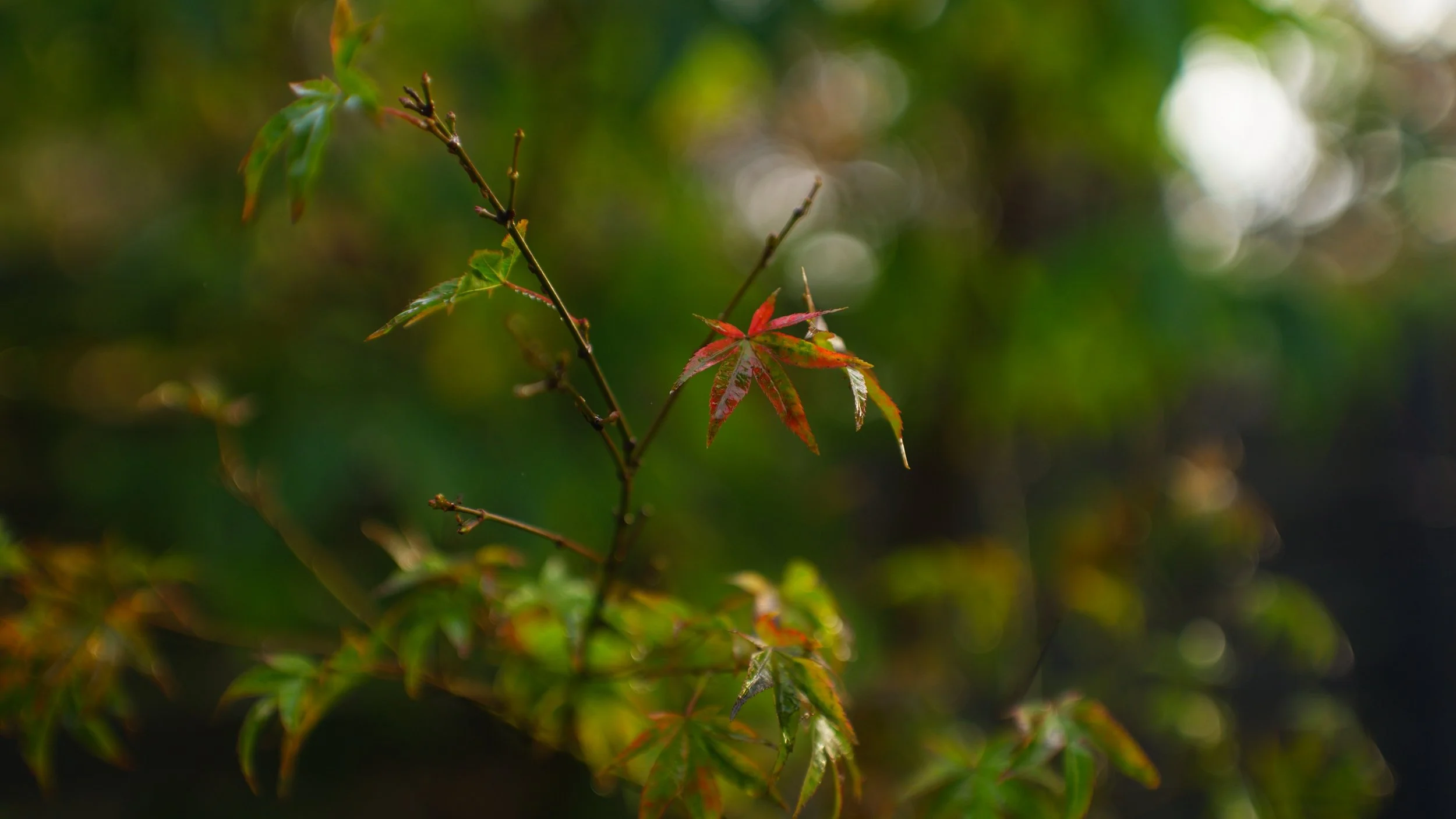
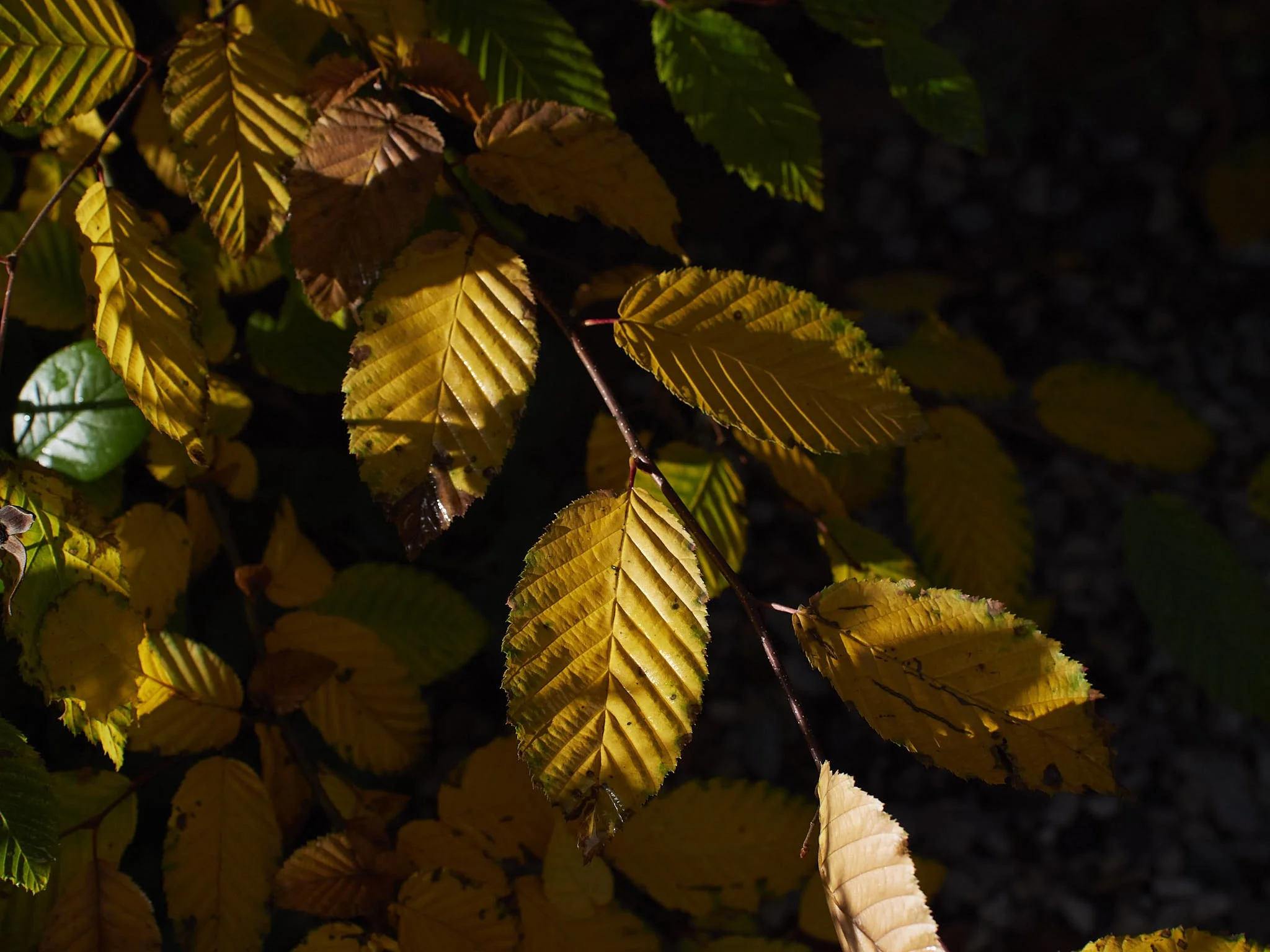
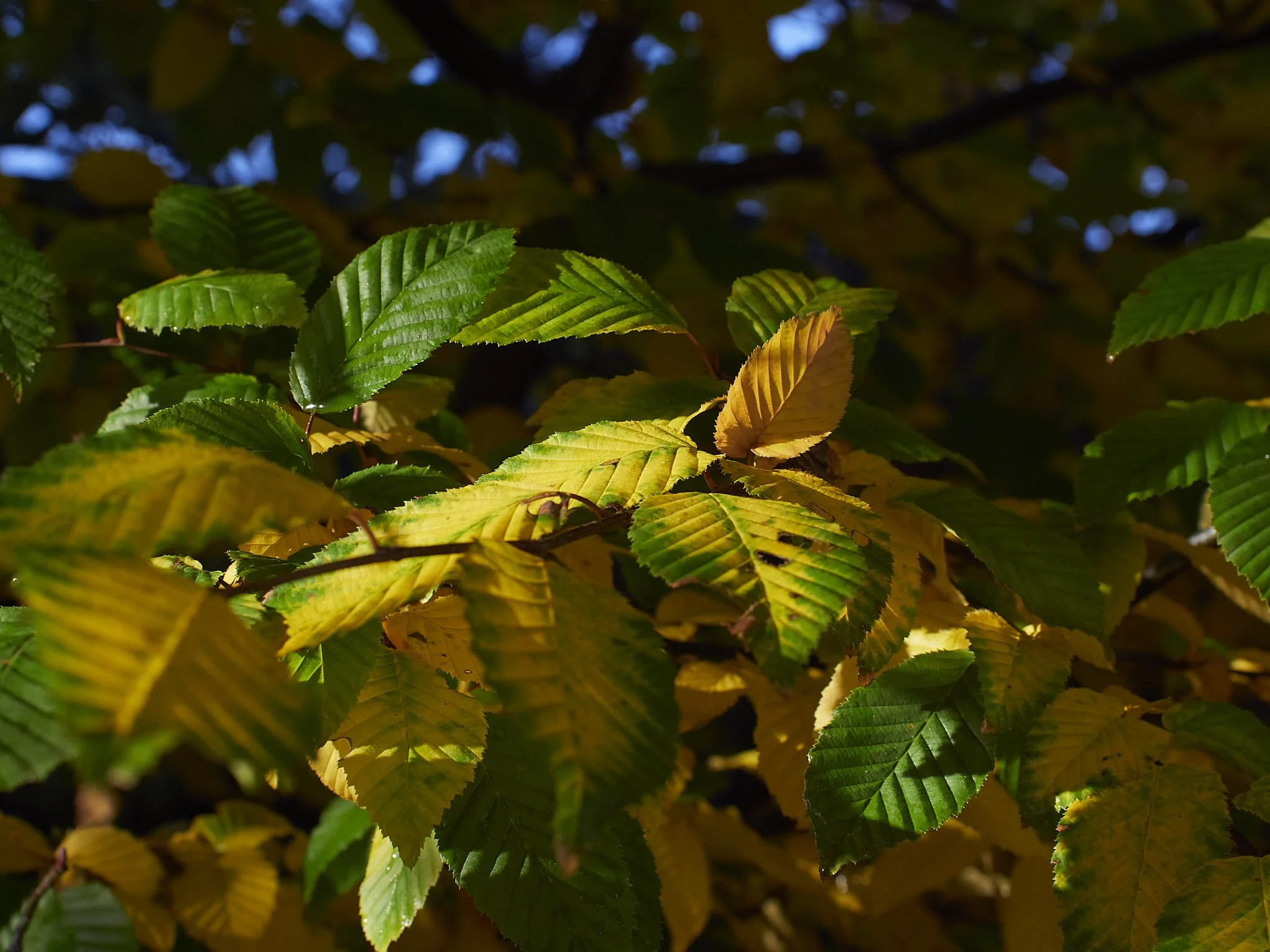
In the week we were away, autumn has rolled through with a vengeance, the unturned leaves have turned, some trees gone to bare in no time it seems, but plenty to find when it presents.

I grabbed the Vespid, GH5s (hand held, no stabe in a bulky rig, not pretty) and mounted the Neewer 5 stop ND and matt box.

The footage was shot in 4k, Q3, B-Raw, a basic power grade applied then curves adjusted as needed, more to make up for my exposure misses than anything.

I used mostly T4, a little T2.1 for the flare test and ISO 320-800 on the GH5s.

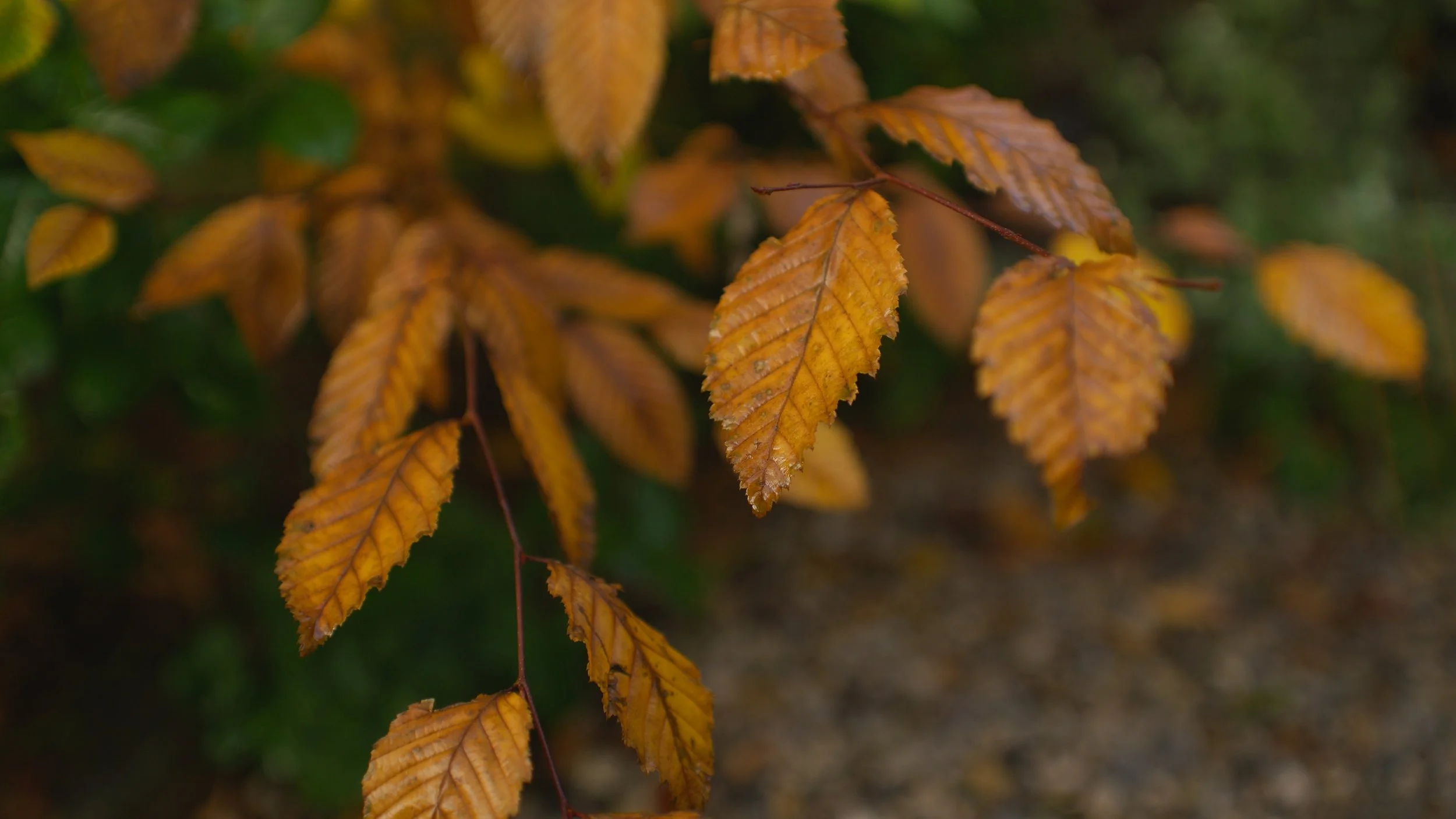
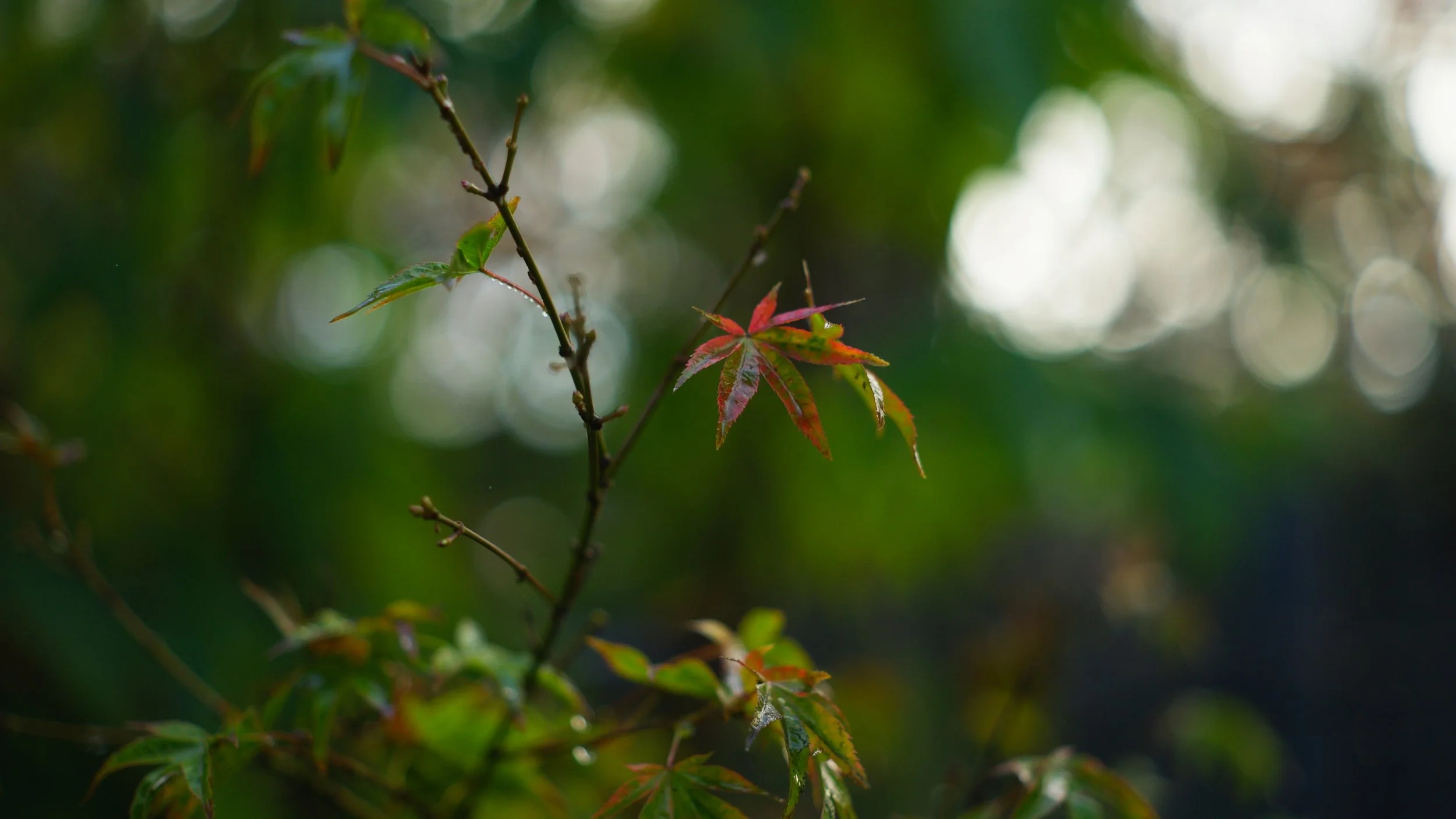
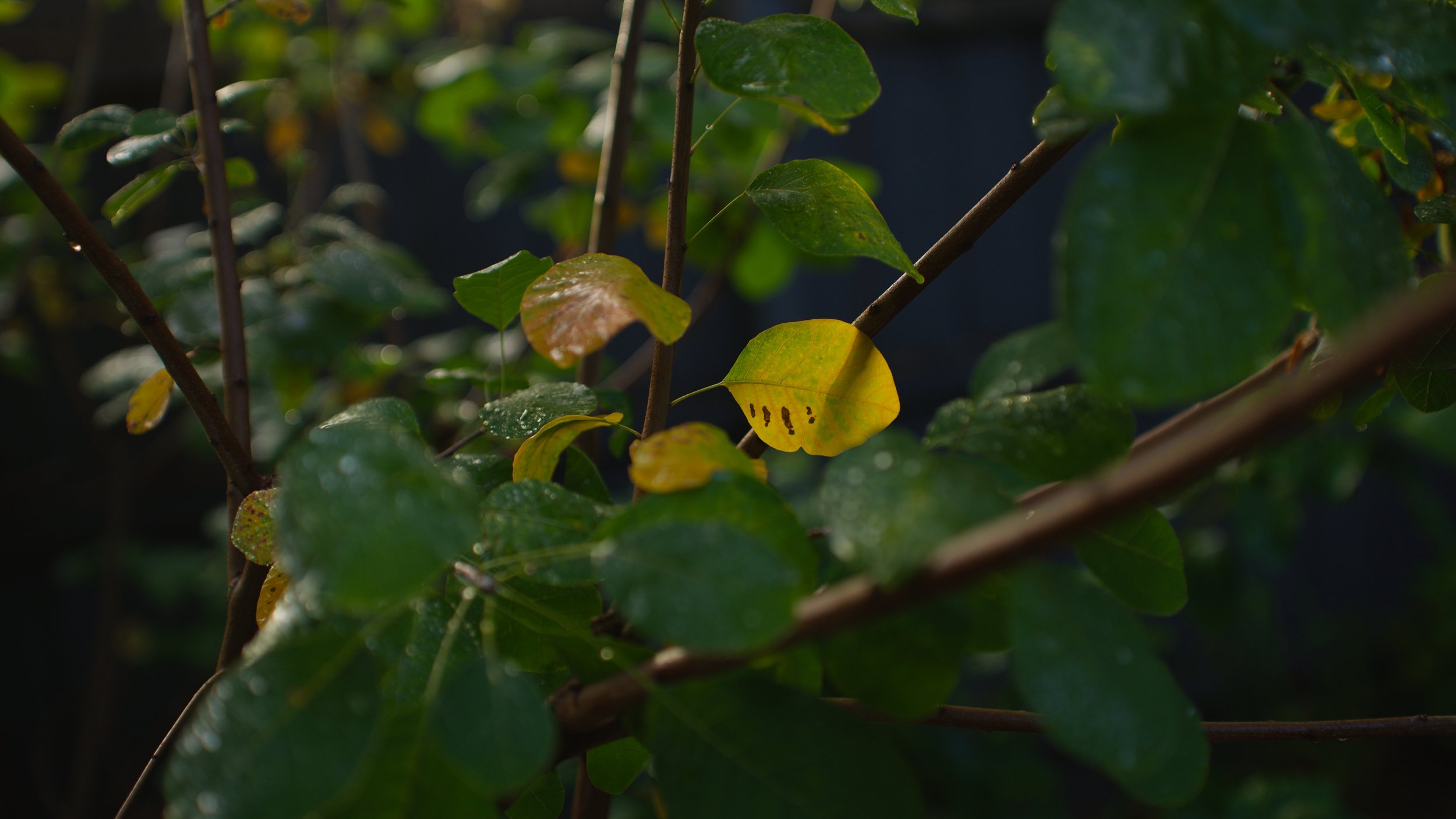
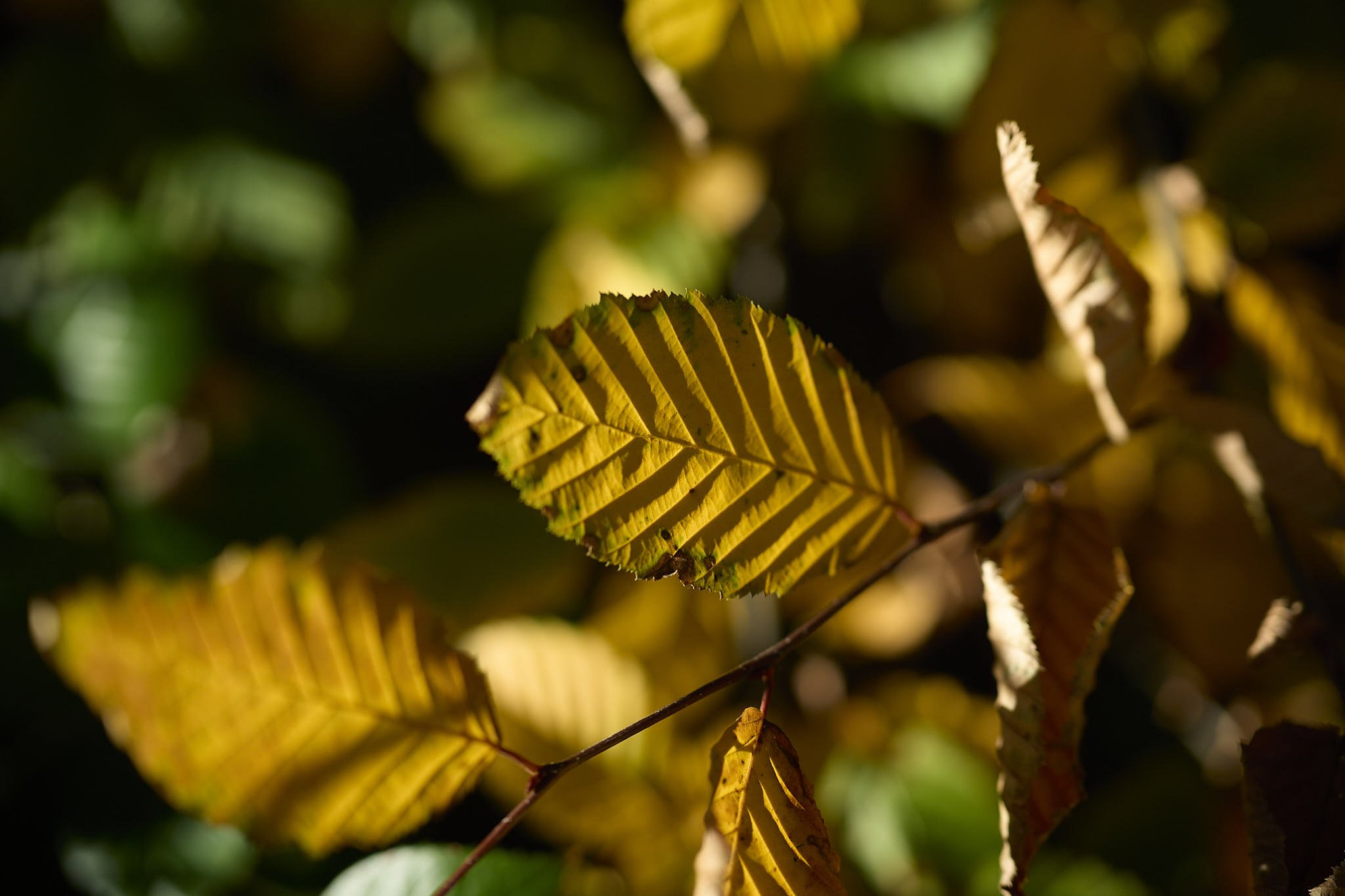
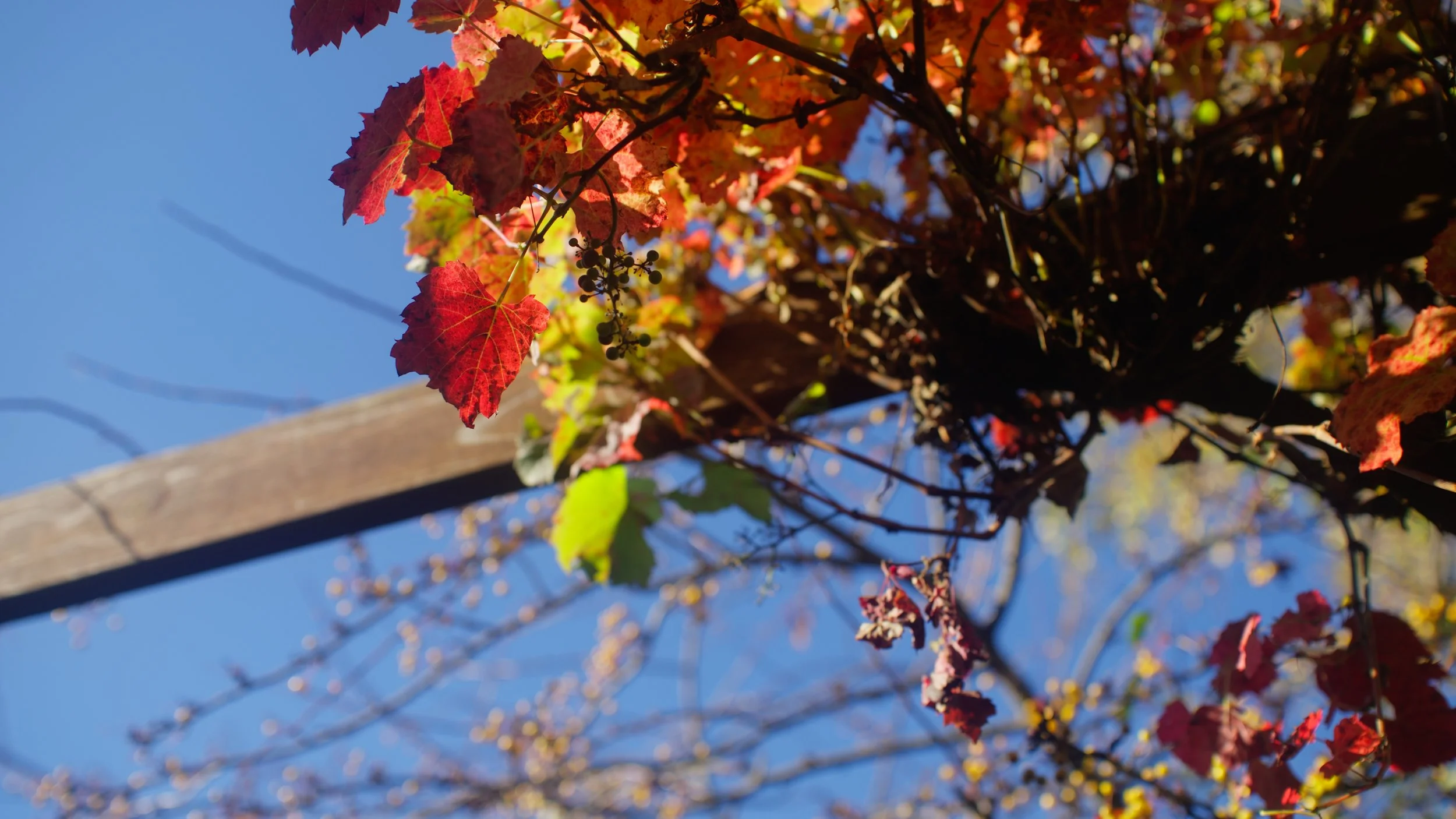
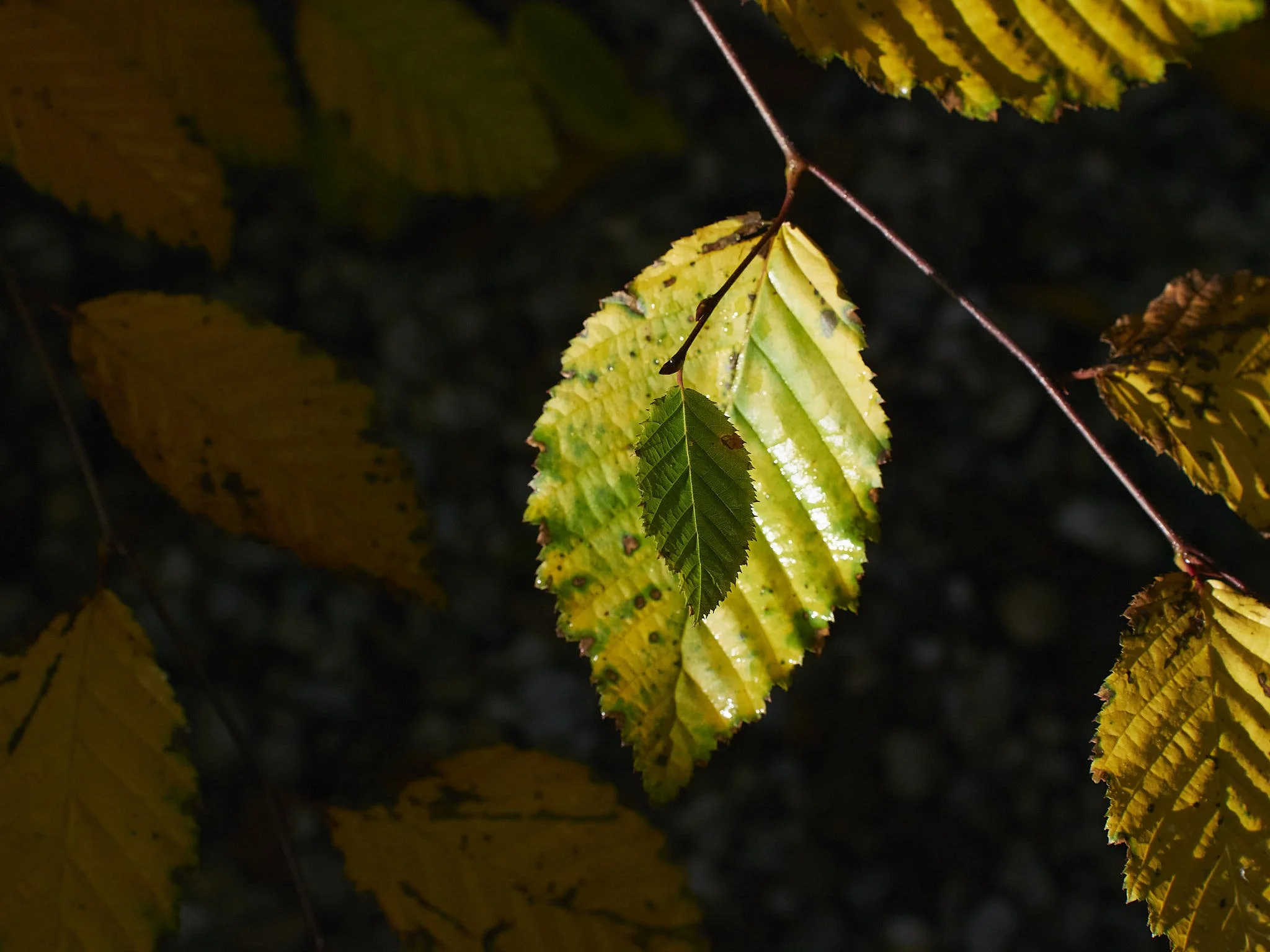
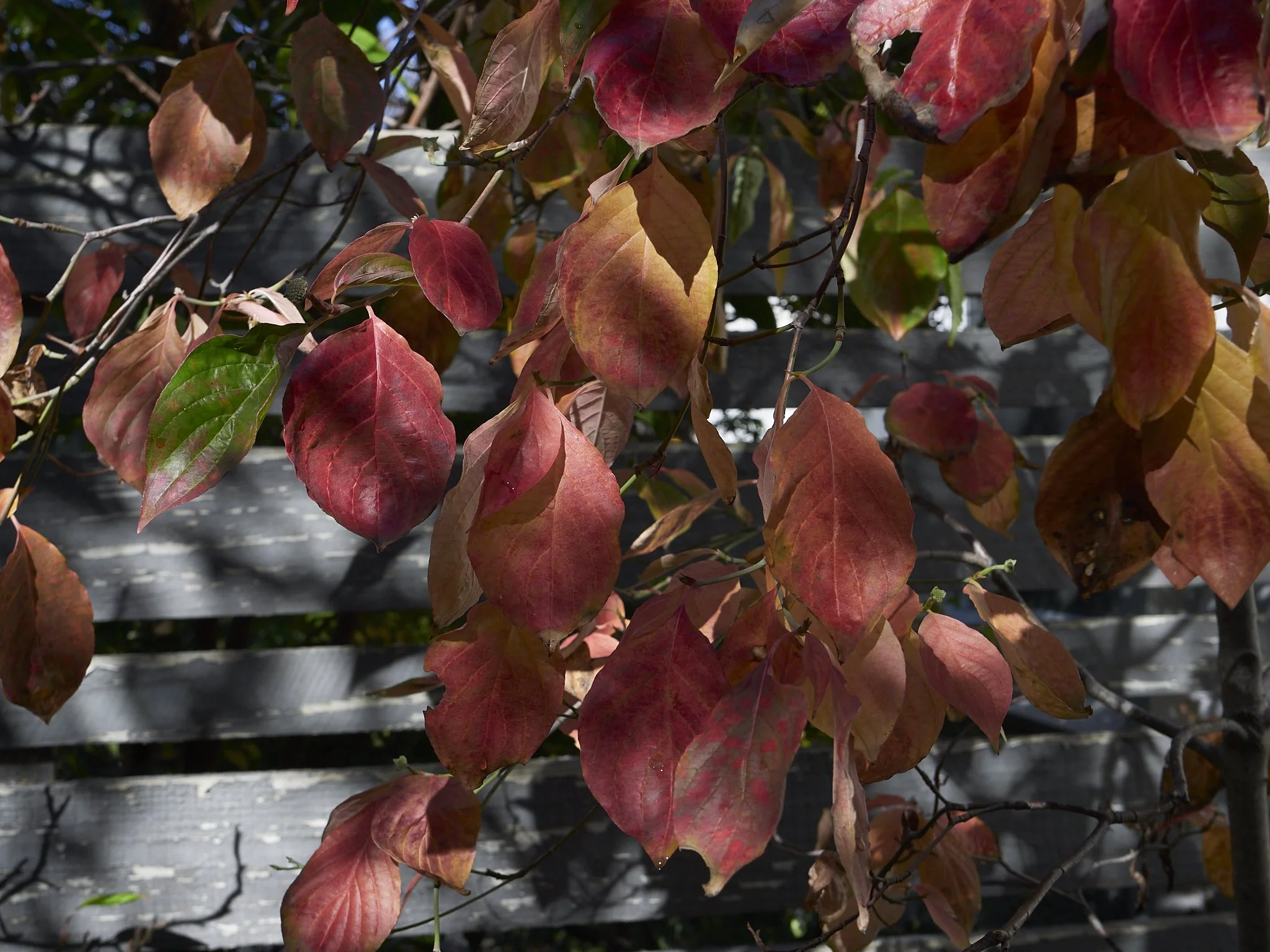
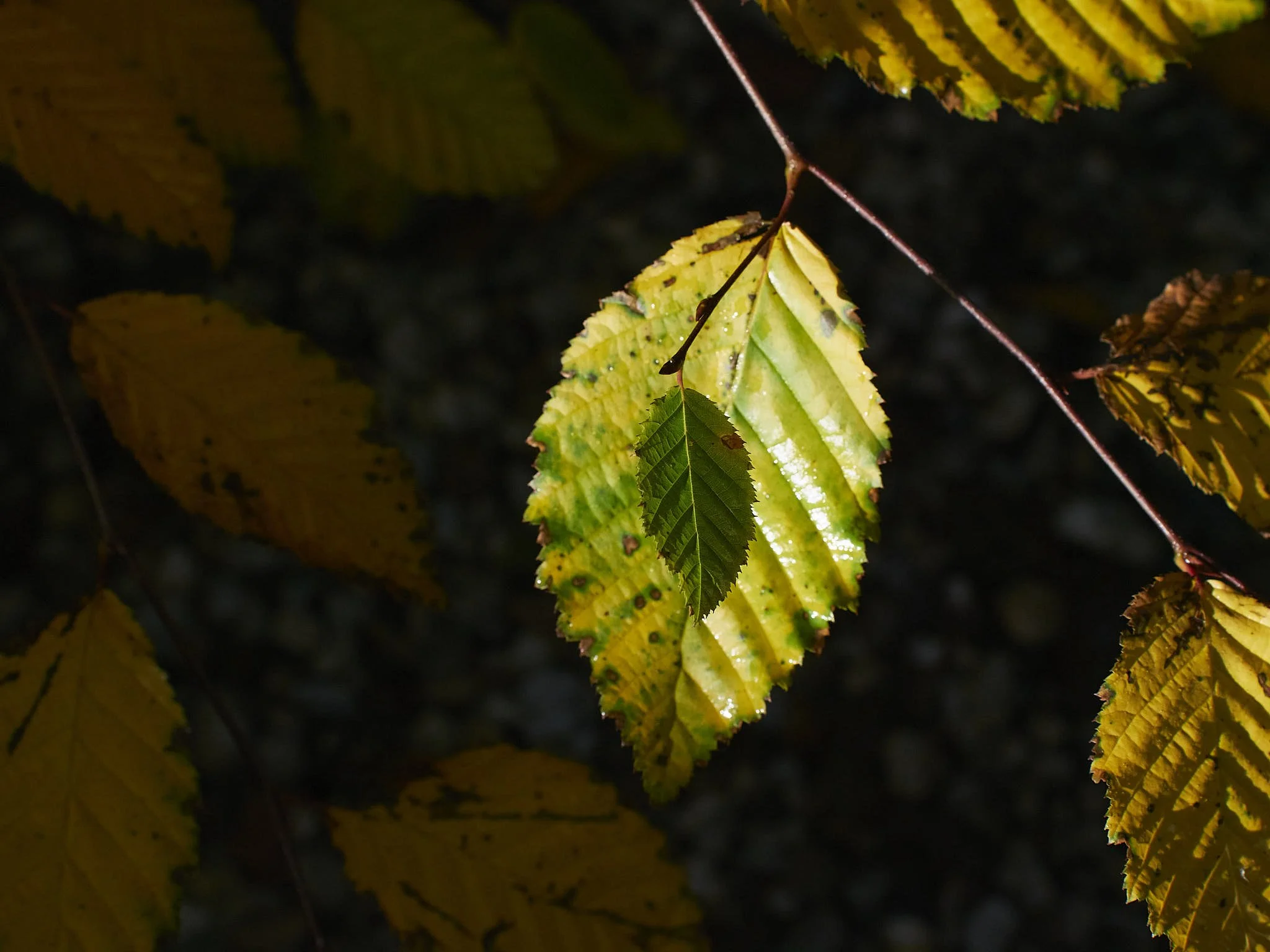
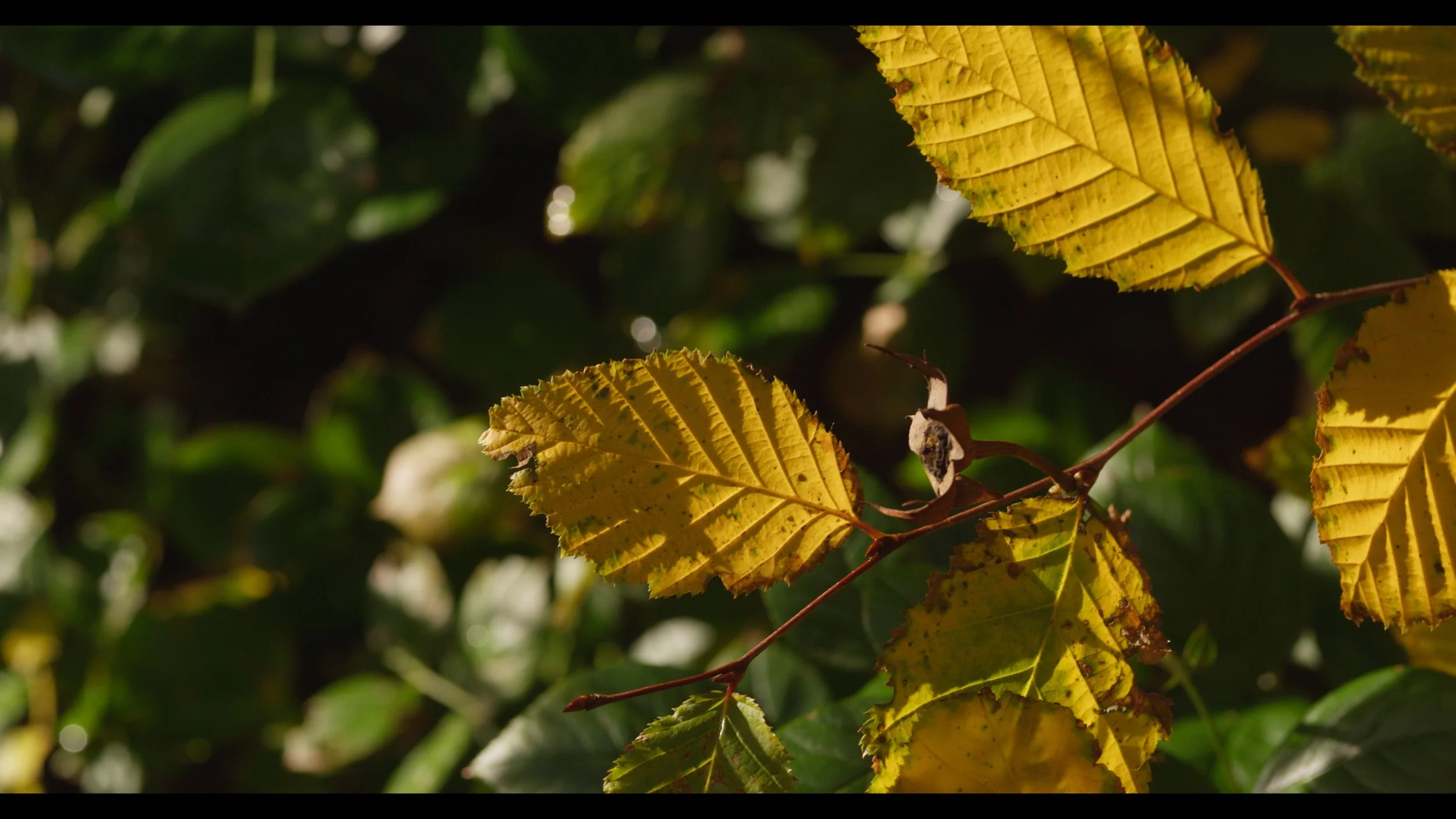
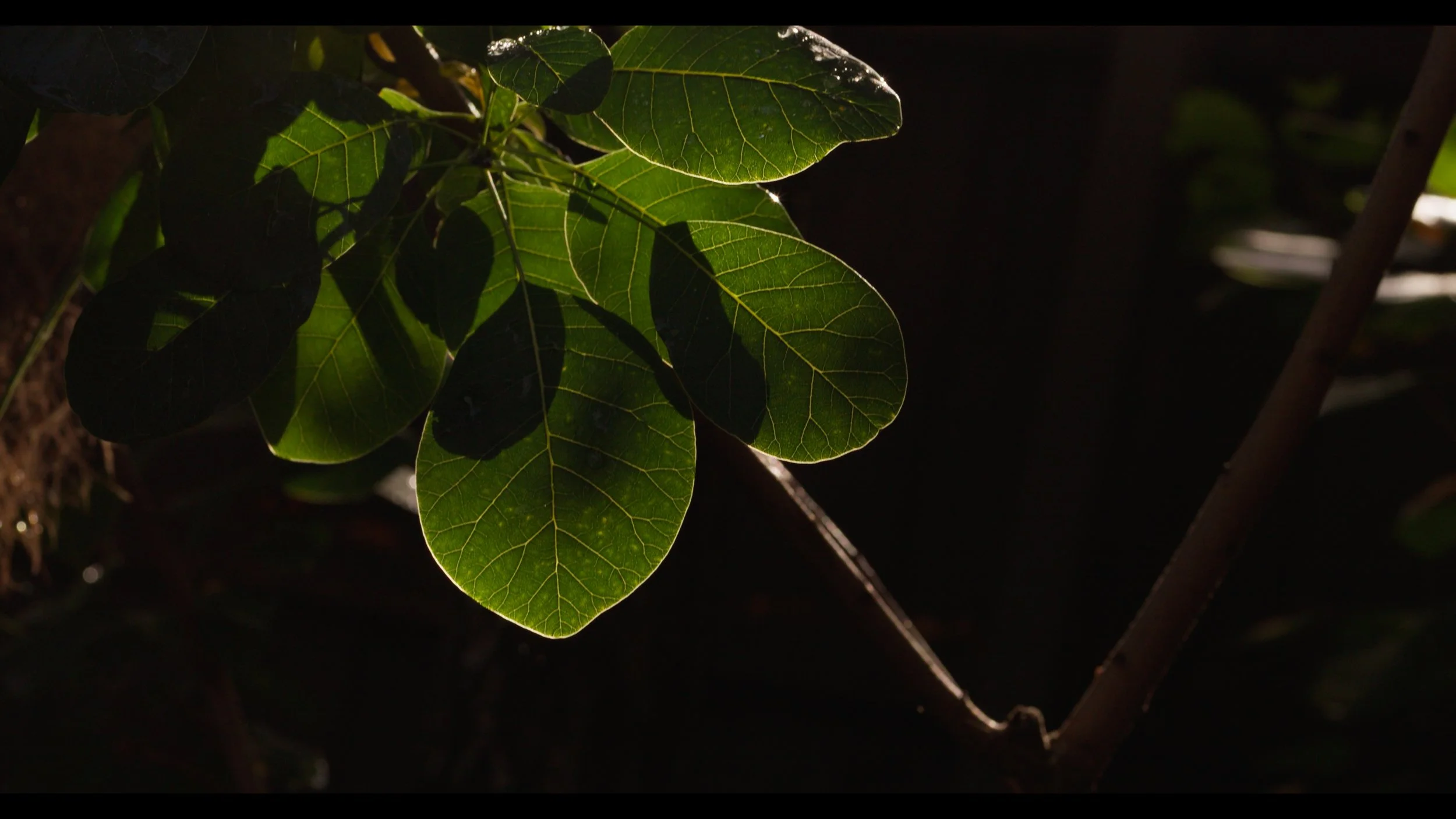
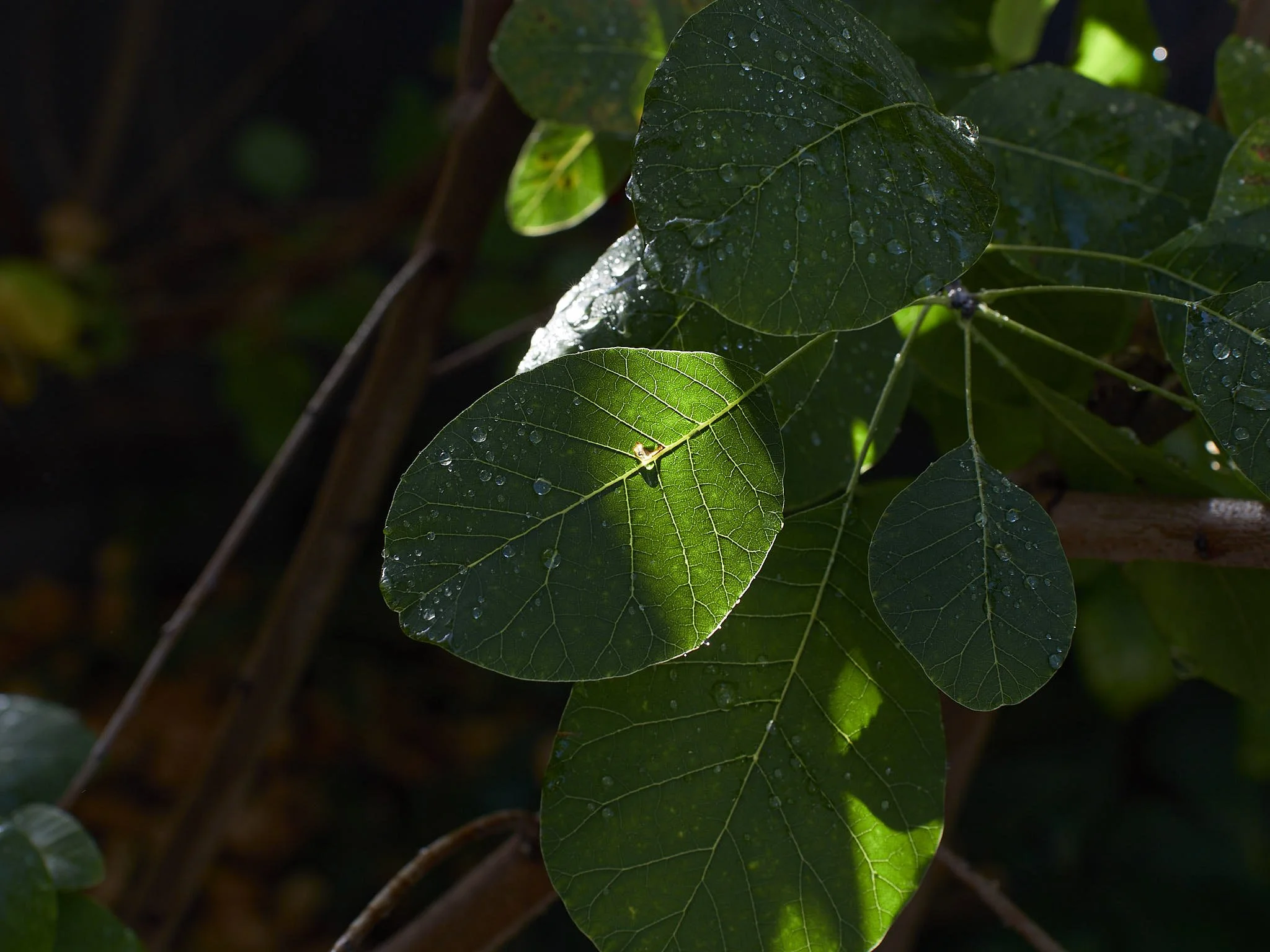
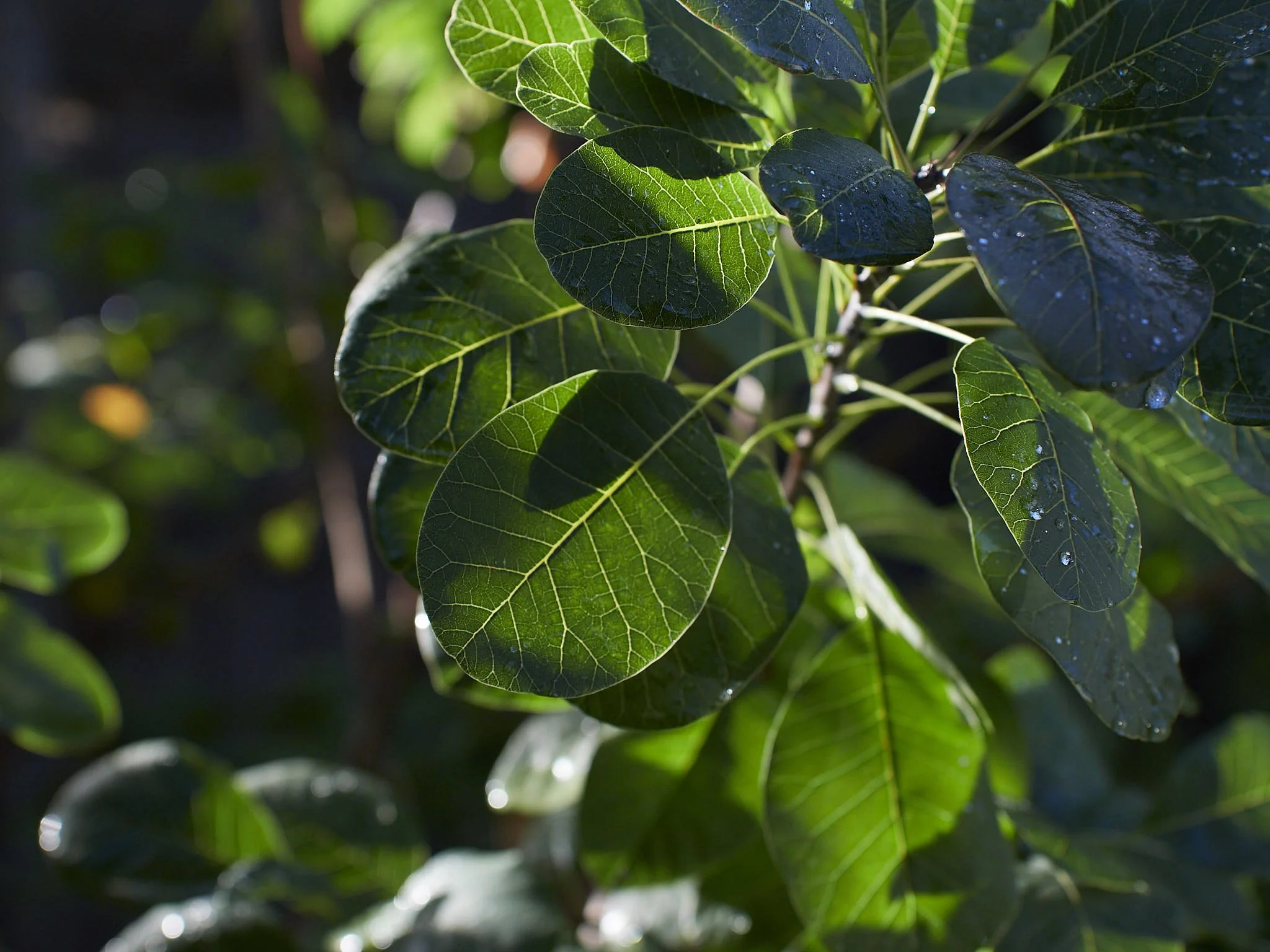
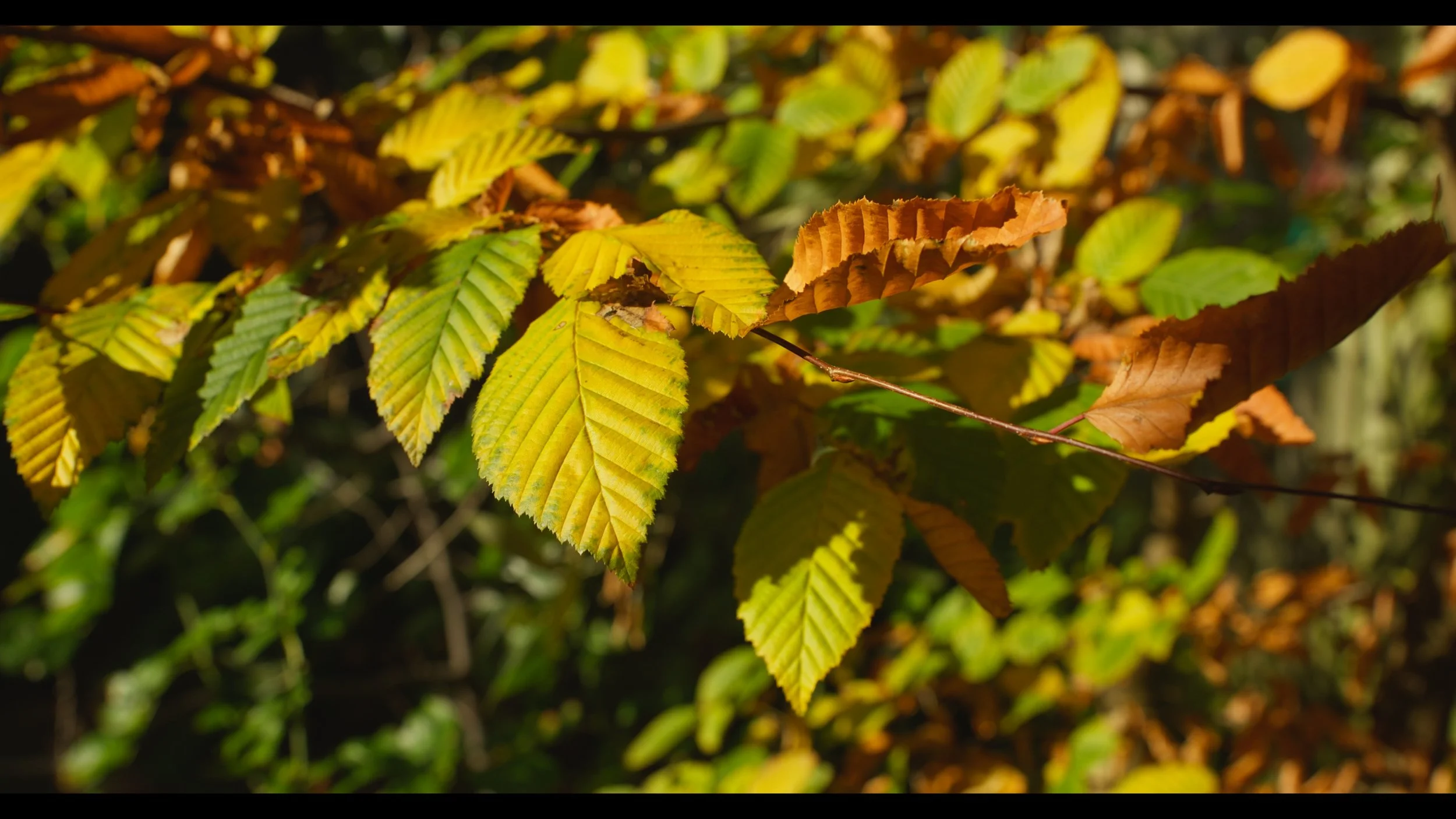
The top leaf is stunningly sharp, but my takeaway is, the whole image looks harmonious and focus was very easy to find.

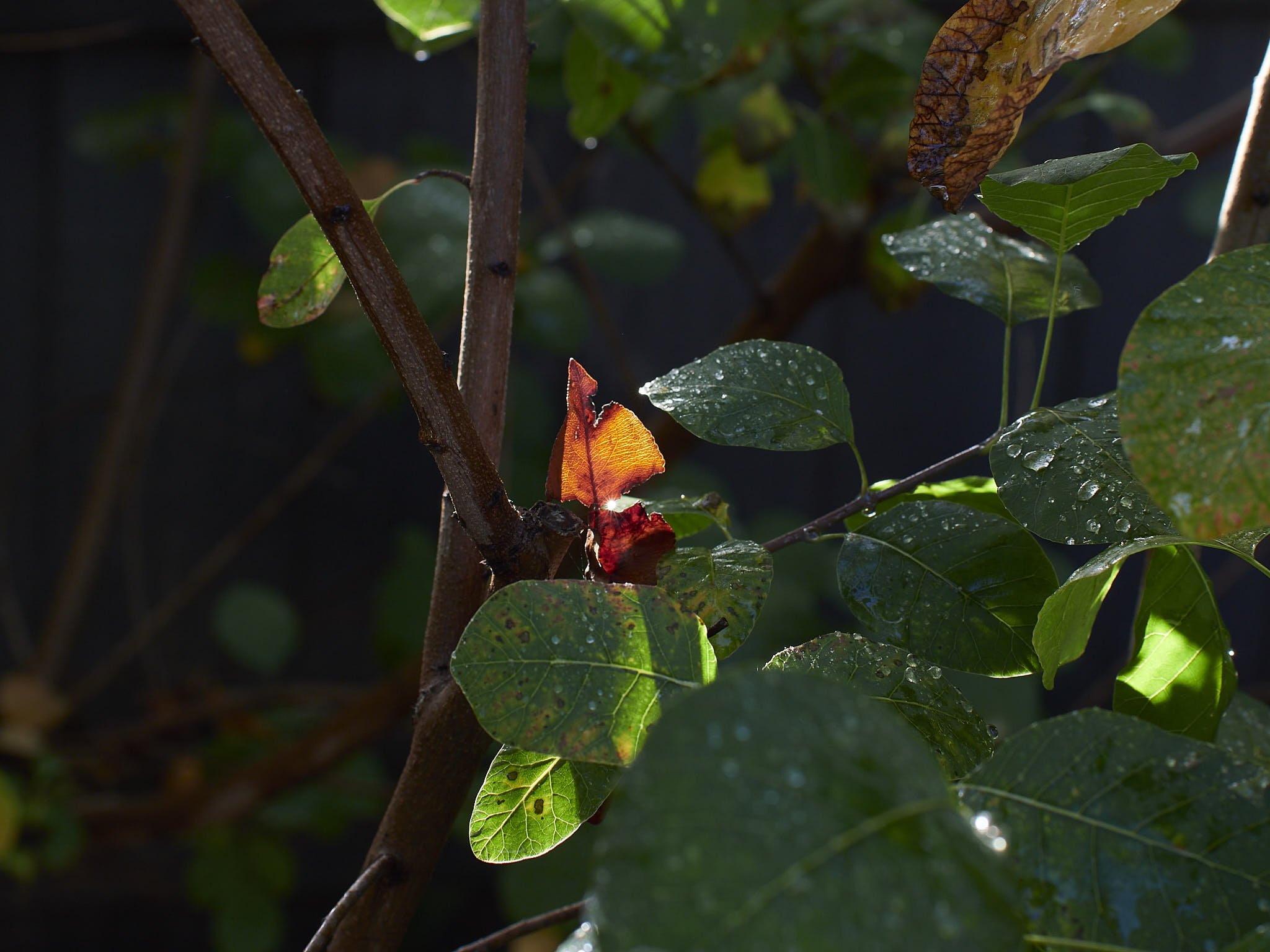
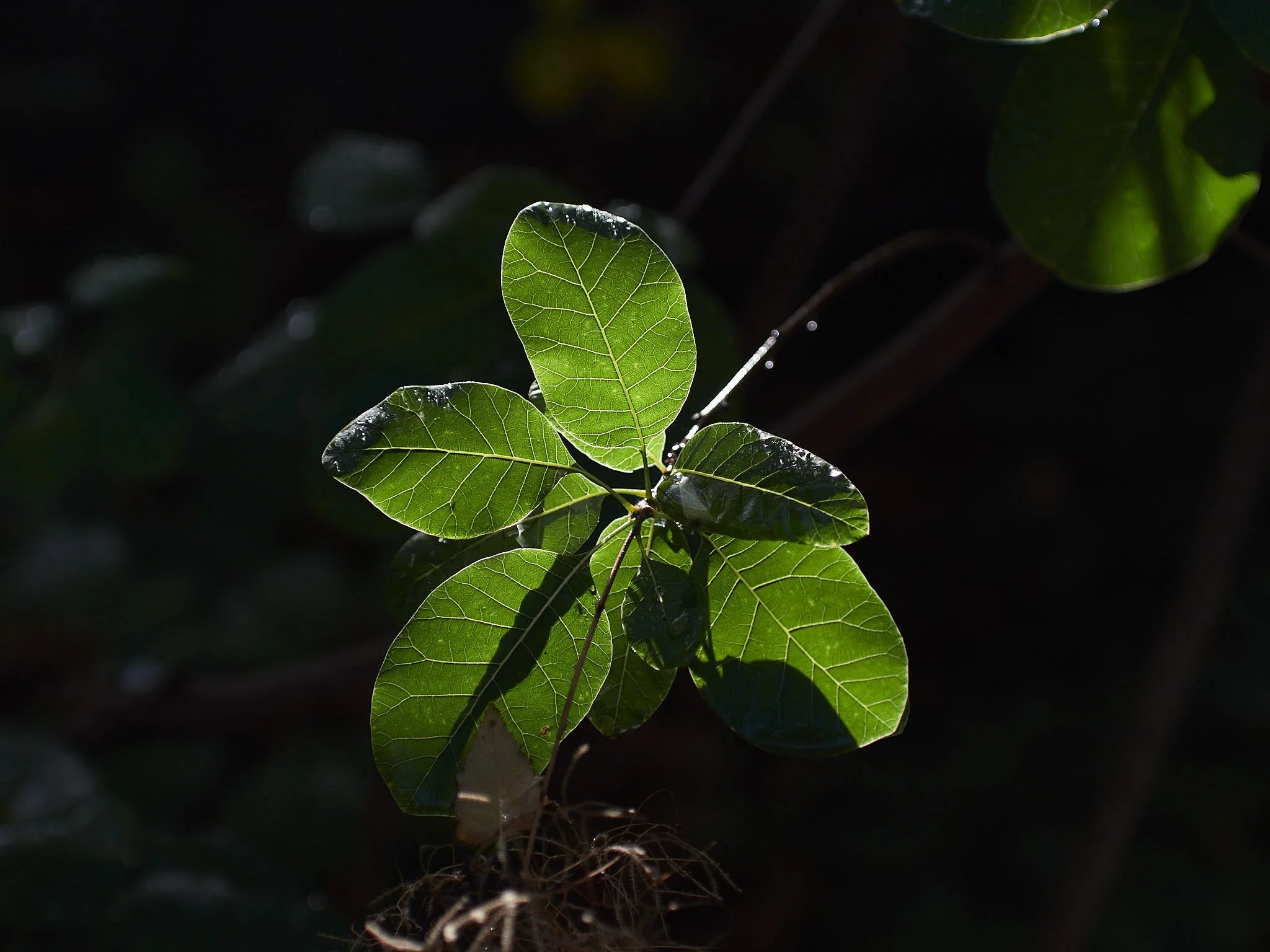
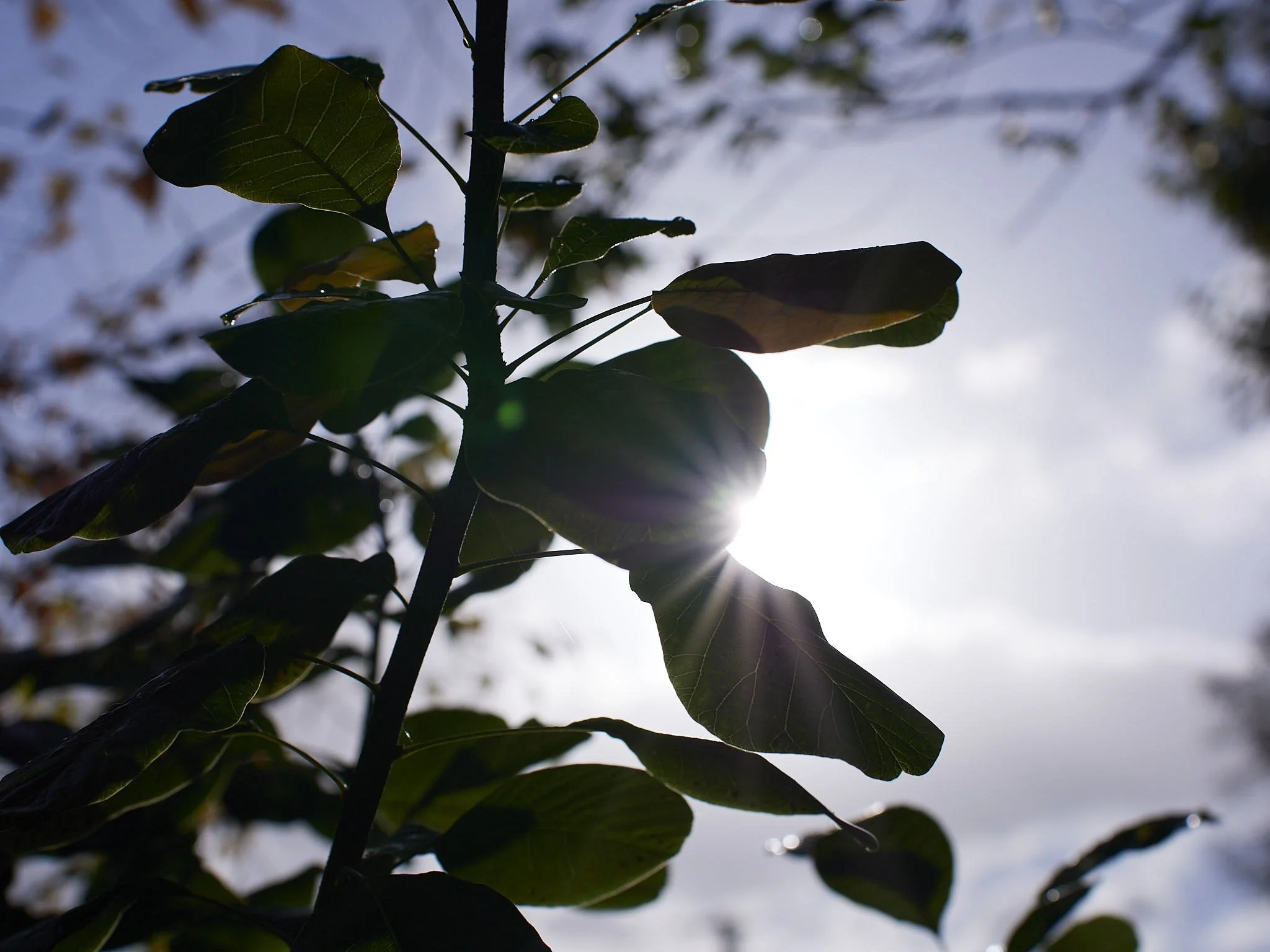
Some mild flare from off axis sunlight, but still sharp and if I wanted to, it was fully adjustable.

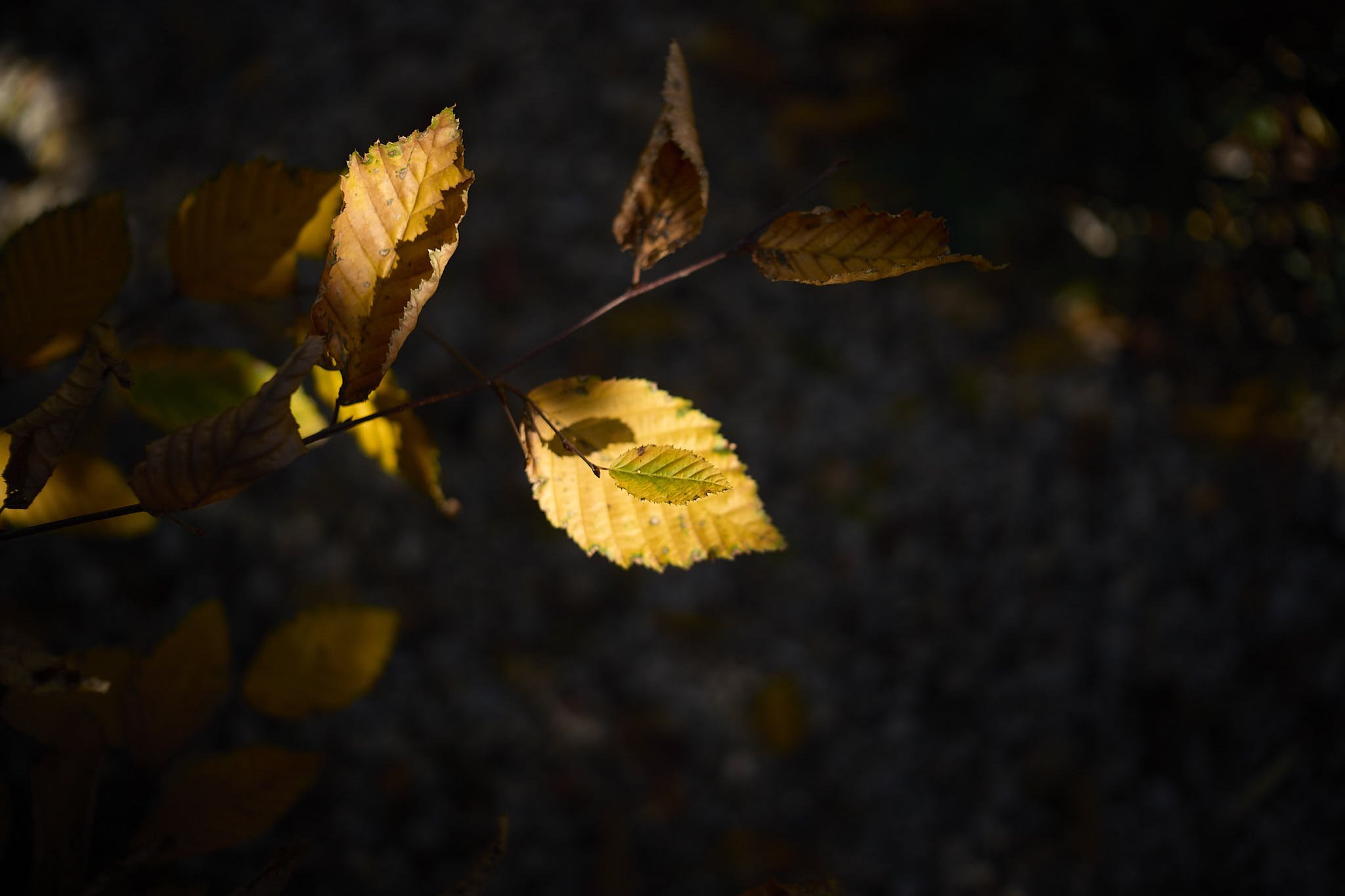
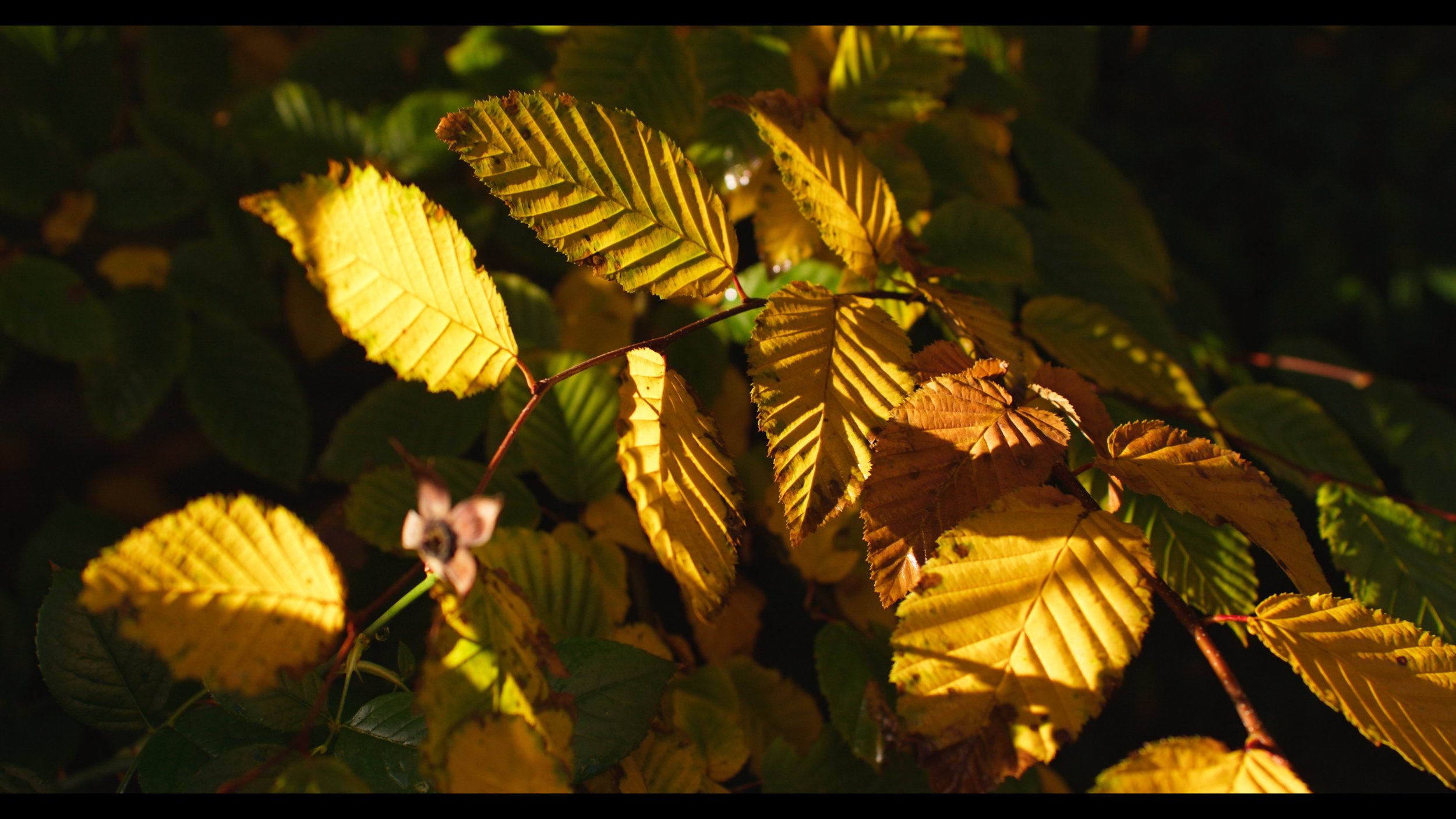
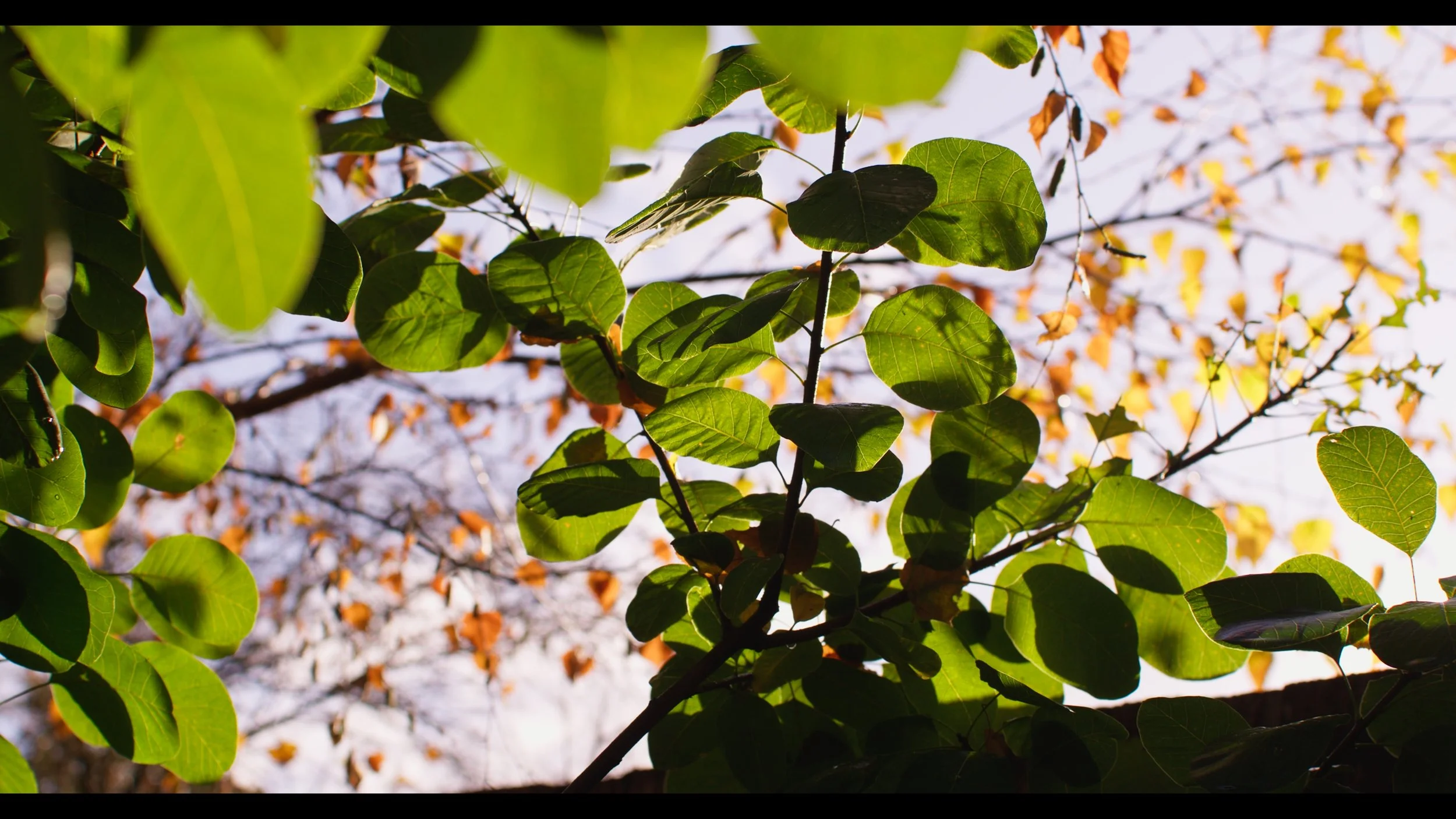
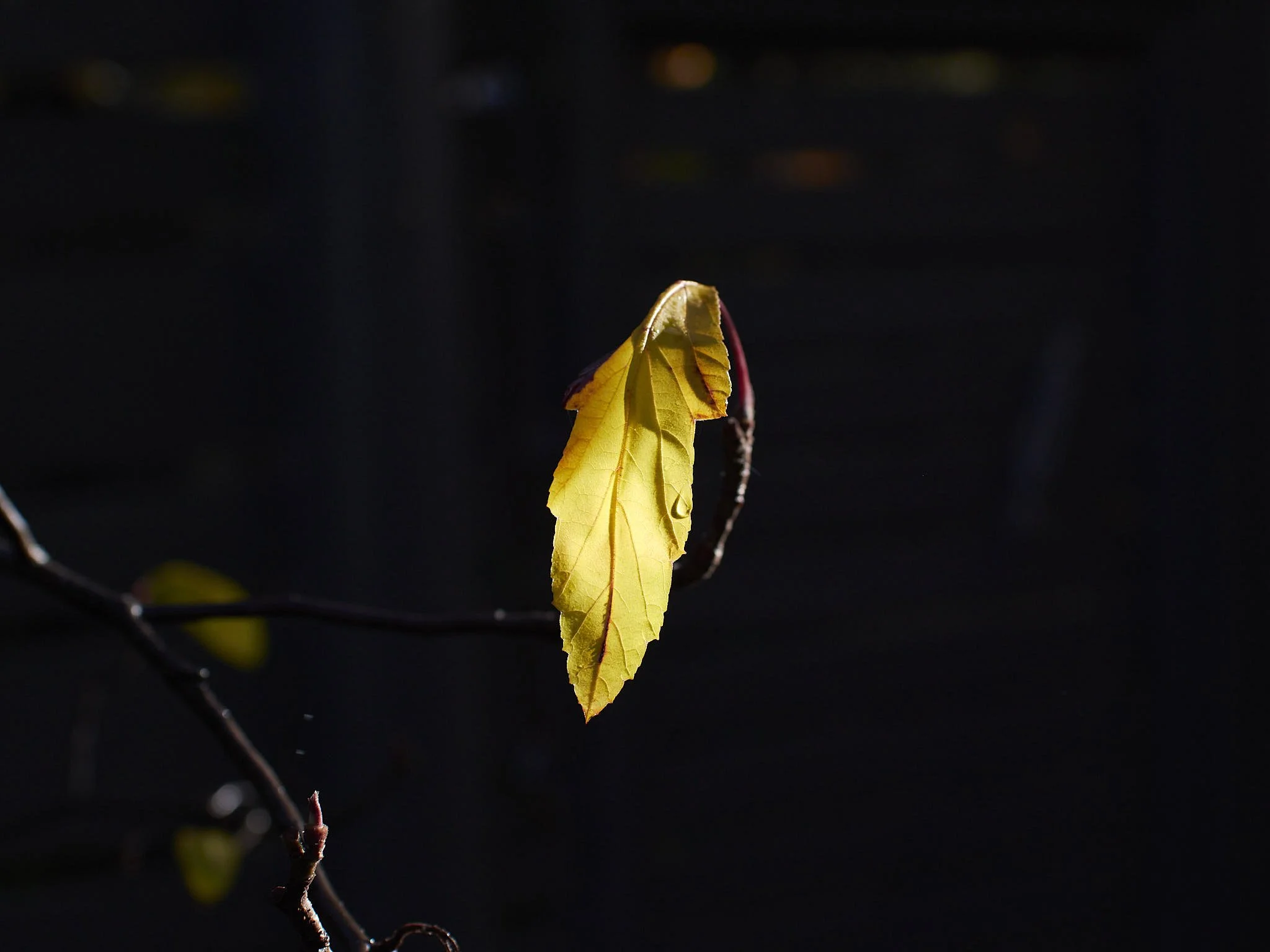
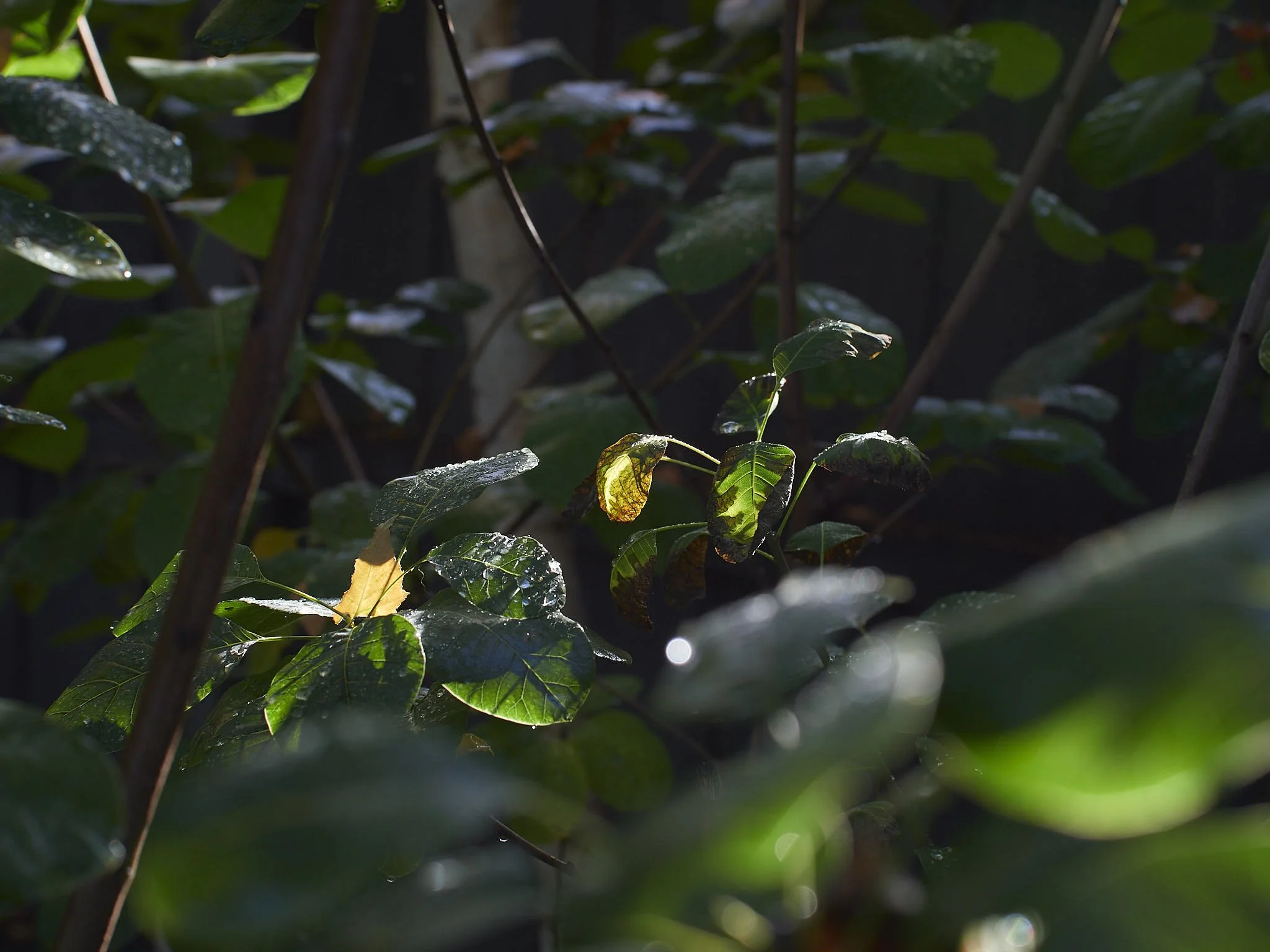
A little dark and as shot, this was subtle and contrasty on screen.

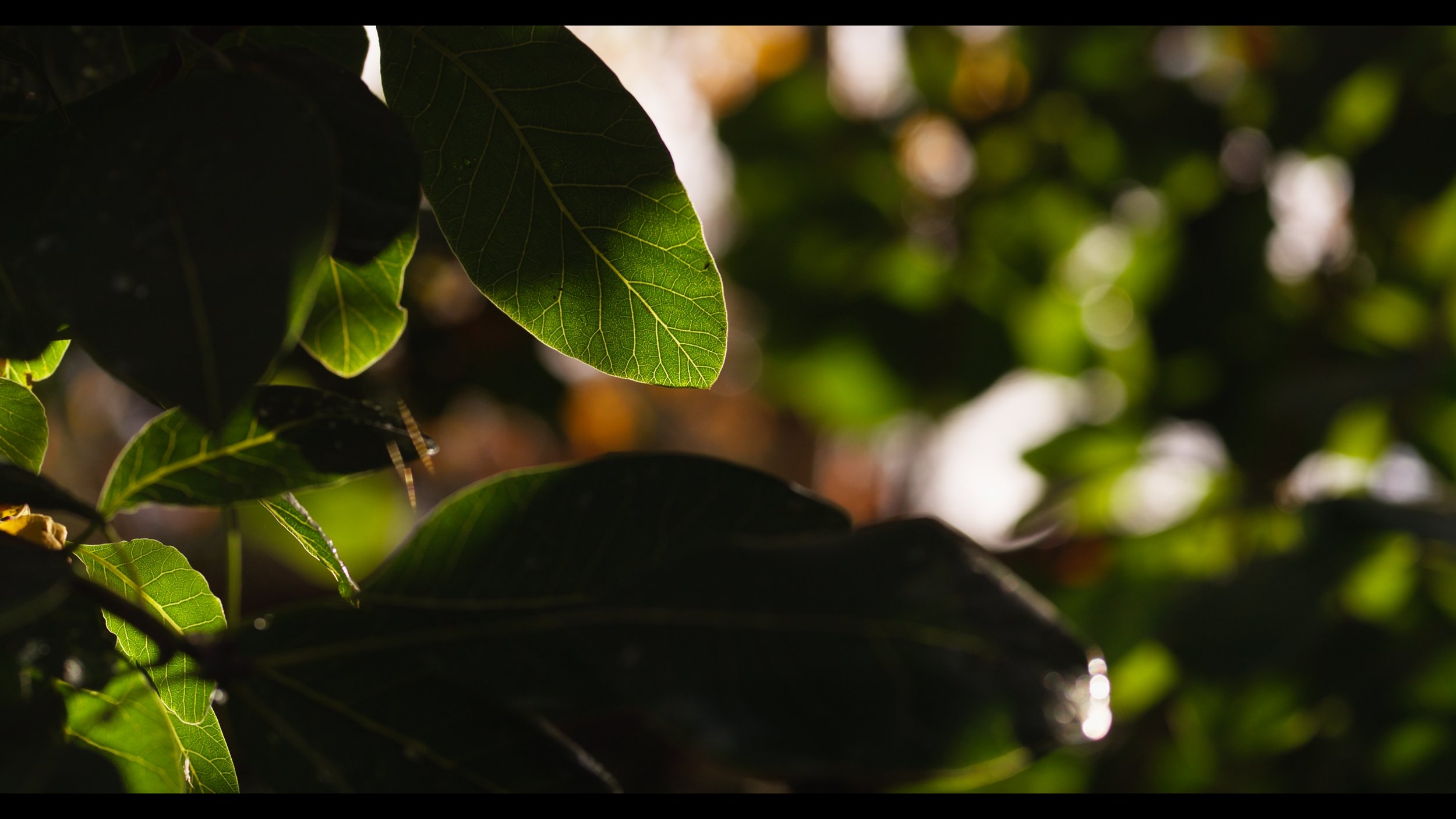
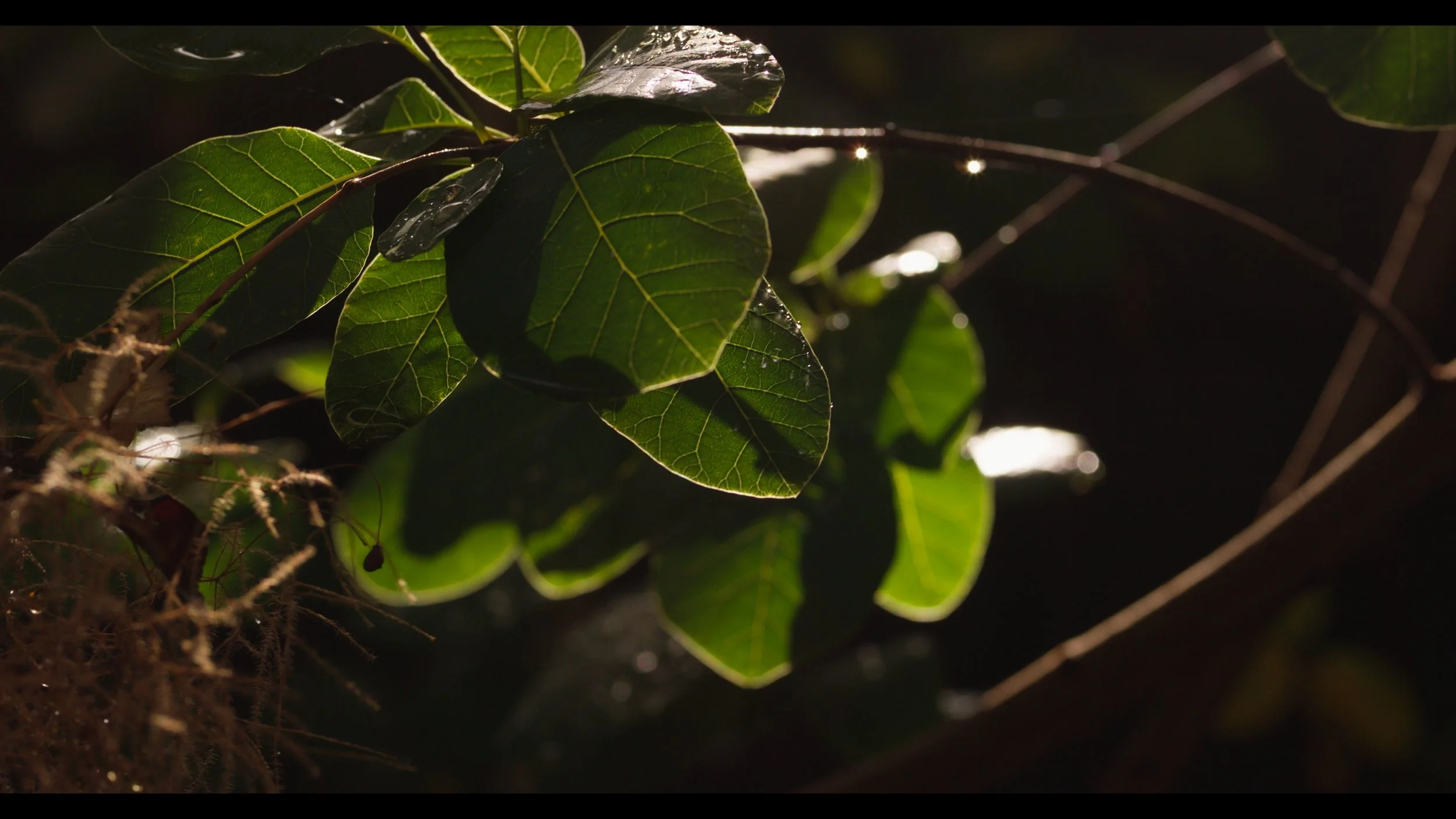
Just a lovely image. In the footage I rolled through from front to back out of focus, the result felt effortless and natural, no obvious breathing, nice Bokeh throughout.

It occurred to me a little later that this would be a good time for a Vespid-Hope comparison.

Same camera, same filter etc, slightly different light and the extra 10mm made handling and focus slightly tougher.

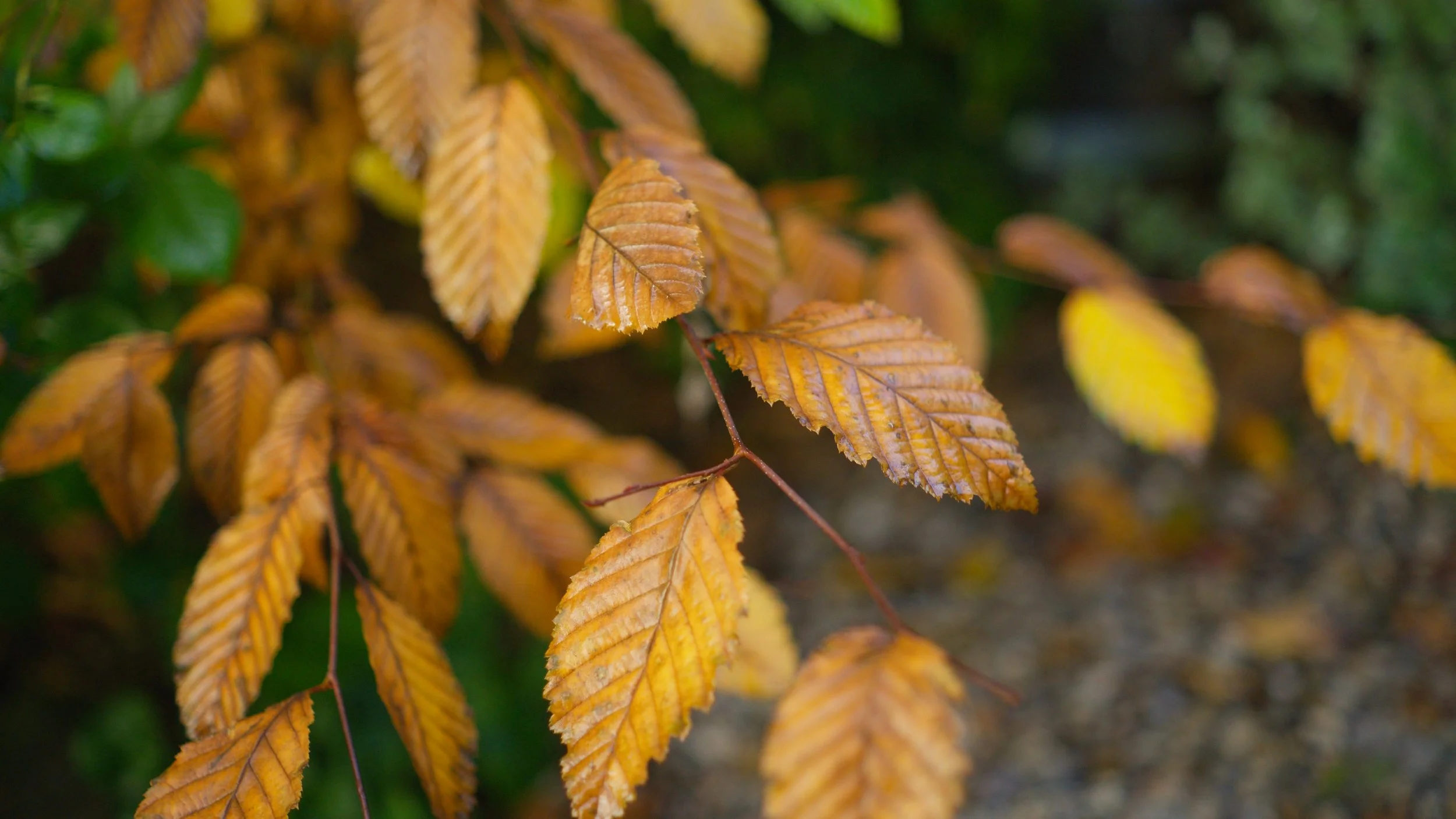
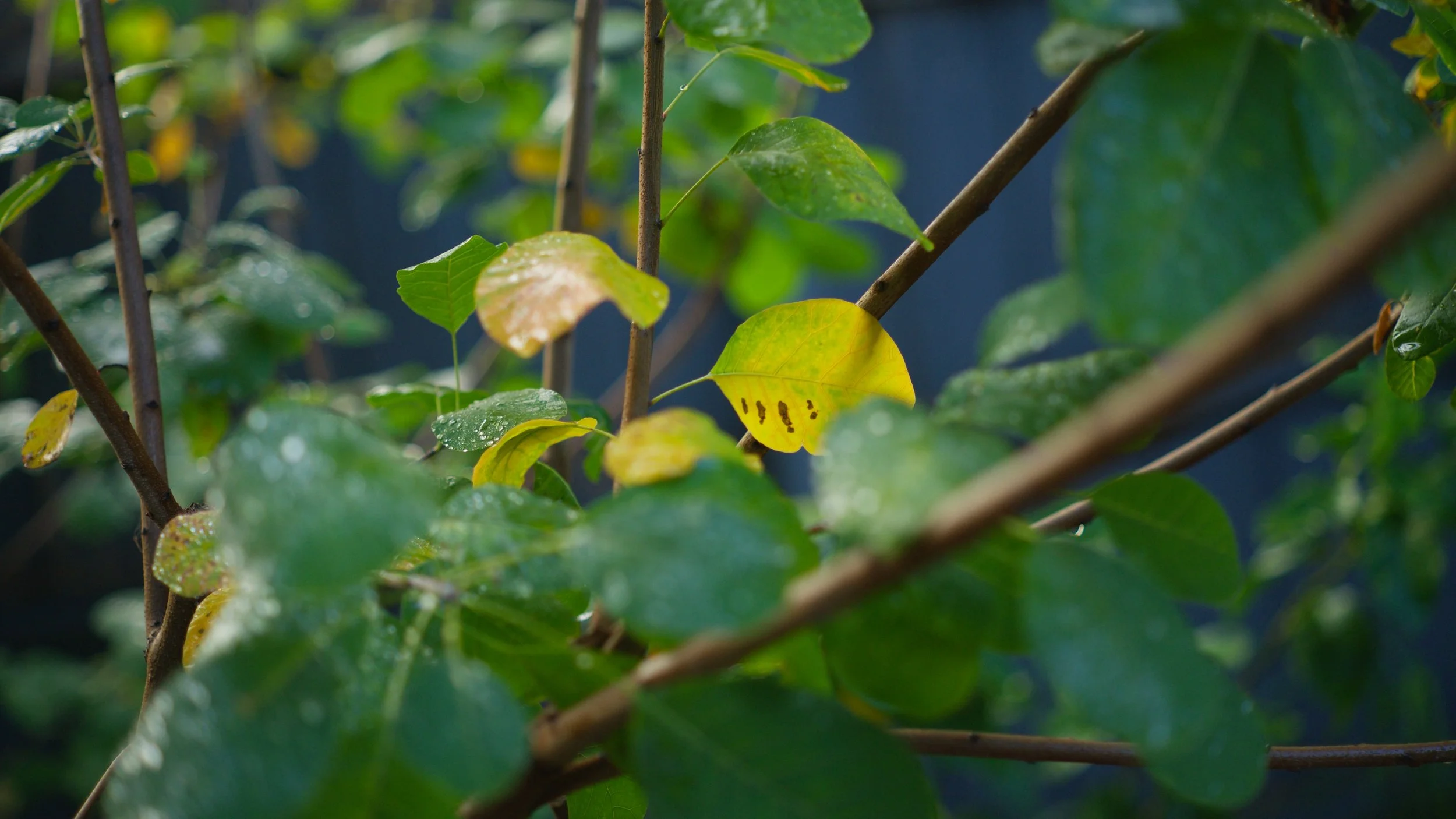
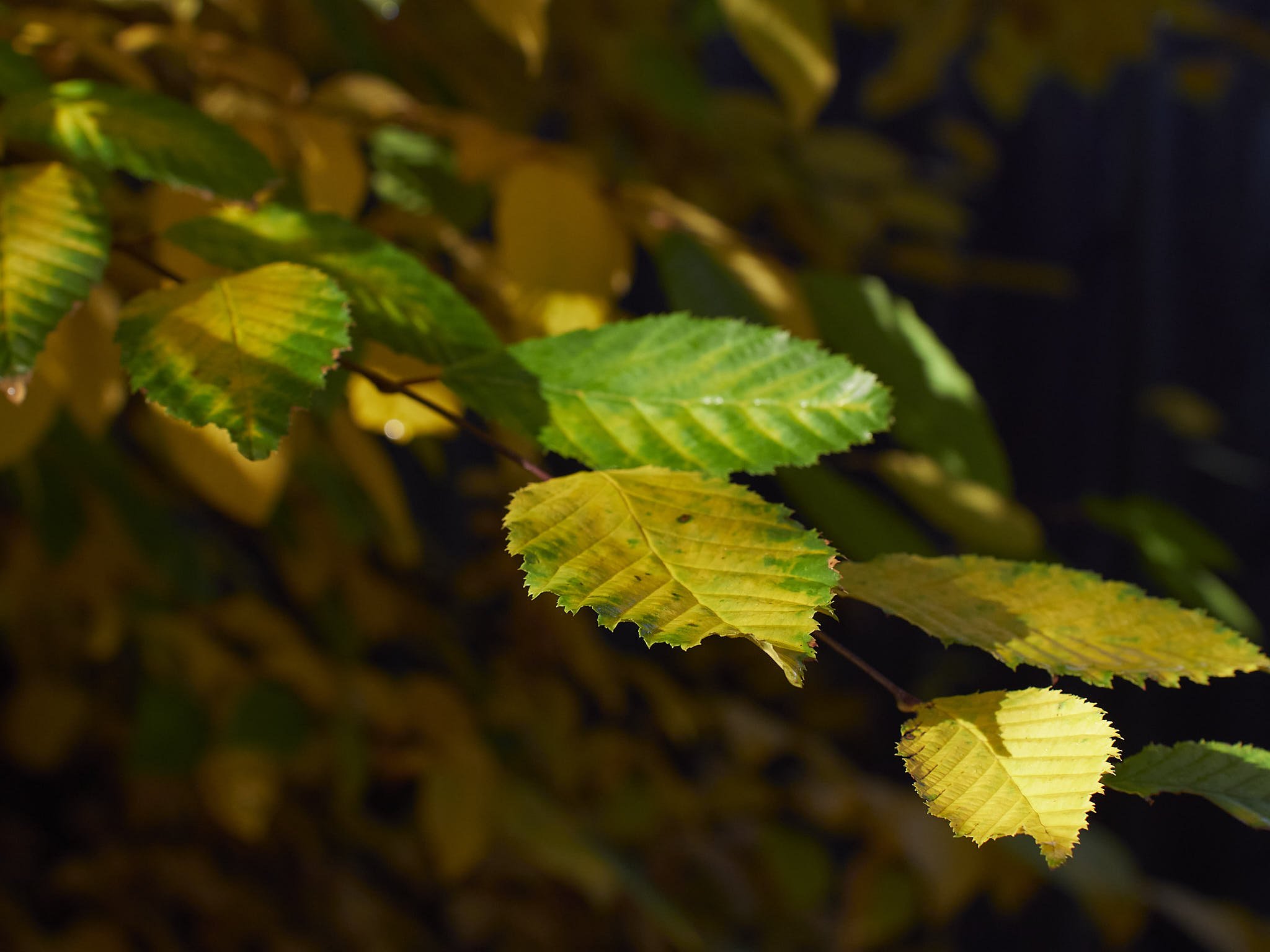
Also very sharp, the duller look may be down to me, not the lens.

Off axis flare on this lens is either absent of there, less of a creative tool than the Vespid.

Ok, not a fair comparison, because the light was harder, but still some gut feelings to go on with.

The Vespid files look more delicate, more open and gentler. Flare was full image area veiling, mostly fixable, but pleasant enough and a tool, not a problem.

The Hope files are less punchy, but again, maybe the harder light and I did apply the same power grade, which may have suited the Vespid more. They are as sharp when the comparison was fair. I found the Hope harder to work with, but I was rushed, it is longer, the light was harder and close focus was also longer.

In fairness to the Vespid though, I had never used it before, so it feeling very natural is a good sign. I was using the GH5s set up for tripod work, not hand holding (my G9II was not rigged for B-Raw), with a cheap slightly loose adapter, but I still found the whole experience pleasant.

The Hope, given a fair chance, is capable of producing quality enough to match Vespid footage. The difference in cameras will likely be more telling. The Hope 25 on the G9II and Vespid as a 40 on my S5 will probably handle similarly, the Neewer filter was excellent except for possibly some nasty purple flare I noticed when shift location on the Hope.

The Vespid is also delicately sharp enough to slot in well with the Sirui anamorphics.

The only way to make any sort of determination about a lens is to use it for a while, so time to do just that.

I also got a chance to shoot some stills with the Vespid on a G9.1. A 6k test I guess. I missed focus a few times, but mostly got what I expected.

Love this lens.

Might get another when the dust settles, probably a 25 (giving me a total range of 25-80 across all formats).

It's Over I Think.

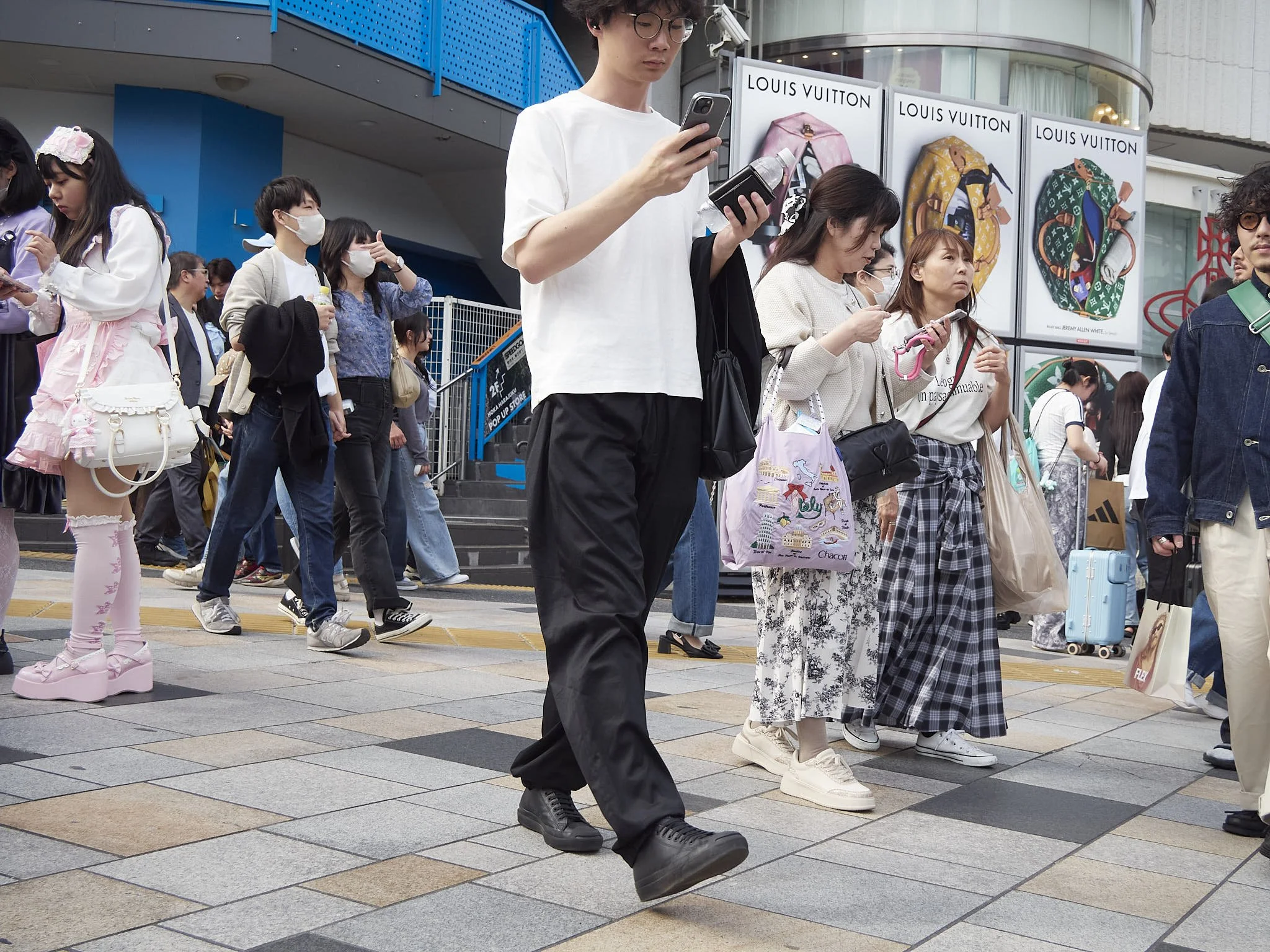
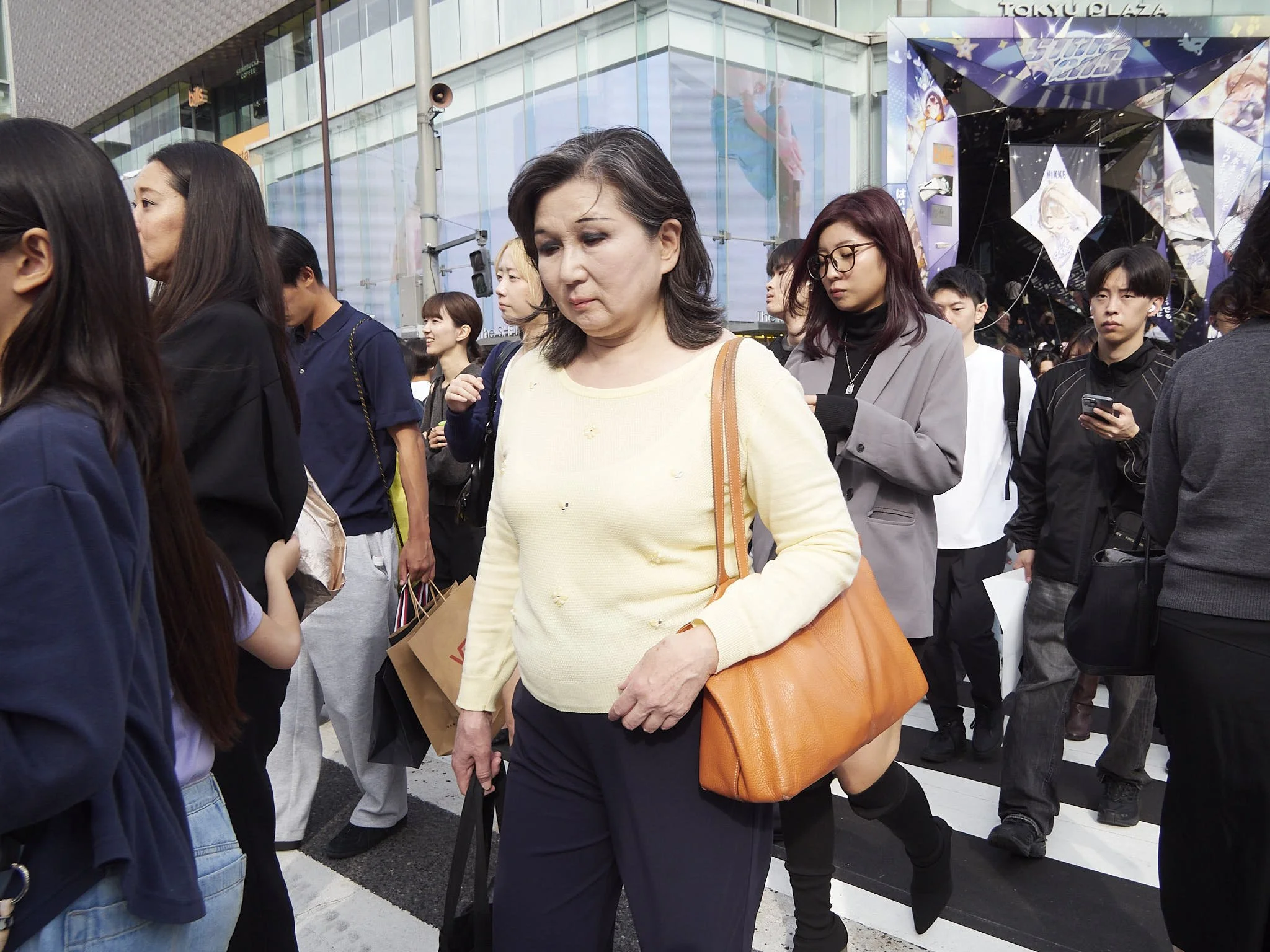
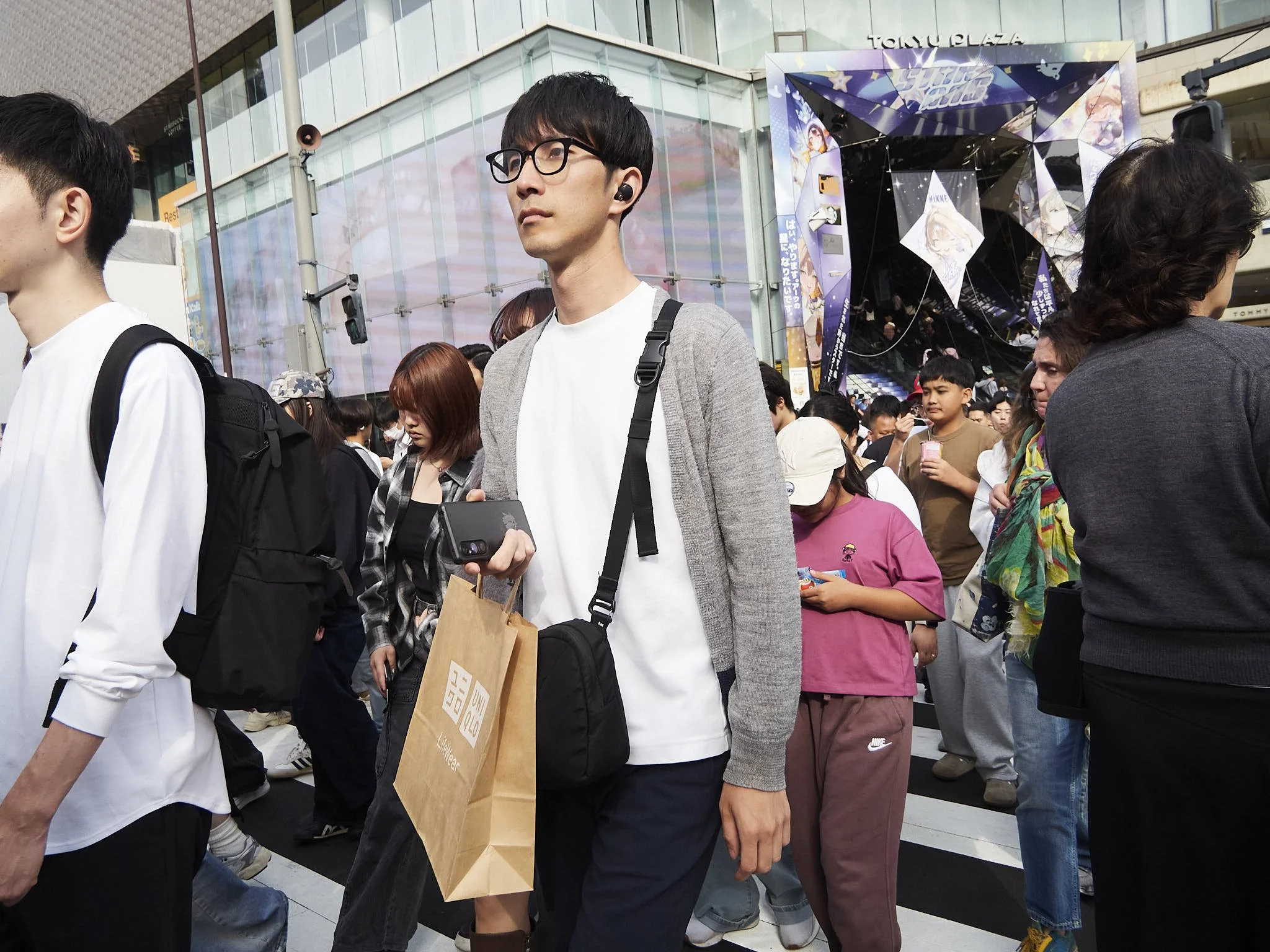
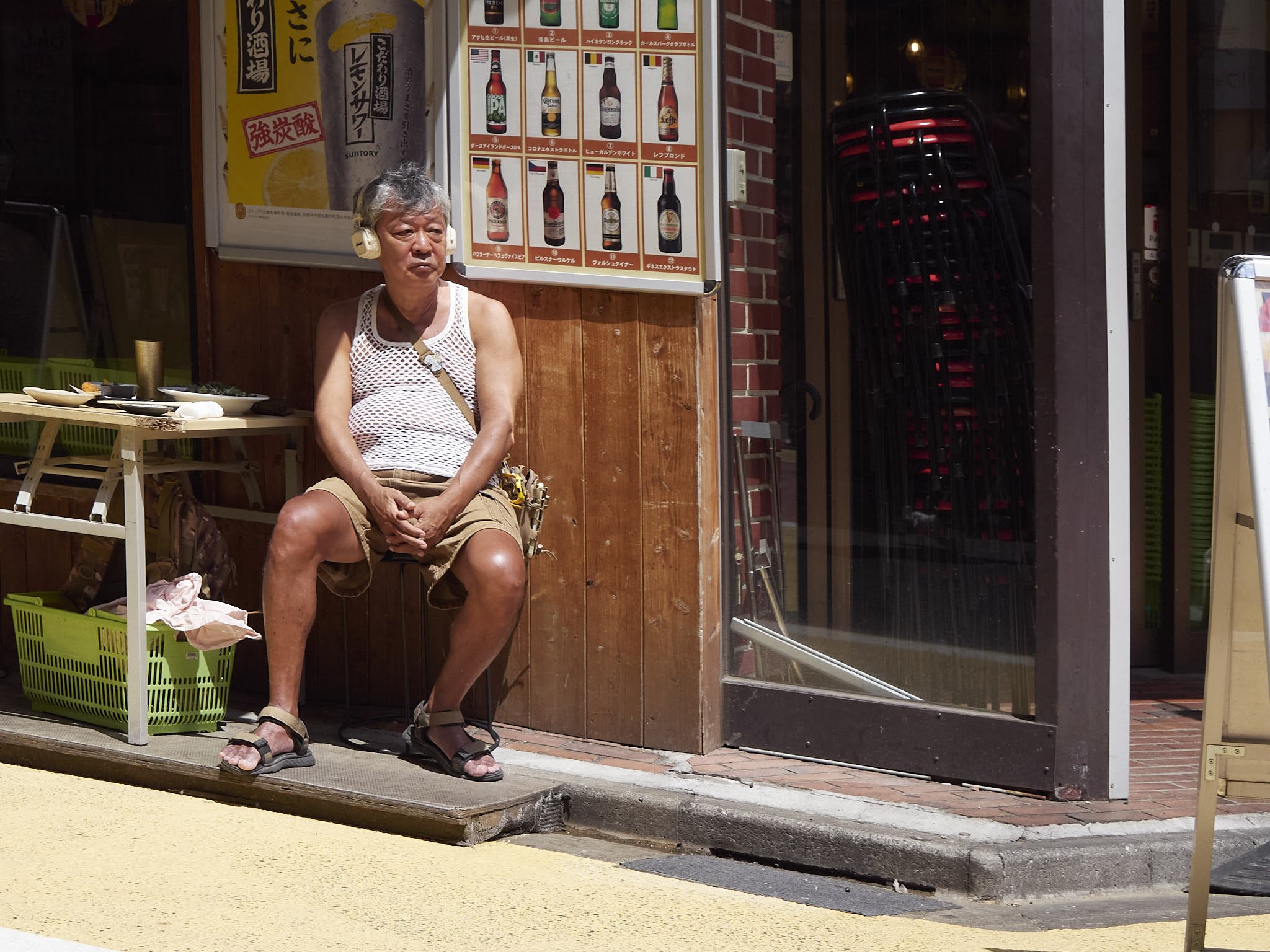
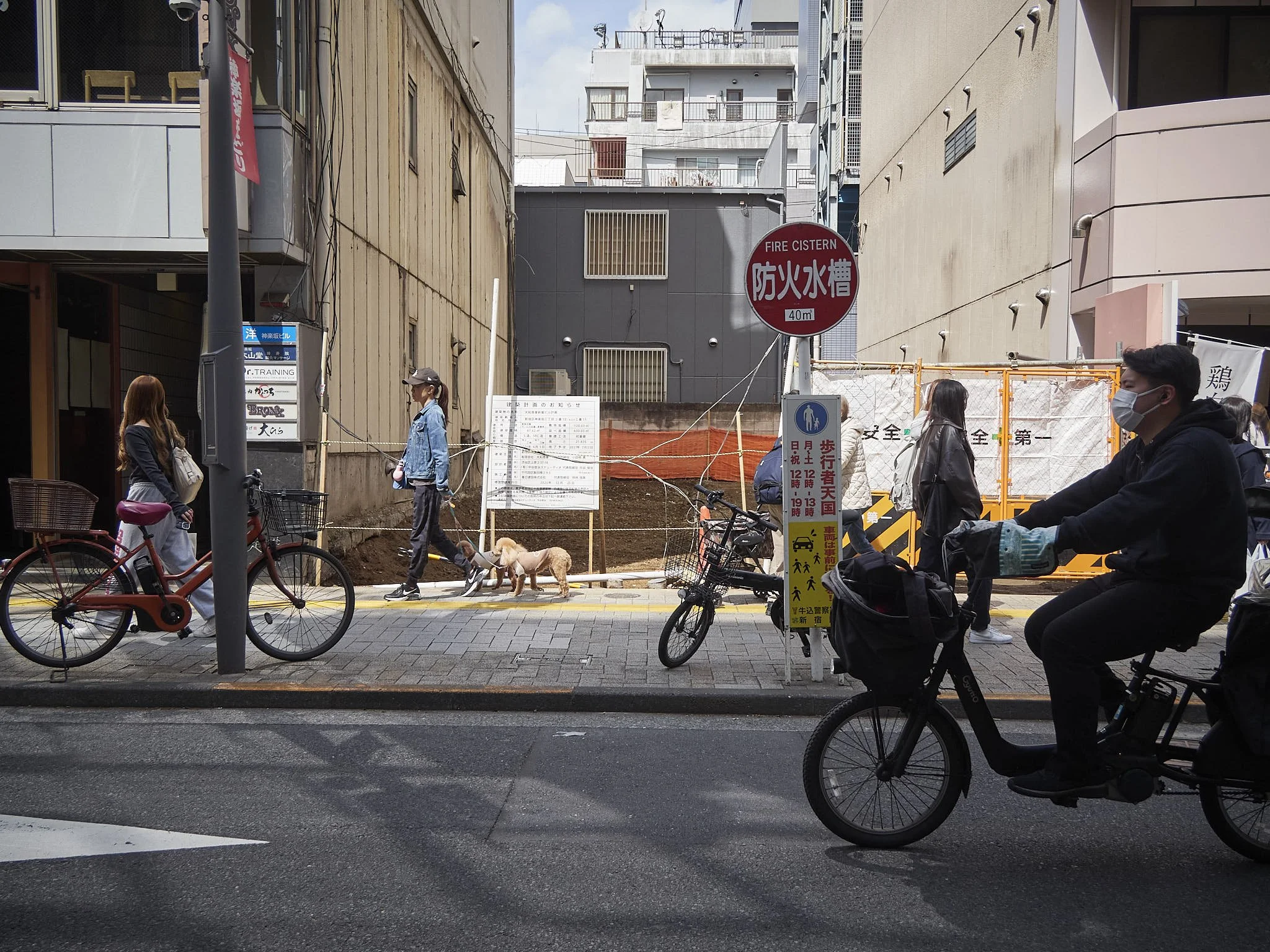
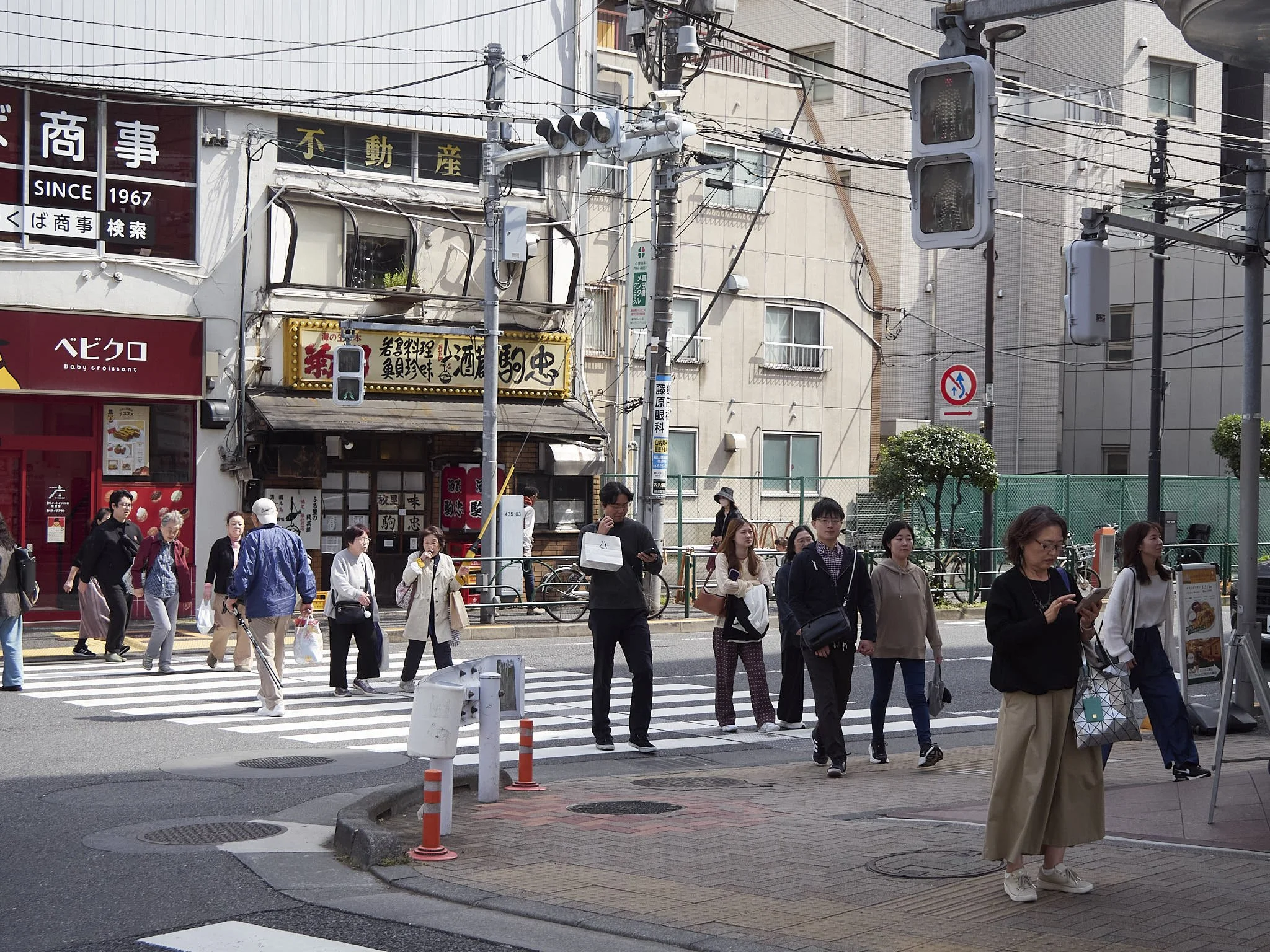
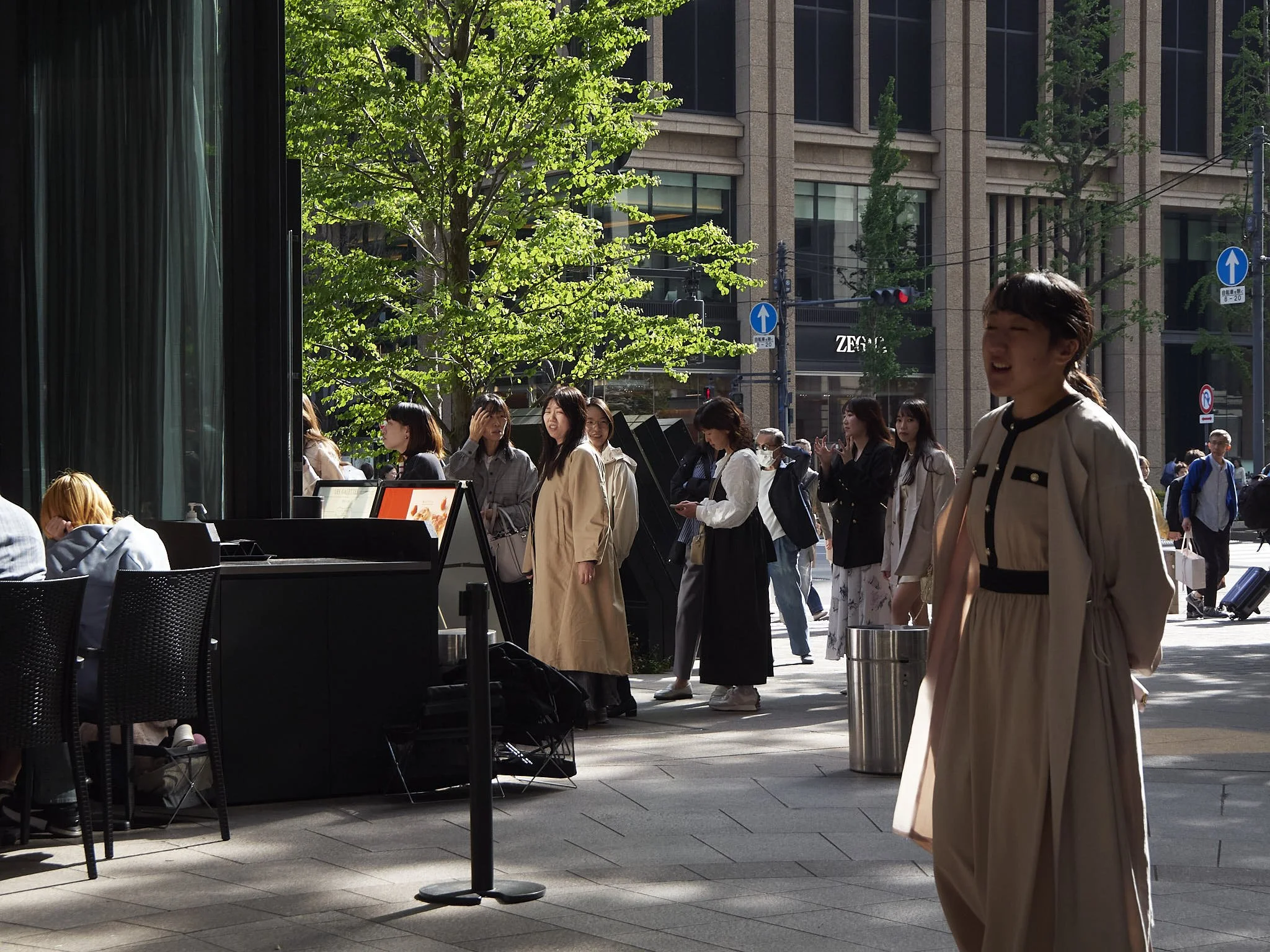
No more street shooting for me, well no obsession for it, maybe just a little as it arises.

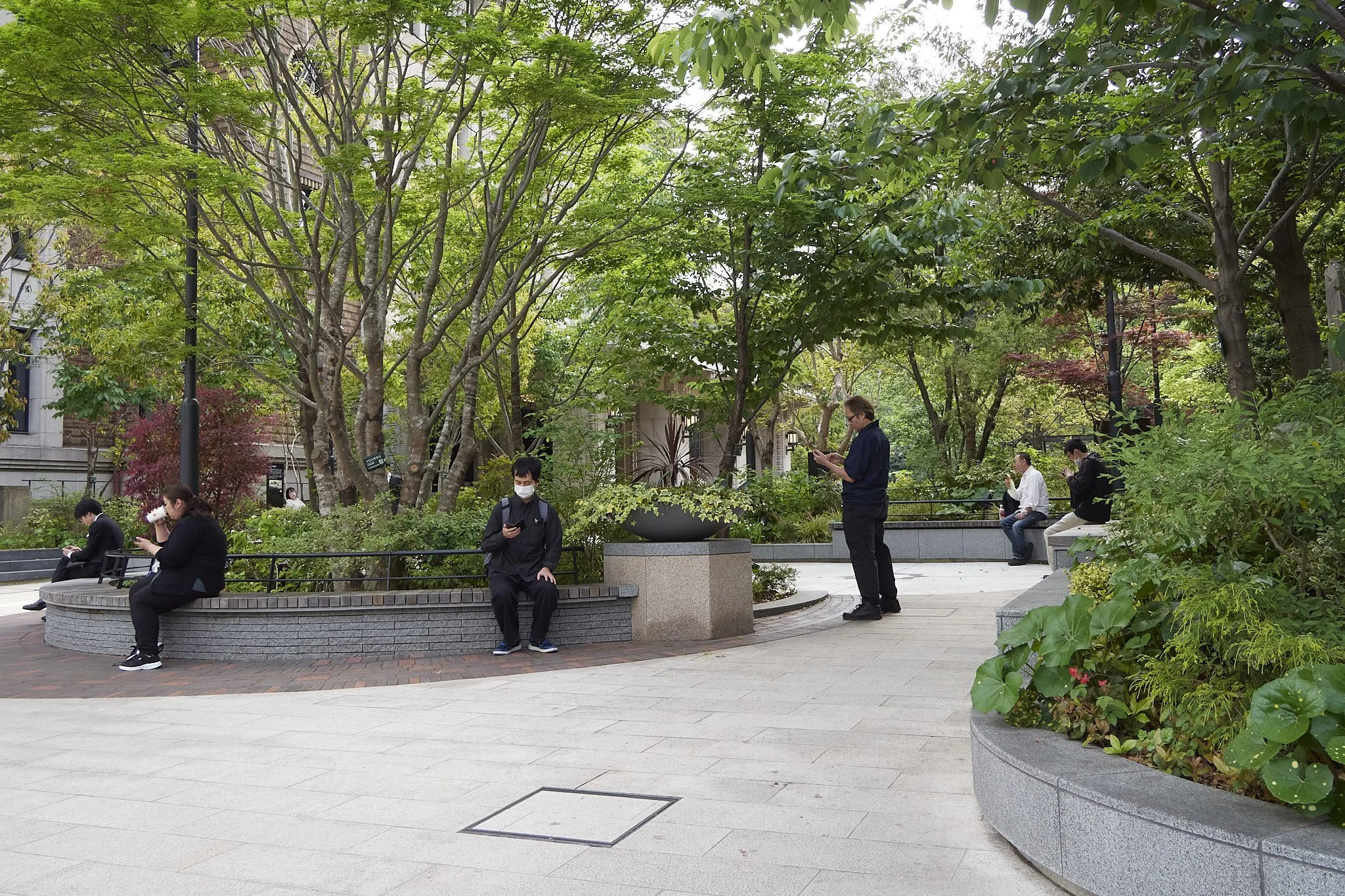
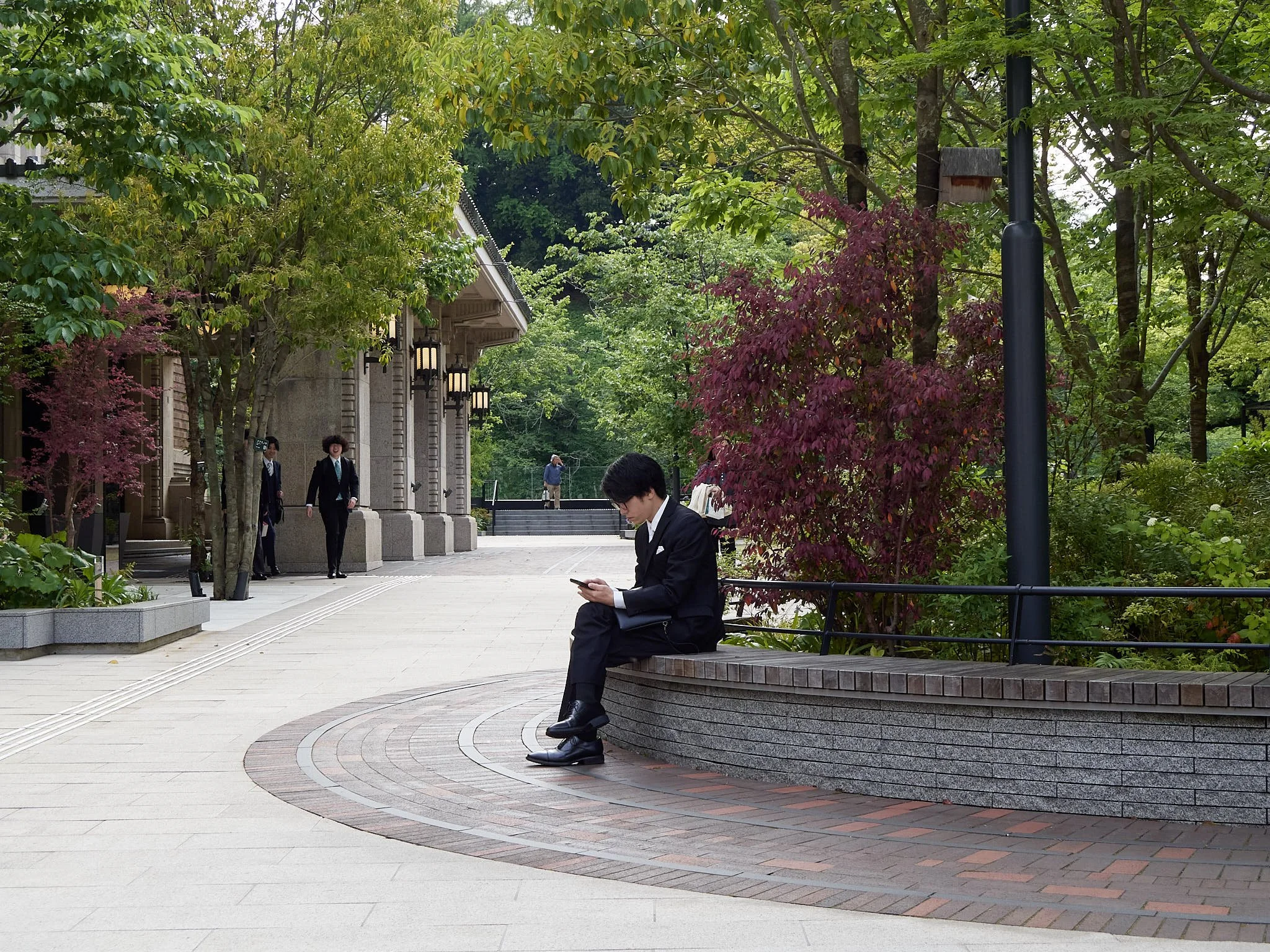
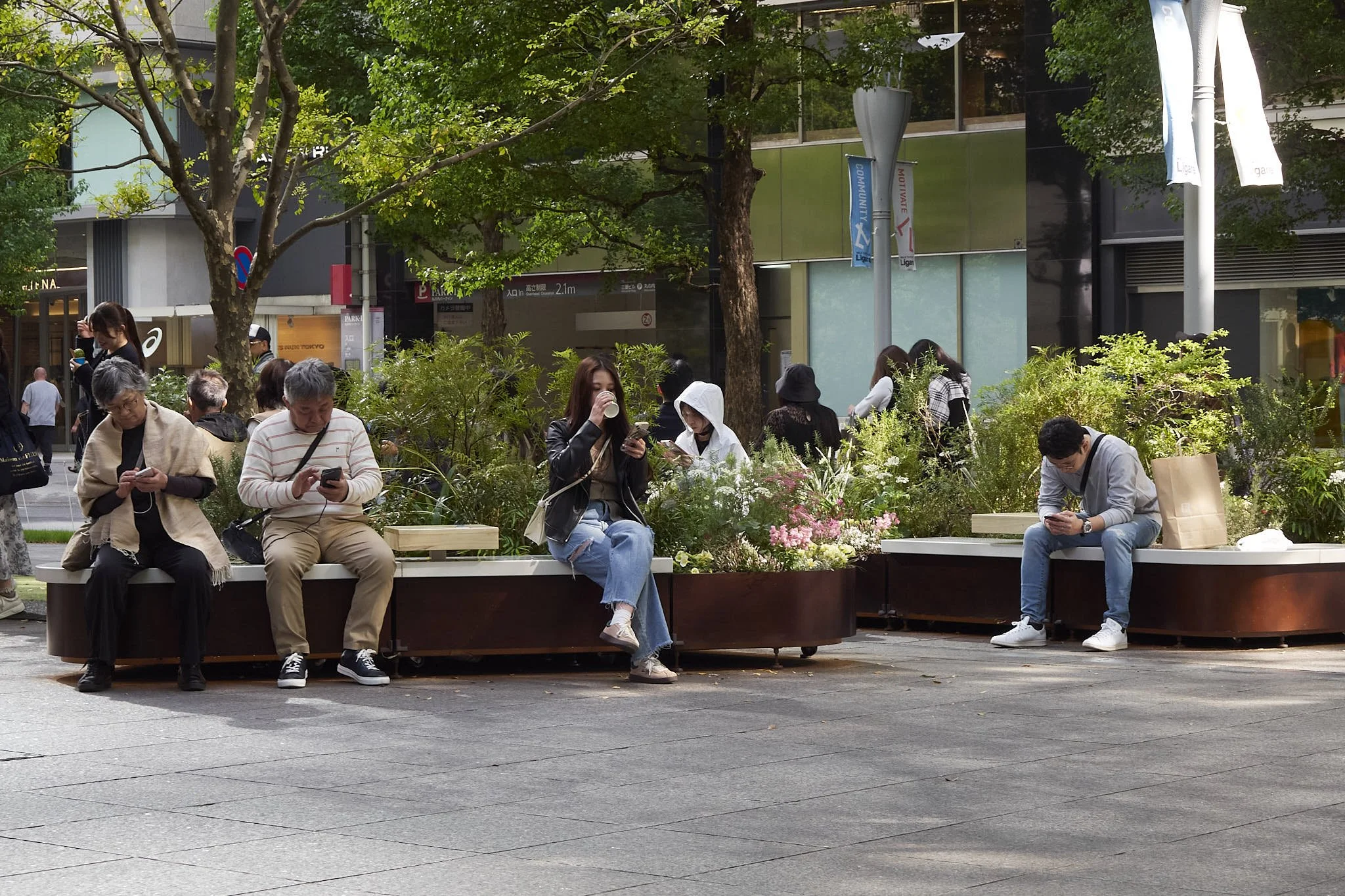
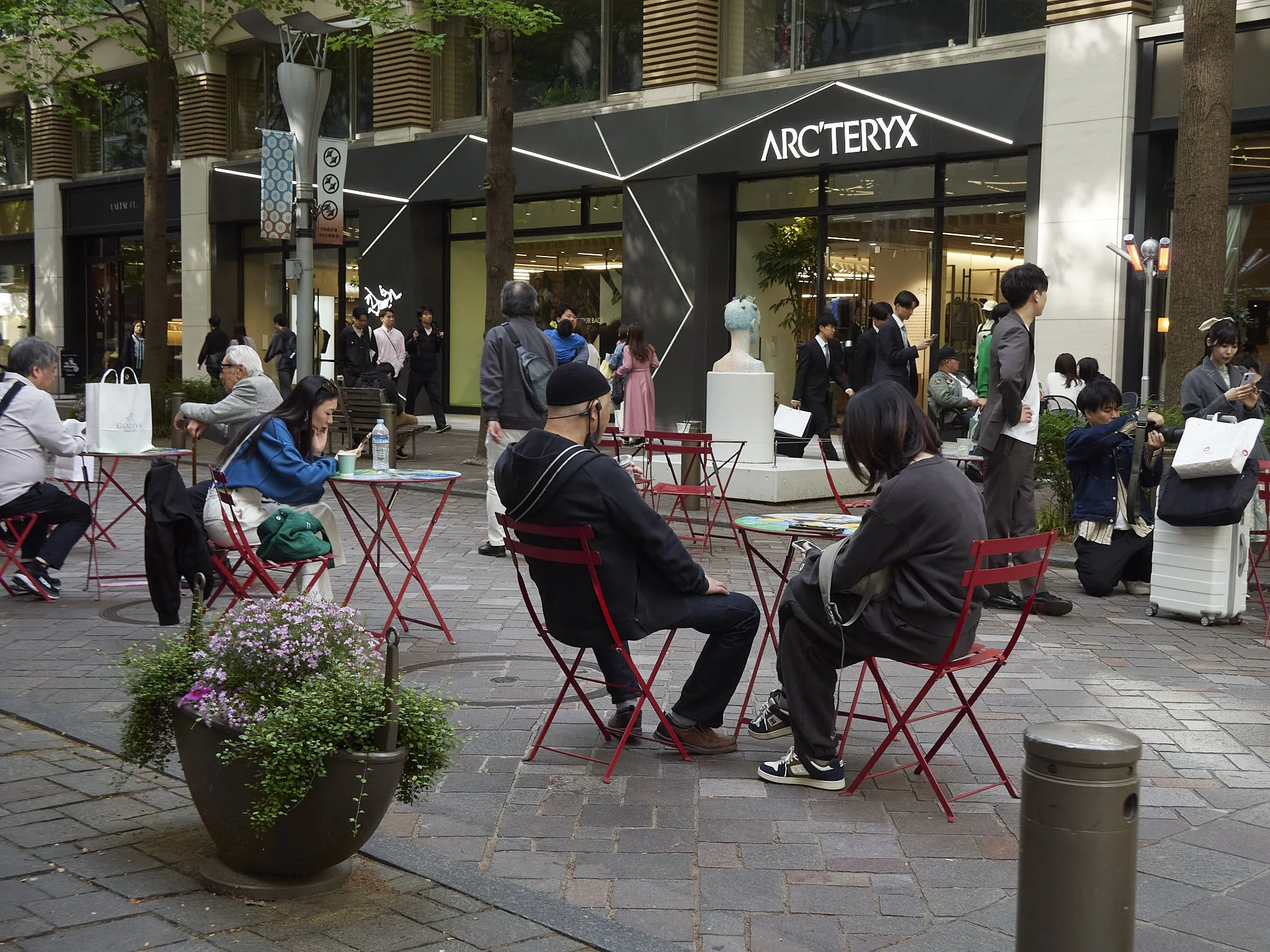
Another issue is the mobile phone “shape”, basically changing street photography from capturing life to capturing our screen obsession.

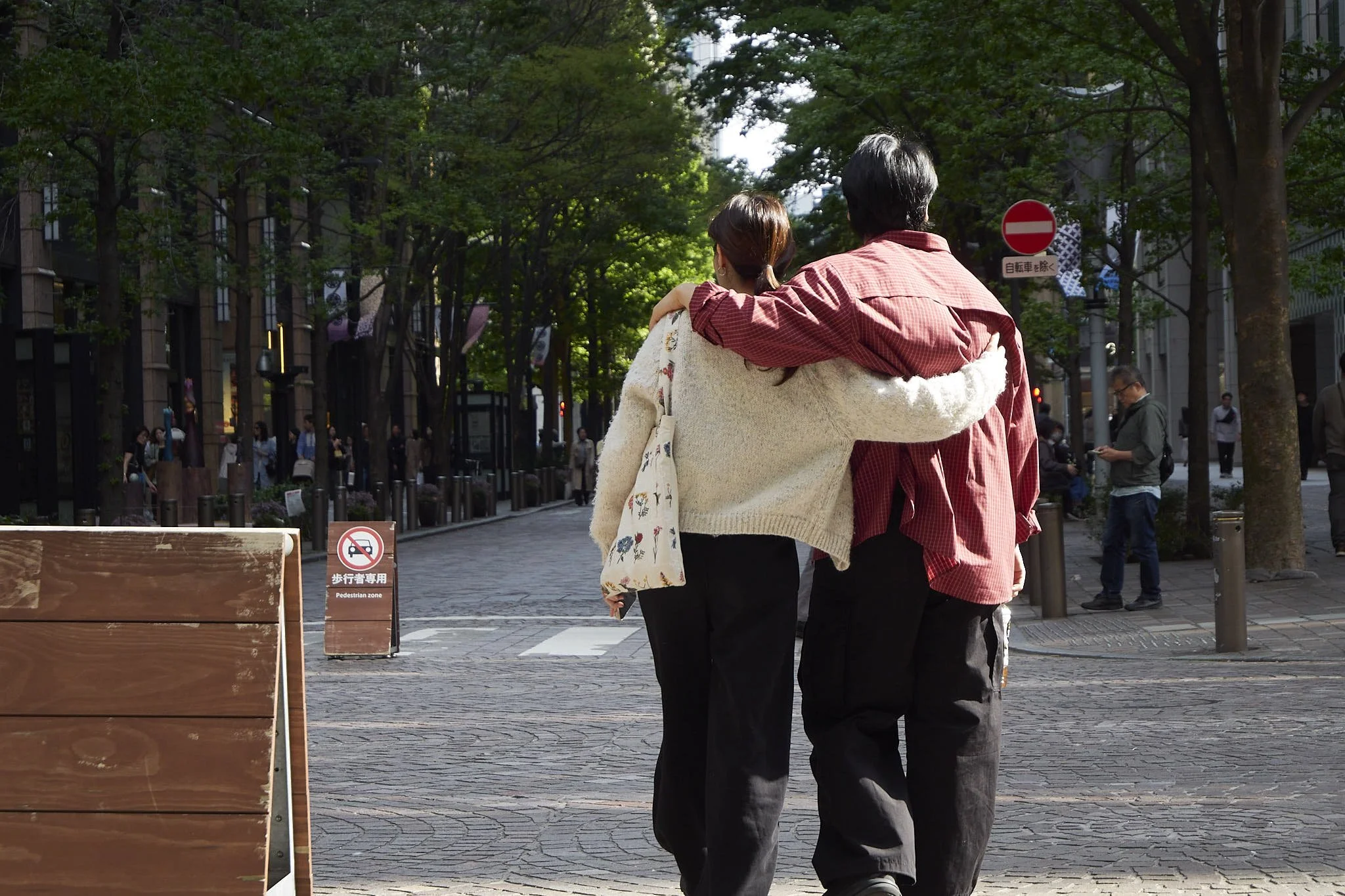
People as more of the scenery are more appealing.

Or just none at all.

Japan Kit, After Action Report

So, what did I actually use on the trip?

It looks like my days of street shooting excitement are over (more on that to come), but I did do some this trip never the less.

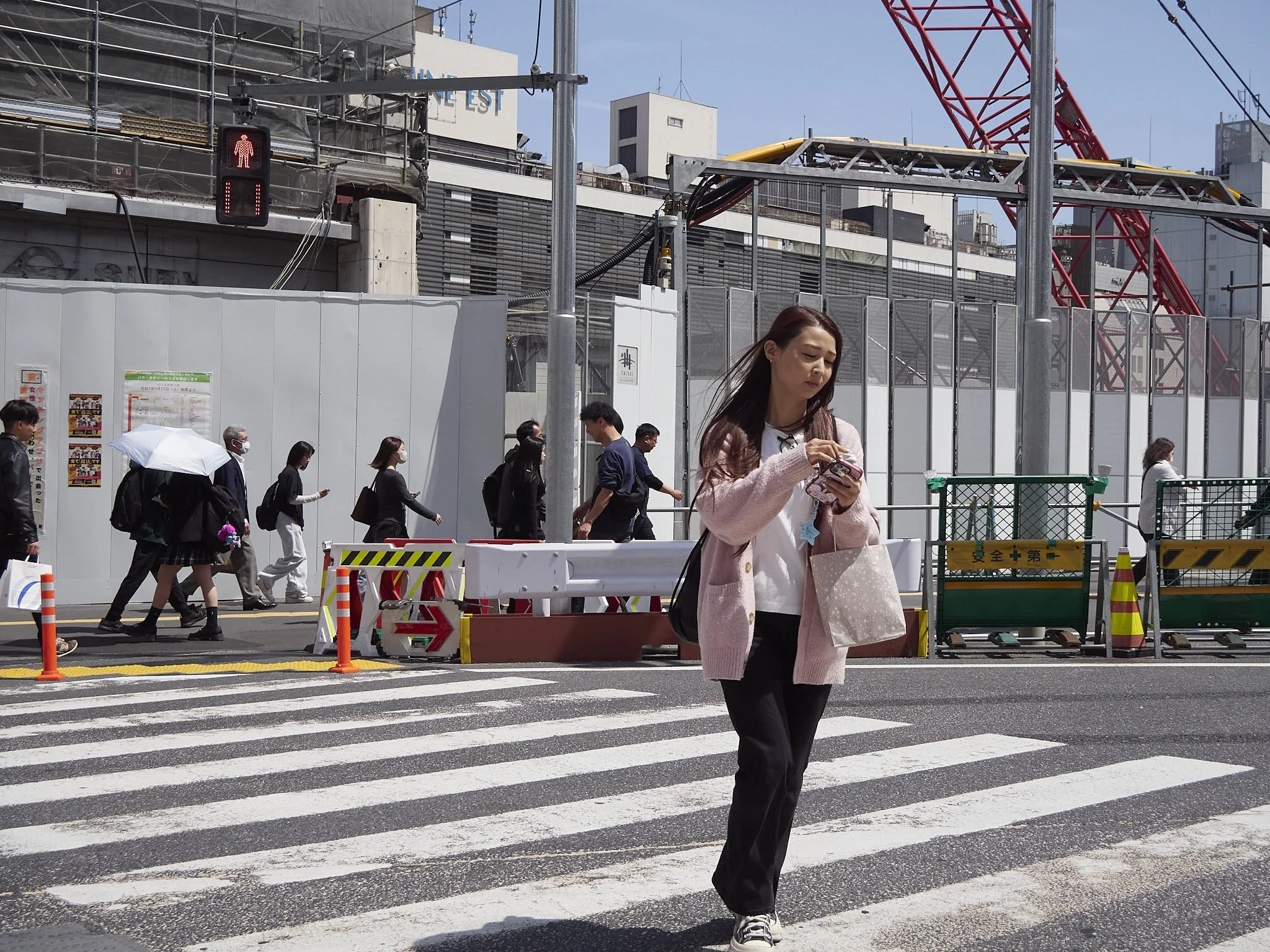
My interest has shifted to places people frequent, but sans people it seems. part f this is a consciousness that people are more aware and wary of a middle aged dude with a camera and I am ok with that.

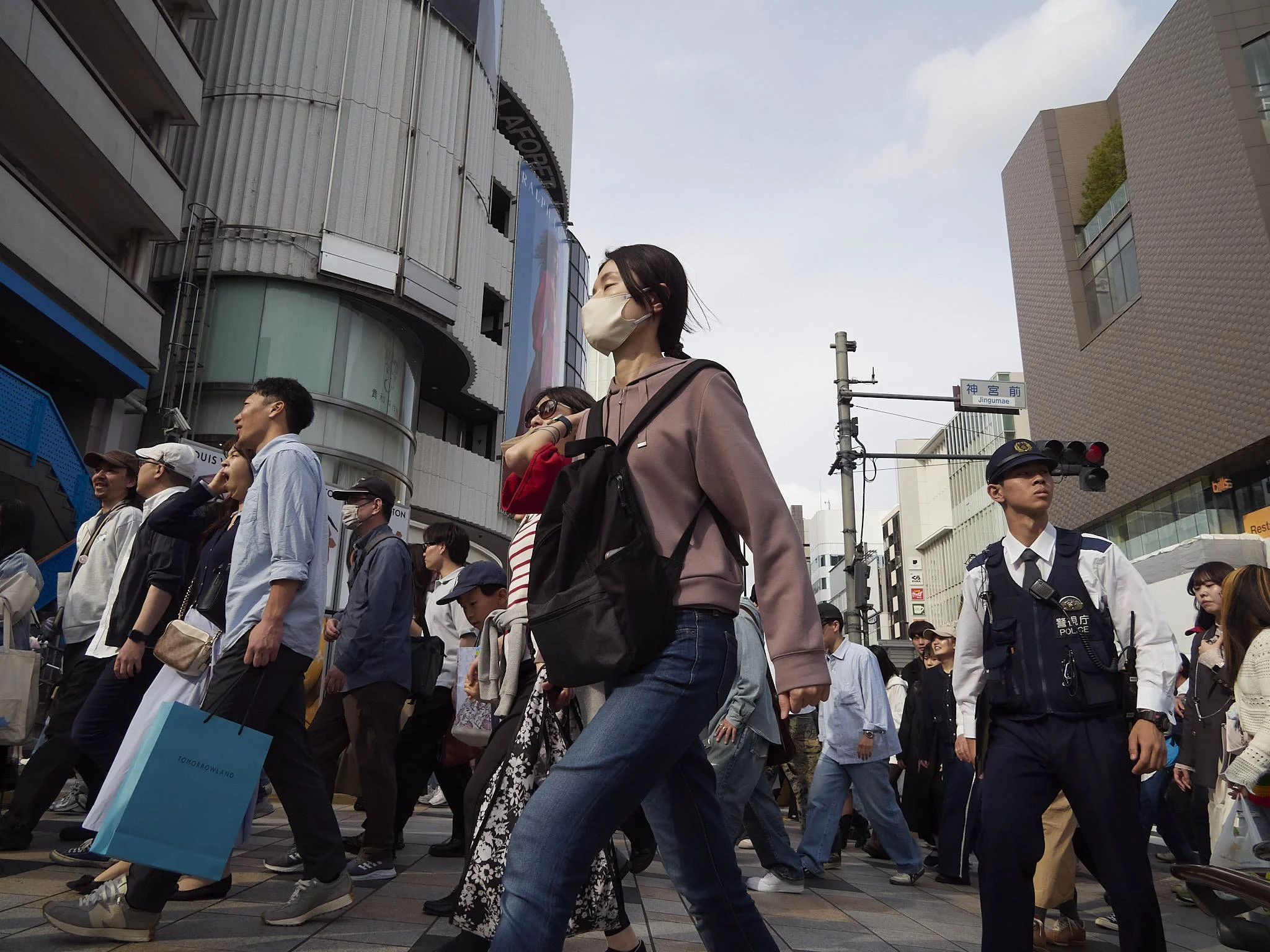
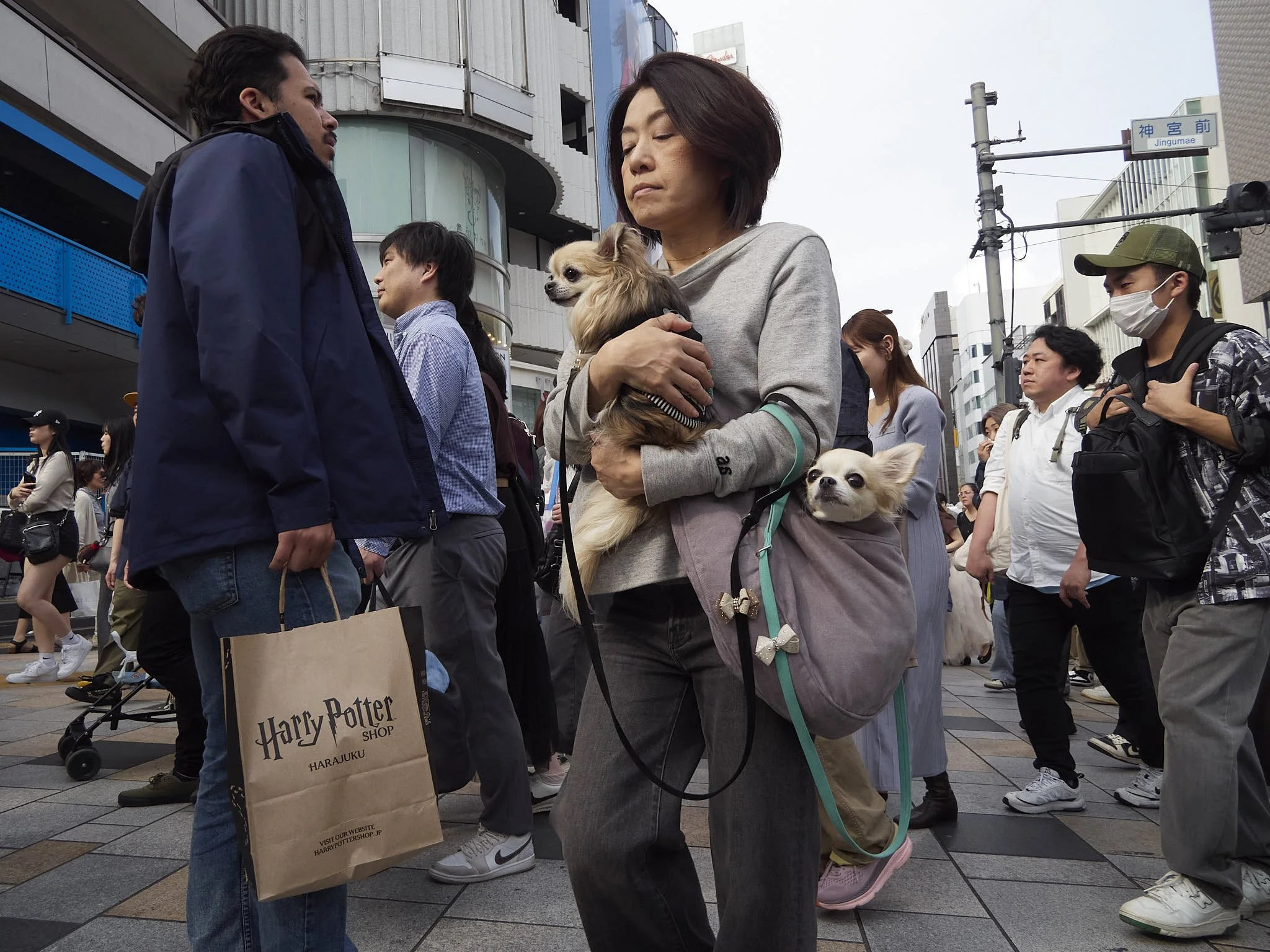
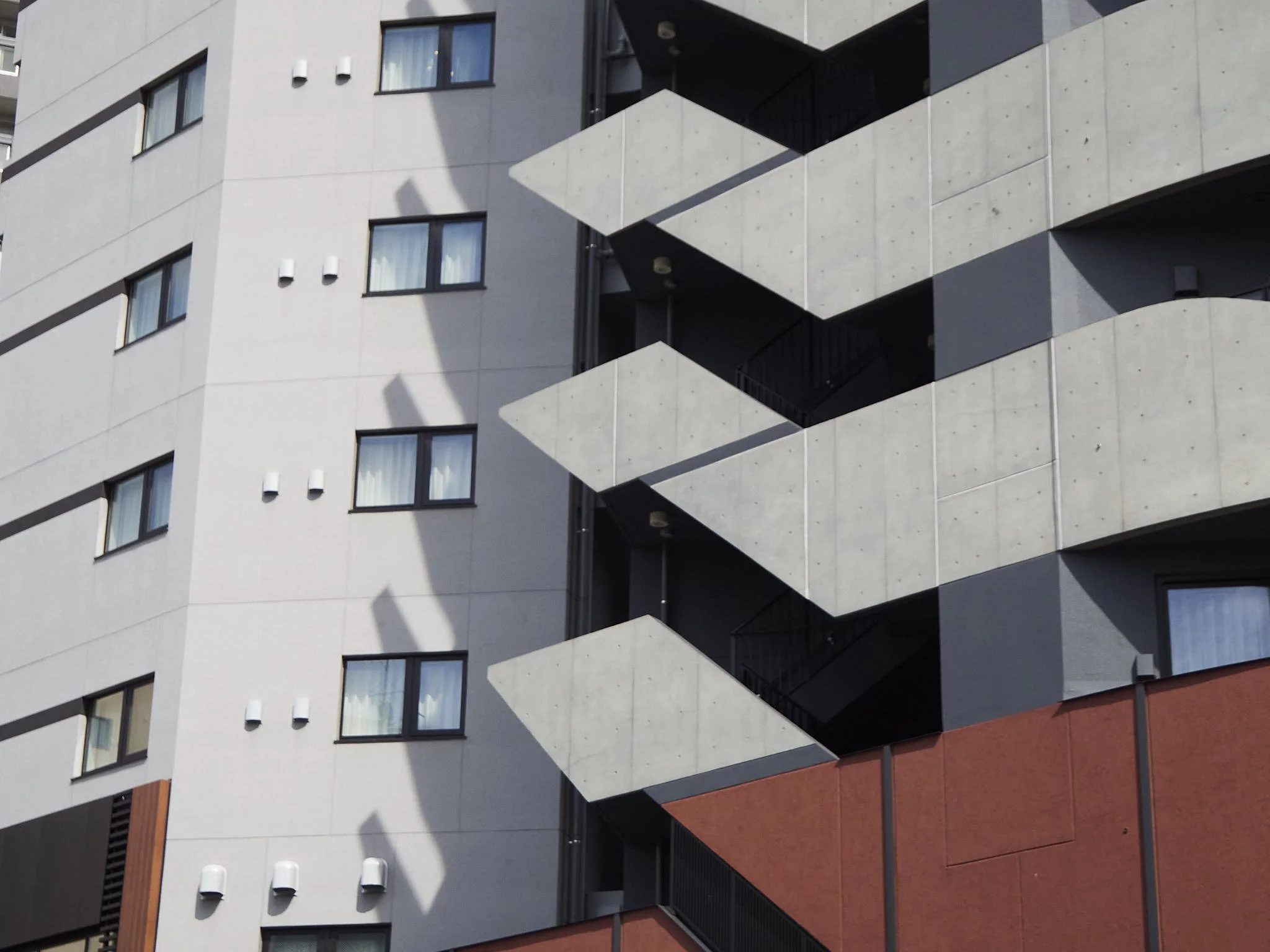
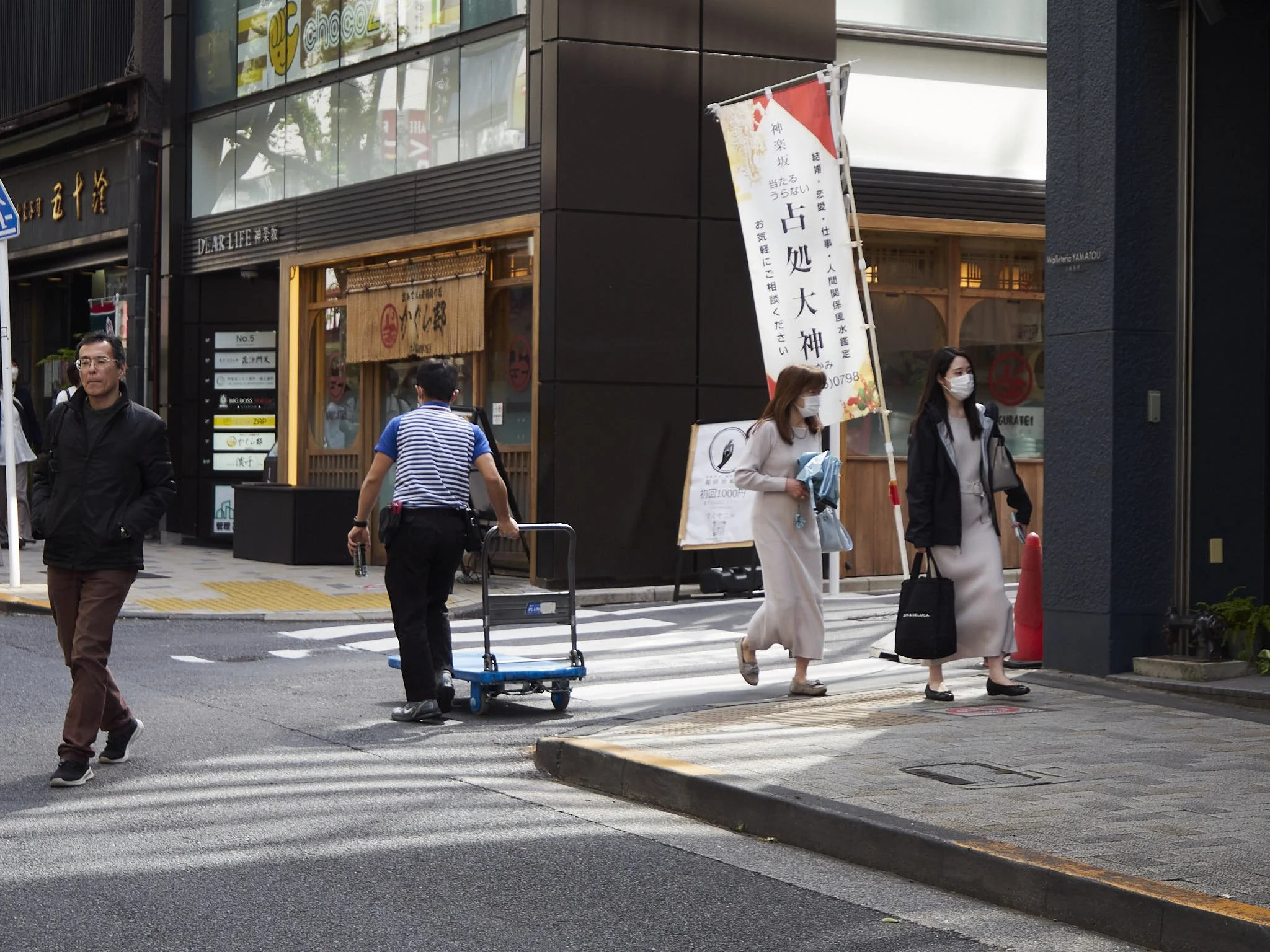
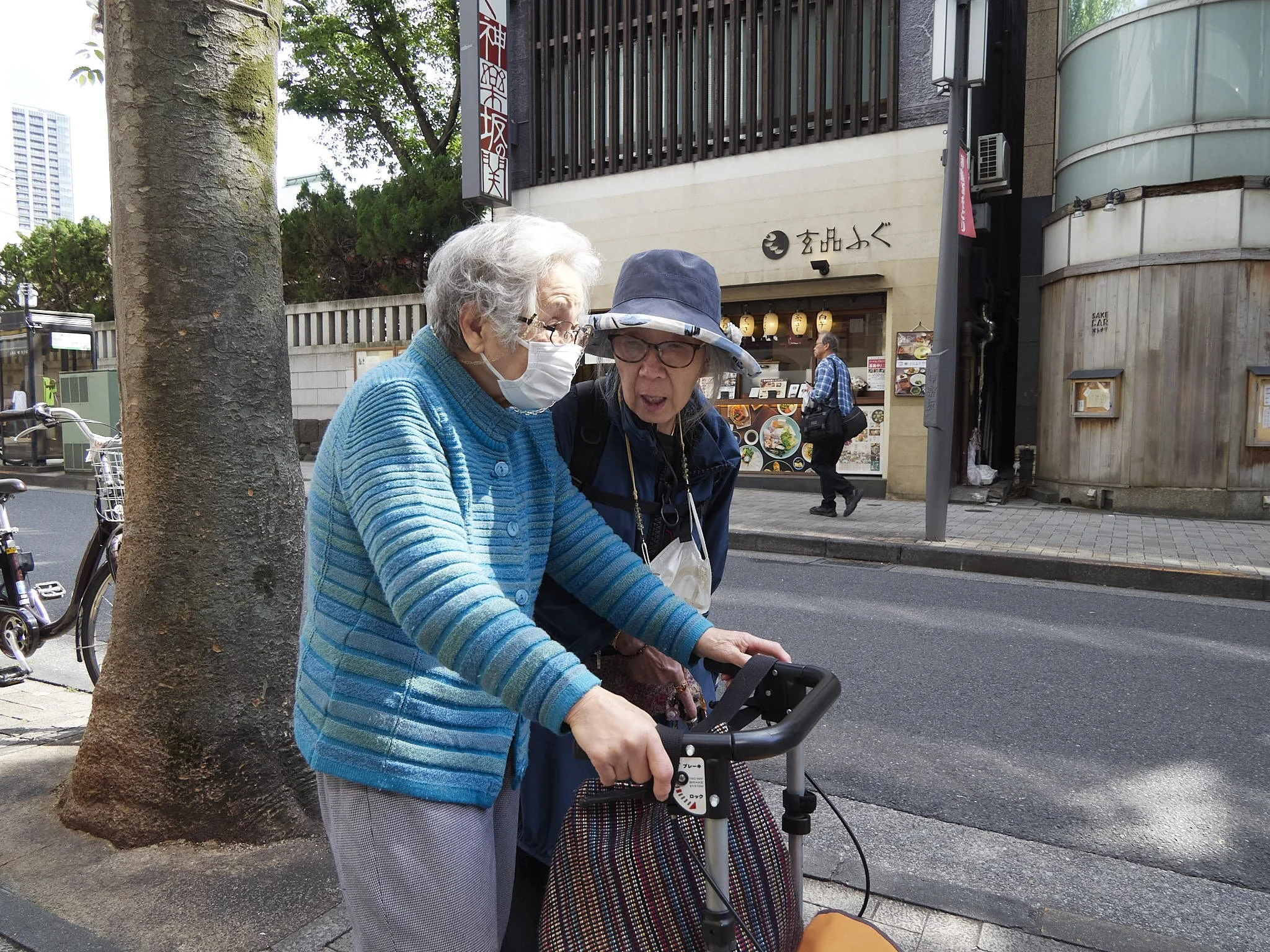
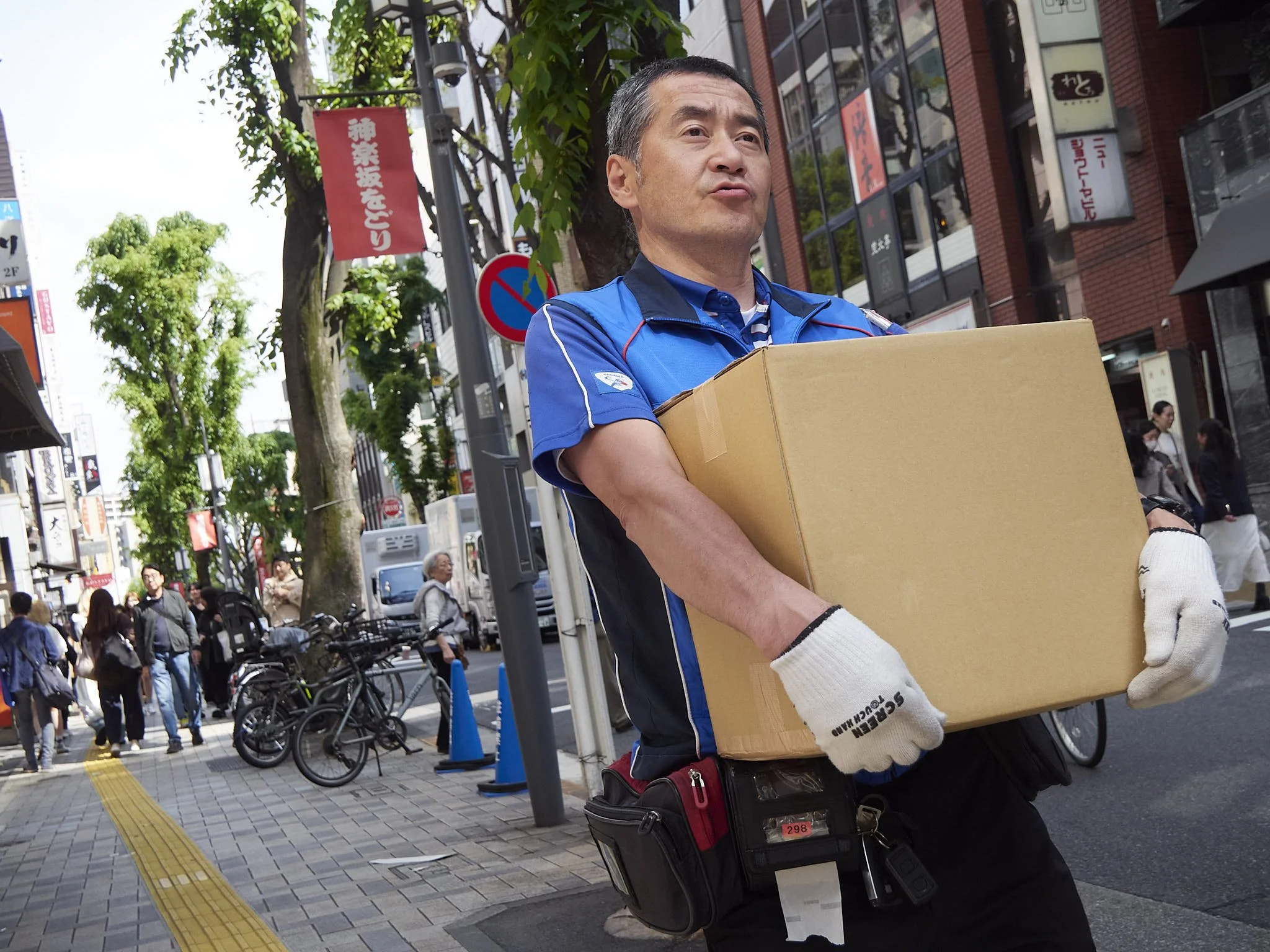
Tokyo is tall and busy, that sums it up decently, tall and busy. Height needs a wide zoom, busy needed some reach to compress and tidy up compositions, the “everyday street corner” habit I developed needed something in the middle, so the 12-60 lit lens did most days.

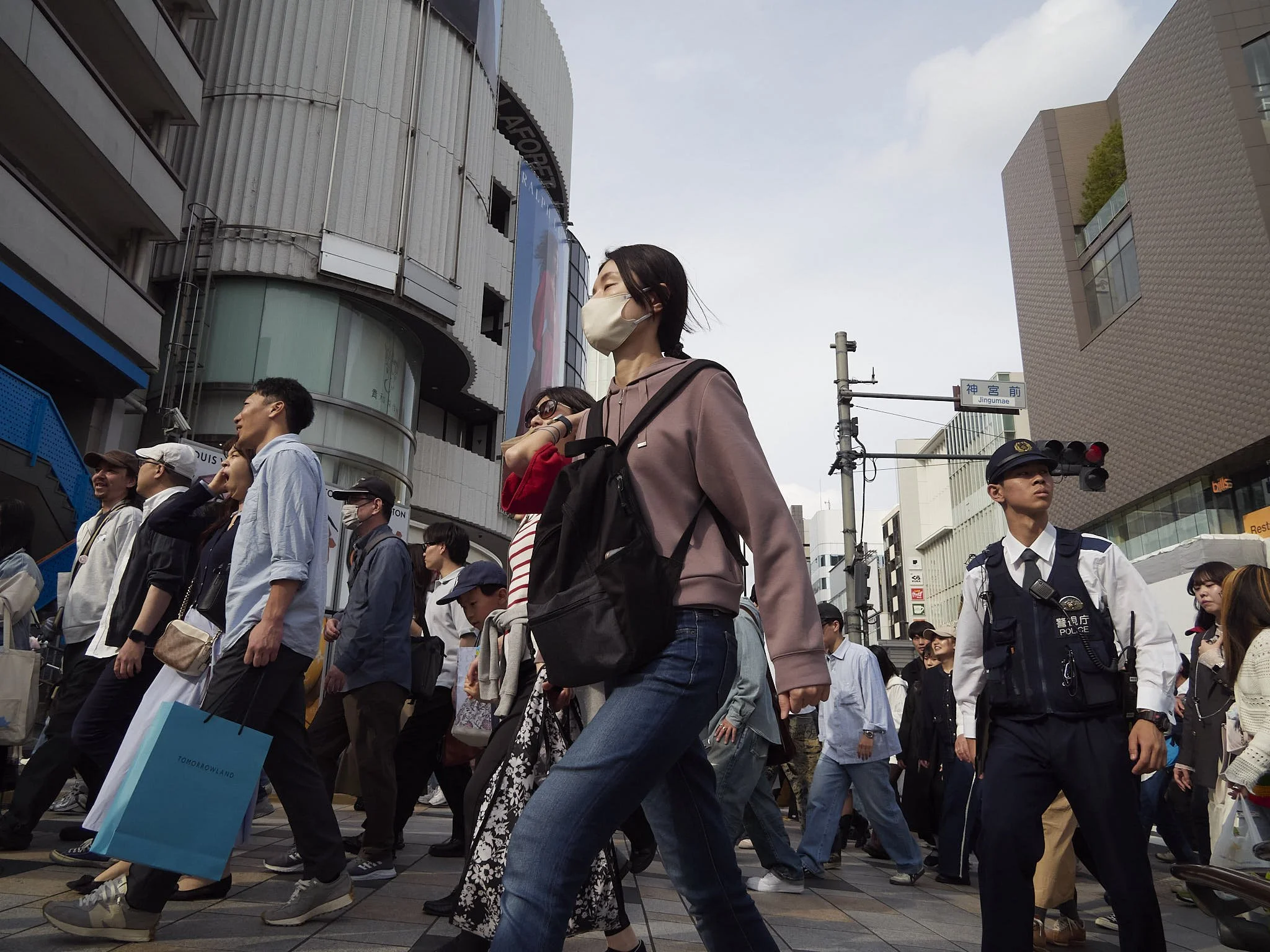
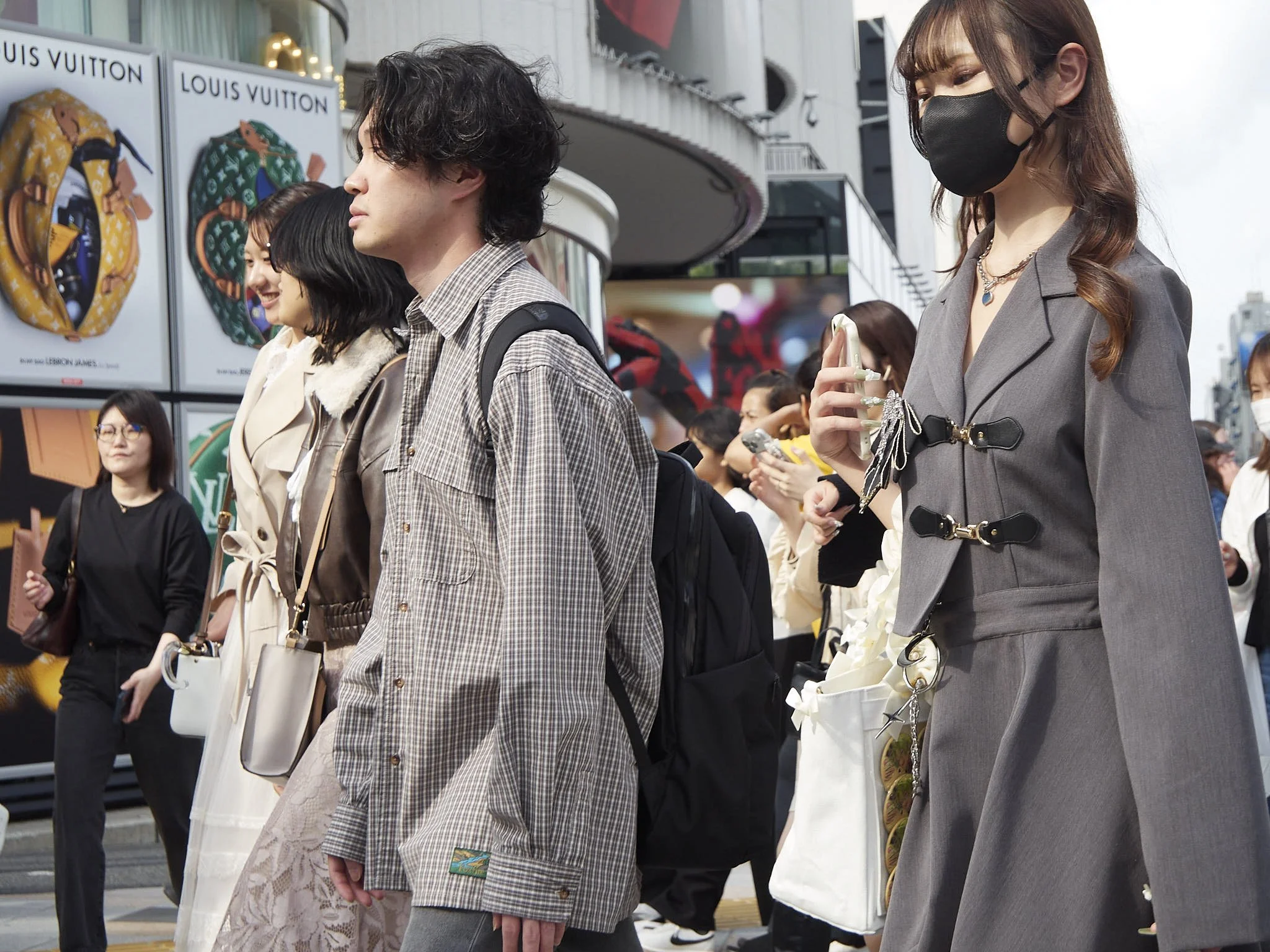
Harajuku

I did try to use the primes, but unless I needed the speed, the 12-60 kit was plenty. Set to AF, central focus point (notched one box down to catch more, at f5.6. I did not miss many and at that aperture, Bokeh was irrelevant.

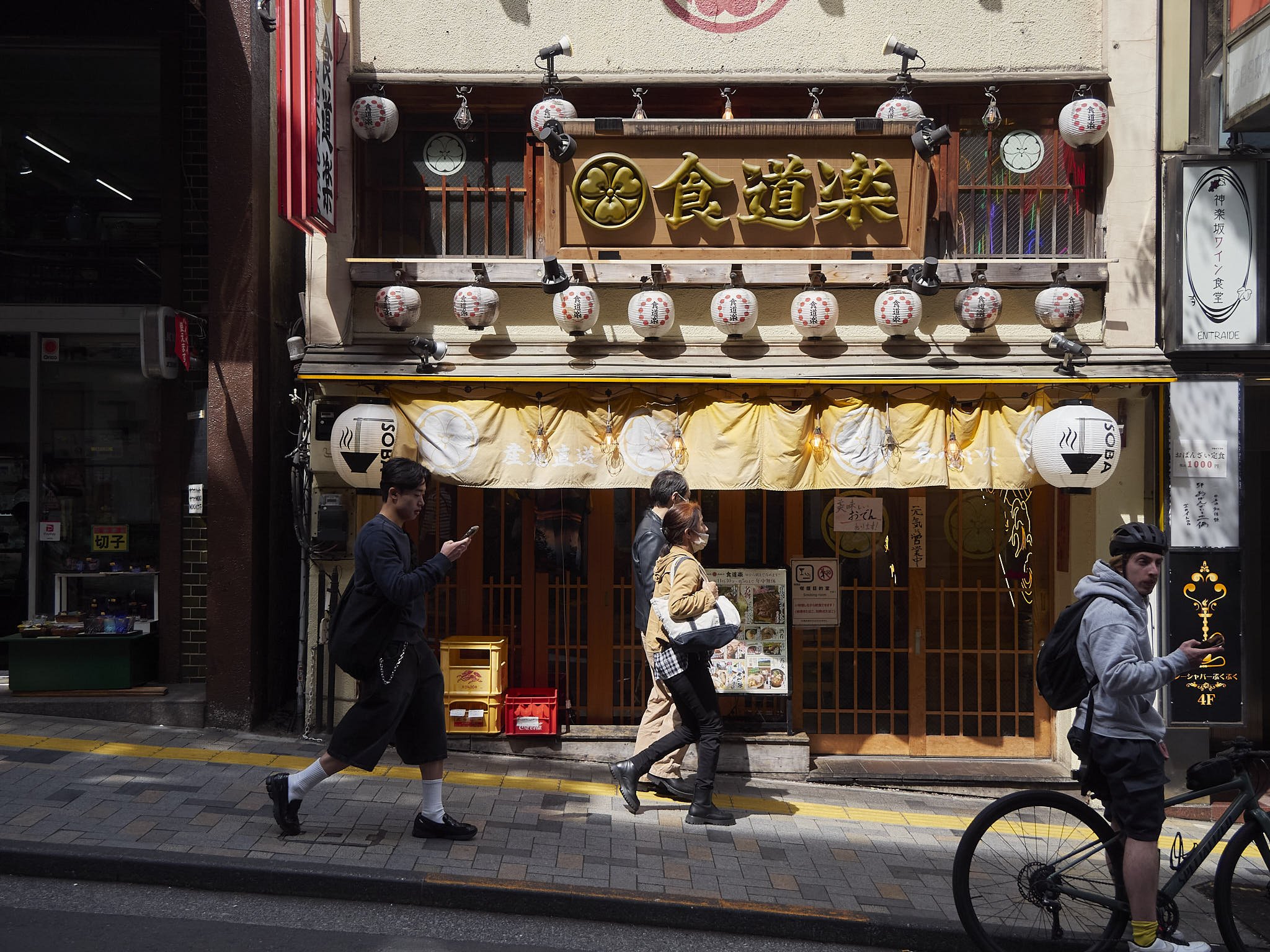
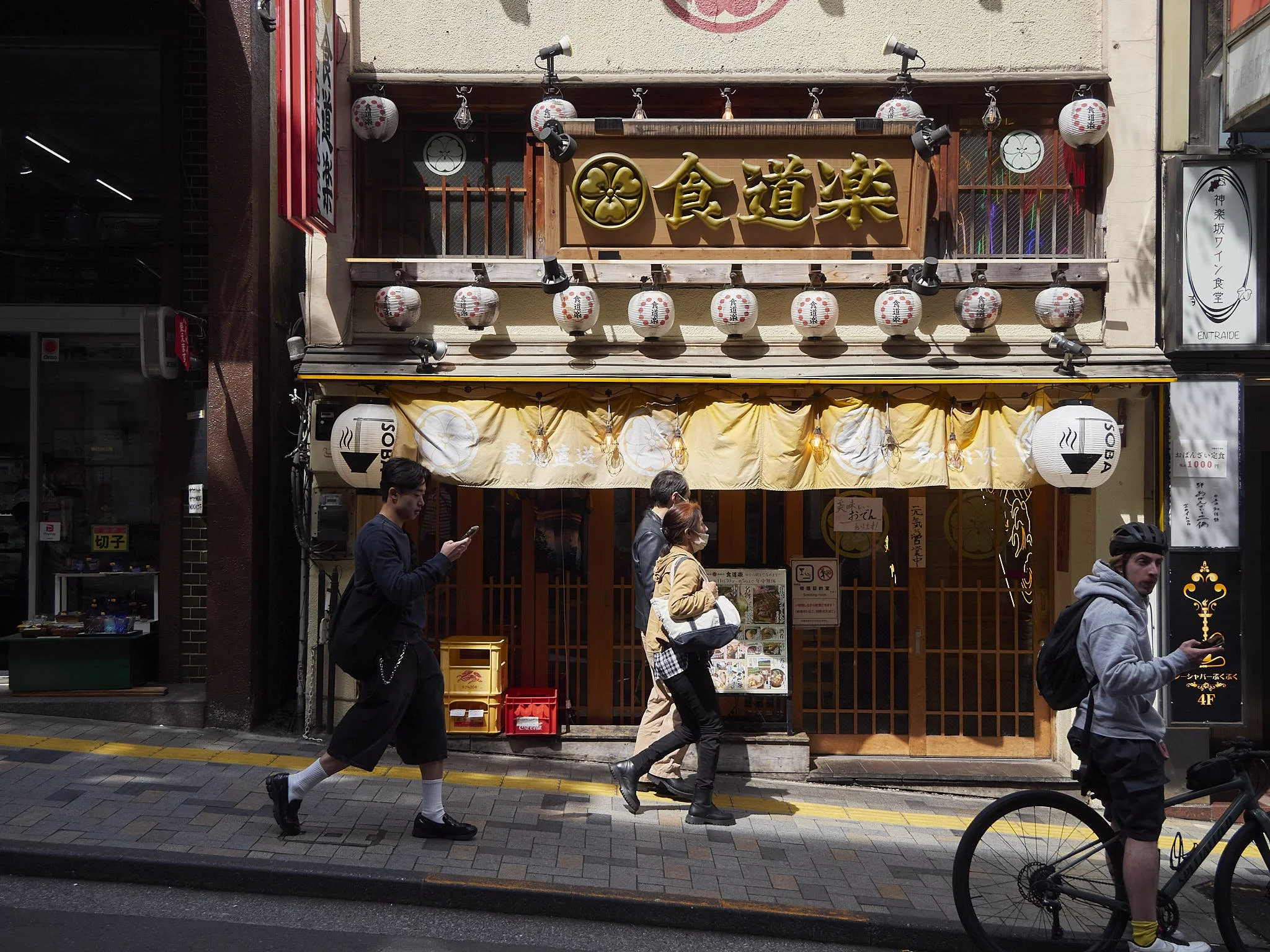
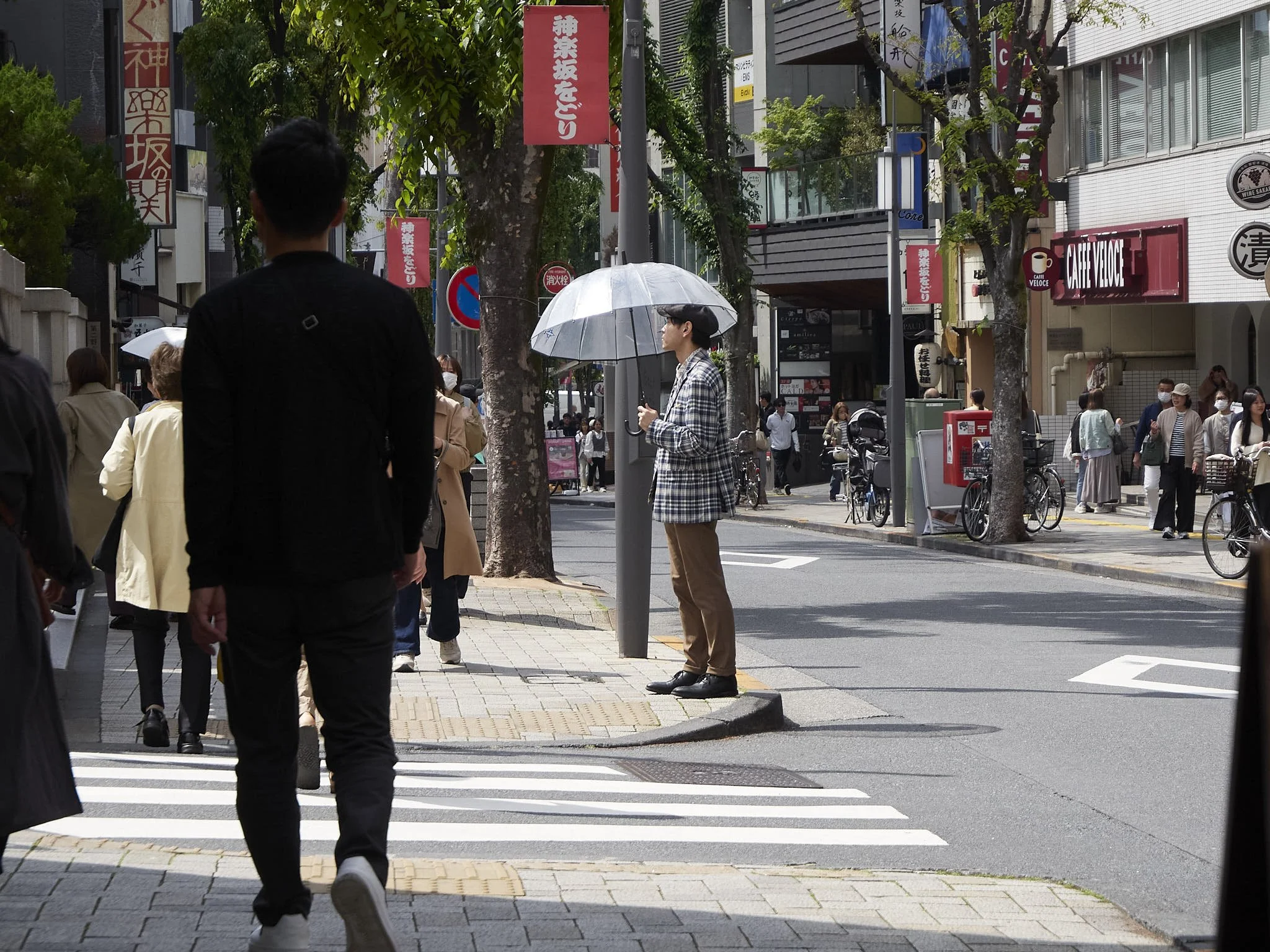
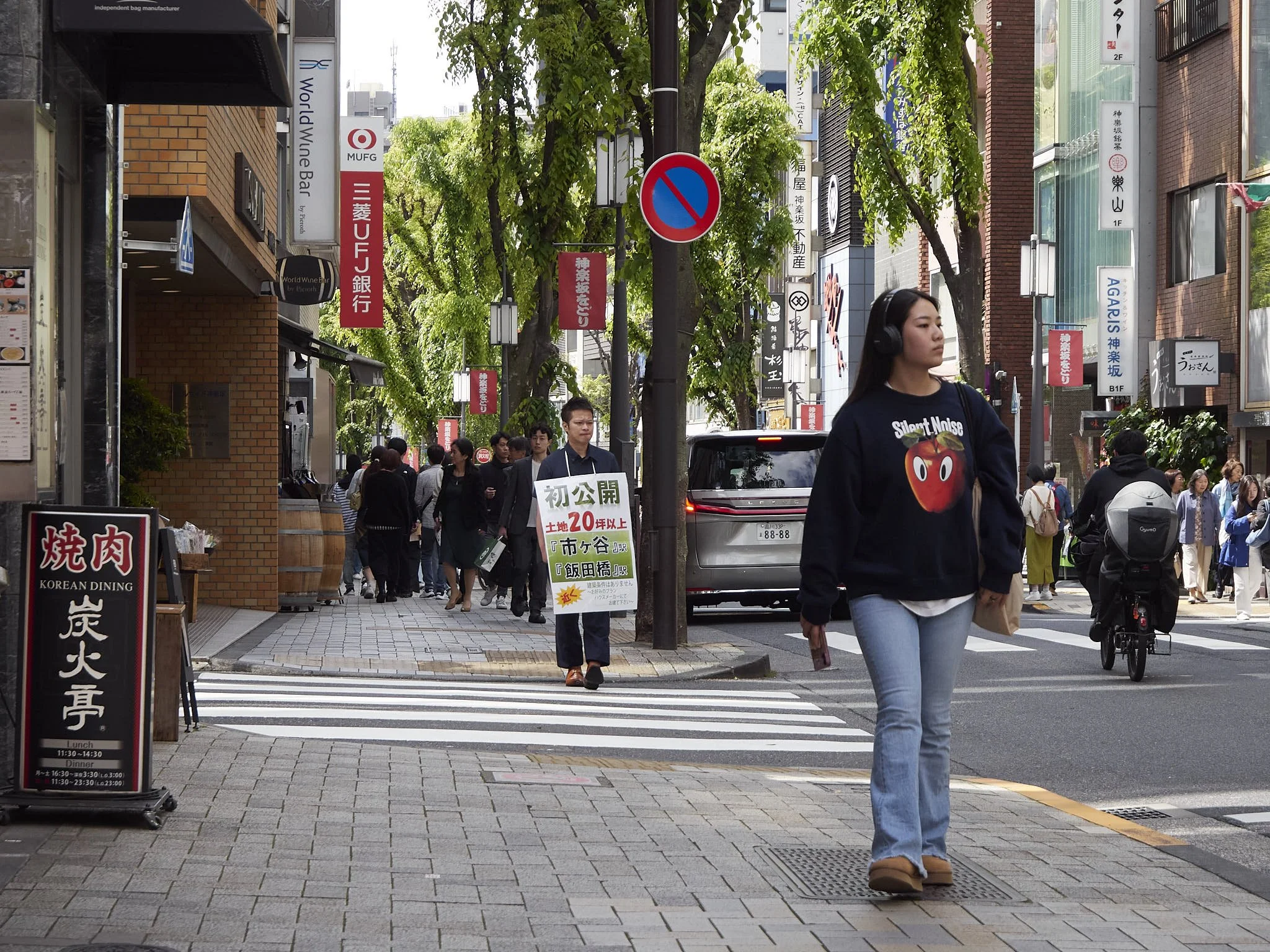
Kagurazaka or “little Paris”

The 45 was used in tandem with the 17 one rainy night in Harajuku, then I put both away. The 9mm was never used (no vast temple interiors), the 15 was used a little more and the 40-150 was usually packed just in case, used for about 15% of the files, especially in parks etc. My one day of trying the 15 and 40-150 was a day of lens changes, mind changes and more lens changes.

One slightly faulty EM10.2 did the bulk of the trip.

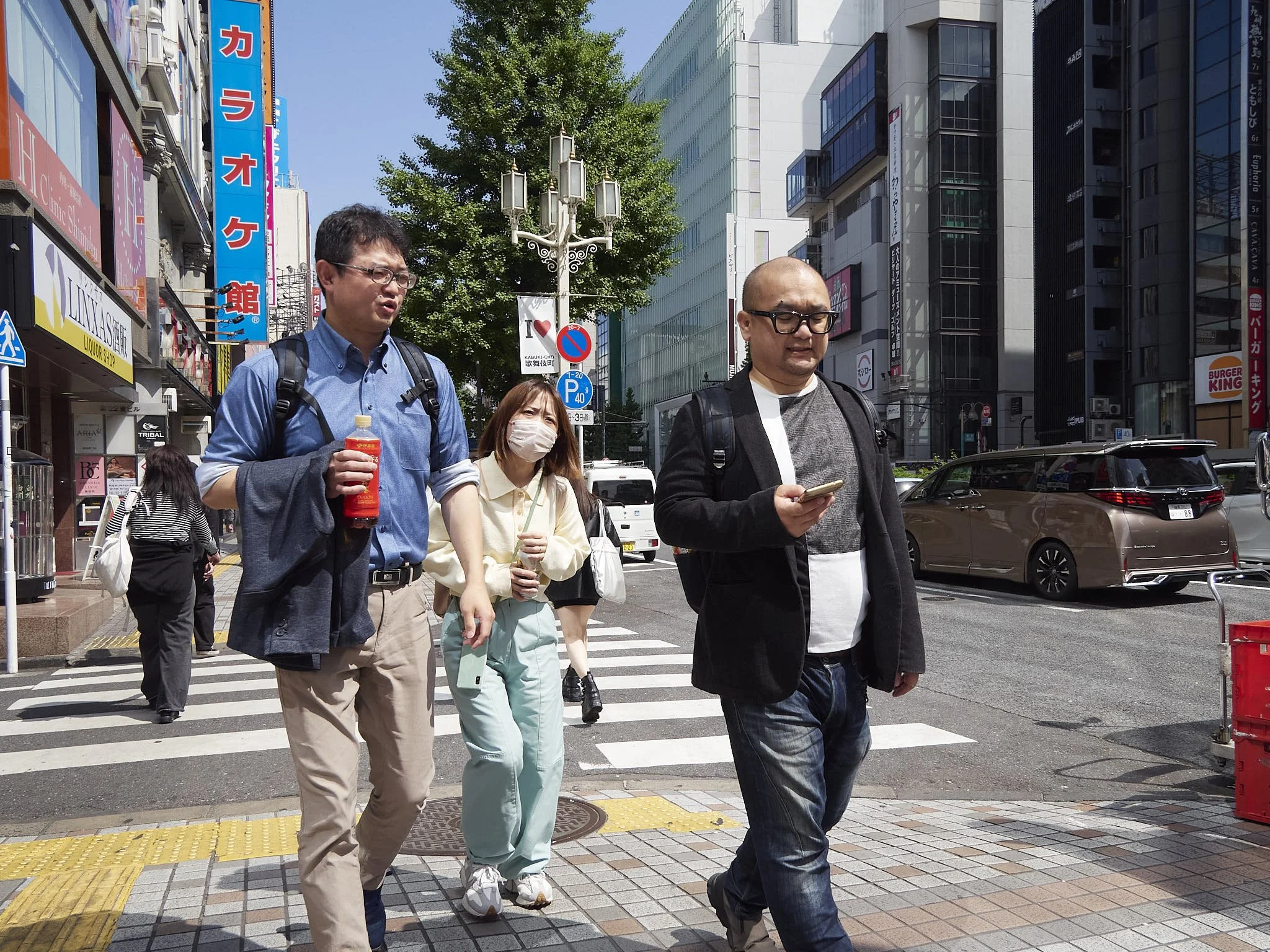
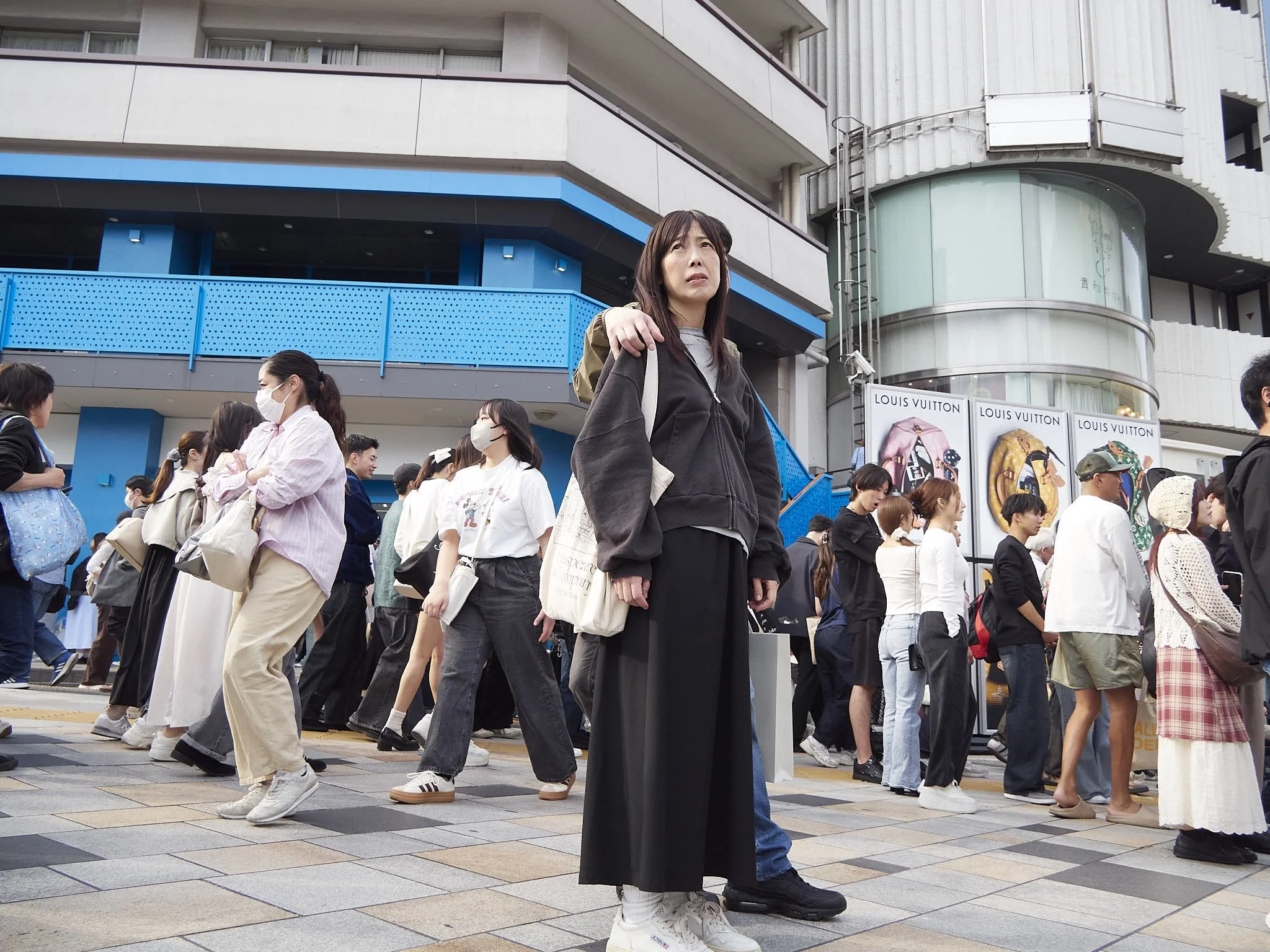
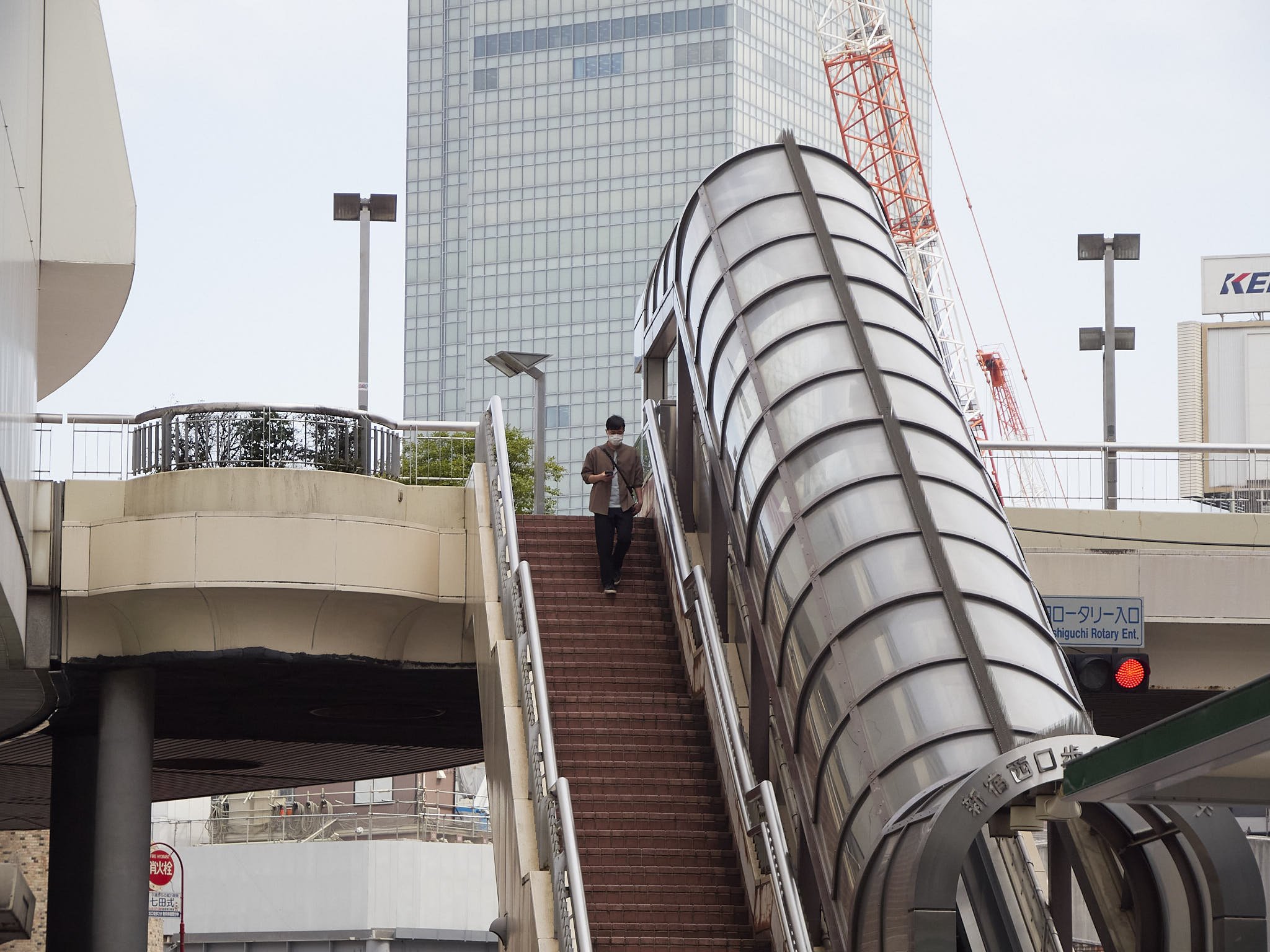
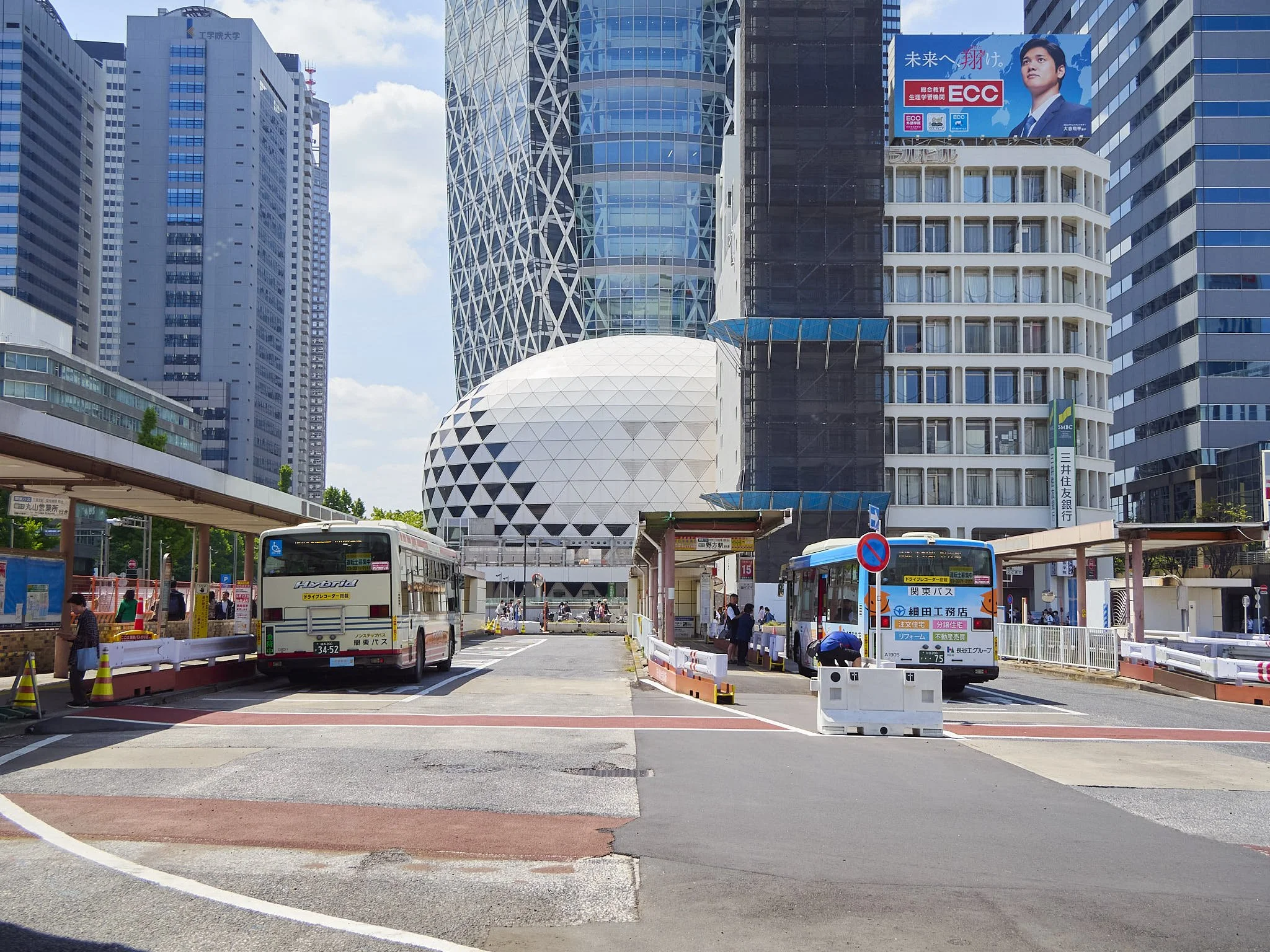
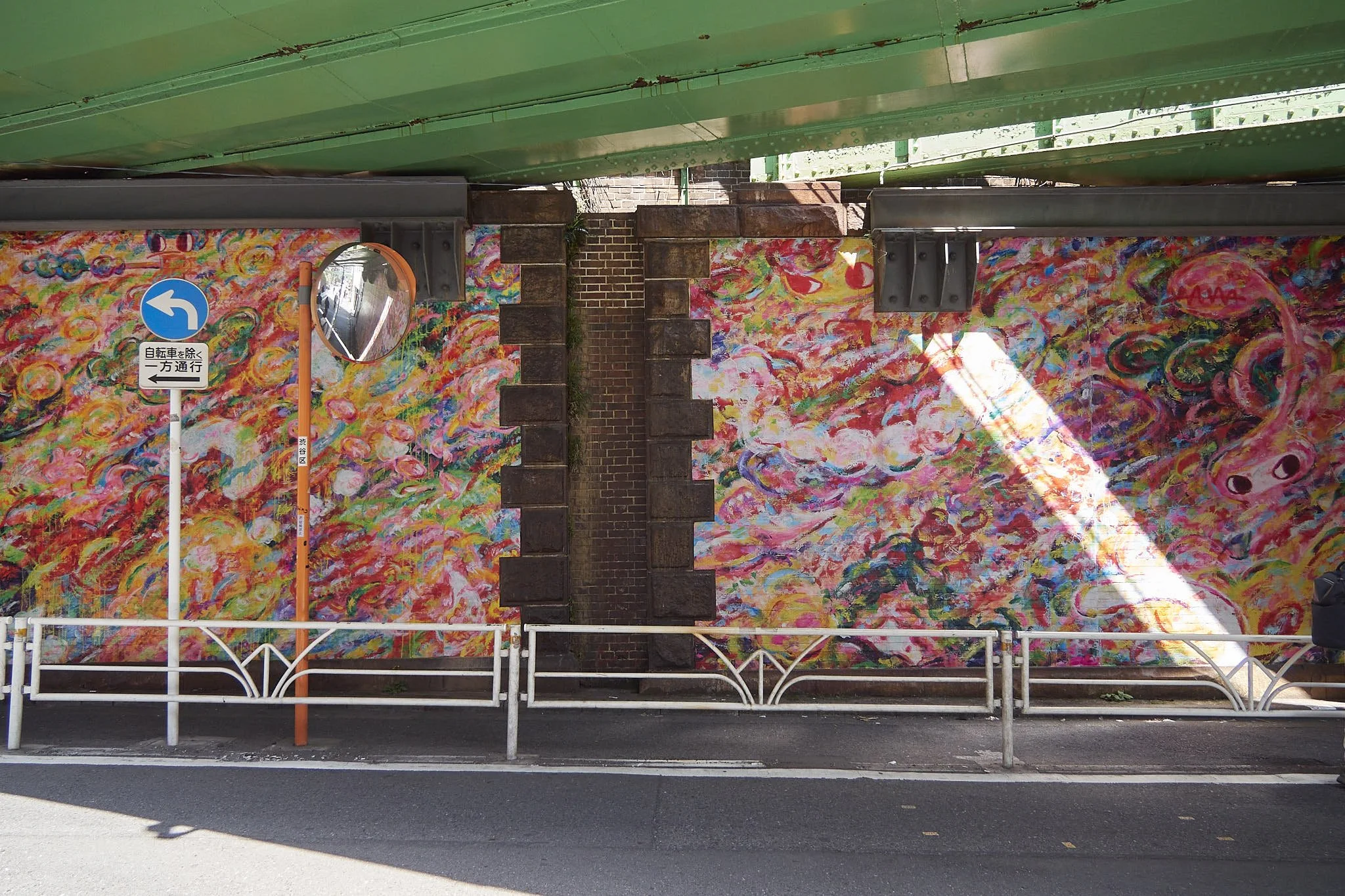
Tight cropping in Shinjuku

The second one decided to ignore requests for the back screen for viewing only showing the info screen (seems the info button was dead), which on top of its quirks with screen angles (both of them will give me the back screen only at 45 degrees, not at horizontal or vertical), it was just too much to bother with and the Pen Mini was used once, then the lack of a tilt screen and its annoying habit of selecting and shifting exposure comp without me realising, got it shelved.

A little reach in Kanda Jimbocho. This is effectively the length of a block on the 40-150.

Batteries were excellent, shooting over 1700 images over one day with a little over two batts out of four at hand. I used about 40-50gb of card memory spread over several cards for safety.

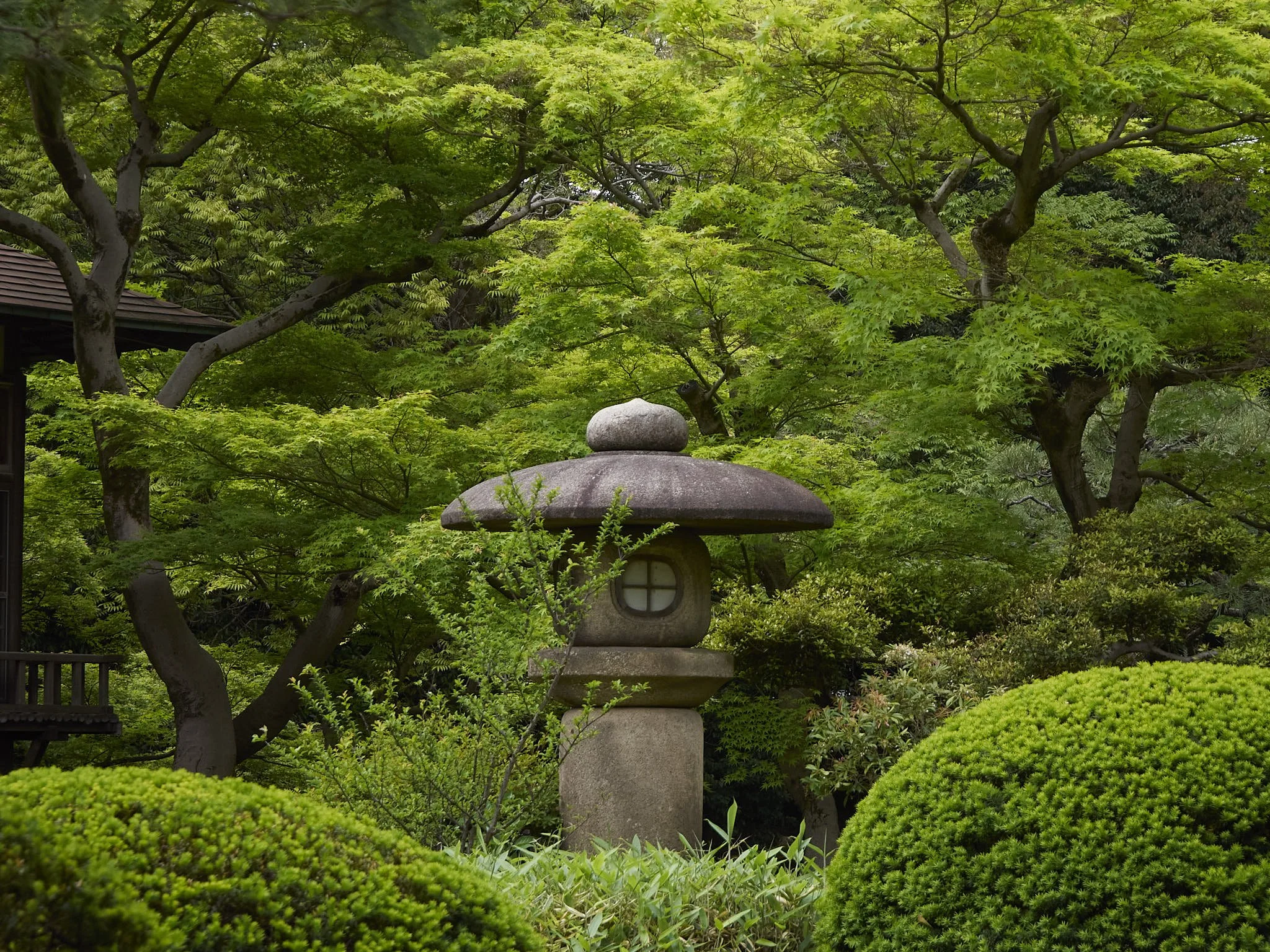
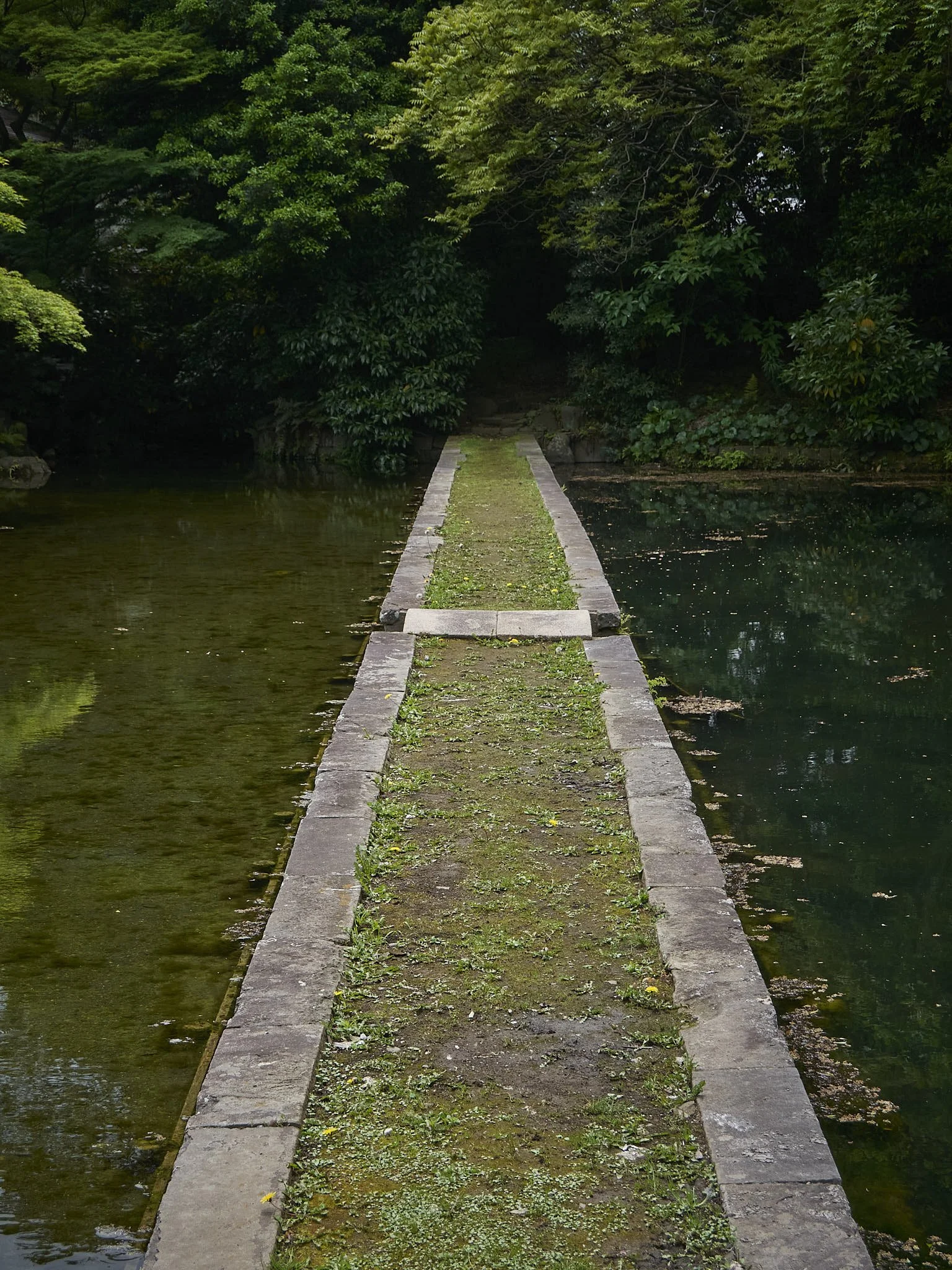
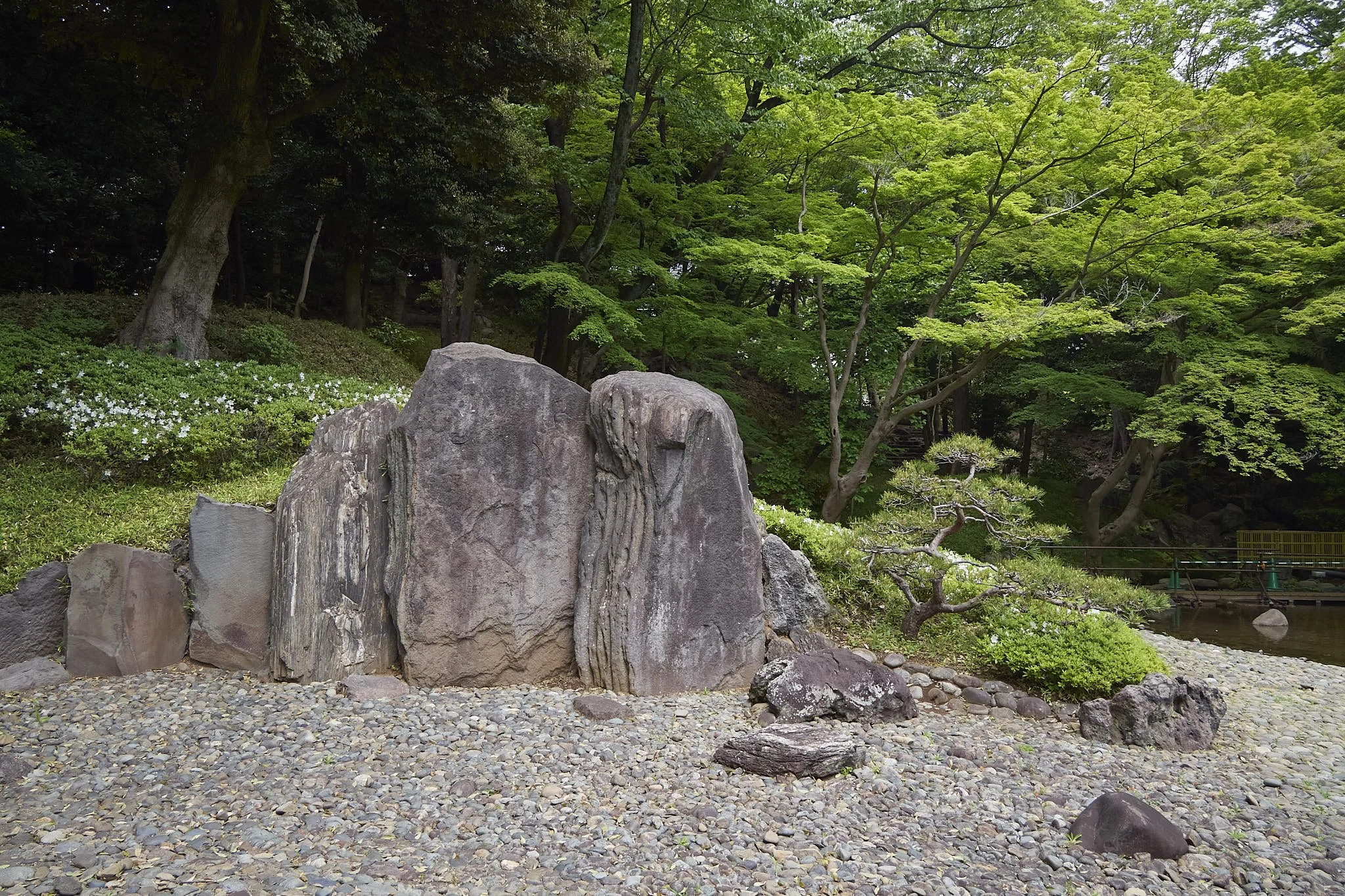
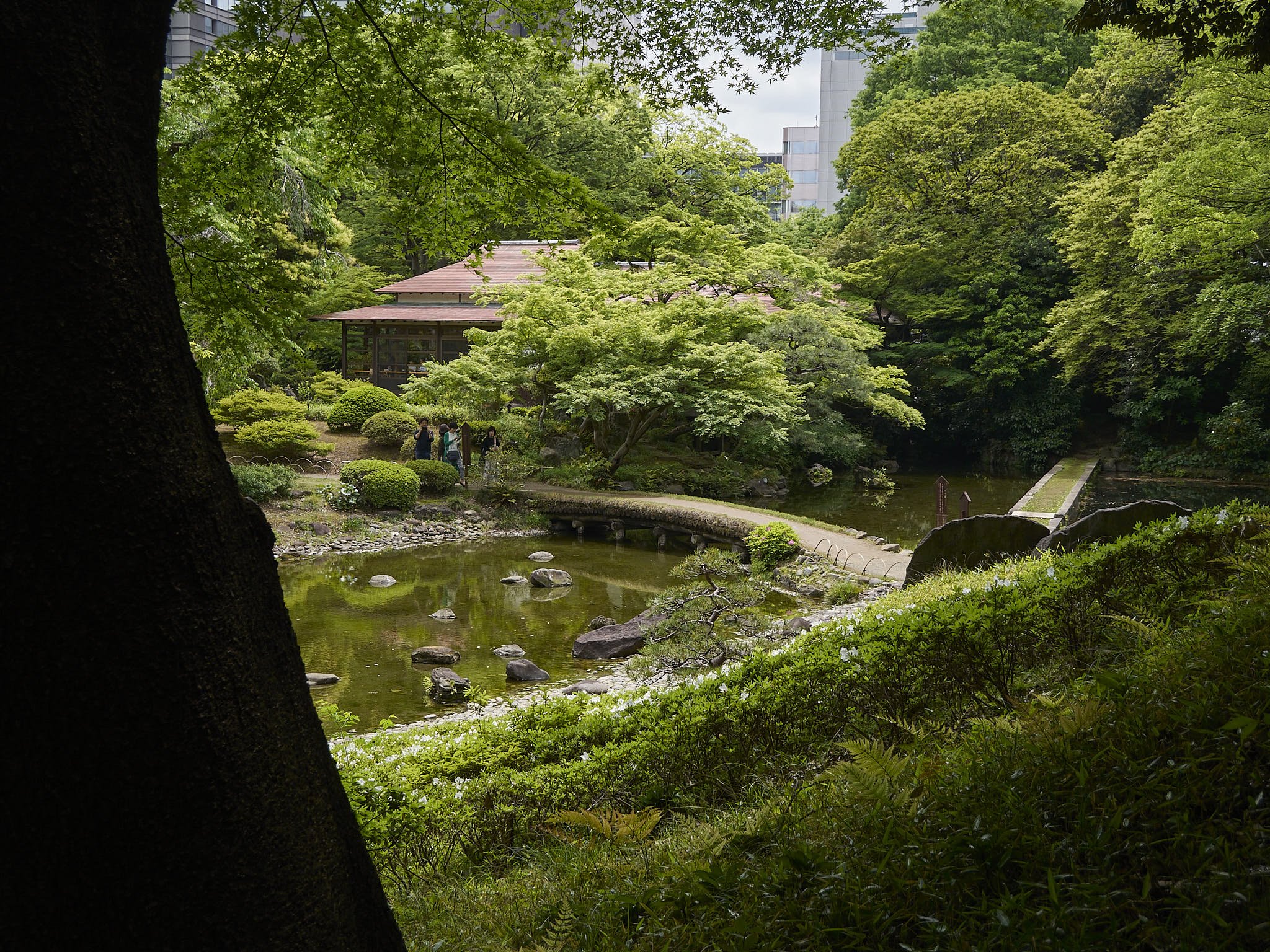
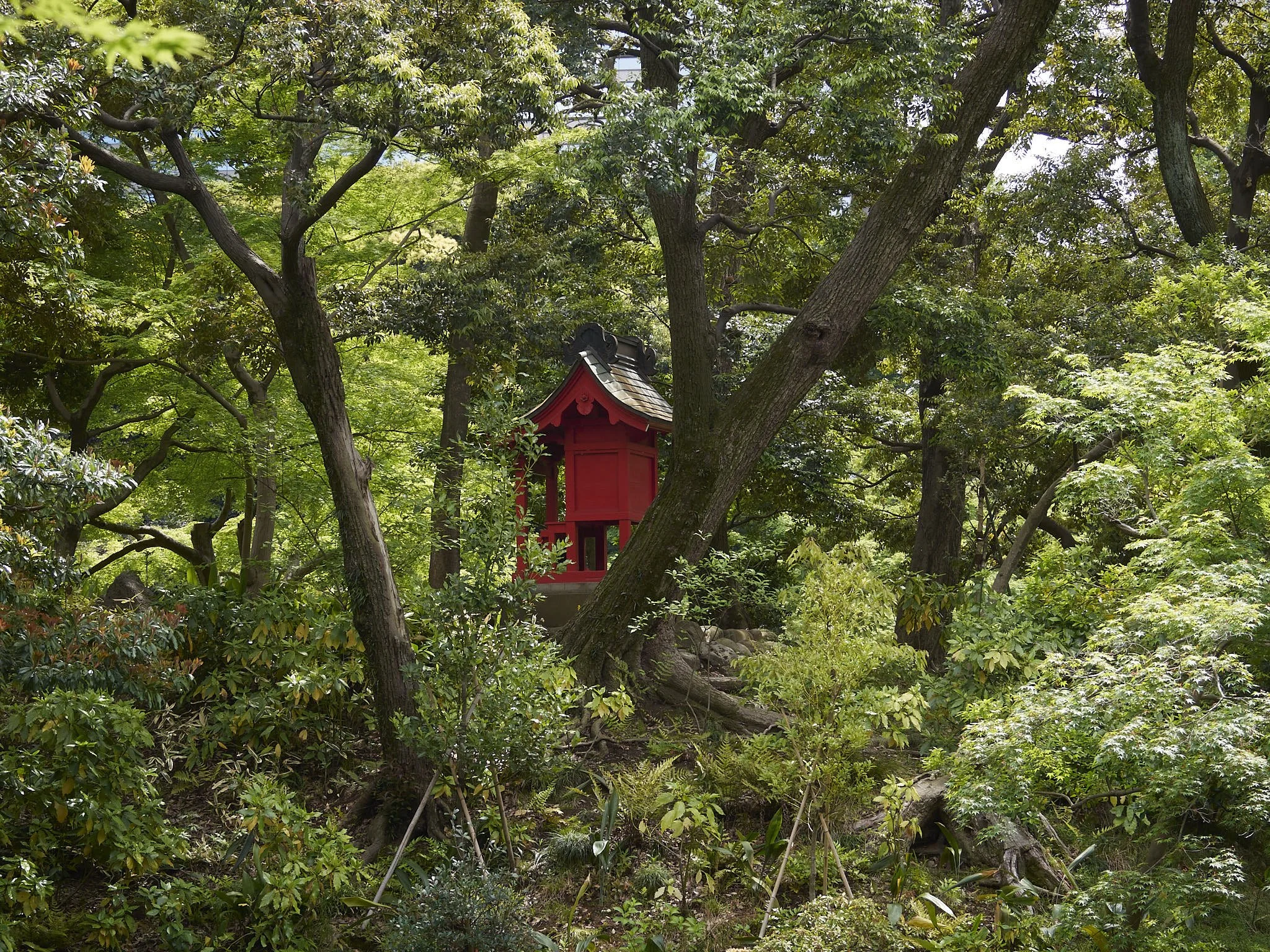
Koishikawa Korsakuen Garden.

Once I got myself sorted, it all went brilliantly and my day bag, a canvas tote with camera insert, down vest, rain coat and stuff, weighed about 2-3kg all up.

The Vespid Has Arrived, With a New Friend

On our last day in Tokyo, a day of filling in the hours before our over night flight, we decided to revisit the Ueno Market and walk back to our hotel and the airport limousine station in Ningyocho.

I discovered ne of few camera stores, a special one, dedicated to film era gear.

Thanks to a translation device, I managed to avoid a Pen half frame 42 f1.2 with a lazy aperture (fine for stills, just not video) and picked up the 28mm f2.8 AI Nikkor.

The later 8 element AI-S version is a legendary lens, probably the best Nikkor wide of the era, but the 7 element AI version was decent enough to create a legend to better it.

It is mint, as in, like a new one mint, pretty good for a lens that came out when I was seven (a long time ok, don’t be rude). For $135au, I got a lens worth taking a chance on, a reliable classic. I have a cheap Nk > EOS and EOS > MFT adapter (what a mess), so this can be tested before I get an L-mount one as I intend to use it as a 40mm equivalent in the APS-C setting of the S5.

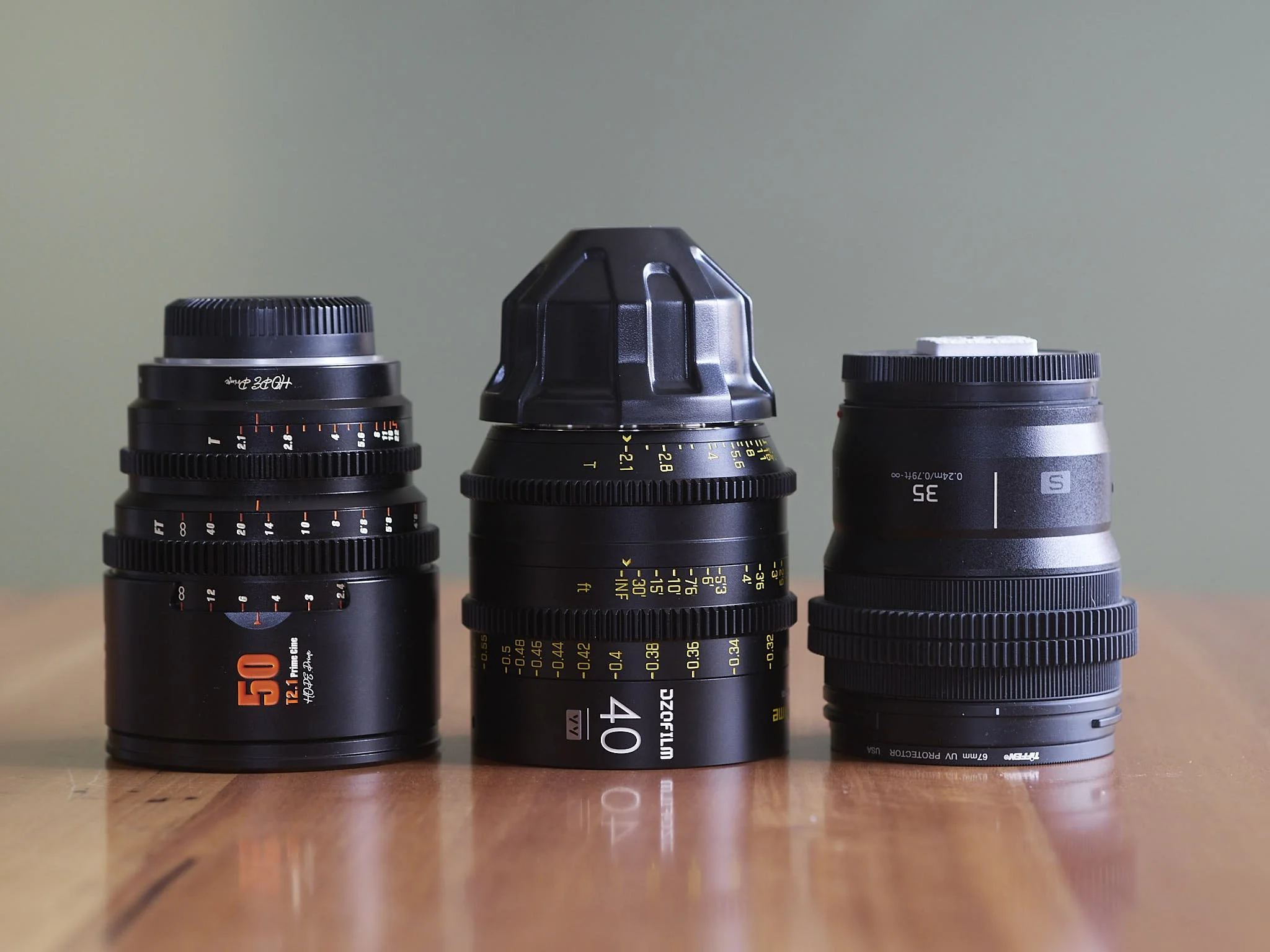
Slightly bigger than the Hope and just noticeably heavier (both are hefty, but the Vespid is the denser feeling lump, the S-Prime feeling like a “fake sampler” lens in comparison.

The Vespid 40mm which came today can also be tried out on an MFT body if I switch it over to EF mount, but I have already ordered a Nisi PL-L adapter (well made, considered a decent match and considerably cheaper than the Vespid one). If it works out, I will get the Nisi PL-MFT also, but the 40/60 combo is the main application I have planned.

Comparing it to my Hope lenses, the 50mm in particular (after I changed the mount to EF), has stirred up some fears to be honest.

What if this legendary lens is no better than my Hope glass?

If it is equal, that would be ok as I have decided to mostly make it a full frame/APS-c companion to those.

This is my Hope 50 at T4 (I missed focus at T2.1), but a preferred aperture anyway. Clean, sharp and still some snap even though the subjects are 4ft away and about 2” apart, staggered. I did match colour on this one as it was originally a little warm-green. Colour matching is probably going to be the biggest issue, the 50 is cooler than the 25 Hope, so a huge difference to the Vespid.

Shot from the same spot and cropped to match the shot above, the Vespid at T4. Colour left alone. I am seeing a slightly less clean, more natural looking file.

Hope on the left, looking cleaner, but that is after being quickly balanced from warmer-murkier.

And even tighter. They seem pretty close in sharpness, so it is a look thing only, which I knew already. On very close inspection, I will give the gong to the Vespid at T4, by a hair, but the Hope at T4 is sharper than the Vespid wide open.

Now the Hope at T4 vs the Vespid at T2.1, mostly to compare sharpness.

And again for sharpness. The Hope has a slight edge, but I knew that the Vespid wide open has a softer character.

When I bought this lens, it was partly because the one I was first interested in became the only one on sale at the right time in my thinking, but also to “scratch that itch”, but I had a mild suspicion it would make little difference in comparison to the excellent S-Primes, Hopes and various other budget cine options I have.

As an example the IRIX 150 macro is excellent, but so is the Spectrum 50 and they are in turn little different to the S-series Panasonic lenses.

So, what have I achieved?

A Hope grade lens for my S5 that has that special something?

The Hope lenses are enough for MFT, saving me (for now) buying an adapter.

A single lens that can be used on all of my cameras (with a $300au mount-I have chosen Nisi PL adapters) with a set of focal lengths that to be honest cover all I use for video. It has a good reputation, especially for a characterful look and one that impresses on sight.

I had a lot of that already, but I also had a need to be sure and felt that fate was guiding me (gets me in trouble some times fate, costs time and money).

Like the BMPCC4k, I knew it would likely not change much, but we will see.

This is the end of the line for my purchases until I have a genuine need for something that will make a definite difference, not a “head worm” compulsion.

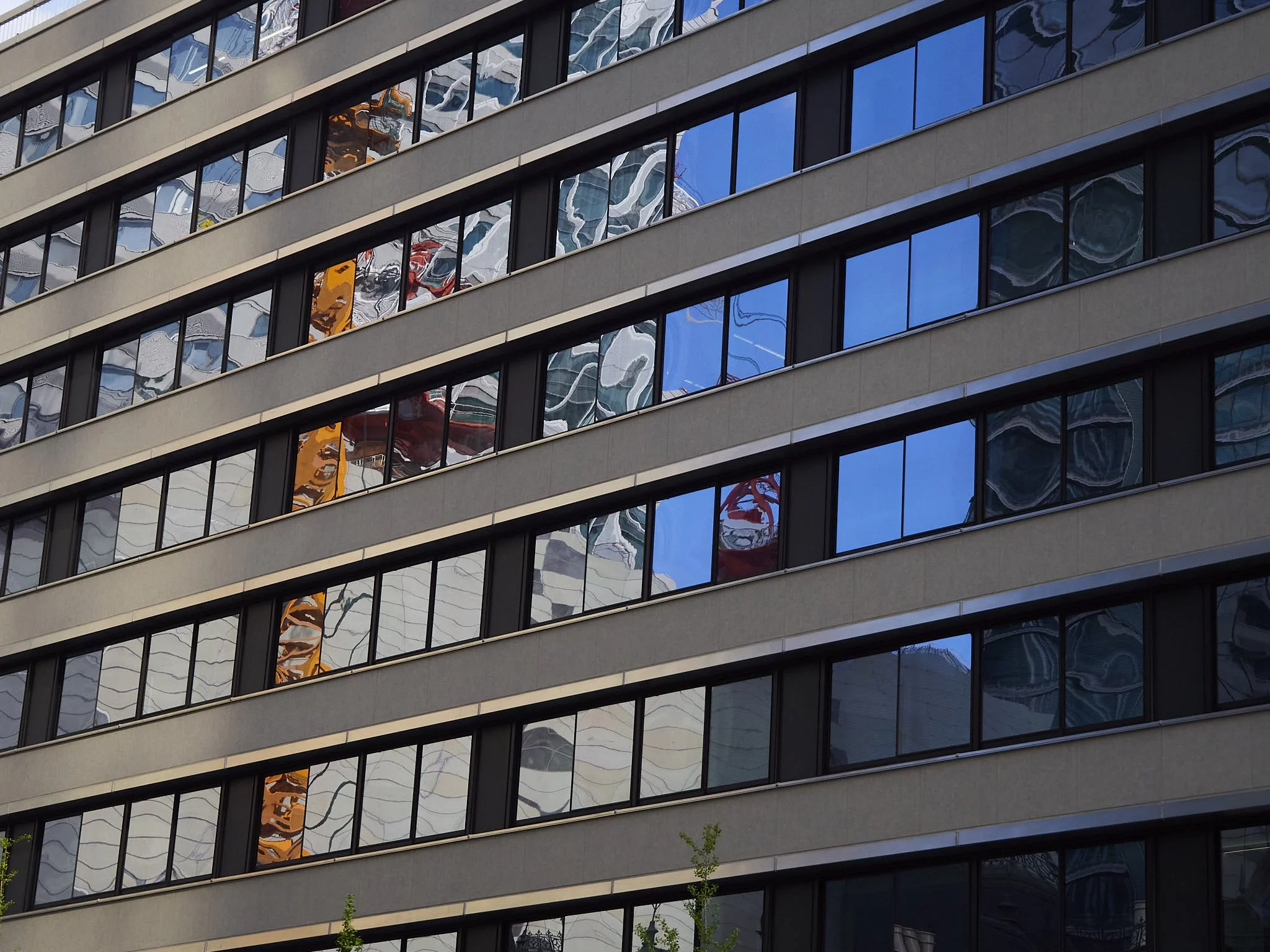
That Beautiful Light You Find In Big Cities

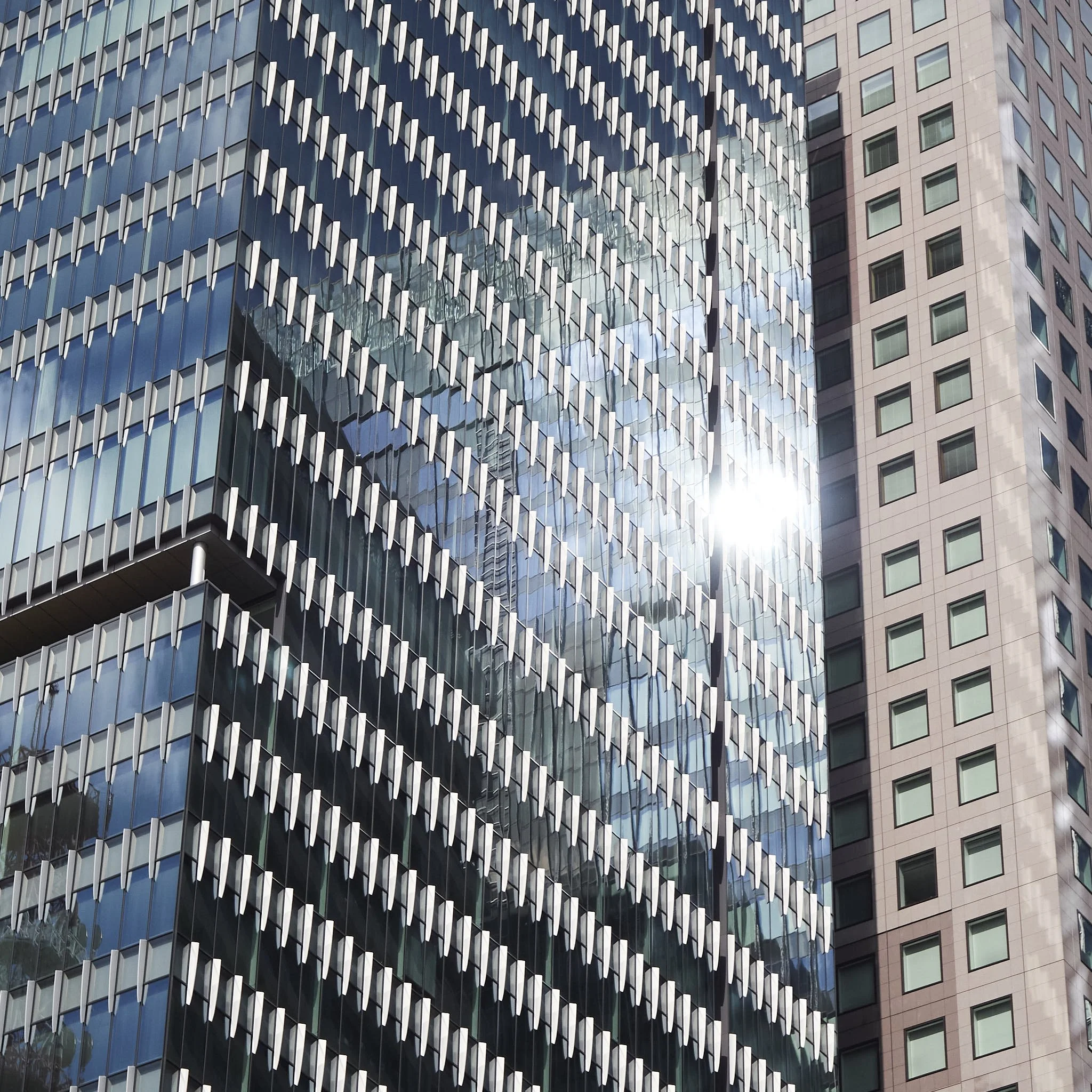
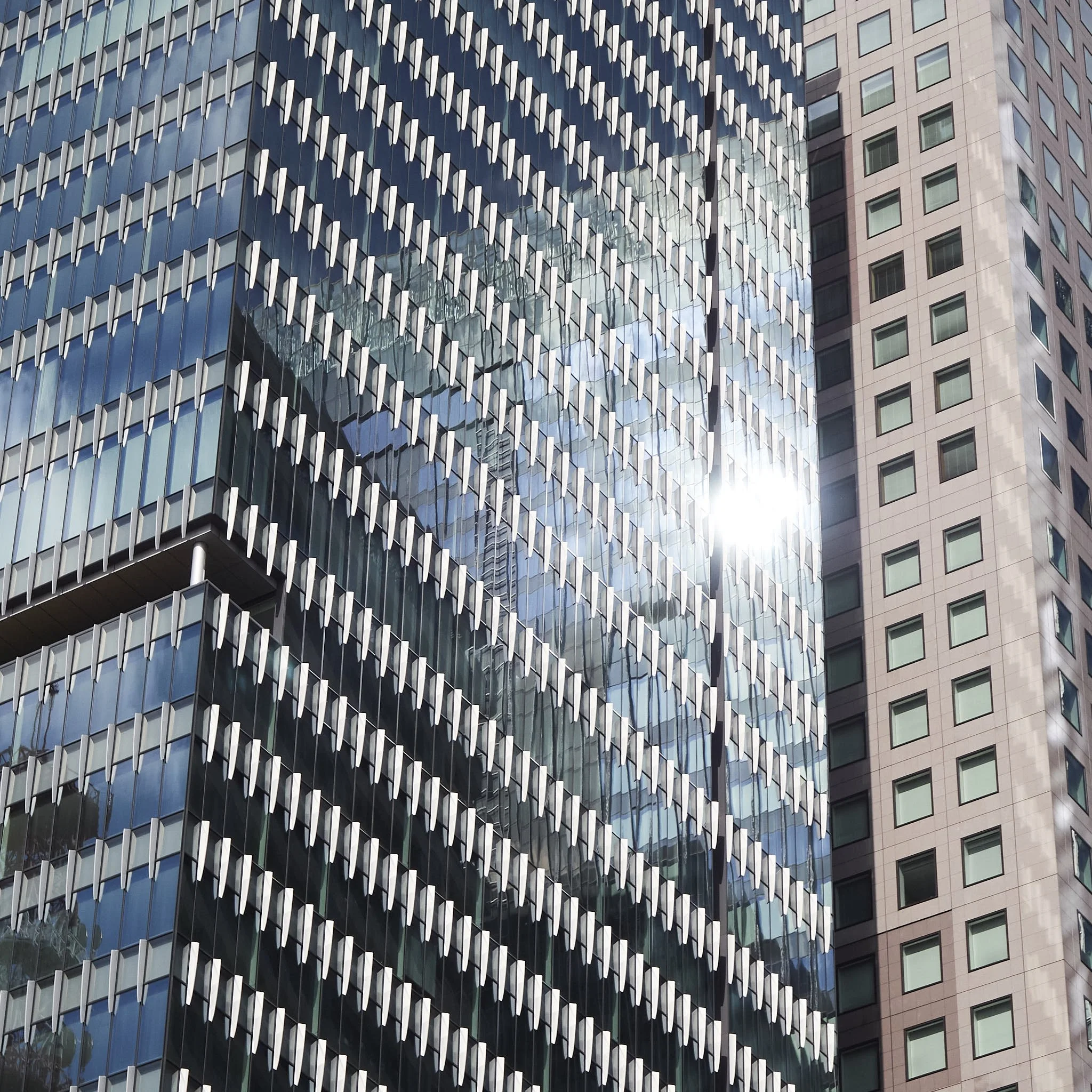
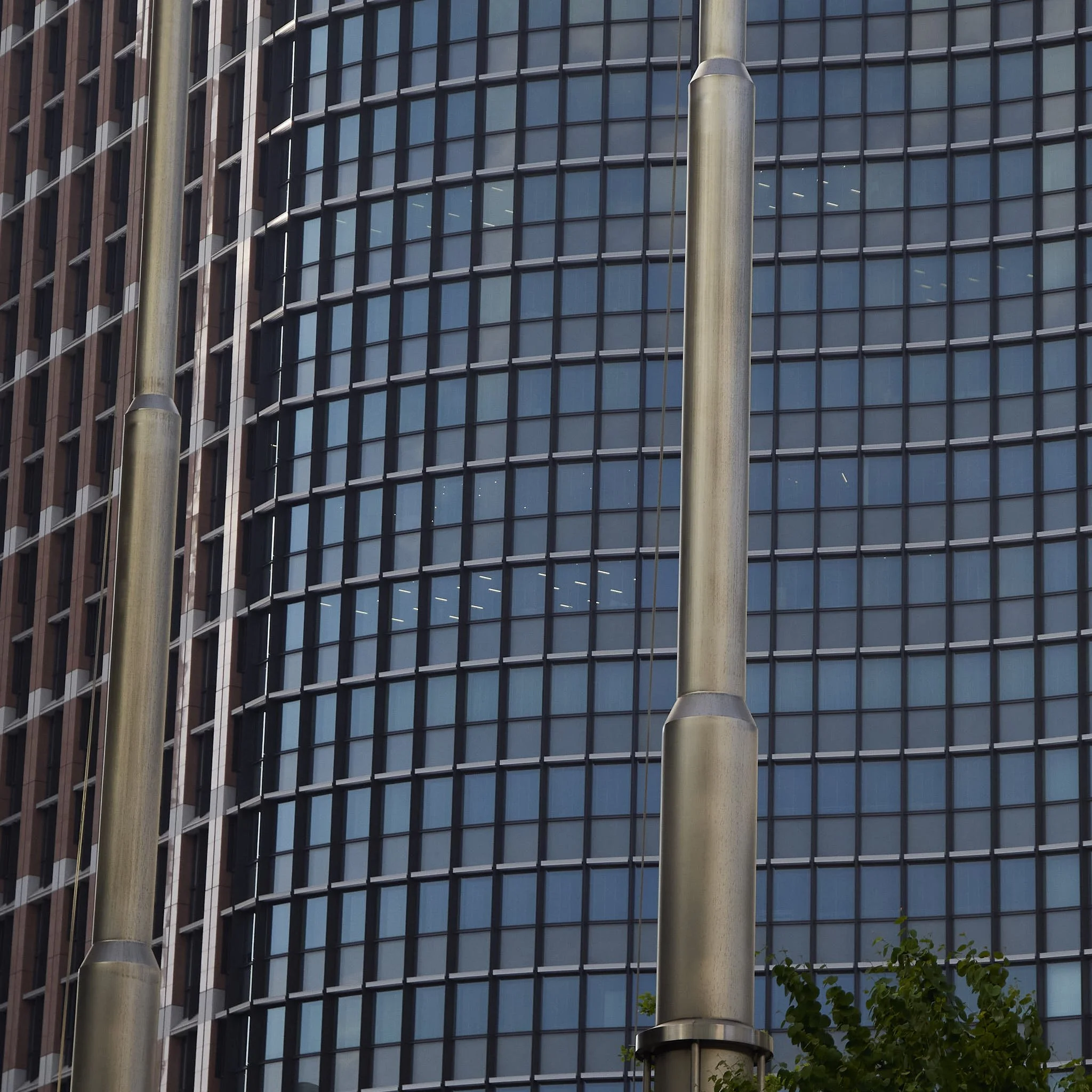
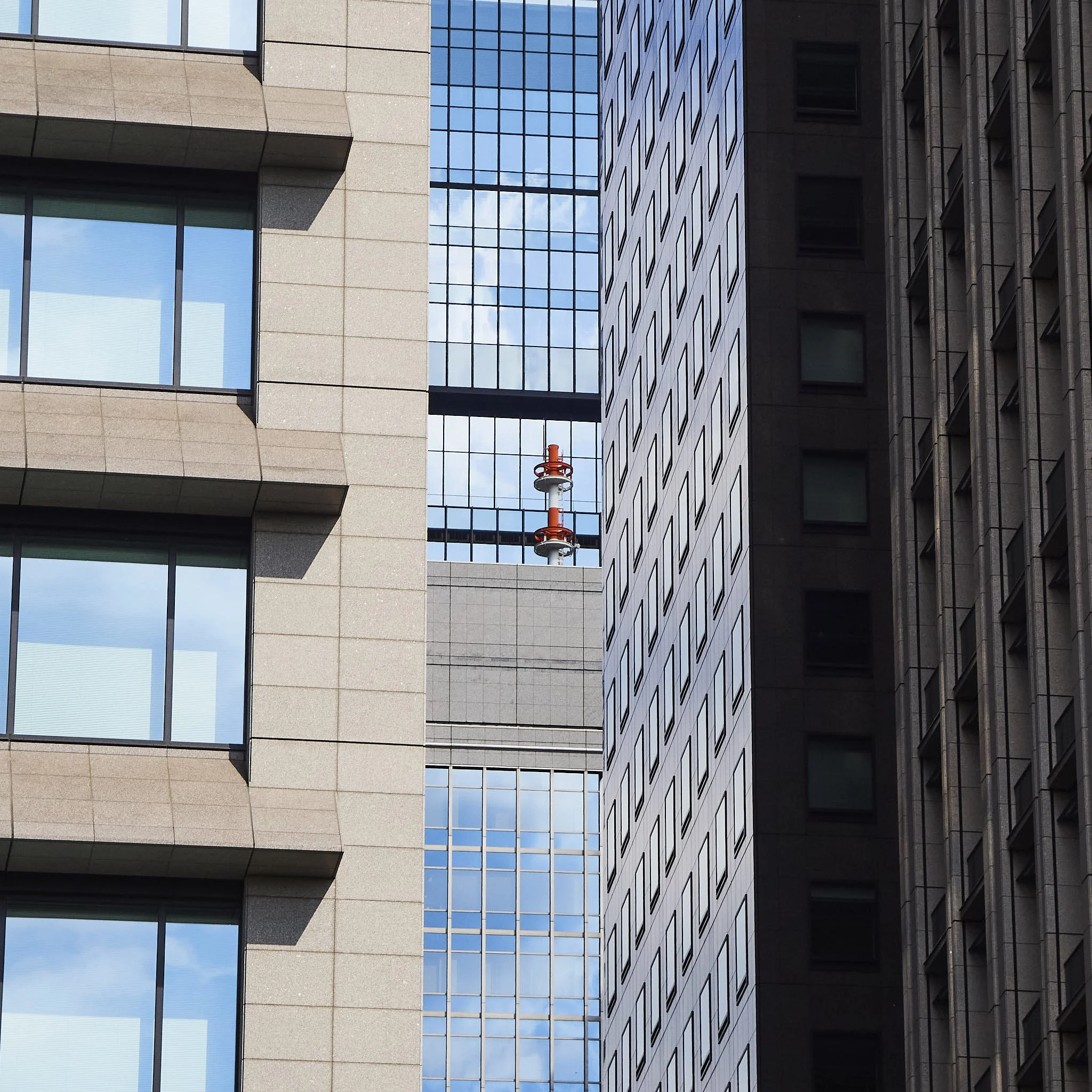
Reflected light is something photographers and cinematographers often chase or create.

It adds brilliance that an overcast day removes while retaining a soft and even illumination that direct strong light cannot.

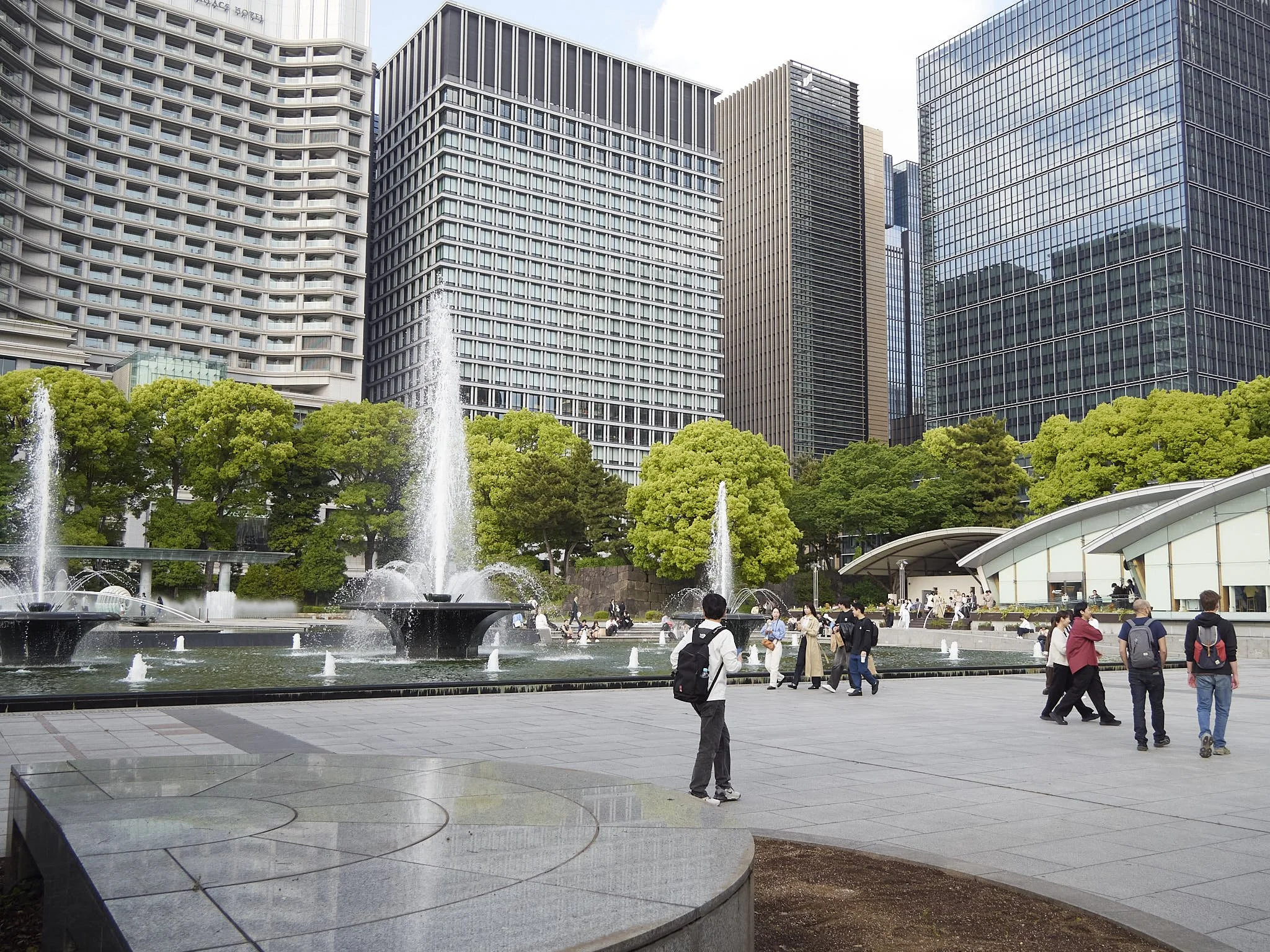
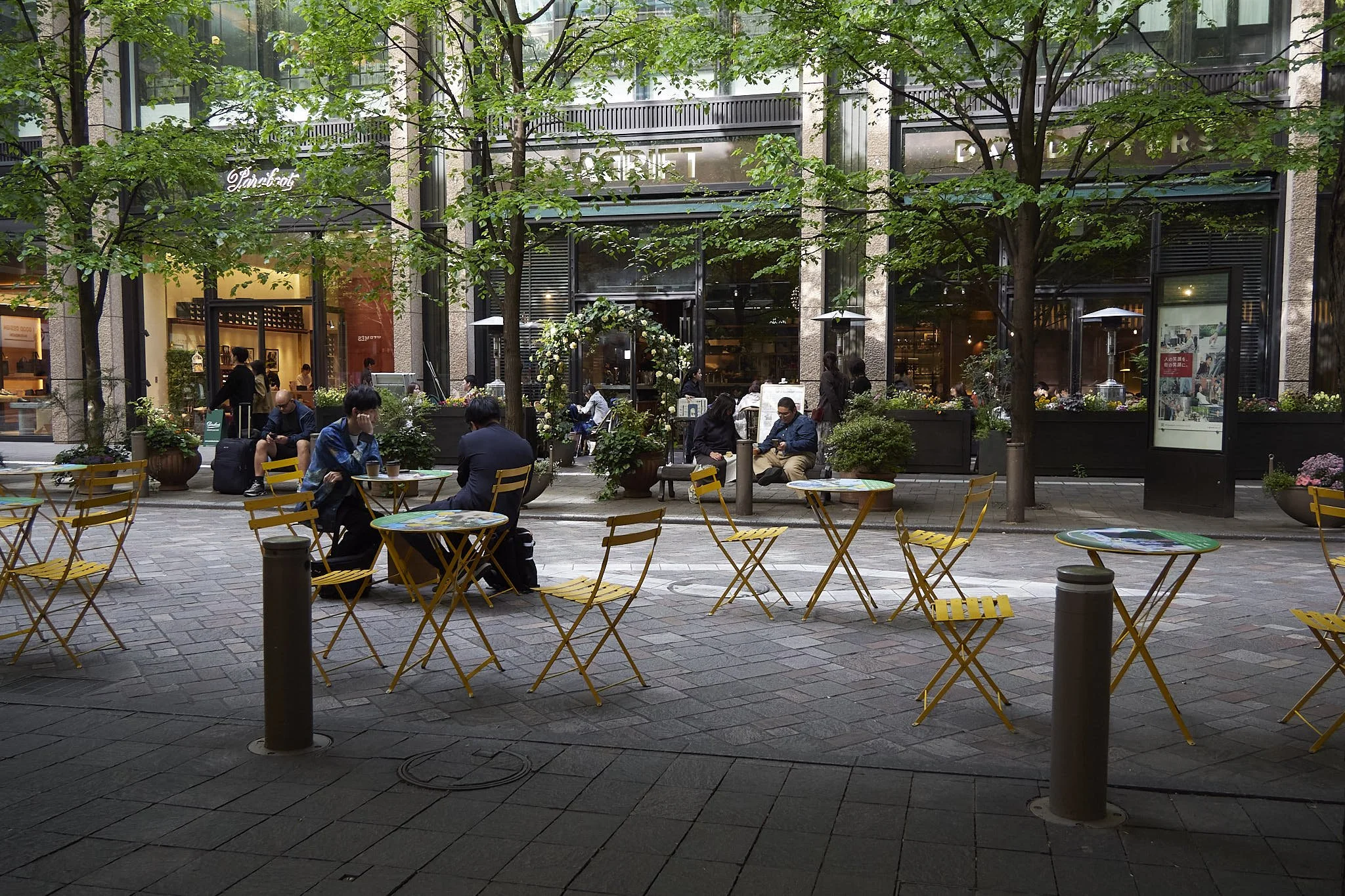
Hibiya

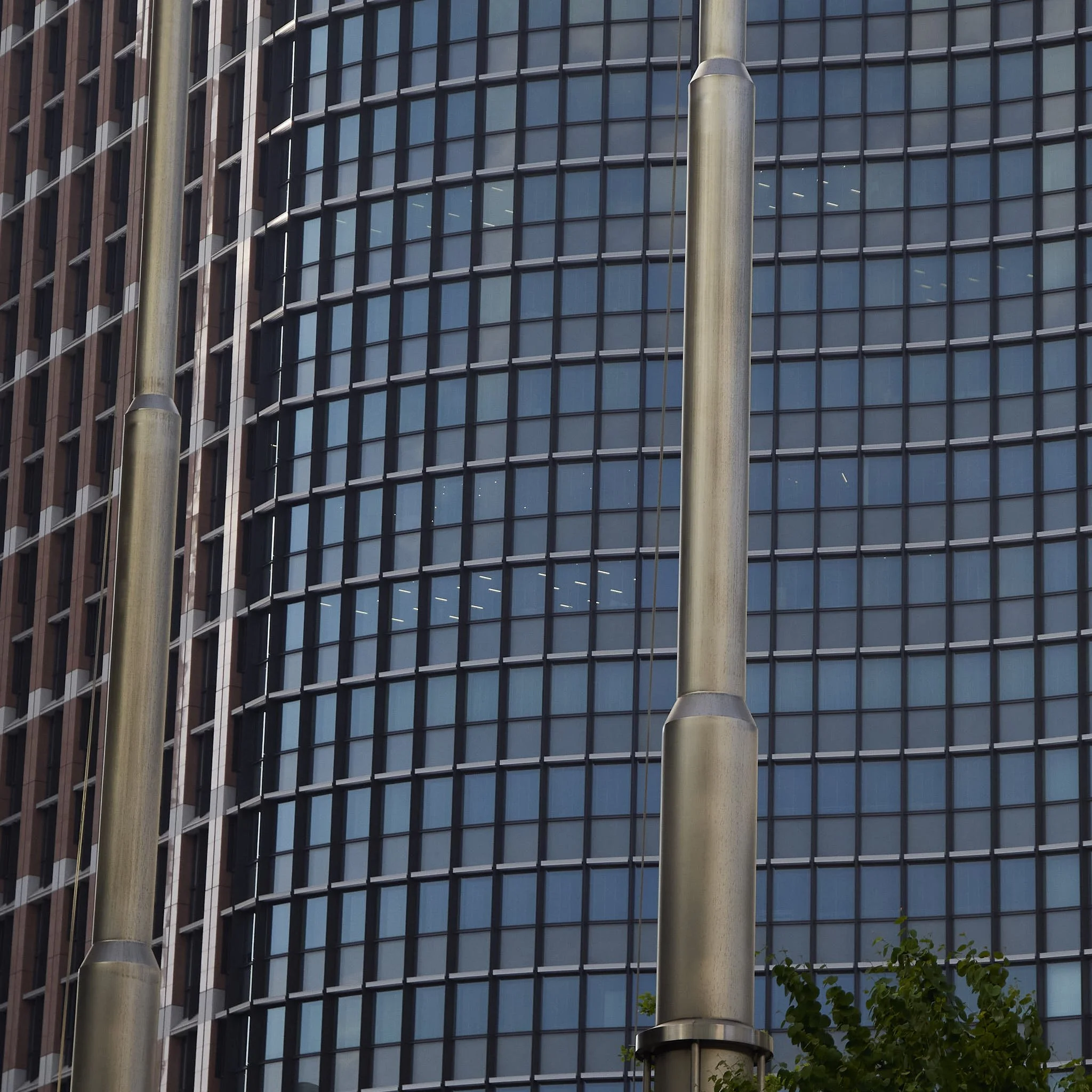
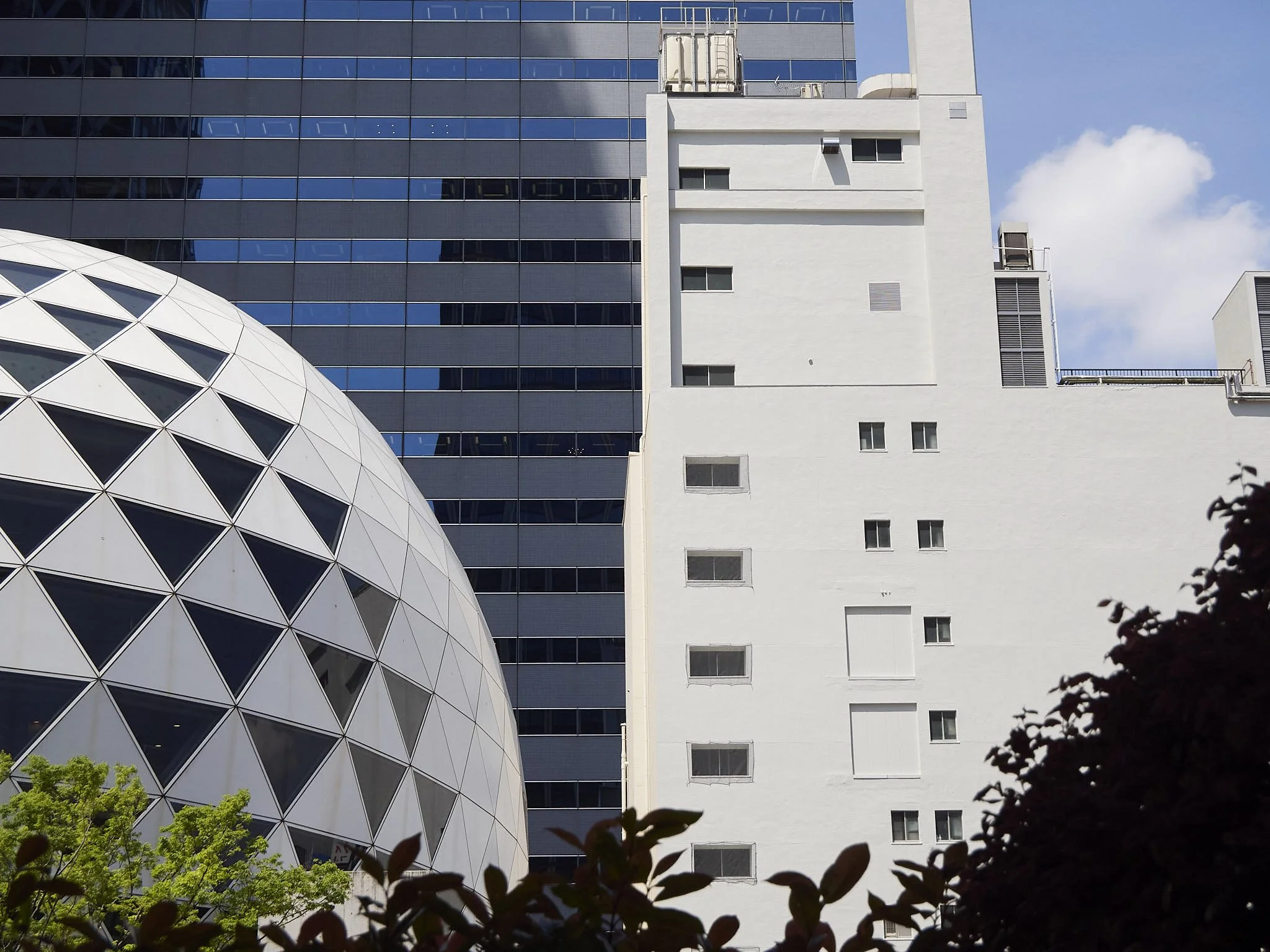
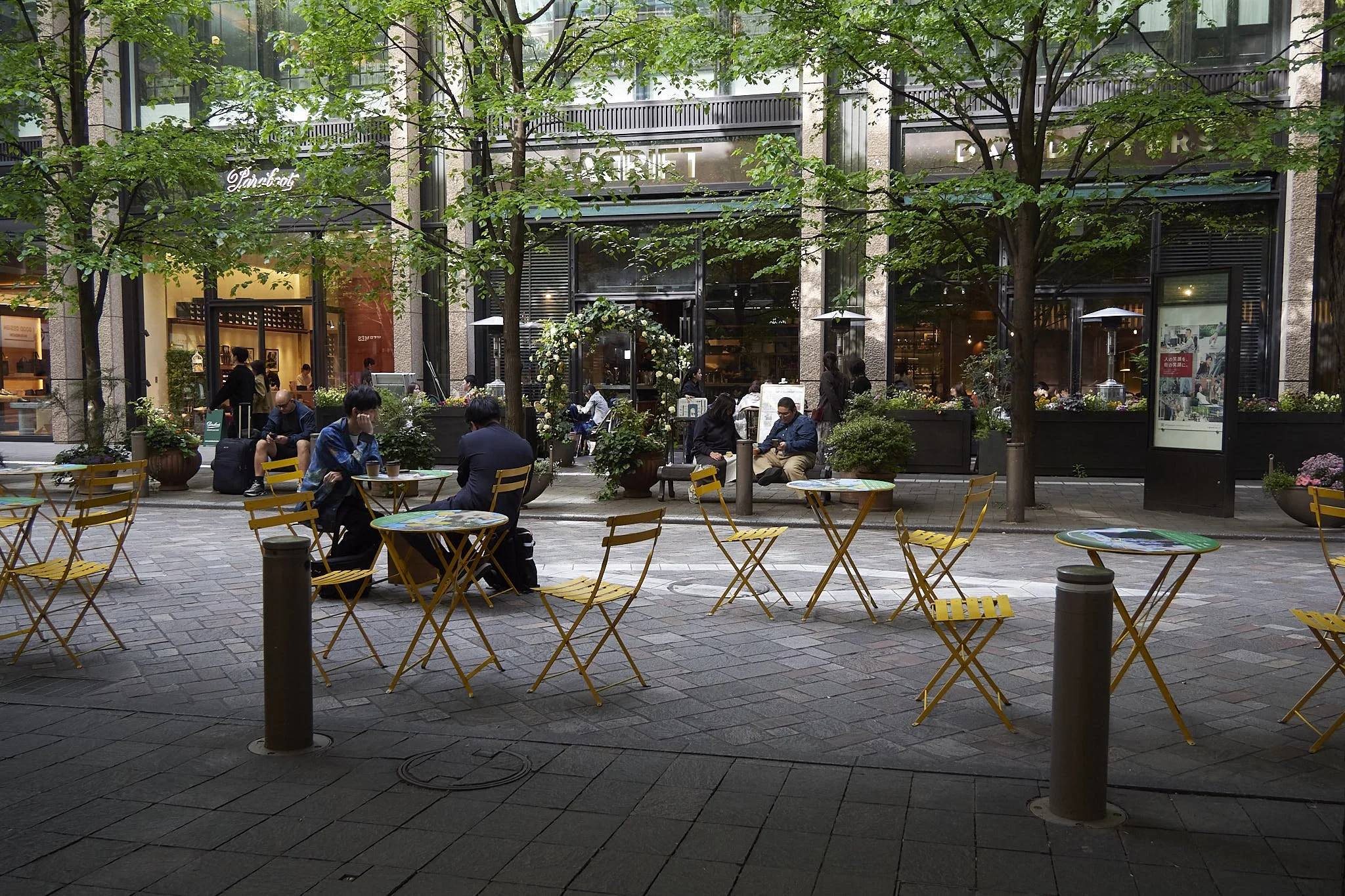
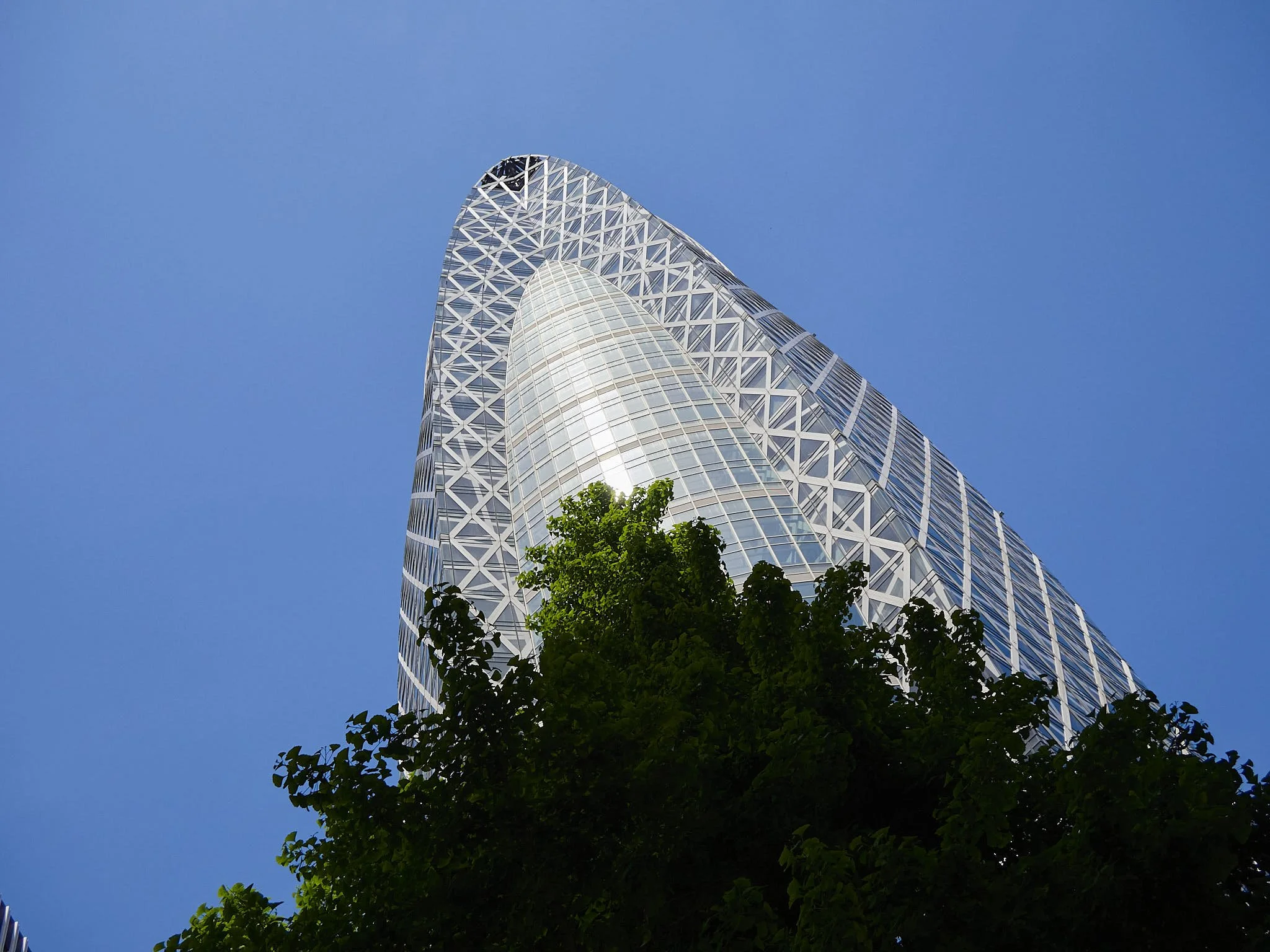
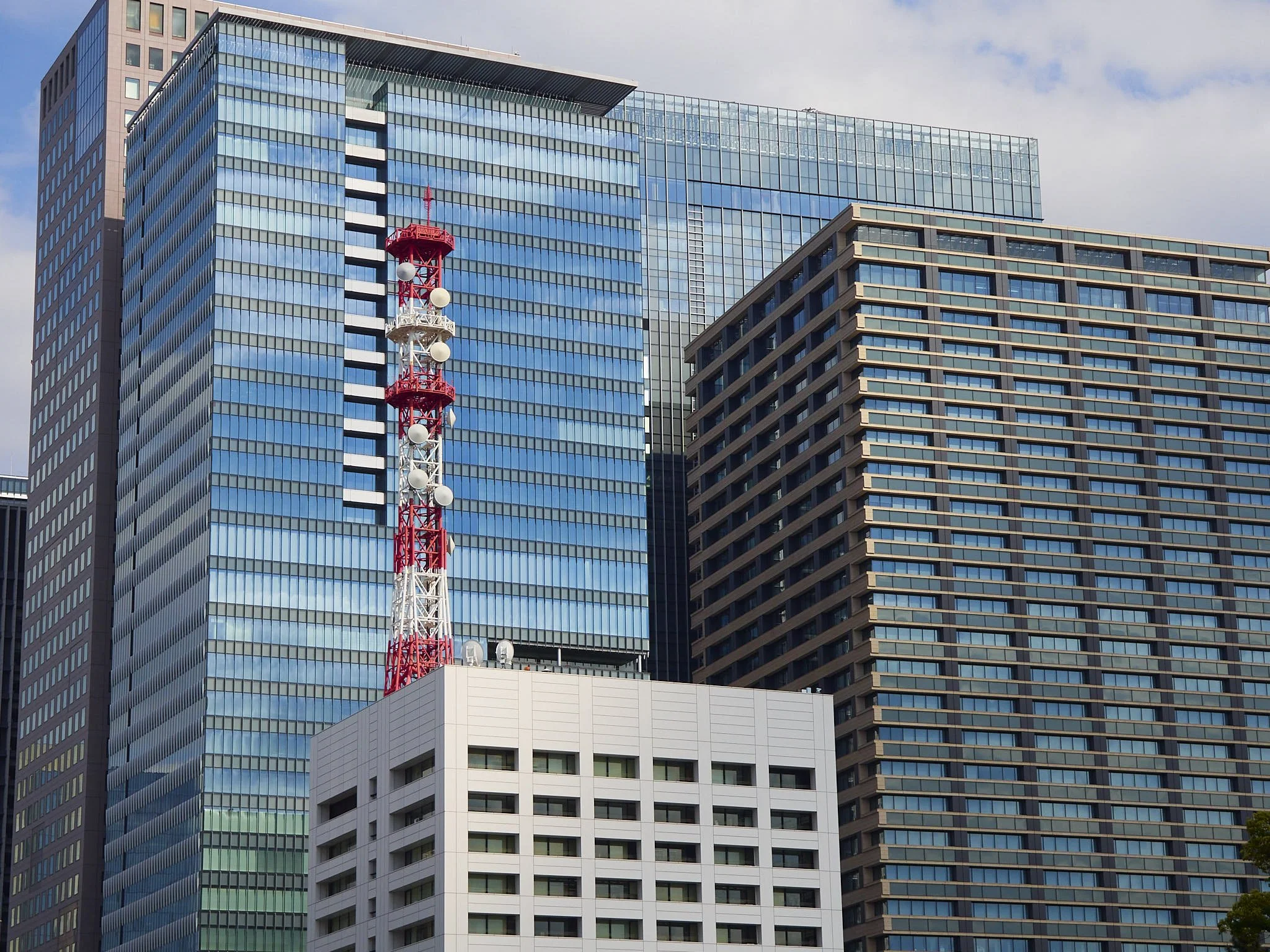
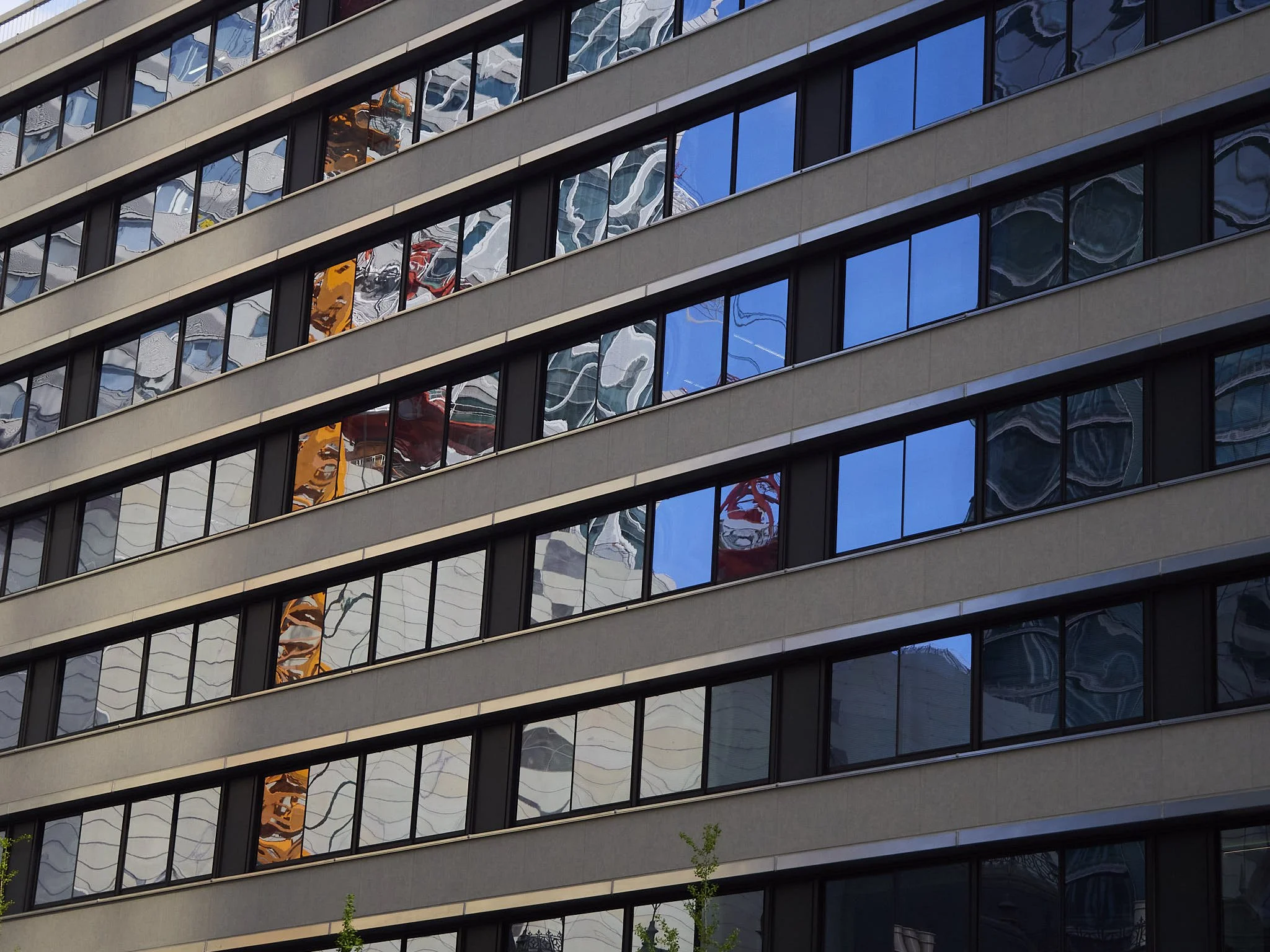
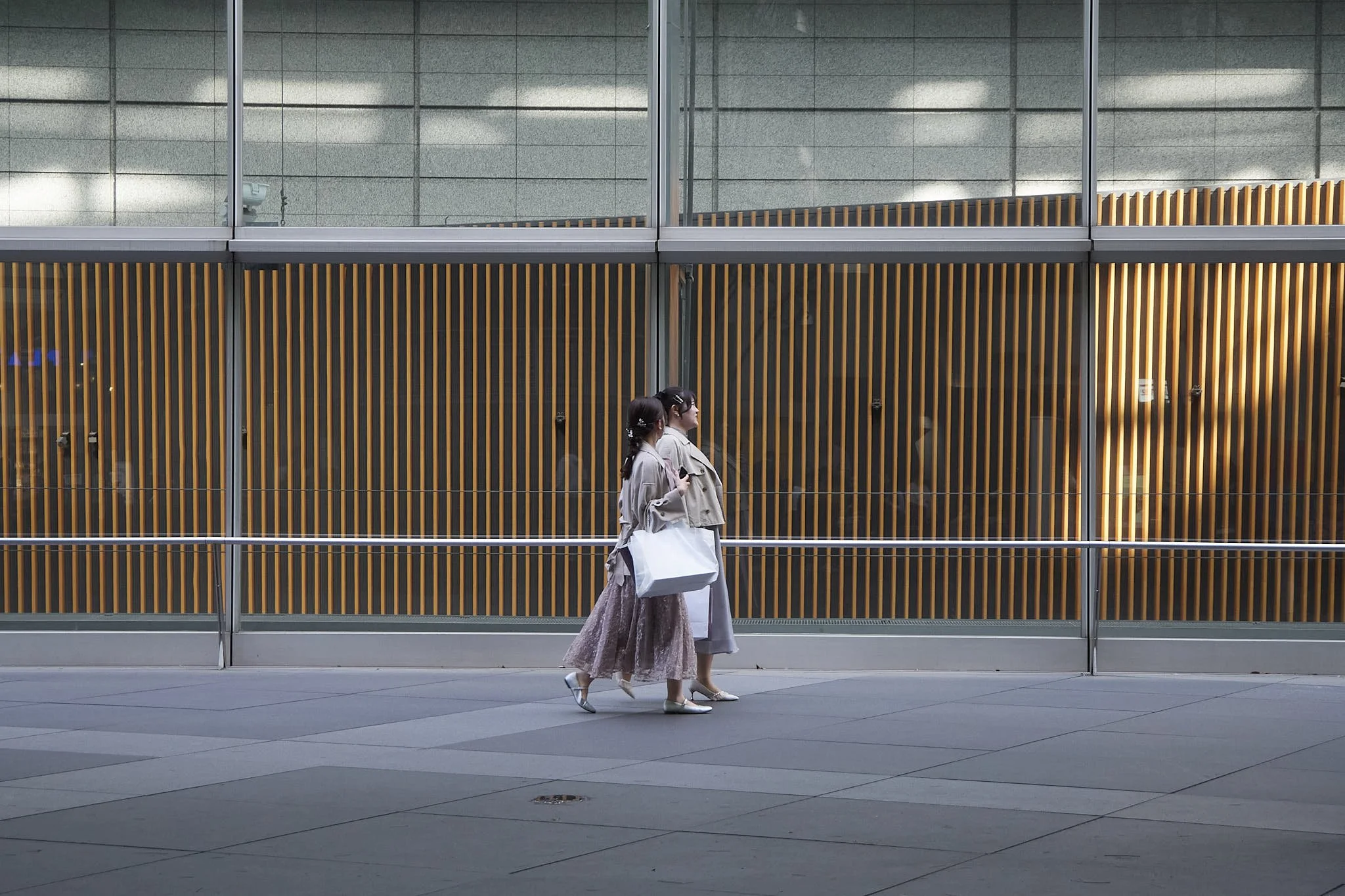
Tokyo is a prime example of the “big” light that many shiny and clean glass buildings can produce on a good day, especially Shinjuku and Hibiya.

Hibiya

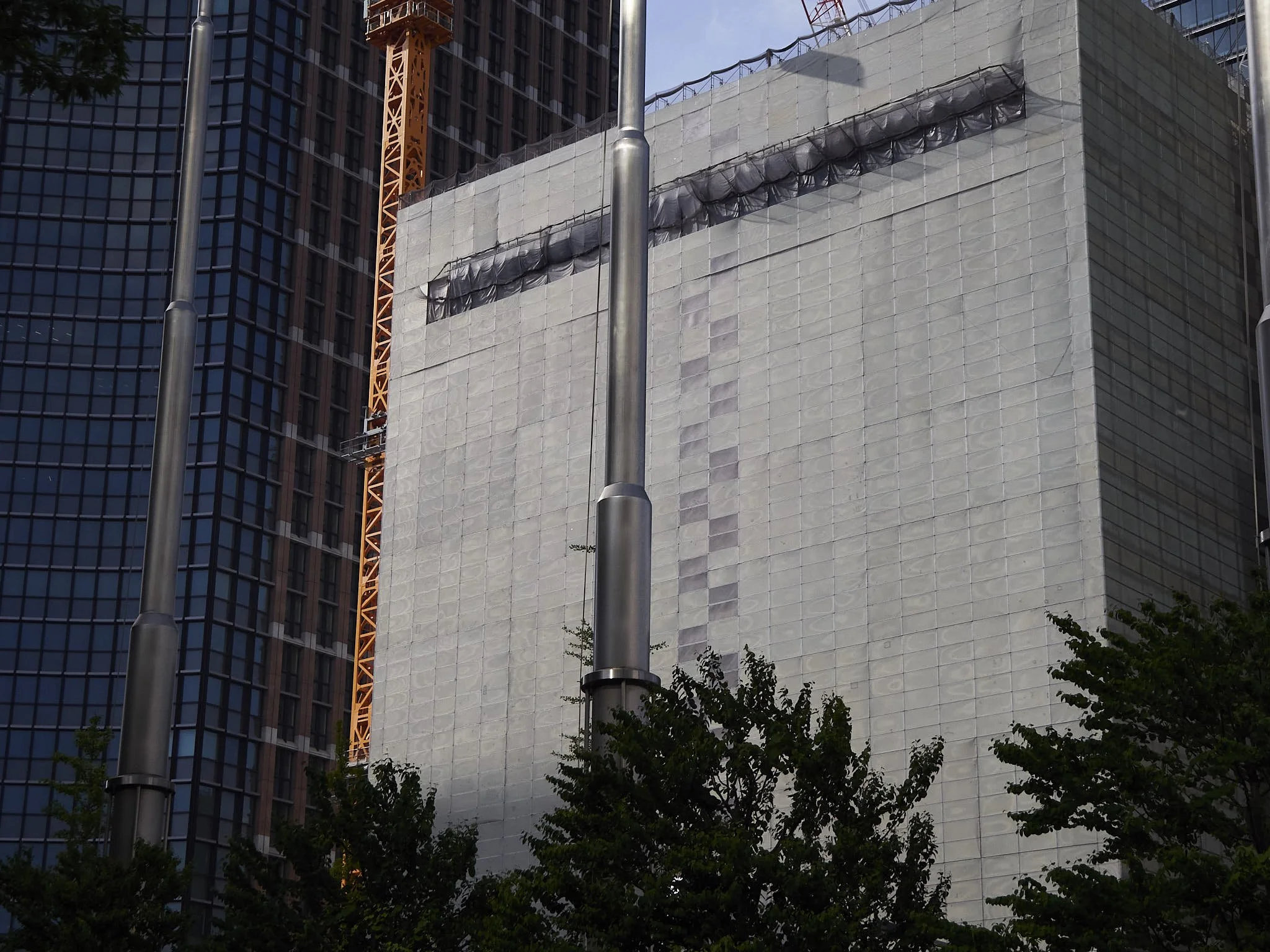
Glowing flag poles Hibiya

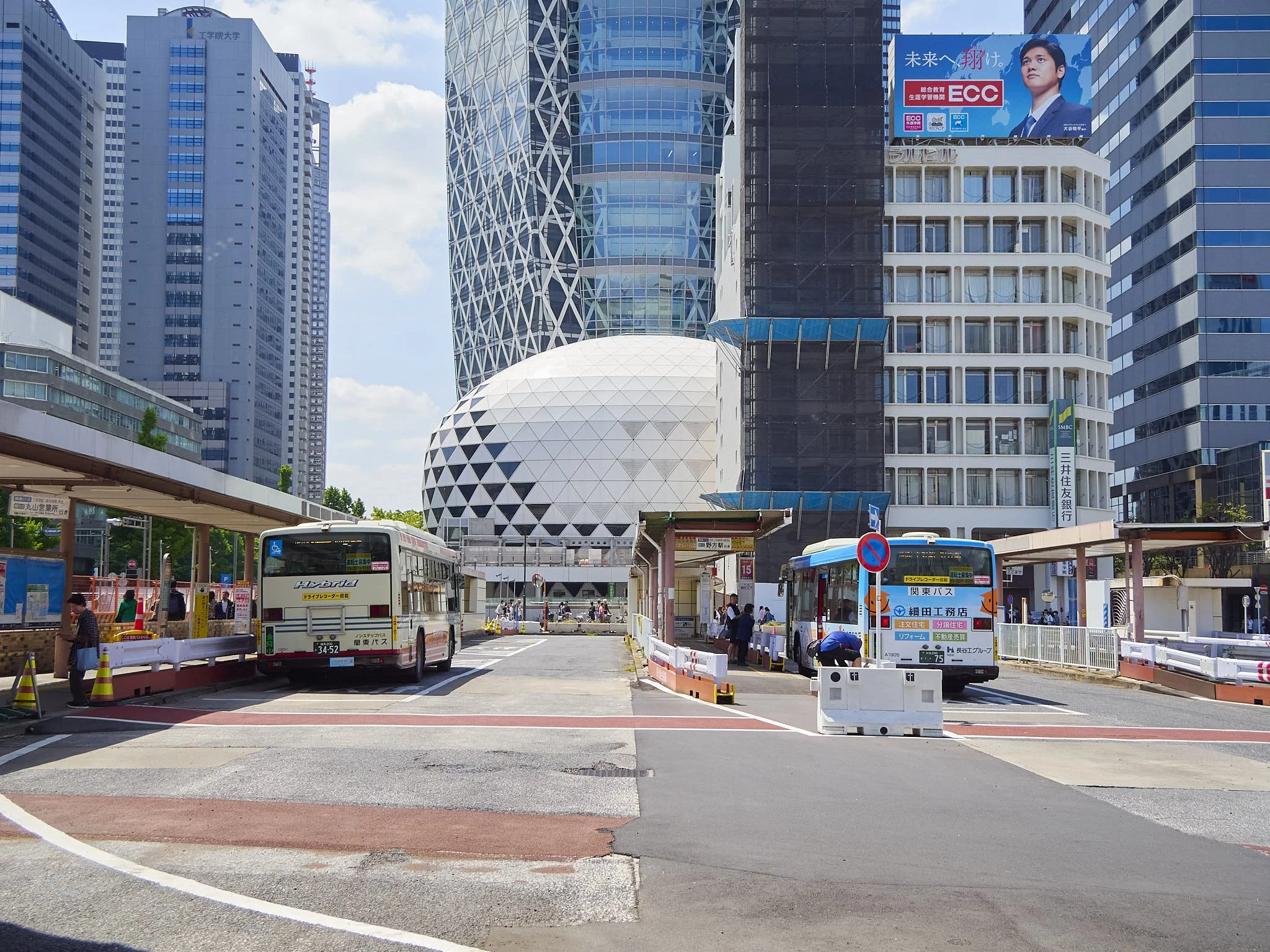
Shinjuku

Hibiya

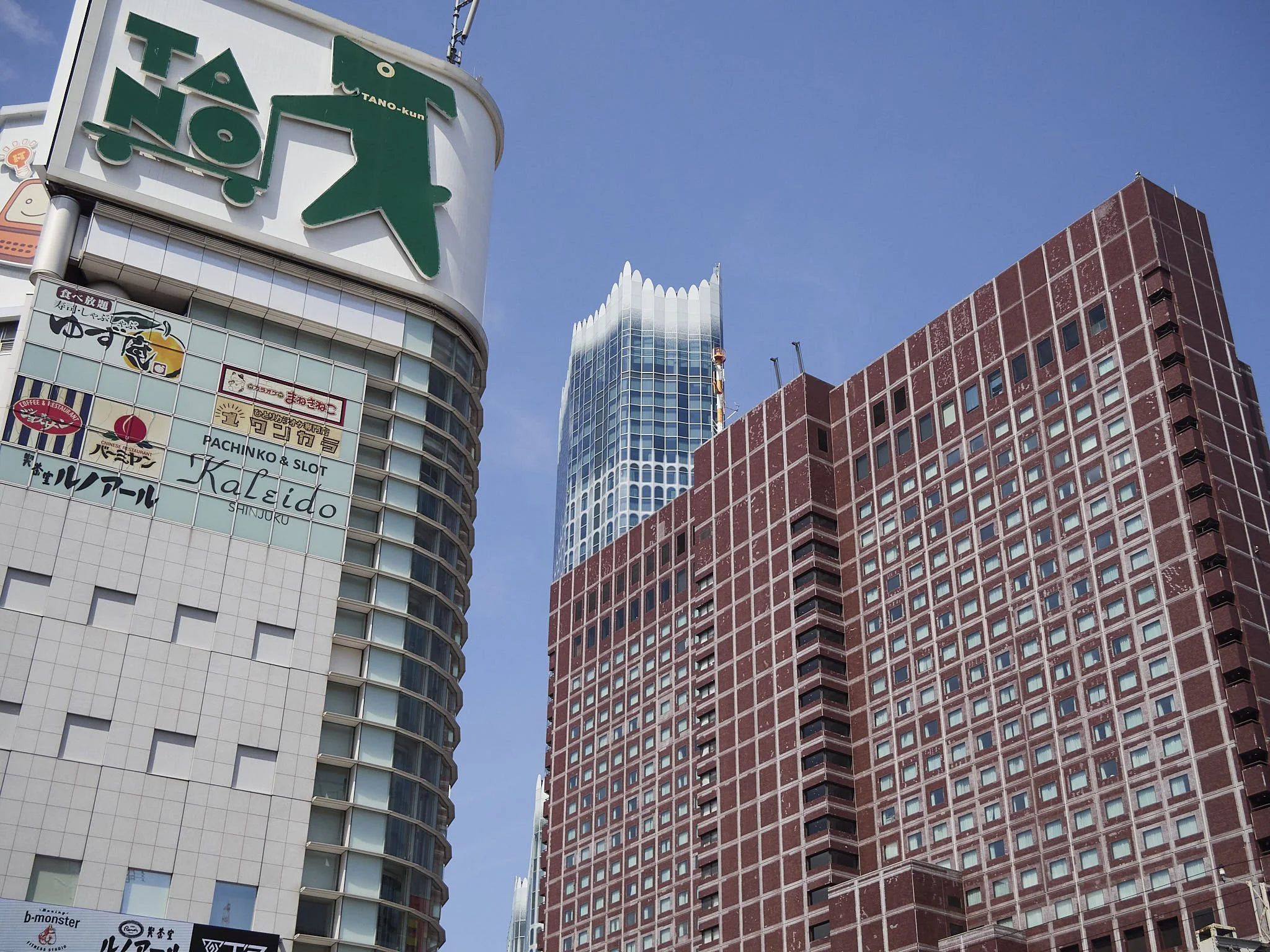
Shinjuku, the “melting ice block” building.

Hibiya

Hibiya

I find that it is the most useful of light types, there is always something happening from one direction or another and even the most mundane buildings can take on an other worldly beauty.

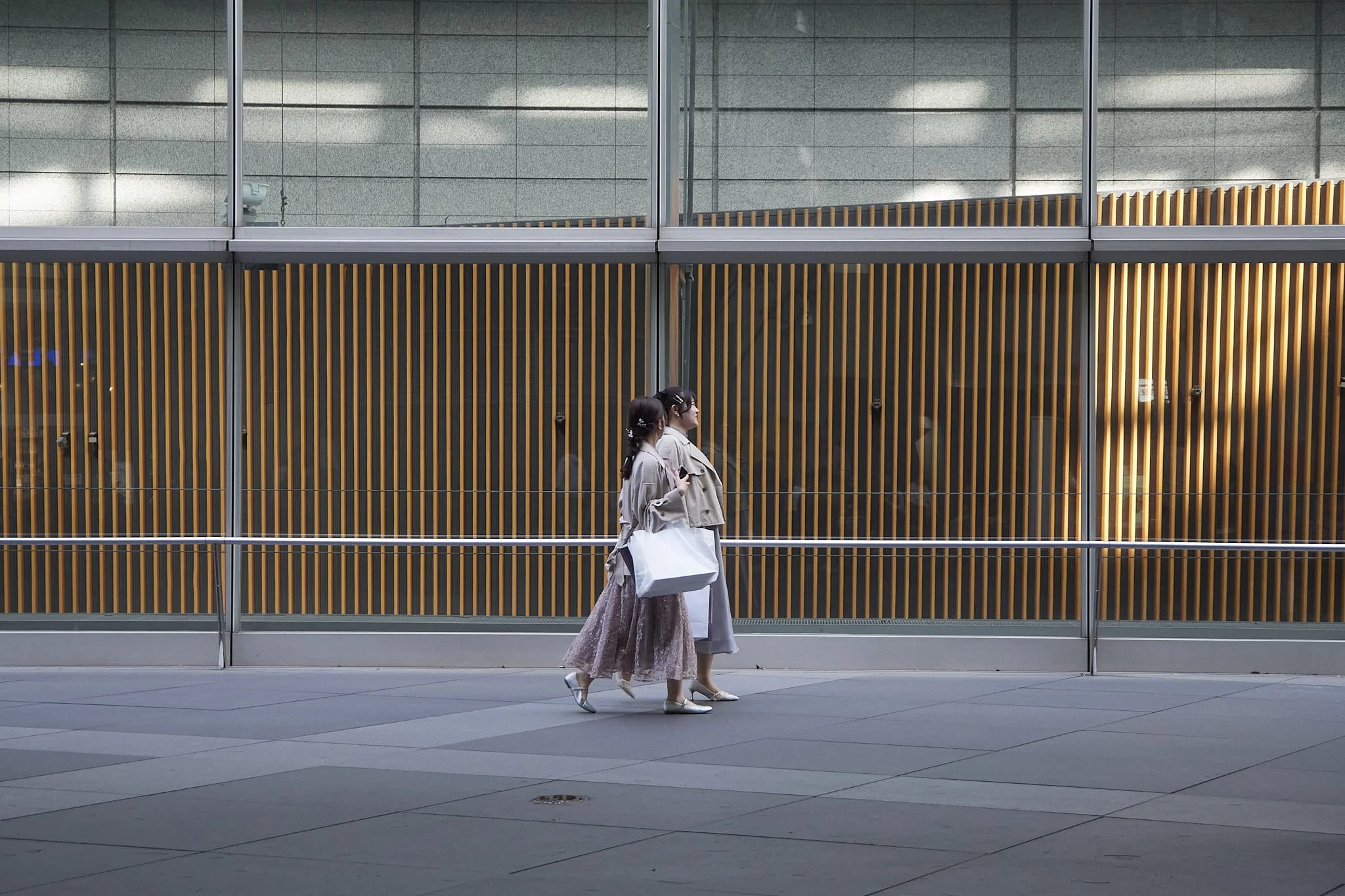
Shinjuku, channelling a little “Stephen Shore”.

Shinjuku

Shinjuku

And Just Like That, It's Over.

It has been a while since out last trip to Tokyo, pre-COVID to be precise, so it is to be expected we would miss-remember things, get scales wrong and generally get wonderfully lost as we wind our way, but the things that we discovered, suburbs that blew our minds and the pleasure of discovery through walking cannot be over stated.

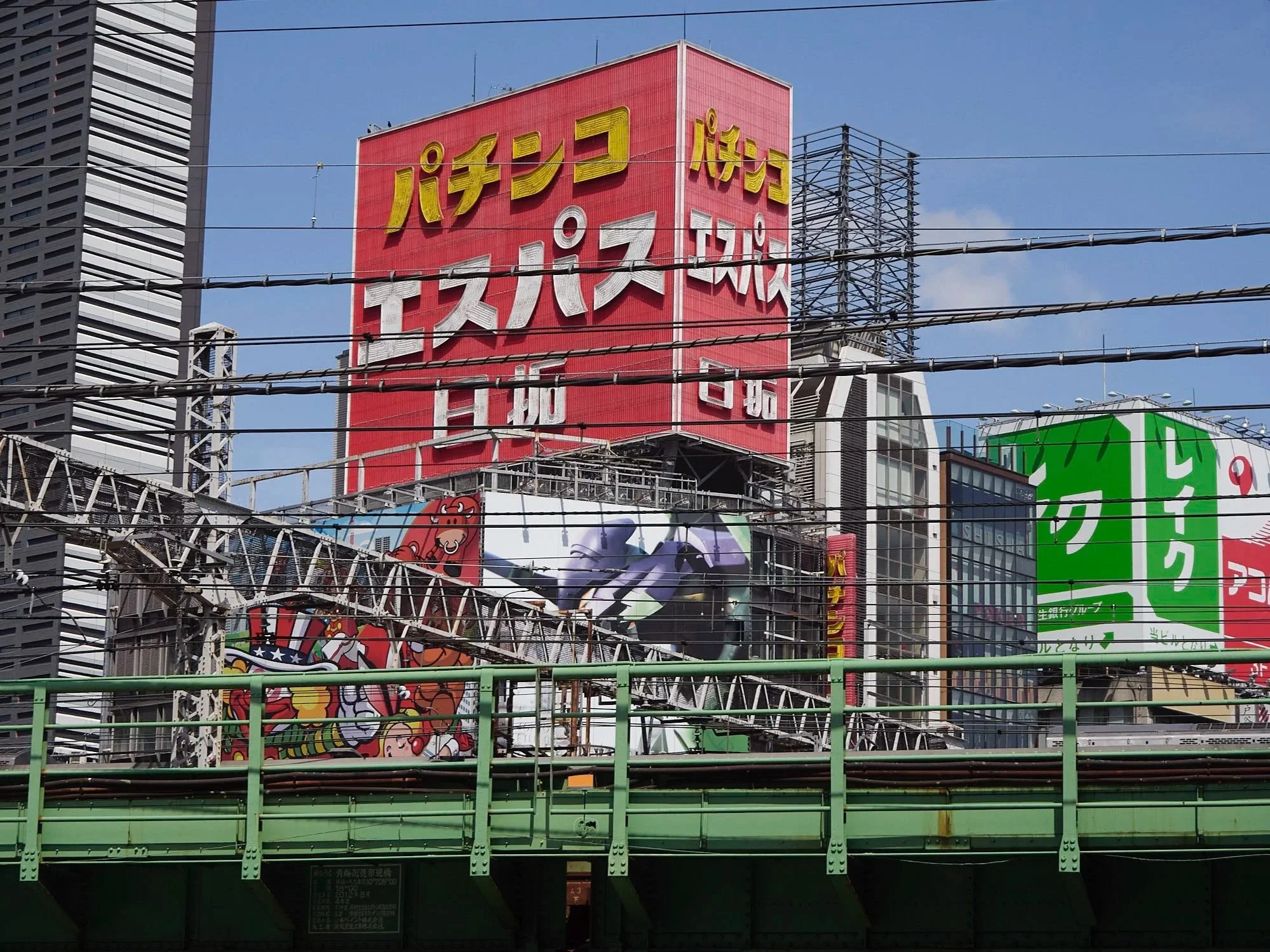
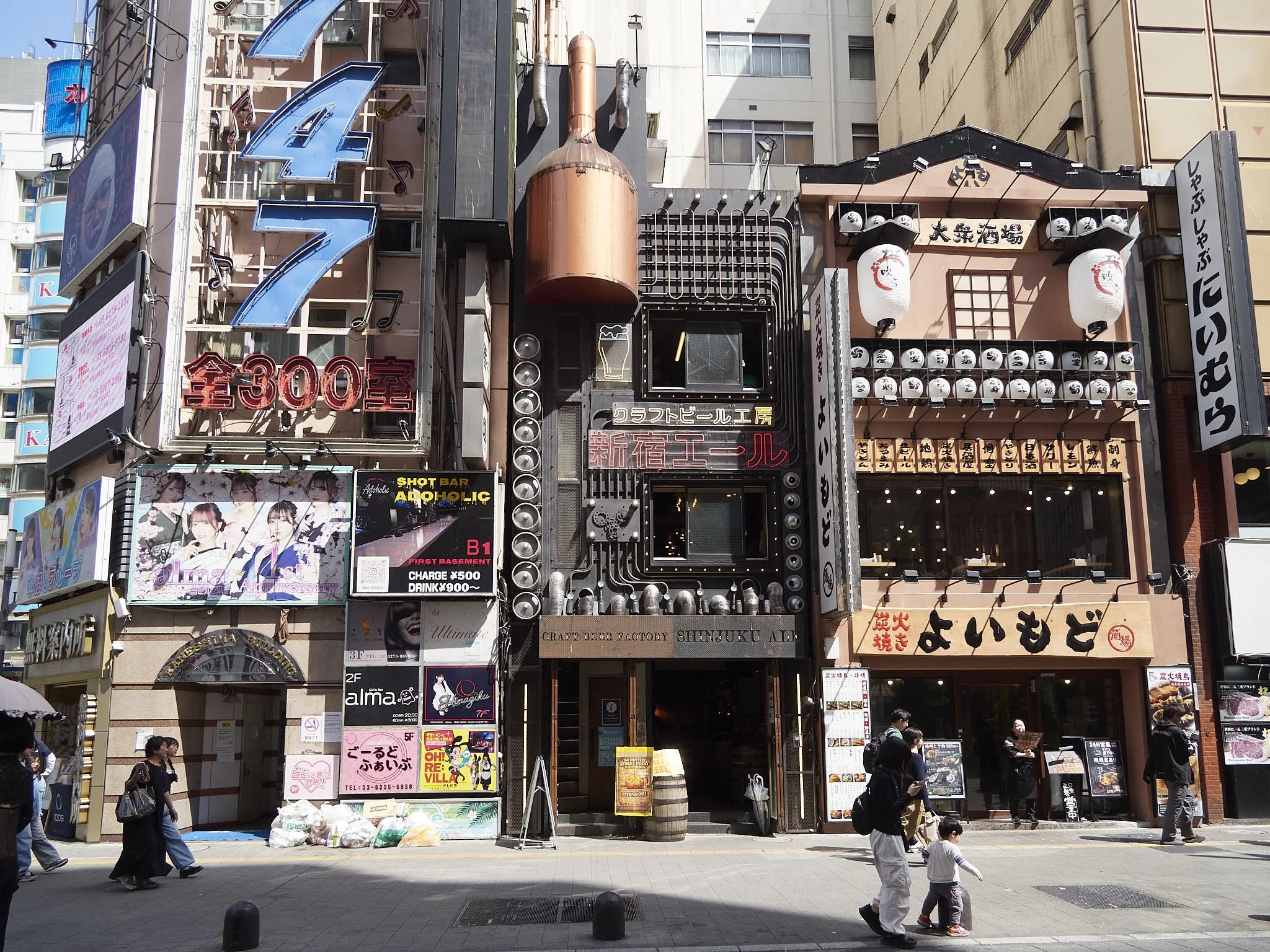
My previous memory of Shinjuku consisted of a train stop, emerging outside of a BIC camera (more on that in a moment), a wander under the train bridge to the “crazy” side, then back. It was late in the evening, a cooler time of year and one of our first trips.

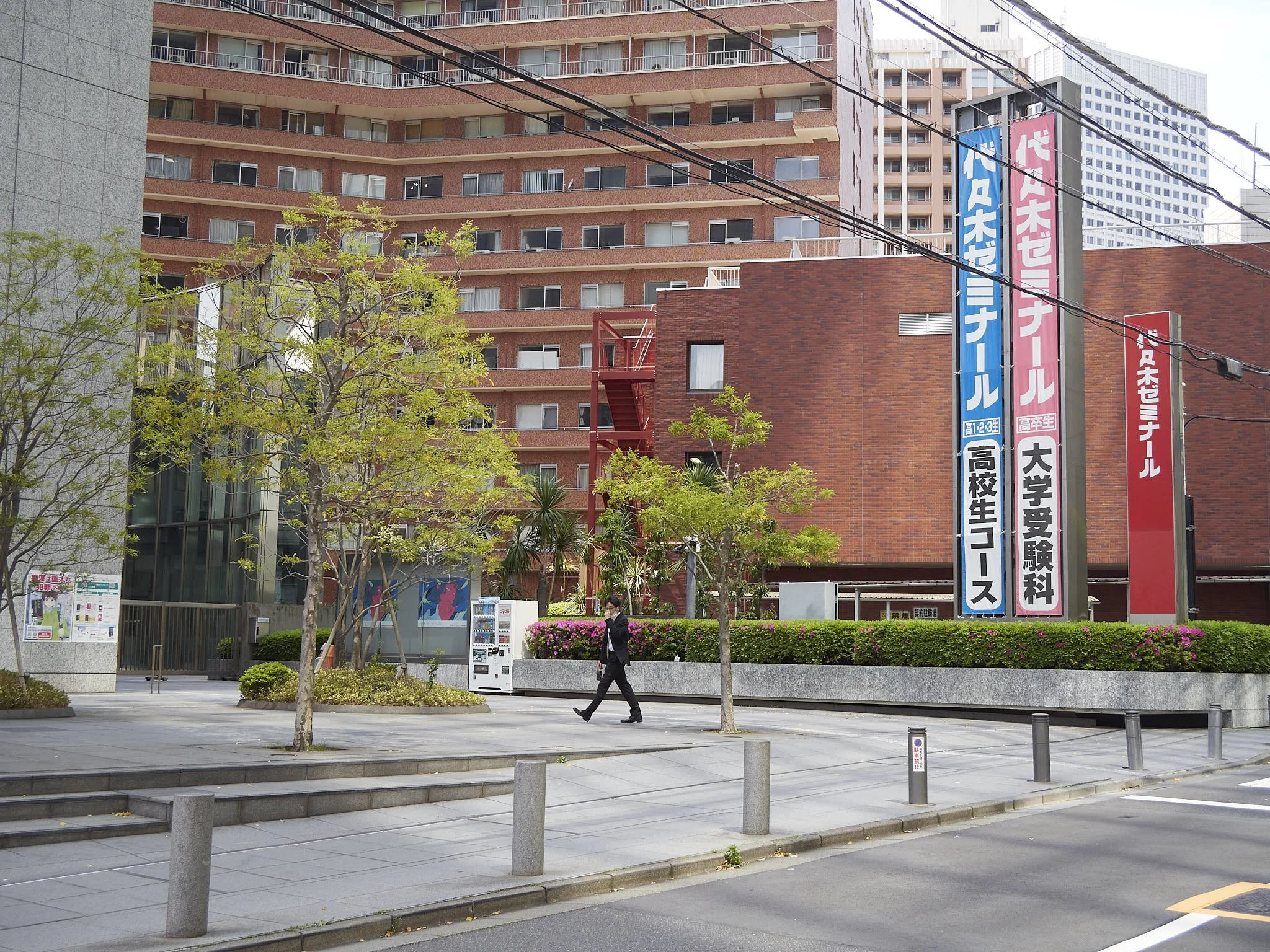
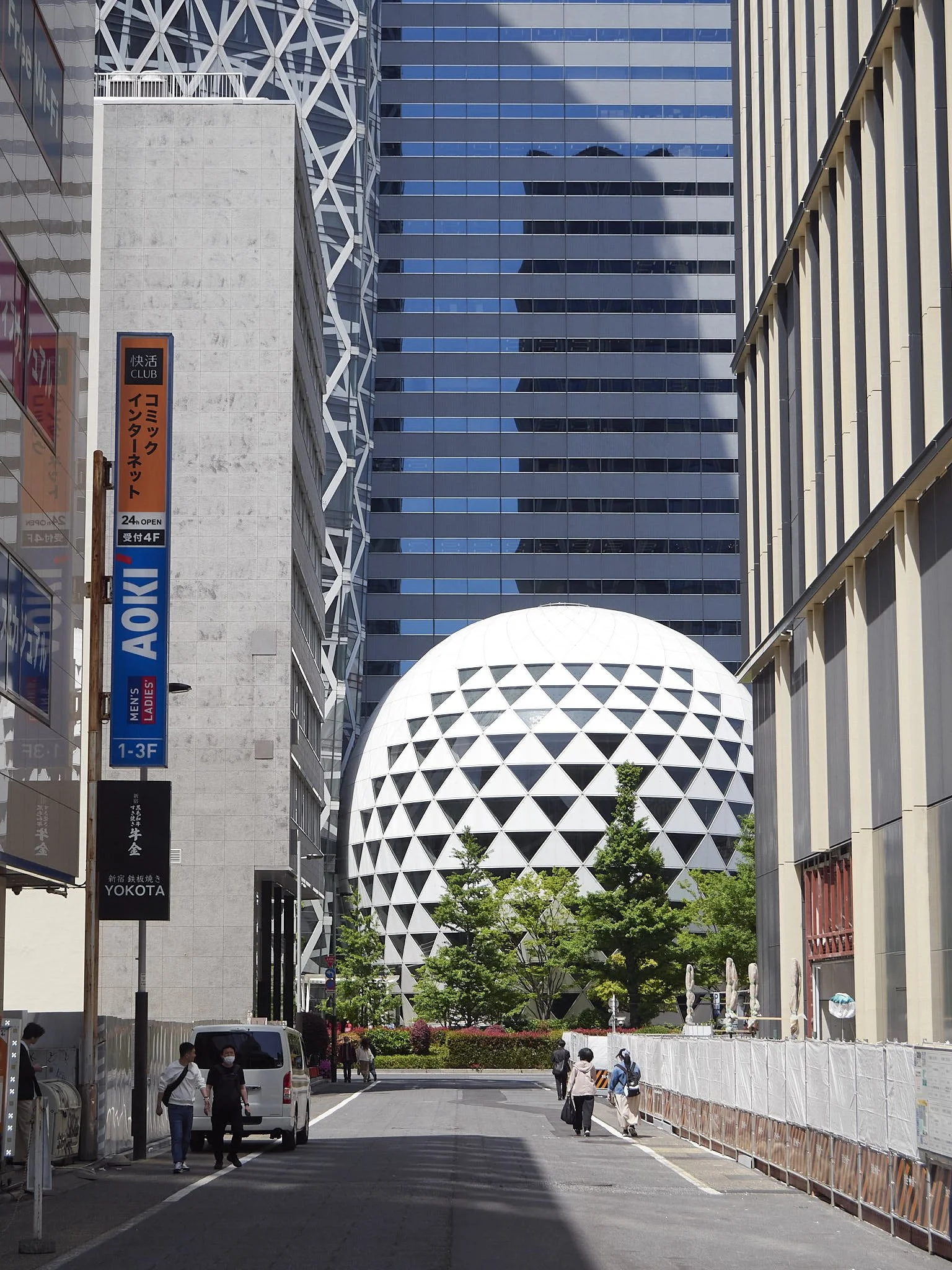
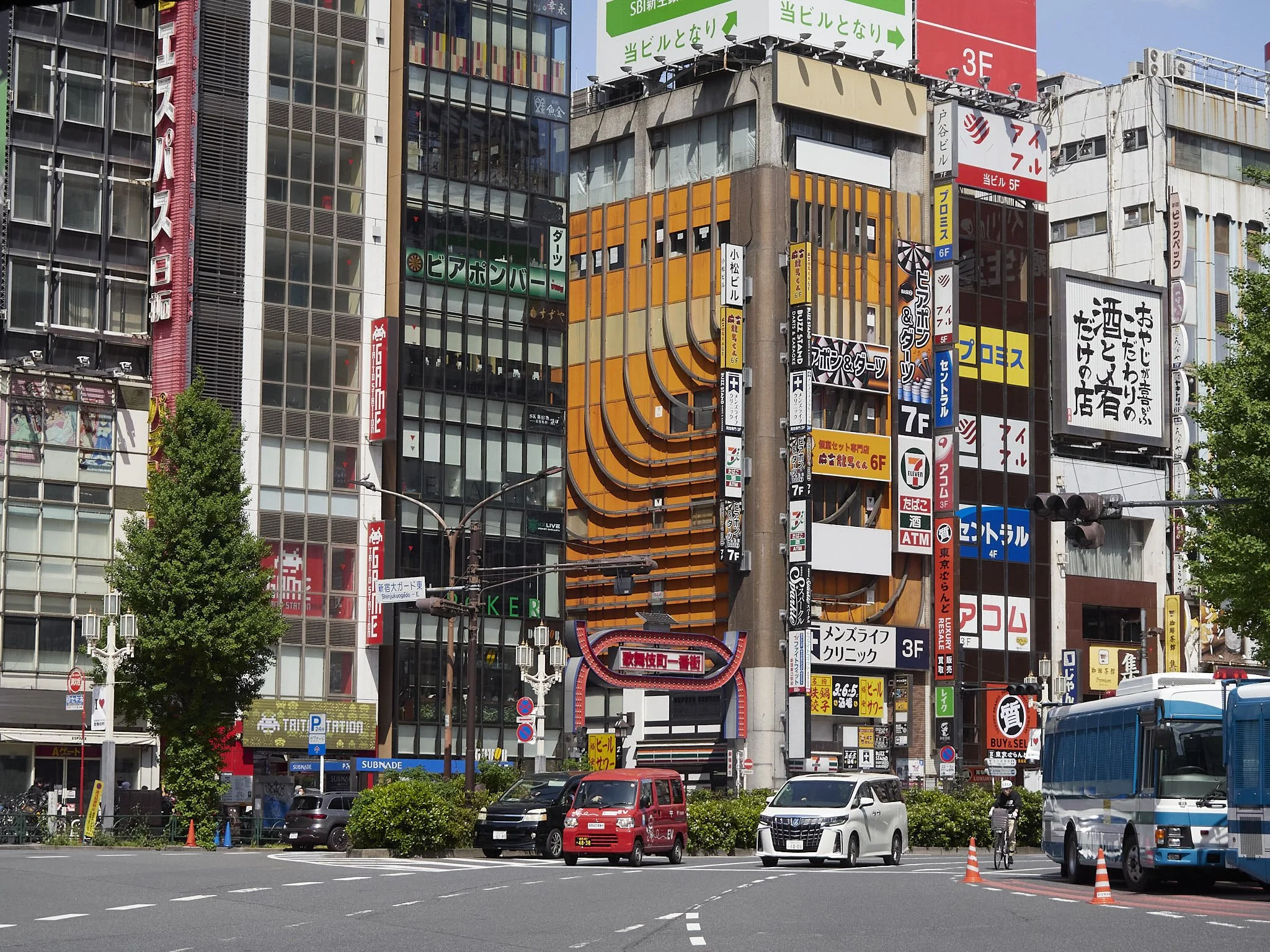
This time we came at it from the Harajuku direction, on a brilliant sunny day and the business area, a zone of massive buildings and pristine streets, bisected by the little commercial side streets all Japanese cities need to survive was mind boggling in scale, especially when you take into account it is only a part of a bigger whole.

BIC camera was a slight dissapointlemtn. No Domke bags! I picked up a F3x in olive rugged ware in Tokyo, never have I seen one anywhere else, other limited edition bags also, now it is a dissapointing offer of PD, some Mind Shift and generic Japanese brands.

Day 5 People, People, People

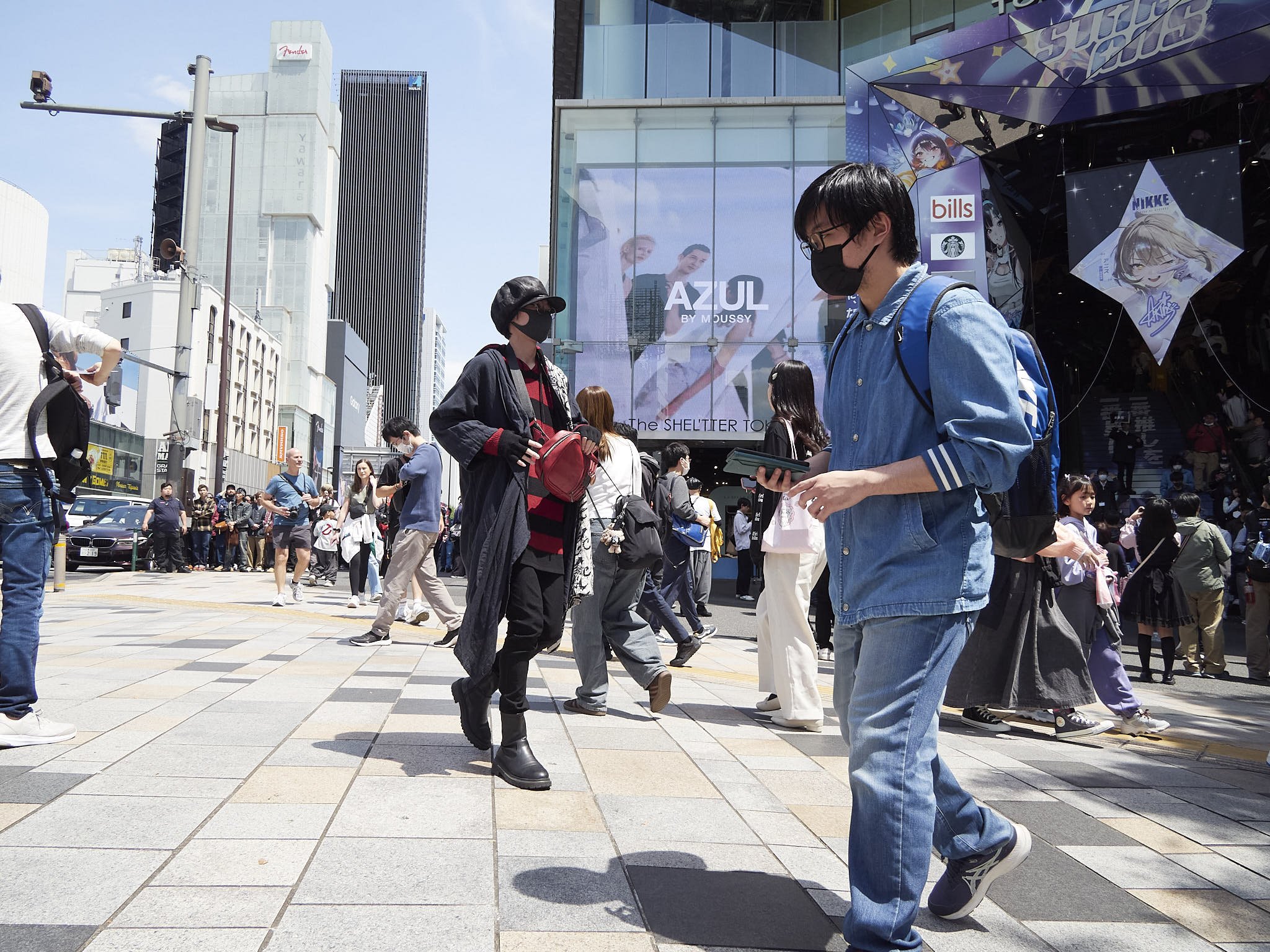
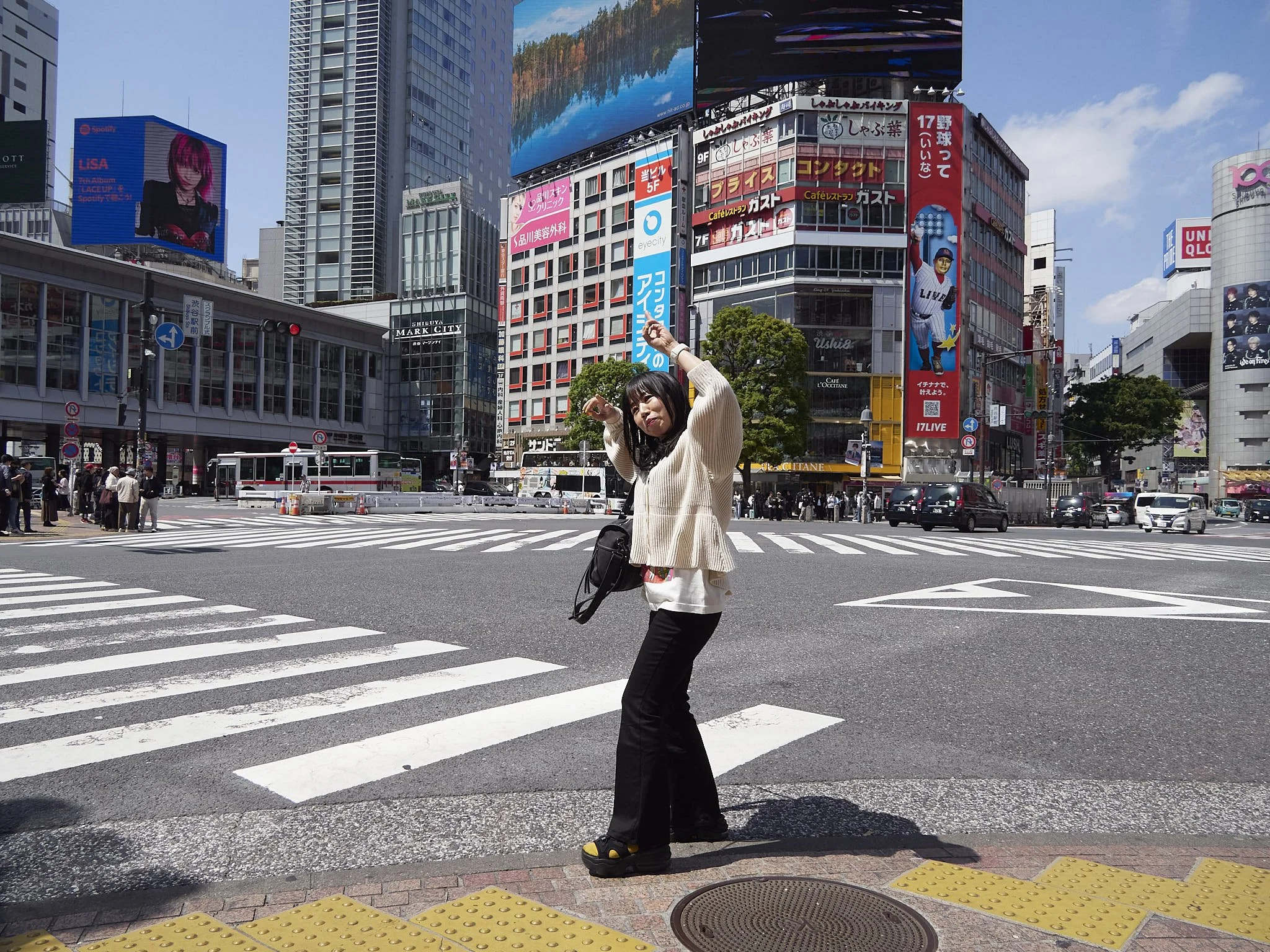
We did the Sunday gauntlet of Shibuya, Harajuku, Shinjuku, back to Harajuku.

Lots of km’s lots of people, lovely day.

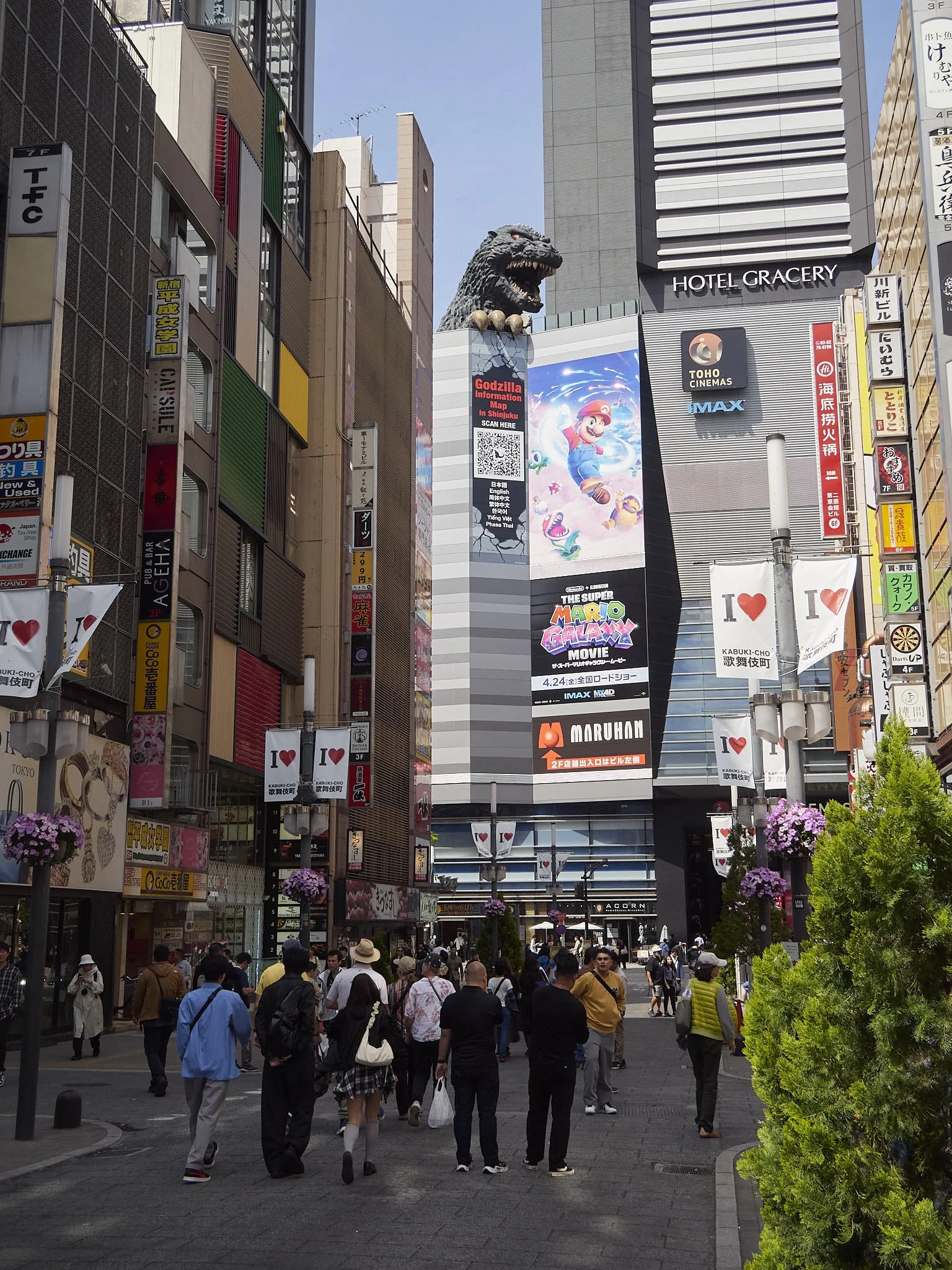
Big eye opener was Shinjuku. We had been once before, but came up from the underground late one evening on the “Godzilla” side. The shiny commercial district, which we totally missed was a real eye opener.

Day 4, Best So Far

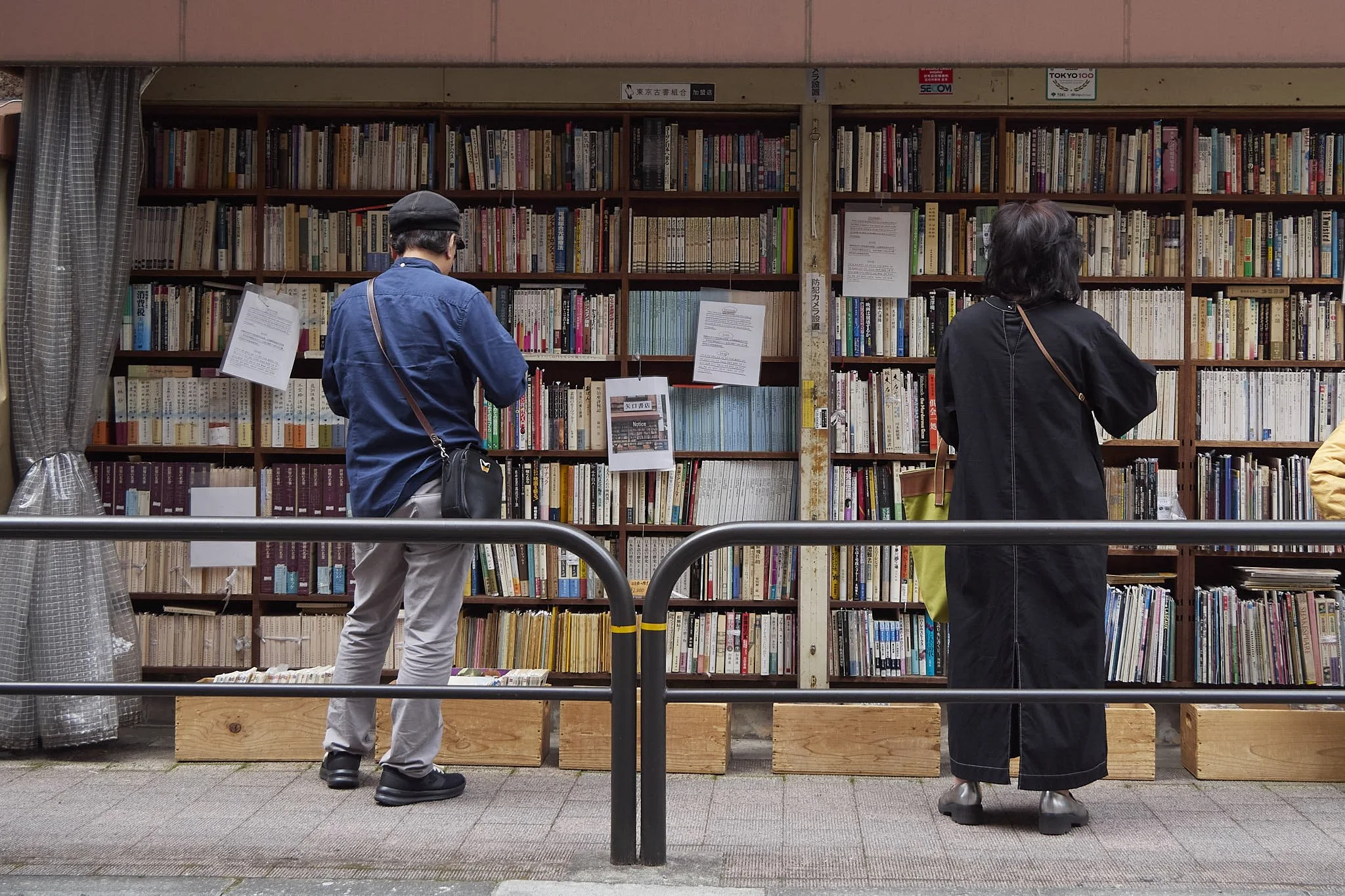
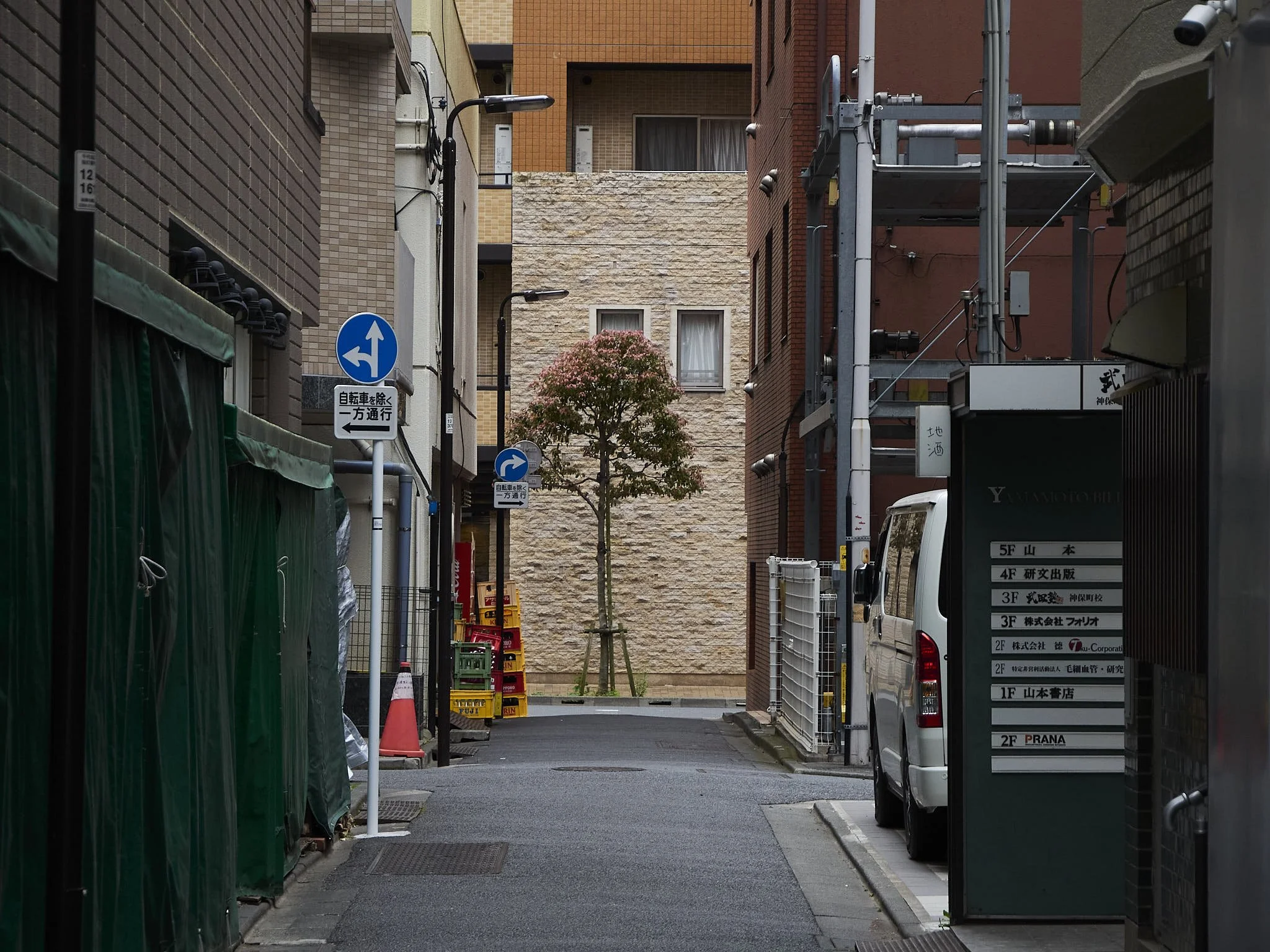
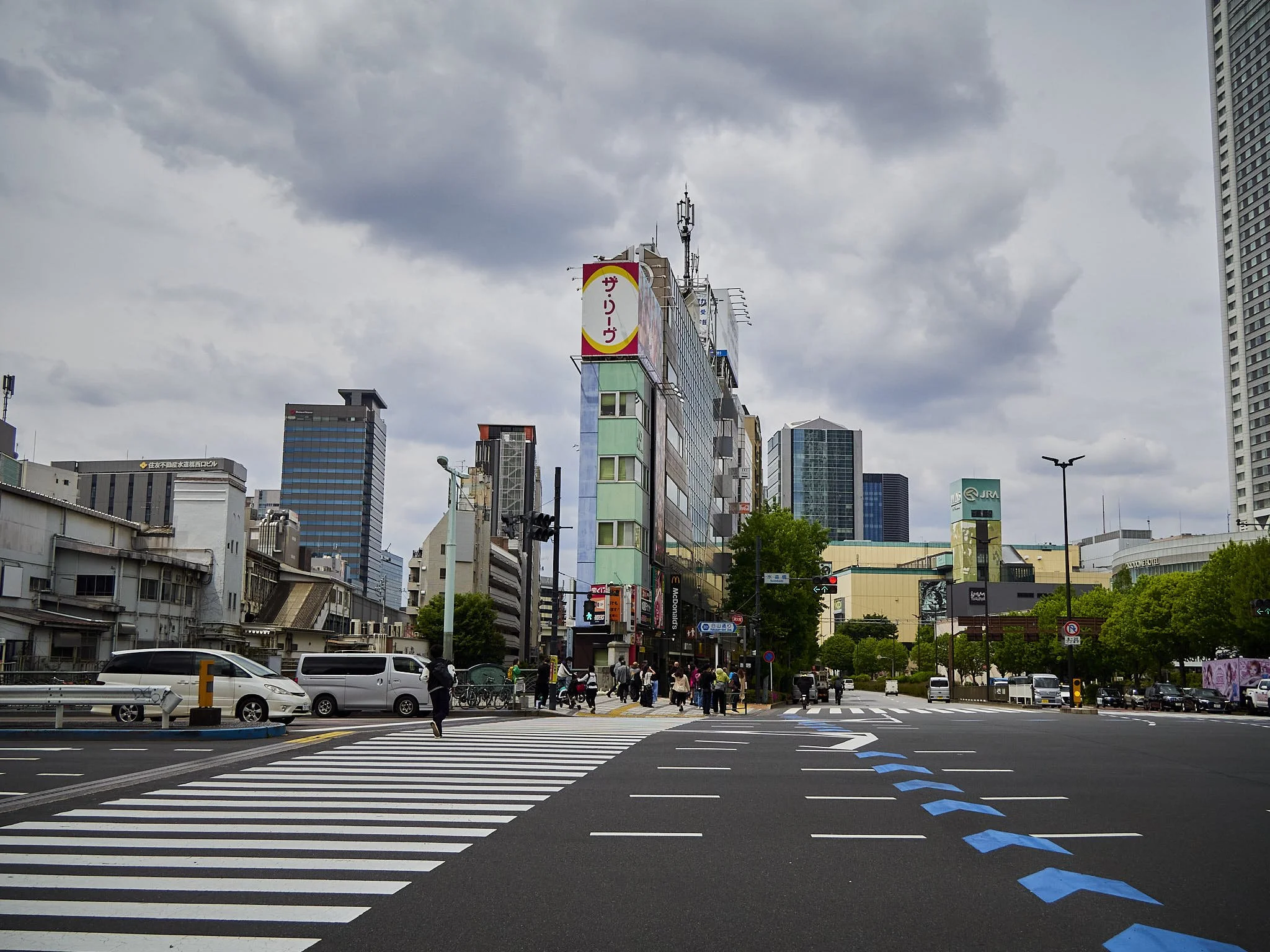
A long trek today, 15km roughly from the old Jimbocho book district to Tokyo Dome, the
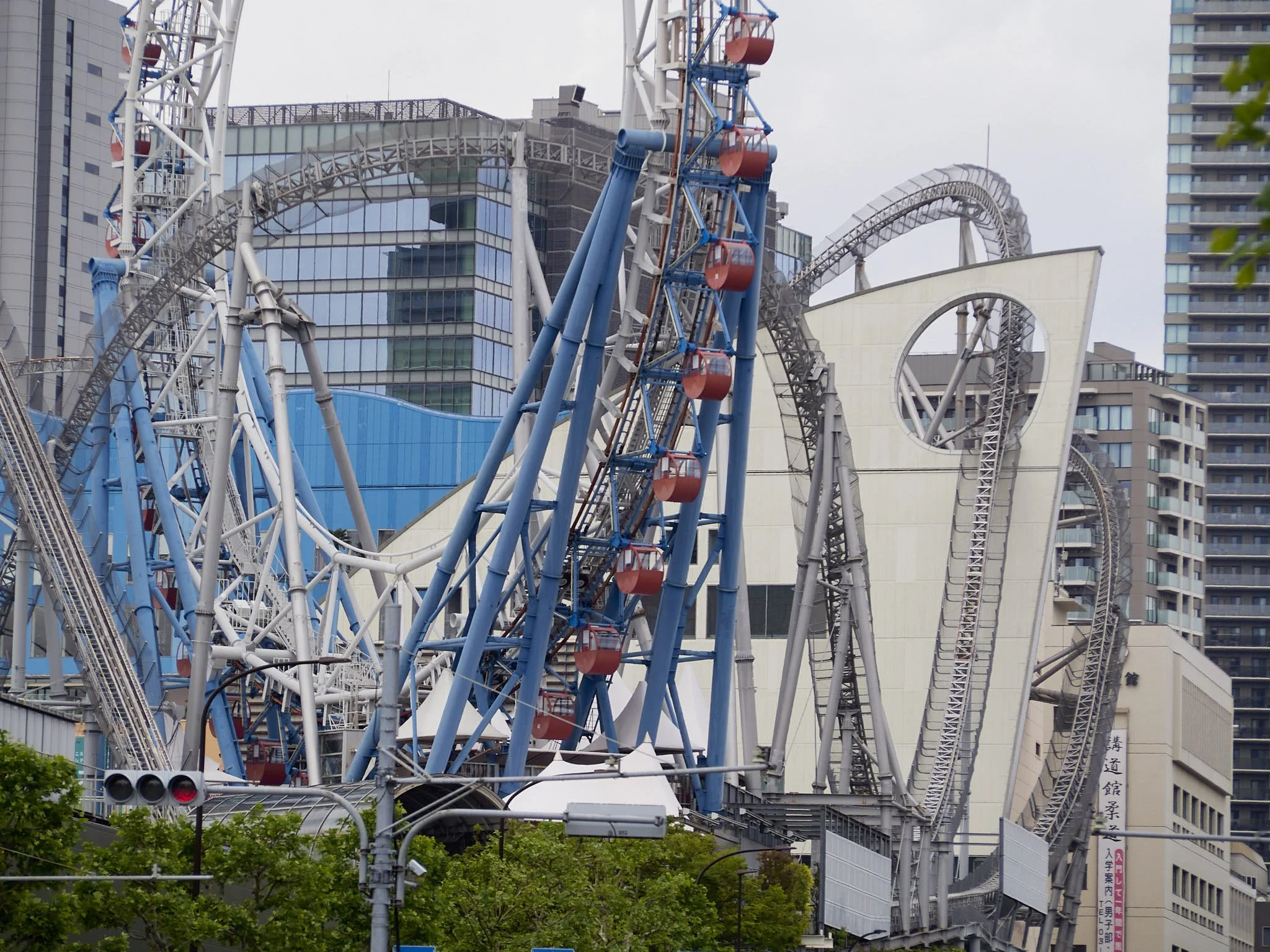
Koishikawa Korakuen gardens there, through the Kagurazaka French quarter then to the Palace, along the exclusive Marunouchi Naka-Dori Ave shopping strip then into Ginza.

The whole day was shot on the EM10.2 and 12-60 (mostly) or 40-150 kit zooms.

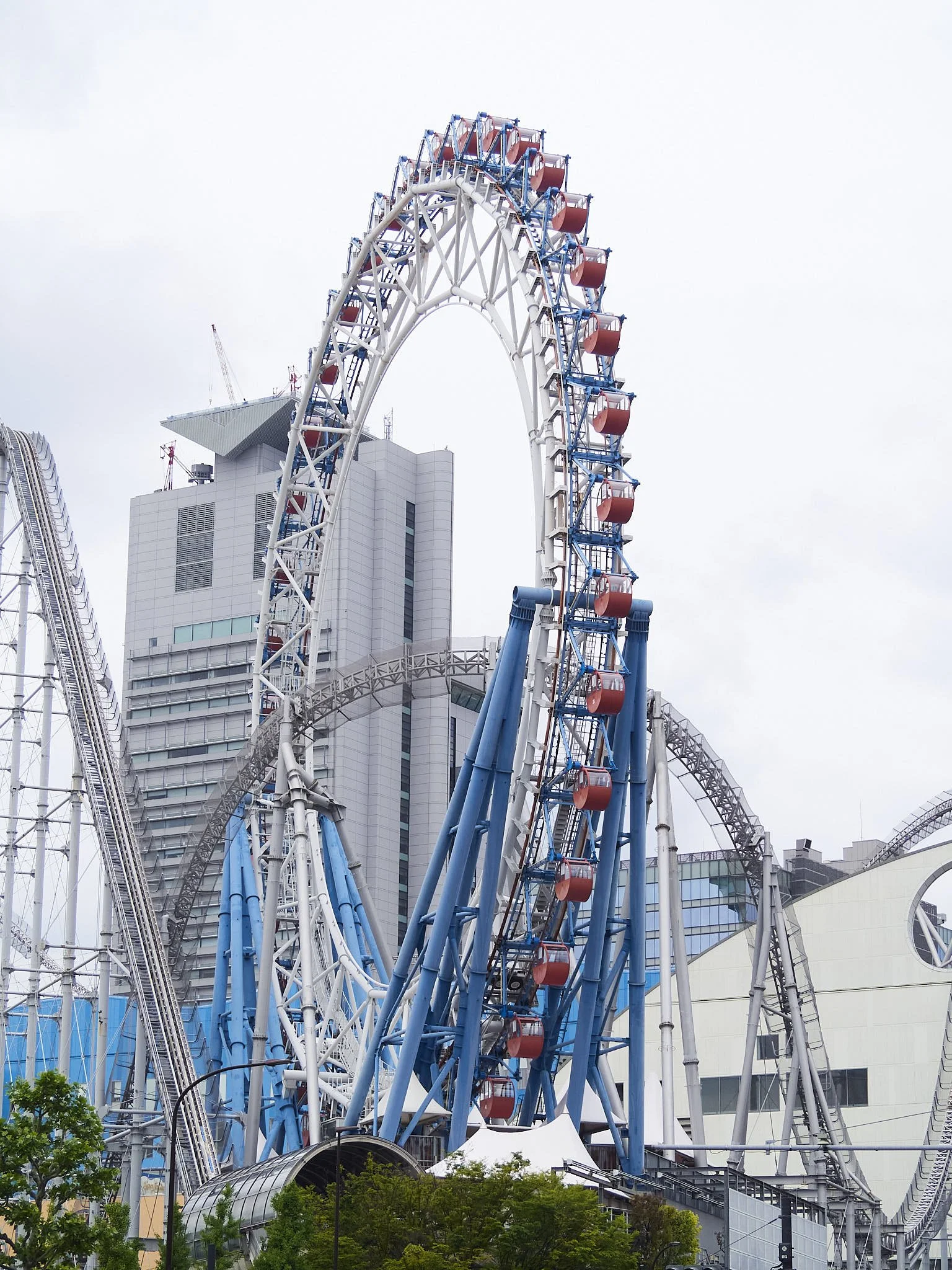
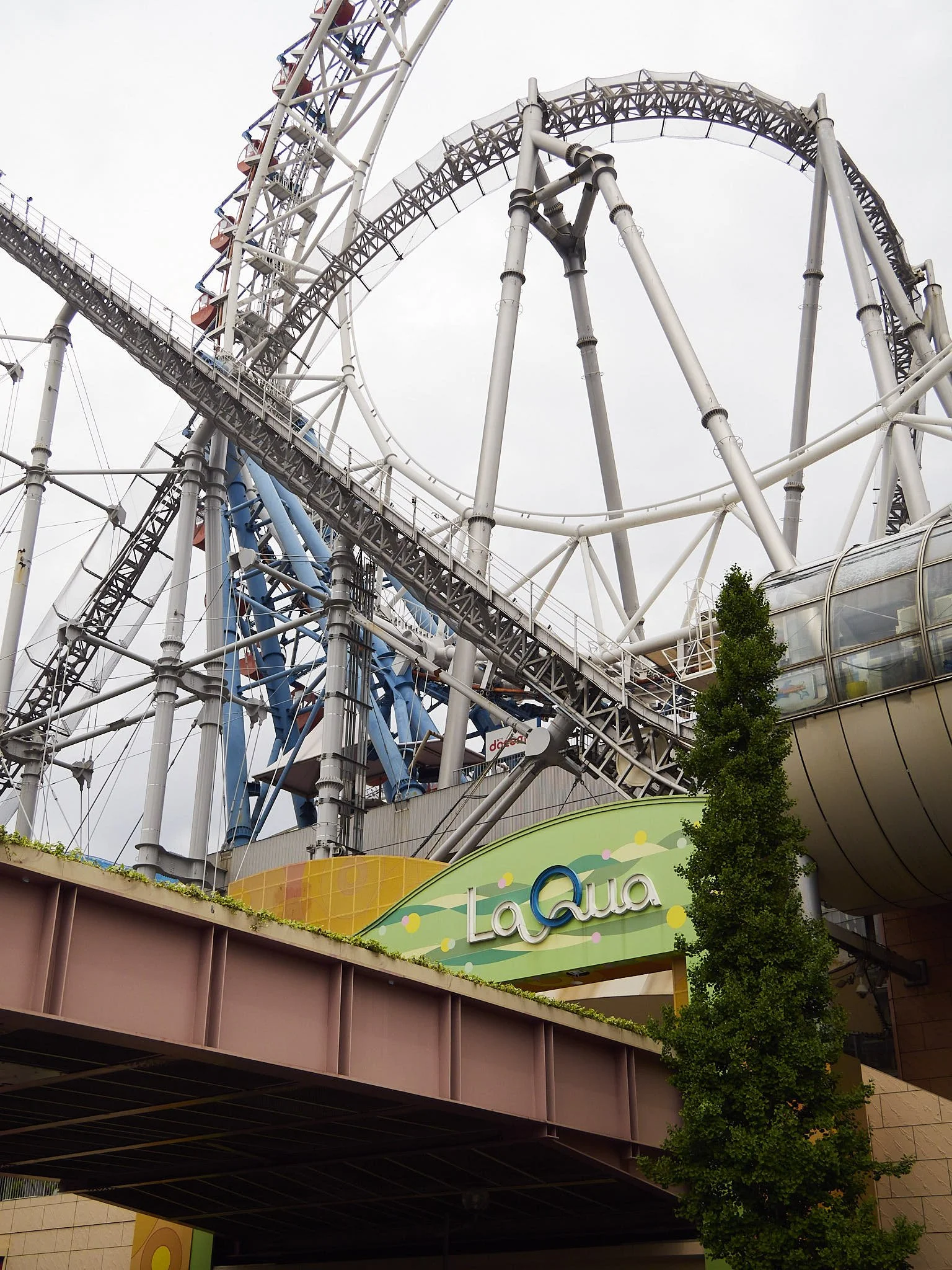
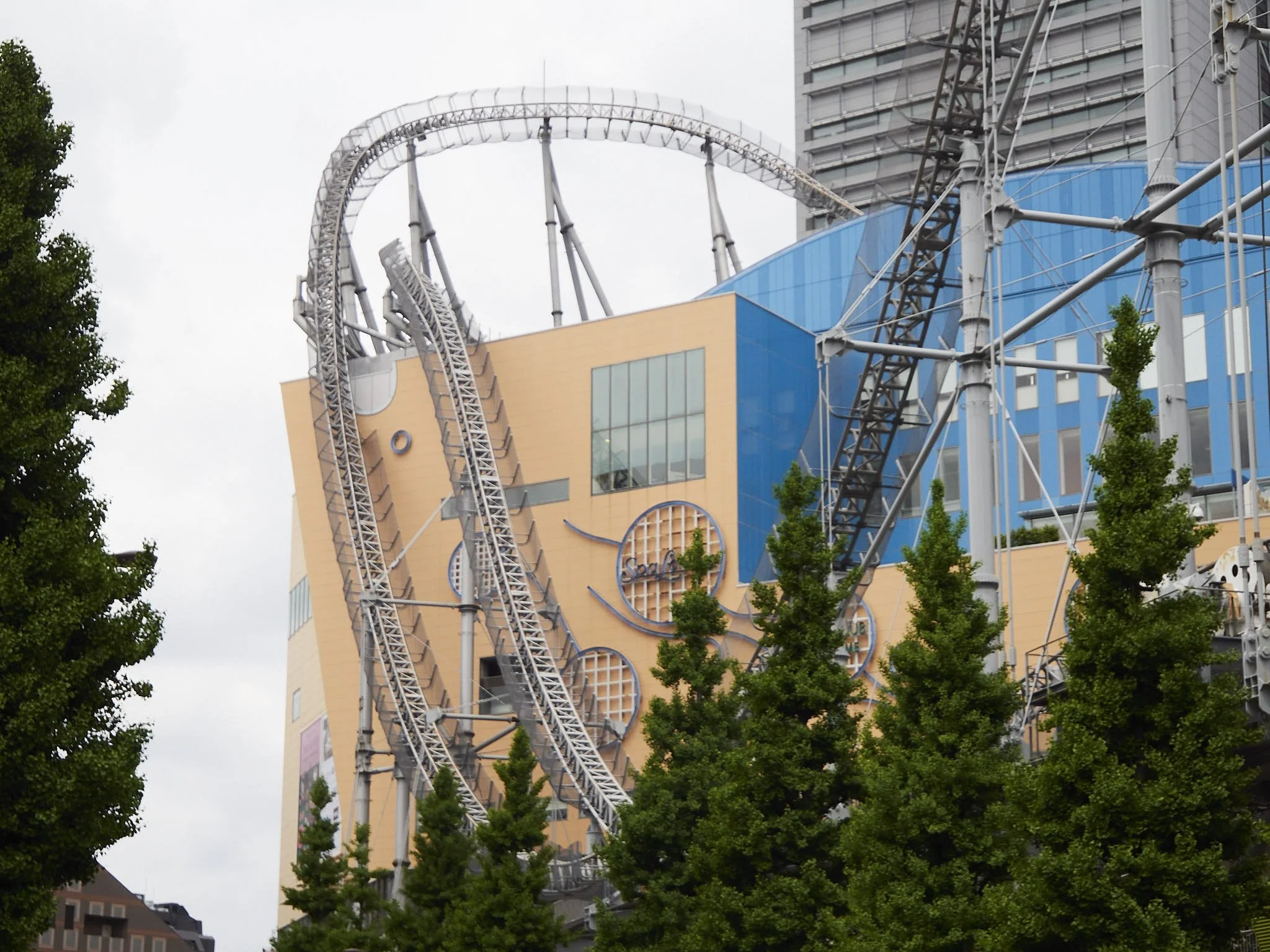
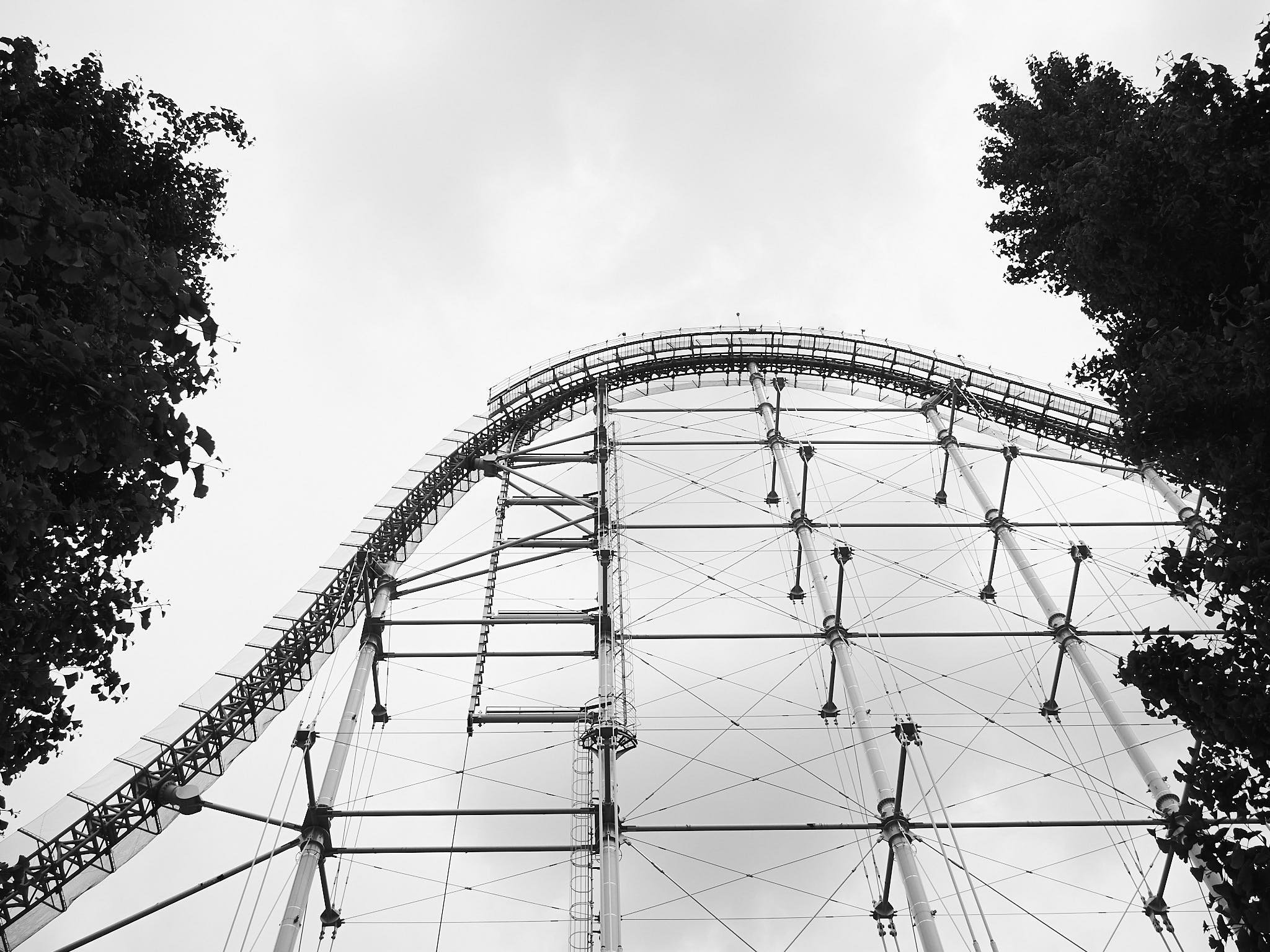
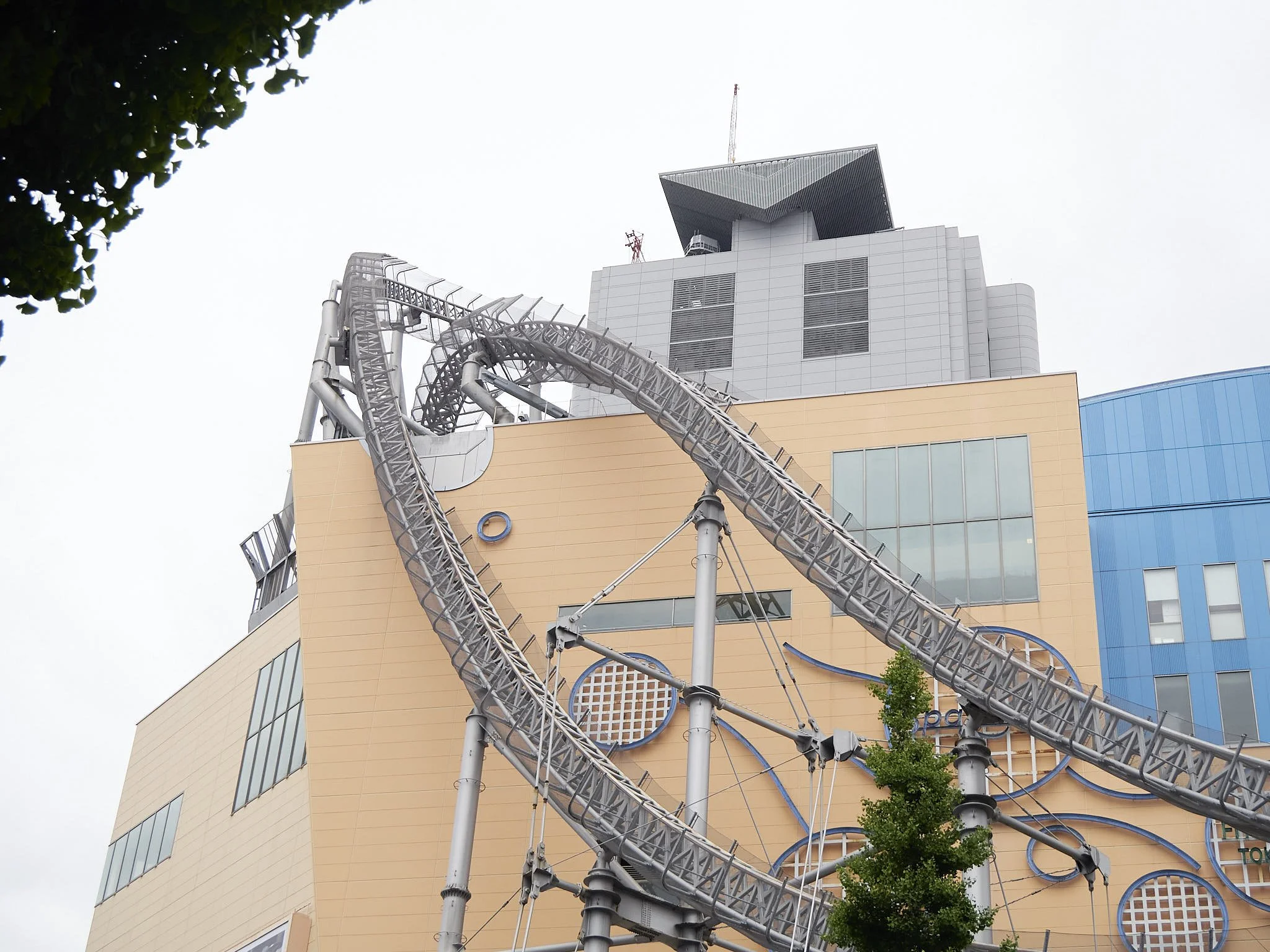
Still blows me away there is a whole amusement park in the middle of Tokyo.

Well, Sometimes Things Happen, They Just Do!

I have slowly gone cold on the BMPCC4k idea.

It may happen, but I am leaning towards an all Panasonic family tree, with or without B-Raw.

The camera would provide me with beautiful footage I have no doubt, but it would not necessarily match my other cameras and the G9II really could be upgraded for less, or maybe I will just sit on what I have.

My email feed did tempt me though with something I chose not to resist.

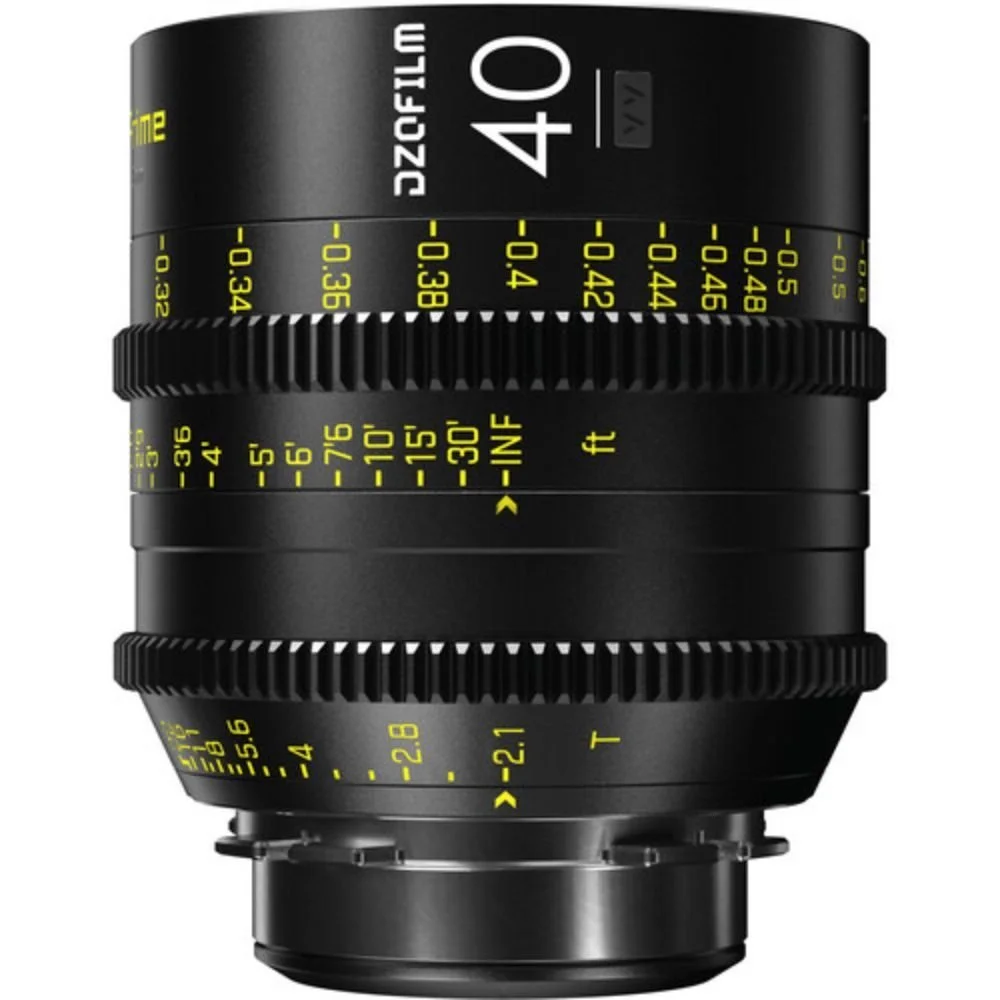
The DZO Vespid 40 T2.1, on special for $920au (only this lens of the set, the one I originally wanted, the “one” lens), so I jumped as I had also been paid by several clients in the same email batch. Basically I have saved enough to pay for an adapter.

The real deal?

This is my 40/60 and 70/80mm on various formats*, basically all my favourite focal lengths for video in one lens with two adapters (I have a cheap EF-MFT adapter, so we will see).

I know the Mk2’s are technically better, but I am not spending $2000au on a lens and I have a need for a smooth-sharp cine lens, nothing sharper as I have sharper, so the older set appeals more.

Crazy?

Probably, but I also tend to go with big fat obvious signs when they are delivered.

What this purchase may do for me is;

  • Put the rest of my lens stable, cine and not into perspective. Try as I might, I cannot find a comparison of the Vespids to cheaper cine lenses like the Spectrum or Hope glass or even the Lumix S-Primes.

  • Give me a format and mount proof investment lens, any mount any brand. “Marry the lens, date the camera (brand)”.

  • Hopefully give me the special something, or not.

Along with the L-mount IRIX 150, I can cover 40-225mm, so if successful, I may look again at the 25mm, or not.

*Fullframe, APS-C, 1.8x MFT, 2x MFT.

Japan Kit

So the actual Japan kit became;

2x EM10.2’s, both with screens that are faulty (will not work flat or horizontal, but ok in between at about 45 degrees).

Usually just one of these in a bag will have the alternate to below, so a 12-60, 40-150, 9 or 45mm.

1x Pen Mini 2 on a shoulder strap with 17mm attached (street grabs).

Nothing extravagant, nothing precious and nothing heavy. Does the job.

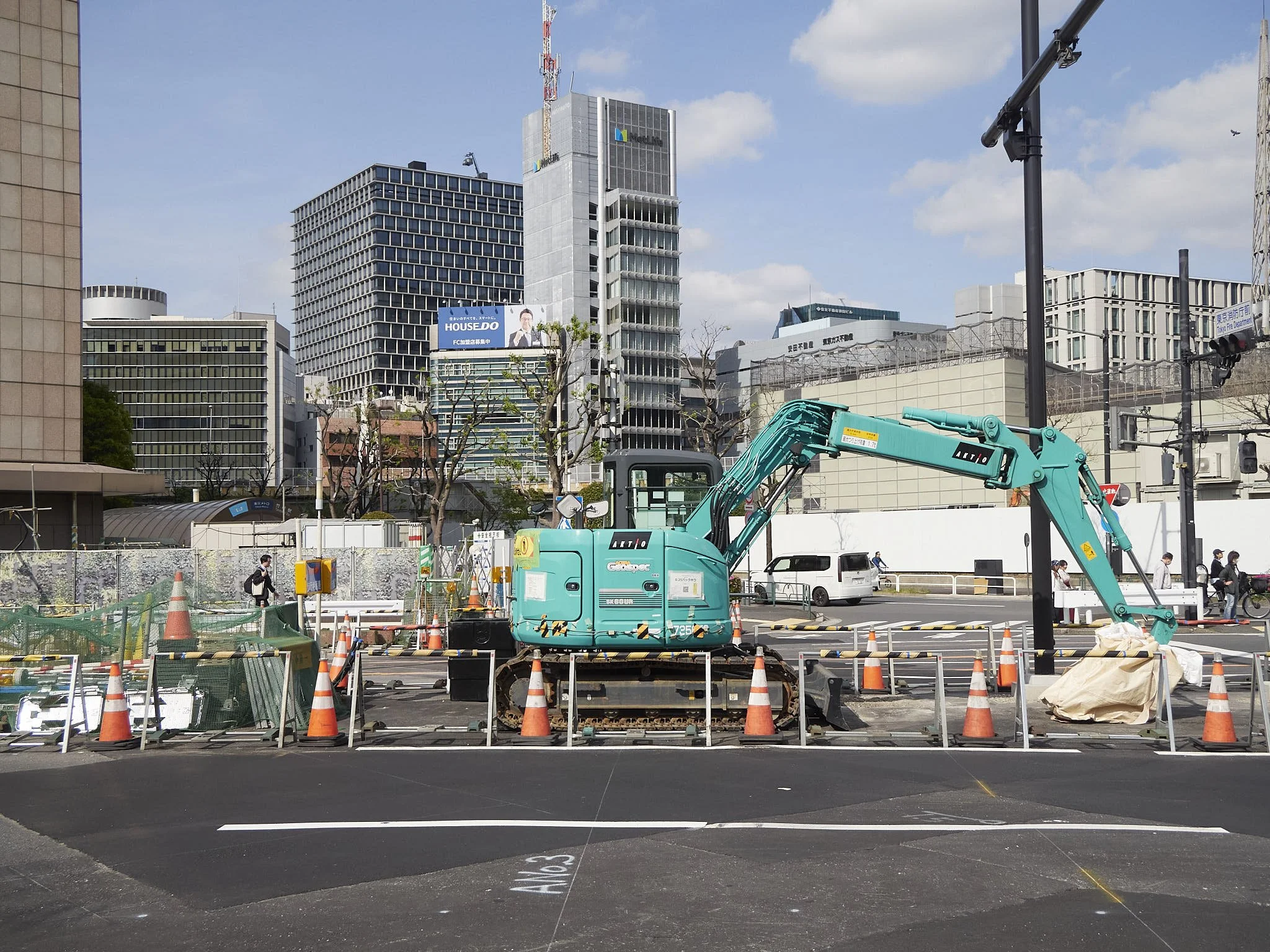
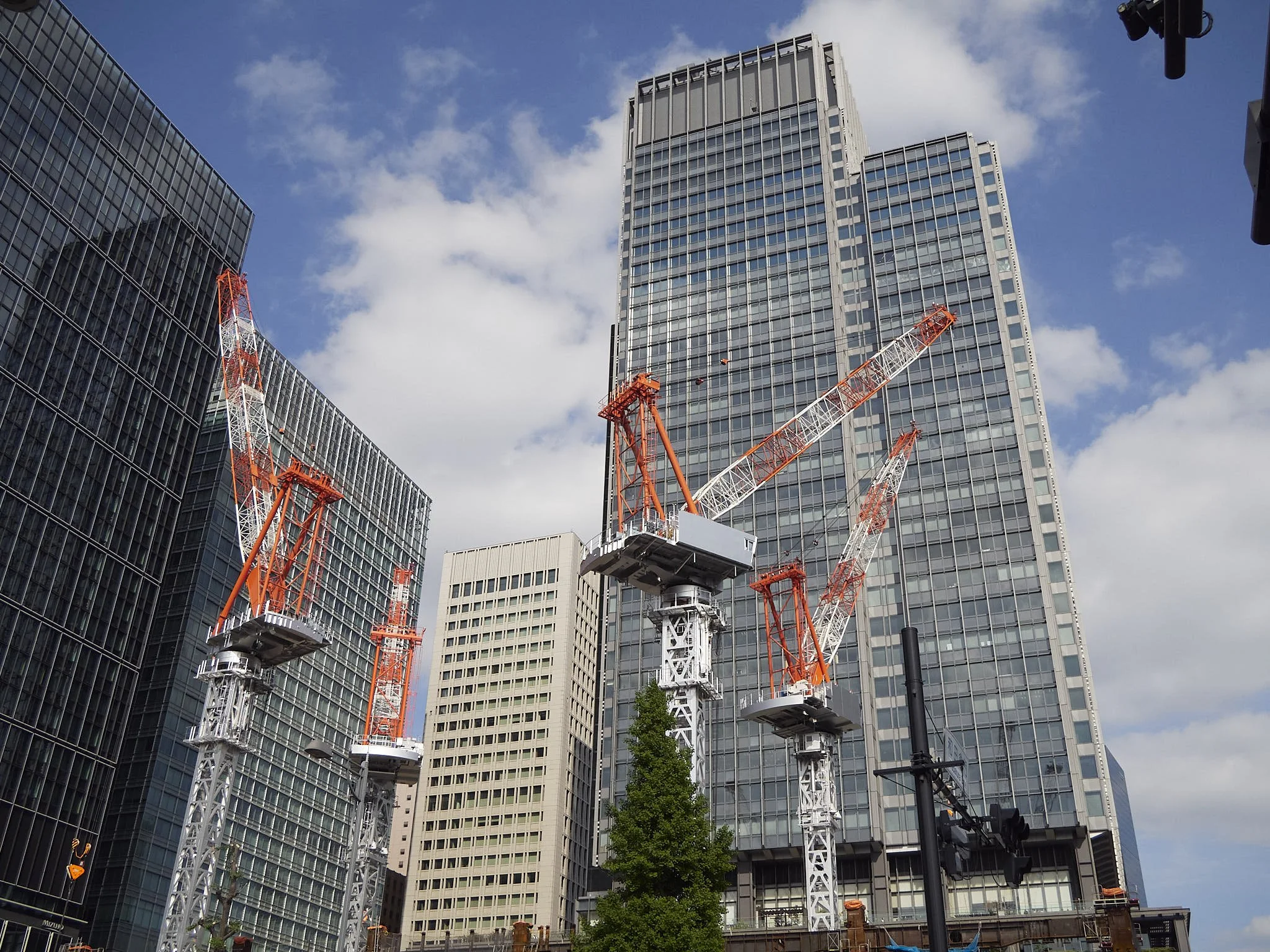
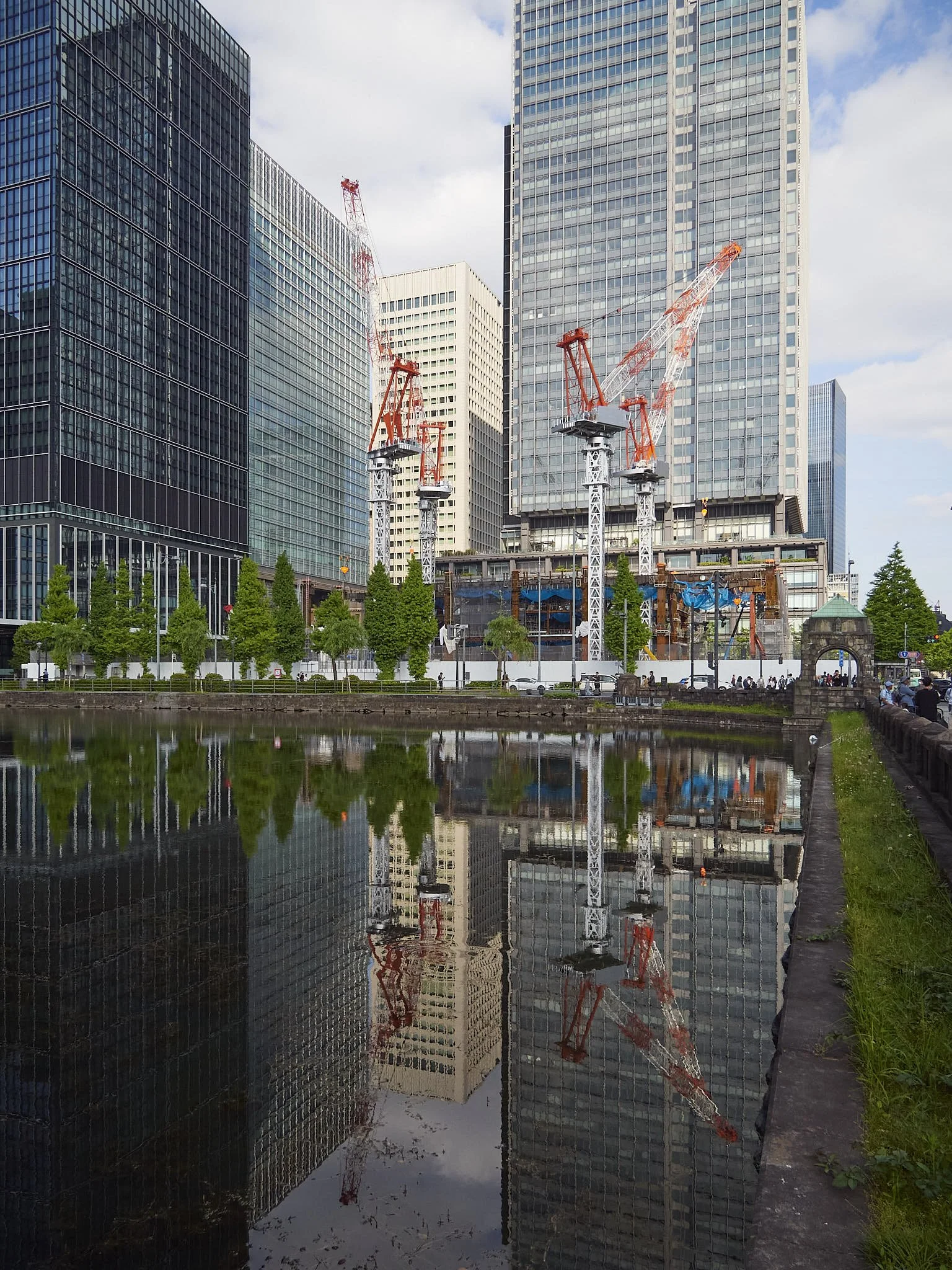
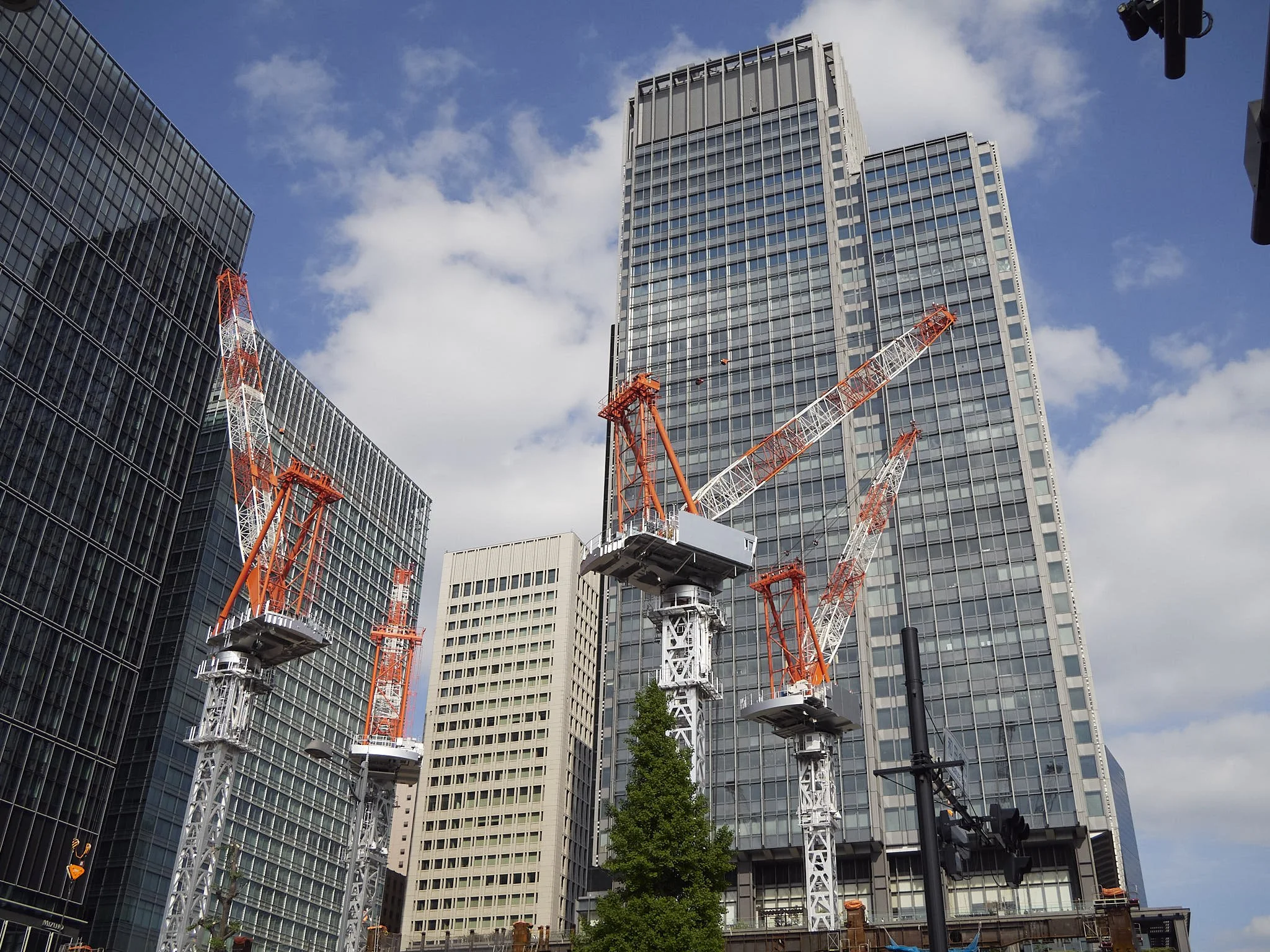
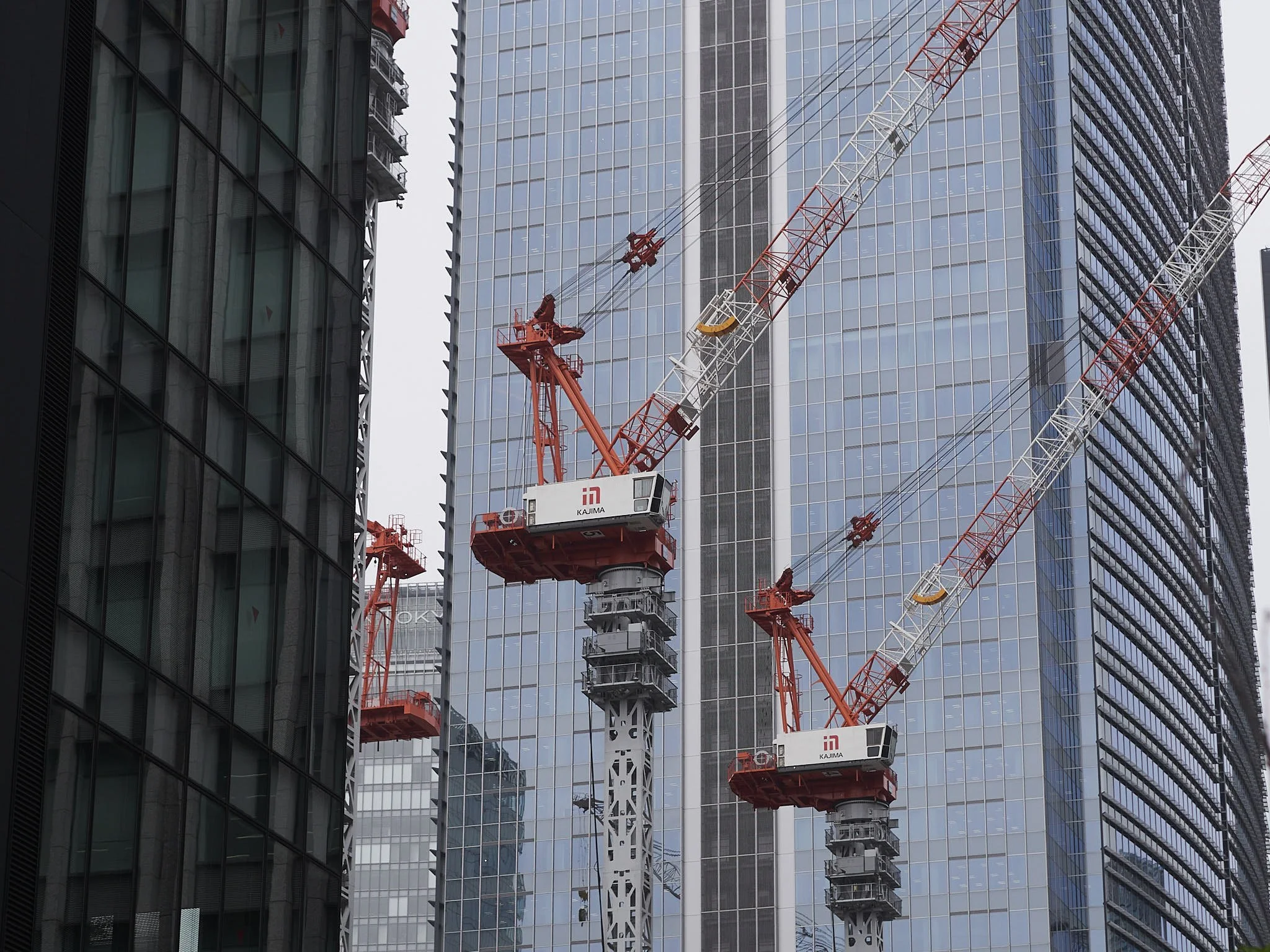
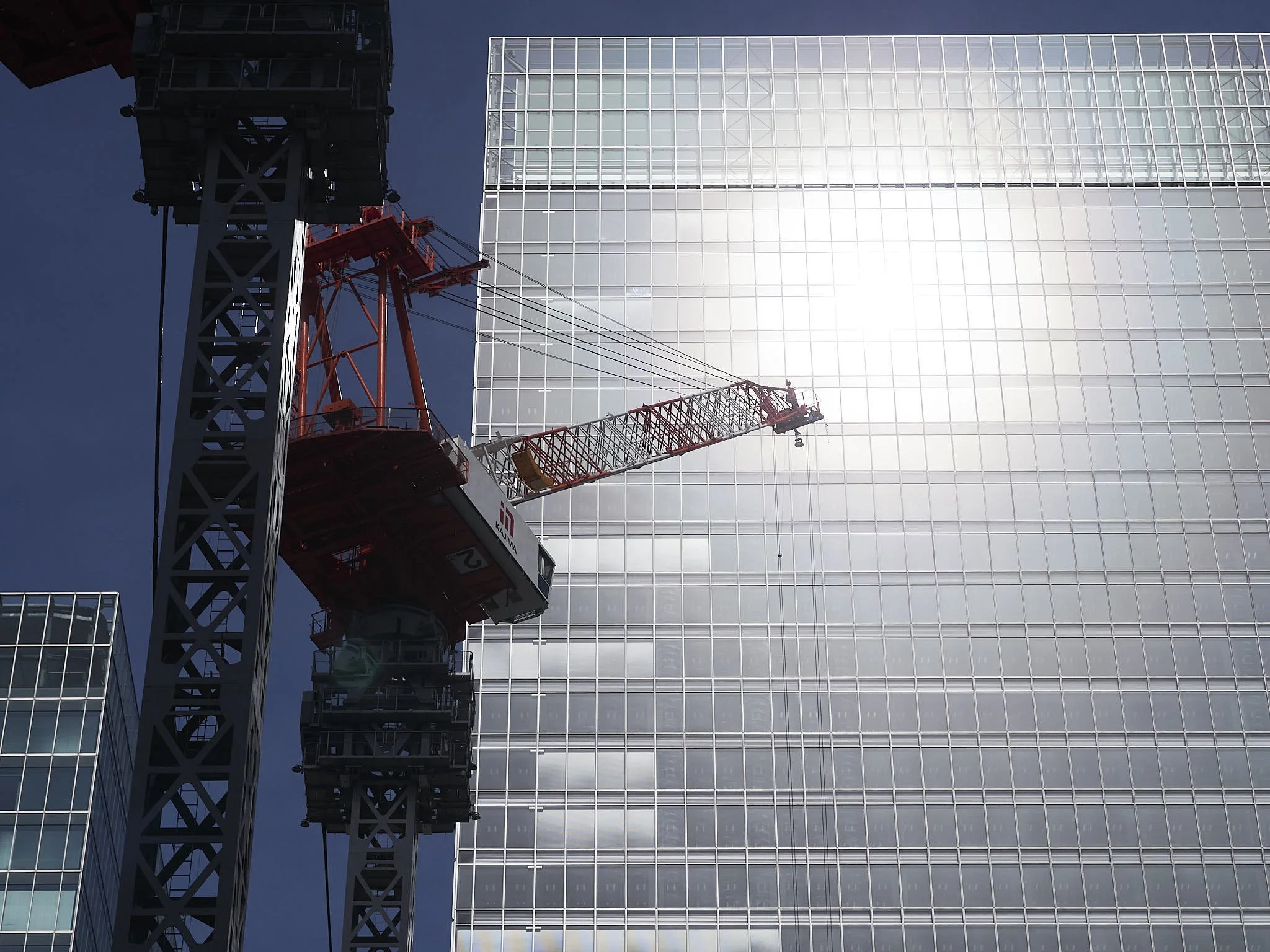
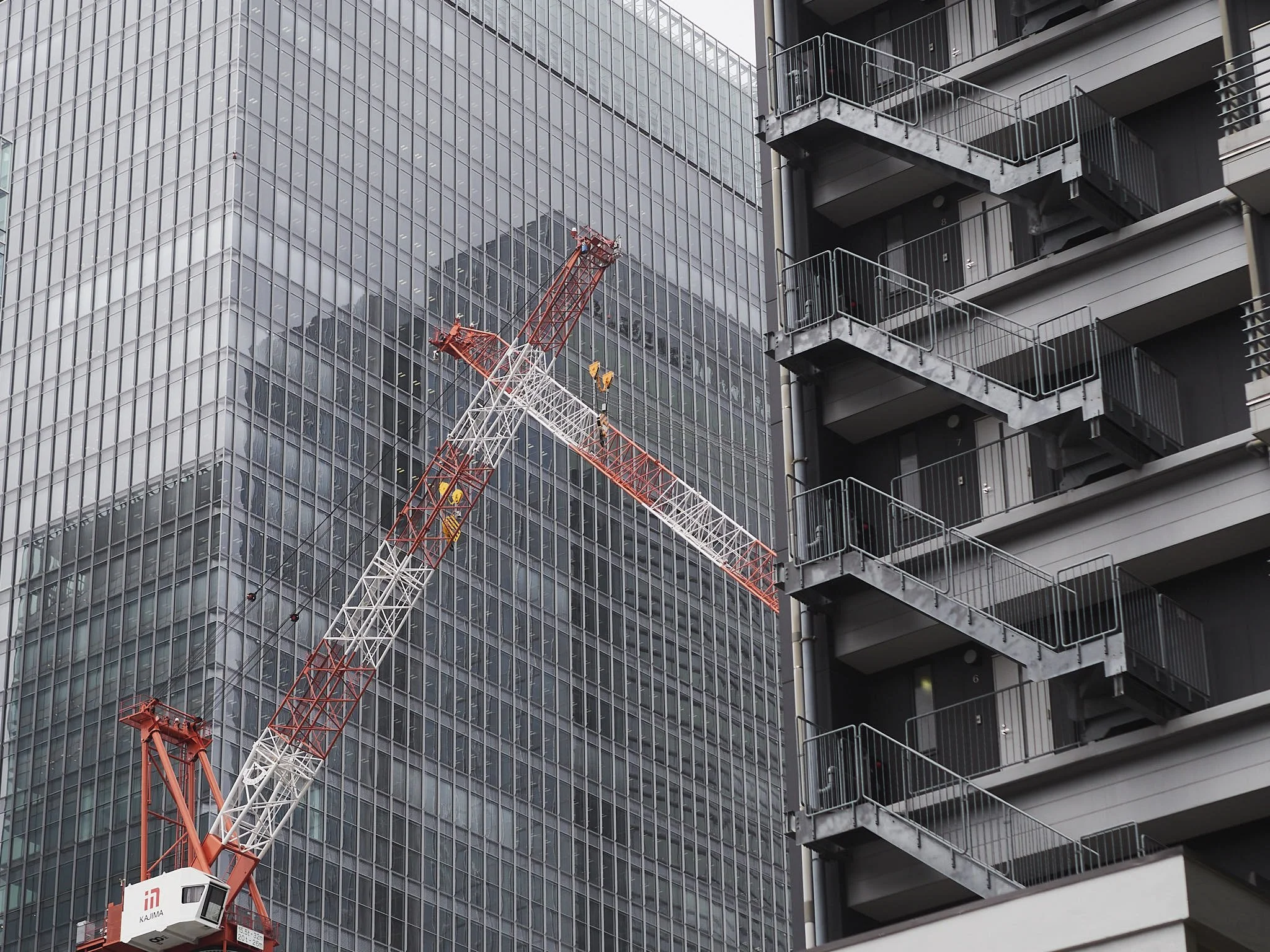
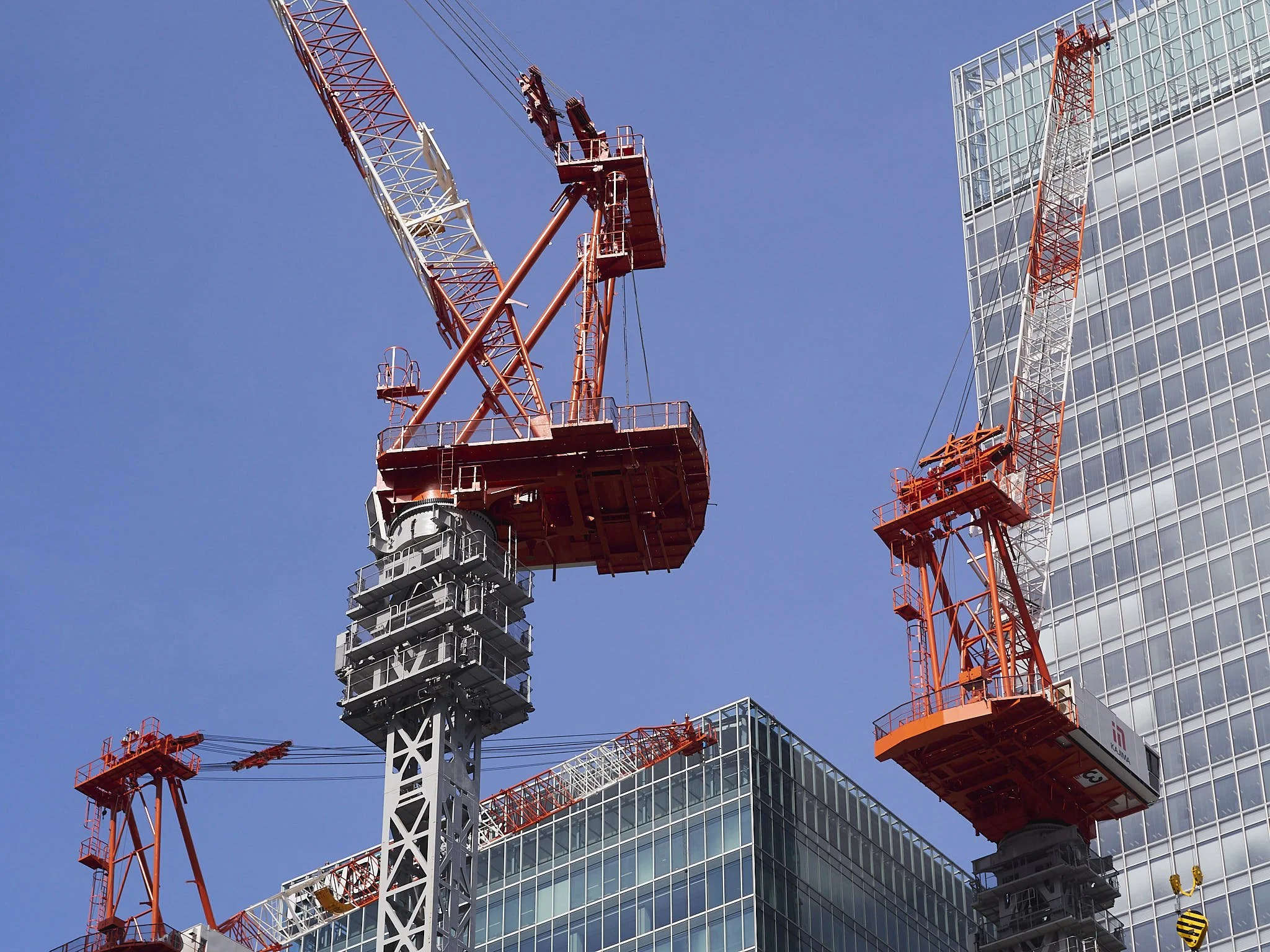
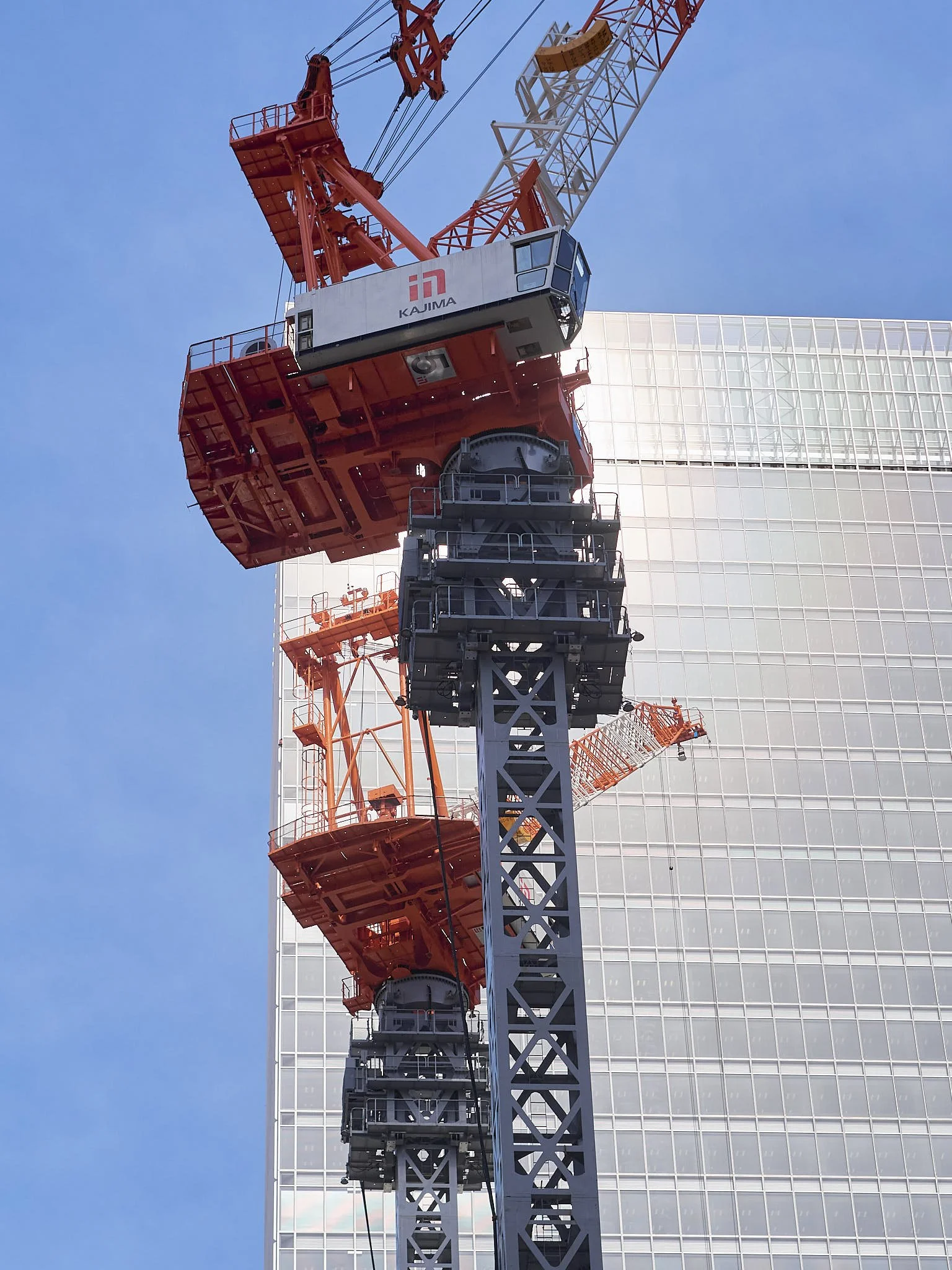
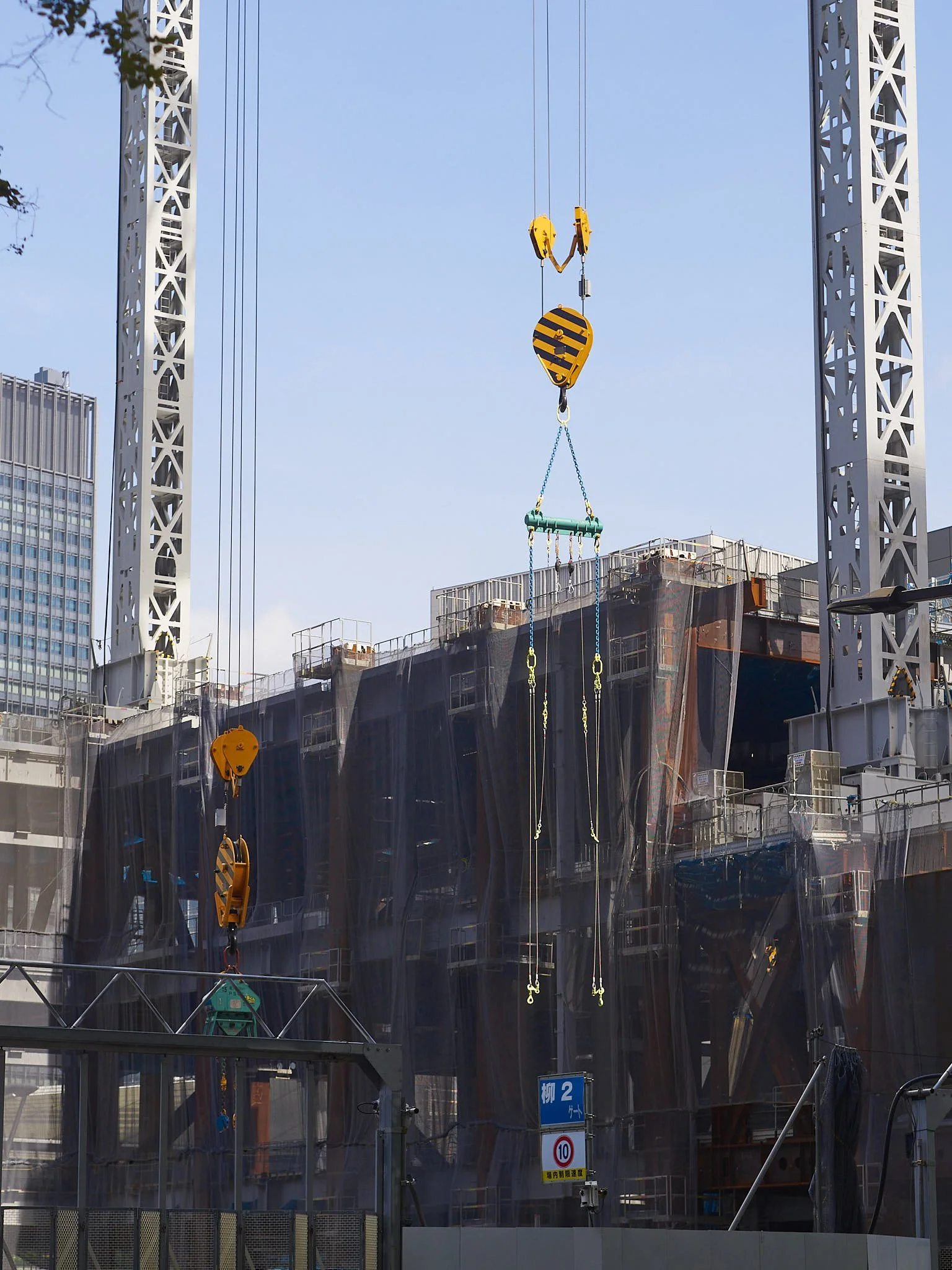
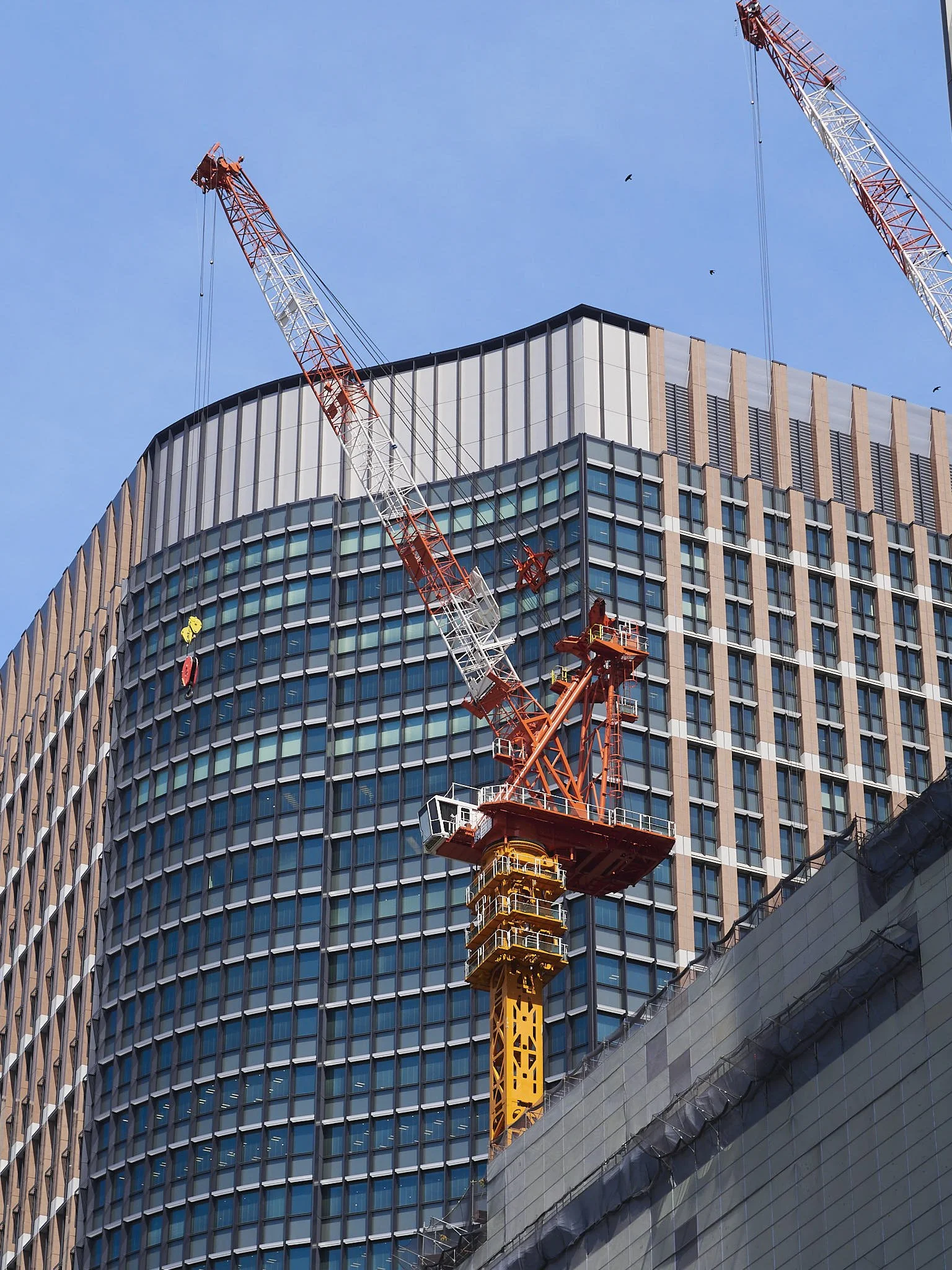
First morning and cranes are a thing it seems (all images 45mm).

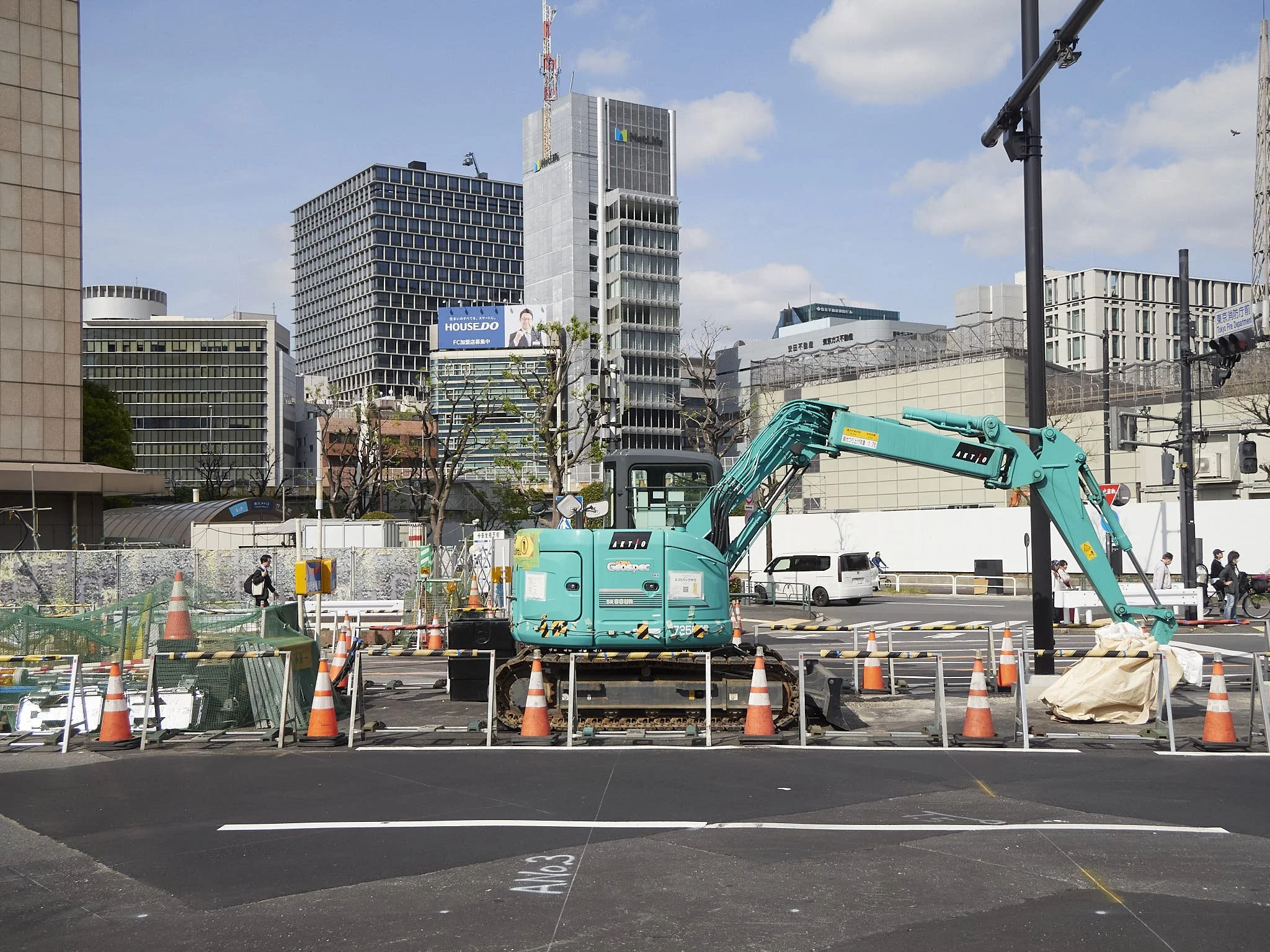
Multiple building projects, some with as many as eight of these monster cranes.

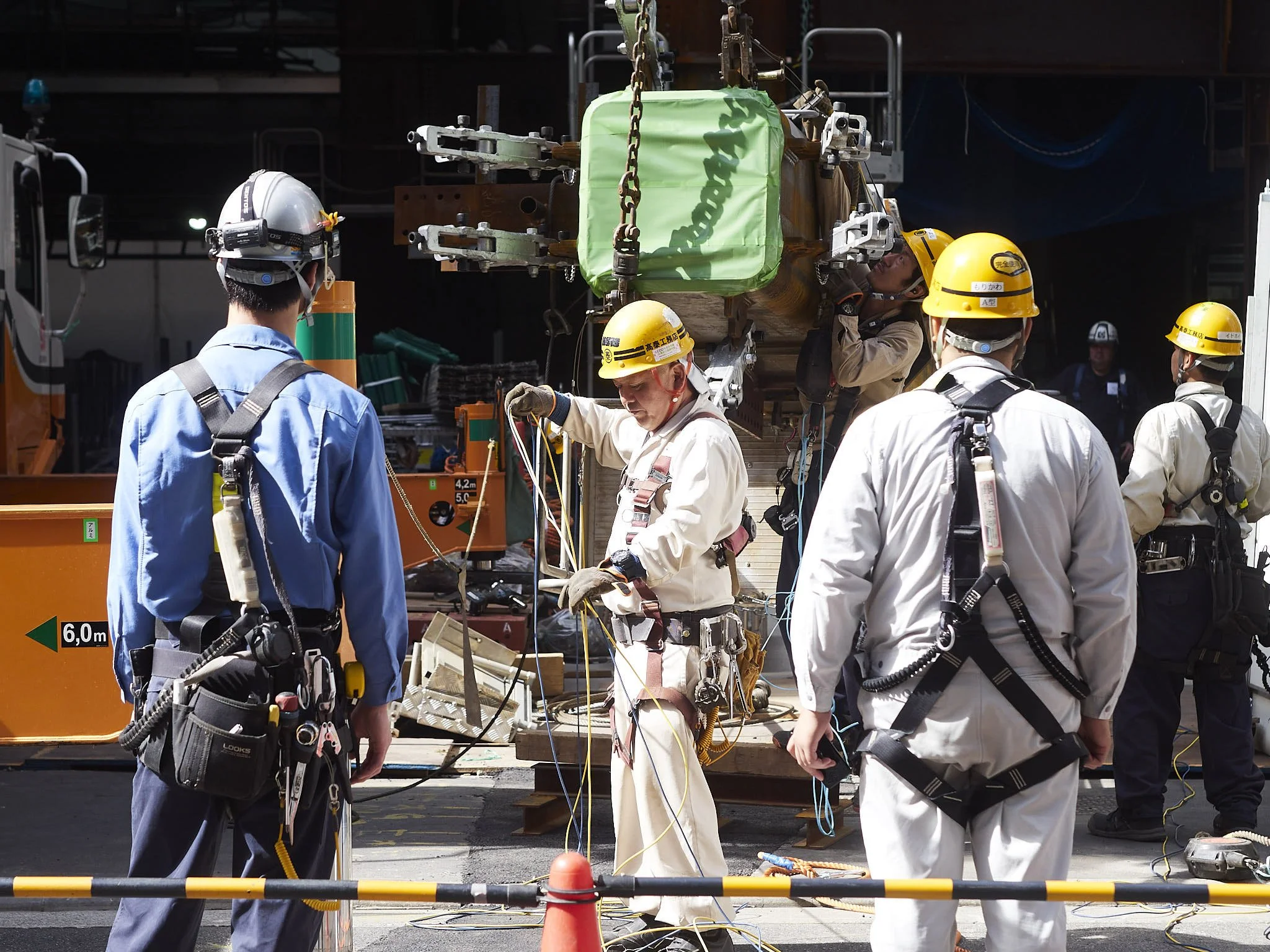
So much construction going on, always busy, always organised.

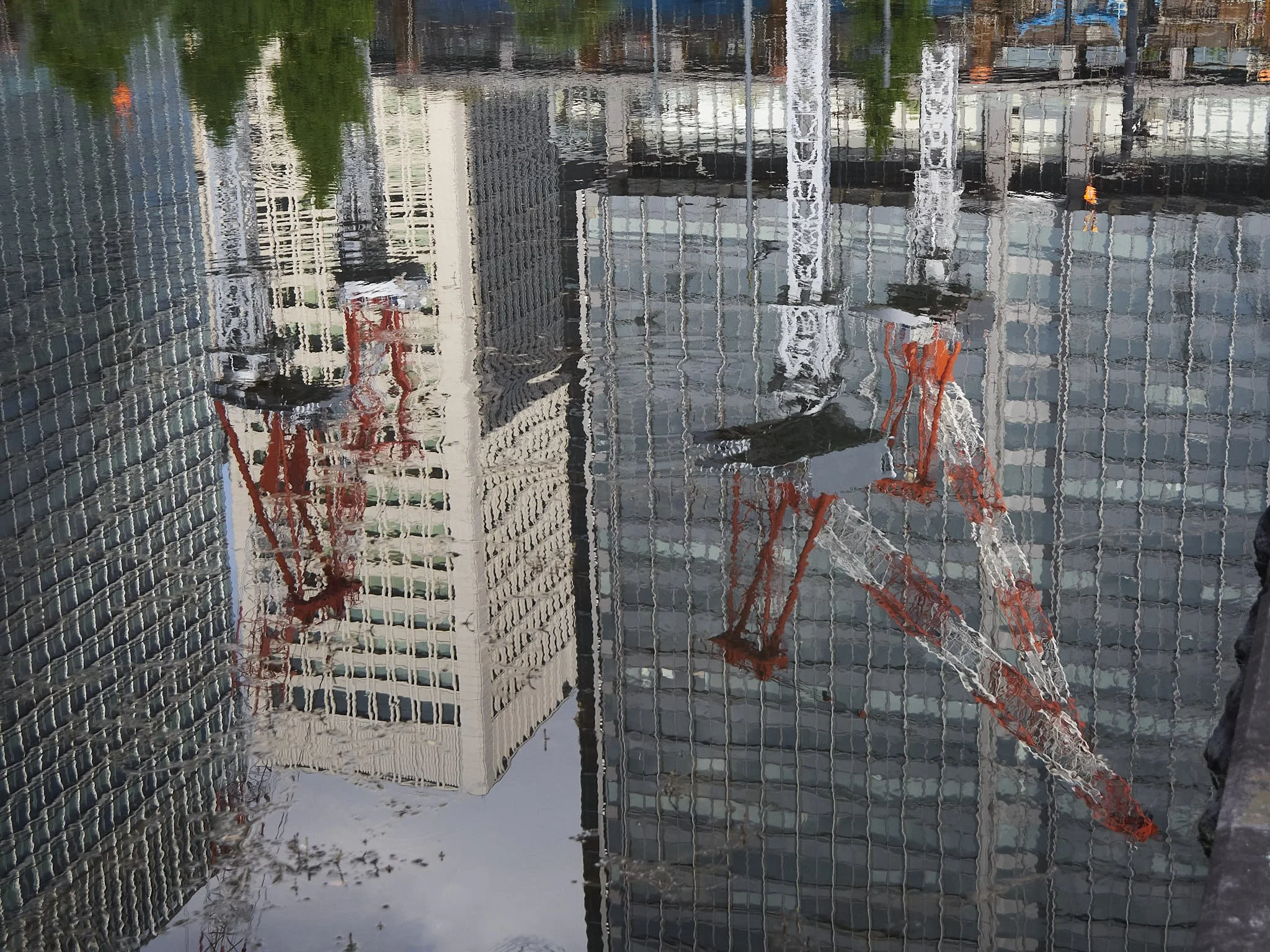
The results can be spectacular or at least interesting.