So this one will not go away, but I feel that maybe I am being steered this way by a universe intent on me getting it right once and for all.
The Black Magic Pocket Cinema Camera 4k (4k from now) is quite possibly the biggest giver of all the available video options right now.
Big statement in the era of power house cameras.
On release, it did not have B-Raw, but now it does, Resolve did not and it seemed like it never would support ProRes RAW, and now it and the camera both do. This thing just keeps getting better.
It does add several things I do not have while at the same time giving me that third B-Raw capable camera (I like to do interviews with a left, right and wide option).
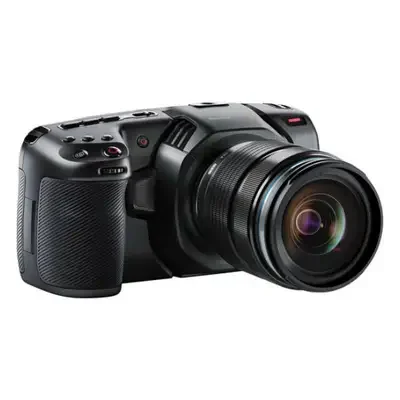
Even years after release, it is still more than relevant.
I get a real BM screen and interface, a 1080 B-Raw recorder (not an option with HDMI RAW out cameras which are always 4-6k), better BM integration and implementation (ISO, highlight recovery), for a price in the same class as the recorder alone.
The HDMI could then be used for a small screen, like the Portkeys PT6 I have laying around.
Logic would suggest I buy a third BMVA, 12g 5” for $900au, so my third Lumix (the “movement” G9II) is consistent with the others. What puts me off that a little is the price when compared to other options and the reality that apart from consistency and depth, I would not be bringing anything new to the table and possibly messing with my best and cleanest portable camera option. I can use the G9II with a BMVA like any other Lumix, just not with all my other cameras at once.
Same look, same slightly messy dynamic, just dotting an “i” really.
To put this in context, I have been looking for the cinematic “one lens” lately and I have looked at a lot of comparison videos (as you do), trying to decide between lens “a” and lens “q”, but then something hit me.
I was often responding more to the cameras used and how they were applied than the lenses. I have good lenses, great ones even, the camera seemed to make more visible difference, making choosing lenses a nightmare!
examples;
https://www.youtube.com/watch?v=bz02W93nVC0
https://www.youtube.com/watch?v=KkXdo1Tqvm4
https://www.youtube.com/watch?v=7O4qMsrPieM
https://www.youtube.com/watch?v=HmtjW6gt6Eg
https://www.youtube.com/watch?v=djRfHF-gI54
https://www.youtube.com/watch?v=k858DITfNMk
Maybe then, the shortest route to a more “cinematic” look for me is the camera, not the lenses and from a practical perspective, what is the point of adding anything if it does not support and expand what I have now?
Reasons to go with the 4k;
I seem to need to scratch that itch, to be able to compare the difference while increasing my offer and not straying far from my B-Raw “patch”. My unanswered question is does adding a dedicated cinema camera and/or a serious cinema lens make a visual difference.
Even if I change my mind, turning it around would lose me maybe $400, so less perilous than a bad lens choice.
For only $300au more than a BMVA 7”, I get a 5” BMVA with a camera built in, no clutter or excess cabling outside of choices I make. It also has an mini XLR audio in and I am going to assume less fan noise, so a mini 7” by default.
A new camera also frees up the G9II for stills work, so an upgrade in that space.
I can even run it with a BMVA for backup or my little PT6 screen.
B-Raw is better realised in a dedicated BM camera, especially ISO control and highlight recovery.
It brings all my cameras into line with each other (3x B-Raw capable models).
I would have a ProRes RAW capable camera.
It can operate without clutter unlike a Lumix+BMVA.
I have the infrastructure, lots of battery, screen and rigging bits to draw from. All I need is a D-tap cable for a V-Mount.
The camera may well upgrade all my lenses, while a lens (for similar money), may not make a huge difference.
No latency, an issue with Pana cams running out via HDMI.
It would be the first camera I have bought since my Pen-F that would be for me as much as my business needs.
App support.
Complete power needs can be supplied from mains via one cable.
It will make me a better film maker, i.e everything will be harder for better results, which is good.
But…………..
For $2500au (i.e $1000 more), I could go into a GH7.
The issues are of course, basically a lone wolf, capable of ProRes RAW with an expensive CF Xpress-B card, which is again not a compatible codec with anything else I have, the option of ARRI Log as a paid option (same issues as previous), the same V-Log, AF, Stabe and RAW-out of the G9II.
It is a power house camera no doubt, but does it bring to me anything other than new complications? If I could only have one camera, this would be it, but the thing is I have other cameras.
A $2000au G9II body would do the same in this case and the difference would mostly pay the needed BMVA 5”.
Back to the BMPCC4k, as it provides all of these benefits, without the issues or extra costs and what it does not do exceptionally (stabe, AF), I do not actually need as I already have other options.
Ok, curve ball time.
The BM Micro G2 studio camera.
A tiny, more battery friendly, live streaming capable BMPCC4k variant. It needs a screen (I have one and the menu to generic screens is ok, just different to the BMVA’s), but a Pyxis screen gives you full BM interface on a compact 5” screen for less than a 3G recorder.
So, dearer than the BMPCC4k, or is it?
The 4k needs to be attached to a battery option (only 20-30mins with the internal), which means a V-Mount/NP plate, or the grip for 2x NP 570’s. Life is then 2-5hrs depending on which, but assumes the already wide camera can also go deep and heavy.
The fixed screen is also a problem as the likely battery placement would be behind (not buying anything else), so the screen would be partially obscured or you get the grip and end up with a monster SLR configuration.
The G2 is one of the smallest of the box cameras, smaller than a BGH1, with a light weight screen on top, a big battery conforming to the back plate of the camera and a cage (lots around) if needed.
If I want a (1) third static B-Raw capable camera, (2) something smaller and lighter (3) possible streaming option (my BMVA 12 can also, making a network) this might be it. It is not perfect, it has different needs to the 4k, not better or worse, just different.
The bare cost is basically the same as the 4k, needed accessories ranging from $0-600*, but the 4k could cost me nothing more than the camera, maybe a half cage, work arounds are assumed.
If I bought the G2 only, I would be rigging it out with a Portkeys PT6 screen, V-Mount plate, some type of handle (various) and end up with a smaller and lighter cam than the 4k with a thin shape and fix the battery blocking the screen issue.
The 4k on its own is fine, the NP and V-Mount battery options could be reserved for static use (several LP-E6’s are cheap enough), the screen is integrated, so a wide but optionally shallow camera. With the grip, I could use my many small NP batteries for something useful.
In static use, it makes little difference, the difference is in handling and that is really a Lumix speciality anyway.
*The norm is a cage and Pyxis screen, but the reality is I have everything.