If you take time to look at the work of past photographers and cinematographers, people just like us, who were slaves to technical limitations and the trends of the time, something becomes evident and it may help to explain why modern “big hit” images and scenes have little lasting power. Images made with the simple majesty of Stephen Shore http://stephenshore.net/photographs.php , or Michael Kenna https://www.michaelkenna.com , the story telling of Sam Abel https://samabell.com/new-index/ quirky humour of Martin Parr https://martinparr.com , emotive and tragically beautiful Salgado https://www.icp.org/browse/archive/constituents/sebastião-salgado , timeless Saul Leiter https://www.saulleiterfoundation.org and meditative Harry Gruyaert do https://www.harrygruyaert-film.com .
That missing thing is the use of deeper depth of field.
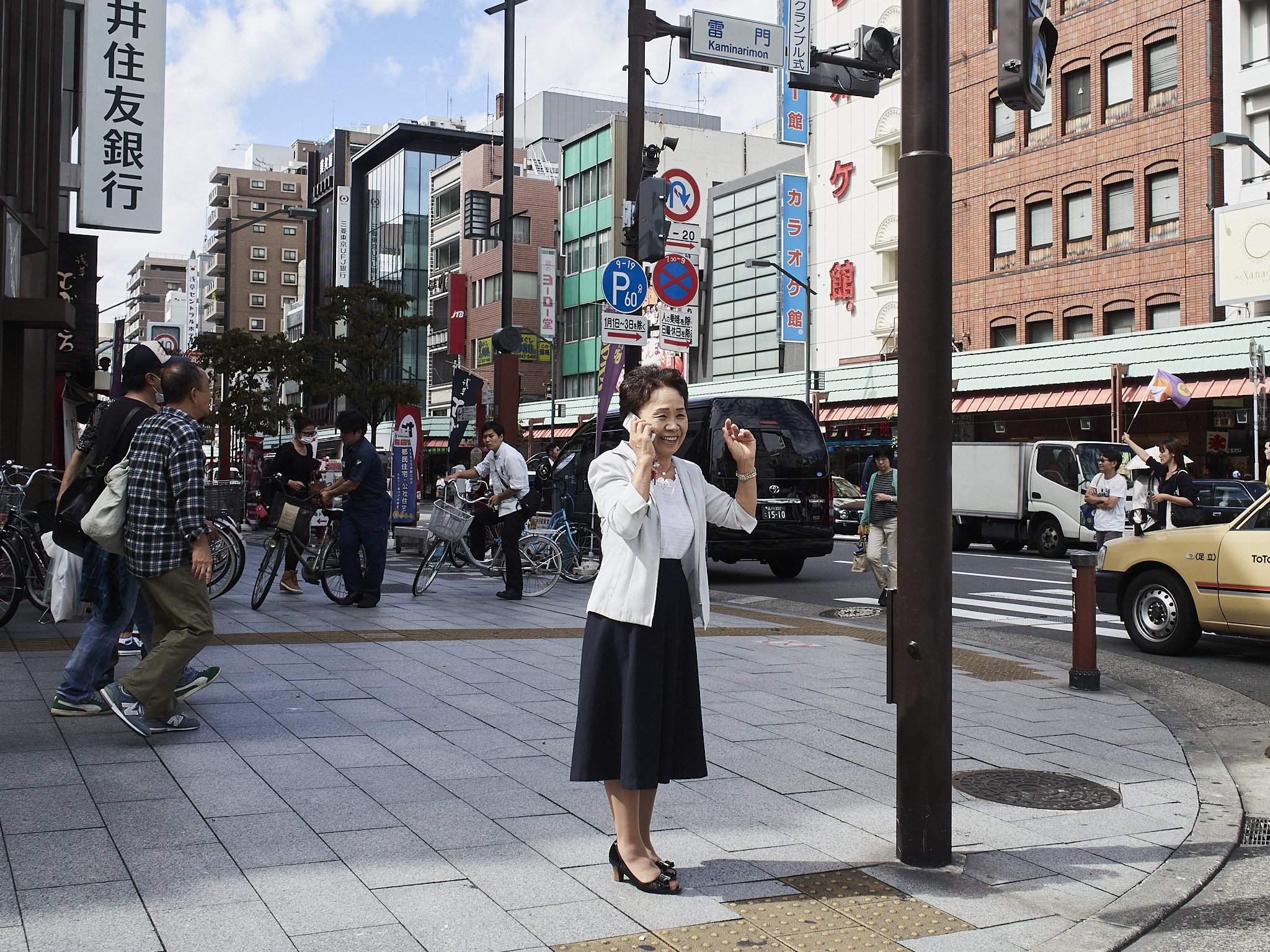
The subject of this image would be ok I guess if cut out from a blurry background, but context would be lost for no benefit.
Not that more depth of field equals better images by definition, but in this highly ironic time of not needing wide apertures any more, but seeming to be addicted to them, many have fallen back on the sharp-soft look as a visual crutch.

Many images need only sharpness from front to back, selective blurring would do nothing but confuse the visual clarity of the image.
Some images need deep depth of field by definition, like landscapes or architectural, because the subject is the environment, it’s all important, but sometimes nothing can become something, simply by seeing that potential.
Stephen Shore is probably one of the best examples of seeing the ordinary without the needed main subject. His images do not have a hero, they are anchored by colour or shape, sometimes relevance to place. The stage is the hero, not the actor.
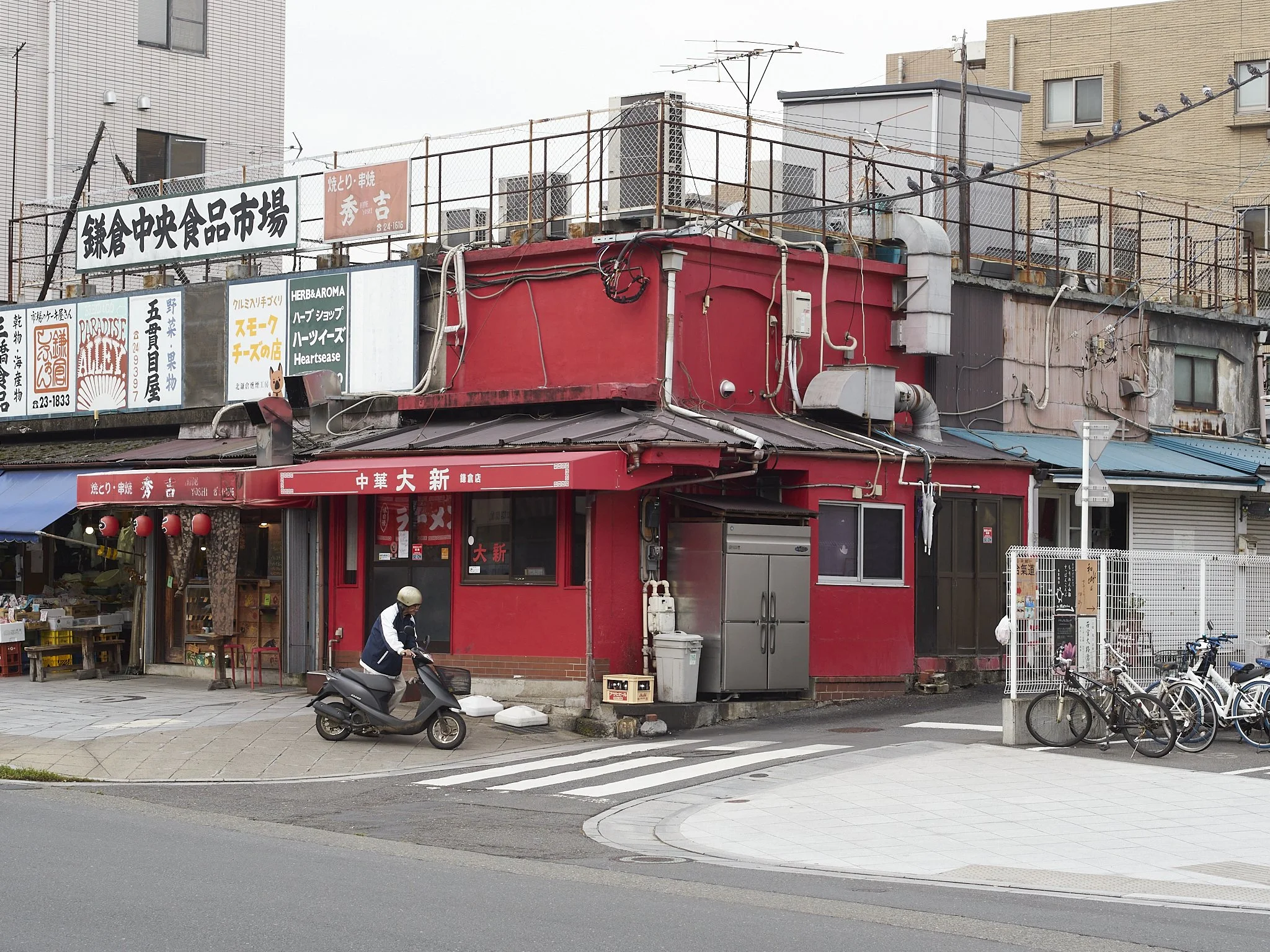
From a series of Japanese street corners, a project that needs attending.
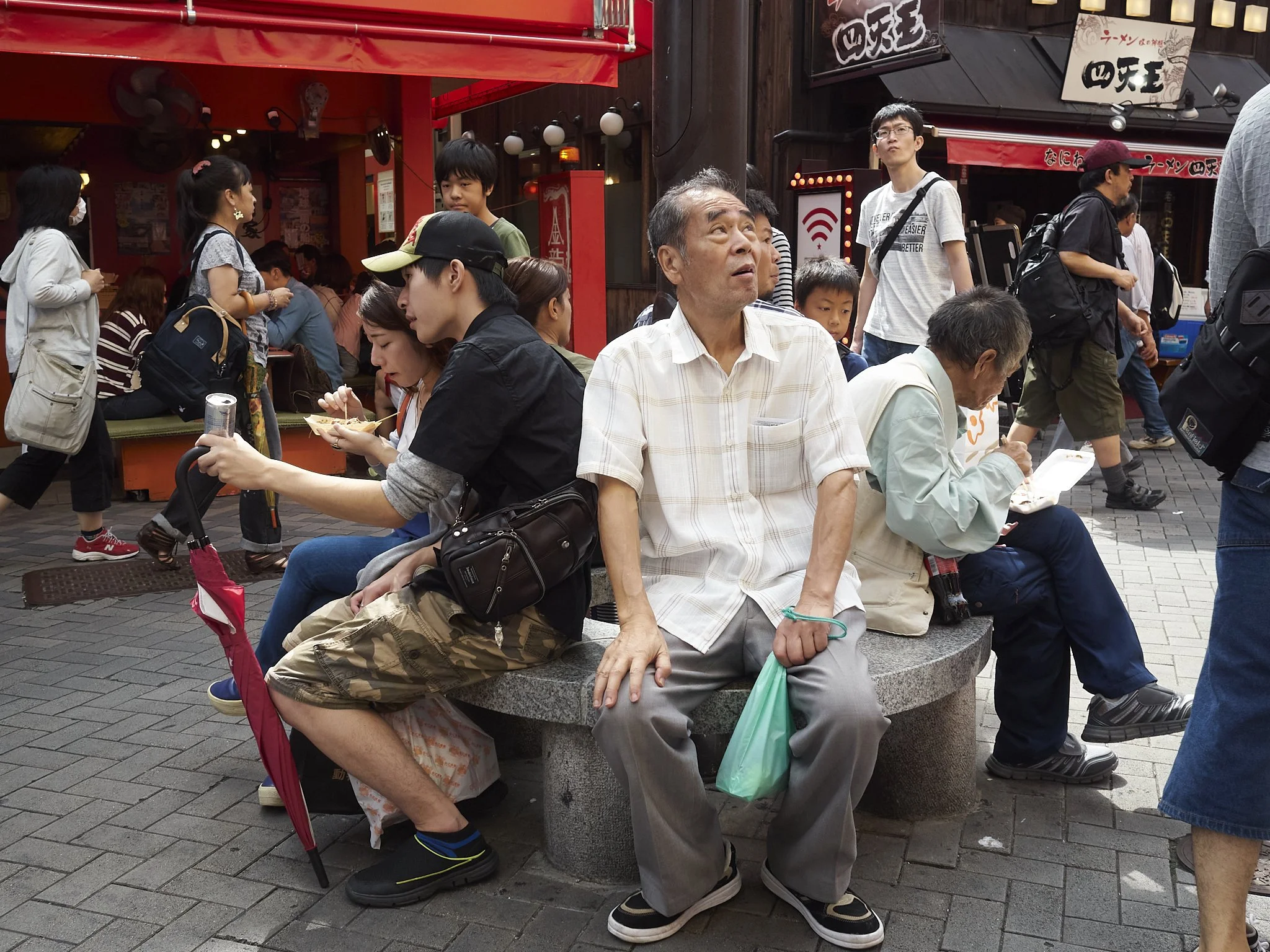
Two faces are important in theis shot, one near, one far. neither would hold as much interest on their own.
Sharp front to back is an important tool becasue even though our own eyes have immense depth of field, we only focus on what we look specifically at, but in a still image, that attention can wander.
Every element of the image must serve to impart information or support the information provided.

Depth of field does not have to be perfectly sharp, just coherent enough to show shape and help form a story. The main gesticulating in the background is the subject, every other element draws you there, but not immediately.
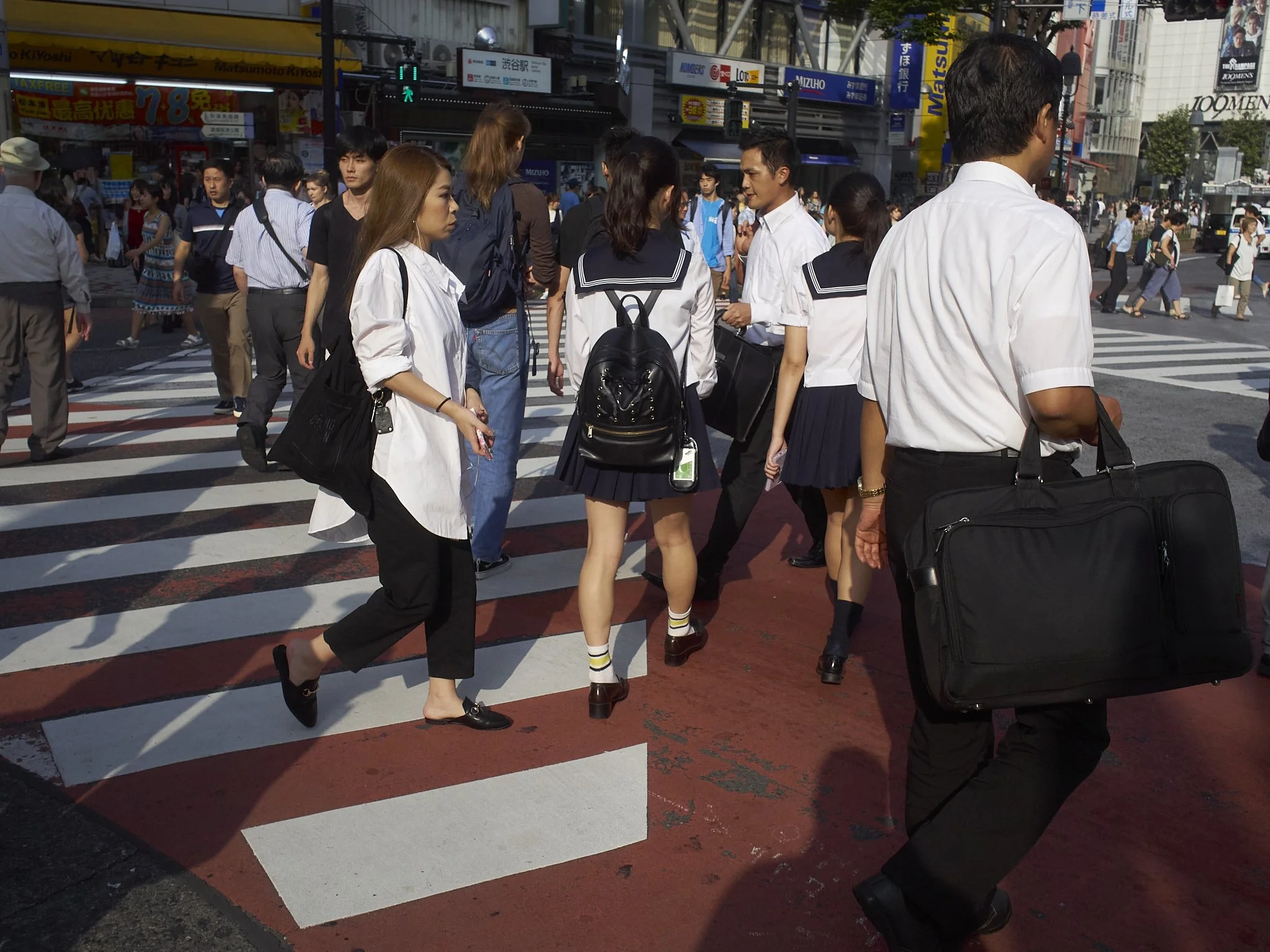
Depth allows for multiple shapes to emerge and allow all things to have their place.
One of the reasons deep depth images are used less, is because they are often hard to get right.
You have to balance all the elements, even be a little lucky sometimes. Colourists need to balance the eye catching elements like reds and yelloews, mono shooters have to balance tones and textures on a “flatter” palette.
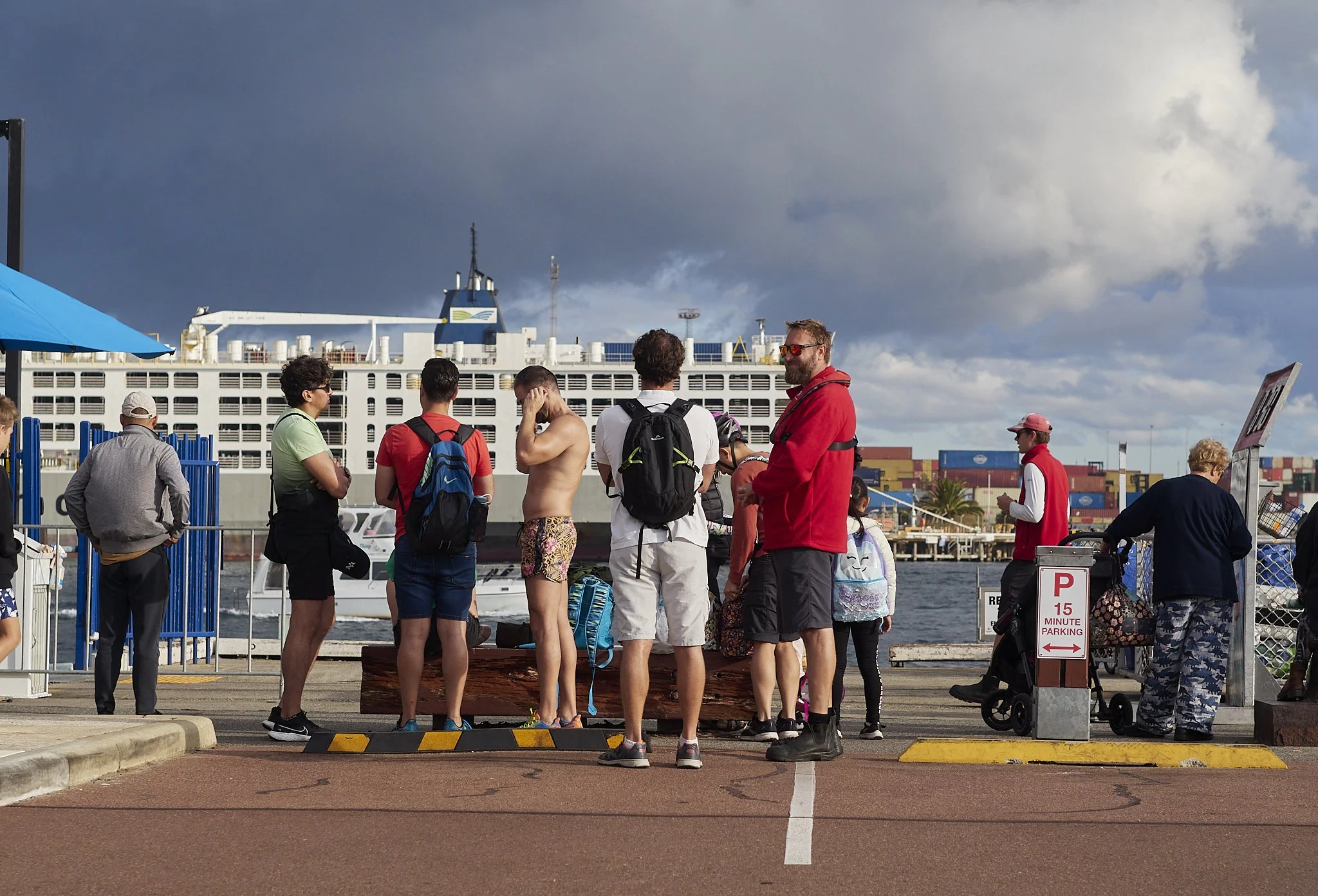
First you see red, then the individuals become evident, lastly (to me) blue and yellow play a part.
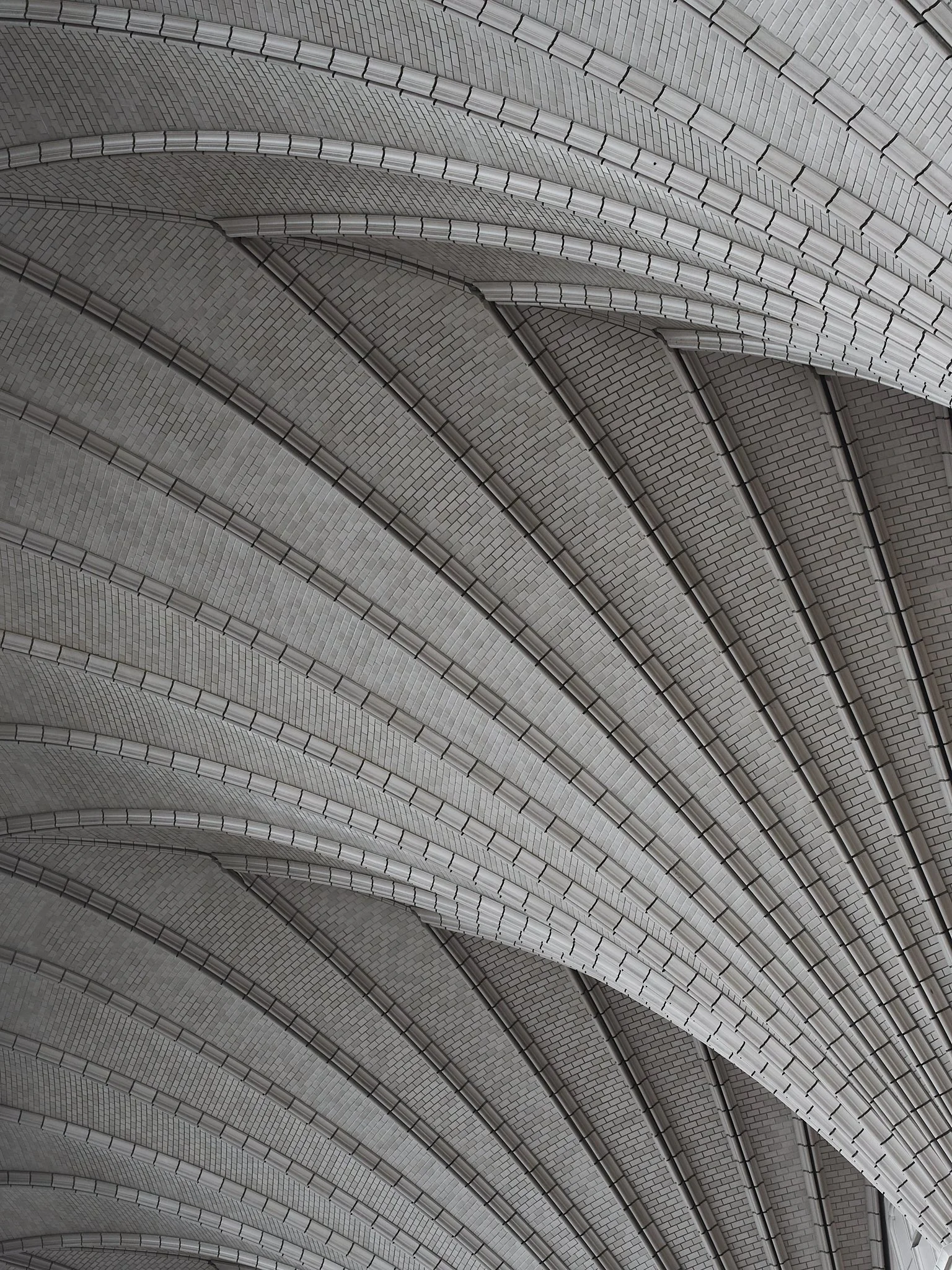
When the very front and far distance are equal in all areas, the image sits harmoniously, it breathes and relaxes.
The secret of course is comprehension. There is more to see, more to explore, more to reveal as you look, it is not a sugar hit of beauty, something we grasp instantaneously, then file away and move on from, it is layered, complicated (even if it is simple) and it puts us in its moment.
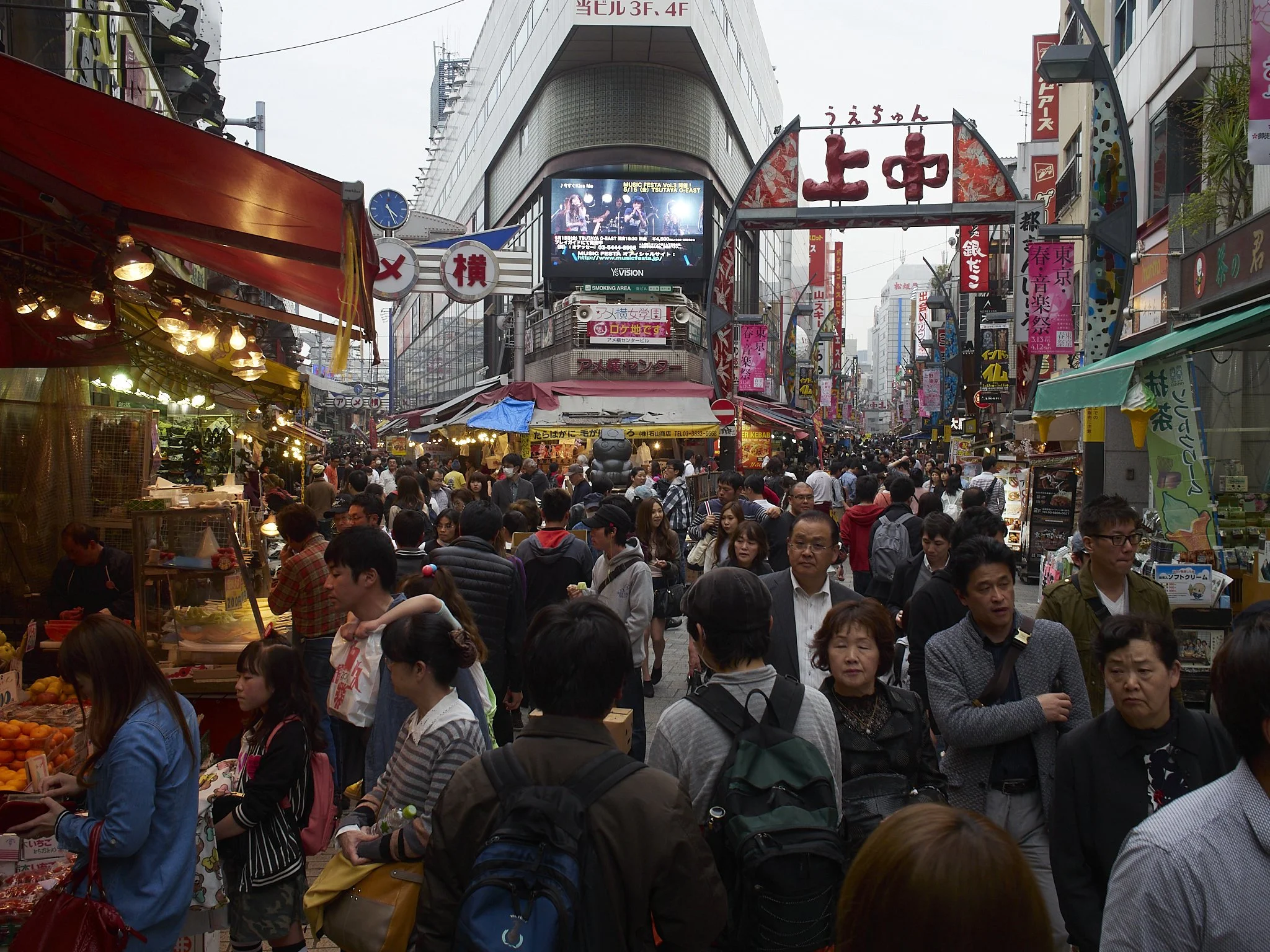
Like many images in this post, this was taken with the 17mm f1.8. Unlike most of the others, this one was shot wide open in “available gloom”. A very special feature of this lens is its ability to hero a focus point, while including the whole of the image for context, sometimes even wide open (focus was on the man in the white shirt and suit jacket).
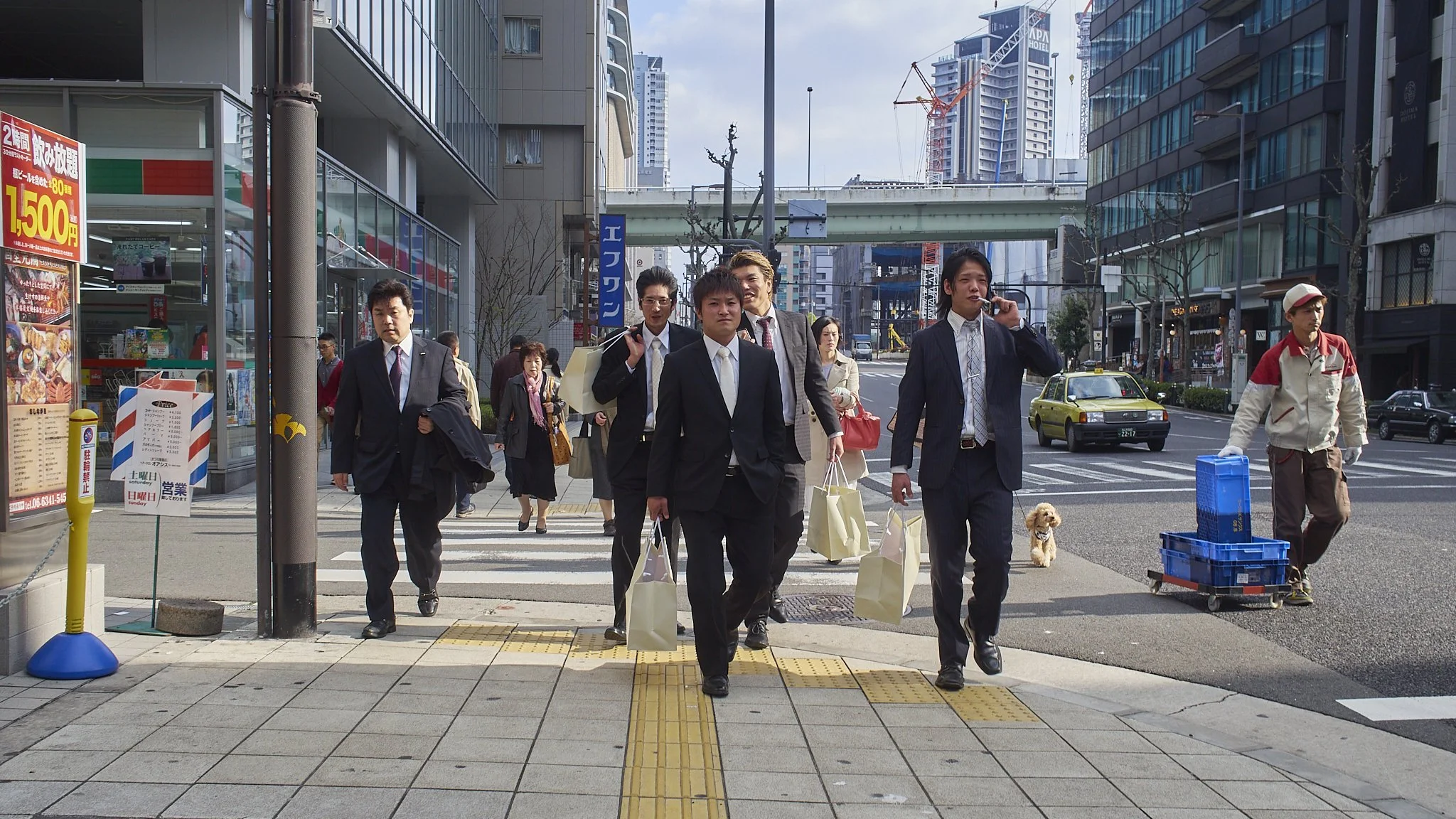
“Reservoir Dogs” Osaka, an image with a dozen stories, shallow depth of field only reducing their effect.
If an image has a hero element, the temptation is the exaggerate that, but sometimes the strength of the main player is increased in context.
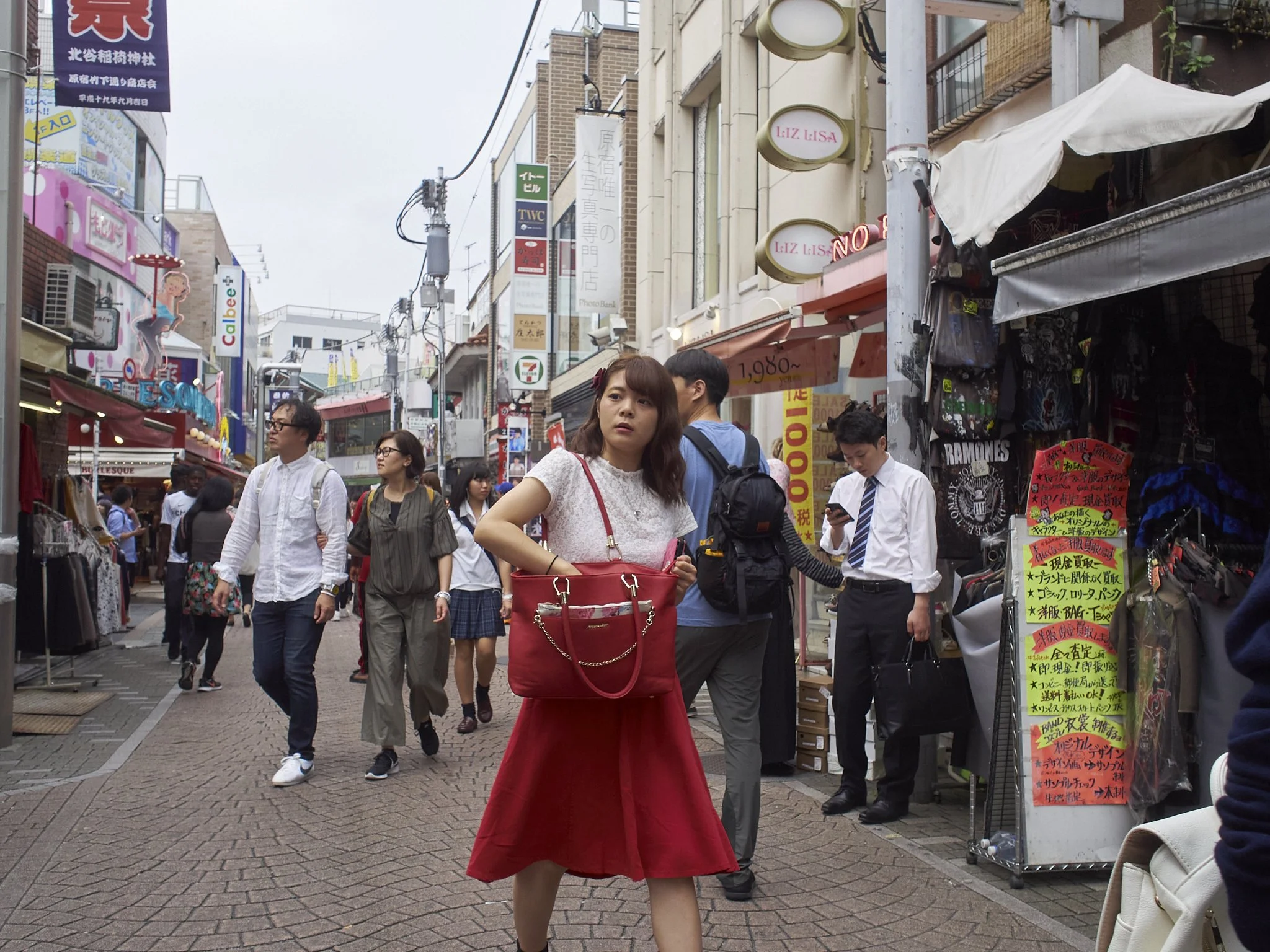
A lone subject front and centre, active and red and white even for impact, but there is more to see.
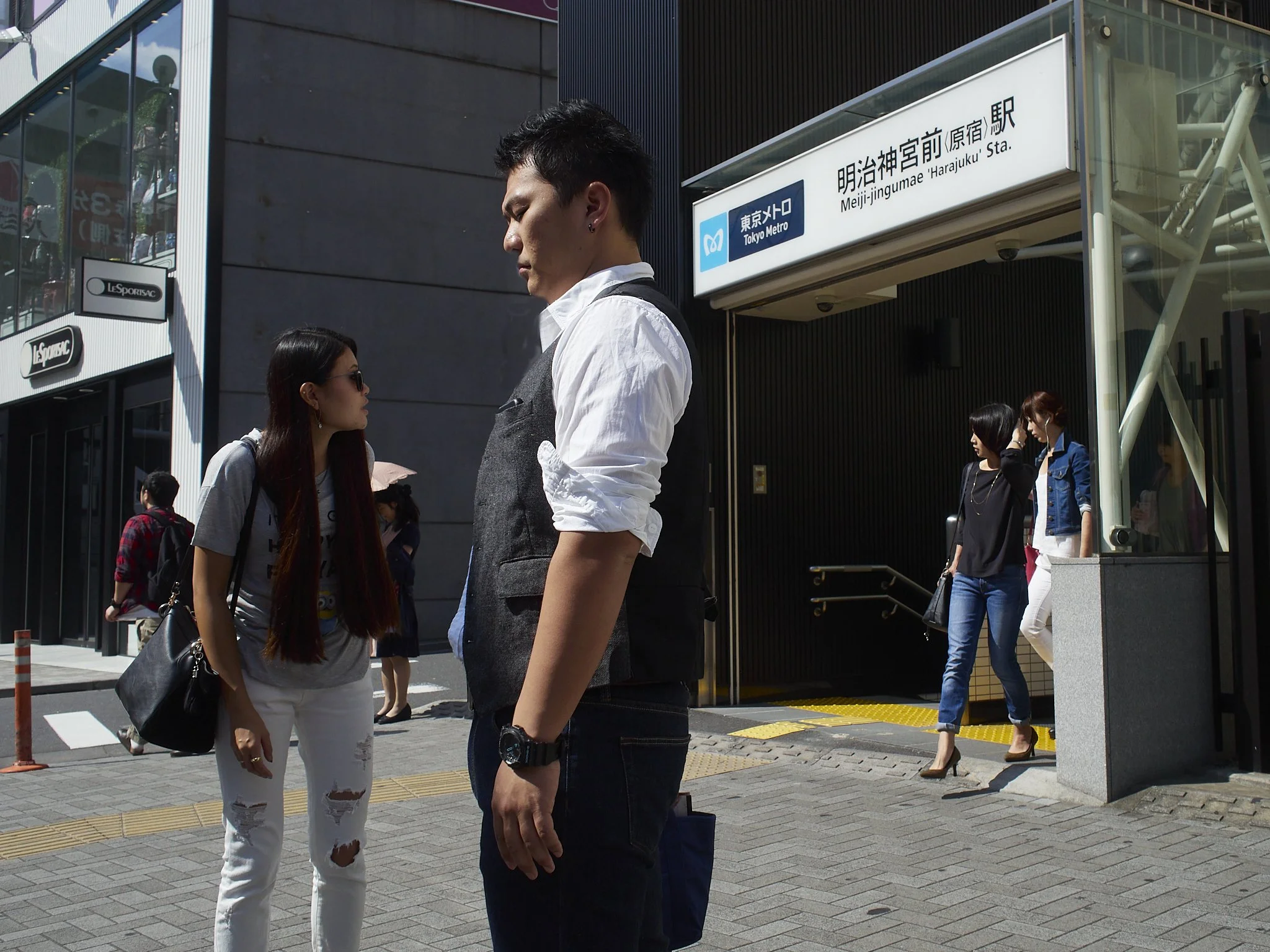
Cut away cleanly, this mans story is one of quiet loneliness. With a supporting cast of detached, searching people, his place in the tableau shifts to one of calm, like a rock in a stream.
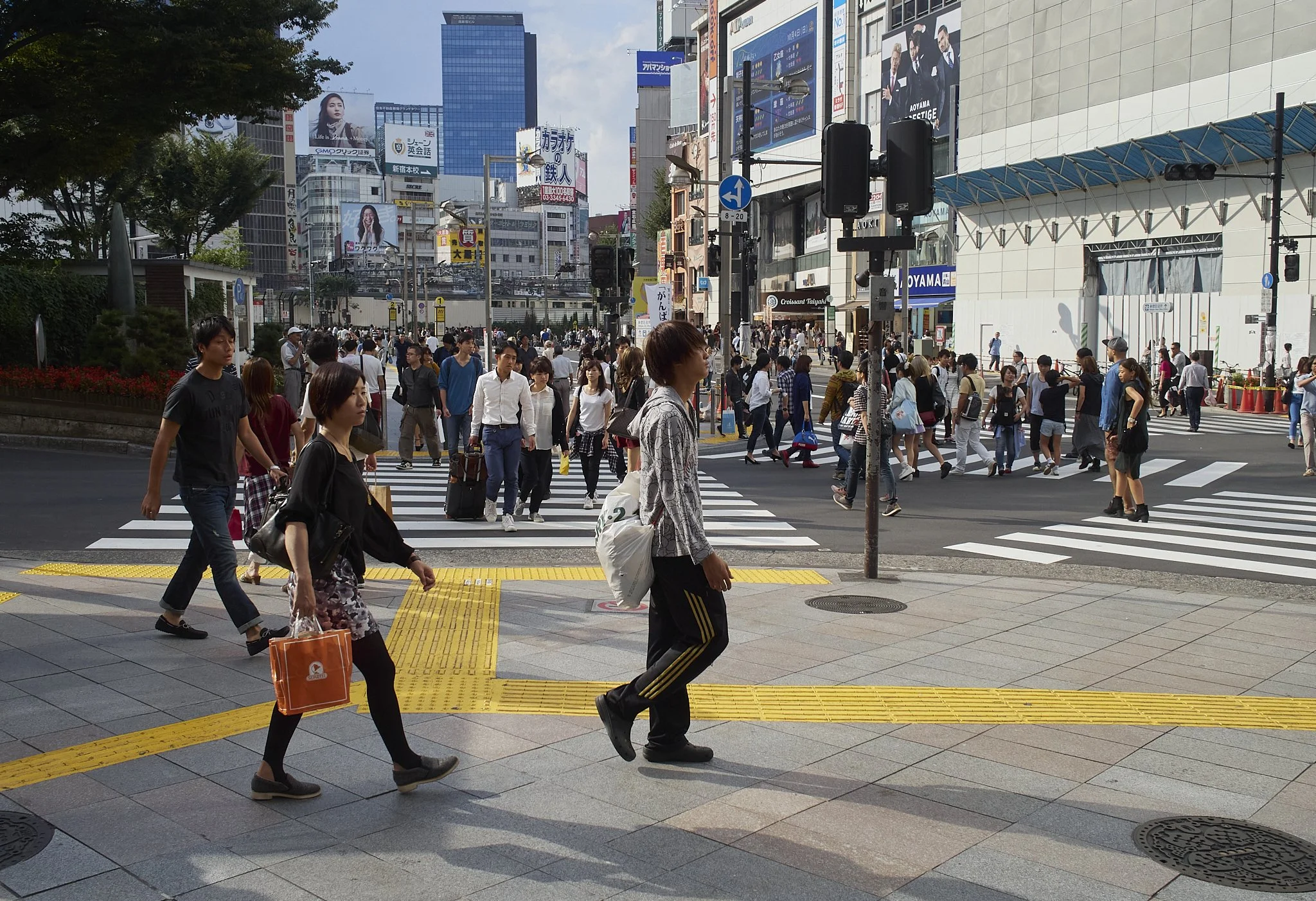
Following lines, literal and of the eye, with a cinematic brilliance. Seemingly infinite depth of field is often a benefit, not a curse.
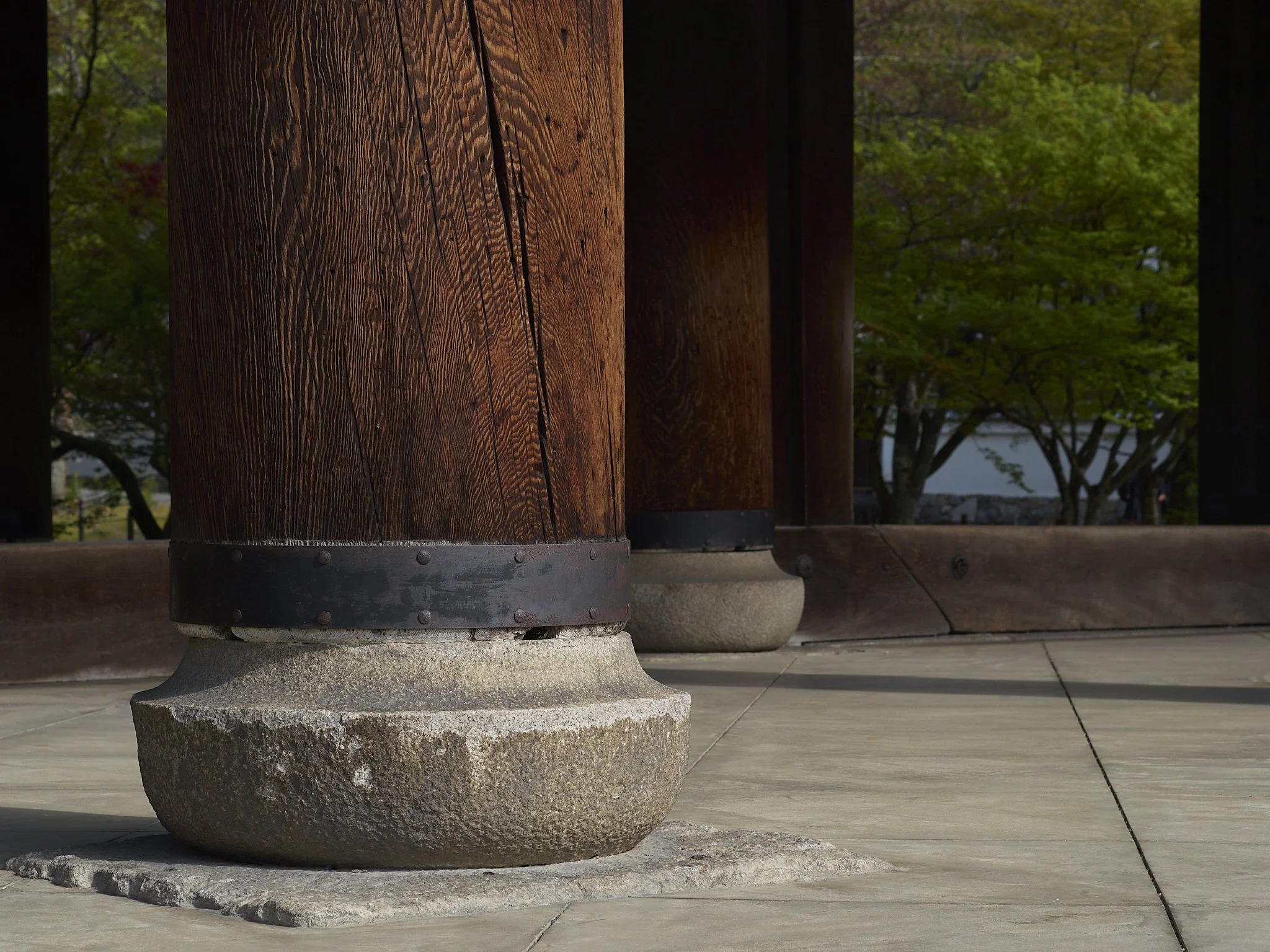
If there is a sharp to soft transition, it does not have to be fast or dramatic. The eye can see many ways, but lens tricks that defy then only draw attention to themselves.
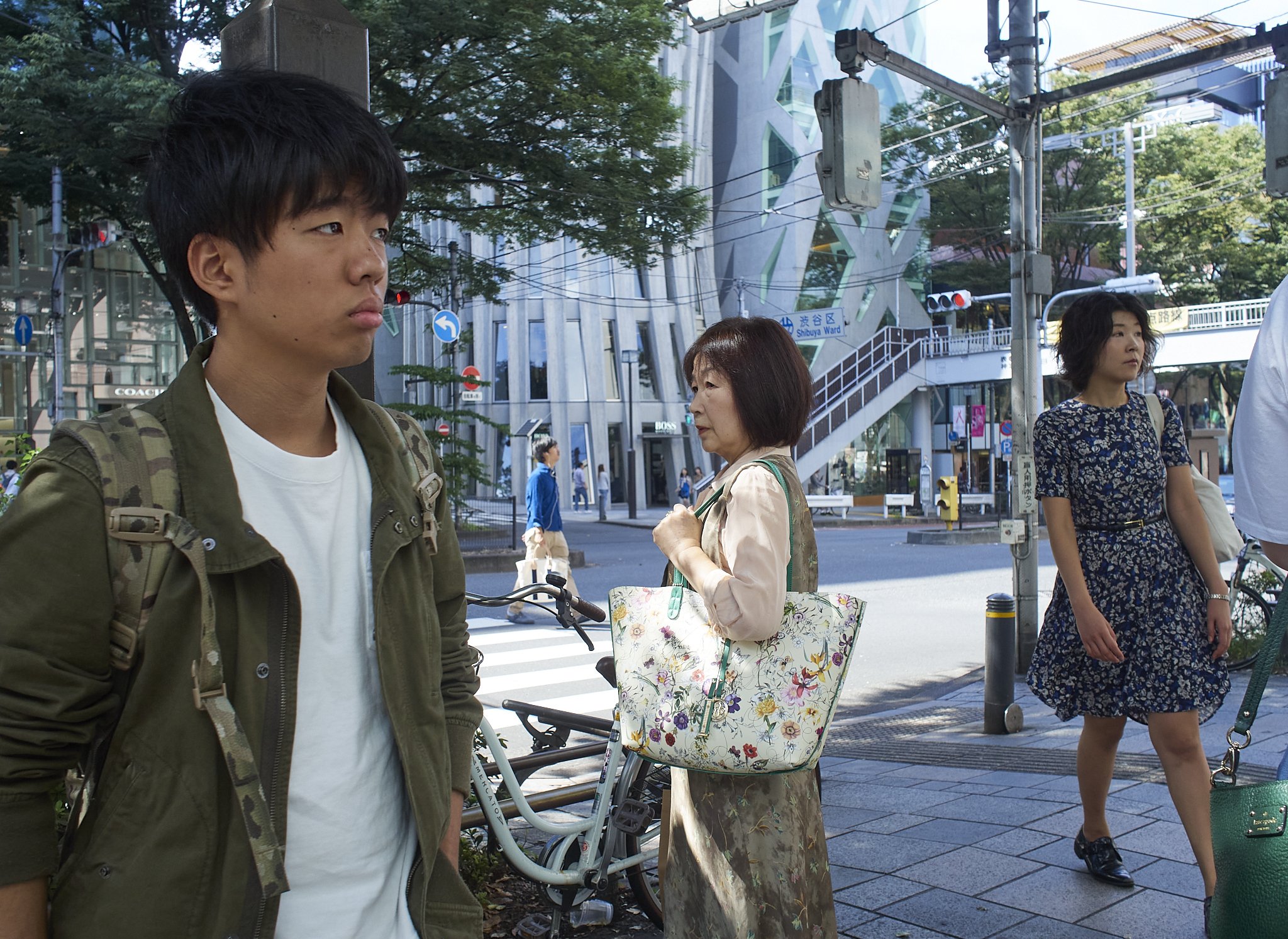
No single face here is compelling on its own, but with depth four different stories are told.
As I continue my journey in this craft, some things are becoming ever more strongly evident.
I like naturalness and seek invisibility in my image making.
This means normal focal length lenses from 28 to 90mm (ffe), because I am really growing to dislike photographic tricks such as over use of shallow depth of field (it’s not Bokeh, just an exaggerated form of it), image flatness and compression, wide angle distortion, poor technique resulting in motion blur passed of as “art” and compositional laziness.
One of the things that strikes me about the work of many of the greats of documentary, street and real life photography is their images are devoid of obvious process, of technical constraint.
They are the result of their camera capturing what they saw so your eyes can see the same thing.
This is not creative interpretation, it is literal interpretation, something only photography can do.
I am very glad I have found this clarity of vision on the eve of another trip to Tokyo. Part of it came from thinking about gear, which led to images made and eventually to here.
I work as a photographer, which it seems may have put my personal processes in peril. My need to get the image at any reasonable cost has to be discarded when I am away, my love of story telling depth re-embraced.
Perfect timing.