Realism or Escapism?
The super soft, amber-teal look is starting to be noticed by even the most un-aware of viewers and I think the bubble is about to burst.
Some things creep up on us, we absorb them and float along accepting this slow change, oblivious to their effect until one day they are seen and cannot then be unseen.
The soft focus trend, a reaction to over-sharp and digital looking footage seems to have settled in mainstream TV anyway as full strength Black Mist as its base. The BBC and ABC (Australia) are there, some cameramen are pushing back slightly, but the new generation coming through are there boots and all.
I can understand it and even accept it to some extent, because it has come from a need, into a habit, then a preferred look until we forget what things looked like before it. Even re-runs are getting the “glow” look.
This can be achieved also with old glass, but even then, the “vintage” look is augmented with filters.
It does seem odd though, that in an attempt to emulate film or the very best digital cameras like the ARRI 35 that do a good job of that, we seem to be falling well short in our mimicry, mocking our goal with our clumsy and simplistic techniques.
The cheaper the camera it seems, the stronger the reaction, although it seems there is nothing stopping cinematographers using 100k+ cameras, with $50 flea-market lenses and stacked filters.
Seems counter-intuitive.
Film does look different and the way many emulate this is……. with film or at least a film based technique. The last Indiana Jones movie as an example had a film grain overlay added to its digital capture to match the past films. It does not look exactly the same, but it is close and apart from the extra effort taken, probably a good work around, but the best one could have been to “just use film”.
Worked for a century.
The other half of this is the teal-orange look or lately the “no colour-colour” look.
This is getting out of hand. It seems the difference between mainstream TV and “cinematic” series or movies is either a highly compressed and dark colour palette (Harry Potter series, The Odyssey, Wicked II, basically everything on Netflix) or the strong but weird colour camp, where skin turns orange, shadows look like they are filled wth blue neon and it is hard to tell whether you are watching daylight or night. There are of course examples of both.
The final link in the chain, unnaturally shallow depth of field enabled by full frame AF digicams and super bright lenses (both old and new), which exaggerates both of the above and creates a look that is so far from natural, it must be accepted only as an on-trend “gimmick look” over-serving a habit developed from a perceived need.

An antique super fast Canon 50mm set wide open on a Red Monstro with I assume some BM filters and graded with the “there are only two colours, dull and duller” LUT. Looks natural…. not.
Mix these together and you get something that would have been once used for a”dreamscape” sequence.
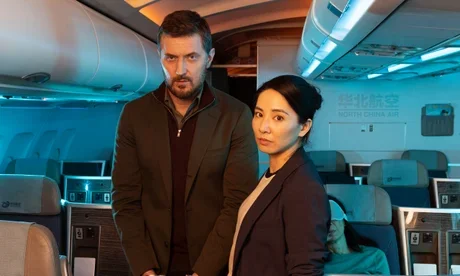
Seriously, ever been in a plane that looks like this or with people this colour?
Way to date your work.
Pushback against the new Harry Potter* and Odyssey** releases seems to be zeroing in on the “no colour”, “too dark”, “flat and weird” or “more Hollywood dross” vibes, and this following the fallout from Wicked II, a movie with sumptuous and colourful sets, which were then blurred into de-saturated, out of depth of field oblivion and that coming from audiences that have either been unaware of this trend or are finally realising it is getting out of hand.
So maybe the end is near, or as things can go, maybe we are only just getting started.
Maybe the reality is I am being unkind, that this is the modern equivalent of early film escapism, designed to distract us from other issues, but maybe we should not let it enable our self destructive ignorance?
*https://www.youtube.com/watch?v=zHpw7q0tm6U&t=463s
https://www.youtube.com/watch?v=AqqXGfvjqU0
**Other issues with this one are common across any “historical” work, too many American accents, over done action scenes, and generally speaking liberties taken. Names like Matt Damon in the lead are often a key indicator here (remember The Great Wall?).