I have seen 4 decades of photography.
From my perspective the journey from my perceptions in the 80’s to now seems to be a century long or more. I can remember what I thought, but struggle to remember how I felt or even why I thought it.
I will try to sum it up better though, partly because a trip down memory lane is always cathartic, but also to remind us all, just how far we have come, what we have learned and equally, what we have forgotten.
1980’s
The vibe at this time was one of “everything is new", everything is cool and also confusing”. The shape of the beast is saving up for film and processing (I had a weekly allowance), shooting, waiting to see, taking notes because I was serious, repeating, getting slowly better, wasting more time and money, but learning from any source you could (usually books and magazines). Nothing was rushed, you got into a rhythm of delayed gratification. The gear was a matter of weeding out the duds and celebrating the winners and technique was all and it lasted. My monthly drop of magazines kept me excited, my collection of coffee table books started.
My first camera (T80 Canon-terrible, but a start) was an 18th birthday gift to myself with little inspiration other than an awareness of an absent father and passed grandfather with photographic interests, but they were only really memories for me, so I will assume it was a personal choice.
Cameras at this point were a mix of all metal-manual everything rarely with shutter and aperture priority available in some form, or the very first “modern” cameras with curvy plastic grips, full or semi auto modes, little screens and built in motors.
My main cameras at the time were the Canon T90 (x3), F1 (x2), F1n, A-1 and Olympus OM-1 and OM-4ti (x2). I had plenty of lenses, favouring primes, because we needed the speed (see below) including long glass like a frightfully expensive for the time 300 f2.8 Tokina, Olympus 180 f2.8, Canon FD 200 f2.8 and 135 f2. Wish I still had most of these.
Film stock was Kodachrome 64, or Fuji Velvia 50 slide films, I tried most black and white films, favouring the older Tri-X (rated at 250, developed in 1:1 ID11 or 1:100 Rodinal), XP-2 and APX 25 being specialist and occasional Fuji Reala print film.
Film speed or ISO was the major control point at this time and with the exception of XP2, was fixed per roll, so fast glass was not only cool, but often necessary at ISO 50! Serious shooters shot mono or slide film. The big issue with print film was actually lab processing, something I did not fully realise at the time until I actually had a job doing it and when I did the answer, to process your own was prohibitively difficult.
I went to enormous lengths to get medium format quality from 35mm using APX 25 and heavily diluted Rodinal (200:1 with low agitation) and my favourite books were “The Darkroom Cookbook” and “Image Quality” with consistent if difficult to achieve success.
I learned to develop black and white prints, spending some time in the dark room, but not that much as I hated it to be honest. My father in law helped me build two excellent darkrooms, but no matter how I tried, my darkroom work is mostly memories of obsessive cleaning dust off surfaces, smelly chemicals and expensive, often disappointing results.
I learned a lot of theory and could enable others, something I realise is a thing with me, which was handy as I was always working in the industry in some form. I developed a skill for making hard things sound easy, but for me, photography was mostly sporadic mono prints from a vast catalogue of unrealised negatives, a collection of slides with little chance of being seen (the reality with slides) and lots of beautiful books of others’ work.
Highlights were a trip to Prague in the post Communism 80’s with 100 rolls of film, which felt like living the actual life.
My inspirations were contemporary black and white photographers like Salgado and Michael Kenna and National Geo colour shooters, Sam Abell in particular.
Late in the decade, I started to look at auto focus more, even after the ludicrous T80, helped by Canons ascendency here with the new EOS mount cameras, but I did not jump at this point as I felt AF was not there and nor was the system as a whole (lots of plastic, not a fan).
1990’s
General vibe for me now was one of self assured exploration. The process was much the same as before. Magazine and book collections grew (still have many of the books and some of the mags), technical stuff is honed, costs lower in proportion to results and gear gets ever more professional. This is the last decade of film ascendency, so the shoot-wait-process rhythm is still king, but there is a feeling of change, especially in processing which made slide film more accessible for some.
The 1990’s were much the same as the 80’s, but with more mature expectations focussing on quality, so I fully dabbled in medium format (Bronica, Pentax, Fuji) and dreamt of formats large and small. Ironically, the two cheapest formats were 35mm and large format (4x5” or 8x10”), medium format was a killer in every way.
I also discovered the wonder that was a Pentax Spot meter.
I was employed by a photography firm/retail business that used Olympus, Nikon and Hasselblad as well as Sinar large format cameras, so I had some exposure to many brands and processes. We did commercial and wedding photography in the era of few professionals and not many more amateurs, so being a photographer, which it dawns on me now I actually was (more an apprentice I guess), was something back then.
We still shot Polaroids before portraits, studio lights were a major process, big heavy and expensive, everything was done with a risk to return formula as film, paper, batteries and time were expensive.
AF came into my life in the form of a pair of EOS 50’s, then an A2 (EOS 5 without eye focus) and a full system switch. This hurt and in hindsight, I could have as easily switched to Nikon at this point, but Canon loyalty reigned and in AF they were in front thanks to a new mount.
It is important to remember here, you are only buying the body and system, the colours and look were in the film or print stock, so there was no loyalty to a “look” only legend, form factor, options, performance and reliability.
I dreamed of a life travelling, so manual cameras that did not need batteries were still on my mind, the Nikon FM2 a favourite, but I stuck to plastic fantastic EOS.
Film brands were slowly offering slightly faster options like Velvia 100 (from the 50 original), but mono films were losing their mojo a little with reduced silver content and mono processed through colour print soup was convenient and popular (XP2 and the like).
The first serious digital cameras were emerging, but cost a house for sub-par performance.
I fully shed Olympus, Canon FD and my medium format did not last long as photography at this time went from a maximum quality obsession to a need to just record my life.
The 2000’s
Vibe now is confused apathy. The whole industry is split between the “film is better” school and the “wake up and smell the silicone” crowd. I remember reading an article in Camera and Darkroom about the contributors gear and it was a split field between various film formats and the digital enabled. This was probably the last time I felt safe in film land and for many, film was still viable, scanners were the new thing, so we thought.
With the 2000’s I had a decent AF kit, including 100 macro, 17-40 f4 and 70-200 f2.8, lots of L and regular primes, lots of cameras.
To be honest my photography was on the wane with the looming monster of digital and a feeling of apathetic confusion regarding the what, why and when of it all. I was not a computer user, never even sent an email, so that side of things felt like starting all over again, with bells on and the “Photoshop manipulation” train was going full steam, making it all feel like the province of tech nerds, not photographers.
We travelled a bit, often being the main driver for my imaging, but it was clear I was dropping away from the fold, jaded by a change I felt was killing the soul of photography.
A friend at the time sold me a third hand EOS 10D, an excellent camera and reasonably compatible with my kit (wide angle lenses were an issue for everyone at this time, my 17-40L being the new standard) and taught me Lightroom 2 before I had even sent that email!
It made sense and I picked up the basics quickly, but the whole computer thing still did my head in. I can remember losing some files, never to be found to this day.
Even still with film in my life and my digital shift, I was a very occasional shooter, not very productive, which digital was effectively free to do, so seeds were sewn. I had a Deviant Art site and feverishly added images as they came.
I became “like” obsessed, something I have rejected since.
This decade was the big shift, film becoming ever less popular and digital growing, often with little real reason, but it was the new horizon. Most films were still available, neg scanners were being used by papers, printers etc, but the shift to cameras with digital sensors was clear.
My obsession was the EOS 5D, but the cost alone made it a professional camera only ($4000+ twenty years ago). I remember saying to a friend once that “the full frame 12mp on the 5D is enough for anything!”. Probably more true than not, but things moved on.
Mid decade I got a job in the cities top camera store, my third such store, after a long period out of the industry, right when the last big camera bubble hit. We did literally millions in sales per year (per salesman some years), selling the now “more than enough” EOS, Nikon, Sony (ex Minolta), Pentax and Four Thirds DSLR’s and compacts, then the early mirrorless movement emerged.
The 2010’s
The vibe is again one of change, but what, when and how? Film is on the decline, but plenty still use it professionally for art and studio work especially in larger formats. Digital is now king of the heap for most, making the big cost ever evolving cameras, the new replacement for film.
The Nikon D80-90 and D700, Canon 40-50D and 5DII and III, pretty much hold the industry up. It was a golden time for photography as you could pick any horse, they were all about even as digital was seen as good enough, but medium format film was still better (and few could afford medium format digital).
The 2010’s saw many major shifts in my life and the industry as a whole.
Sales were still strong through the early years, a true high point for the industry, exciting and fun and it seemed something new was constantly arriving, but also a frustrating time really as mirrorless emerged in a fairly hostile environment.
The big two, Canon and Nikon and the original SLR maker Pentax (it’s in the name) were sticking to DSLR’s, while most others were exploring mirrorless with mixed success. I personally tried a few all at once (Sony, Fuji, Panasonic and Olympus with Canon SLR’s), aware of their advantages and disadvantages and fuelled by direct comparison to older DSLR designs.
After trying Sony, Fuji, Panasonic and OlympusI went with Olympus in the end, the only brand with a viable semi-pro camera and system for my needs, if mirrorless shortcomings in AF were accepted. Those needs were for a travelling companion, a perfect fit, but I kept a little EOS gear also.
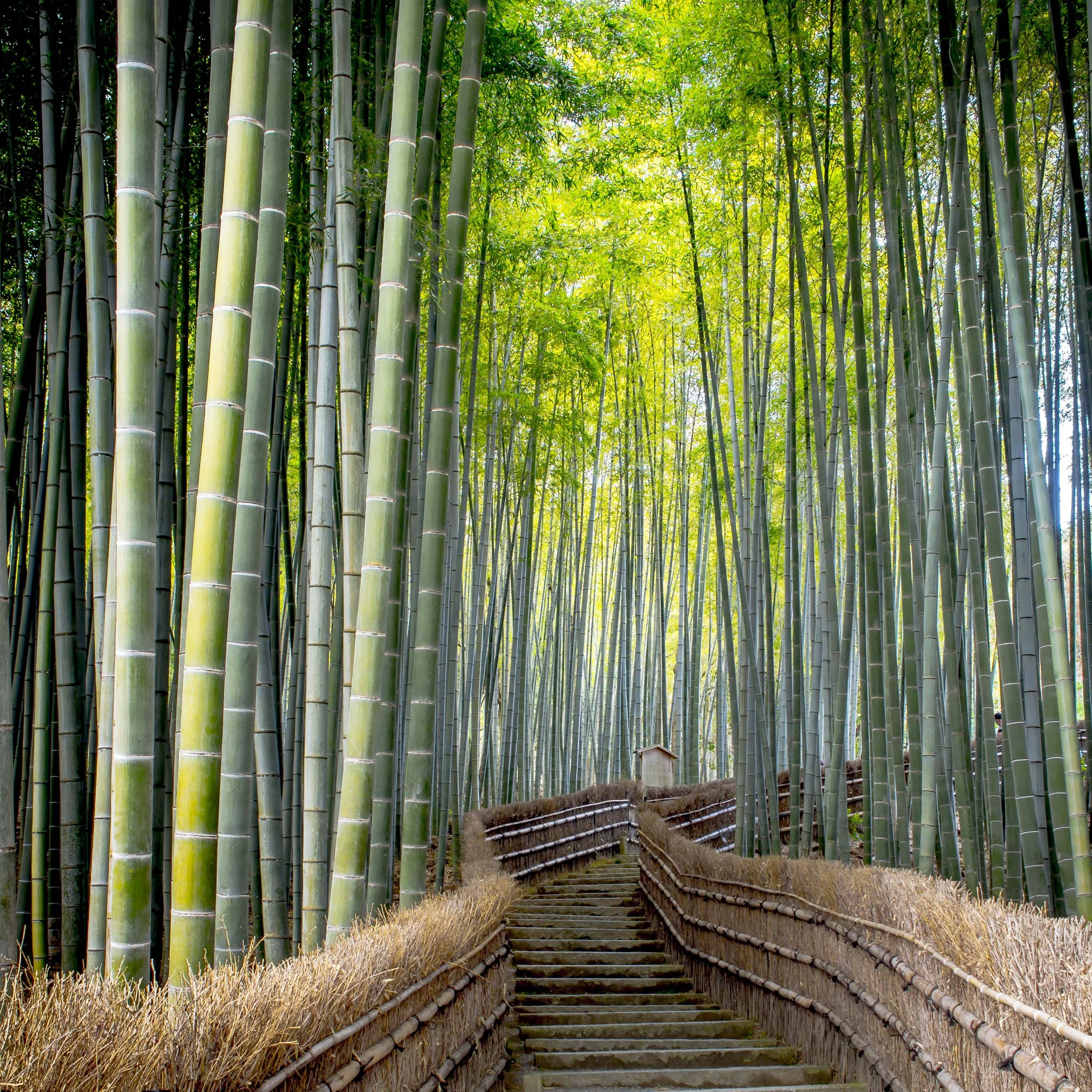
Thank heavens for Japan and the EM-5 Mk1. It kept the flame alive and no better place to gain a context of time.
Film was dead, very cool film cameras effectively worthless. I scored all sorts, most of which I later sold for as much as they originally cost when the resurgence came (next decade). Interestingly the whole film resurgence thing was a doughnut with a hole in the middle, that hole being anything plastic fantastic. Only old metal cams were popular, the rest disappeared.
I left the store mid to late decade, about the time we decided Sony was finally a thing with the A7II, even with their pathetic lens range at the time. It still amazes me that Sony, a brand not taken seriously before then and riding on the coat tails of Minolta, a respected but smaller brand, has become the bedrock of a new generation, all thanks to getting video AF sorted first.
Sales were much lower and the whole thing less satisfying, often coming down to cost alone versus the internet and little of interest being the main problems.
Everyone had decent cameras so upgrades were hard to justify, the internet was confusing things, phones were getting decent, killing the compact market and mirrorless was still the outlier. Nobody wanted a new SLR, but mirrorless was a patchwork quilt of ideas and mixed successes, so people waited.
Personally I was shooting mid to low end Olympus for our many trips to Japan, concentrating on the biggest benefits of the format, size and speed. I was still into photography, but my interest in anything other than personal stuff had been shelved. I was disinterested in DSLR’s, Sony, video, or phones, so most of the big news was not news for me.
One highlight was early dabbling with printers (Canon 9000 II the Pro 10s), which was far more interesting than being in a dark room. I wasted a lot of paper, learned enough.
In 2016 I got sick, near death sick and my mother bought in some magazines during my three month recovery, one of which was an English photo mag.
I got the bug again.
Spurred on by this random inspiration I bought a Pen F, the 40-150 f2.8 and I think the 12-40 f2.8. Then I bought an EM1 mk2, picked up some nice glass, kept shooting with a now semi-pro kit.
The 2020’s
The latest vibe I am living now is “do it while you still can, the future can wait” and old lessons still have some legs.
The new decade saw me return to the camera shop under a new owner, the previous owner feeling my experience would help with the transition.
The process of photography at this point was very much Adobe controlled, Lightroom and Premier in their later iterations had no real competition. AI was a tiny little shadow hiding in plain sight inside these programmes.
Film had a resurgence, fuelled by a discontent younger wave, maybe wanting to rekindle what we had so quickly run away from. The many ditched film cameras of the previous decade become valuable again (I sold a mint condition Zenit for more than it cost originally).
Sony is now dominant as video becomes a thing. They missed the big thing early on, that a system is a system needing lenses and support, not just a constant parade of same-but-different cameras, but recovered and ruled the early part of the decade. People even seemed to see past the odd colour science.
When they woke up, they and Sigma colluded to create the modern look of flattened perspective, ultra sharp edge to edge, wide open performance. The big movers at this time were the triad of Sony, Sigma and gimbals.
Video is now an expectation, Sony nailing video AF first, thus winning that race, but seminal cameras like the Panasonic GH5 also made their mark.
After dabbling with a school for a little while as a second or third job, I was now shooting in schools properly after leaving the camera shop the week before COVID lock downs came into effect.
We were quarantined in the state, the privilege of being an island, so I could work with standard precautions. Against the odds, I started a new career at the start of COVID, in my 50’s in a shrinking field!
My mother passed early in this period (not COVID as it goes), leaving me a small inheritance outside of her estate. I spent some of it on my Oly 300 f4, first EM1x and 8-18 Leica, all needed if I was to go next level. None of these things have proven poor buys, the 300 alone landing me contracts like AFL Tasmania.
I switched to Capture 1 thanks to buying an EM1x with an aging Mac and realising that meant incompatible Lightroom. This was a good move overall, something I was reminded of when I tried Lightroom again recently.
At some time in this journey I tried video and I liked it which has led to purchasing no fewer than 6 Panasonic cameras including a pair of full frames. It is now another feather in my professional cap, with caveats. I am keen to avoid it being a time killer, something it does so well, so I am limiting myself to capture, process and delivery, not production.
Like the Adobe alternative Capture 1, I went with DaVinci Resolve for video processing. I will admit it is a steep learning curve, but I am getting there and like C1, it is for me better than Adobe.
Adobe at this point has been purged from my system, no easy feat.
In the last few years, AI has risen as the new wonderful, putting a cloud over most things photo and video. Only recording authenticity is relatively safe, AI benefits for me are coming behind the scenes in processing power (I now shoot ISO 6400 in MFT format without consideration, unthinkable in my early years).
Video is now on an even playing field, all major brands improving AF and functionality, even non video aligned companies like Nikon are now decent and Canon, Panasonic and others are fighting back against Sony.
The current state of play is one of accessible abundance on the verge of another and probably the last big shift as AI replaces image capture for many. Ironically the phone will be the first victim as everyday users will jump first, as they do.
*
So, what has changed over the last four and a half decades?
We have gone from all metal bodied, manual everything cameras and lenses shooting mono or slide film if you were serious, colour print film with zooms if not, all in the shadow of the giants of recent times who mostly did the same things the same way, to mirrorless hybrid digital cameras and phones all capable of better stills and video quality than even professional cameras of only decades ago, all stabilised and video-AF capable, but with possibly no future.
Are we better off?
My fondest memories are drawn from the 1990’s the era of mystery, firsts and reward for effort, the transition from all manual to semi auto, but both still mattered. A feeling of longevity, grandeur and respect. The photo mattered, the gear was just the enabler. Magazinearticles and even adds were cool, emotive, classy.
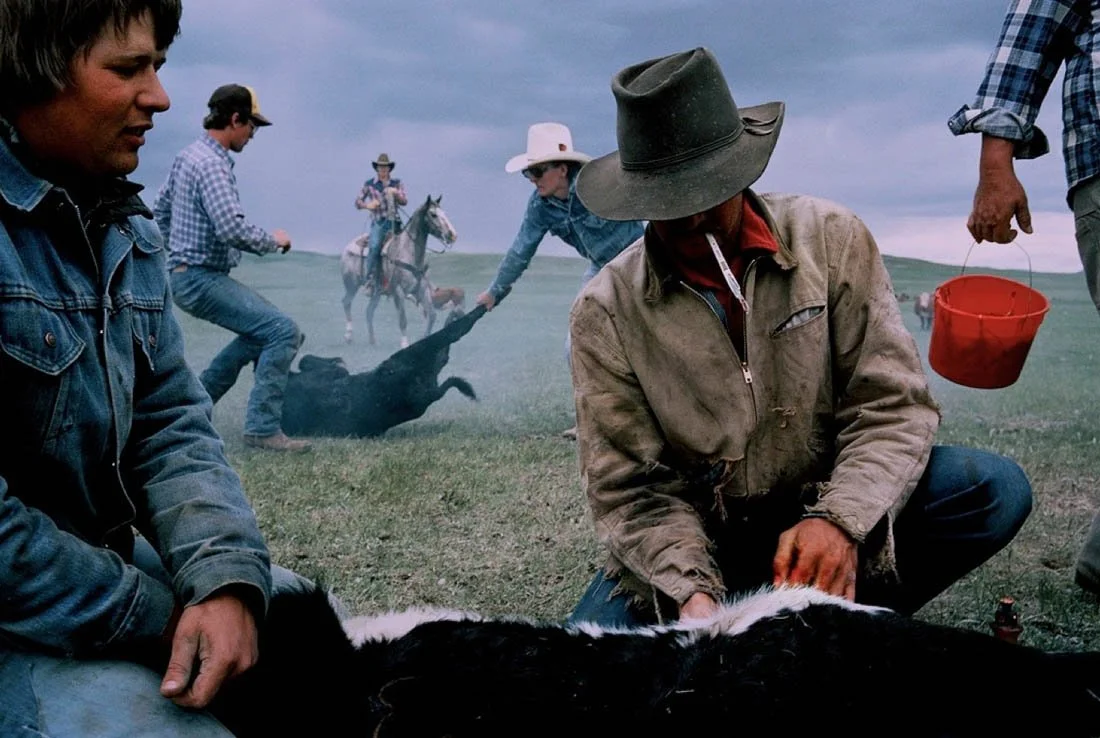
An early Sam Abell, an image that still influences my thinking today.
I don’t feel this is about the time of my life, more the times they were, but when we were living them, they were just what they were.
There is a lesson in that.
I cannot say I have enjoyed the industry as much since, but it has obviously kept me involved, no matter how tenuously.