Savage Worlds and I have along and frustrating past.
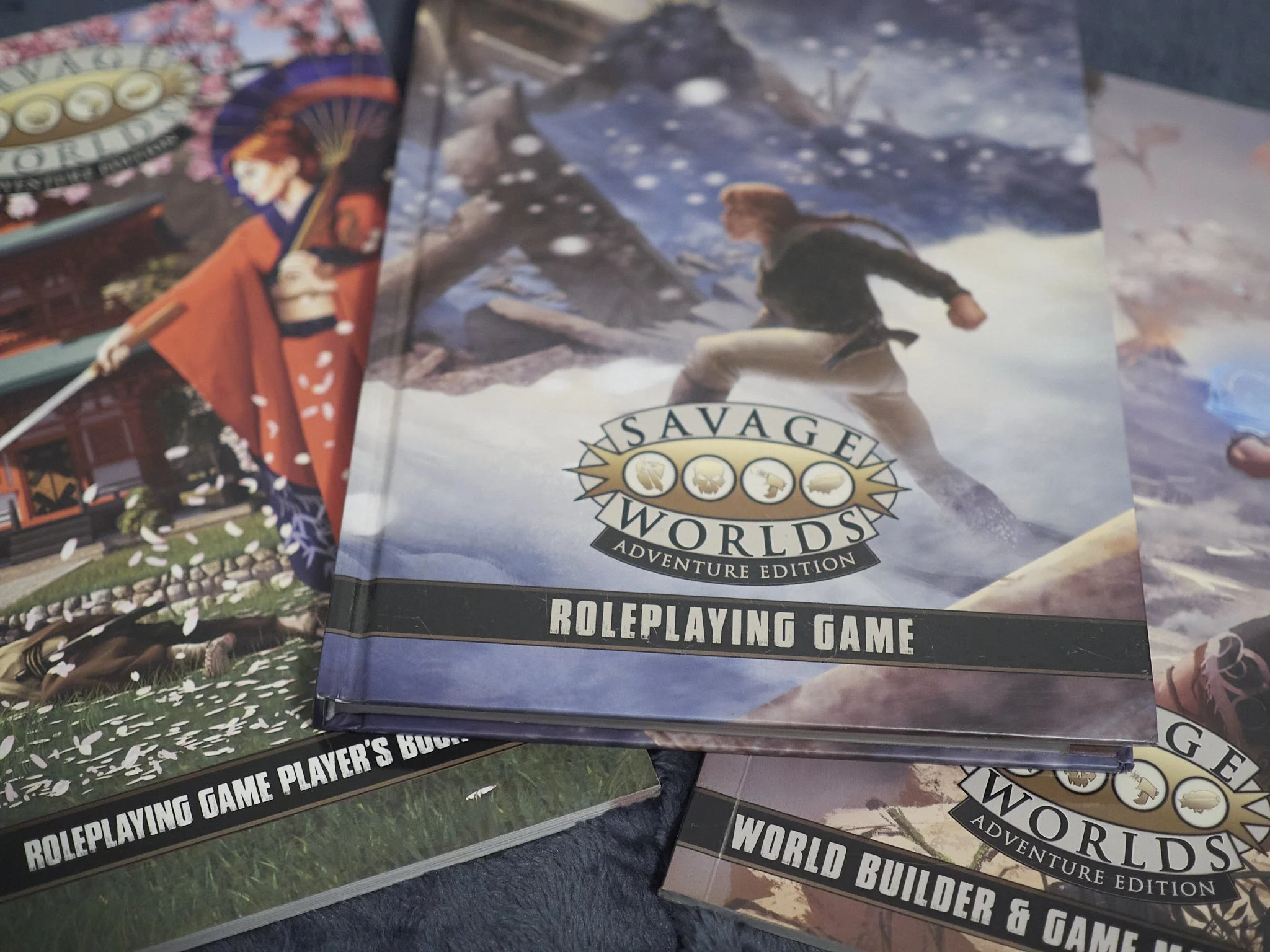
I think I have 6 SWADE rule books now, including Players Handbooks, Pathfinder and even an anniversary edition. Committed I guess.
I have always been drawn to the game, but not as often had success with it ditching a whole collection of Explorers edition, but trying and re-trying the system has not only allowed it to become my base-line game, but also helped me to grow as a player, GM and designer.
There are a lot of things that potentially put people off SW, some of them are purely perceptual and others are simply miss-understood pre-conceptions.
Style and application.
First up, nothing is set in stone. The game is very, very flexible in every way. If you do not like some terms or rules, they are flexible, the game even pushes you that way. Want something to feel hard, dangerous, mean even, take out or reduce some of the “pulpy” mechanics like exploding dice, bennies, soaking damage. Add in other options such as damage that means something or fear mechanics. Your game, your choices.
I have felt that Cortex Prime is my narrative tool box, SW sitting in a more crunchy-minis end of things, but I am coming to realise that SW is very similar to Cortex, just starting at the more grounded end, meeting in the middle somewhere.
Too much to learn.
This one ties into above, there is a tidal wave of stuff to add or subtract, which is the benefit of a system that can literally play any style in any genre. The trick I have found is build small from the core book, add only as needed.
For example, if you want to play hard sci-fi, first establish the look and feel you want, “write the story”, then add in what is part of the world you have built, ignore the rest.
The beauty of it is, once you grok the core rules, the genre specific elements are easier to learn than a whole other system.
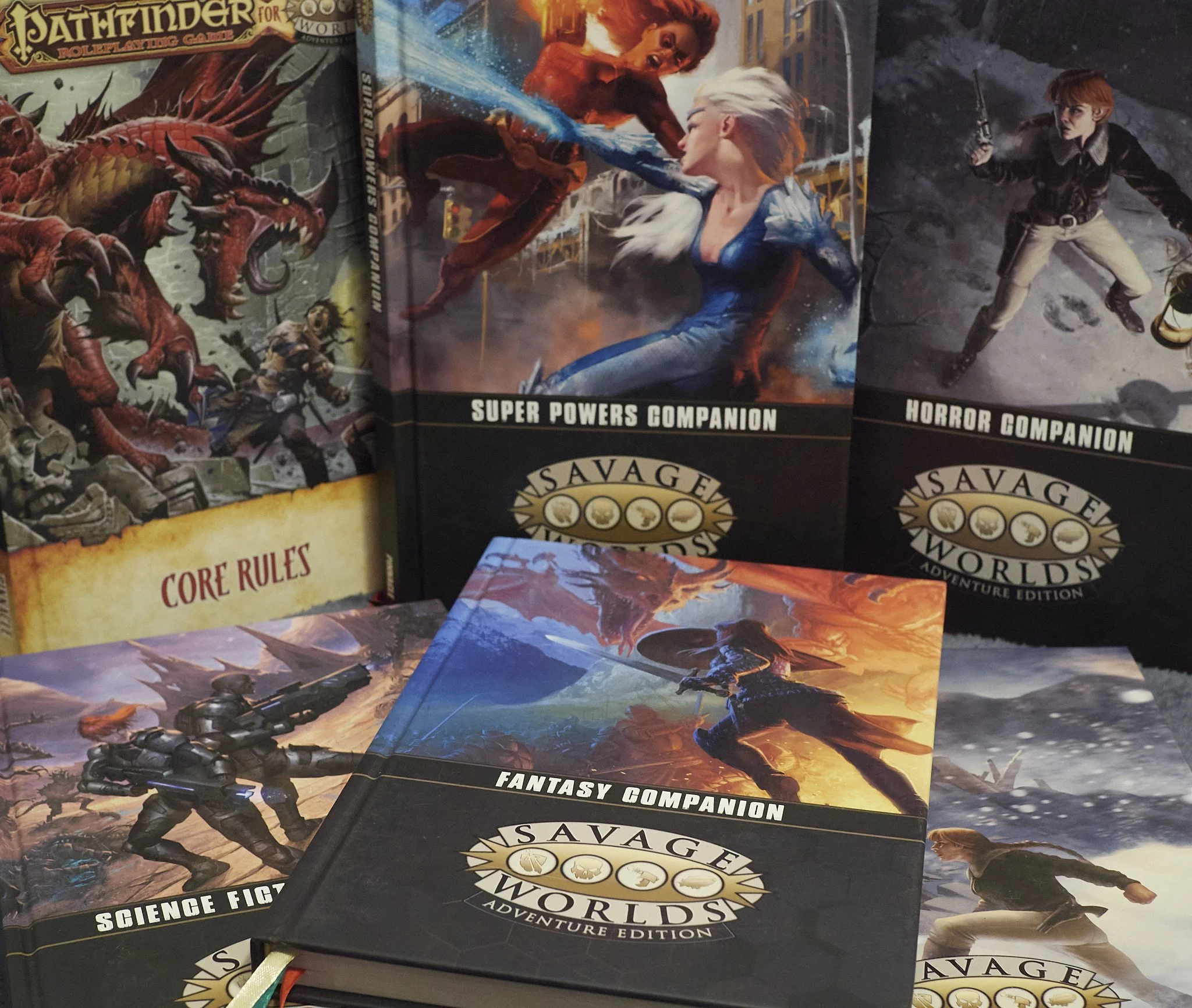
Lots of stuff, but you do not need to use it all, just be aware it is there to draw from. Less is more is the key here. You can for example lift the Walker rules from the Sci-Fi book and add them to the Fantasy book for a steam punk Warmachine-like game.
The look and feel is consistently “pulpy”.
With cartoonish art, even the darker horror stuff, clean modern font and a high adventure vibe, it does come across that way.
This is a crucial one to get sorted early, the look and feel of your game is sooo important.
Get the look of your game right and it all sits better.
For example, many love The One Ring for its thematic art (although opinions are divided about which edition is best) and the mechanical processes that tie into the feel of Tolkiens writing*. The combination of the two really suit the theme. But SW can cover many of the mechanics, the core system is as comprehensive, maybe even more so and many of the TOR sub-systems could be slotted into a SW makeover.
*I personally find many of these needlessly limiting and rail-roady, things that players who ant to play a LotR’s style game will simply do, because they want to.
If you take the mechanics of SW, re-dress it with TOR style art, use a ye-olde font, look at the races, cultures, character roles to be played and set the right tone in the mechanics used (or not), then SW can do TOR no issue.
The same can be said for most games as varied as Tales from the Loop to Monster of the Week.
Good role playing comes from a lot of things, rules are only the bones of it, the feel and player pay-in is down to the group and always has been.
There was a time many older gamers remember when the rules you chose provided nothing much in the way of “theming”, like Traveller with no illustrations in most of their books or AD&D with many that looked like high school level doodles.
Fast, furious and fun.
This is a bit misleading if you take it as fast over furious and fun. Combat for example is faster than 5e especially with large numbers of combatants, and more interesting I would dare to say, but it can be quite “heavy” in table top play.
One of the ironies of SW doing d20 games is, the relentless attrition of a fight-recover-fight game, something I find unrealistic and quite boring, is that SW handles these more realistically, therefore differently. Fights have meaning or they are avoided, tactics can be something useful and there is always a fear that things might go wrong, but not to a Call of Cthulhu level, but not that inherent “hard to kill” safety net.
If you like a tactical minis game, then this is effectively a whole game for you, but if you want “theatre of the mind”, you can also do that, you just have to intend to and ignore some pre-conceptions. There are even faster ways of doing things, which is handy.
It is too “mathematical”.
I get this one, it seems like everything comes down to a bunch of +/-2 bonuses and to some extend it does, but much of this is just the same as other games, but in SW it is clear consistent and predictable and much of it is done up front or there is collateral to help. I highly recommend getting the accessory box (I have 2), which gives you several packs of handy cards to hand out to players for their characters conditions and powers.
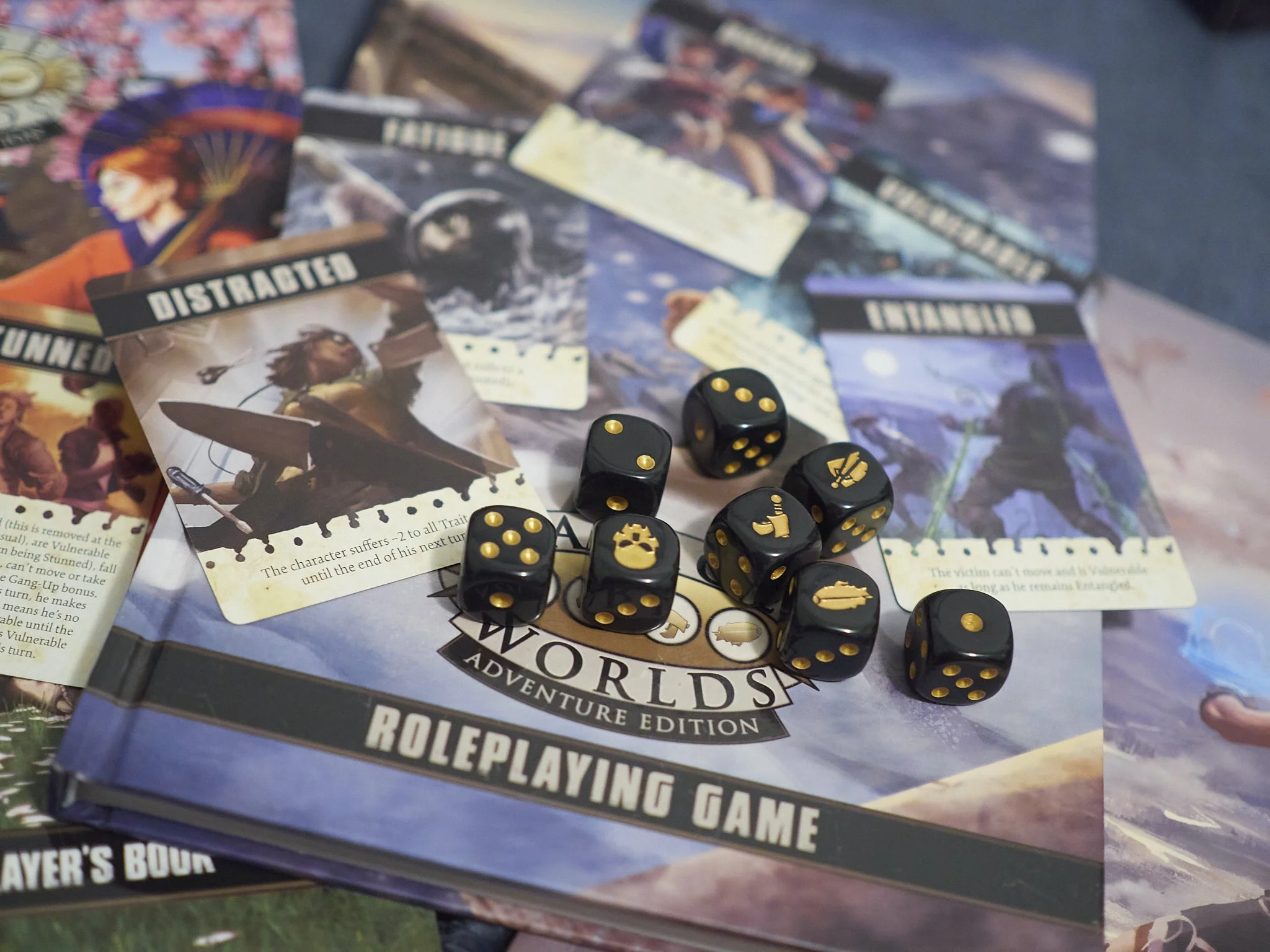
Lots of handy stuff to use, so use it. It is not often a game hands you all you need to make life easier, but here it is.
The system is too simplistic.
This is deceptive. Single die skill tests and almost always a 4 as the target number does look pretty simplistic, but the game adds granularity when needed (damage for example), has balanced math and the Wild die adds a curve for important characters.
I have crunched the numbers and it holds up and believe me, this is where it would fall apart for me. The Bennies economy is important here also. It is ok to fail, then recover using a limited resource.
It’s very generic.
It can be assumed that handling all of some factors with simplistic all encompassing systems would make them bland and I guess on the surface that might seem true.
This one is mostly aimed at powers, which unlike the massive spell tomes or super powers lists of other games handles every conceivable special power with about 60 core options, then allows for a huge amount of customisation within that as “trappings” to shape the look and feel of them.
Take a fireball spell for example. It is basically “Blast” with fire “trapping” which can be more or less focussed, with longer or shorter range and power as the player wants. This is the same as a super hero or flame thrower might do, but specific to the genre and theme you want.
The reality is, often the only real difference in other games is the name and the mechanical crunch applied. Fireball might be very differently applied in a variety of games, but really not.
*
I am not a SW fanboy, in fact it has spent most of its time in my collection as an alternate at best and after recently committing to the four genre books for SWADE, I found at first I went away from it, not closer, but the more I read it and other systems, the more I come back to it as my “one system” option.
It can do basically any other game I have, even absorbing the things that make them unique, while offering systems they may not have inherently.
I find I often look at other new games and think to my self “great idea, but I can do that with SW” and save myself $100+ and hours of learning a new system. I now often see other expensive and tightly themed games just as one-shot ideas for SW.
I also have other generic games such as BRP/Mythras and Cortex, but SW is the one that best straddles the flexi-narrative-crunchy-tactical role best. In other words, it seems to me to be the one that best does the job of others, which they often cannot do in return.
Hard sci-fi like Mothership or M-Space, space opera like Star Wars, low magic fantasy, High magic Fantasy, Cthulhu dark horror, kids on bikes, Buffy style monster of the week, popular franchises like Electric State (book or movie) or Tales from the Loop, Zombie apocalypse, Pirate-fantasy-horror-sci-fi, Oriental traditional or Kung Fu, Stone age hunters, classic fantasy, super hero from street level to cosmic or Delta Green style modern horror.
They are all possible with one unified system and many are already specifically adapted, all you need to do is take ownership of the feel and look of the game. The best thing is, it is often astonishingly easy to port the scenarios from other games over to SW.
An RPG to me has to be able to simulate reality, maybe a reality that is less or more fantastic or high octane than our reality, but realistic player intentions should be realisable. I have a reaction against games that control all actions, especially games the hinder, restrict or simply gloss over smart play.
SW has the ability for any player to have input in any situation basically in any way they wish with both mechanical and narrative elements. It makes me feel that I can come up with an idea that will effect combat, or a verbal barb, or a lateral take on a skill based task and run with it.
That is all I ask of a game.