When I started gaming ADnD was the king of the block, 1e Traveller (little black box), 2e Champions, 1-2e Runequest, Tunnels and Trolls, Elf Quest, 2-3e Call of Cthulhu were the outliers. I was never a fan of DnD, it just did not sing to me, its concept were too abstract and the game felt “soft”, meaning my high level character dying seemed like a choice not a fear.
I preferred the other more grounded and realistic games out there, I also struggled with the AC/HP/Levels/Vancian Magic tropes that formed its foundation, so I naturally gravitated towards Cthulhu and Traveller. Even in the 1980’s, I disliked DnD’s core foundations, I struggled to find the story as I wanted it in the game as presented.
This was just how I felt at the time. I have since bought almost every edition of DnD, but it always felt alien, weird and pointless, so now I only have 13th Age, a derivative of the system with lots of clunky edges filed off, but even then, I only keep it as a “if you insist on playing DnD, I’ll give you DnD” game.
The most common denominator was the venerable D100 game mechanic, which powers a lot of TTRPG’s, more than any other mechanic outside of D20, but they have many detractors, so lets look at why and some fixes as we go.
The games are too lethal.
This is not a D100 mechanical imperative, more of a habit of design. Because D100 games are often skills based, they are by extension more grounded than level based games. This more realistic nature leans into combat as the possible undoing of any character of any experience level by any protagonist, so good life choices need to be made.
First up, this is not always a problem. Keeping players involved and even scared of the consequences of their actions in TTRPG’s can be hard. One of the easiest ways is to raise the stakes. There is nothing more boring to my mind than a swarm of minions attacking a group of near god-like heroes who can basically just wade thought them swinging with a “lill counter” ticking over. Even worse is when they get rewarded for doing so.
I so often see game rules enforced that fail to do the easiest of things, just be realistic.
Choosing to fight should not be sport without consequence (at least in my games), it should be one of several options to get things done and the results should be a reflection of those choices. It makes your wins more meaningful, not just an addition to your kill count.
It can be a memorable stepping stone on the way to your legend, rather than just more juice for the experience point tank.
Lethality is also down to a lot more than a simple core mechanic. What happens when a character takes damage, how are they affected by it, are there long term effects and how does healing and recovery happen? Is it realistically brutal and does every hit has an effect or can they soak a certain amount of damage before something sticks?
Basically should combat be a considered risk or sport.
These factors are all in the control of the designer and nothing to do with the core mechanic. D100 games have often chosen to take the “real licks have real effects” path over the years, but there is nothing to say a DnD style abstractness could not be used with them and has been, Pulp Cthulhu as an example or the reverse****.
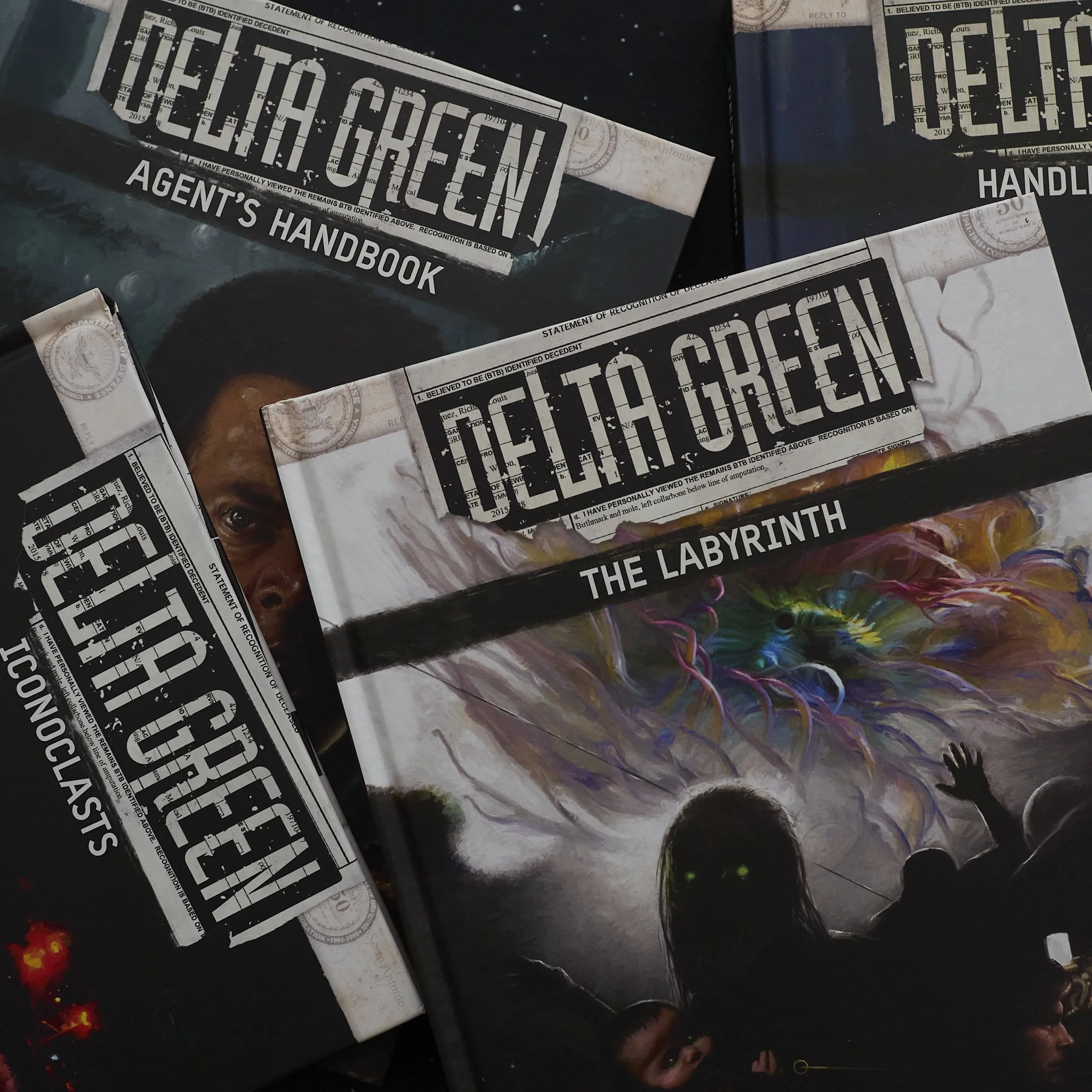
This one can kill you with a single shot, expressed as a lethal percentage roll.
The math is too much.
D100 math is not hard, but it can be made harder than it needs to be. Ironically, % based systems are very intuitive by nature a 25% chance meaning more to most than 1/4 or .25, but setting various difficulty or success levels and applying multiple mods on the fly is done on a larger scale than D20 or 3d6 games by definition.
Games like Warhammer FRPG 4e is a prime example of making the simple less so. It requires levels of success derived from rolls vs targets compared to opposition rolls and gets quite convoluted, not to mention the need to track success levels, it even offers a simpler option in the game and many just use more basic D100 systems to drop what does not work for them (D100 games are super flexible because the core math is consistent).
Some older games are also a little counter intuitive with odd chance slopes, but new games have tried various methods of simplification and a consensus seems to be looming. Being as flexible as it is, most games can have another similar system inserted with minimal fuss.
Difficulty can be a matter of reversing the dice (the D10 and D1 dice are usually pre-assigned, but this can be flexible), giving the players a roughly +25 or -25% chance of rolling under 50, with a curve added and no extra math required.
A basic test of “2x d10’s read the best way” gives a curve that evens out the linear pass/fail nature of the system. It is a thing I guess that a character with a 90% skill, which may be exceedingly hard to reach, still has a 1-in-10 chance of failing, so adding the above curve to a basic, uncontested, un stressed test give roughly a 75% chance or rolling 50 or less and that 90% skill only fails on a 99 or 00 (both “soft” fails).
The player may choose any combo that works for them (i.e deliberately fluff a roll for story diving need, the GM giving them a break later or take the higher or lower of two passing options).
If a test is contested or more challenging, the usual linear roll is used, then a test under duress is made using the worst combo. Adding even more dice can heavily shift the odds (always taking the best or worst 2), again avoiding math.
For our games, the “worst case” roll is 2x red dice and 2x blue for “best combo” rolls, use one of each if a pre-designated standard test. This also lets the game keep skill levels under control. I favour a game that tops out at 99% (assumes “normal” power levels), the 90%+ skill character being a rare beast.
Exceptional results can simply be all doubles rolled, pass (good) or fail (bad), giving the characters a 10% chance of something outstanding happening, but these can also be aligned to the value rolled, a 99 fail being trivial, a 99 pass being unbelievably legendary, because only 99% skill characters can even roll it and so on. This requires just a small chart maybe aligned to task difficulty.
If “00” is a flat fail (not 100, which is the usual), then no character has a 100% chance of success. These can also be aligned to the difficulty, the 99 fail on a mundane task is negligible, but on a difficult task becomes more brutal (see the above chart).
If skills are allowed over 100, the extra can be used flexibly as a secondary success value on a flat “00” fail or a negative mod to an opponent in a contest as the player chooses.
Also, in combat, combat skill may be applied as either a positive attack mod or a negative defensive mod applied to an attacker.
Contests can be as simple as “highest passing roll wins, a pass vs a fail gives advantage and does rolling doubles” etc. If one side gains advantage that may be applied as a bonus or penalty to their or their opponent’s next roll.
These are a few ideas floating around currently and they basically remove any math outside of reading the dice and tracking some easy bonuses and penalties.

Adhering to older design principles, it is still possible to modernise or simplify the game using the background materiel and any BRP or Mythras based system.
The games are skills based (like life), not level based (like a video game).
Not much can be said here. If you like the inherent suspension of reality that level based games provide**, then I guess D% or any skill based games are not for you, but don’t level that at D% games only as plenty of other games went there. Even when DnD ruled the early years of RPG’s, by being the first, almost all of it’s competition went in the skills/abilities direction.
It was only during the open licence period of 3rd edition that level based d20 games became more wide spread.
One of the many areas DnD has always fallen down is a decent skills system and support for non-combat role playing. It seems churlish to dislike the systems that actually support these things better.
Hit points, armour class, level based bonuses are closer to a video game than reality, so as a game mechanism, they make sense to many, but most RPG’s aim to recreate the world they are based on, DnD actually fails at this dismally if you compare the story line of almost any fantasy stories it claims to emulate to the reality of the game. Even the DnD movie fails to simulate the game it was drawn from.
The linear nature of D100 is more swingy than dice pools or addition systems with a curve.
True, they can be, but the easy fix is the above mentioned roll best/as allocated/worst combo system. This means there is a curve for mundane or standard tasks, a linear chance for more challenging and contested tasks and a curve against for difficult ones (and more dice can be added making thing exponentially harder taking the worst two of many).
The D20 is also linear, the curve in some systems can be tricky to make work (mods becoming more and more powerful over a smaller range) and pools can be accused of regularly producing bland, overly predictable or bizarrely unfair results (like rolling 8d6 to score a single 6 and failing).
The roll under system seems negative and limiting, roll over is more positive.
I see this one a lot and I get it to a point. Throwing a ball as high as you can seems limitless, where rolling it along the floor to get as close to an edge as possible without it going over seems like a game in itself and one that requires restraint and some decision making.
People generally like the “more is more” vibe of roll high games, but the “roll as high as you can without over doing it” restraint thing is also fun and probably more like reality.
This is very much down to your interpretation I guess. I like the high as I can within a limit envelope.
No right or wrong here. One thing I do is by using the “read them the best way” curve for basic tests, skill levels can generally be lower and still be effective and truly exceptional skill levels are rare and powerful.
Advancement can also be aligned to skill. For example, if a critical result in a challenging or harder test is rolled (good or bad, they both teach us something), the player may later test against their current skill, a roll over adds +1%. So, as the character gains skill, their progression slows, something Dragonbane does to great effect, if less incrementally using a d20.
Meeting a 97% skill swordsman should be an event, hopefully with a good ending.
The mechanics are dated.
I roll my eyes at this one. DnD is older, but nobody calls it dated. The real reason it may get this label is the consistency of the system, one that has fundamentally remained unchanged for over 40 years means it is directly linked to some games much older than the players playing them, but compare that to the revolving door of DnD and most other RPG’s that seem to have to re-invent their core mechanics regularly.
Try playing 1,2,3,4e DnD with 5e rules. Impossible.
Then give Call of Cthulhu or Runequest a go with their first and last editions mixed. Not so hard.
Easy to think of older games as old mechanics, but D100 games are a dynamic and ever changing group of games, that still share a core mechanic that is nearly unchanged and almost any D100 mechanical idea you have can be blended into almost any D100 game with little harm. Find RG:G too hard? Use BRP systems instead.
There are other negative points levelled at d100 games, but in most cases, these are simply down to “I don’t like them” worded another way. I don’t like D20 level based games with massive over simplification of details in abstract mechanics, which I feel is a more valid reason to dislike something than “just because”, but that is me, you need to be you.
I guess the question comes down to whether you like the specific game itself and if you do, will you accept the mechanic that powers it?
For me, I like D100 games so much, I convert other games to them, often seeing other entire game and system packages as simply scenario ideas for a D100 generic*** to be applied to.
*Some, like Mothership revel in this high character turn over dynamic, others like Troubleshooters play it down.
**Using the term level based assumes hit points and attack values etc are linked to a level based experience base.
***Or SWADE, or Cortex, it depends on the feel I am going for.
****I once tried to “inflict” on my DnD players a combat rules from Traveller, which was to apply critical hits directly to physical stats. It did not go down well, which to be honest surprised me as it felt like a good way to increase the risk and reward vibe.